战役专篇第7集:重燃武装火炬:巴当勿刹跨国铁桥爆破、勿洞对空反围剿与怡保宜力战斗(1969–1971)
Campaign Feature 7: Reigniting the Torch of Armed Struggle: The Padang Besar Bridge Demolition, Betong Counter-Sweep, and Ipoh & Gerik Engagements (1969–1971)
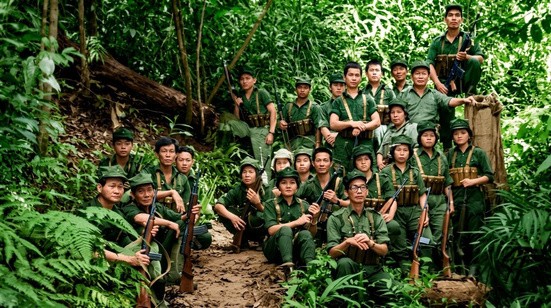
1968年马共中央发出重整武装斗争号召后,马来亚民族解放军在马泰边境与霹雳腹地打响了一系列震撼敌胆的标志性战役:1969年12月10日,爆破队潜入玻璃市巴当勿刹以南铁道安全区,一举炸断长逾百英尺的跨国铁路大桥,彻底切断马泰反共军事联动动脉;1970年5月底至6月上旬,第十二支队在勿洞大摆丛林地雷阵反击泰马联合大围剿,半个月内歼敌60余人并于6月5日成功打落敌军直升机一架;1971年6月,南下部队在霹雳宜力与怡保乌鲁近打连续设伏,重创突击队第7营与第12马来兵团,并当场击毙曾在澳大利亚受训的突击队第4营连长钱德兰上尉。本篇完整收录三份《战斗消息》原始文献影印与逐字全文。
Following the CPM Central Committee's 1968 directive to renew the armed struggle, the Malayan National Liberation Army (MNLA) launched a series of decisive operations across the Malaysia-Thailand border and deep into Perak: on December 10, 1969, demolishing a 100+ foot transnational railway bridge south of Padang Besar; between May 26 and June 9, 1970, deploying extensive jungle minefields in Betong to neutralize over 60 enemy troops and shoot down a military helicopter on June 5; and in June 1971, conducting successive ambushes in Gerik and Ulu Kinta near Ipoh, eliminating Australian-trained Captain Mohana Chandran of the 4th Rangers. This feature includes the complete facsimiles and verbatim transcriptions of three original MNLA 'Combat Bulletins'.
第一章:切断马泰反共铁道大动脉:巴当勿刹跨国铁路桥爆破战(1969年12月10日)
Chapter 1: Severing the Transnational Rail Artery: The Padang Besar Railway Bridge Demolition (December 10, 1969)
1969年底,拉曼与拉扎克政权勾结泰国反动军警当局,在玻璃市与泰国宋卡府交界的巴当勿刹(Padang Besar)边境地带集结重兵,加紧实施二十四小时宵禁、强迫边民迁移,企图依托跨国铁路干线调运兵力与军火,对马共边境游击区发动反革命联合“围剿”。
为给马泰反动派的联合军事挑衅以迎头痛击,1969年12月10日晚上9时45分,马来亚民族解放军爆破突击队凭借严密的战术侦察,神不知鬼不觉地穿过敌军层层铁丝网哨卡,潜入巴当勿刹以南约五英里郭马村(Kok Mak)附近的“铁道安全区”,将高威力炸药精准安装在横跨河谷、长达一百多英尺的跨国铁路大桥桥墩与钢梁要害部位。随着一声惊天动地的巨响,整座跨国铁路大桥被炸断坍塌,马泰两国之间的国际铁路交通彻底中断。
次日清晨,惊慌失措的敌军出动大批军警赶赴断桥现场勘查,我军预先埋设在桥头周边的触发地雷随即轰然爆炸,当场炸死炸伤多名敌兵。正如1969年12月29日发布的《战斗消息》战报所指出的,巴当勿刹跨国铁路桥爆破战是第二阶段武装斗争初期的标志性突破,严重瘫痪了泰马两国反共军事力量的协同联动,在北马各族人民中引起巨大振奋。
In late 1969, Malaysian and Thai security forces massed troops along the Perlis–Songkhla border around Padang Besar, imposing 24-hour curfews and forced evictions while utilizing the transnational railway line to transport troops and munitions for joint counter-insurgency sweeps.
At 9:45 p.m. on December 10, 1969, an MNLA demolition squad slipped past heavily guarded perimeters into the designated 'railway security zone' near Kok Mak village, approximately five miles south of Padang Besar. Planting high explosives at the structural supports of a 100+ foot transnational railway bridge, the squad blew up the span at one stroke, completely severing rail traffic between Malaysia and Thailand.
When enemy troops rushed to inspect the ruined bridge the next morning, landmines planted around the approaches by the guerrillas detonated, inflicting further casualties. As recorded in the December 29, 1969 'Combat Bulletin' reproduced below, this operation marked a landmark breakthrough in the early phase of the Second Armed Struggle.
【1969–1971 重燃武装火炬三大战役 · 战略影响定评】
• 1969.12.10 巴当勿刹跨国铁桥爆破战:一举切断马泰两国军警联合反共物资运输与兵力调动的铁道大动脉,向全世界宣告马来亚民族解放军重返主战场。
• 1970.5–6 勿洞对空防御反围剿战:以自制地雷阵结合轻武器集火射击击落击伤敌军直升机,打破了马泰联军依赖美制直升机实施“垂直包围”的立体战术神话。
• 1971.6 怡保(乌鲁近打)与宜力战斗:在霹雳州首府怡保近郊重创敌军并击毙钱德兰上尉,迫使马来西亚当局将大批野战部队回调霹雳腹地设防。[1969–1971 Three Campaigns Reigniting the Armed Struggle · Strategic Impact]— 《马来亚共产党武装斗争历史战役全纪实》重燃武装斗争时期战略影响定评 | Strategic Impact Assessment, CPM Armed Struggle Historical Campaigns Archive
• Dec 10, 1969 Padang Besar Rail Bridge Demolition: Severed the cross-border rail artery linking Malaysian and Thai counter-insurgency logistics.
• May–Jun 1970 Betong Anti-Air Defense: Combined landmines and concentrated rifle fire to down enemy helicopters, shattering the myth of helicopter "vertical envelopment".
• Jun 1971 Ipoh (Ulu Kinta) & Gerik Battles: Struck deep into Perak near Ipoh, forcing government forces to pull troops back to defend the interior.
1969年底,拉曼与拉扎克政权勾结泰国反动军警当局,在玻璃市与泰国宋卡府交界的巴当勿刹(Padang Besar)边境地带集结重兵,加紧实施二十四小时宵禁、强迫边民迁移,企图依托跨国铁路干线调运兵力与军火,对马共边境游击区发动反革命联合“围剿”。
为给马泰反动派的联合军事挑衅以迎头痛击,1969年12月10日晚上9时45分,马来亚民族解放军爆破突击队凭借严密的战术侦察,神不知鬼不觉地穿过敌军层层铁丝网哨卡,潜入巴当勿刹以南约五英里郭马村(Kok Mak)附近的“铁道安全区”,将高威力炸药精准安装在横跨河谷、长达一百多英尺的跨国铁路大桥桥墩与钢梁要害部位。随着一声惊天动地的巨响,整座跨国铁路大桥被炸断坍塌,马泰两国之间的国际铁路交通彻底中断。
次日清晨,惊慌失措的敌军出动大批军警赶赴断桥现场勘查,我军预先埋设在桥头周边的触发地雷随即轰然爆炸,当场炸死炸伤多名敌兵。正如1969年12月29日发布的《战斗消息》战报所指出的,巴当勿刹跨国铁路桥爆破战是第二阶段武装斗争初期的标志性突破,严重瘫痪了泰马两国反共军事力量的协同联动,在北马各族人民中引起巨大振奋。
In late 1969, Malaysian and Thai security forces massed troops along the Perlis–Songkhla border around Padang Besar, imposing 24-hour curfews and forced evictions while utilizing the transnational railway line to transport troops and munitions for joint counter-insurgency sweeps.
At 9:45 p.m. on December 10, 1969, an MNLA demolition squad slipped past heavily guarded perimeters into the designated 'railway security zone' near Kok Mak village, approximately five miles south of Padang Besar. Planting high explosives at the structural supports of a 100+ foot transnational railway bridge, the squad blew up the span at one stroke, completely severing rail traffic between Malaysia and Thailand.
When enemy troops rushed to inspect the ruined bridge the next morning, landmines planted around the approaches by the guerrillas detonated, inflicting further casualties. As recorded in the December 29, 1969 'Combat Bulletin' reproduced below, this operation marked a landmark breakthrough in the early phase of the Second Armed Struggle.
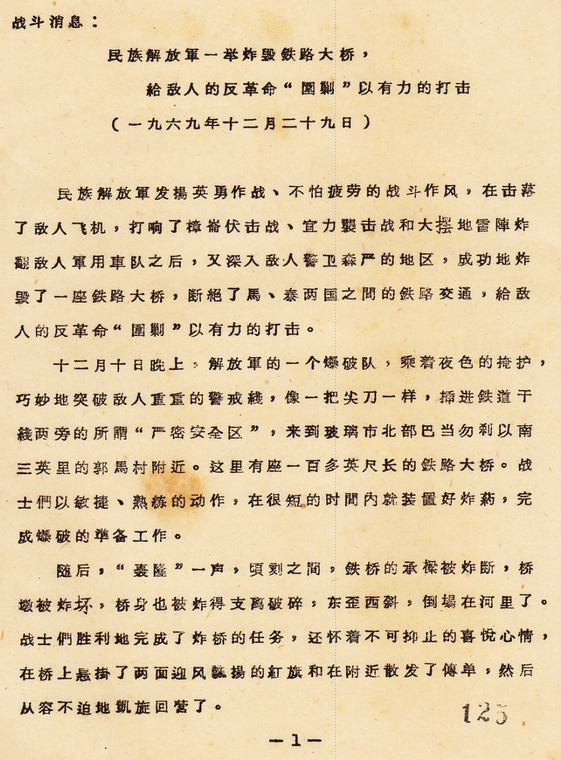
巴当勿刹跨国铁路桥爆破战(1969.12.10):马共爆破队潜入巴当勿刹以南铁道安全区,炸断了一座100多英尺长的跨国铁路大桥,切断了马泰两国的铁路交通,严重干扰了泰马两国反共军事力量的协同联动。
历史定评:这是第二阶段武装斗争初期的标志性突破,彻底切断了马来亚与泰国之间的跨国铁路交通,给马泰初期的联合“围剿”以有力打击。The Padang Besar Transnational Railway Bridge Demolition (1969.12.10): A CPM demolition squad entered the railway security zone south of Padang Besar, blowing up a 100+ feet long transnational railway bridge, disrupting railway connections between Malaysia and Thailand.— 《战斗消息(一九六九年十二月二十九日)》马来亚革命之声广播战报原件 | Voice of the Malayan Revolution Combat Bulletin (December 29, 1969)
Historical Assessment: Marking a landmark breakthrough in the early phase of the Second Insurgency, this action completely severed transnational rail traffic between Malaya and Thailand, delivering a heavy blow to the joint counter-insurgency operations.
第二章:地雷阵显威与步枪打落直升机:勿洞对空防御反围剿战(1970年5月–6月)
Chapter 2: Minefield Supremacy and Downing a Helicopter with Infantry Fire: The Betong Air-Defense & Counter-Sweep (May–June 1970)
1970年5月下旬,马泰联合司令部出动大批陆空军警部队,在狂轰滥炸与武装直升机机降配合下,向马来亚民族解放军第十二支队驻防的勿洞(Betong)丛林游击根据地发起大规模联合围剿扫荡。面对拥有绝对空中优势与重火力的敌军,第十二支队指战员依托险峻的原始山林地形,在敌军必经的山脊、河谷与宿营点大摆连环自制地雷阵,并组织对空射击小组与机动伏击队,展开了英勇的丛林反围剿作战。
从1970年5月26日(高潮战斗集中于5月31日至6月9日)的短短半个月内,进犯敌军接连陷入第十二支队布下的地雷网与冷枪伏击圈,先后踩响地雷数十次,共被我军歼灭60多人。尤为辉煌的是,1970年6月5日,当敌军一架军用直升机低空盘旋企图向丛林前沿实施机降增援与侦察时,第十二支队对空射击组集中轻机枪与步枪火力猛烈齐射,当场将该架军用直升机凌空打落,机上敌军全部毙命!
勿洞反围剿大捷不仅彻底粉碎了泰马联合部队的夏季扫荡计划,更创造了马共游击队利用自制地雷阵与步兵轻武器克制敌军现代化空中优势的经典战例。
In late May 1970, joint Malaysian and Thai forces, backed by artillery bombardment and helicopter air-mobility, launched a large-scale encirclement sweep against the jungle base areas of the MNLA 12th Regiment in Betong. Confronting an adversary with total air superiority, the 12th Regiment leveraged the rugged mountain terrain to lay dense networks of homemade landmines while deploying anti-aircraft fire teams and mobile ambush squads.
Within just half a month between late May and June 9, 1970, the advancing joint forces repeatedly blundered into the 12th Regiment's minefields and sniper ambushes, suffering over 60 casualties. At the climax of the battle on June 5, 1970, when an enemy military helicopter hovered at low altitude to land reinforcements, 12th Regiment fighters unleashed concentrated machine-gun and rifle fire, shooting down the helicopter in flames!
The Betong Counter-Sweep victory shattered the joint summer offensive and stood as a textbook example of utilizing indigenous jungle minefields and disciplined infantry fire to defeat modern aerial superiority.
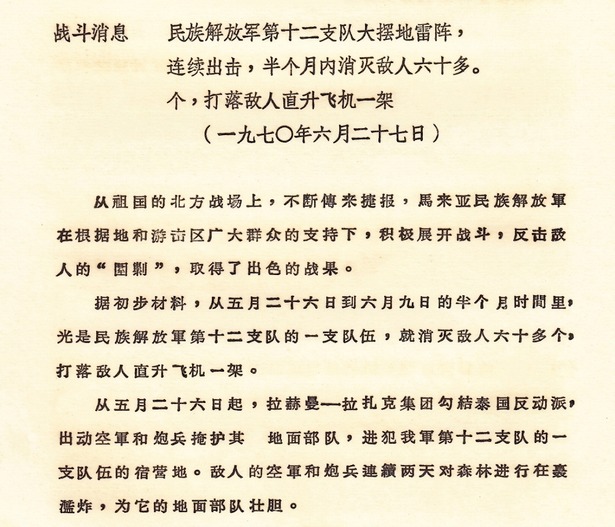
勿洞对空防御反围剿战(1970.5–1970.6):联合部队对马共第十二支队营地发起围剿扫荡。马共武装利用险要地形和大摆地雷阵进行丛林反围剿。在5月31日至6月9日的半个月内,共消灭敌军60余人,并在6月5日成功击落直升机一架。
历史定评:此战展示了马共游击队利用自制地雷阵克制现代化空中优势与联合清剿的经典战例。The Betong Air-Defense & Counter-Sweep (1970.5–1970.6): Joint forces launched a sweep targeting the 12th Regiment camps. Utilizing rugged terrain and extensive landmine layouts, the CPM forces conducted active jungle counter-sweep operations. Between May 31 and June 9, they neutralized over 60 enemy troops and shot down a military helicopter on June 5.— 《战斗消息(一九七〇年六月二十七日)》原始战报文献 | MNLA Combat Bulletin (June 27, 1970)
Historical Assessment: This battle demonstrated a classic example of utilizing homemade minefields to counter modern aerial superiority and joint infantry sweeps.
第三章:深入霹雳腹地的利剑:1971年6月怡保(乌鲁近打)与宜力战斗及击毙钱德兰上尉
Chapter 3: Deep Strike into Perak: The June 1971 Ipoh (Ulu Kinta) and Gerik Engagements and Elimination of Captain Chandran
在粉碎边境围剿的同时,马来亚民族解放军第五支队等南下突击部队果断越过马泰边境封锁线,向南挺进至霹雳州宜力(Gerik)及首府怡保近郊的乌鲁近打(Ulu Kinta)山林,在敌人的心脏地带展开连环袭扰与伏击战。
1971年6月10日,我军在霹雳州北部宜力地区率先出击,突袭马来西亚武装部队精锐“突击队第七营”(7th Rangers),毙伤敌军数名;仅仅三天后的6月13日,深入怡保东北乌鲁近打(Ulu Kinta)森林的我军部队,对前来围攻的“突击队第四营”(4th Rangers)展开顽强阻击与反伏击。激战中,曾远赴澳大利亚接受特种反游击战训练的敌突击队第四营连长莫哈纳·钱德兰上尉(Captain Mohana Chandran,死后被马来西亚当局追授最高军事勋章SP勋章)被我军精准火力当场击毙,其余敌兵狼狈溃退!
紧接着在6月23日,我军在怡保附近再度设伏,结合地雷与近战火力重创马来兵团第十二营(12th Royal Malay Regiment)搜剿分队。短短两周内在霹雳腹地三战三捷,并击毙受过澳大利亚特种训练的敌王牌连长,使乌鲁近打与宜力战斗成为第二次紧急状态期间最著名的交火事件之一。
Simultaneously with the border defense, MNLA southward advance units pushed deep into Perak, establishing operational bases in Gerik and the Ulu Kinta hills just outside the state capital of Ipoh.
On June 10, 1971, MNLA fighters launched a surprise attack against the 7th Malaysian Rangers in Gerik, inflicting multiple casualties. Three days later, on June 13, 1971, in the Ulu Kinta jungle near Ipoh, MNLA guerrillas engaged a sweeping force of the 4th Malaysian Rangers. In a fierce close-range firefight, MNLA marksmen eliminated Captain Mohana Chandran, an Australian-trained company commander of the 4th Rangers (who was posthumously awarded the Seri Pahlawan Gagah Perkasa medal by the Malaysian government).
On June 23, 1971, MNLA forces near Ipoh struck again, ambushing and heavily mauling a patrol of the 12th Royal Malay Regiment with landmines and rifle fire. These three rapid victories in June 1971 shook the Malaysian military command and demonstrated that MNLA assault units had successfully re-established themselves around Ipoh.
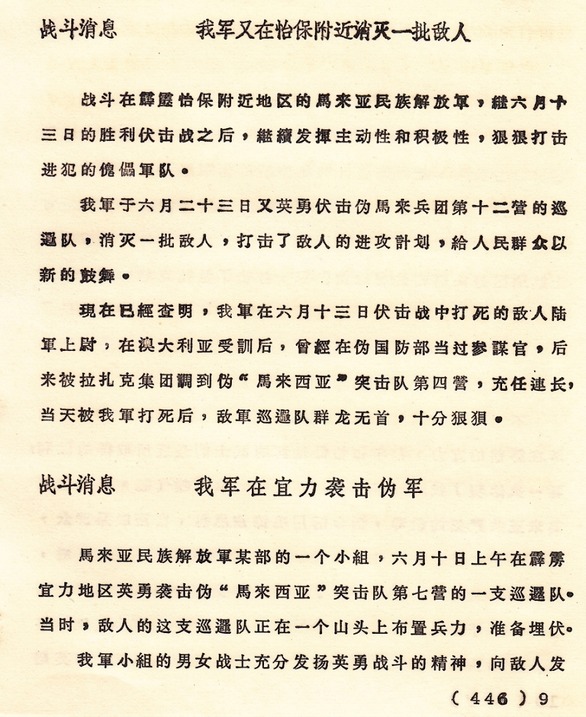
怡保(乌鲁近打)与宜力战斗(1971.6):马共在霹雳展开袭扰战:6月10日在宜力突袭突击队第七营;13日在怡保附近设伏击毙澳大利亚受训的突击队第四营连长钱德兰上尉(后追授SP勋章);23日再次设伏重创马来兵团第十二营。
历史定评:此战是第二次紧急状态期间著名的交火事件之一。The Ipoh (Ulu Kinta) & Gerik Engagements (1971.6): CPM forces launched raids in Perak: attacking the 7th Rangers in Gerik on the 10th; ambushing the 4th Rangers near Ipoh on the 13th, neutralizing the Australian-trained Captain Mohana Chandran (posthumously awarded the SP medal); and striking the 12th Malay Regiment on the 23rd.— 1971年6月《战斗消息》战报原件合辑 | MNLA Combat Bulletins on the June 1971 Perak Operations
Historical Assessment: This was one of the most significant clashes during the Second Emergency.