第22集:“五一三事件”的历史创伤、阶级本质与宫廷政变解密(1969年5月13日)
Episode 22: The May 13 Tragedy: Declassifying the FCO 24/484 Palace Coup, Class Contradictions, and Revolutionary Resilience
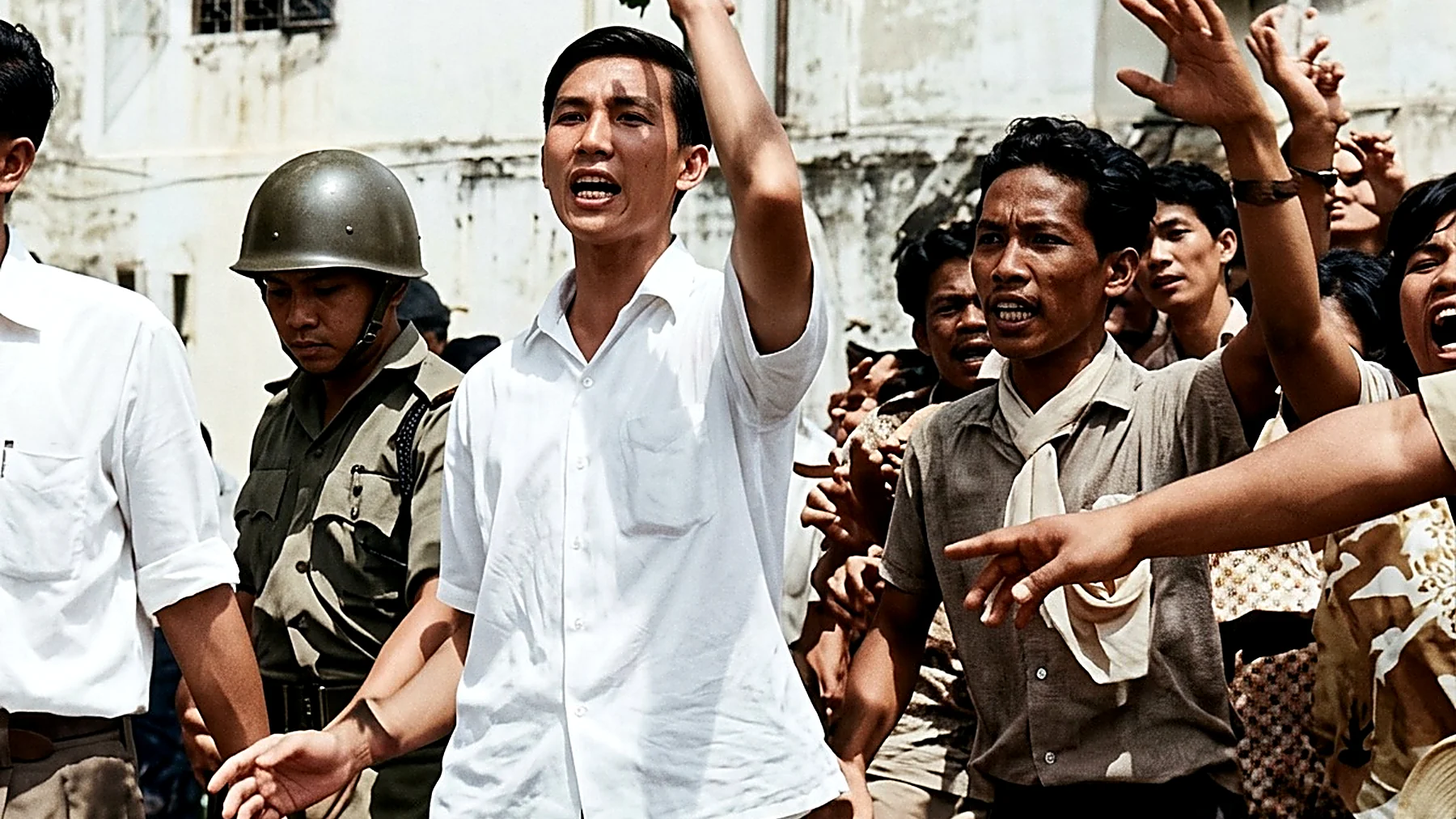
1969年5月13日,马来西亚首都吉隆坡爆发震惊世界的流血惨案。半个多世纪以来,官方话语始终将其定性为“底层族群自发冲突”与“华人自大引发马来人义愤”的虚伪神话,甚至荒谬地栽赃于马共煽动。然而,英国国家档案馆最新解密的外交与情报档案(FCO 24/484至487、SIFE绝密评估),与马共中央历史文献、战后经济解密资料相互印证,揭示出冷酷的历史真相:五一三惨案绝非不可控的种族仇杀,而是殖民地单一畸形经济破产、英镑贬值引发民生灾难的大背景下,巫统党内右翼少壮派借流血混乱推翻东姑阿都拉曼、建立军管独裁政权的“宫廷政变”。面对反动统治阶级以种族屠杀掩盖阶级矛盾的法西斯暴行,马共中央第一时间发表历史性正义宣言,戳穿谎言,号召各族工农结成反帝反殖民族统一战线;大批对议会民主彻底绝望的各族进步青年毅然奔赴泰南边陲丛林,使马来亚民族解放军核心力量激增至千人以上,形成了遏制法西斯反扑的坚强革命砥柱。
On May 13, 1969, horrific violence erupted in Kuala Lumpur. For decades, official state narratives framed the tragedy through communal mythologies of spontaneous ethnic rioting, while scapegoating communist agitators. However, declassified British Foreign and Commonwealth Office files (FCO 24/484 to 487) and Security Intelligence Far East (SIFE) assessments, corroborated by CPM Central Committee archival declarations and socioeconomic records, reveal a stark historical reality: the May 13 bloodshed was not an uncontrollable race riot, but an orchestrated 'palace coup' by UMNO right-wing ultras to sideline Prime Minister Tunku Abdul Rahman and impose authoritarian military rule amid the economic collapse of colonial commodity reliance and sterling devaluation. Confronting the reactionary regime's resort to racial terror to obscure class exploitation, the CPM Central Committee issued landmark declarations calling for multi-ethnic working-class unity against feudal-comprador tyranny. Shattered by state violence, hundreds of disillusioned progressive youths fled into the border jungles, swelling the ranks of the Malayan National Liberation Army (MNLA) into a formidable military deterrent that effectively curbed further fascist purges.
第一章:殖民遗产的破产与经济风暴:英镑贬值、物价飞涨与底层民众的抗争怒潮
Chapter 1: Bankruptcy of the Colonial Legacy : Sterling Devaluation, Soaring Inflation, and Grassroots Defiance
1969年5月13日爆发于马来西亚首都吉隆坡的血腥惨案,绝非孤立偶发的族群仇杀,而是大英帝国战后单一原料殖民地经济体制彻底破产与宗主国转嫁金融危机的必然产物。1960年代末,西方垄断资本大力推广廉价的人工合成橡胶与电解铝工业,国际市场上的天然橡胶与锡矿这两大马来西亚支柱初级出口商品价格发生了灾难性暴跌。这一重挫直接摧毁了马来乡村小农、割胶工,以及华印两族采矿工人与园丘劳工的生存根基,揭示出旧殖民地依赖型经济结构的深层脆弱性。
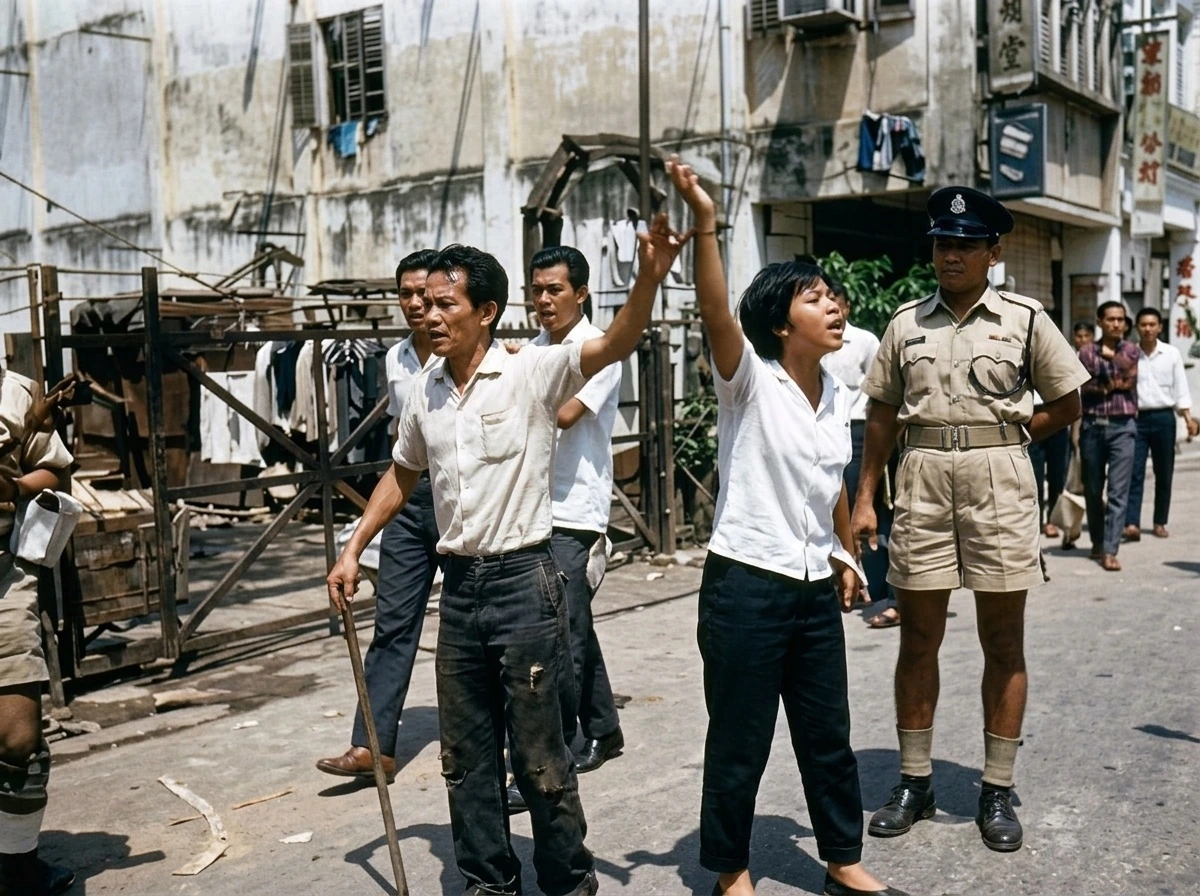
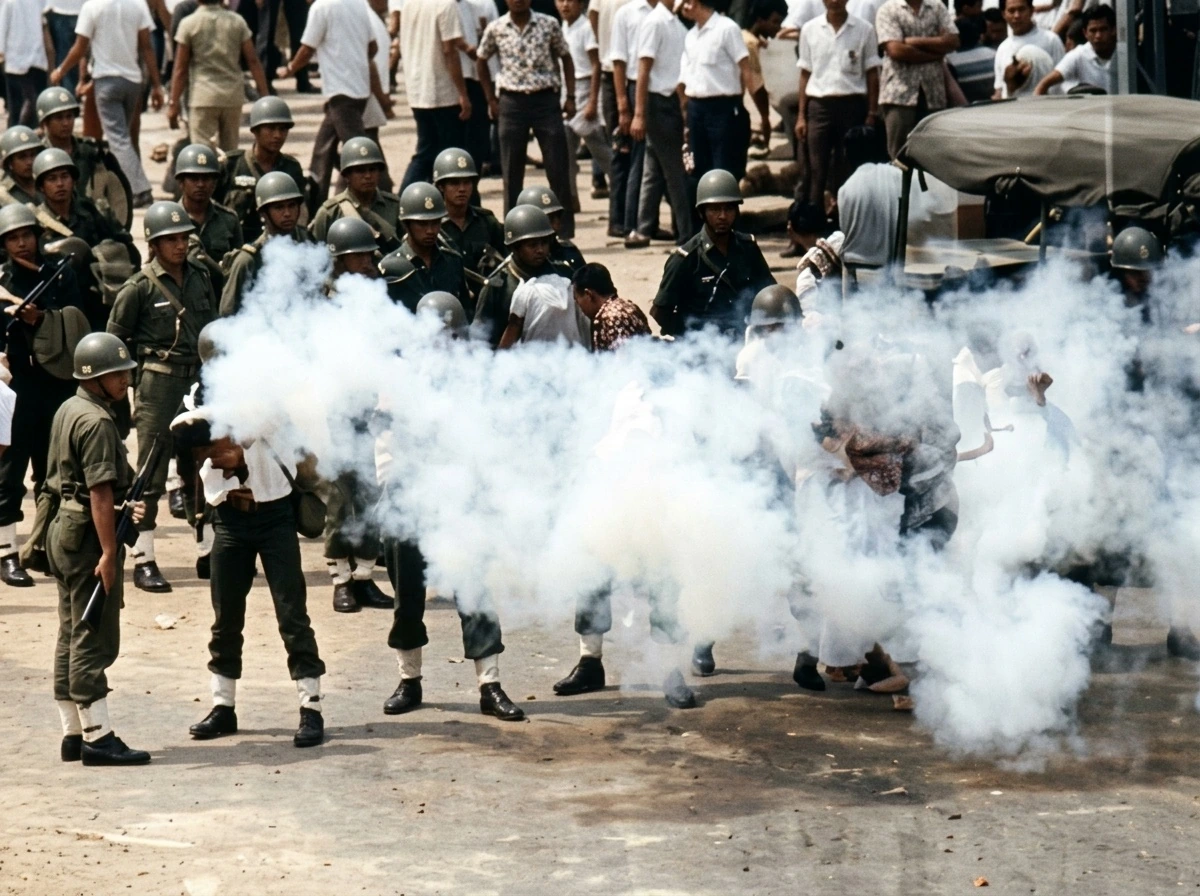
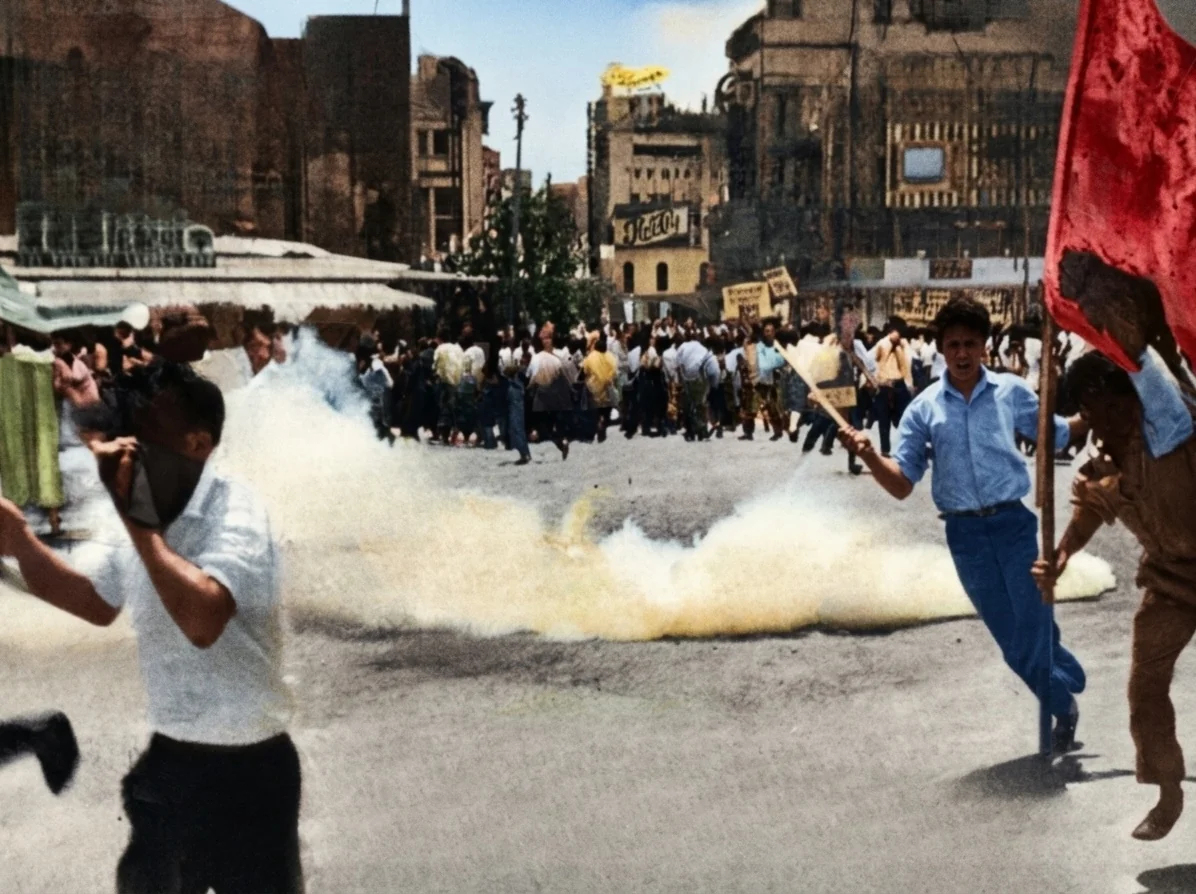
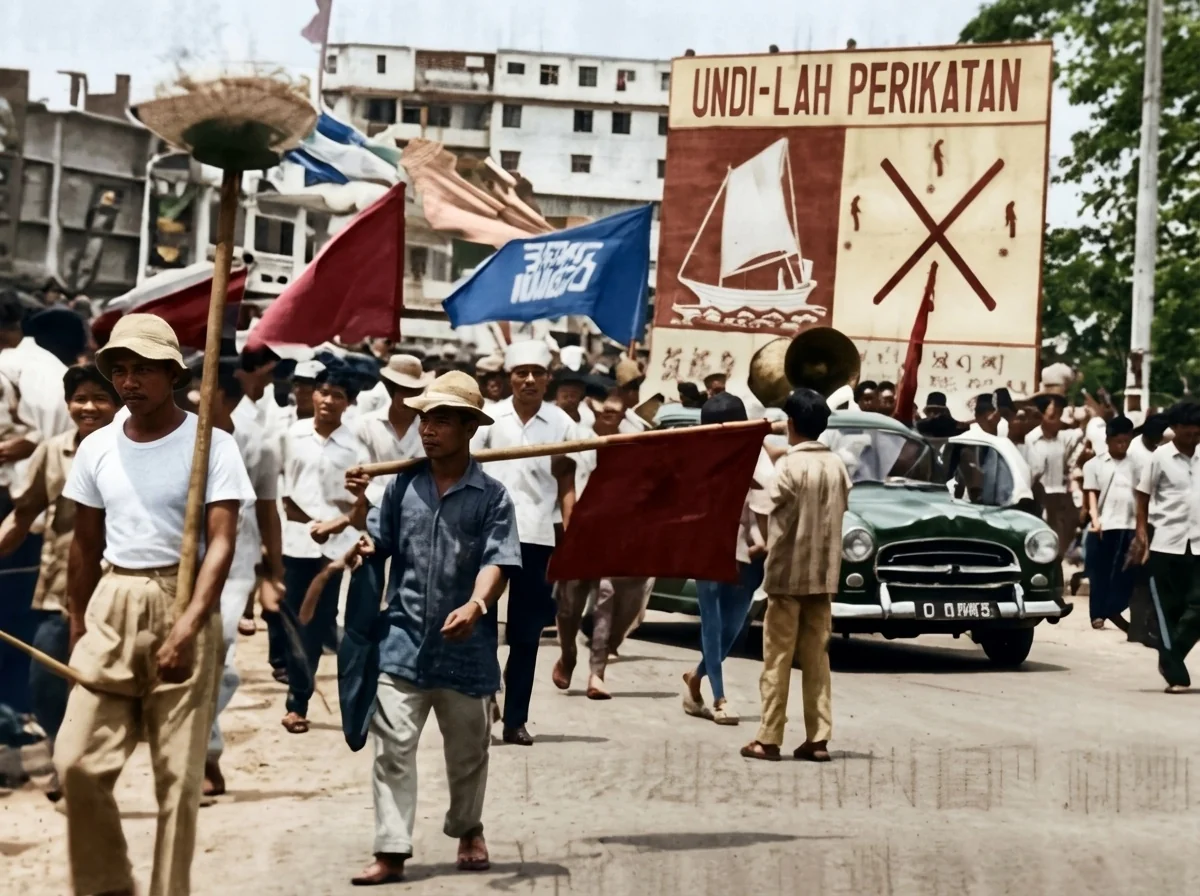
在此背景下,各族工农劳苦群众与进步青年率先在首都打响了反抗法西斯恶法的第一枪。1965年2月13日,为纪念社会主义阵线(社阵)领导人遭反动政权依据《国内安全法令》(ISA)无审讯长期关押两周年,吉隆坡爆发了震撼全马的数千人“人权日”示威。广大群众高呼“反帝、反高物价、释放政治犯”口号走上街头,冲破重重关卡包围美国新闻署(USIS)。面对反动军警防暴队施放催泪瓦斯的野蛮镇压,示威群众同仇敌忾、英勇抗争。这场“人权日”示威成为1960年代各族人民向反动军警统治发出的严正历史通牒,有力彰显了跨族群团结斗争的阶级觉醒。
雪上加霜的是英国宗主国金融危机的转嫁。1967年11月18日,深陷财政危机的英国工党政府悍然宣布英镑贬值14.3%,将汇率由1英镑兑2.80美元下调至2.40美元。唯伦敦马首是瞻的吉隆坡联盟买办政府机械跟进货币贬值,不仅直接削减了马来西亚与英镑挂钩的国家收入,更在毫无预警的情况下宣布由原殖民地货币委员会发行的旧版纸钞直接贬值14.3%。底层劳苦大众历经千辛万苦积攒的微薄血汗储蓄瞬间缩水蒸发,大米、白糖等生活必需品物价飞涨,而公务员与普通劳动者薪资却未获任何合理调整,阶级矛盾急剧激化。
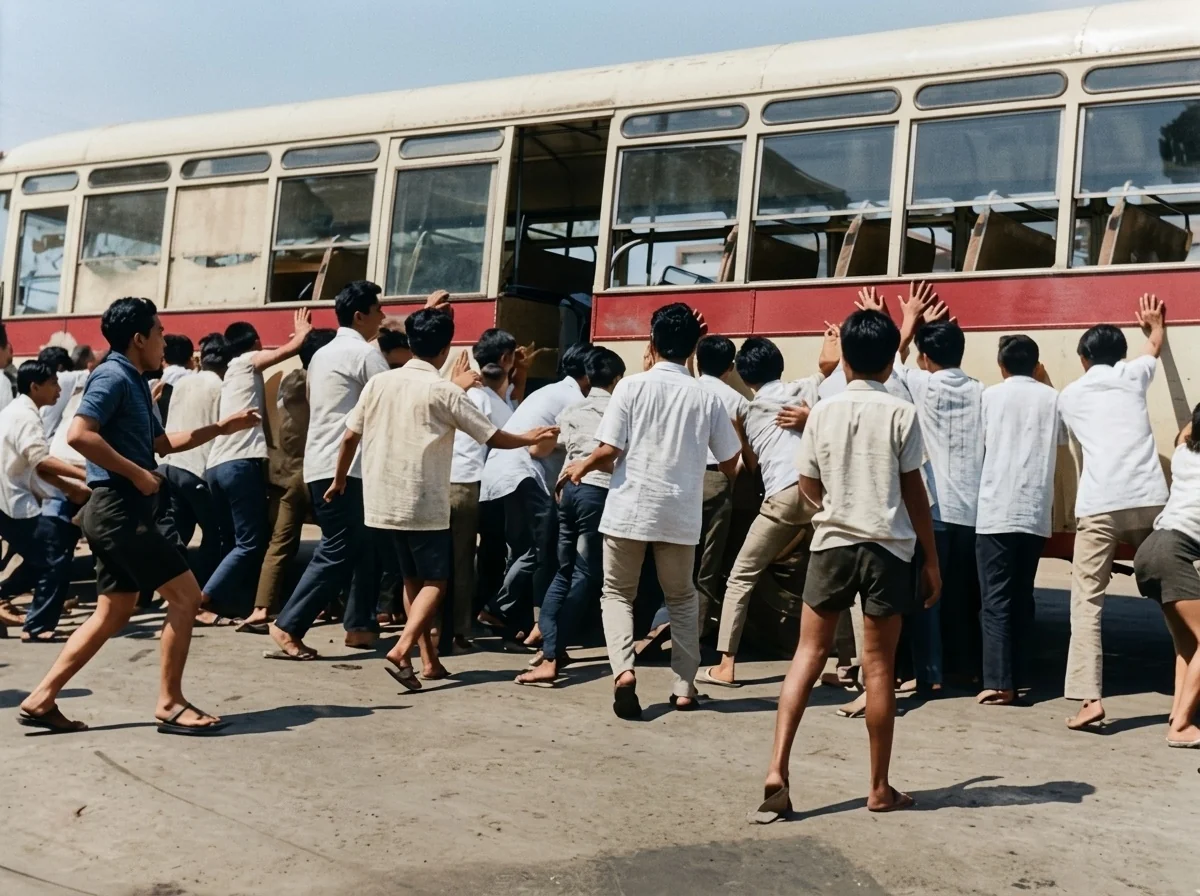
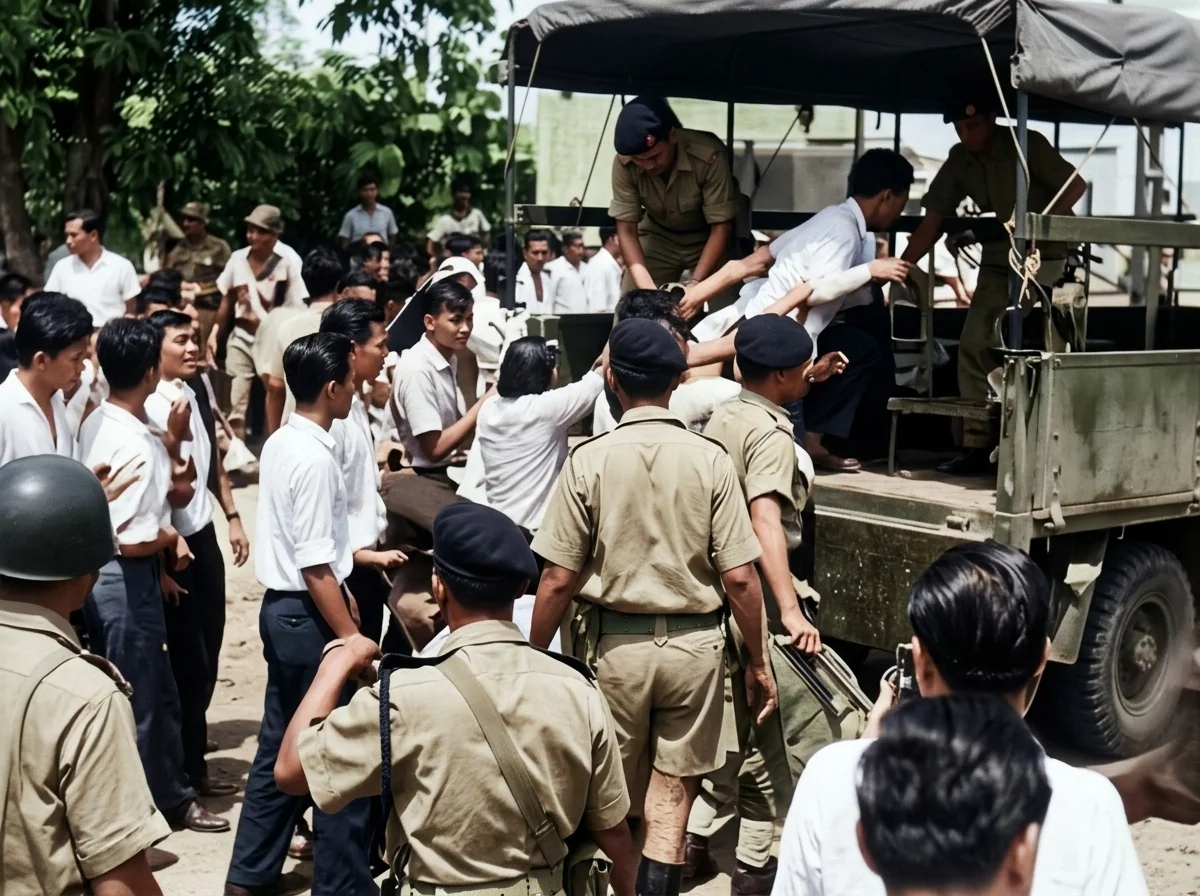
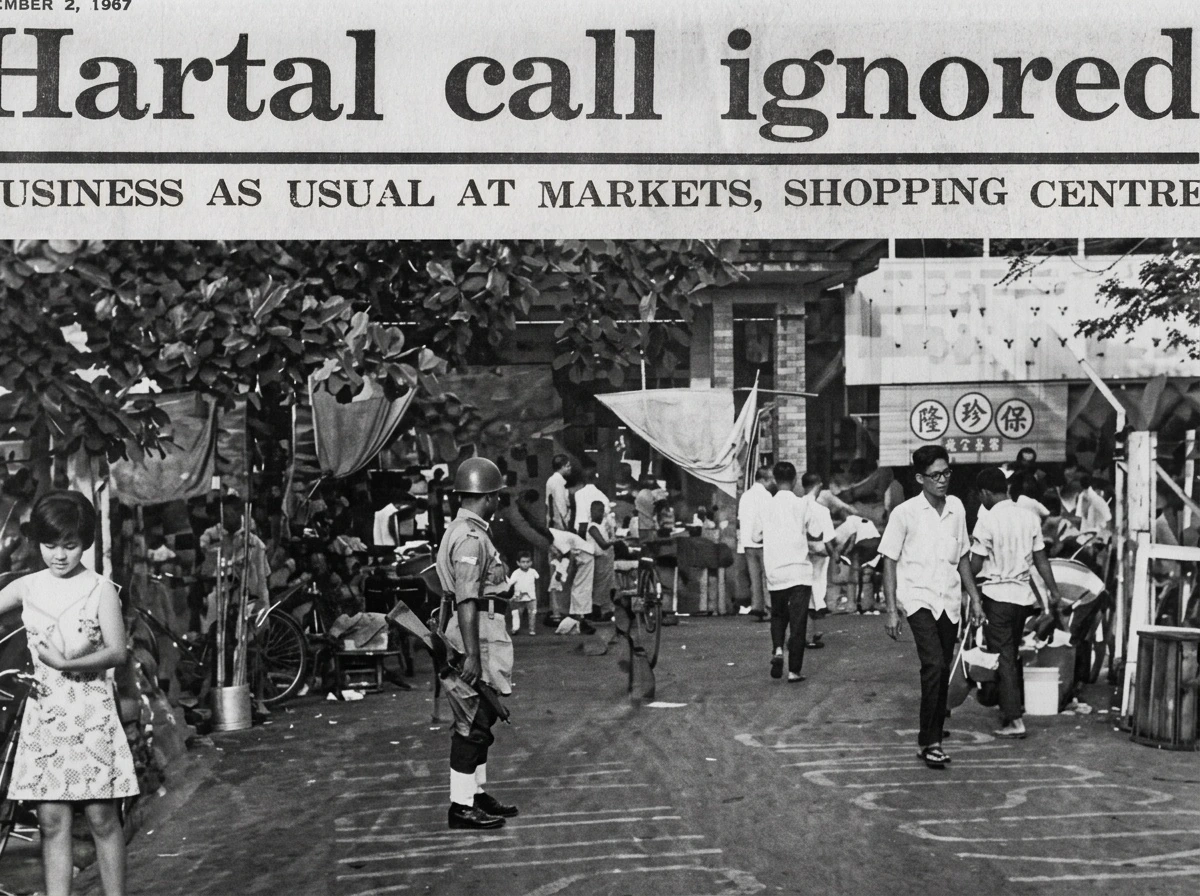
旧钞缩水与恶性通胀直接引爆了工人阶级的抗暴怒火。1967年11月24日,由马来亚劳工党与各大左翼工会联合发起的“槟城大罢市”(The Penang Hartal of 1967)轰轰烈烈爆发。全岛商铺紧闭,码头、工厂、市内交通全面瘫痪,工农各行业团结一致向反动经济政策发出严正怒吼。罢市初期完全和平有序,但吉隆坡反动政权为瓦解跨族群阶级团结,蓄意纵容巫统右翼打手挑衅滋事挑起流血事端,并借机宣布全岛紧急状态,调动皇家马来军团正规军与防暴装甲车进驻血腥镇压。反动官媒更倒打一耙,将工人阶级的反通胀斗争污蔑为“种族暴乱”。骚乱导致平民约26人死亡、128至131人受重伤。反动当局以此大肆搜捕左翼骨干,加速以族群对立消解跨族群阶级政治,成为一年半后五一三惨案的最直接预演。
行至1969年大选前夕,劳苦大众的怒火已不可遏制。4月18日前夕,雪隆、霹雳、柔佛等地相继散发出《全国行动日告全体工人书》《告公共汽车工人书》等秘密油印传单,一致要求在4月18日举行“各族总罢工”,并明确提出三大共同阶级诉求:减轻生活成本与提高工资、释放全体政治拘留者、恢复民主自由。山雨欲来风满楼,甚至连英国驻远东最高情报机构:远东安全情报局(Security Intelligence Far East,简称 SIFE),都在1969年4月的绝密情报评估报告中发出了极具历史深度的冷酷哀鸣:“我们的殖民遗产债已到期(Our colonial dues are due)。”
The May 13 bloodshed was not an isolated racial outburst, but the inevitable breakdown of Britain's exploitative single-commodity colonial economy and the dumping of imperial financial crises onto Malaya. By the late 1960s, Western synthetic rubber and aluminum industries caused catastrophic price collapses in Malaya's core exports—rubber and tin. This shattered the livelihood of rural Malay smallholders, rubber tappers, and Chinese/Indian tin miners and plantation laborers alike, exposing the structural vulnerability of the peripheral colonial economy.
Against this backdrop, the working masses and progressive youths in Kuala Lumpur spearheaded resistance against authoritarian laws. On February 13, 1965, marking the second anniversary of the arbitrary detention of Socialist Front leaders under the Internal Security Act (ISA), thousands gathered for the monumental 'Human Rights Day' demonstration. Marching through the capital chanting slogans such as 'Anti-Imperialism, Down with High Prices, Release Political Prisoners', crowds breached police cordons and encircled the United States Information Service (USIS) building. Despite tear gas barrages from paramilitary riot squads, demonstrators stood their ground. This 1965 confrontation represented a pivotal milestone in multi-ethnic grassroots resistance against state terror.
The economic vulnerability deepened on November 18, 1967, when the British Labour government unilaterally devalued the pound sterling by 14.3%, reducing its peg from US$2.80 to US$2.40. Subservient to London, the Alliance regime in Kuala Lumpur followed suit without notice, declaring that old currency notes issued by the Board of Commissioners of Currency Malaya would also lose 14.3% of their face value. Overnight, the meager life savings of ordinary workers, rubber tappers, and peasants evaporated, while prices of essential foodstuffs surged uncontrollably, drastically inflaming class tensions across the nation.
The currency devaluation and spiraling inflation ignited widespread working-class fury. On November 24, 1967, the Labour Party of Malaya and progressive trade unions launched the historic 'Penang Hartal'—one of the largest general strikes against colonial and comprador economic exploitation in post-war Malayan history. Commercial activities, ports, and transit across the island ground to a halt. While the general strike was entirely peaceful and orderly, the Alliance regime, desperate to neutralize cross-ethnic class solidarity, orchestrated provocations and declared a state of emergency, deploying regular army units and armored vehicles to brutally suppress the movement. State media inverted reality by framing the anti-inflation class action as a 'race riot'. The crackdown resulted in approximately 26 civilian deaths and over 128 severe casualties, serving as a chilling dress rehearsal for the May 13 bloodshed 18 months later.
By the eve of the 1969 election, working-class resistance reached a boiling point. On April 18, 1969, underground leaflets titled 'Manifesto to All Workers on National Action Day' and 'Letter to Bus Workers' circulated across Selangor, Perak, and Johor, calling for an all-ethnic general strike with three non-negotiable class demands: lowering living costs, releasing all political detainees, and restoring democratic freedoms. As early as April 1969, Britain's supreme intelligence agency in the region—the Security Intelligence Far East (SIFE)—concluded with ominous colonial foreboding: 'Our colonial dues are due.'
1969年5月13日爆发于马来西亚首都吉隆坡的血腥惨案,绝非孤立偶发的族群仇杀,而是大英帝国战后单一原料殖民地经济体制彻底破产与宗主国转嫁金融危机的必然产物。1960年代末,西方垄断资本大力推广廉价的人工合成橡胶与电解铝工业,国际市场上的天然橡胶与锡矿这两大马来西亚支柱初级出口商品价格发生了灾难性暴跌。这一重挫直接摧毁了马来乡村小农、割胶工,以及华印两族采矿工人与园丘劳工的生存根基,揭示出旧殖民地依赖型经济结构的深层脆弱性。
The May 13 bloodshed was not an isolated racial outburst, but the inevitable breakdown of Britain's exploitative single-commodity colonial economy and the dumping of imperial financial crises onto Malaya. By the late 1960s, Western synthetic rubber and aluminum industries caused catastrophic price collapses in Malaya's core exports—rubber and tin. This shattered the livelihood of rural Malay smallholders, rubber tappers, and Chinese/Indian tin miners and plantation laborers alike, exposing the structural vulnerability of the peripheral colonial economy.
“我们的殖民遗产债已到期。”'Our colonial dues are due.'— 英国远东安全情报局(SIFE)绝密情报评估报告(1969年4月) | UK Security Intelligence Far East (SIFE) Confidential Assessment (April 1969)
在此背景下,各族工农劳苦群众与进步青年率先在首都打响了反抗法西斯恶法的第一枪。1965年2月13日,为纪念社会主义阵线(社阵)领导人遭反动政权依据《国内安全法令》(ISA)无审讯长期关押两周年,吉隆坡爆发了震撼全马的数千人“人权日”示威。广大群众高呼“反帝、反高物价、释放政治犯”口号走上街头,冲破重重关卡包围美国新闻署(USIS)。面对反动军警防暴队施放催泪瓦斯的野蛮镇压,示威群众同仇敌忾、英勇抗争。这场“人权日”示威成为1960年代各族人民向反动军警统治发出的严正历史通牒,有力彰显了跨族群团结斗争的阶级觉醒。
Against this backdrop, the working masses and progressive youths in Kuala Lumpur spearheaded resistance against authoritarian laws. On February 13, 1965, marking the second anniversary of the arbitrary detention of Socialist Front leaders under the Internal Security Act (ISA), thousands gathered for the monumental 'Human Rights Day' demonstration. Marching through the capital chanting slogans such as 'Anti-Imperialism, Down with High Prices, Release Political Prisoners', crowds breached police cordons and encircled the United States Information Service (USIS) building. Despite tear gas barrages from paramilitary riot squads, demonstrators stood their ground. This 1965 confrontation represented a pivotal milestone in multi-ethnic grassroots resistance against state terror.
雪上加霜的是英国宗主国金融危机的转嫁。1967年11月18日,深陷财政危机的英国工党政府悍然宣布英镑贬值14.3%,将汇率由1英镑兑2.80美元下调至2.40美元。唯伦敦马首是瞻的吉隆坡联盟买办政府机械跟进货币贬值,不仅直接削减了马来西亚与英镑挂钩的国家收入,更在毫无预警的情况下宣布由原殖民地货币委员会发行的旧版纸钞直接贬值14.3%。底层劳苦大众历经千辛万苦积攒的微薄血汗储蓄瞬间缩水蒸发,大米、白糖等生活必需品物价飞涨,而公务员与普通劳动者薪资却未获任何合理调整,阶级矛盾急剧激化。
The economic vulnerability deepened on November 18, 1967, when the British Labour government unilaterally devalued the pound sterling by 14.3%, reducing its peg from US$2.80 to US$2.40. Subservient to London, the Alliance regime in Kuala Lumpur followed suit without notice, declaring that old currency notes issued by the Board of Commissioners of Currency Malaya would also lose 14.3% of their face value. Overnight, the meager life savings of ordinary workers, rubber tappers, and peasants evaporated, while prices of essential foodstuffs surged uncontrollably, drastically inflaming class tensions across the nation.
“1967年11月18日货币贬值:英国将汇率从1英镑兑2.80美元下调至2.40美元。英镑贬值直接削减了马来西亚与英镑挂钩的收入,通过固定汇率机制对马来西亚经济造成了冲击。吉隆坡联盟当局机械跟进并宣布旧钞贬值14.3%,底层劳苦大众血汗积蓄瞬间缩水蒸发,直接引爆了以槟城大罢市为代表的工农抗暴风潮。”'November 18, 1967 Devaluation: Britain lowered the exchange rate from US$2.80 to US$2.40 per pound sterling. Devaluation directly slashed Malaysia\'s sterling-linked revenue. The Alliance regime mechanically followed suit, declaring old dollar notes devalued by 14.3%, triggering massive working-class strikes like the Penang Hartal.'— 1967年11月18日英镑与马来西亚货币贬值风暴历史文献档案 | Historical Archival Dossier on the 1967 Sterling and Malayan Dollar Devaluation Crisis
旧钞缩水与恶性通胀直接引爆了工人阶级的抗暴怒火。1967年11月24日,由马来亚劳工党与各大左翼工会联合发起的“槟城大罢市”(The Penang Hartal of 1967)轰轰烈烈爆发。全岛商铺紧闭,码头、工厂、市内交通全面瘫痪,工农各行业团结一致向反动经济政策发出严正怒吼。罢市初期完全和平有序,但吉隆坡反动政权为瓦解跨族群阶级团结,蓄意纵容巫统右翼打手挑衅滋事挑起流血事端,并借机宣布全岛紧急状态,调动皇家马来军团正规军与防暴装甲车进驻血腥镇压。反动官媒更倒打一耙,将工人阶级的反通胀斗争污蔑为“种族暴乱”。骚乱导致平民约26人死亡、128至131人受重伤。反动当局以此大肆搜捕左翼骨干,加速以族群对立消解跨族群阶级政治,成为一年半后五一三惨案的最直接预演。
The currency devaluation and spiraling inflation ignited widespread working-class fury. On November 24, 1967, the Labour Party of Malaya and progressive trade unions launched the historic 'Penang Hartal'—one of the largest general strikes against colonial and comprador economic exploitation in post-war Malayan history. Commercial activities, ports, and transit across the island ground to a halt. While the general strike was entirely peaceful and orderly, the Alliance regime, desperate to neutralize cross-ethnic class solidarity, orchestrated provocations and declared a state of emergency, deploying regular army units and armored vehicles to brutally suppress the movement. State media inverted reality by framing the anti-inflation class action as a 'race riot'. The crackdown resulted in approximately 26 civilian deaths and over 128 severe casualties, serving as a chilling dress rehearsal for the May 13 bloodshed 18 months later.
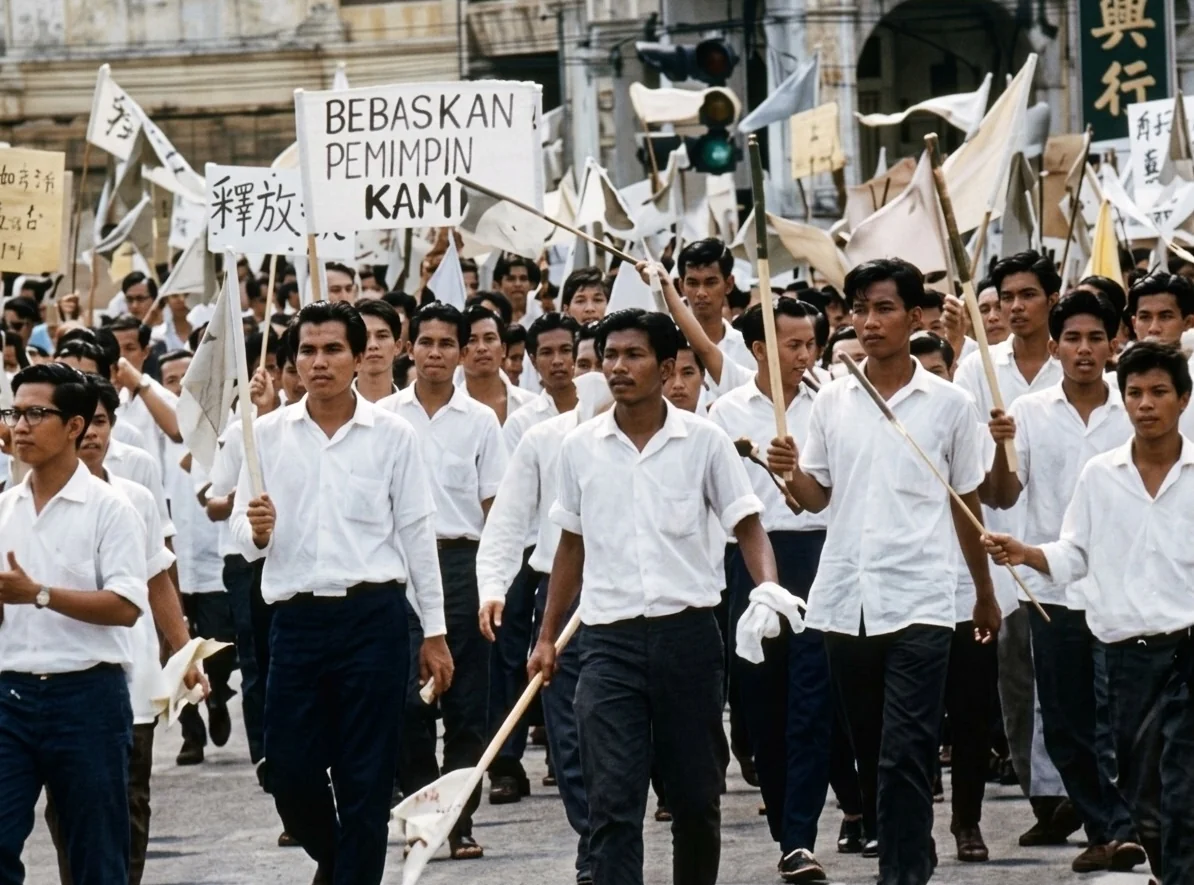
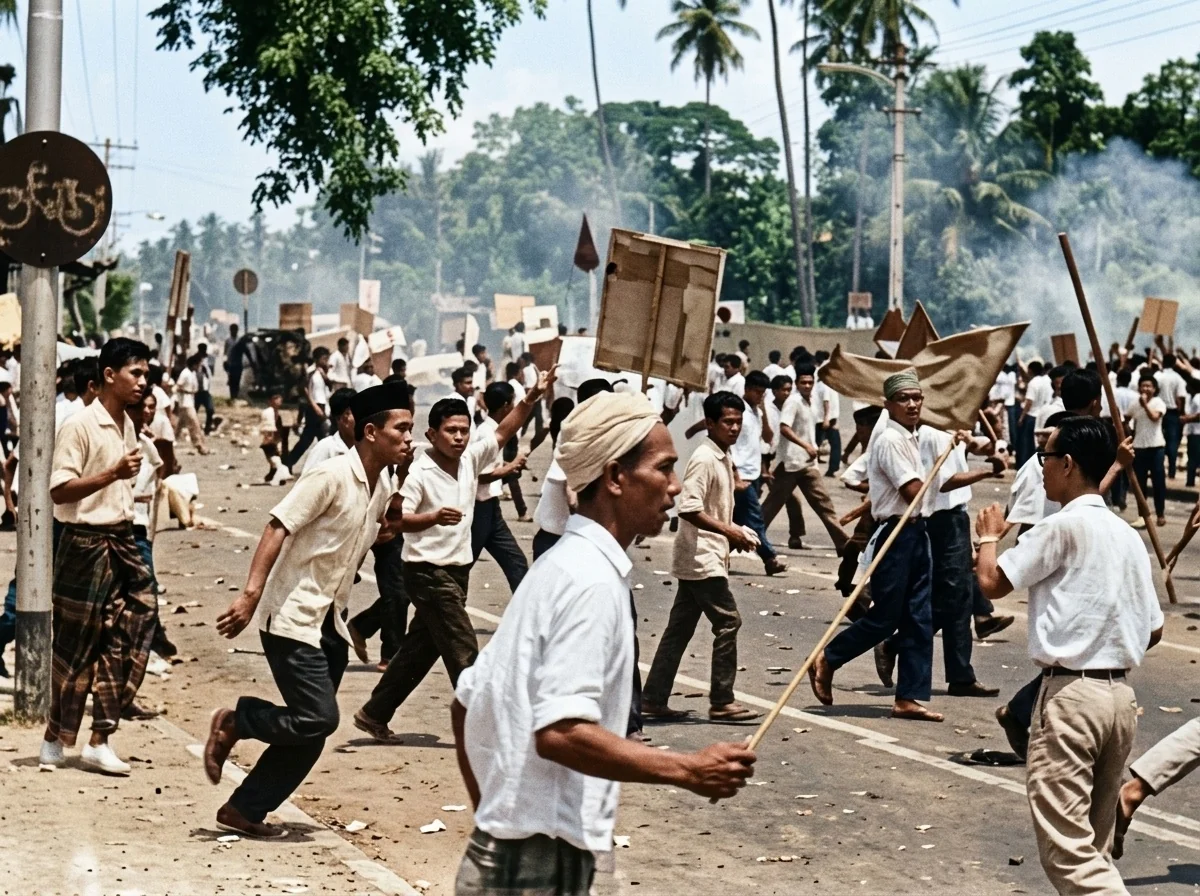
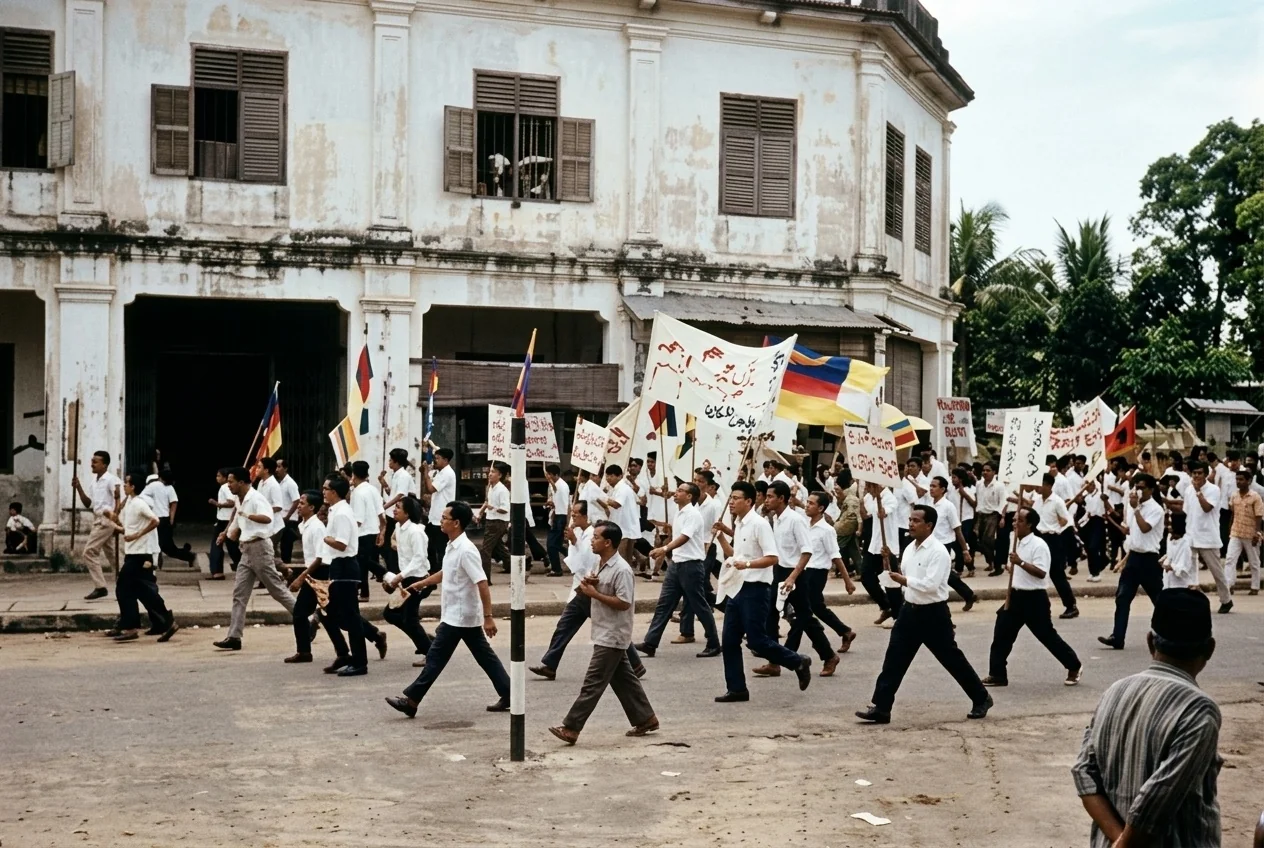
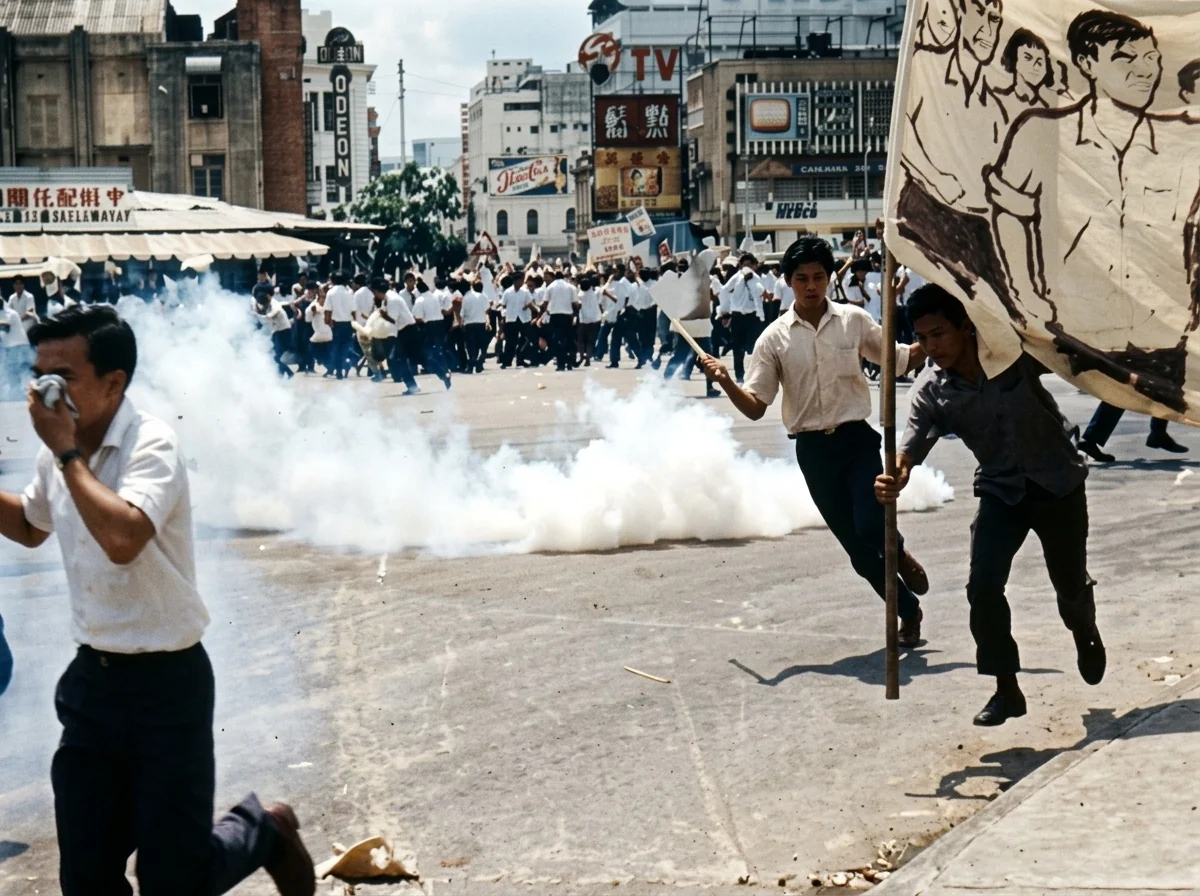
行至1969年大选前夕,劳苦大众的怒火已不可遏制。4月18日前夕,雪隆、霹雳、柔佛等地相继散发出《全国行动日告全体工人书》《告公共汽车工人书》等秘密油印传单,一致要求在4月18日举行“各族总罢工”,并明确提出三大共同阶级诉求:减轻生活成本与提高工资、释放全体政治拘留者、恢复民主自由。山雨欲来风满楼,甚至连英国驻远东最高情报机构:远东安全情报局(Security Intelligence Far East,简称 SIFE),都在1969年4月的绝密情报评估报告中发出了极具历史深度的冷酷哀鸣:“我们的殖民遗产债已到期(Our colonial dues are due)。”
By the eve of the 1969 election, working-class resistance reached a boiling point. On April 18, 1969, underground leaflets titled 'Manifesto to All Workers on National Action Day' and 'Letter to Bus Workers' circulated across Selangor, Perak, and Johor, calling for an all-ethnic general strike with three non-negotiable class demands: lowering living costs, releasing all political detainees, and restoring democratic freedoms. As early as April 1969, Britain's supreme intelligence agency in the region—the Security Intelligence Far East (SIFE)—concluded with ominous colonial foreboding: 'Our colonial dues are due.'
第二章:大选前夜的血色序曲:林顺成烈士殉难与苏丹街三万市民出殡怒潮
Chapter 2: Bloody Prelude to the Polls : The Martyrdom of Lim Soon Seng and the Sultan Street Mass Funeral
随着工农阶级抗争的激化,执政联盟的统治基础发生剧烈动摇,其应对之策唯有依赖更为凶残的法西斯白色恐怖。自1960年代中期起,吉隆坡当局借助英国殖民者炮制的《国内安全法令》(ISA),对全国进步在野党实施灭绝性围剿。马来亚劳工党(Labour Party of Malaya)与社会主义阵线的成百上千名民选国会议员、州议员、干部及基层工会领袖遭到无审讯长期拘禁,数十处支部被军警野蛮捣毁。面对这一被军警特务彻底操控的伪民主体制,马来亚劳工党中央委员会经过极其严谨的阶级分析,作出了具有里程碑意义的历史抉择:拒绝充当反动独裁体制的议会花瓶,于1969年初断然宣布全面抵制(杯葛)第三届全国大选,将斗争主力由虚伪的议会清谈全面转移至群众街头斗争。
大选前夕的吉隆坡,白色恐怖密布。1969年5月4日清晨,年仅二十四岁的劳工党青年党员林顺成,在吉隆坡甲洞街头张贴抗议伪选举、号召广大选民共同“杯葛大选”的宣传标语。一队荷枪实弹的巡逻警察突然逼近。在林顺成手无寸铁、未构成任何威胁的情况下,冷血警员竟毫无预警地直接拔枪射击!林顺成当场重伤倒卧在血泊之中,送往吉隆坡中央医院后不治牺牲。反动当局企图以“抗捕自卫”草草掩盖这起光天化日之下的国家谋杀,但这声罪恶的枪响,彻底引爆了全马积压已久的阶级怒潮。
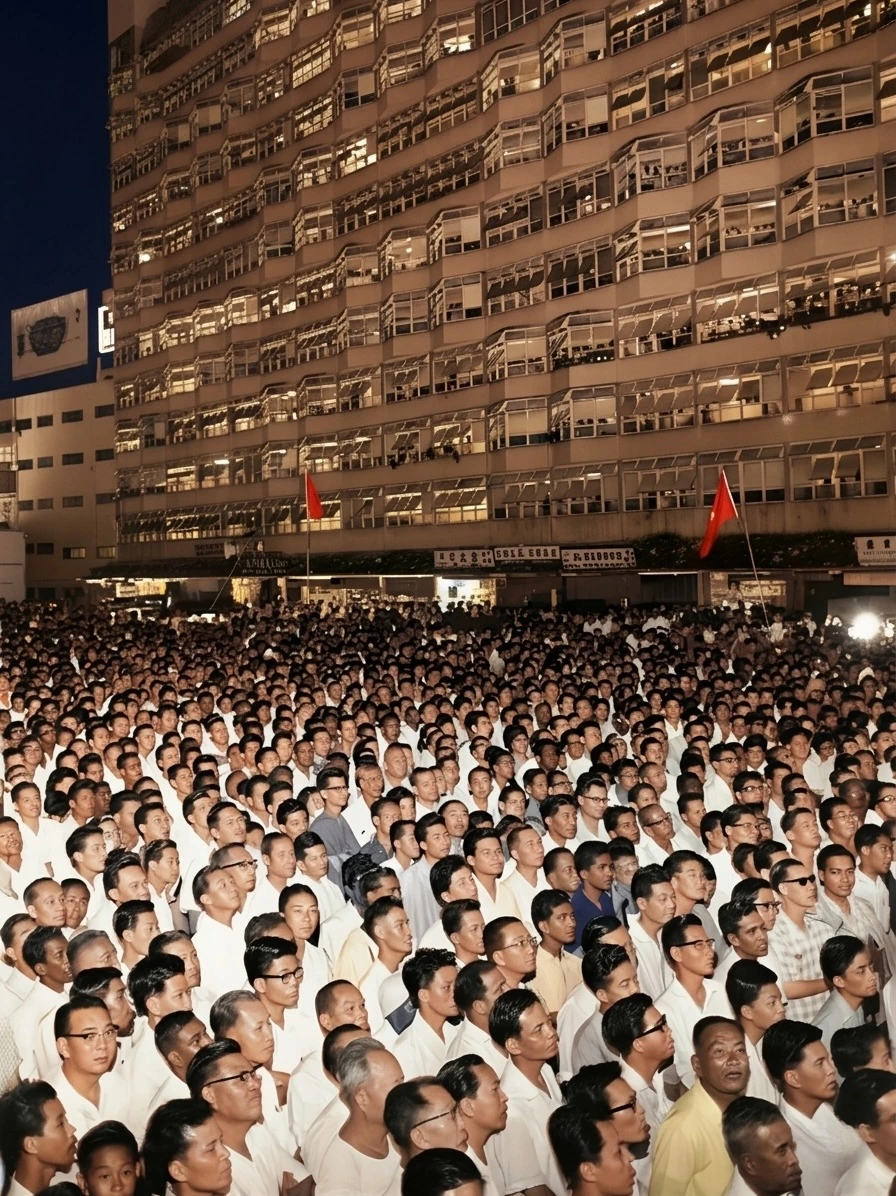
1969年5月9日,即全国大选投票前二十四小时,一场马来亚现代史上规模罕见的反迫害群众出殡游行震撼爆发。清晨,林顺成烈士的灵柩自吉隆坡苏丹街积善堂缓缓启灵。来自雪隆、森美兰、霹雳乃至全马各地的三万余名工农劳苦群众、青年学生与社会各界进步人士自发走上街头,组成绵延数里的出殡长阵。送葬队伍沿途高唱革命歌曲,挥舞白花、挽联与写有“血债血偿”的标语,严正声讨反动政权草菅人命的法西斯暴行。队伍在高度自律中穿过吉隆坡市中心,沿途数万市民驻足肃立致哀。这场三万人排山倒海般的大出殡,不仅是对死难烈士的深切哀悼,更是各族被压迫人民向反动军警统治发出的严正历史通牒,成为五一三前夕局势升级的决定性转折点。
As working-class defiance intensified, the ruling Alliance regime resorted to escalating fascist state terror. From the mid-1960s, Kuala Lumpur deployed the draconian Internal Security Act (ISA) to execute a decapitation campaign against progressive political organizations. Hundreds of elected parliamentarians, state assemblymen, and union cadres of the Labour Party of Malaya and the Socialist Front were subjected to indefinite detention without trial, while dozens of party branches were raided and shut. Confronting a sham constitutional facade orchestrated by security forces, the Labour Party made a historic decision in early 1969: refusing to legitimize authoritarian rule, it announced a complete boycott of the 3rd General Election, shifting its strategic center of gravity from parliamentary compromise to militant mass street action.
Tensions peaked dramatically on the eve of the election. At dawn on May 4, 1969, twenty-four-year-old Labour Party youth activist Lim Soon Seng was putting up 'Boycott the Election' placards along the streets of Kepong, Kuala Lumpur. An armed police patrol intercepted him. Although unarmed and posing no physical threat, an officer fired point-blank into his chest. Lim collapsed in a pool of blood and succumbed to his wounds at Kuala Lumpur General Hospital. State authorities attempted to cover up the extrajudicial killing as 'self-defense in resisting arrest', but this murder ignited uncontrollable public fury across the peninsula.
On May 9, 1969, barely twenty-four hours before polling, an unprecedented mass funeral procession paralyzed the federal capital. At dawn, Lim Soon Seng's casket departed from the Ji Shan Tang mortuary on Sultan Street. Over 30,000 workers, peasants, students, and citizens converged from across Selangor, Perak, and Negeri Sembilan to form a funeral cortège stretching several miles. Chanting revolutionary hymns and carrying banners reading 'Blood Debts Must Be Repaid', the marchers demonstrated formidable working-class discipline as tens of thousands of city residents lined the streets in solemn solidarity. This outpouring was not merely a farewell to a fallen youth, but an indictment of state violence and a decisive turning point escalating the pre-election crisis.
随着工农阶级抗争的激化,执政联盟的统治基础发生剧烈动摇,其应对之策唯有依赖更为凶残的法西斯白色恐怖。自1960年代中期起,吉隆坡当局借助英国殖民者炮制的《国内安全法令》(ISA),对全国进步在野党实施灭绝性围剿。马来亚劳工党(Labour Party of Malaya)与社会主义阵线的成百上千名民选国会议员、州议员、干部及基层工会领袖遭到无审讯长期拘禁,数十处支部被军警野蛮捣毁。面对这一被军警特务彻底操控的伪民主体制,马来亚劳工党中央委员会经过极其严谨的阶级分析,作出了具有里程碑意义的历史抉择:拒绝充当反动独裁体制的议会花瓶,于1969年初断然宣布全面抵制(杯葛)第三届全国大选,将斗争主力由虚伪的议会清谈全面转移至群众街头斗争。
As working-class defiance intensified, the ruling Alliance regime resorted to escalating fascist state terror. From the mid-1960s, Kuala Lumpur deployed the draconian Internal Security Act (ISA) to execute a decapitation campaign against progressive political organizations. Hundreds of elected parliamentarians, state assemblymen, and union cadres of the Labour Party of Malaya and the Socialist Front were subjected to indefinite detention without trial, while dozens of party branches were raided and shut. Confronting a sham constitutional facade orchestrated by security forces, the Labour Party made a historic decision in early 1969: refusing to legitimize authoritarian rule, it announced a complete boycott of the 3rd General Election, shifting its strategic center of gravity from parliamentary compromise to militant mass street action.
“伪议会民主不过是披着‘普选’外衣的法西斯独裁花瓶。在成百上千工运领袖被囚于内安法令铁窗之下、人民集会结社权利被剥夺殆尽的今天,参加伪大选就是出卖人民利益!全马各民族劳动人民看清了,唯有走出议会迷宫,走群众街头抗暴斗争道路,人民才能争得真正的生存与自由!”Sham parliamentary democracy is merely a fascist vase draped in 'universal suffrage'. With hundreds of trade union leaders and cadres imprisoned without trial under the ISA and civil liberties trampled, participating in these sham elections is a betrayal of the people. Working people of all nationalities see clearly: only by breaking out of the parliamentary labyrinth and taking the road of mass resistance can genuine freedom be won!— 马来亚劳工党中央委员会《坚决抵制第三届伪全国大选宣言》 | Labour Party of Malaya Central Committee Manifesto on Boycotting the 3rd Sham General Election
大选前夕的吉隆坡,白色恐怖密布。1969年5月4日清晨,年仅二十四岁的劳工党青年党员林顺成,在吉隆坡甲洞街头张贴抗议伪选举、号召广大选民共同“杯葛大选”的宣传标语。一队荷枪实弹的巡逻警察突然逼近。在林顺成手无寸铁、未构成任何威胁的情况下,冷血警员竟毫无预警地直接拔枪射击!林顺成当场重伤倒卧在血泊之中,送往吉隆坡中央医院后不治牺牲。反动当局企图以“抗捕自卫”草草掩盖这起光天化日之下的国家谋杀,但这声罪恶的枪响,彻底引爆了全马积压已久的阶级怒潮。
1969年5月9日,即全国大选投票前二十四小时,一场马来亚现代史上规模罕见的反迫害群众出殡游行震撼爆发。清晨,林顺成烈士的灵柩自吉隆坡苏丹街积善堂缓缓启灵。来自雪隆、森美兰、霹雳乃至全马各地的三万余名工农劳苦群众、青年学生与社会各界进步人士自发走上街头,组成绵延数里的出殡长阵。送葬队伍沿途高唱革命歌曲,挥舞白花、挽联与写有“血债血偿”的标语,严正声讨反动政权草菅人命的法西斯暴行。队伍在高度自律中穿过吉隆坡市中心,沿途数万市民驻足肃立致哀。这场三万人排山倒海般的大出殡,不仅是对死难烈士的深切哀悼,更是各族被压迫人民向反动军警统治发出的严正历史通牒,成为五一三前夕局势升级的决定性转折点。
Tensions peaked dramatically on the eve of the election. At dawn on May 4, 1969, twenty-four-year-old Labour Party youth activist Lim Soon Seng was putting up 'Boycott the Election' placards along the streets of Kepong, Kuala Lumpur. An armed police patrol intercepted him. Although unarmed and posing no physical threat, an officer fired point-blank into his chest. Lim collapsed in a pool of blood and succumbed to his wounds at Kuala Lumpur General Hospital. State authorities attempted to cover up the extrajudicial killing as 'self-defense in resisting arrest', but this murder ignited uncontrollable public fury across the peninsula.
On May 9, 1969, barely twenty-four hours before polling, an unprecedented mass funeral procession paralyzed the federal capital. At dawn, Lim Soon Seng's casket departed from the Ji Shan Tang mortuary on Sultan Street. Over 30,000 workers, peasants, students, and citizens converged from across Selangor, Perak, and Negeri Sembilan to form a funeral cortège stretching several miles. Chanting revolutionary hymns and carrying banners reading 'Blood Debts Must Be Repaid', the marchers demonstrated formidable working-class discipline as tens of thousands of city residents lined the streets in solemn solidarity. This outpouring was not merely a farewell to a fallen youth, but an indictment of state violence and a decisive turning point escalating the pre-election crisis.
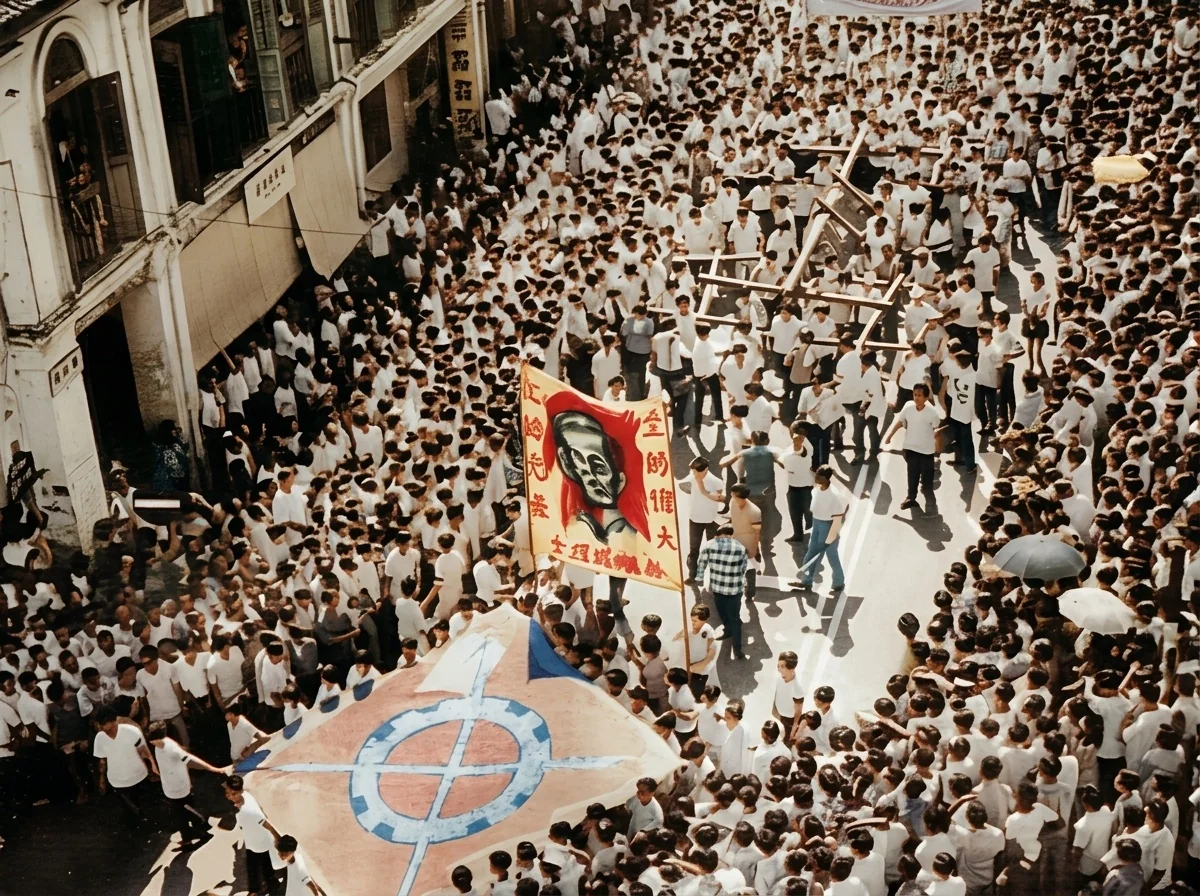
【档案实录】1969年5月9日吉隆坡苏丹街三万人大出殡现场核心标语:
- “人民英雄林顺成烈士永垂不朽!”
- “血债必须血还!严厉谴责反动军警野蛮谋杀!”
- “坚决杯葛伪大选!决不充当反动派议会花瓶!”
- “释放所有政治拘留者!废除法西斯内安法!”Archival Slogans and Banners from the May 9, 1969 Sultan Street Funeral Procession:— 1969年5月9日吉隆坡苏丹街三万人出殡历史实照横幅与治丧委员会传单档案 | Original Banners and Funeral Committee Archival Leaflets, Jalan Sultan, May 9, 1969
- 'Eternal Glory to Martyr Lim Soon Seng!'
- 'Blood Debts Must Be Repaid in Blood! Condemn the Police Murder!'
- 'Boycott the Sham Elections! Never Serve as Decorative Vases for Reactionaries!'
- 'Release All Political Detainees! Abolish the Fascist ISA!'
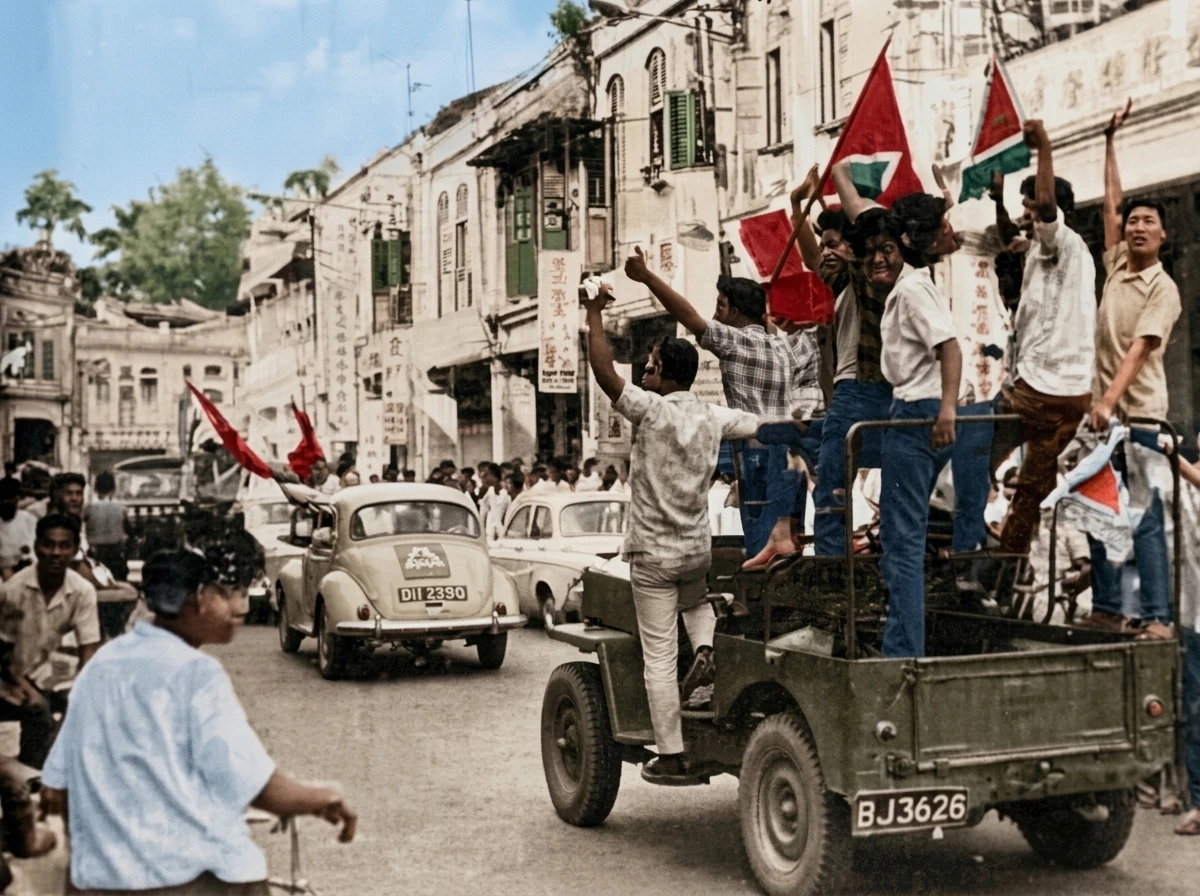
第三章:1969大选地震与少壮派绝望反扑:从哈伦官邸到甘榜峇鲁的暴民集结
Chapter 3: The 1969 Electoral Earthquake and Hardliner Retaliation : Mobilization from Harun's Compound to Kampung Baru
1969年5月10日,第三届全国大选投票结果揭晓,全马政局爆发了建国以来最剧烈的政治大地震。在劳工党坚决杯葛的强大号召与广大选民对联盟买办反动政策的极度唾弃下,执政联盟在马来半岛仅斩获48.5%的普选得票率,在历史上首次彻底丧失了赖以维持修宪独裁统治的国会三分之二绝对多数!更具决定性的是在全国政治与经济心脏雪兰莪州,联盟遭遇空前惨败,仅得14席,与民主行动党(DAP)及民政党(Gerakan)等反对党斩获的14席战成均势,长期垄断雪州政权的巫统封建特权派瞬间面临失去州政权的灭顶之灾;而在槟城,在野党更是以压倒性优势彻底击垮买办马华公会,夺取槟州执政权。
面对这一断崖式的统治崩溃,习惯于特权垄断的巫统封建买办权贵陷入了绝望的歇斯底里。5月11日与12日,赢得议席的在野党支持者在吉隆坡街头举行了庆祝游行。尽管绝大多数集会维持和平克制,但在巫统党内右翼少壮派的极端政治操弄下,在野党的欢庆游行被官控宣传机器全盘扭曲为“华人对马来政治统治地位的公开羞辱与夺权挑战”。一个借用种族极端主义煽动仇杀、强行推翻合法民主选举结果并借机肃清党内温和派的血腥反扑阴谋,在吉隆坡巫统高层官邸内秘密出笼。
5月13日下午,雪兰莪州务大臣哈伦·宾·依德里斯(Harun bin Idris)在甘榜峇鲁的官邸,成为了这场血腥阴谋的动员中枢。数以千计从雪州乡镇及外州由卡车有组织运送而来的极端青年聚集在官邸院落内外。英国国家档案馆解密外交与情报档案(FCO 24/484至487)铁证如山地记录:这些暴民手持巴冷刀、长矛等凶器,头系红布条,现场充斥着狂热的煽动性演讲。更令人触目惊心的是,英国外交电报一针见血地指出,守卫在主要交通要道的吉隆坡军警,对满载武装暴民呼啸而过的卡车车队“故意睁一只眼闭一只眼(turning a blind eye)”,予以全面放行与纵容,显示出统治集团内部强硬派策动暴力、以此为借口夺取国家最高统治权力的险恶预谋。
On May 10, 1969, the results of the 3rd General Election triggered a profound political earthquake. Propelled by the Labour Party's boycott and massive grassroots repudiation of Alliance policies, the ruling coalition secured only 48.5% of the popular vote in Peninsular Malaysia, losing its crucial two-thirds parliamentary majority for the first time in history. Crucially, in Selangor: the nation's political and economic heartland: the Alliance suffered catastrophic losses, winning only 14 of 28 state seats, deadlocking with the opposition DAP and Gerakan and threatening to strip UMNO elites of control over the state government. In Penang, opposition forces swept into power, obliterating the comprador MCA.
Faced with an unprecedented collapse of their monopoly, conservative UMNO elites reacted with hysteria. On May 11 and 12, opposition supporters held celebratory processions in Kuala Lumpur. While the vast majority were peaceful, state-controlled propaganda and right-wing ultra networks systematically framed these celebrations as 'deliberate provocations to humiliate Malay political sovereignty'. A calculated conspiracy to incite communal bloodshed, nullify democratic election outcomes, and purge party moderates was orchestrated behind closed doors.
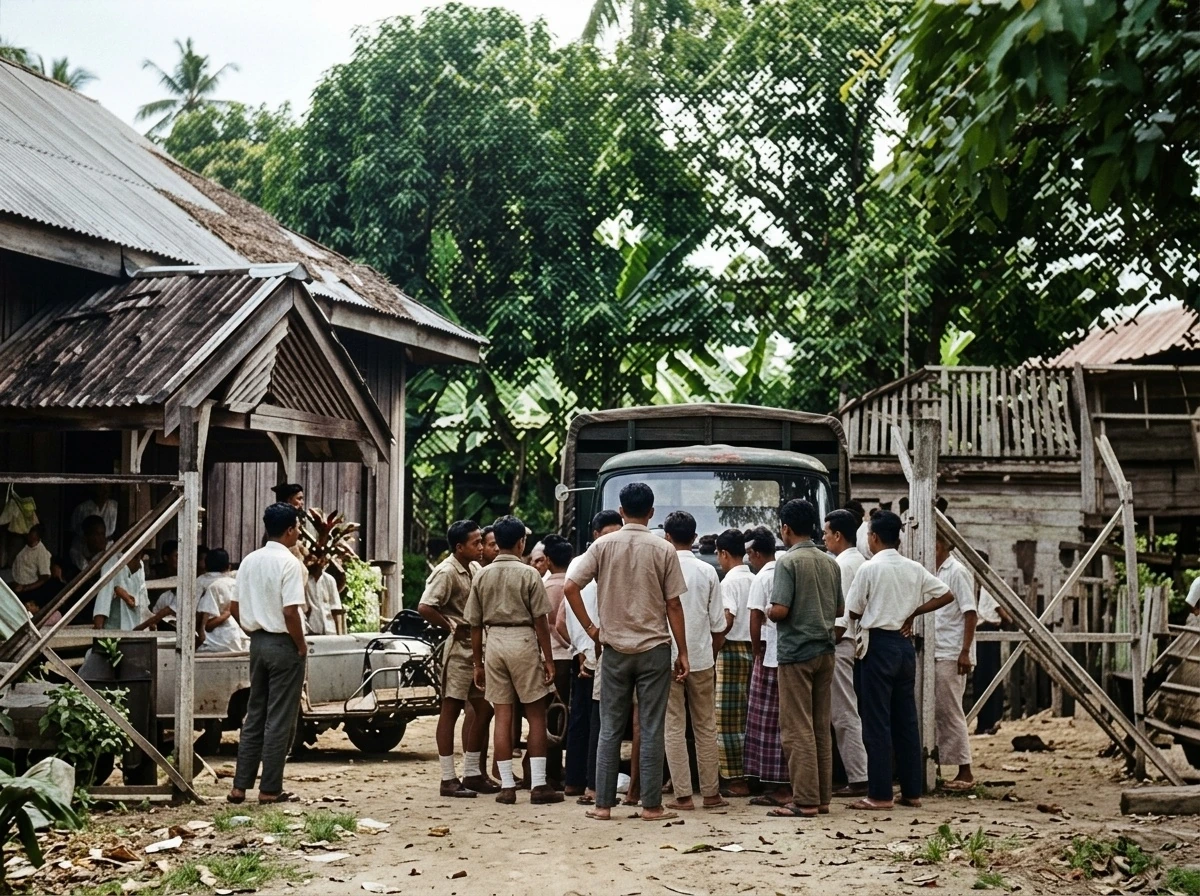
By the afternoon of May 13, the official residence of Selangor Menteri Besar Harun bin Idris in Kampung Baru became the operational epicenter of this violent mobilization. Thousands of rural youths, organized and transported in lorries from outlying towns, converged on Harun's compound armed with parangs and spears. Declassified British Foreign Office files (FCO 24/484 to 487) provide damning proof: British diplomatic cables explicitly criticized the police and military checkpoints for 'turning a blind eye' to the influx of armed convoys, directly facilitating the imminent explosion of violence to justify an authoritarian takeover.
1969年5月10日,第三届全国大选投票结果揭晓,全马政局爆发了建国以来最剧烈的政治大地震。在劳工党坚决杯葛的强大号召与广大选民对联盟买办反动政策的极度唾弃下,执政联盟在马来半岛仅斩获48.5%的普选得票率,在历史上首次彻底丧失了赖以维持修宪独裁统治的国会三分之二绝对多数!更具决定性的是在全国政治与经济心脏雪兰莪州,联盟遭遇空前惨败,仅得14席,与民主行动党(DAP)及民政党(Gerakan)等反对党斩获的14席战成均势,长期垄断雪州政权的巫统封建特权派瞬间面临失去州政权的灭顶之灾;而在槟城,在野党更是以压倒性优势彻底击垮买办马华公会,夺取槟州执政权。
On May 10, 1969, the results of the 3rd General Election triggered a profound political earthquake. Propelled by the Labour Party's boycott and massive grassroots repudiation of Alliance policies, the ruling coalition secured only 48.5% of the popular vote in Peninsular Malaysia, losing its crucial two-thirds parliamentary majority for the first time in history. Crucially, in Selangor: the nation's political and economic heartland: the Alliance suffered catastrophic losses, winning only 14 of 28 state seats, deadlocking with the opposition DAP and Gerakan and threatening to strip UMNO elites of control over the state government. In Penang, opposition forces swept into power, obliterating the comprador MCA.
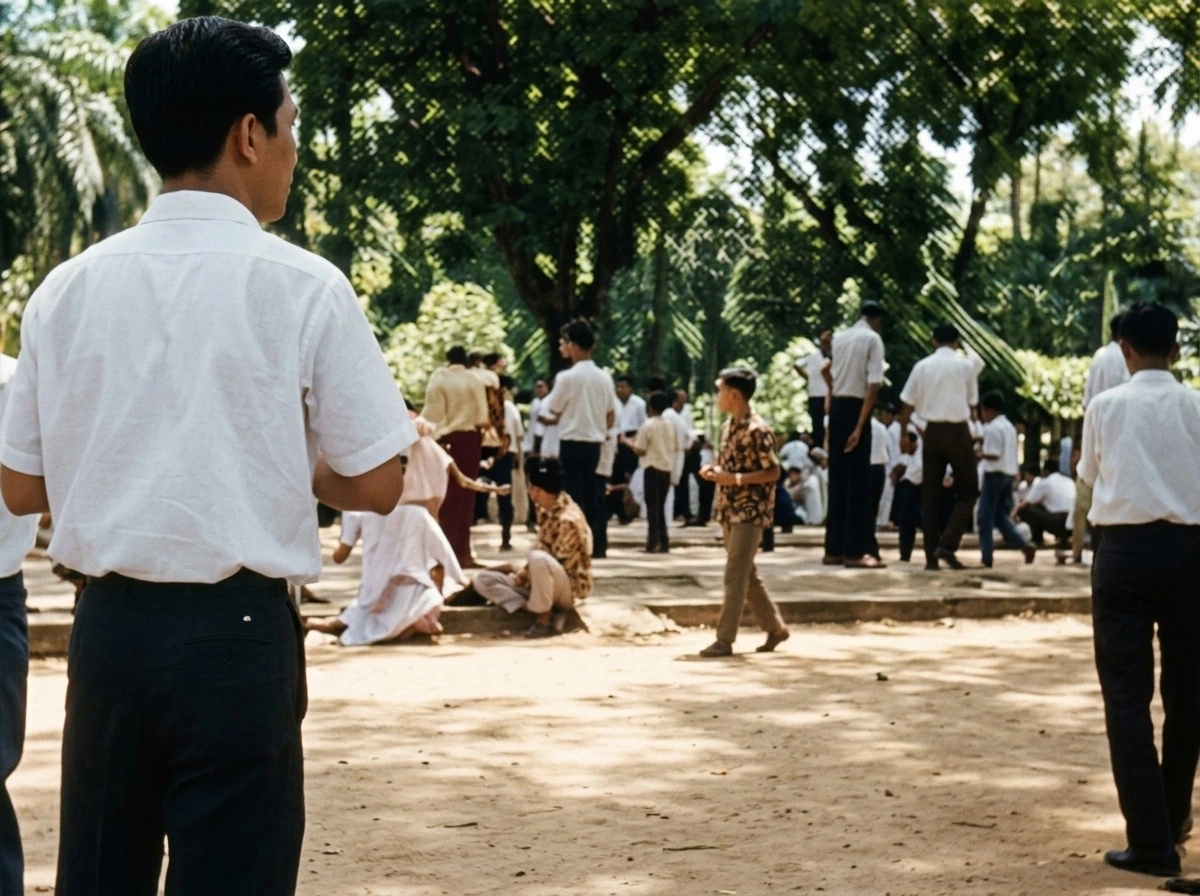
面对这一断崖式的统治崩溃,习惯于特权垄断的巫统封建买办权贵陷入了绝望的歇斯底里。5月11日与12日,赢得议席的在野党支持者在吉隆坡街头举行了庆祝游行。尽管绝大多数集会维持和平克制,但在巫统党内右翼少壮派的极端政治操弄下,在野党的欢庆游行被官控宣传机器全盘扭曲为“华人对马来政治统治地位的公开羞辱与夺权挑战”。一个借用种族极端主义煽动仇杀、强行推翻合法民主选举结果并借机肃清党内温和派的血腥反扑阴谋,在吉隆坡巫统高层官邸内秘密出笼。
Faced with an unprecedented collapse of their monopoly, conservative UMNO elites reacted with hysteria. On May 11 and 12, opposition supporters held celebratory processions in Kuala Lumpur. While the vast majority were peaceful, state-controlled propaganda and right-wing ultra networks systematically framed these celebrations as 'deliberate provocations to humiliate Malay political sovereignty'. A calculated conspiracy to incite communal bloodshed, nullify democratic election outcomes, and purge party moderates was orchestrated behind closed doors.
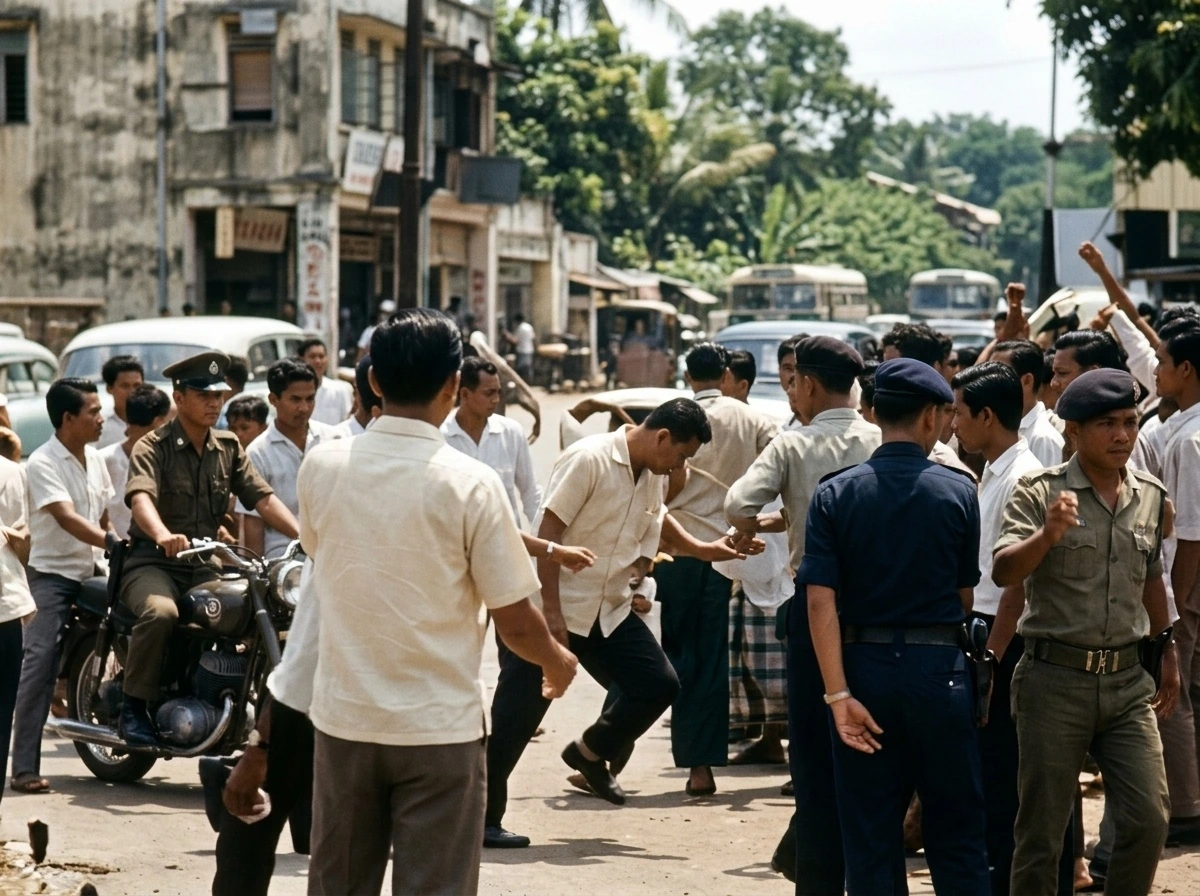
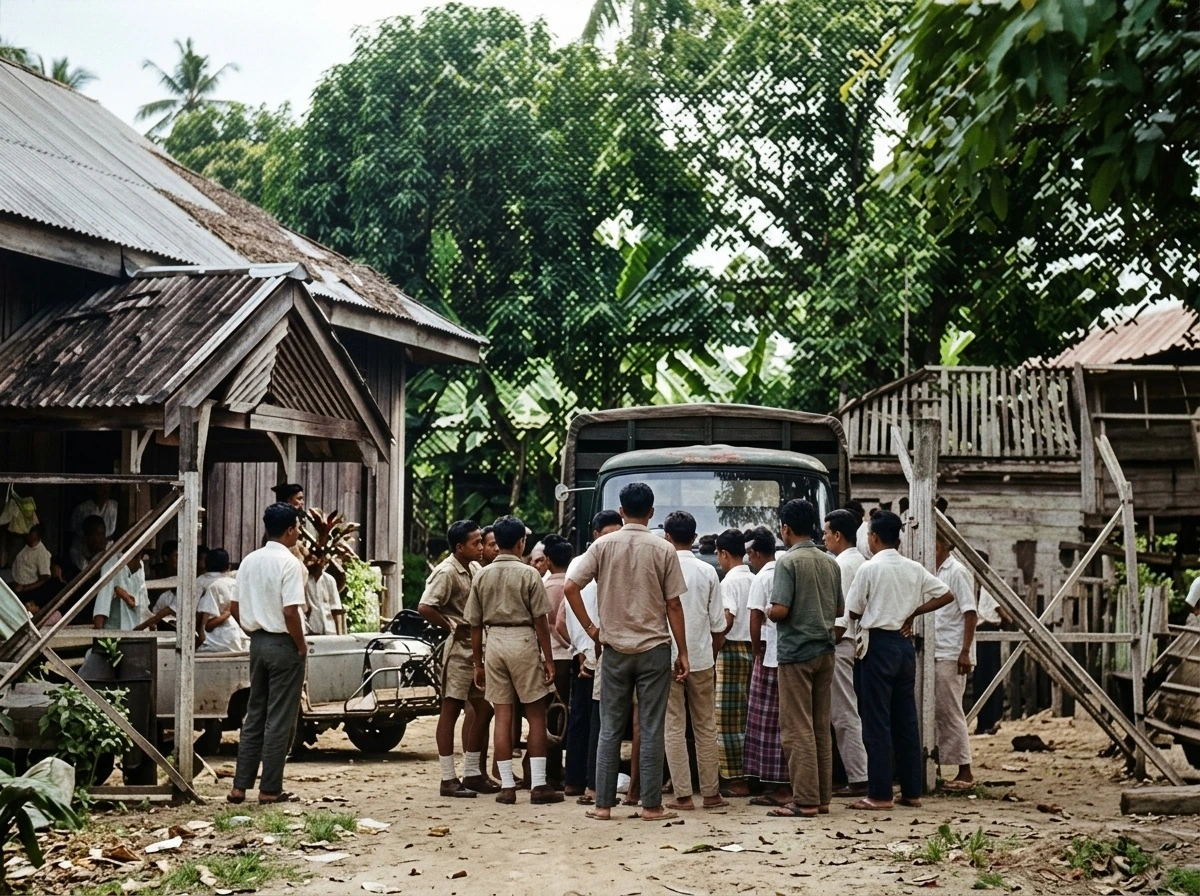
5月13日下午,雪兰莪州务大臣哈伦·宾·依德里斯(Harun bin Idris)在甘榜峇鲁的官邸,成为了这场血腥阴谋的动员中枢。数以千计从雪州乡镇及外州由卡车有组织运送而来的极端青年聚集在官邸院落内外。英国国家档案馆解密外交与情报档案(FCO 24/484至487)铁证如山地记录:这些暴民手持巴冷刀、长矛等凶器,头系红布条,现场充斥着狂热的煽动性演讲。更令人触目惊心的是,英国外交电报一针见血地指出,守卫在主要交通要道的吉隆坡军警,对满载武装暴民呼啸而过的卡车车队“故意睁一只眼闭一只眼(turning a blind eye)”,予以全面放行与纵容,显示出统治集团内部强硬派策动暴力、以此为借口夺取国家最高统治权力的险恶预谋。
By the afternoon of May 13, the official residence of Selangor Menteri Besar Harun bin Idris in Kampung Baru became the operational epicenter of this violent mobilization. Thousands of rural youths, organized and transported in lorries from outlying towns, converged on Harun's compound armed with parangs and spears. Declassified British Foreign Office files (FCO 24/484 to 487) provide damning proof: British diplomatic cables explicitly criticized the police and military checkpoints for 'turning a blind eye' to the influx of armed convoys, directly facilitating the imminent explosion of violence to justify an authoritarian takeover.
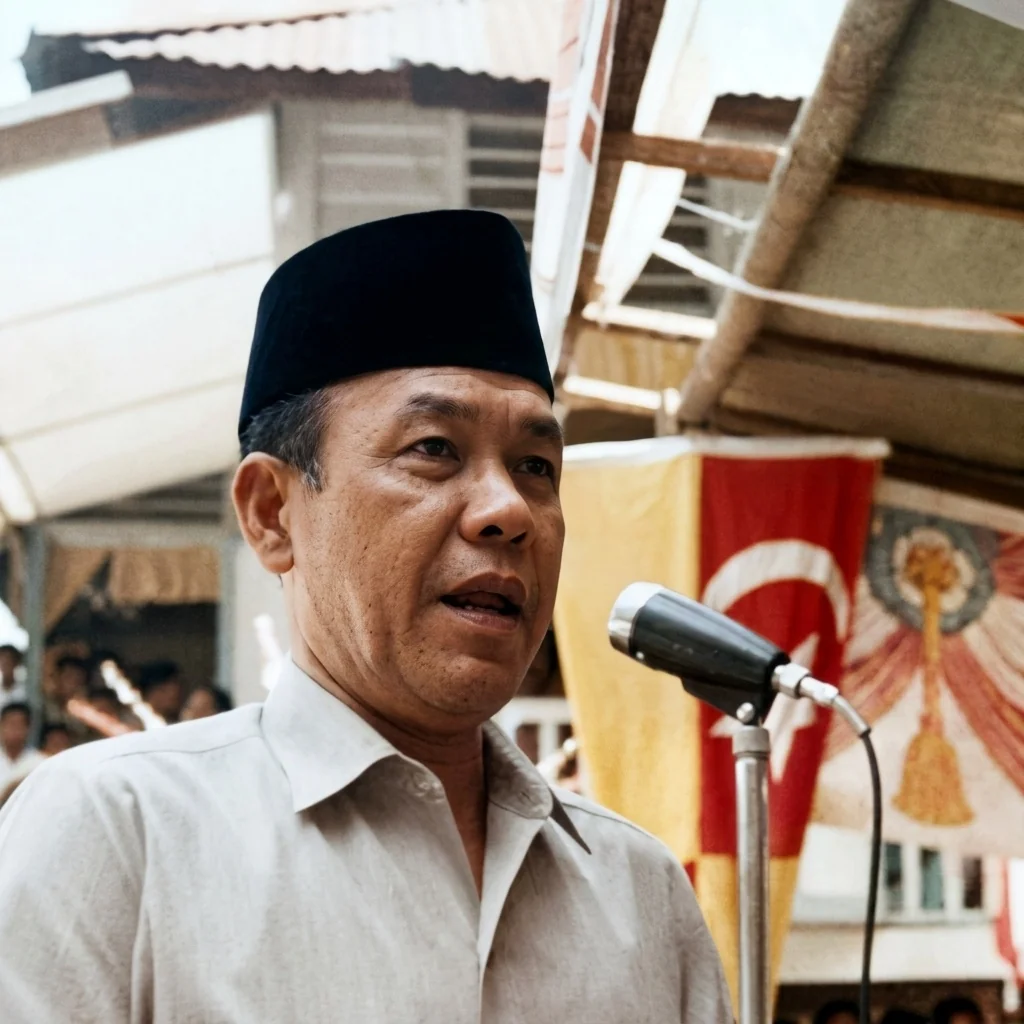
“乡镇马来青年乘卡车陆续抵达吉隆坡,集结在雪州大臣哈伦官邸外;警方放行,却被英美电报批评‘睁一只眼闭一只眼’。卡车满载挥舞凶器的乡镇青年陆续开入吉隆坡,并在大臣哈伦官邸聚集。军警人员完全知情却未加阻拦。骚乱绝非自发失控,而是有组织、有庇护的政治动员。”Rural Malay youths arrived in lorries to KL and gathered outside Selangor Menteri Besar Harun's residence; police allowed passage, criticized by UK/US telegrams as 'turning a blind eye'. Convoys of lorries carrying armed youths entered Kuala Lumpur under the watchful eyes of security forces without interception. The violence was an orchestrated mobilization under political patronage.— 英国国家档案馆绝密外交档案(UK National Archives FCO 24/484-487) | UK National Archives Declassified Diplomatic Cables (FCO 24/484-487)
第四章:血火交织的黄昏与官方谎言的破产:军警暴行、伤亡真相与白厅绝密档案
Chapter 4: The Twilight of Fire and Blood: State Atrocities, Declassified Whitehall Cables, and the Myth of 196 Casualties
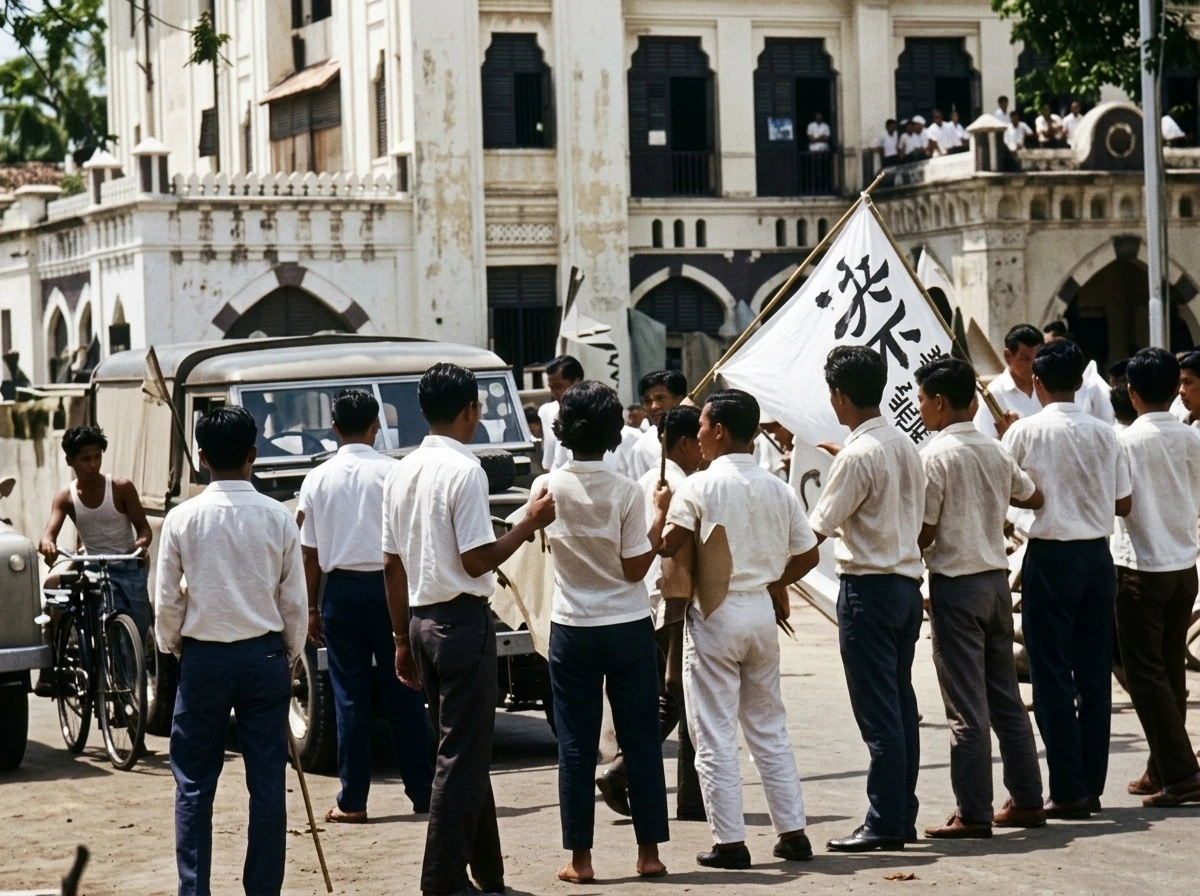
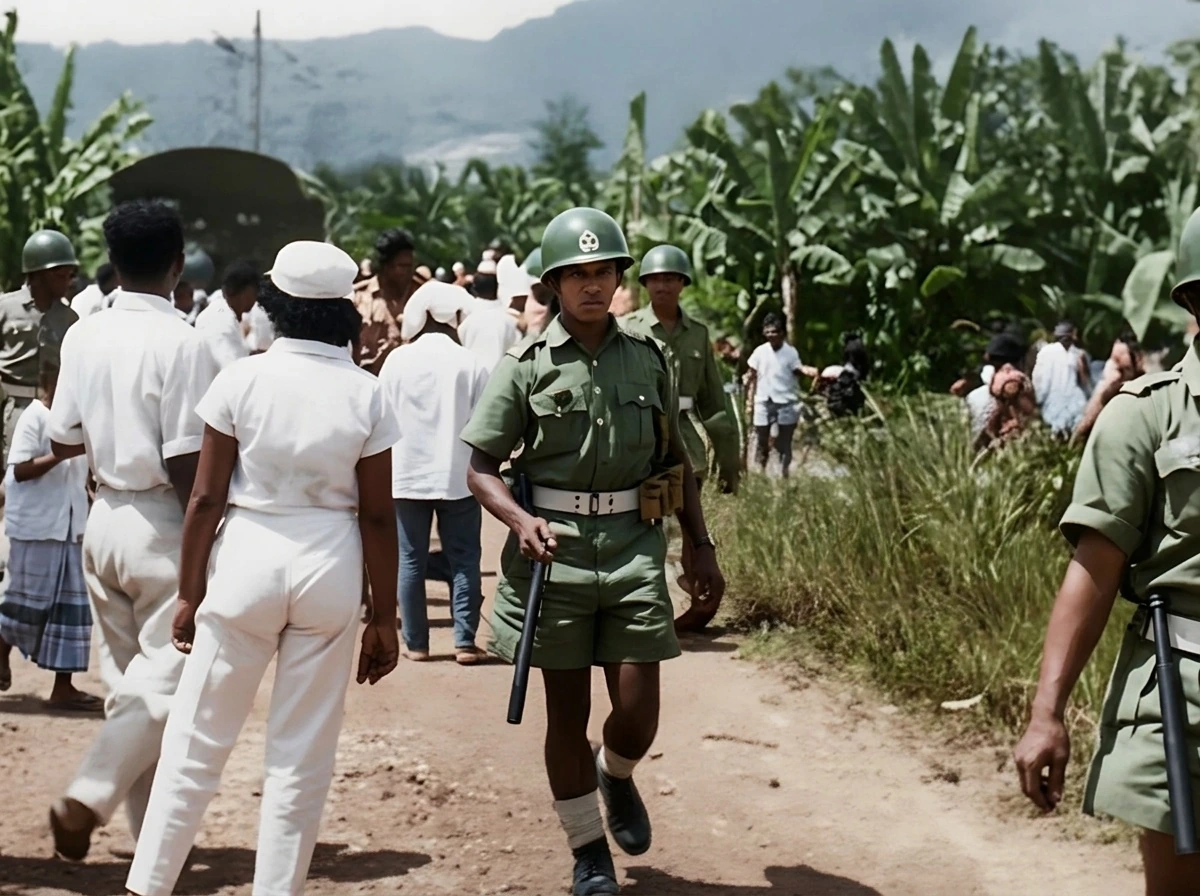
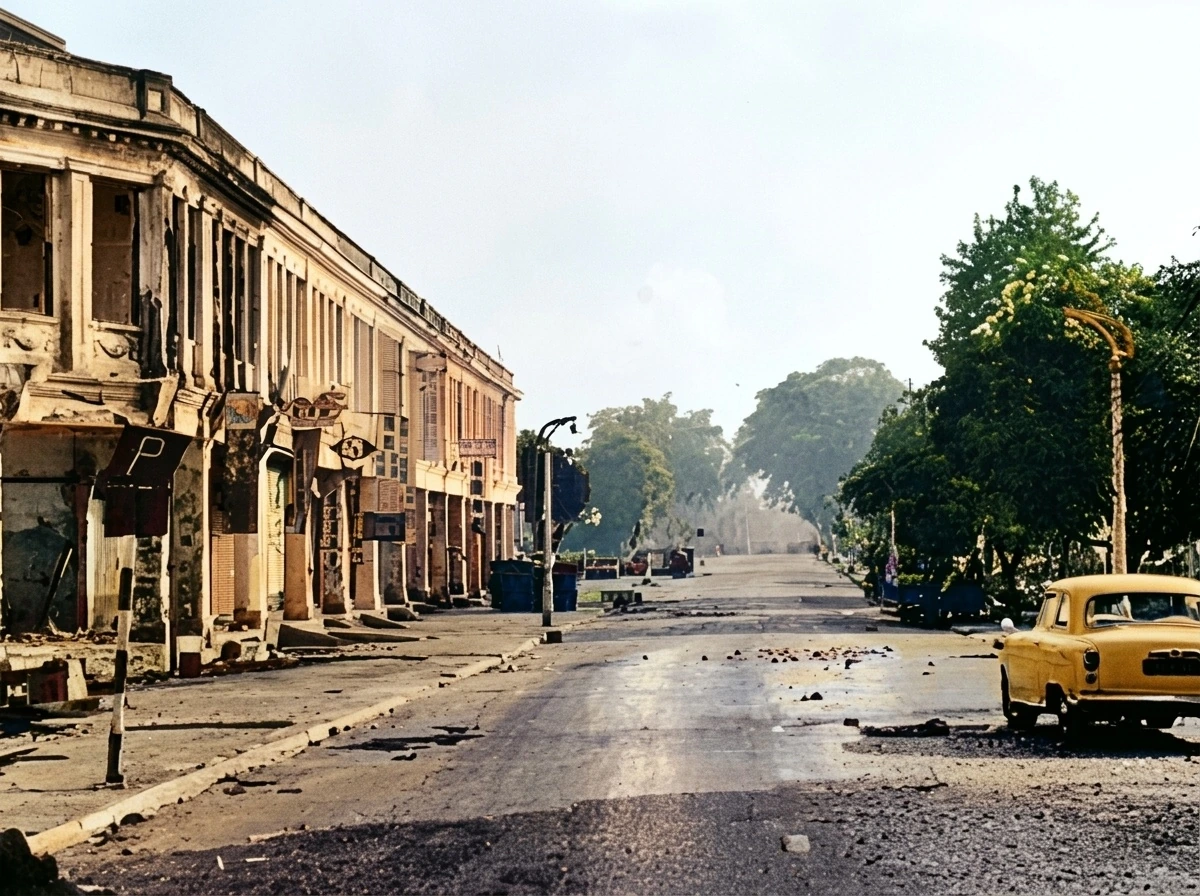
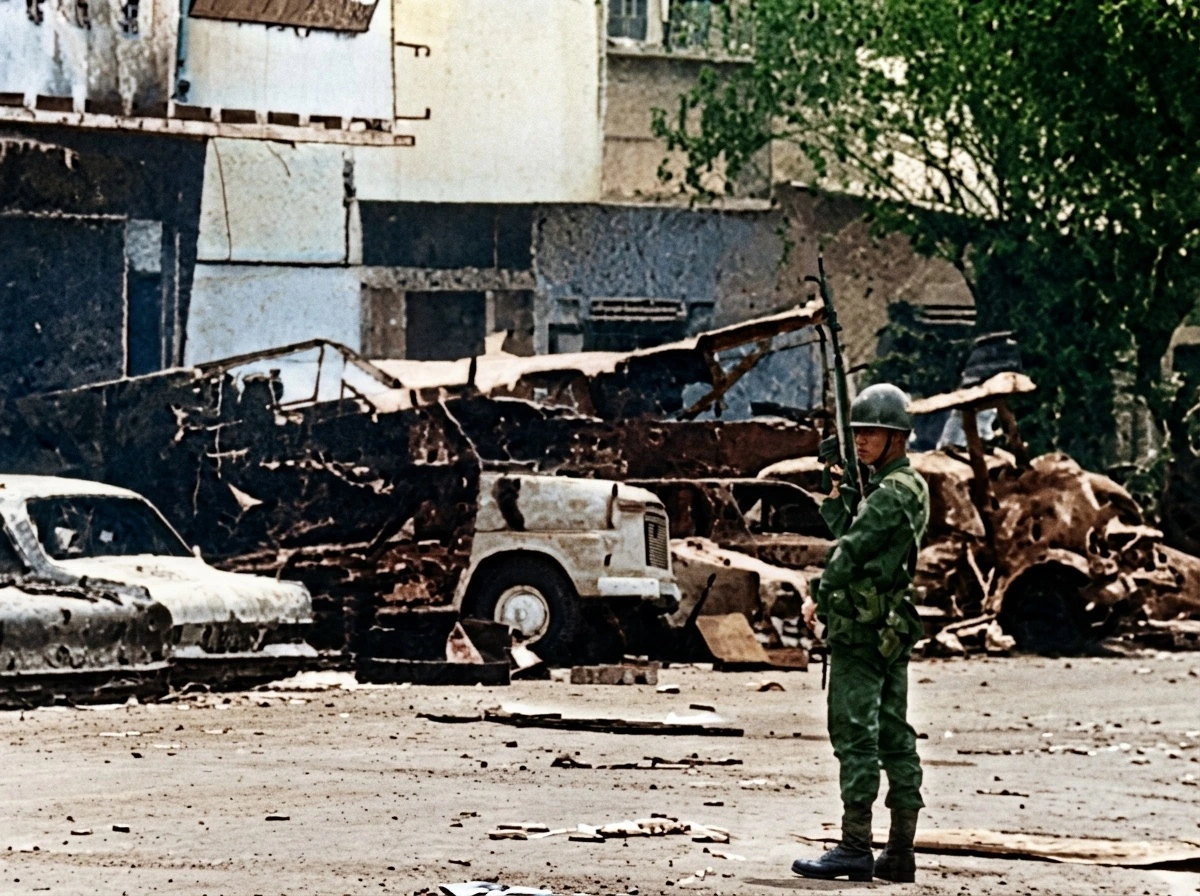
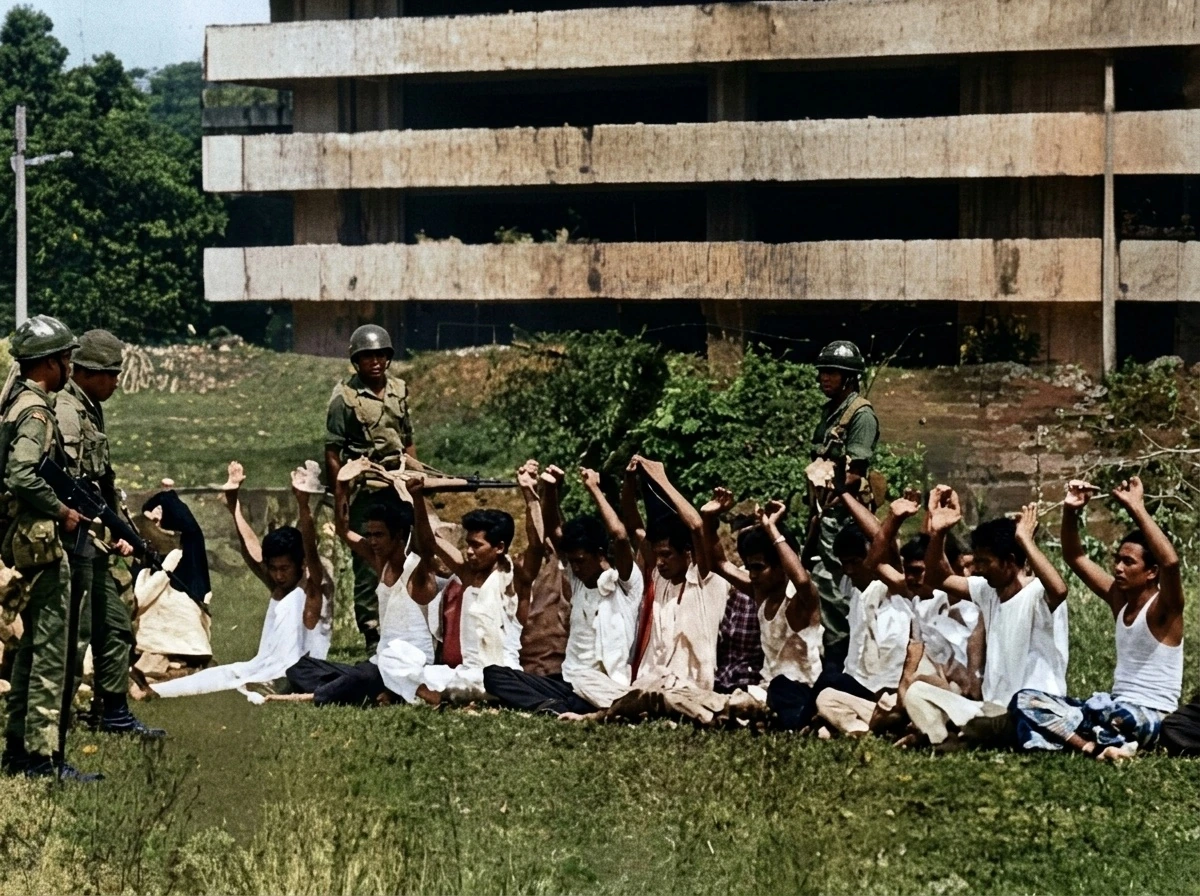
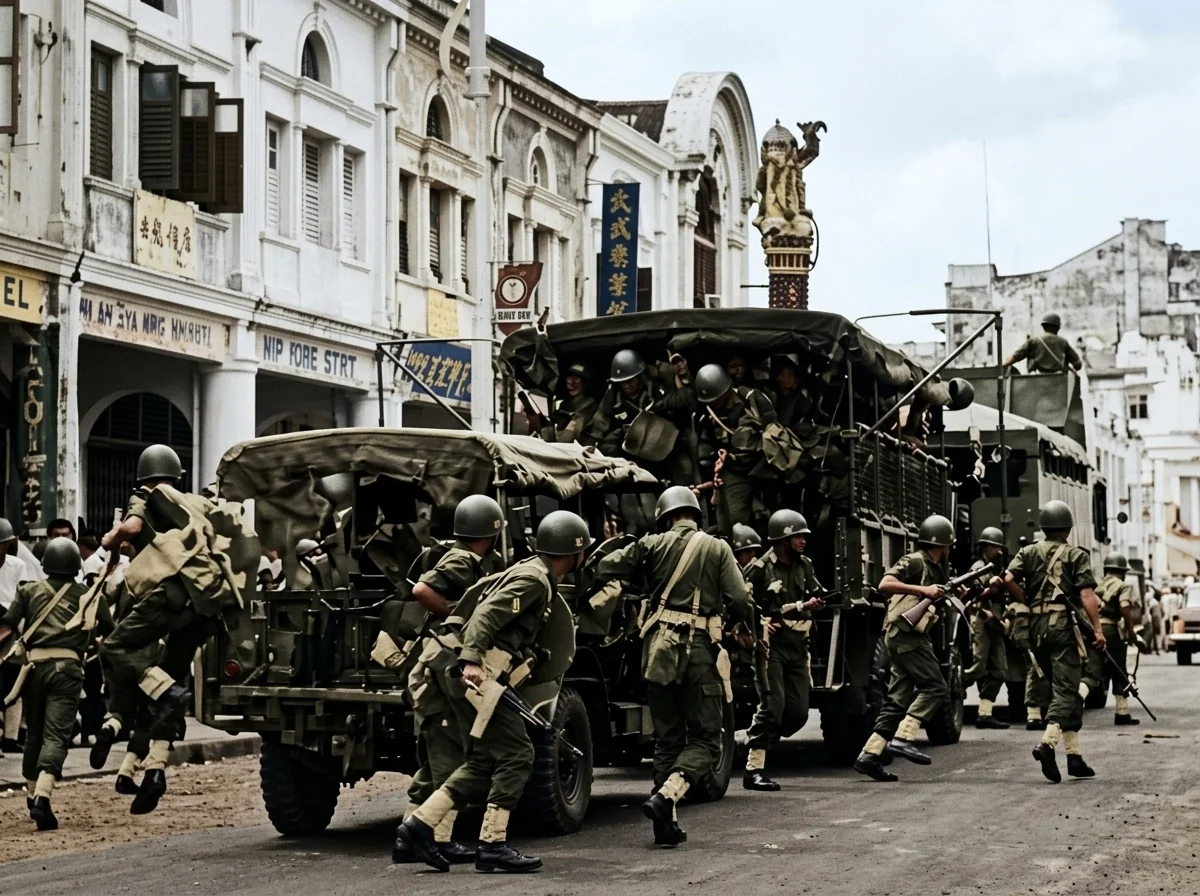
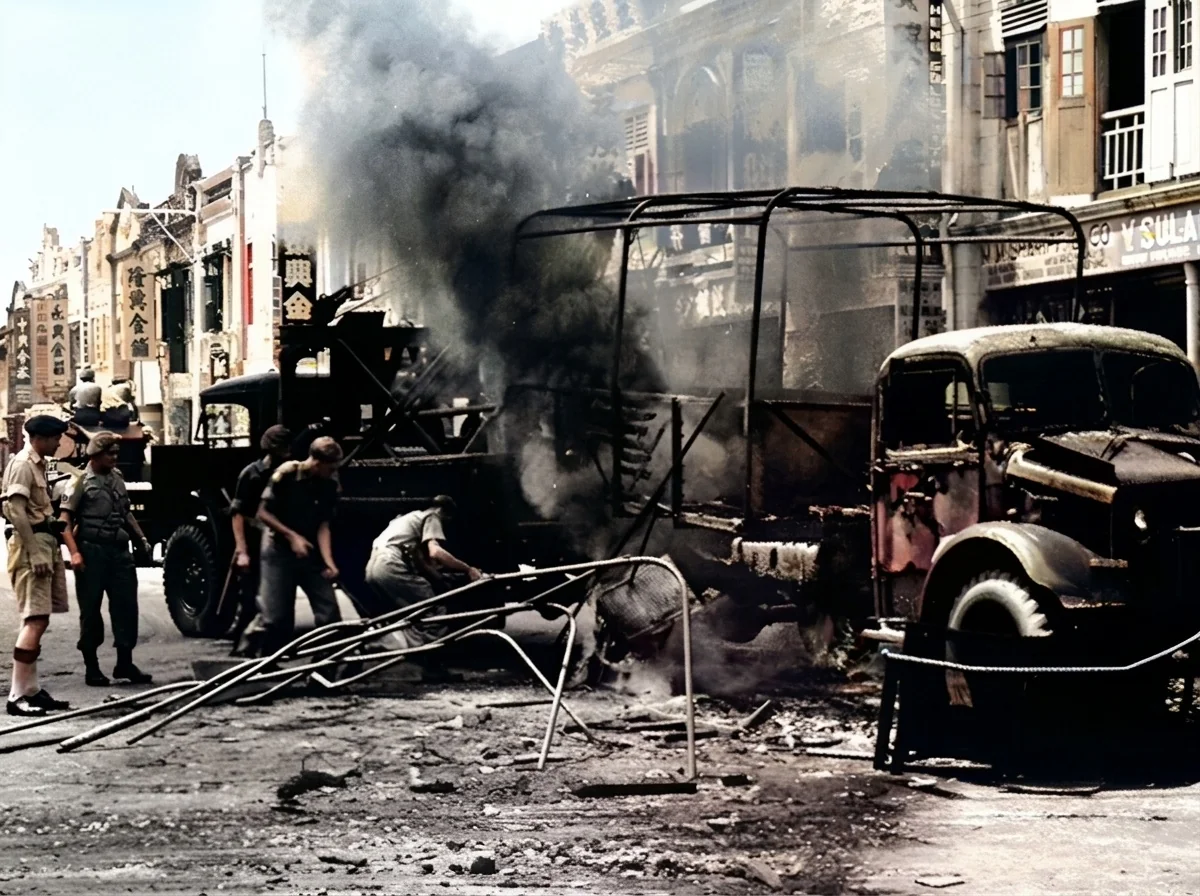
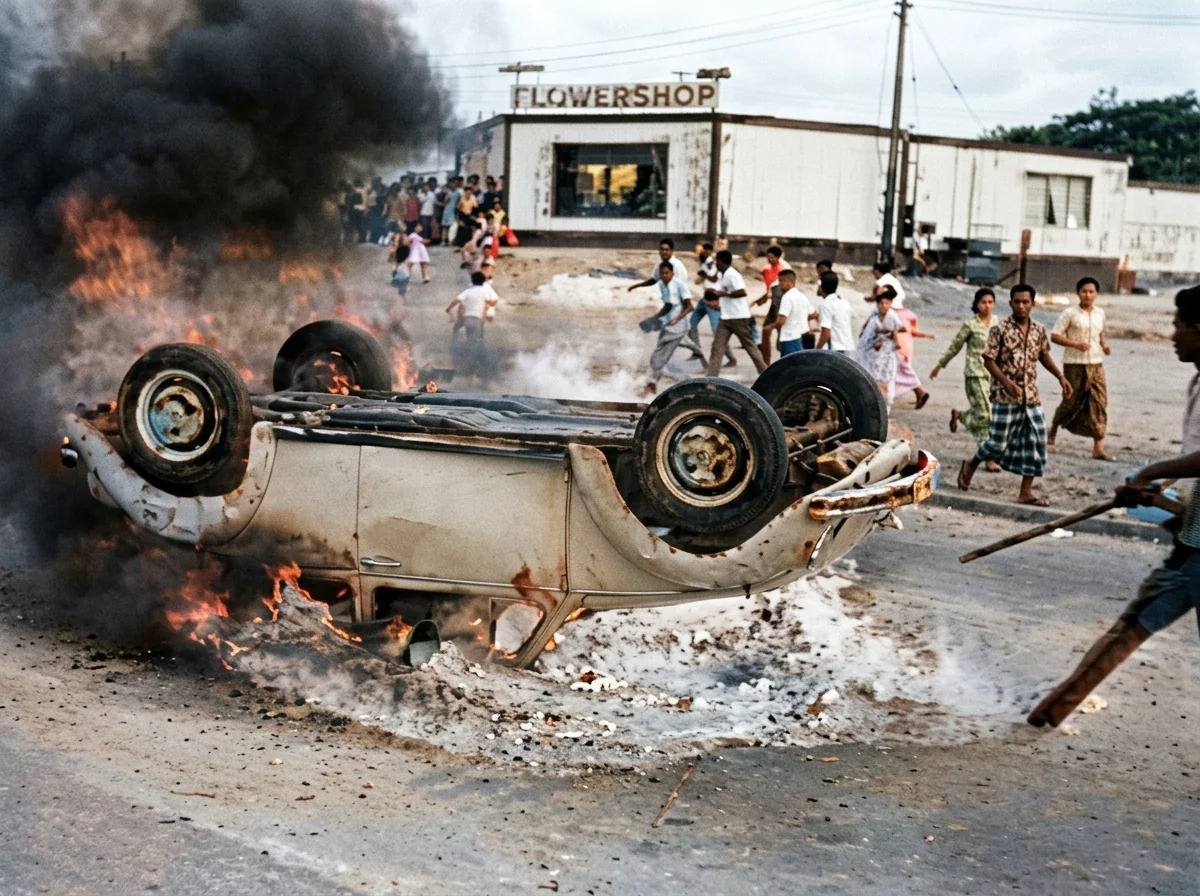
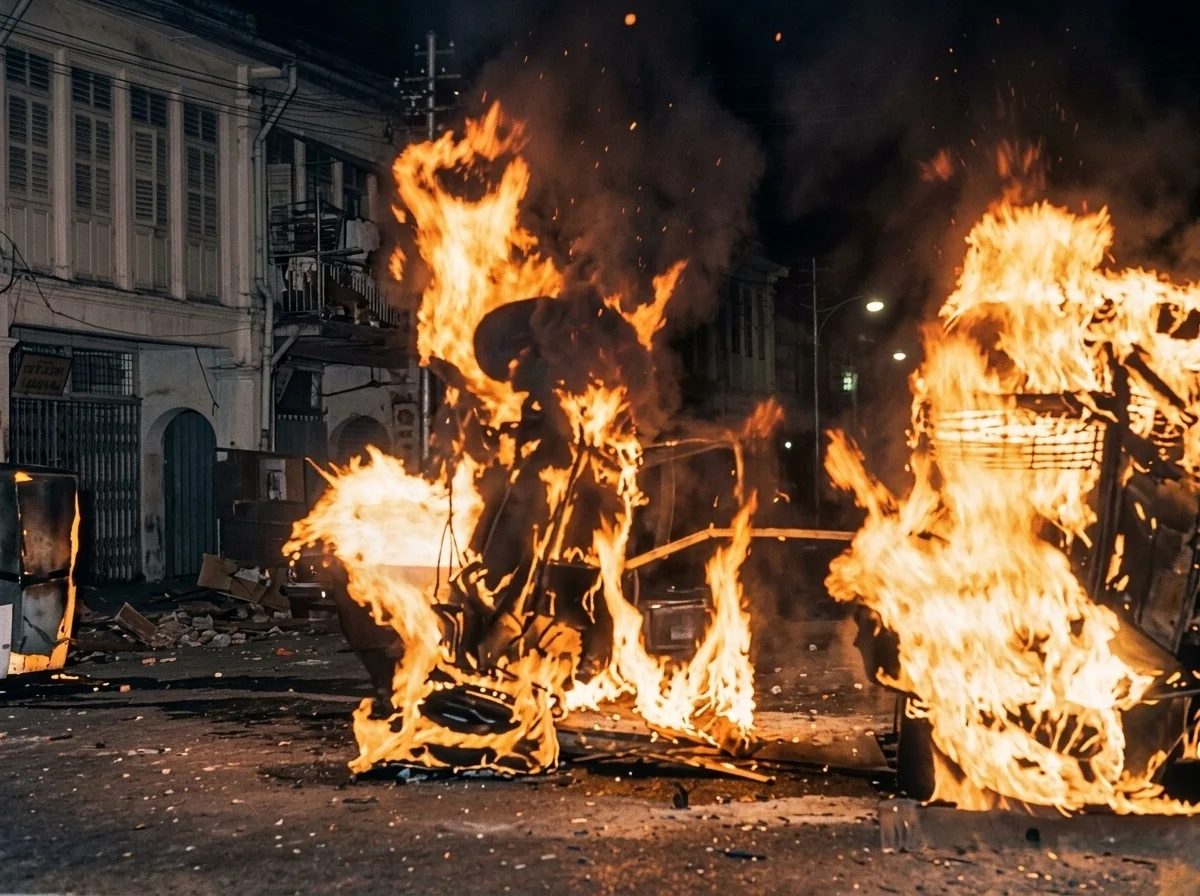
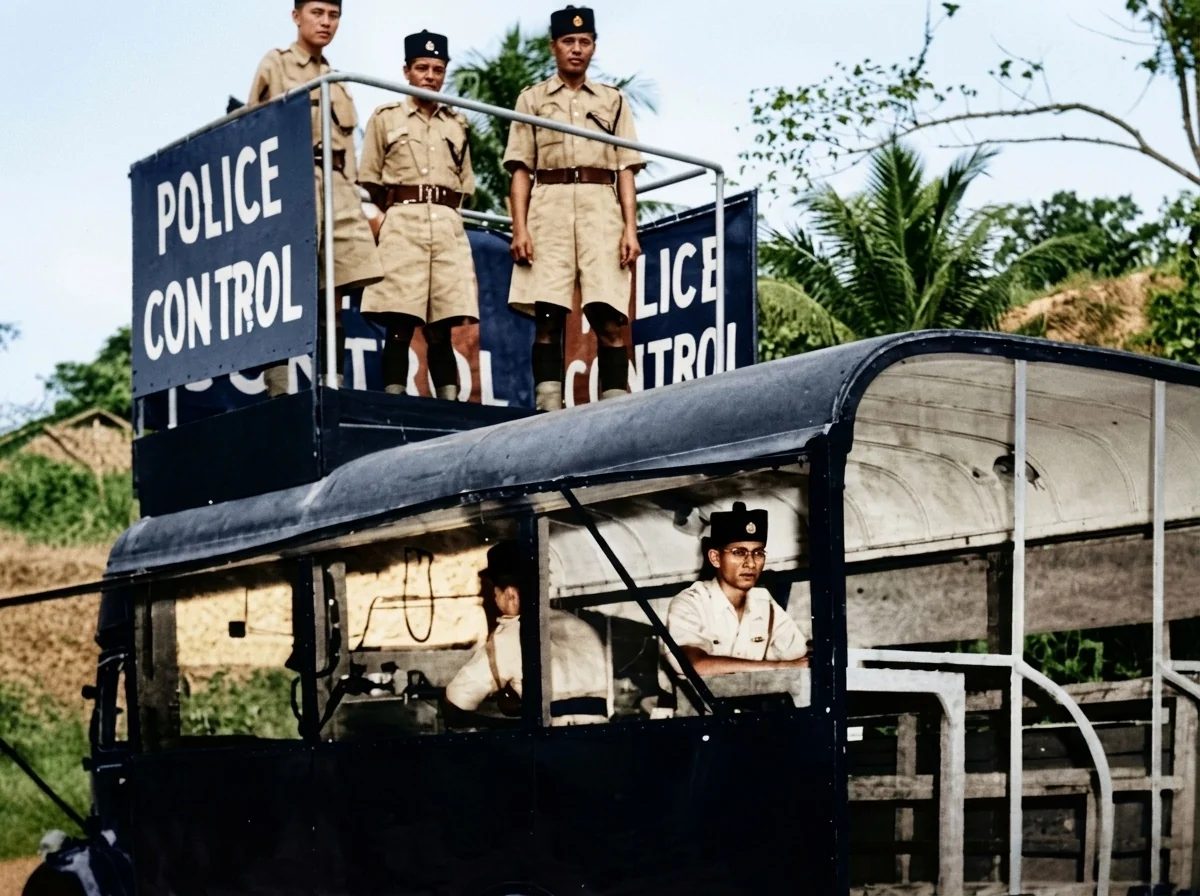
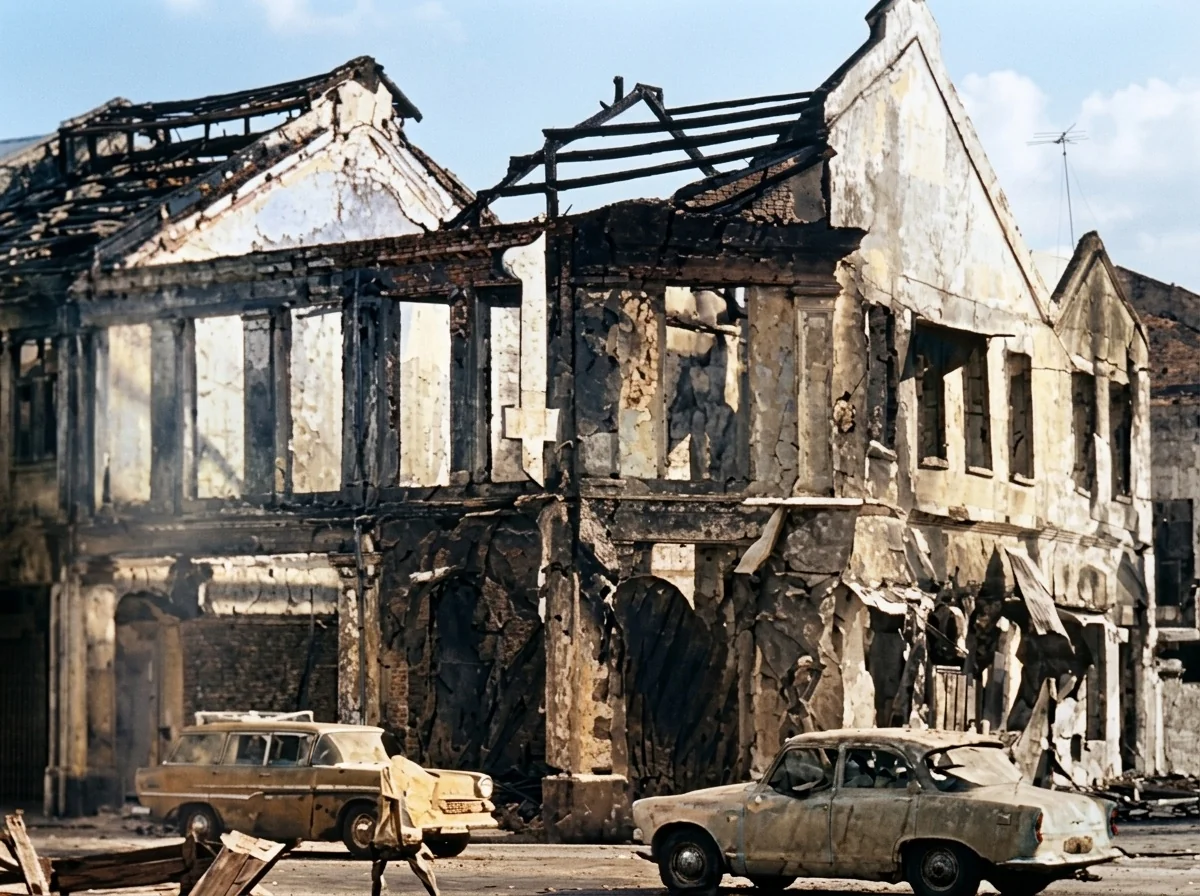
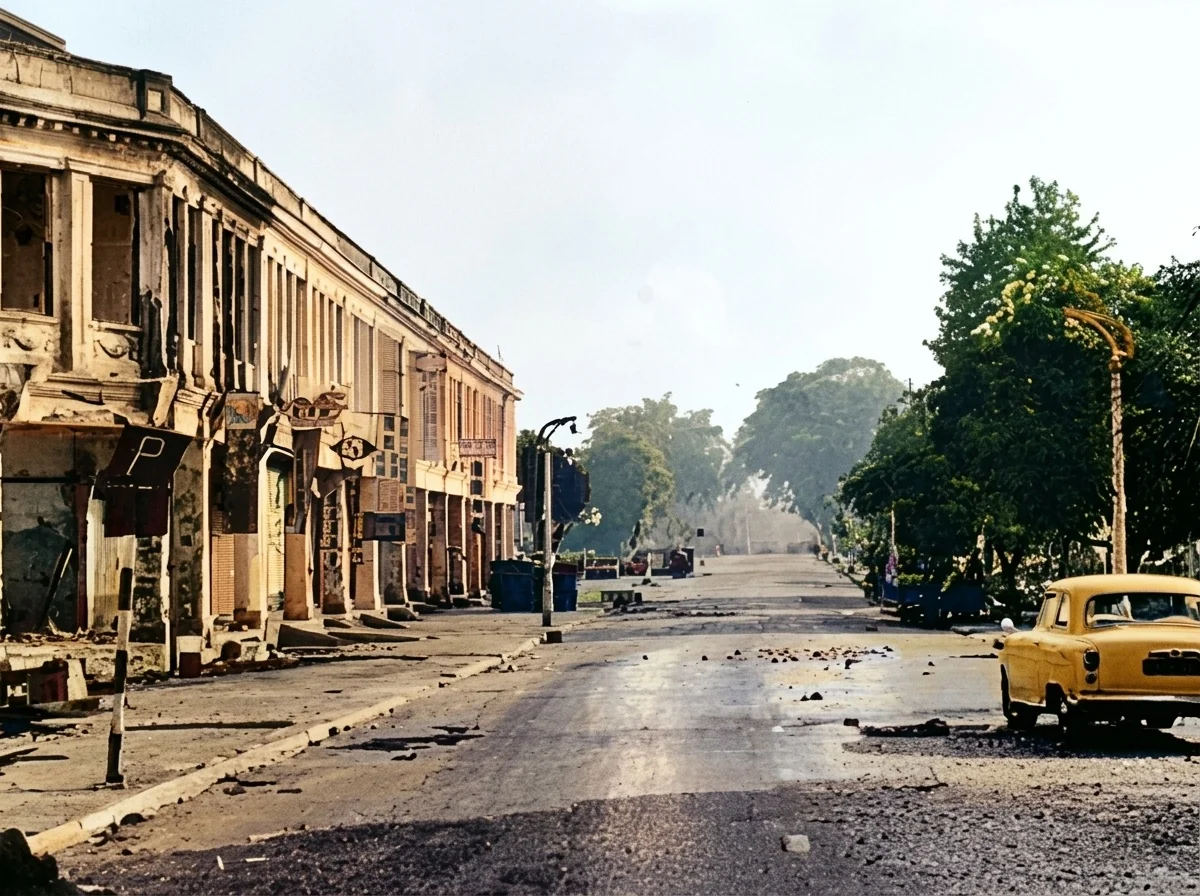
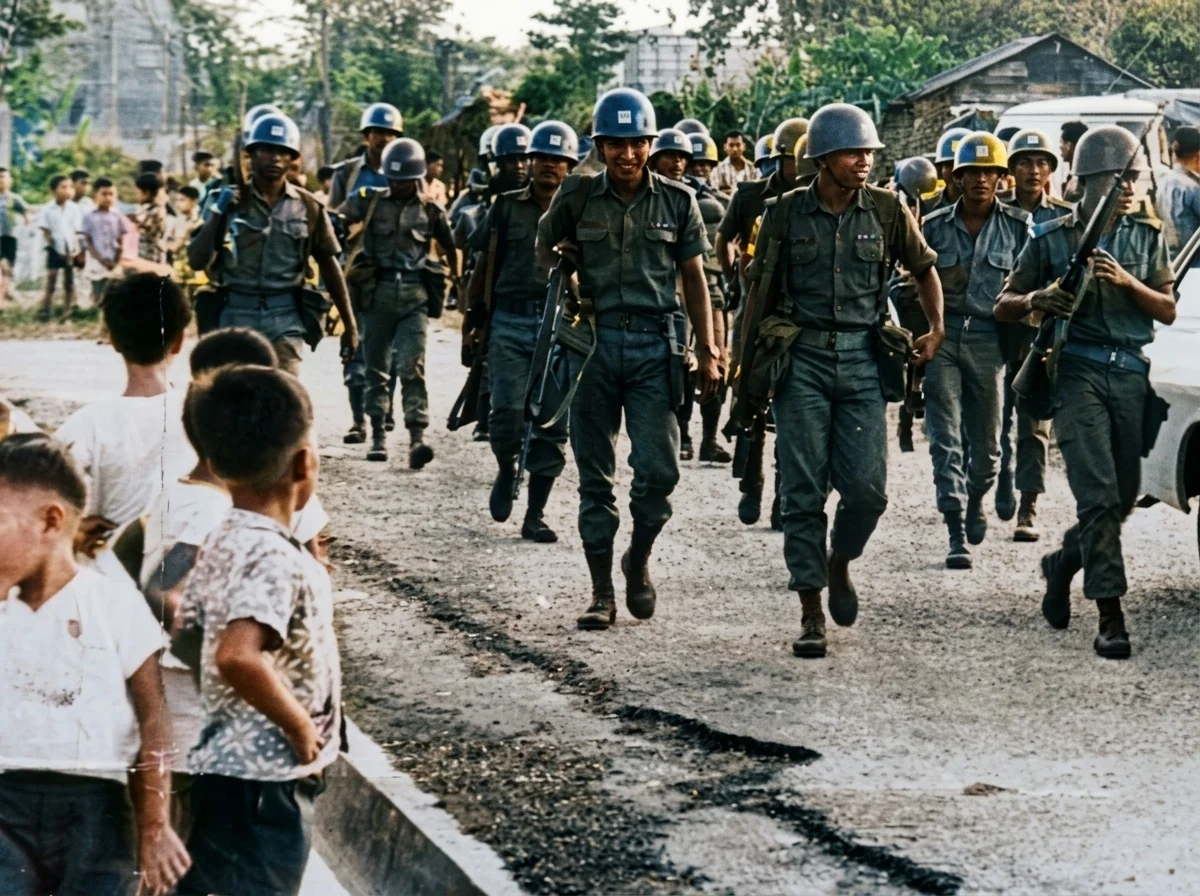
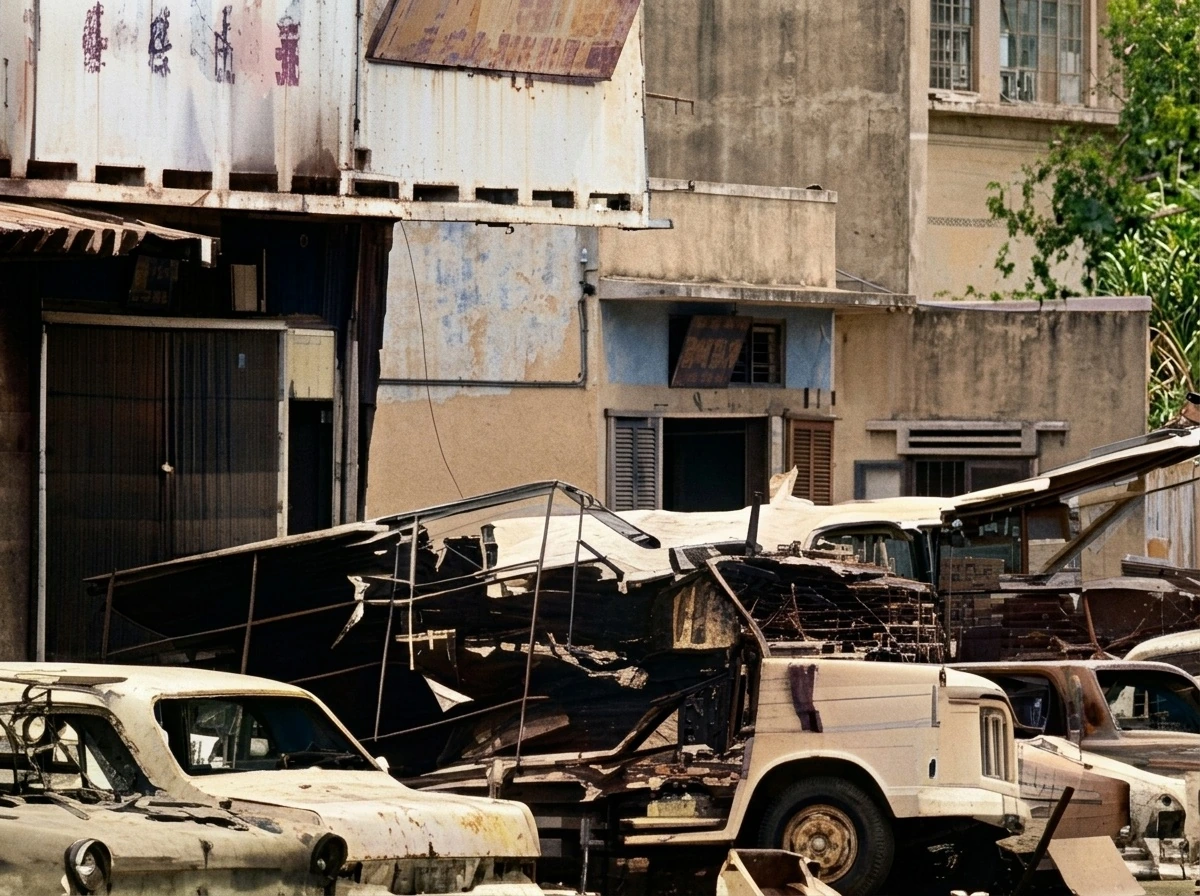
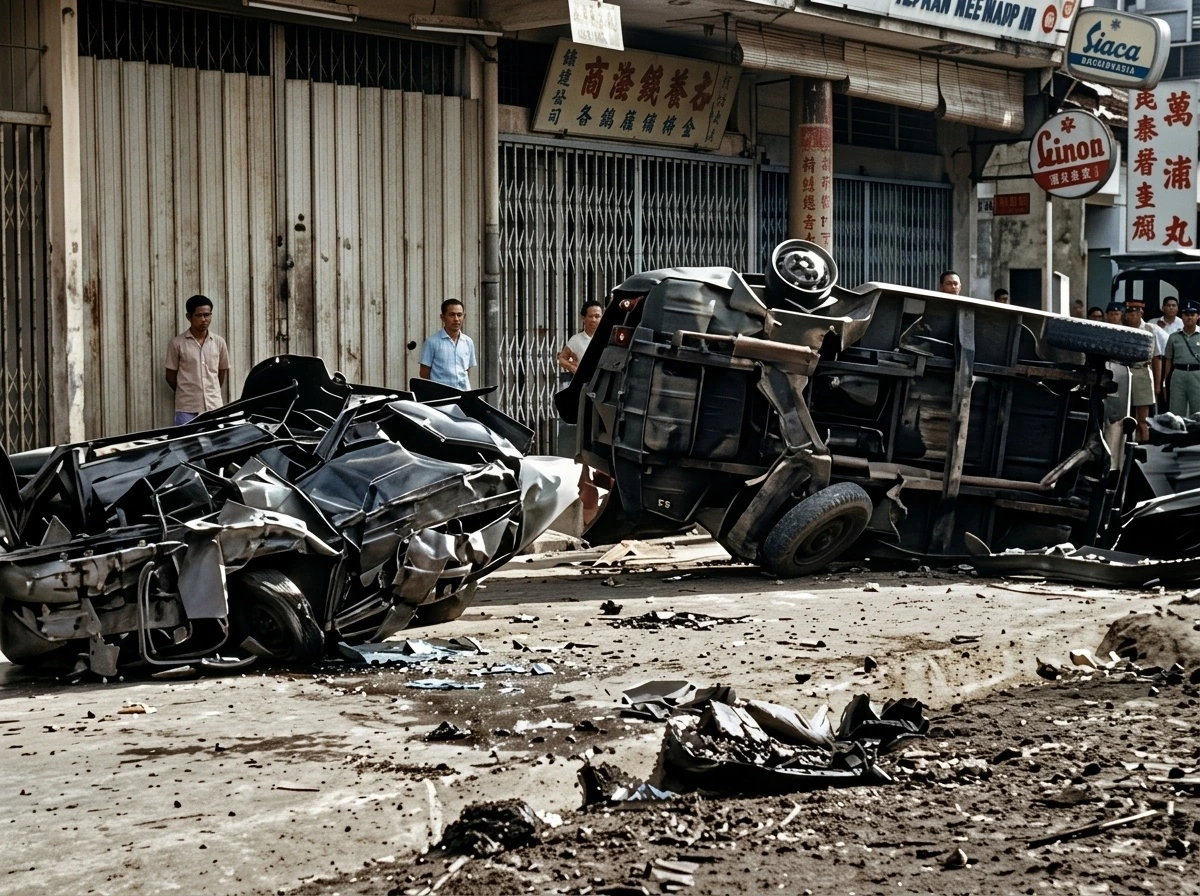
1969年5月13日傍晚6时许,惨绝人寰的大屠杀骤然爆发。集结在哈伦官邸的武装暴徒冲出甘榜峇鲁,挥舞凶器沿途纵火、砍杀无辜平民,洗劫华人商店与住宅。暴乱迅速蔓延至文良港、秋杰路、甘榜班登及吉隆坡中心城区,数十处华人住宅区与连排商铺陷入火海,大批停放在路旁的汽车被掀翻焚毁。更为恶劣的是,在初期骚乱中,部分军警治安部队公然表现出极其严重的种族偏袒,甚至有报告指士兵向无辜自卫群众开枪射击,导致大批手无寸铁的劳苦市民在血火交织中惨死街头。
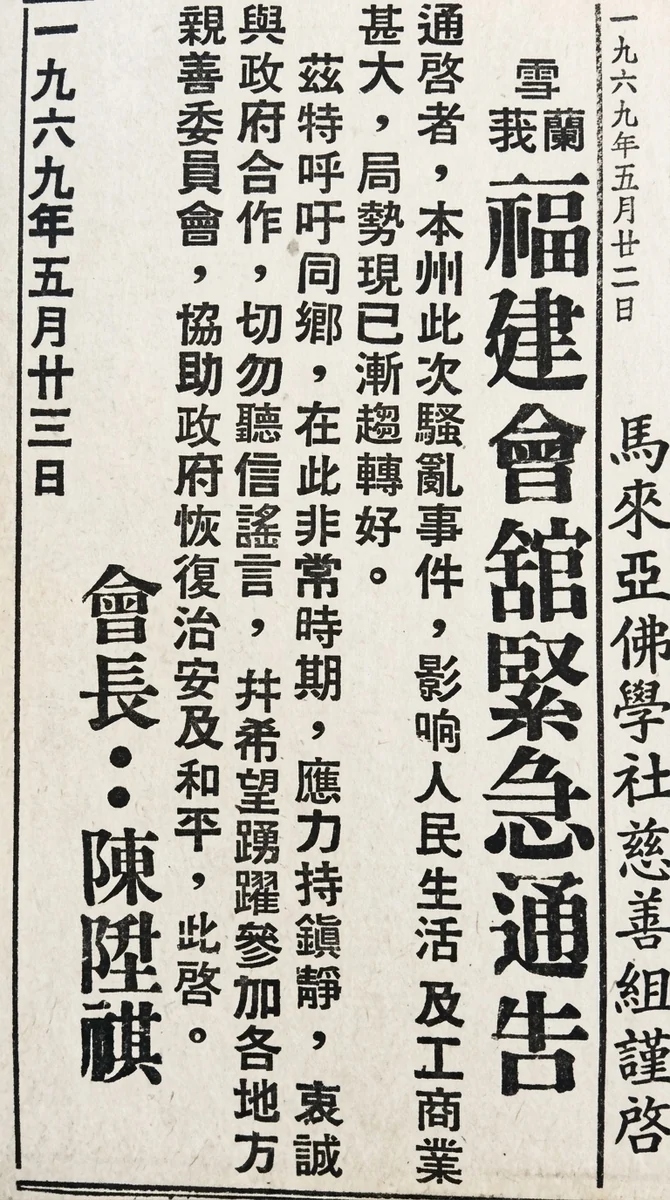
惨案发生后,国家行动理事会(NOC)出台官方白皮书,企图把死亡人数轻描淡写地锁定在区区“196人”(华人143人、马来人25人、印族13人、身份不明15人),并荒诞不经地将屠杀归咎于“共产恐怖分子煽动”与“华人沙文主义挑衅”。1969年10月9日,由阿都拉萨主导的军管中枢正式抛出《五一三骚乱报告书》(The May 13 Tragedy Report),次日各大华文报章在头版通栏予以全文转载,赫然打出“英统治时期非巫人移民大批涌入”、“抗日军乘机崛起 / 共产党蠢蠢欲动重来夺取政权”及“巫不良分子惹事生非”等耸动标题。这一官方报告正是吉隆坡统治当局构建“种族冲突与马共颠覆神话”、掩盖巫统右翼少壮派策动“宫廷政变”真相的直接铁证。然而,冰冷的解密档案彻底粉碎了这一弥天大谎。当时各大外国驻马使馆(包括英国高级专员公署、美国大使馆、驻新外交使团)以及国际红十字会医护人员的现场评估一致证实:死于刀枪与烈火的实际遇难平民人数至少在600至800人以上,甚至可能高达千人以上!吉隆坡中央医院停尸房尸满为患,大量受害者遗体在宵禁封锁下被军车运往双溪毛糯等地秘密集体掩埋。
随着英国国家档案馆(The National Archives, Kew)绝密外交与情报档案(FCO 24/486/1)的完全解密,英国驻马高级专员署资深外交官 J.G. McMinnies 于1969年5月28日撰写并呈交伦敦白厅的绝密专题评估报告浮出水面。该报告作出了载入史册的权威历史定性:“把骚乱归因于‘共产恐怖分子’,仅仅是为当局采取更严厉的威权军管措施提供借口,同时也是在极力回避一个事实:在这起事件中,主要进攻方是马来人,而遭受杀戮和财产损失的绝大多数是华人。”这一来自帝国主义核心外交官的内部机密定评,与马共中央的政治论断惊人一致,彻底宣判了吉隆坡反动政权数十年官方伪史的破产。
At approximately 6:00 PM on May 13, 1969, horrific violence erupted. Armed mobs emerging from Harun's compound in Kampung Baru launched assaults along Jalan Tuanku Abdul Rahman, Chow Kit, and Setapak, setting fire to shophouses, lynching innocent civilians, and torching motor vehicles. The capital was engulfed in flames. Grossly compromising their professional duty, segments of the state security apparatus exhibited blatant communal bias: troops fired upon defensive civilian enclaves while allowing armed rioters free movement, compounding the scale of bloodshed.
Following the carnage, the National Operations Council (NOC) released an official White Paper attempting to minimize the death toll to a fabricated figure of '196' (143 Chinese, 25 Malays, 13 Indians, and 15 unidentified), while scapegoating 'communist agitators' and 'chauvinist provocation'. On 9 October 1969, the military administration headed by Tun Abdul Razak published the official Report on the May 13 Tragedy, reprinted across major Chinese newspapers the following day. Front-page banners blamed 'massive non-Malay immigration under British rule' and 'communist exploitation to seize power'. This archival newspaper page serves as irrefutable primary evidence of the regime fabricating the 'racial conflict and communist subversion myth' to conceal a right-wing palace coup: standing today as a textbook historical counter-proof. However, declassified diplomatic cables from British and American missions, alongside international Red Cross medical personnel, estimated the true death toll at between 600 and 800+, with some records indicating four figures. Hospital mortuaries overflowed, and mass graves were secretly dug under military curfew at Sungai Buloh.
With the declassification of British Foreign Office records (FCO 24/486/1) at Kew, the definitive assessment written on May 28, 1969 by senior diplomat J.G. McMinnies of the British High Commission was exposed: 'To blame the disturbances on communist terrorists gave added justification for the assumption of authoritarian powers. But it was also an attempt to duck the fact that these were essentially racial clashes in which the Malays were the main aggressors and the Chinese were the main victims.' This verdict, penned by metropolitan diplomats, completely shattered the ruling regime's decades-long official mythology.
1969年5月13日傍晚6时许,惨绝人寰的大屠杀骤然爆发。集结在哈伦官邸的武装暴徒冲出甘榜峇鲁,挥舞凶器沿途纵火、砍杀无辜平民,洗劫华人商店与住宅。暴乱迅速蔓延至文良港、秋杰路、甘榜班登及吉隆坡中心城区,数十处华人住宅区与连排商铺陷入火海,大批停放在路旁的汽车被掀翻焚毁。更为恶劣的是,在初期骚乱中,部分军警治安部队公然表现出极其严重的种族偏袒,甚至有报告指士兵向无辜自卫群众开枪射击,导致大批手无寸铁的劳苦市民在血火交织中惨死街头。
At approximately 6:00 PM on May 13, 1969, horrific violence erupted. Armed mobs emerging from Harun's compound in Kampung Baru launched assaults along Jalan Tuanku Abdul Rahman, Chow Kit, and Setapak, setting fire to shophouses, lynching innocent civilians, and torching motor vehicles. The capital was engulfed in flames. Grossly compromising their professional duty, segments of the state security apparatus exhibited blatant communal bias: troops fired upon defensive civilian enclaves while allowing armed rioters free movement, compounding the scale of bloodshed.
惨案发生后,国家行动理事会(NOC)出台官方白皮书,企图把死亡人数轻描淡写地锁定在区区“196人”(华人143人、马来人25人、印族13人、身份不明15人),并荒诞不经地将屠杀归咎于“共产恐怖分子煽动”与“华人沙文主义挑衅”。1969年10月9日,由阿都拉萨主导的军管中枢正式抛出《五一三骚乱报告书》(The May 13 Tragedy Report),次日各大华文报章在头版通栏予以全文转载,赫然打出“英统治时期非巫人移民大批涌入”、“抗日军乘机崛起 / 共产党蠢蠢欲动重来夺取政权”及“巫不良分子惹事生非”等耸动标题。这一官方报告正是吉隆坡统治当局构建“种族冲突与马共颠覆神话”、掩盖巫统右翼少壮派策动“宫廷政变”真相的直接铁证。然而,冰冷的解密档案彻底粉碎了这一弥天大谎。当时各大外国驻马使馆(包括英国高级专员公署、美国大使馆、驻新外交使团)以及国际红十字会医护人员的现场评估一致证实:死于刀枪与烈火的实际遇难平民人数至少在600至800人以上,甚至可能高达千人以上!吉隆坡中央医院停尸房尸满为患,大量受害者遗体在宵禁封锁下被军车运往双溪毛糯等地秘密集体掩埋。
Following the carnage, the National Operations Council (NOC) released an official White Paper attempting to minimize the death toll to a fabricated figure of '196' (143 Chinese, 25 Malays, 13 Indians, and 15 unidentified), while scapegoating 'communist agitators' and 'chauvinist provocation'. On 9 October 1969, the military administration headed by Tun Abdul Razak published the official Report on the May 13 Tragedy, reprinted across major Chinese newspapers the following day. Front-page banners blamed 'massive non-Malay immigration under British rule' and 'communist exploitation to seize power'. This archival newspaper page serves as irrefutable primary evidence of the regime fabricating the 'racial conflict and communist subversion myth' to conceal a right-wing palace coup: standing today as a textbook historical counter-proof. However, declassified diplomatic cables from British and American missions, alongside international Red Cross medical personnel, estimated the true death toll at between 600 and 800+, with some records indicating four figures. Hospital mortuaries overflowed, and mass graves were secretly dug under military curfew at Sungai Buloh.
随着英国国家档案馆(The National Archives, Kew)绝密外交与情报档案(FCO 24/486/1)的完全解密,英国驻马高级专员署资深外交官 J.G. McMinnies 于1969年5月28日撰写并呈交伦敦白厅的绝密专题评估报告浮出水面。该报告作出了载入史册的权威历史定性:“把骚乱归因于‘共产恐怖分子’,仅仅是为当局采取更严厉的威权军管措施提供借口,同时也是在极力回避一个事实:在这起事件中,主要进攻方是马来人,而遭受杀戮和财产损失的绝大多数是华人。”这一来自帝国主义核心外交官的内部机密定评,与马共中央的政治论断惊人一致,彻底宣判了吉隆坡反动政权数十年官方伪史的破产。
With the declassification of British Foreign Office records (FCO 24/486/1) at Kew, the definitive assessment written on May 28, 1969 by senior diplomat J.G. McMinnies of the British High Commission was exposed: 'To blame the disturbances on communist terrorists gave added justification for the assumption of authoritarian powers. But it was also an attempt to duck the fact that these were essentially racial clashes in which the Malays were the main aggressors and the Chinese were the main victims.' This verdict, penned by metropolitan diplomats, completely shattered the ruling regime's decades-long official mythology.
“过去三个星期,情报机构和我一直在评估共产党是否有参与......简单的结论是:没有。它还提到,最初被标记为‘共产恐怖分子’的两个团体,其实只是普通的华人流氓,而心理战主管也拿不出更多证据,除了1968年1月的一张传单以外。”
“把骚乱归因于‘共产恐怖分子’,为当局采取更强的威权措施提供了借口,同时也是在回避一个事实:这些冲突实质上是族群冲突,在这起事件中,无可否认的事实是马来人是主要的进攻方,而华族是主要的受害者。”For some three weeks now the Security Control Officer and I have been trying to assess the degree of communist involvement... The short answer is: none. It also includes the follow-ups about the two groups initially labelled 'communist terrorists' being ordinary Chinese thugs and the inability of the Head of Psychological Warfare to produce evidence beyond a January 1968 leaflet.— J. G. McMinnies《马来西亚:大选后的骚乱》(英国国家档案馆 UK National Archives FCO 24/486/1) | J. G. McMinnies, 'Malaysia - Civil Disturbances following General Election' (UK National Archives FCO 24/486/1)
To blame the disturbances on communist terrorists gave added justification for the assumption of authoritarian powers. But it was also an attempt to duck the fact that these were essentially racial clashes in which the Malays were the main aggressors and the Chinese were the main victims.
第五章:宫廷政变与军管体制:NOC独裁夺权、国家原则与新经济政策的阶级自肥
Chapter 5: Palace Coup and Martial Rule : The NOC Dictatorship, Rukun Negara, and the Class Exploitation of the NEP
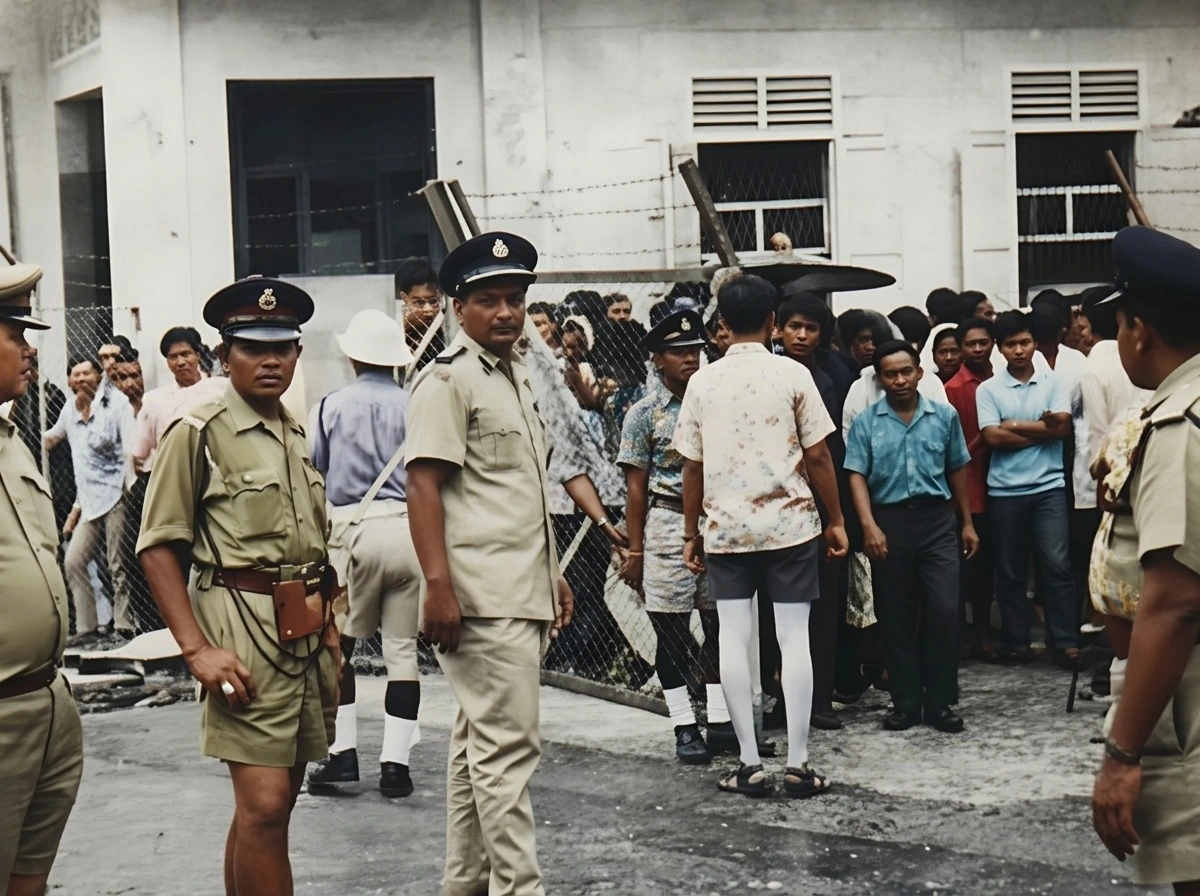
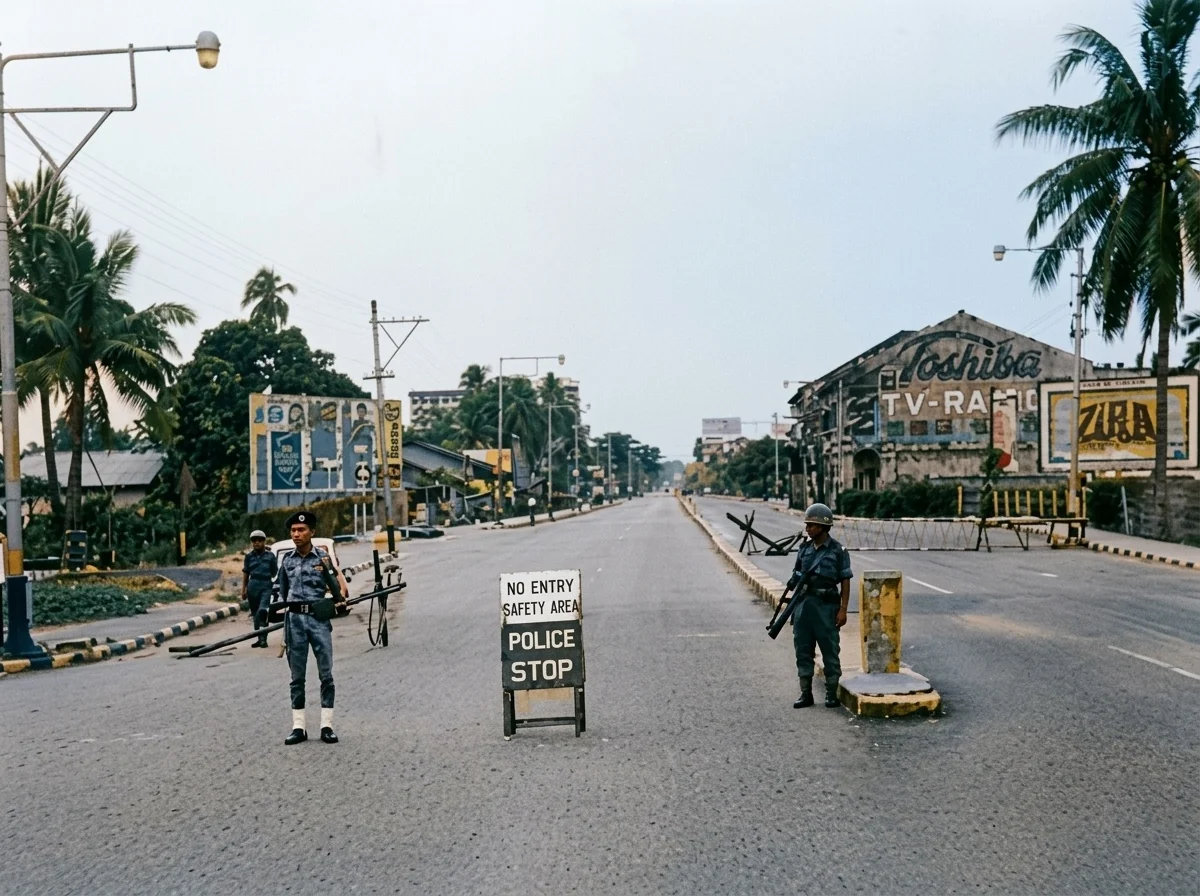
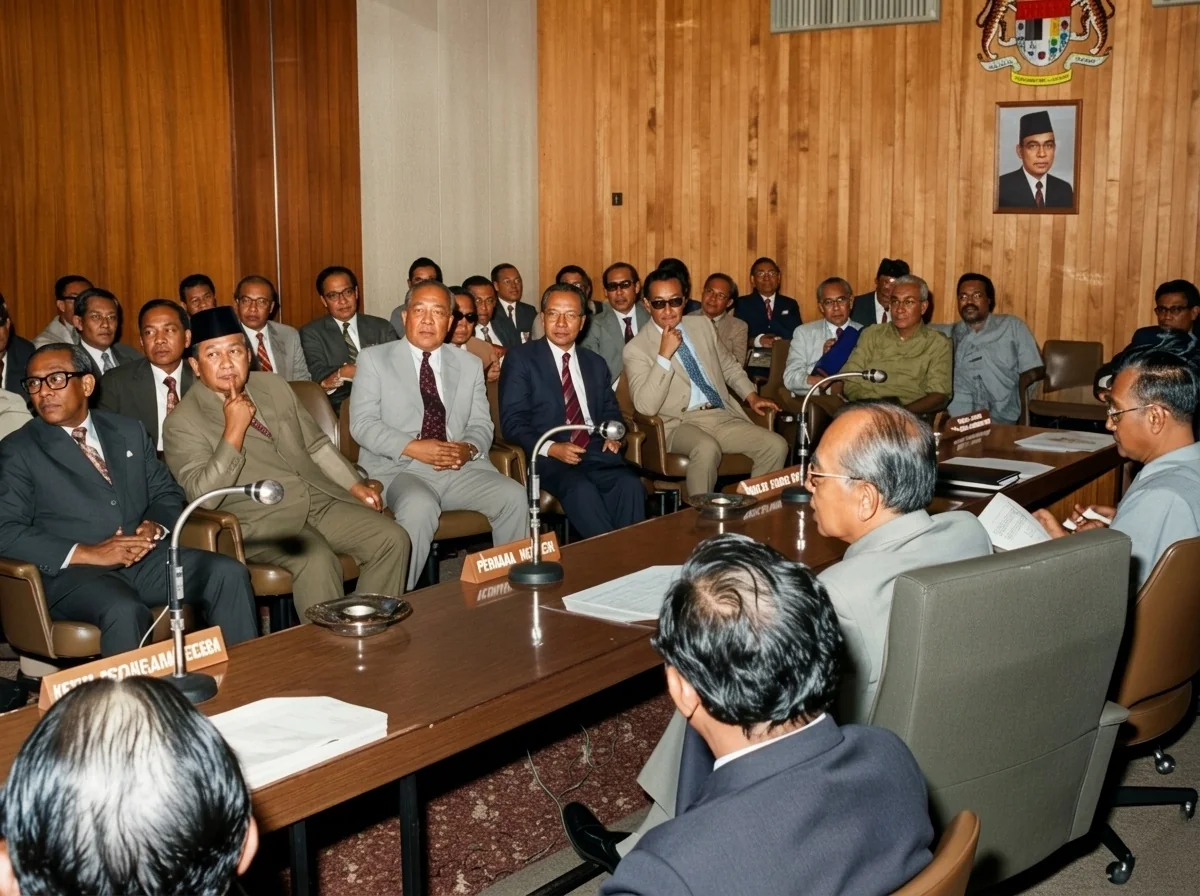
随着血火混乱的降临,巫统党内右翼少壮派的真实战略企图彻底浮出水面。以副首相兼国防部长敦阿都拉萨(Tun Abdul Razak)为核心的少壮派官僚集团,借流血惨案迅速发难。5月14日,政府在雪兰莪全州实施24小时戒严,出动两千名正规军士兵与三千六百名防暴警察进驻市区。5月15日,最高元首在少壮派胁迫下宣布全国进入紧急状态,国会与各州议会被无限期中止直至1971年2月,宪政民主荡然无存。国家最高权力被移交给由敦拉萨全权掌控的“国家行动理事会”(National Operations Council,简称 NOC)。在长达二十一个月的军管独裁统治下,首相东姑阿都拉曼的实权被彻底架空,最终被迫于1970年9月辞职下野,由敦拉萨正式接任首相。这是一场以人民鲜血为代价、精心谋划的“宫廷政变”。
在大权独揽后,反动统治集团于1970年8月31日仓促颁布“国家原则”(Rukun Negara),企图在封建专制与官僚垄断的前提下强推思想钳制。紧接着在1971年5月27日的新闻发布会上,正式推出了长达二十年的“新经济政策”(NEP)。官方宣传宣称该政策旨在“消除贫困与重构社会”,但在官僚资产阶级与封建买办权贵的实际操弄下,其核心异化为极其赤裸的阶级自肥工具:通过行政固打制、执照垄断与官营信托机构,将巨额国有资产私相授受,疯狂扶植附庸于执政党高层的巫统权贵与裙带资本家,导致马来社会内部贫富分化急剧拉大,广大马来贫苦工农并未真正摆脱剥削;同时残酷剥夺非马来族群劳动者的平等生存与受教育权利,导致大批专业人才被迫流亡海外(Brain Drain),埋下了深重的体制性社会创伤。
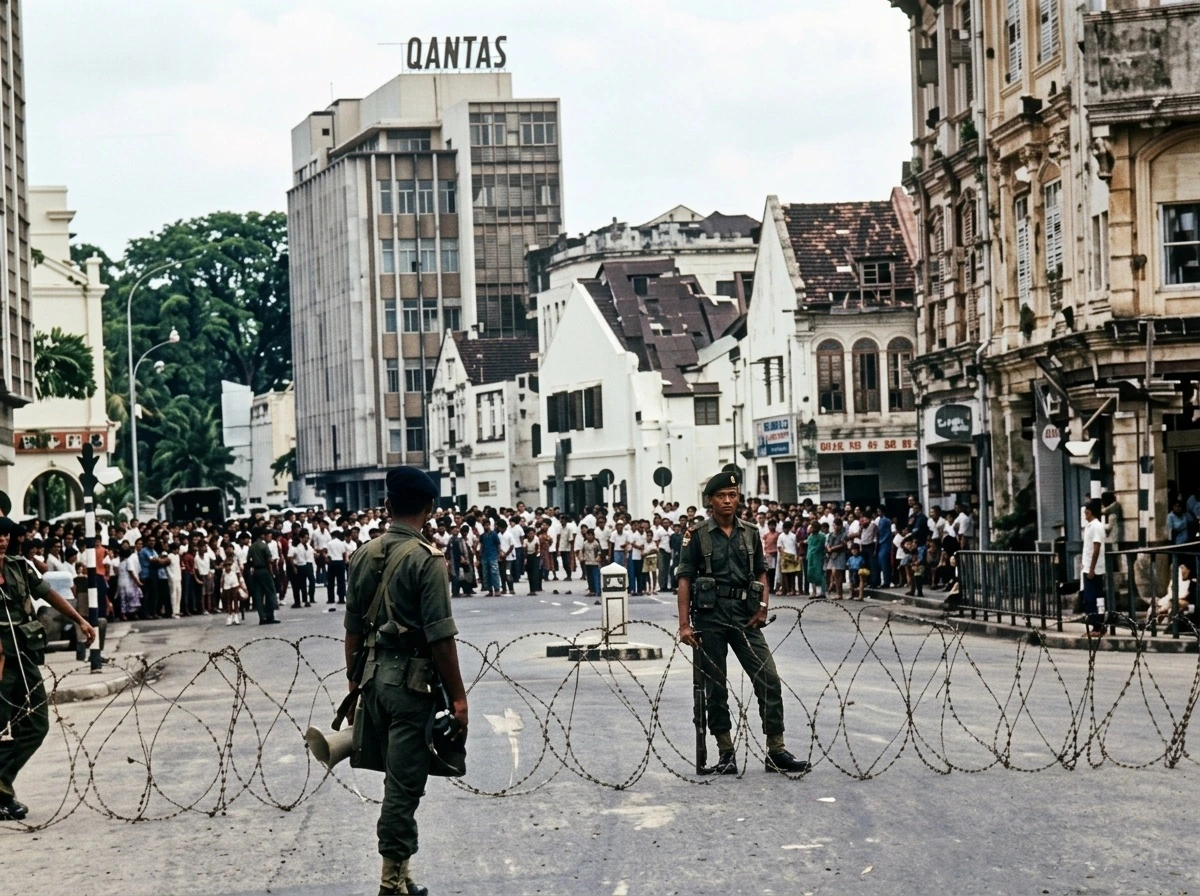
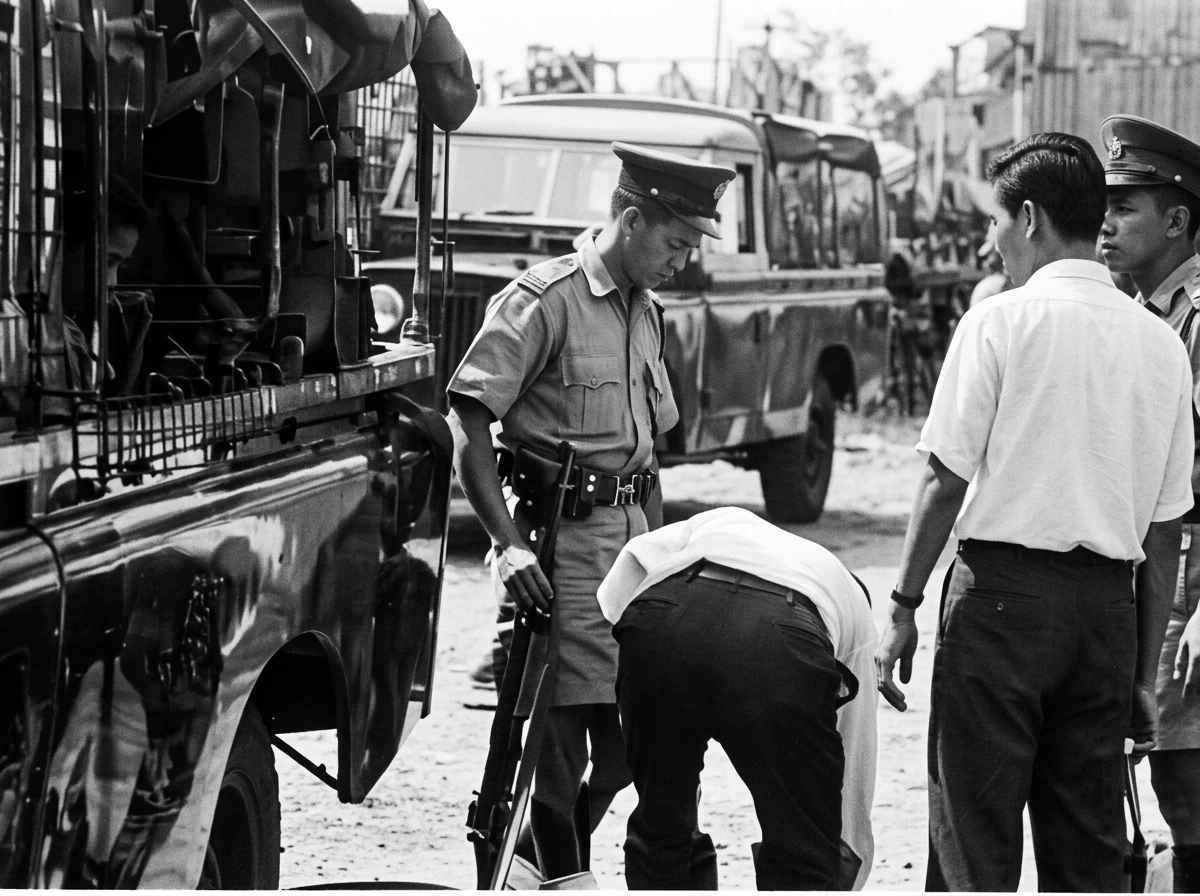
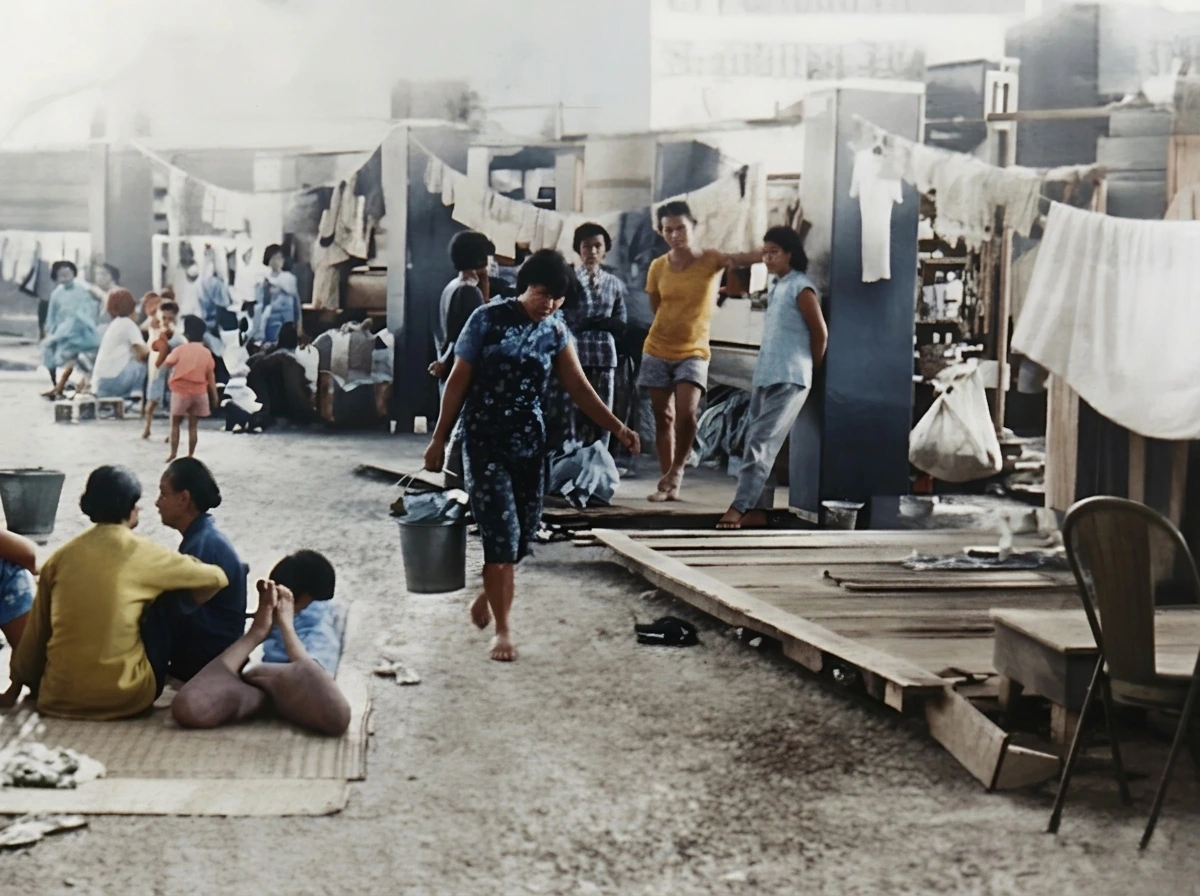
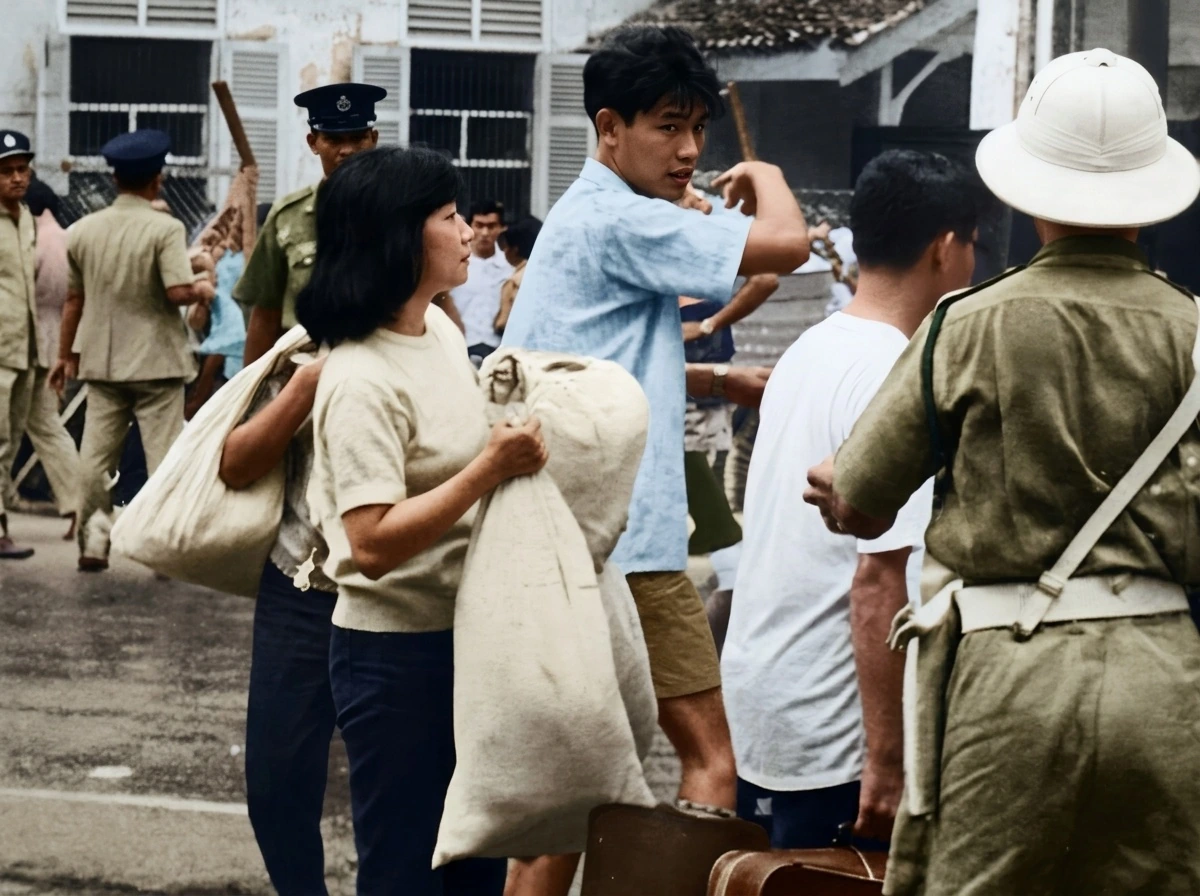
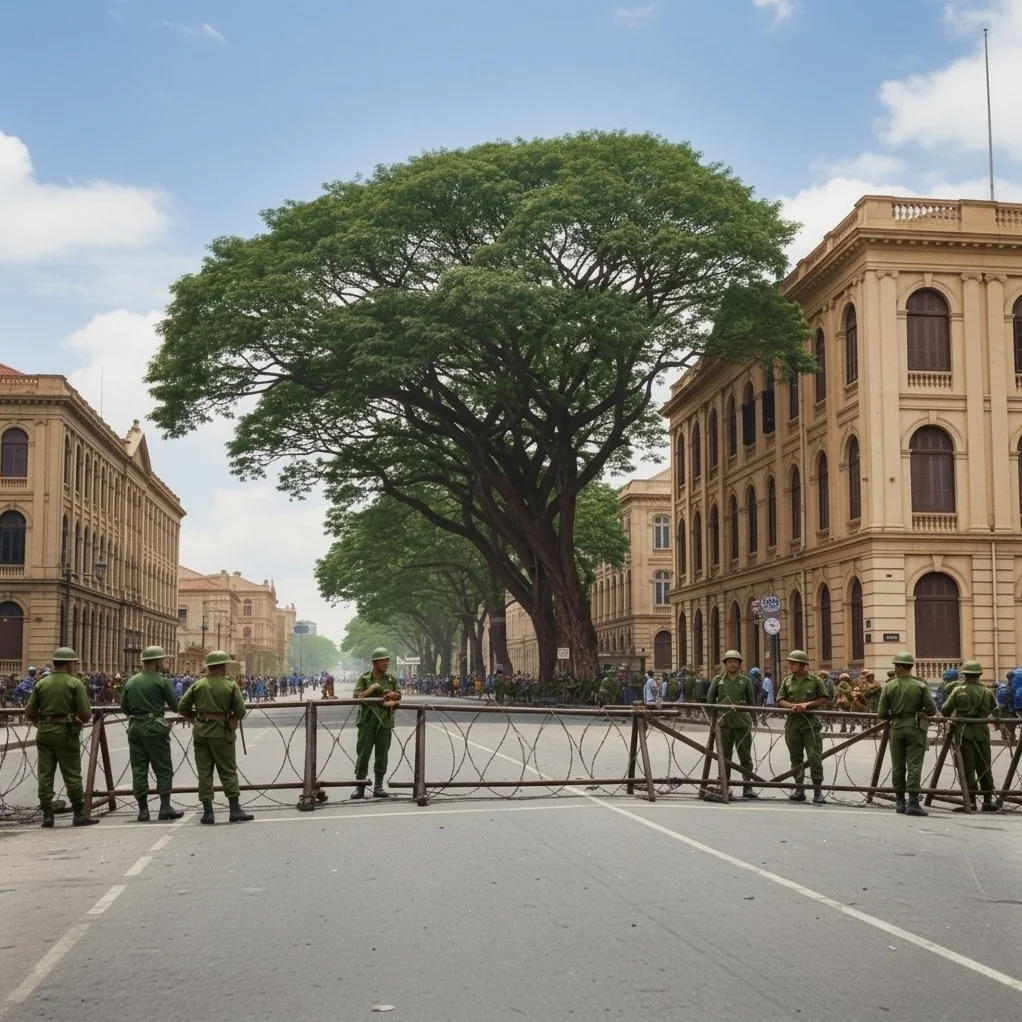
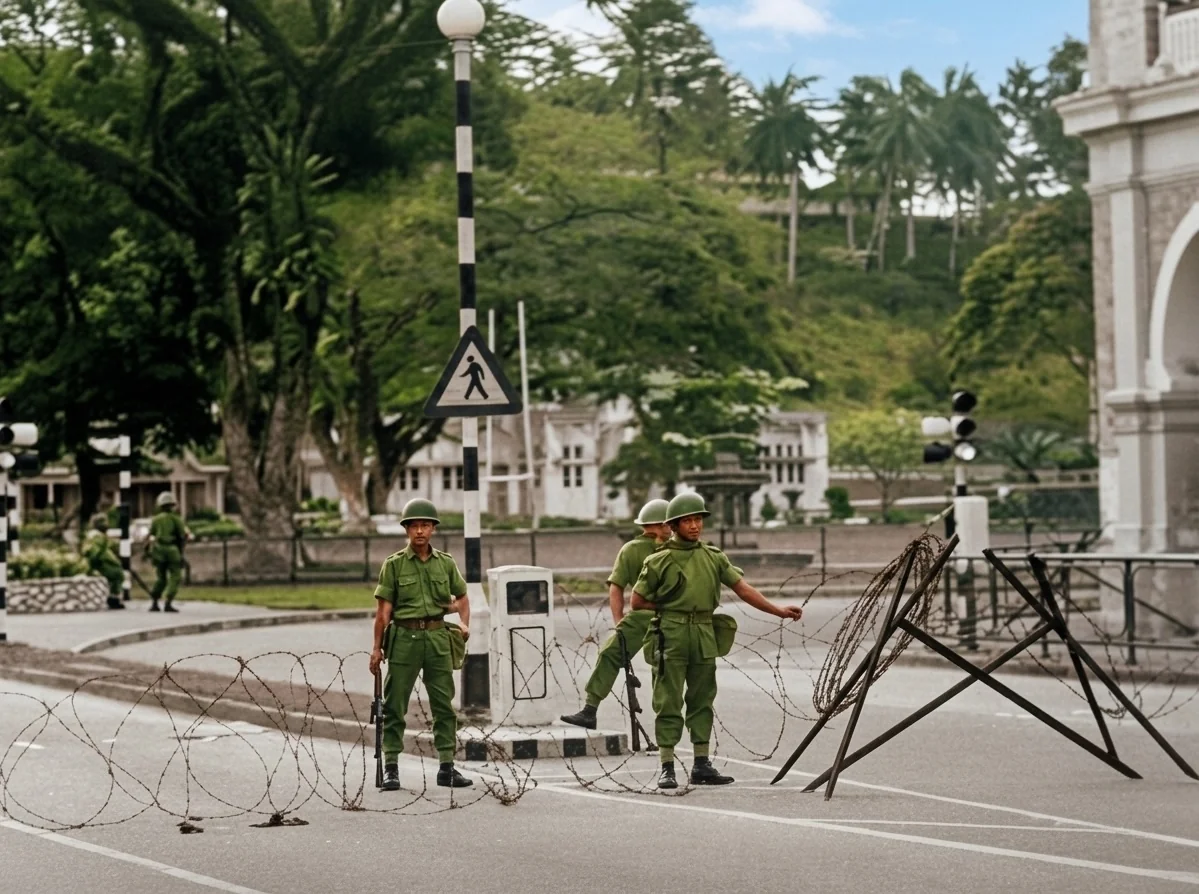
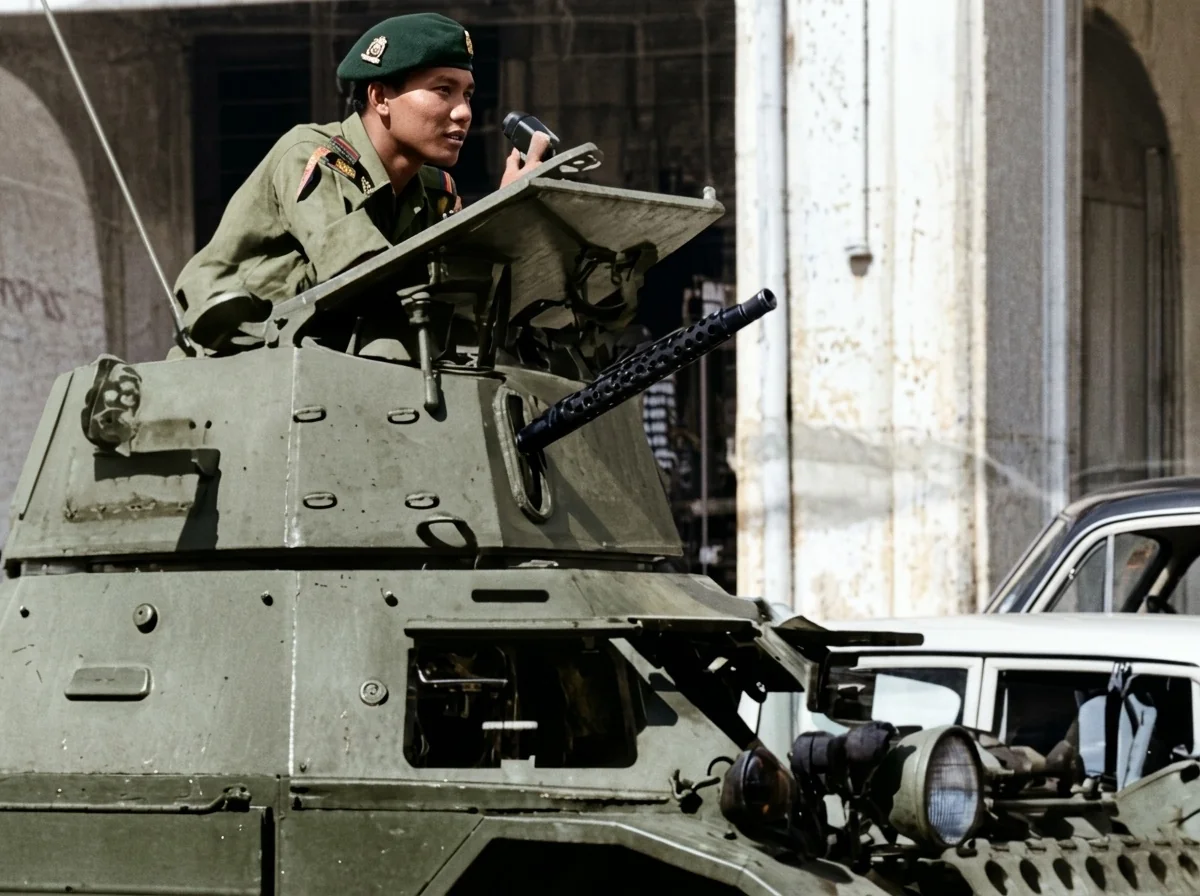
面对全城宵禁与重兵封锁,数万无家可归的各族受灾平民陷入绝境。仅在吉隆坡默迪卡体育馆,便临时收容了数千名房屋被焚、亲人离散的各族平民。荷枪实弹的皇家马来军团士兵架设重机枪在空旷市街巡弋,装甲战车截断主要桥梁要道。国家机器对平民的残酷压制,彻底击碎了人民群众对资产阶级议会制度的最后信赖。
As chaos engulfed the capital, the ultimate political objectives of the UMNO right-wing ultras were realized. A clique of bureaucratic and military hardliners centered around Deputy Prime Minister and Defense Minister Tun Abdul Razak executed a swift internal takeover. On May 14, a state-wide 24-hour curfew was imposed on Selangor, backed by 2,000 regular troops and 3,600 police officers. On May 15, a nationwide state of emergency was declared, suspending Parliament and fundamental civil liberties until February 1971. Executive power was concentrated in the National Operations Council (NOC) chaired by Tun Razak. Prime Minister Tunku Abdul Rahman was politically sidelined, ultimately forced to resign in September 1970 as Tun Razak assumed the premiership, consolidating a textbook palace coup.
Consolidating their authoritarian grip, the regime promulgated the Rukun Negara on August 31, 1970 to enforce ideological conformity, followed on May 27, 1971 by the formal launch of the New Economic Policy (NEP). While ostensibly designed to 'eradicate poverty and restructure society', the policy functioned in practice as an instrument of class enrichment for a rising bureaucratic-comprador bourgeoisie. State quotas, licensing monopolies, and statutory bodies channeled national wealth into the hands of an UMNO-connected political elite, worsening inequality within the Malay community while marginalizing working-class non-Malays and precipitating a massive brain drain that permanently impaired Malaysia's economic potential.
Under prolonged military curfew, thousands of displaced families were stranded. In Stadium Merdeka alone, thousands of destitute displaced residents whose homes had been torched were sheltered in makeshift relief centers. Regular infantry squads equipped with machine-gun mounted armored cars patrolled the desolate boulevards, enforcing emergency decrees with live ammunition. This militarization permanently shattered public faith in bourgeois constitutionalism.
随着血火混乱的降临,巫统党内右翼少壮派的真实战略企图彻底浮出水面。以副首相兼国防部长敦阿都拉萨(Tun Abdul Razak)为核心的少壮派官僚集团,借流血惨案迅速发难。5月14日,政府在雪兰莪全州实施24小时戒严,出动两千名正规军士兵与三千六百名防暴警察进驻市区。5月15日,最高元首在少壮派胁迫下宣布全国进入紧急状态,国会与各州议会被无限期中止直至1971年2月,宪政民主荡然无存。国家最高权力被移交给由敦拉萨全权掌控的“国家行动理事会”(National Operations Council,简称 NOC)。在长达二十一个月的军管独裁统治下,首相东姑阿都拉曼的实权被彻底架空,最终被迫于1970年9月辞职下野,由敦拉萨正式接任首相。这是一场以人民鲜血为代价、精心谋划的“宫廷政变”。
As chaos engulfed the capital, the ultimate political objectives of the UMNO right-wing ultras were realized. A clique of bureaucratic and military hardliners centered around Deputy Prime Minister and Defense Minister Tun Abdul Razak executed a swift internal takeover. On May 14, a state-wide 24-hour curfew was imposed on Selangor, backed by 2,000 regular troops and 3,600 police officers. On May 15, a nationwide state of emergency was declared, suspending Parliament and fundamental civil liberties until February 1971. Executive power was concentrated in the National Operations Council (NOC) chaired by Tun Razak. Prime Minister Tunku Abdul Rahman was politically sidelined, ultimately forced to resign in September 1970 as Tun Razak assumed the premiership, consolidating a textbook palace coup.
在大权独揽后,反动统治集团于1970年8月31日仓促颁布“国家原则”(Rukun Negara),企图在封建专制与官僚垄断的前提下强推思想钳制。紧接着在1971年5月27日的新闻发布会上,正式推出了长达二十年的“新经济政策”(NEP)。官方宣传宣称该政策旨在“消除贫困与重构社会”,但在官僚资产阶级与封建买办权贵的实际操弄下,其核心异化为极其赤裸的阶级自肥工具:通过行政固打制、执照垄断与官营信托机构,将巨额国有资产私相授受,疯狂扶植附庸于执政党高层的巫统权贵与裙带资本家,导致马来社会内部贫富分化急剧拉大,广大马来贫苦工农并未真正摆脱剥削;同时残酷剥夺非马来族群劳动者的平等生存与受教育权利,导致大批专业人才被迫流亡海外(Brain Drain),埋下了深重的体制性社会创伤。
Consolidating their authoritarian grip, the regime promulgated the Rukun Negara on August 31, 1970 to enforce ideological conformity, followed on May 27, 1971 by the formal launch of the New Economic Policy (NEP). While ostensibly designed to 'eradicate poverty and restructure society', the policy functioned in practice as an instrument of class enrichment for a rising bureaucratic-comprador bourgeoisie. State quotas, licensing monopolies, and statutory bodies channeled national wealth into the hands of an UMNO-connected political elite, worsening inequality within the Malay community while marginalizing working-class non-Malays and precipitating a massive brain drain that permanently impaired Malaysia's economic potential.
“所谓新经济政策的‘重构社会’,本质上是巫统买办权贵阶级利用国家行政特权进行的自肥盛宴。它在制造官僚裙带富豪的同时,将整套体制合法化为不可动摇的特权堡垒,极大地加深了对各民族劳动者的阶级剥削。”'The so-called restructuring of society under the New Economic Policy was fundamentally a feast of self-enrichment by the UMNO bureaucratic elite utilizing state administrative monopoly. While creating crony billionaires, it institutionalized class exploitation against the working masses of all ethnicities.'— 新经济政策(NEP)阶级本质历史考据定论 | Historical Verdict on the Class Nature of the New Economic Policy
面对全城宵禁与重兵封锁,数万无家可归的各族受灾平民陷入绝境。仅在吉隆坡默迪卡体育馆,便临时收容了数千名房屋被焚、亲人离散的各族平民。荷枪实弹的皇家马来军团士兵架设重机枪在空旷市街巡弋,装甲战车截断主要桥梁要道。国家机器对平民的残酷压制,彻底击碎了人民群众对资产阶级议会制度的最后信赖。
Under prolonged military curfew, thousands of displaced families were stranded. In Stadium Merdeka alone, thousands of destitute displaced residents whose homes had been torched were sheltered in makeshift relief centers. Regular infantry squads equipped with machine-gun mounted armored cars patrolled the desolate boulevards, enforcing emergency decrees with live ammunition. This militarization permanently shattered public faith in bourgeois constitutionalism.
第六章:马共的历史宣告与力量跃升:六三〇声明、革命之声与青年奔赴边区大潮
Chapter 6: Historic Declaration and Revolutionary Surge: The June 30 Manifesto, Voice of Malayan Revolution, and the Youth Exodus to Border Bases
面对反动统治阶级蓄意挑起种族屠杀、实行法西斯军管的滔天罪行,马来亚共产党在历史关头展现出无产阶级先锋队的坚定气魄与正义担当。1969年6月30日,马共中央第一时间发布了载入史册的重磅历史文献:《各民族人民团结起来,以革命的暴力反对反革命的暴力,粉碎敌人的民族屠杀政策!(马来亚共产党中央委员会声明)》。马共中央在声明中深刻揭露:拉曼-拉萨傀儡集团撕下‘民主’面皮发动血腥屠杀,是其推行民族压迫与阶级剥削政策的必然恶果,旨在掩盖其统治危机与掠夺财富的贪婪本质;马共中央严正号召全马来亚各民族工人、农民及一切被压迫阶层彻底认清反动统治阶级的挑拨阴谋,团结起来展开武装自卫,绝不陷入盲目仇杀的圈套。
在军管严厉封锁新闻、全马舆论一片窒息的黑暗时刻,1969年11月15日,马共中央的广播电台“马来亚革命之声”正式开播。电台以华、马两种语言强力发射电波。1969年12月3日、10日与20日,革命之声连续播发三篇重磅编辑部评论员文章,以无可辩驳的史实证据,逐条驳斥反动政府出台的欺骗性白皮书,严厉揭露拉曼-拉萨集团自日本投降以来挑动种族对立的罪恶历史,成为全马各族人民冲破信息铁幕的唯一真理灯塔。
五一三的国家法西斯暴行,在全马社会激起深重政治信任危机的同时,也彻底击碎了进步青年对资产阶级议会民主的最后幻想。大批原本活跃于工运、学运的优秀各族青年纷纷转入秘密地下斗争,成百上千的热血青年在马共地下交通线的引导下,毅然决然告别家庭、跨越重重封锁北上泰南丛林,投身马来亚民族解放军。从冷战时期白色恐怖与《国内安全法令》(ISA)的严酷现实审视,马共在泰南根据地建立的革命武装阵地,客观上为这些走投无路的爱国志士与热血青年提供了另一个免遭军警搜捕、免于在集中营里把牢底坐穿的‘政治避难所与尊严庇护所’。在半岛白区,留在城市意味着随时可能在深夜被捕、遭受严刑逼供,乃至像谢太宝、林顺成一样面临数十年的无审讯监禁或当街枪杀;而走进丛林拿起武器,青年们不仅保全了革命气节与做人的尊严,更从任人宰割的被动受害者,蜕变为掌握自己命运、保卫工农利益的历史能动主体。正如马共中央总书记陈平在回忆录《我方的历史》(My Side of History)中所郑重记载:马共武装力量在此期间迎来了历史性大发展,核心战斗指战员由低谷时期的数百人,在五一三惨案后迅速翻番至一千六百人以上。一支百炼成钢、植根于人民群众的民族解放铁军在泰南密林中巍然屹立,对吉隆坡法西斯政权形成了坚强的军事威慑,迫使其统治集团在后续岁月中不得不深怀戒惧,有力地保卫了各民族劳动大众的长远根本利益。
Confronting the reactionary regime's deliberate instigation of racial terror and military dictatorship, the Communist Party of Malaya demonstrated resolute revolutionary clarity. On June 30, 1969, the CPM Central Committee issued a landmark historical manifesto: 'People of All Nationalities, Unite to Oppose Counter-Revolutionary Violence with Revolutionary Violence and Smash the Enemy's Policy of Racial Massacres!' (Archival Exhibit No. 182). The statement pierced state propaganda, exposing the Rahman-Razak clique's slaughter as the natural outcome of decades of feudal-comprador class oppression, and called upon workers, peasants, and progressive forces of all ethnicities to organize armed self-defense against fascist terror.
In the dark hours of total censorship, on November 15, 1969, the CPM Central Committee's radio station Voice of the Malayan Revolution (VMR) officially commenced broadcasting. Broadcasting in Chinese and Malay, VMR aired three devastating editorial commentaries on December 3, 10, and 20, 1969, rigorously dismantling the regime's fraudulent White Paper and documenting how reactionary elites had manufactured ethnic strife since the Japanese surrender to maintain comprador hegemony.
The May 13 atrocities completely shattered illusions in bourgeois parliamentarism among progressive youth. Across cities and rural towns, hundreds of radicalized activists went underground, making their way through clandestine logistics networks into the jungle redoubts of Southern Thailand to join the Malayan National Liberation Army (MNLA). Viewed through the harsh realities of Cold War White Terror and the draconian Internal Security Act (ISA), the liberated border zones established by the CPM objectively functioned as an indispensable sanctuary of resistance: saving an entire generation of dedicated trade unionists and students from arbitrary arrest, torture, and lifelong imprisonment without trial. In the cities, remaining above ground meant facing constant surveillance by the Special Branch or extrajudicial killings like that of Lim Soon Seng; in the jungle, by taking up arms in collective self-defense, these youths reclaimed their human dignity, transforming from defenseless victims of state terror into conscious historical agents. As CPM Secretary-General Chin Peng recorded in *My Side of History*, guerrilla ranks surged from a low-point nucleus of several hundred to well over 1,600 dedicated frontline fighters. This battle-hardened revolutionary force established a formidable deterrent that effectively constrained the fascist excesses of the Kuala Lumpur ruling elite, safeguarding the vital interests of the oppressed masses.
面对反动统治阶级蓄意挑起种族屠杀、实行法西斯军管的滔天罪行,马来亚共产党在历史关头展现出无产阶级先锋队的坚定气魄与正义担当。1969年6月30日,马共中央第一时间发布了载入史册的重磅历史文献:《各民族人民团结起来,以革命的暴力反对反革命的暴力,粉碎敌人的民族屠杀政策!(马来亚共产党中央委员会声明)》。马共中央在声明中深刻揭露:拉曼-拉萨傀儡集团撕下‘民主’面皮发动血腥屠杀,是其推行民族压迫与阶级剥削政策的必然恶果,旨在掩盖其统治危机与掠夺财富的贪婪本质;马共中央严正号召全马来亚各民族工人、农民及一切被压迫阶层彻底认清反动统治阶级的挑拨阴谋,团结起来展开武装自卫,绝不陷入盲目仇杀的圈套。
Confronting the reactionary regime's deliberate instigation of racial terror and military dictatorship, the Communist Party of Malaya demonstrated resolute revolutionary clarity. On June 30, 1969, the CPM Central Committee issued a landmark historical manifesto: 'People of All Nationalities, Unite to Oppose Counter-Revolutionary Violence with Revolutionary Violence and Smash the Enemy's Policy of Racial Massacres!' (Archival Exhibit No. 182). The statement pierced state propaganda, exposing the Rahman-Razak clique's slaughter as the natural outcome of decades of feudal-comprador class oppression, and called upon workers, peasants, and progressive forces of all ethnicities to organize armed self-defense against fascist terror.
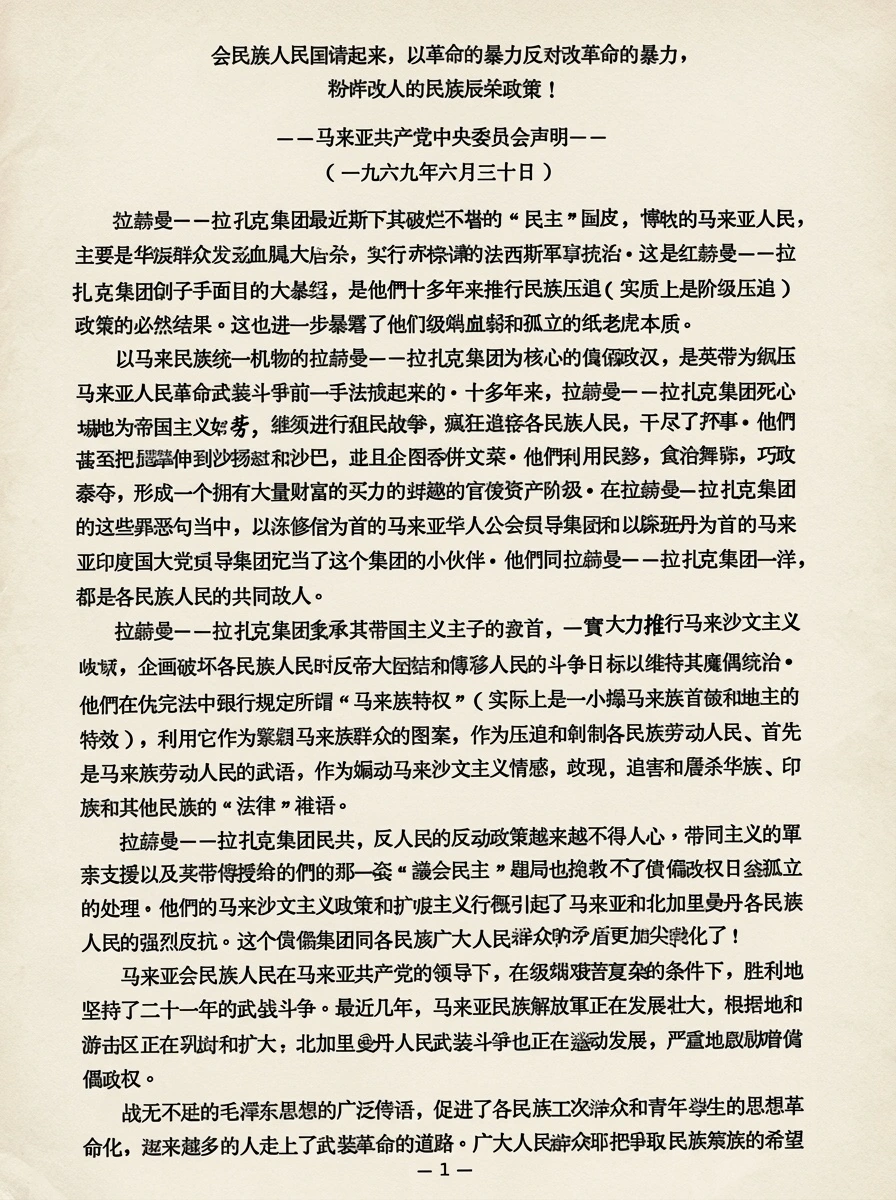
“各民族人民团结起来,以革命的暴力反对反革命的暴力,粉碎敌人的民族屠杀政策!拉曼-拉萨集团的刽子手面目大暴露,是他们十多年来推行民族压迫(实质上是阶级压迫)政策的必然结果。各民族广大工农劳动群众必须紧密团结起来,粉碎敌人的分化挑拨!”'People of all nationalities, unite to oppose counter-revolutionary violence with revolutionary violence and smash the enemy's policy of racial massacres! The butcher face of the Rahman-Razak clique is the inevitable result of their class oppression. Working masses must unite firmly to shatter reactionary divide-and-rule tactics!'— 《马来亚共产党中央委员会声明》(1969年6月30日原件) | Statement of the Central Committee of the Communist Party of Malaya (June 30, 1969)
在军管严厉封锁新闻、全马舆论一片窒息的黑暗时刻,1969年11月15日,马共中央的广播电台“马来亚革命之声”正式开播。电台以华、马两种语言强力发射电波。1969年12月3日、10日与20日,革命之声连续播发三篇重磅编辑部评论员文章,以无可辩驳的史实证据,逐条驳斥反动政府出台的欺骗性白皮书,严厉揭露拉曼-拉萨集团自日本投降以来挑动种族对立的罪恶历史,成为全马各族人民冲破信息铁幕的唯一真理灯塔。
In the dark hours of total censorship, on November 15, 1969, the CPM Central Committee's radio station Voice of the Malayan Revolution (VMR) officially commenced broadcasting. Broadcasting in Chinese and Malay, VMR aired three devastating editorial commentaries on December 3, 10, and 20, 1969, rigorously dismantling the regime's fraudulent White Paper and documenting how reactionary elites had manufactured ethnic strife since the Japanese surrender to maintain comprador hegemony.
五一三的国家法西斯暴行,在全马社会激起深重政治信任危机的同时,也彻底击碎了进步青年对资产阶级议会民主的最后幻想。大批原本活跃于工运、学运的优秀各族青年纷纷转入秘密地下斗争,成百上千的热血青年在马共地下交通线的引导下,毅然决然告别家庭、跨越重重封锁北上泰南丛林,投身马来亚民族解放军。从冷战时期白色恐怖与《国内安全法令》(ISA)的严酷现实审视,马共在泰南根据地建立的革命武装阵地,客观上为这些走投无路的爱国志士与热血青年提供了另一个免遭军警搜捕、免于在集中营里把牢底坐穿的‘政治避难所与尊严庇护所’。在半岛白区,留在城市意味着随时可能在深夜被捕、遭受严刑逼供,乃至像谢太宝、林顺成一样面临数十年的无审讯监禁或当街枪杀;而走进丛林拿起武器,青年们不仅保全了革命气节与做人的尊严,更从任人宰割的被动受害者,蜕变为掌握自己命运、保卫工农利益的历史能动主体。正如马共中央总书记陈平在回忆录《我方的历史》(My Side of History)中所郑重记载:马共武装力量在此期间迎来了历史性大发展,核心战斗指战员由低谷时期的数百人,在五一三惨案后迅速翻番至一千六百人以上。一支百炼成钢、植根于人民群众的民族解放铁军在泰南密林中巍然屹立,对吉隆坡法西斯政权形成了坚强的军事威慑,迫使其统治集团在后续岁月中不得不深怀戒惧,有力地保卫了各民族劳动大众的长远根本利益。
The May 13 atrocities completely shattered illusions in bourgeois parliamentarism among progressive youth. Across cities and rural towns, hundreds of radicalized activists went underground, making their way through clandestine logistics networks into the jungle redoubts of Southern Thailand to join the Malayan National Liberation Army (MNLA). Viewed through the harsh realities of Cold War White Terror and the draconian Internal Security Act (ISA), the liberated border zones established by the CPM objectively functioned as an indispensable sanctuary of resistance: saving an entire generation of dedicated trade unionists and students from arbitrary arrest, torture, and lifelong imprisonment without trial. In the cities, remaining above ground meant facing constant surveillance by the Special Branch or extrajudicial killings like that of Lim Soon Seng; in the jungle, by taking up arms in collective self-defense, these youths reclaimed their human dignity, transforming from defenseless victims of state terror into conscious historical agents. As CPM Secretary-General Chin Peng recorded in *My Side of History*, guerrilla ranks surged from a low-point nucleus of several hundred to well over 1,600 dedicated frontline fighters. This battle-hardened revolutionary force established a formidable deterrent that effectively constrained the fascist excesses of the Kuala Lumpur ruling elite, safeguarding the vital interests of the oppressed masses.
“在山下,每天晚上睡觉都提心吊胆,听见警车汽笛声就心惊肉跳;但只要迈过边境秘密交通线踏入根据地,哪怕头顶有轰炸机,我们心里反而踏实了。因为在这里,我们不再是任人宰割的囚徒,我们拥有反抗压迫的权利,活得有做人的尊严。”'Down in the cities, we lived every night in dread, our hearts pounding at the mere wail of a police siren. But the moment we crossed the clandestine border routes into the revolutionary base, even with enemy bombers roaring overhead, our hearts were at peace. For here, we were no longer defenseless captives awaiting slaughter; we possessed the right to resist oppression and lived with true human dignity.'— 泰南革命根据地北上青年老战士口述实录 | Oral History of Radicalized Youth Recruits, Southern Thailand Border Redoubts
“马共从低谷的约300人扩大至500人,再到800人,并在1967至1968年达到约1,000人。1969年5月吉隆坡种族骚乱之后,我们迎来大批热血的青年加入。他们通过地下活动的口耳相传而来……此后马共人数扩大到1,600名以上的核心战士。”'Guerrilla ranks swelled during this period from the low-point nucleus of 300 to 500, then to 800 and up to around 1,000 by 1967-68. In the aftermath of the Kuala Lumpur race riots in May 1969, we received a flood of enthusiastic recruits... Our numbers then expanded to well over 1,600 hard-core fighters.'— 陈平回忆录《我方的历史》(Alias Chin Peng: My Side of History) | Chin Peng, Alias Chin Peng: My Side of History
历史档案图证与文献影印(全卷图录)
Archival Photographic & Documentary Evidence Gallery