第9集:英帝维护在马经济命脉与马共纠错准备反击军事进攻
Episode 9: CPM Course Correction, Preparing Counter-Offensives, and the Defense of Economic Lifelines
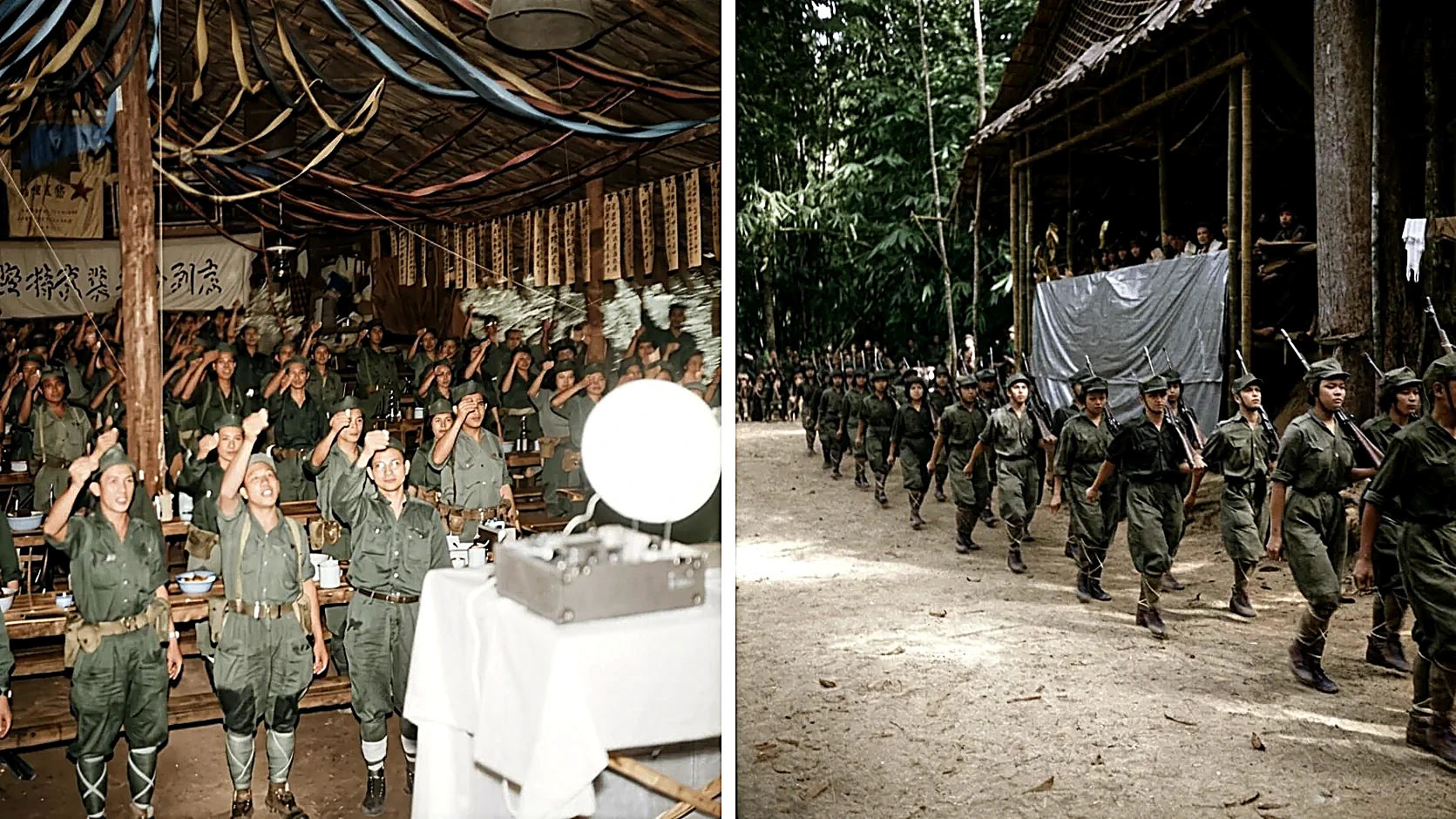
战后英国本土深陷破产危机,全靠马来亚的橡胶和锡矿出口为大英帝国赚取巨额美元顺差。为了维护这一帝国经济命脉,英殖民当局决意用武力扑灭工农反殖运动。马共中央敏锐洞察殖民杀机,在1948年3月第四次中央全会与5月第五次中央全会上彻底清算内奸莱特的右倾投降主义路线,断然破除和平幻想,抢运物资秘密转移丛林,全面做好武装自卫迎击殖民军事进攻的战备动员。
Post-war Britain faced severe fiscal exhaustion, depending heavily on Malaya's rubber and tin exports to generate vital American dollar surpluses for London. To preserve this imperial lifeline, colonial authorities resolved to crush labor and anti-colonial movements by armed force. The CPM Central Committee identified Whitehall's military design, thoroughly repudiated Lai Te's capitulationist line during the February and May plenums, shattered peaceful illusions, and executed a strategic transition into the deep jungle to organize armed self-defense.
第一章:大英帝国的战后破产账单:马来亚“美元造币厂”如何拯救英镑危机
Chapter 1: The Post-War Bankruptcy of the British Empire: How Malaya as the 'Dollar Earner' Rescued Sterling
第二次世界大战的硝烟散去后,作为战胜国的大英帝国并未迎来繁荣,反而陷入了帝国历史上前所未有的财政赤字与债务深渊。伦敦的威斯敏斯特白厅与唐宁街十号每天面对的,是一张张濒临破产的催款单:数以百亿计的战时外债压得国库喘不过气,黄金储备几乎枯竭,全英国极度缺乏采购粮食与重工业重建原料所必需的硬通货:美元。英镑的国际信誉如同狂风中的残烛,随时面临雪崩式贬值的灾难性危机。
在这片残破的殖民版图里,大英帝国唯有一处能够源源不断喷涌出真金白银的战略提款机,那便是远东的马来半岛。彼时马来亚出产的天然橡胶与高品位锡矿,是战后全球工业复苏与美国汽车军工产业无可替代的核心原料。1946年至1951年间,马来亚的橡胶和锡矿直接为大英帝国赚取了超过17亿美元的巨额顺差。这笔庞大无比的硬通货外汇,全数被伦敦财政部强行收缴,充入所谓的‘英镑区外汇池’(Sterling Area Dollar Pool),用以维系英国本土国民的口粮进口并支撑伦敦金融城的全球汇率霸权。
然而,这每年数以亿美元计的庞大财富,完全是建立在全马各族工农劳苦大众极其悲惨的血汗压榨之上的。在橡胶园与锡矿深处,数十万华人、印度人和马来人胶工矿工日夜在热带雨林的恶劣环境中劳作,每日所得报酬甚至不够购买基本的大米。战后严重的恶性通货膨胀让底层人民生活在饥寒交迫之中,营养不良与肺结核肆虐。
当工人们在泛马联合工会(PMFTU)的领导下组织起来,要求最低薪金、八小时工作制与基本的医疗生存权利时,英国种植园主与矿业主联合会(UPAM)却暴跳如雷。在殖民统治者与伦敦财阀看来,任何工人的罢工抗议与薪资增长,都是在‘剥夺大英帝国的美元外汇’。为了保住这根救命稻草,大英帝国工党政府毫不犹豫地下达了军事镇压的铁血指令。
When the guns of the Second World War fell silent, victorious Britain found itself plunged into an unprecedented fiscal abyss. In Whitehall and 10 Downing Street, the imperial elite faced a balance sheet of ruin: war debts had depleted the treasury, gold reserves were nearly exhausted, and the metropole was starving for the essential currency of post-war reconstruction: the American dollar. The international stability of the pound sterling hovered on the brink of catastrophic collapse.
Across the sprawling, fractured remnants of the Empire, only one tropical territory possessed the vital capacity to generate foreign exchange: Malaya. Malaya's high-grade natural rubber and tin were irreplaceable commodities for global industrial revitalization. Between 1946 and 1951, Malayan commodities generated over $1.7 billion in hard US currency. This enormous surplus was forcibly siphoned into London's Sterling Area Dollar Pool to purchase food imports for Britain and prop up the sterling exchange rate.
Yet this torrent of dollar wealth was extracted entirely from the extreme exploitation of Malayan plantation tappers and tin miners. Across rural estates, hundreds of thousands of Chinese, Indian, and Malay laborers endured grueling conditions for wages insufficient to buy daily rice, while runaway inflation triggered widespread malnutrition and tuberculosis.
When workers organized under the Pan-Malayan Federation of Trade Unions (PMFTU) to demand living wages and an eight-hour workday, British planters and mine owners reacted with fury. In Whitehall's calculation, labor strikes threatened the Empire's dollar earnings. To preserve this economic lifeline, Britain's Labour cabinet resolved to unleash military force against the organized labor movement.
第二次世界大战的硝烟散去后,作为战胜国的大英帝国并未迎来繁荣,反而陷入了帝国历史上前所未有的财政赤字与债务深渊。伦敦的威斯敏斯特白厅与唐宁街十号每天面对的,是一张张濒临破产的催款单:数以百亿计的战时外债压得国库喘不过气,黄金储备几乎枯竭,全英国极度缺乏采购粮食与重工业重建原料所必需的硬通货:美元。英镑的国际信誉如同狂风中的残烛,随时面临雪崩式贬值的灾难性危机。
在这片残破的殖民版图里,大英帝国唯有一处能够源源不断喷涌出真金白银的战略提款机,那便是远东的马来半岛。彼时马来亚出产的天然橡胶与高品位锡矿,是战后全球工业复苏与美国汽车军工产业无可替代的核心原料。1946年至1951年间,马来亚的橡胶和锡矿直接为大英帝国赚取了超过17亿美元的巨额顺差。这笔庞大无比的硬通货外汇,全数被伦敦财政部强行收缴,充入所谓的‘英镑区外汇池’(Sterling Area Dollar Pool),用以维系英国本土国民的口粮进口并支撑伦敦金融城的全球汇率霸权。
When the guns of the Second World War fell silent, victorious Britain found itself plunged into an unprecedented fiscal abyss. In Whitehall and 10 Downing Street, the imperial elite faced a balance sheet of ruin: war debts had depleted the treasury, gold reserves were nearly exhausted, and the metropole was starving for the essential currency of post-war reconstruction: the American dollar. The international stability of the pound sterling hovered on the brink of catastrophic collapse.
Across the sprawling, fractured remnants of the Empire, only one tropical territory possessed the vital capacity to generate foreign exchange: Malaya. Malaya's high-grade natural rubber and tin were irreplaceable commodities for global industrial revitalization. Between 1946 and 1951, Malayan commodities generated over $1.7 billion in hard US currency. This enormous surplus was forcibly siphoned into London's Sterling Area Dollar Pool to purchase food imports for Britain and prop up the sterling exchange rate.
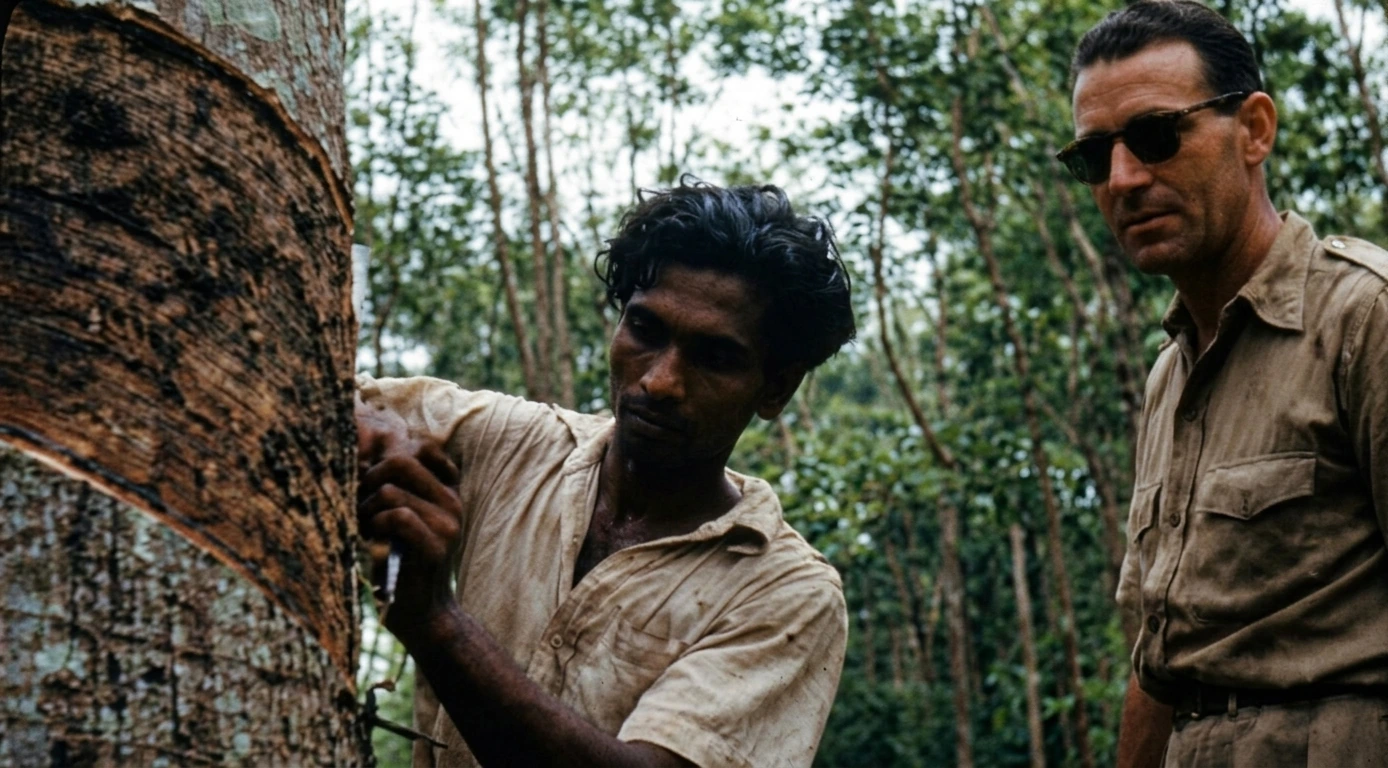
然而,这每年数以亿美元计的庞大财富,完全是建立在全马各族工农劳苦大众极其悲惨的血汗压榨之上的。在橡胶园与锡矿深处,数十万华人、印度人和马来人胶工矿工日夜在热带雨林的恶劣环境中劳作,每日所得报酬甚至不够购买基本的大米。战后严重的恶性通货膨胀让底层人民生活在饥寒交迫之中,营养不良与肺结核肆虐。
当工人们在泛马联合工会(PMFTU)的领导下组织起来,要求最低薪金、八小时工作制与基本的医疗生存权利时,英国种植园主与矿业主联合会(UPAM)却暴跳如雷。在殖民统治者与伦敦财阀看来,任何工人的罢工抗议与薪资增长,都是在‘剥夺大英帝国的美元外汇’。为了保住这根救命稻草,大英帝国工党政府毫不犹豫地下达了军事镇压的铁血指令。
Yet this torrent of dollar wealth was extracted entirely from the extreme exploitation of Malayan plantation tappers and tin miners. Across rural estates, hundreds of thousands of Chinese, Indian, and Malay laborers endured grueling conditions for wages insufficient to buy daily rice, while runaway inflation triggered widespread malnutrition and tuberculosis.
When workers organized under the Pan-Malayan Federation of Trade Unions (PMFTU) to demand living wages and an eight-hour workday, British planters and mine owners reacted with fury. In Whitehall's calculation, labor strikes threatened the Empire's dollar earnings. To preserve this economic lifeline, Britain's Labour cabinet resolved to unleash military force against the organized labor movement.
第二章:五大解密情报档案考据:白厅从“战时利用”到“彻底毁灭”的密谋链条
Chapter 2: Five Declassified Intelligence Dossiers: Whitehall's Premeditated Conspiracy from Wartime Exploitation to Armed Annihilation
依据英国《公共档案法》(Public Records Act)三十年解密原则(Thirty-Year Rule),大批曾被列为最高国家机密的绝密卷宗相继重见天日,包括外交和联邦事务部(FCO)、殖民地部(CO)以及英国军情五处(KV系列)等核心档案。这些白纸黑字的历史文献,彻底粉碎了所谓‘英军是被迫应对马共武装暴动’的殖民官方谎言。
解密档案无可辩驳地表明:战后马来半岛爆发的武装冲突,绝不是偶然发生的治安事件,更不是马共所谓的‘挑起内战’,而是大英帝国在战后三年精心策划、从一开始就决意通过国家武装力量彻底扑灭反帝先锋的既定国策!
第一卷宗(1945年4月23日·军情五处 KV 4/470 档案):这是英国远东安全情报处(SIFE)向伦敦发出的绝密电报。远东情报机关在日军战败前夕就定下了不可逆转的反动基调:“无法合作;目标是消灭马共骨干,免其政治化。”情报界明确达成共识:“绝不让马共合法化,只接受无条件投降”。这铁证如山地证实:在日军投降前数月,白厅就已经打定主意绝不给予马共任何合法政治地位,所谓战后和平过渡纯系麻痹马共的政治诱饵!
第二卷宗(1945年9月2日·英国国家档案馆受降军令 KV 4/422 档案):1945年9月2日,日本签署无条件投降书,全人类迎来反法西斯胜利的黎明。然而英国重返马来亚的军事指挥总部在受降当天签署的绝密记录中,却下达了极其冷酷的指令:“任何和谈提议须立即扼杀;坚持无条件投降。”伦敦总部直接剥夺了前线军政长官开展任何政治接触的权力,打定主意要以征服者的姿态逼迫人民抗日军彻底缴械!
第三卷宗(1948年3月20日·总督府内阁绝密会议记录 FCO 141/15436):内奸莱特被彻底清算后,马共中央果断扭转右倾路线并重新领导全马工潮。殖民统治集团在极度恐慌中撕下假面具。1948年3月20日总督府绝密行政会议正式通过消灭方针:“无法与马共共存;必须摧毁该组织,不可容忍。”公文白纸黑字写道:“虽曾与马共合作(136部队),今后谈判之门彻底关闭!”英国殖民者在政治上正式向马共宣判了死刑!
第四卷宗(1948年6月4日·殖民地部核心绝密卷宗 CO 537/6006):在和丰枪声爆发前近两周,殖民地部便在绝密公文中下达定性:“马共被定性为‘莫斯科指挥的革命党’……谈判只会赋予合法性。”更致命的是,英国殖民安全部门在6月4日就已秘密起草并通过了《第18号紧急法令》(无需审讯无限期拘留与搜查令),为实行‘零和谈’与全马大搜捕提供了完备的司法技术准备!这铁证如山地击碎了“英军因和丰事件才被动宣布紧急状态”的历史谎言!
第五卷宗(1948年12月31日·殖民地部年度战略复盘报告 CO series 537):在全面铁血镇压半年后,白厅在年终最高战略复盘中露骨总结道:“妥协前景等于零。政治资本在于展示强硬。”大英帝国把向西方阵营展示“反共强硬政治资本”置于全马平民生死之上,直接导致了1950年哈罗德·布里格斯中将推行“布里格斯计划”、建立全马 450 余座铁丝网新村集中营、将 50 余万平民强制迁徙监禁的历史浩劫!
剥离殖民当局数十年精心粉饰的公文辞令,这五份绝密公文构成了一条铁证如山的逻辑闭环。它用大英帝国决策者亲笔签署的绝密记录,无可辩驳地还原了历史的原貌:
绝不是马共‘挑起了武装叛乱’,而是帝国主义从重返马来亚的第一天起,就抱定了绝不交出政权、绝不容忍马共合法化、决意通过国家暴力消灭革命力量的反动国策。面对已经举起的屠刀,马共中央在1948年五月扩大会议上果断破除和平幻想、毅然带领工农群众拿起武器走向丛林开展革命自卫,不仅是挽救革命火种于生死存亡关头的唯一正确抉择,更是捍卫全马各族人民生存权利与民族独立未来的崇高正义之举!
Under Britain's Public Records Act and the Thirty-Year Rule, classified state papers from the Foreign and Commonwealth Office (FCO), Colonial Office (CO), and Security Service (MI5 / KV series) have been unsealed. These authentic documents completely dismantle the colonial myth that British forces were 'reluctantly forced' to react to communist aggression.
Declassified records reveal unequivocally that the armed conflict of 1948 was neither an accidental breakdown of order nor a communist-provoked civil war. Rather, it was a premeditated imperial grand strategy orchestrated by Whitehall over three post-war years to annihilate the anti-colonial vanguard through overwhelming military violence.
Dossier 1 (April 23, 1945, MI5 File KV 4/470): Secret telegram from Security Intelligence Far East (SIFE) laying down Whitehall's foundational policy months before the Japanese surrender: 'Collaboration impossible; objective is to neutralize CPM cadres before they mobilize politically.' The consensus was absolute: 'Communist legitimacy must never be permitted; unconditional surrender only.'
Dossier 2 (September 2, 1945, UK National Archives File KV 4/422): On the very day of Japan's formal surrender, British headquarters issued a ruthless operational directive: 'Any suggestion of peace talks must be quashed immediately; insist exclusively on unconditional surrender.' London stripped commanders of authority to negotiate, determined to enforce capitulation at bayonet point.
Dossier 3 (March 20, 1948, Government House Secret Meeting, FCO 141/15436): Following the unmasking of Lai Te and the CPM's labor resurgence, colonial authorities formally adopted the doctrine of annihilation: 'There can be no modus vivendi with the CPM; the movement must be destroyed, not accommodated. Although wartime cooperation had existed through Force 136, negotiations were henceforth categorically ruled out.'
Dossier 4 (June 4, 1948, Colonial Office Secret File CO 537/6006): Twelve days prior to the Sungei Siput shootings, Whitehall branded the CPM as a 'Moscow-directed revolutionary party... negotiation would only confer legitimacy.' Colonial authorities secretly drafted and approved Emergency Regulation 18 on June 4, establishing the technical mechanism for indefinite preventive detention and mass sweeps well in advance.
Dossier 5 (December 31, 1948, Colonial Office Annual Strategy Review, CO Series 537): Six months into the martial clampdown, Whitehall reaffirmed: 'The prospect of compromise is zero. Political capital is derived solely from demonstrating unwavering firmness.' Britain leveraged bloodshed as anti-communist currency, leading directly to the forced internment of 500,000 rural civilians under the Briggs Plan.
Stripping away decades of polished colonial apologetics, these five classified dossiers form an unassailable evidentiary chain. Authored by the British imperial policymakers themselves, they irrevocably establish historical reality:
The armed struggle was never an unprovoked insurrection by the CPM. Rather, British imperialism entered post-war Malaya committed to retaining colonial domination, refusing legal recognition, and employing state violence to liquidate progressive forces. In the face of an executioner's blade already falling, the CPM's decision at the May 1948 plenum to shatter peaceful illusions and lead the workers and peasants into the jungle for armed self-defense was not only the sole viable path to survival, but a sacred, historically justified crusade for national freedom.
依据英国《公共档案法》(Public Records Act)三十年解密原则(Thirty-Year Rule),大批曾被列为最高国家机密的绝密卷宗相继重见天日,包括外交和联邦事务部(FCO)、殖民地部(CO)以及英国军情五处(KV系列)等核心档案。这些白纸黑字的历史文献,彻底粉碎了所谓‘英军是被迫应对马共武装暴动’的殖民官方谎言。
解密档案无可辩驳地表明:战后马来半岛爆发的武装冲突,绝不是偶然发生的治安事件,更不是马共所谓的‘挑起内战’,而是大英帝国在战后三年精心策划、从一开始就决意通过国家武装力量彻底扑灭反帝先锋的既定国策!
Under Britain's Public Records Act and the Thirty-Year Rule, classified state papers from the Foreign and Commonwealth Office (FCO), Colonial Office (CO), and Security Service (MI5 / KV series) have been unsealed. These authentic documents completely dismantle the colonial myth that British forces were 'reluctantly forced' to react to communist aggression.
Declassified records reveal unequivocally that the armed conflict of 1948 was neither an accidental breakdown of order nor a communist-provoked civil war. Rather, it was a premeditated imperial grand strategy orchestrated by Whitehall over three post-war years to annihilate the anti-colonial vanguard through overwhelming military violence.
第一卷宗(1945年4月23日·军情五处 KV 4/470 档案):这是英国远东安全情报处(SIFE)向伦敦发出的绝密电报。远东情报机关在日军战败前夕就定下了不可逆转的反动基调:“无法合作;目标是消灭马共骨干,免其政治化。”情报界明确达成共识:“绝不让马共合法化,只接受无条件投降”。这铁证如山地证实:在日军投降前数月,白厅就已经打定主意绝不给予马共任何合法政治地位,所谓战后和平过渡纯系麻痹马共的政治诱饵!
Dossier 1 (April 23, 1945, MI5 File KV 4/470): Secret telegram from Security Intelligence Far East (SIFE) laying down Whitehall's foundational policy months before the Japanese surrender: 'Collaboration impossible; objective is to neutralize CPM cadres before they mobilize politically.' The consensus was absolute: 'Communist legitimacy must never be permitted; unconditional surrender only.'
无法合作;目标是消灭马共骨干,免其政治化。Collaboration impossible; objective is to neutralize CPM cadres before they mobilize politically.— 英国远东安全情报处(SIFE)绝密电报(英国国家档案馆馆藏,档案号:KV 4/470) | Security Intelligence Far East (SIFE) Secret Telegram (The National Archives, KV 4/470)
第二卷宗(1945年9月2日·英国国家档案馆受降军令 KV 4/422 档案):1945年9月2日,日本签署无条件投降书,全人类迎来反法西斯胜利的黎明。然而英国重返马来亚的军事指挥总部在受降当天签署的绝密记录中,却下达了极其冷酷的指令:“任何和谈提议须立即扼杀;坚持无条件投降。”伦敦总部直接剥夺了前线军政长官开展任何政治接触的权力,打定主意要以征服者的姿态逼迫人民抗日军彻底缴械!
Dossier 2 (September 2, 1945, UK National Archives File KV 4/422): On the very day of Japan's formal surrender, British headquarters issued a ruthless operational directive: 'Any suggestion of peace talks must be quashed immediately; insist exclusively on unconditional surrender.' London stripped commanders of authority to negotiate, determined to enforce capitulation at bayonet point.
任何和谈提议须立即扼杀;坚持无条件投降。Any suggestion of peace talks must be quashed immediately; insist exclusively on unconditional surrender.— 英国国家档案馆馆藏绝密军政档案(档案号:KV 4/422,1945年9月2日) | UK National Archives Classified Directive (File KV 4/422, Sep 2, 1945)
第三卷宗(1948年3月20日·总督府内阁绝密会议记录 FCO 141/15436):内奸莱特被彻底清算后,马共中央果断扭转右倾路线并重新领导全马工潮。殖民统治集团在极度恐慌中撕下假面具。1948年3月20日总督府绝密行政会议正式通过消灭方针:“无法与马共共存;必须摧毁该组织,不可容忍。”公文白纸黑字写道:“虽曾与马共合作(136部队),今后谈判之门彻底关闭!”英国殖民者在政治上正式向马共宣判了死刑!
Dossier 3 (March 20, 1948, Government House Secret Meeting, FCO 141/15436): Following the unmasking of Lai Te and the CPM's labor resurgence, colonial authorities formally adopted the doctrine of annihilation: 'There can be no modus vivendi with the CPM; the movement must be destroyed, not accommodated. Although wartime cooperation had existed through Force 136, negotiations were henceforth categorically ruled out.'
无法与马共共存;必须摧毁该组织,不可容忍。虽曾与马共合作,今后谈判之门彻底关闭!There can be no modus vivendi with the CPM; the movement must be destroyed, not accommodated. Although wartime cooperation had existed through Force 136, negotiations were henceforth categorically ruled out.— 英国绝密内阁文件·总督府会议记录(英国国家档案馆馆藏,档案号:FCO 141/15436) | UK Cabinet Secret File, Government House Meeting Notes (The National Archives, FCO 141/15436)
第四卷宗(1948年6月4日·殖民地部核心绝密卷宗 CO 537/6006):在和丰枪声爆发前近两周,殖民地部便在绝密公文中下达定性:“马共被定性为‘莫斯科指挥的革命党’……谈判只会赋予合法性。”更致命的是,英国殖民安全部门在6月4日就已秘密起草并通过了《第18号紧急法令》(无需审讯无限期拘留与搜查令),为实行‘零和谈’与全马大搜捕提供了完备的司法技术准备!这铁证如山地击碎了“英军因和丰事件才被动宣布紧急状态”的历史谎言!
Dossier 4 (June 4, 1948, Colonial Office Secret File CO 537/6006): Twelve days prior to the Sungei Siput shootings, Whitehall branded the CPM as a 'Moscow-directed revolutionary party... negotiation would only confer legitimacy.' Colonial authorities secretly drafted and approved Emergency Regulation 18 on June 4, establishing the technical mechanism for indefinite preventive detention and mass sweeps well in advance.
“马共被定性为‘莫斯科指挥的革命党’……谈判只会赋予合法性。”CPM labelled 'Moscow-directed revolutionary party... negotiation would only confer legitimacy.'— 英国国家档案馆馆藏绝密档案(档案号:CO 537/6006,1948年6月4日) | UK National Archives Secret File (CO 537/6006, June 4, 1948)
第五卷宗(1948年12月31日·殖民地部年度战略复盘报告 CO series 537):在全面铁血镇压半年后,白厅在年终最高战略复盘中露骨总结道:“妥协前景等于零。政治资本在于展示强硬。”大英帝国把向西方阵营展示“反共强硬政治资本”置于全马平民生死之上,直接导致了1950年哈罗德·布里格斯中将推行“布里格斯计划”、建立全马 450 余座铁丝网新村集中营、将 50 余万平民强制迁徙监禁的历史浩劫!
Dossier 5 (December 31, 1948, Colonial Office Annual Strategy Review, CO Series 537): Six months into the martial clampdown, Whitehall reaffirmed: 'The prospect of compromise is zero. Political capital is derived solely from demonstrating unwavering firmness.' Britain leveraged bloodshed as anti-communist currency, leading directly to the forced internment of 500,000 rural civilians under the Briggs Plan.
妥协前景等于零。政治资本在于展示强硬。The prospect of compromise is zero. Political capital is derived solely from demonstrating unwavering firmness.— 英国国家档案馆馆藏绝密卷宗(档案号:CO series 537,1948年12月31日) | UK National Archives Classified Review (CO Series 537, Dec 31, 1948)
剥离殖民当局数十年精心粉饰的公文辞令,这五份绝密公文构成了一条铁证如山的逻辑闭环。它用大英帝国决策者亲笔签署的绝密记录,无可辩驳地还原了历史的原貌:
绝不是马共‘挑起了武装叛乱’,而是帝国主义从重返马来亚的第一天起,就抱定了绝不交出政权、绝不容忍马共合法化、决意通过国家暴力消灭革命力量的反动国策。面对已经举起的屠刀,马共中央在1948年五月扩大会议上果断破除和平幻想、毅然带领工农群众拿起武器走向丛林开展革命自卫,不仅是挽救革命火种于生死存亡关头的唯一正确抉择,更是捍卫全马各族人民生存权利与民族独立未来的崇高正义之举!
Stripping away decades of polished colonial apologetics, these five classified dossiers form an unassailable evidentiary chain. Authored by the British imperial policymakers themselves, they irrevocably establish historical reality:
The armed struggle was never an unprovoked insurrection by the CPM. Rather, British imperialism entered post-war Malaya committed to retaining colonial domination, refusing legal recognition, and employing state violence to liquidate progressive forces. In the face of an executioner's blade already falling, the CPM's decision at the May 1948 plenum to shatter peaceful illusions and lead the workers and peasants into the jungle for armed self-defense was not only the sole viable path to survival, but a sacred, historically justified crusade for national freedom.
第三章:从妥协迷梦中猛醒:1948年马共中央纠正右倾路线与准备武装自卫
Chapter 3: Shattering Peaceful Illusions: CPM Central Committee Corrects the Right-Deviationist Line and Prepares for Armed Defense
面对殖民者步步紧逼的屠刀,抗日战争胜利后的马共党内,曾经历过极其沉痛的历史弯路。由于长期潜伏在党内最高层的英法日三重间谍莱特(Lai Te)的蓄意蒙骗,马共中央在1945年8月至1947年春,执行了一条严重的右倾机会主义投降路线。盲目迷信和平宪政斗争,轻信英国工党政府会和平赋予马来亚自治权利,导致八支独立队的抗日军精锐被动复员,大量在抗日烽火中缴获的武器装备被交出,给革命事业造成了不可挽回的巨大损失。
1947年春,内奸莱特席卷全党巨额党费潜逃后,全党上下如梦初醒。以陈平为首的年轻一代领导集体迅速主持大局,展开了彻底清算莱特罪行、全面肃清右倾投降思想的自我净化运动。1948年3月17日至21日,马共中央在新加坡召开第四次中央全会,通过《目前形势与党的政策》,科学判定在英帝暴力镇压下“群众斗争必然发展成为民族革命战争”。紧接着于1948年5月上旬,马共第五次中央全会正式召开,一致通过了准备进行武装斗争的核心战略文献《关于斗争策略的决定》。
为防范英国殖民政治部暗探截获,这份珍贵的《关于斗争策略的决定》手抄原件(现存第5、6页)在党内实行了极其严密的地下保密纪律。决议开篇即明令:“这项决议只口头传达给州、市委及××部……州市委或××部在讨论这个问题时,也不得作详细的记录;具体的工作可传达给有关的机关和同志,但不应对一般同志说明党正在准备进行××斗争,及斗争的组织和斗争的时间,对这项决议,必须特别严守秘密,这点当为党纪,违背者须受纪律制裁。”在手抄原件中,凡涉及“武装”等核心军事机密字眼,均统一以暗语符号“××”代称(如“必须准备和进行××[武装]斗争”、“用××[武装]斗争来支持工农斗争,并引导工农走上××[武装]斗争的道路”)。
尤为关键的是,手抄原件第6页“决议纲要”第6条白纸黑字记载着:“各州在一个时间内的准备(略),准备好,须等意见,才能动作。(但在被进攻时,可以主动的采取自卫行动)。”这一第一手原始文献,以无可辩驳的铁证彻底击碎了英殖民当局数十年来捏造“马共于1948年6月发动预谋武装暴动”的殖民谎言:直到1948年5月,马共第五次中央全会仍处于战略防御与秘密整顿准备阶段,明确规定各州完成准备后“须等意见,才能动作”,唯有在遭遇敌人武力进攻时方可主动采取自卫行动!同时,决议第(二)部分《群众团体》深刻指出,在英帝疯狂进攻下公开活动的自由日益缩小,必须果断改造群众组织核心与领导中心,将全党工作重心有条不紊地从城市合法阵地转向农村与热带丛林,以革命的武装自卫迎击迫在眉睫的殖民大搜捕。
Following the Japanese surrender, the CPM experienced painful setbacks due to deep infiltration by triple agent Lai Te. Under his subversion between August 1945 and early 1947, a right-opportunist line prevailed: harboring illusions of constitutional progress under Britain's Labour government, demobilizing the eight MPAJA regiments, and surrendering thousands of firearms.
After Lai Te fled with party funds in the spring of 1947, a young leadership collective led by Chin Peng assumed command, initiating thoroughgoing self-criticism. From March 17 to 21, 1948, the Fourth Central Committee Plenum convened in Singapore, concluding that under intensifying colonial repression, "mass struggle will inevitably develop into a national revolutionary war." In early May 1948, the Fifth Central Committee Plenum formally adopted the landmark operational directive preparing for armed struggle: the "Decision on Struggle Strategy."
To prevent interception by the British Special Branch, the surviving handwritten manuscript of the May 1948 resolution (Pages 5 and 6) enforced strict underground secrecy protocols. Its opening preamble mandated that the resolution be transmitted only orally to State and Municipal Committees and Military Departments without written minutes, stipulating that strict secrecy was a matter of party discipline. Throughout the manuscript, the sensitive word "armed" (武装) was systematically substituted with the cryptographic symbol "××" (e.g., "must prepare for and wage ×× [armed] struggle" and "use ×× [armed] struggle to support worker-peasant struggles").
Crucially, Point 6 of the Resolution Outline on Page 6 explicitly records: "Preparations by each state within a designated period (omitted); once prepared, they must await instructions before taking action. (However, when attacked, they may proactively take self-defense action)." This primary archival manuscript decisively refutes decades of British colonial propaganda claiming that the CPM launched a pre-scheduled insurrection in June 1948: as late as May 1948, the Party was still in a preparatory, defensive posture, instructing state committees to await central orders while authorizing immediate self-defense only if attacked by colonial forces.
面对殖民者步步紧逼的屠刀,抗日战争胜利后的马共党内,曾经历过极其沉痛的历史弯路。由于长期潜伏在党内最高层的英法日三重间谍莱特(Lai Te)的蓄意蒙骗,马共中央在1945年8月至1947年春,执行了一条严重的右倾机会主义投降路线。盲目迷信和平宪政斗争,轻信英国工党政府会和平赋予马来亚自治权利,导致八支独立队的抗日军精锐被动复员,大量在抗日烽火中缴获的武器装备被交出,给革命事业造成了不可挽回的巨大损失。
1947年春,内奸莱特席卷全党巨额党费潜逃后,全党上下如梦初醒。以陈平为首的年轻一代领导集体迅速主持大局,展开了彻底清算莱特罪行、全面肃清右倾投降思想的自我净化运动。1948年3月17日至21日,马共中央在新加坡召开第四次中央全会,通过《目前形势与党的政策》,科学判定在英帝暴力镇压下“群众斗争必然发展成为民族革命战争”。紧接着于1948年5月上旬,马共第五次中央全会正式召开,一致通过了准备进行武装斗争的核心战略文献《关于斗争策略的决定》。
Following the Japanese surrender, the CPM experienced painful setbacks due to deep infiltration by triple agent Lai Te. Under his subversion between August 1945 and early 1947, a right-opportunist line prevailed: harboring illusions of constitutional progress under Britain's Labour government, demobilizing the eight MPAJA regiments, and surrendering thousands of firearms.
After Lai Te fled with party funds in the spring of 1947, a young leadership collective led by Chin Peng assumed command, initiating thoroughgoing self-criticism. From March 17 to 21, 1948, the Fourth Central Committee Plenum convened in Singapore, concluding that under intensifying colonial repression, "mass struggle will inevitably develop into a national revolutionary war." In early May 1948, the Fifth Central Committee Plenum formally adopted the landmark operational directive preparing for armed struggle: the "Decision on Struggle Strategy."
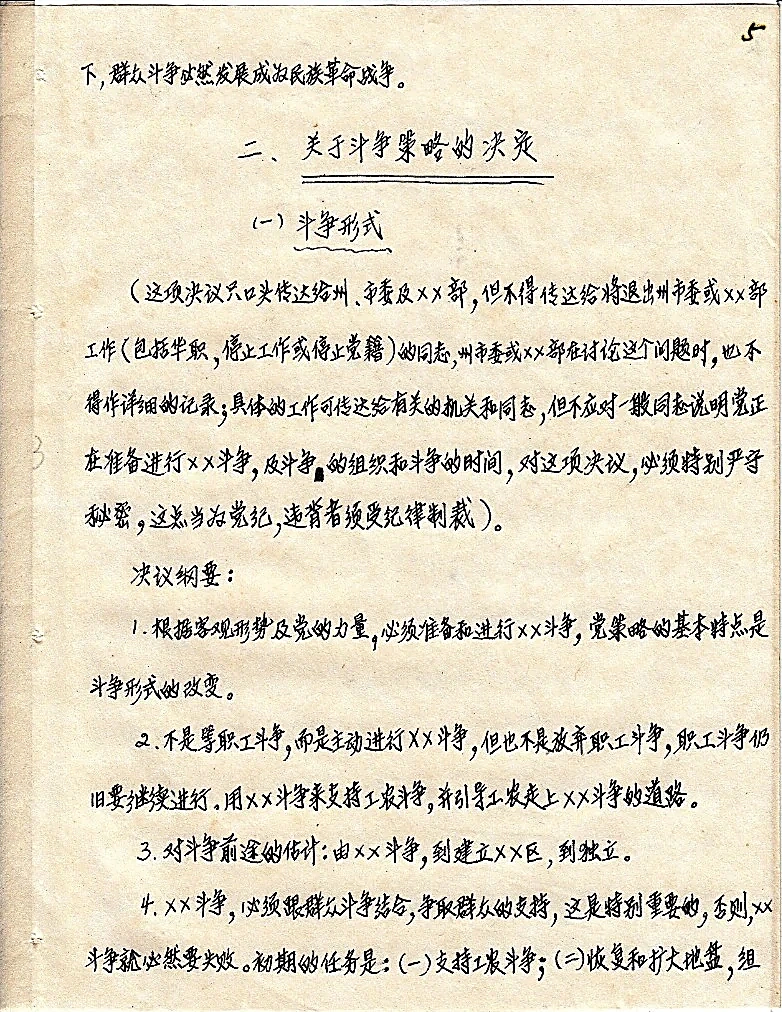
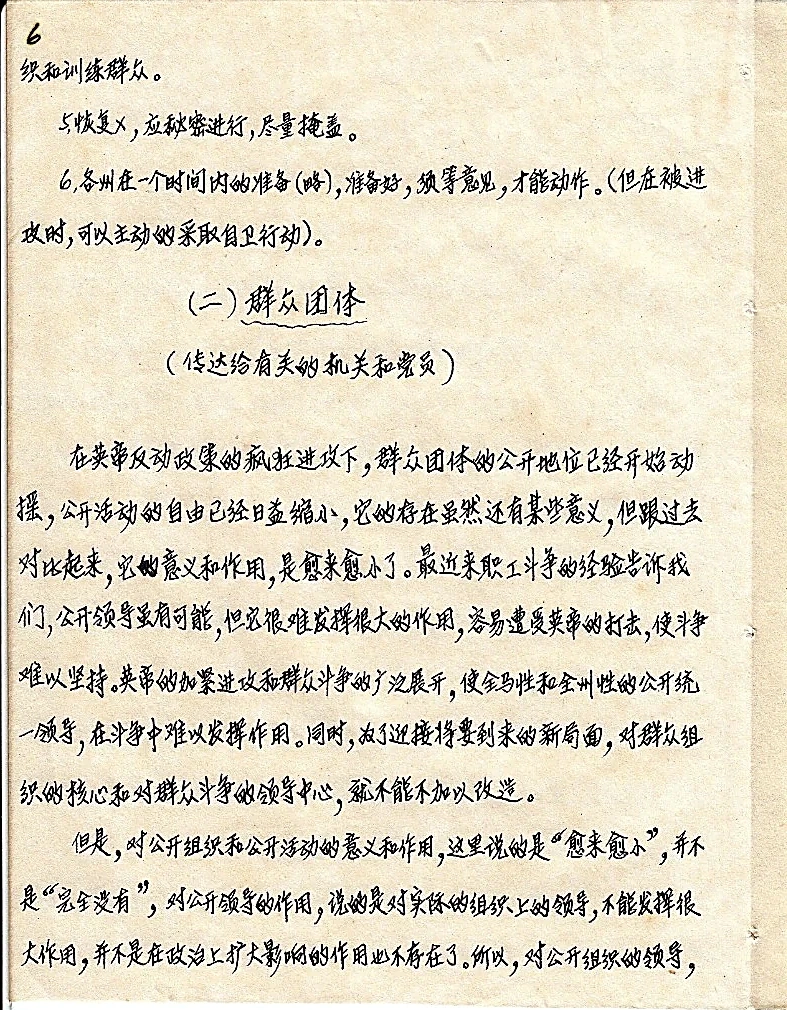
1948年5月马共第五次中央全会《关于斗争策略的决定》手抄原件核心摘录(注:原件中“××”指“武装”):
“(一)斗争形式
(这项决议只口头传达给州、市委及××部,但不得传达给将退出州市委或××部工作(包括半职,停止工作或停止党籍)的同志,州市委或××部在讨论这个问题时,也不得作详细的记录;具体的工作可传达给有关的机关和同志,但不应对一般同志说明党正在准备进行××[武装]斗争,及斗争的组织和斗争的时间,对这项决议,必须特别严守秘密,这点当为党纪,违背者须受纪律制裁)。
决议纲要:
1. 根据客观形势及党的力量,必须准备和进行××[武装]斗争,党策略的基本特点是斗争形式的改变。
2. 不是等职工斗争,而是主动进行××[武装]斗争,但也不是放弃职工斗争,职工斗争仍旧要继续进行。用××[武装]斗争来支持工农斗争,并引导工农走上××[武装]斗争的道路。
3. 对斗争前途的估计:由××[武装]斗争,到建立××区,到独立。
4. ××[武装]斗争,必须跟群众斗争结合,争取群众的支持,这是特别重要的,否则,××[武装]斗争就必然要失败。初期的任务是:(一)支持工农斗争;(二)恢复和扩大地盘,组织和训练群众。
5. 恢复×[军],应秘密进行,尽量掩盖。
6. 各州在一个时间内的准备(略),准备好,须等意见,才能动作。(但在被进攻时,可以主动的采取自卫行动)。”Excerpt from the Handwritten Manuscript of the CPM Fifth Central Committee Plenum Resolution "Decision on Struggle Strategy" (May 1948; note: "××" in the original manuscript denotes "armed"):— 马来亚共产党第五次中央全会(1948年5月) | Fifth Central Committee Plenum of the Communist Party of Malaya (May 1948)
"(1) Forms of Struggle
(This resolution shall only be transmitted orally to State and Municipal Committees and ×× Departments... When discussing this issue, detailed written minutes must not be kept; concrete tasks may be communicated to relevant organs and comrades, but ordinary members must not be told that the Party is preparing for ×× [armed] struggle, nor its organization or timing. Strict secrecy must be maintained regarding this resolution as a matter of Party discipline; violators shall face disciplinary sanction).
Resolution Outline:
1. Based on objective conditions and the Party's strength, we must prepare for and wage ×× [armed] struggle; the fundamental characteristic of the Party's strategy is a change in the form of struggle.
2. Rather than passively awaiting labor struggles, we must proactively wage ×× [armed] struggle without abandoning labor struggles, which must continue. Use ×× [armed] struggle to support worker-peasant struggles and guide workers and peasants onto the path of ×× [armed] struggle.
3. Estimation of the struggle's future: from ×× [armed] struggle, to establishing ×× [liberated] zones, to independence.
4. ×× [Armed] struggle must be integrated with mass struggle to win popular support—this is of paramount importance, otherwise ×× [armed] struggle will inevitably fail. Initial tasks: (i) support worker-peasant struggles; (ii) restore and expand base areas, organizing and training the masses.
5. Restoring the × [Army] must be conducted secretly and under maximum cover.
6. Preparations by each state within a designated period (omitted); once prepared, they must await instructions before taking action. (However, when attacked, they may proactively take self-defense action)."
为防范英国殖民政治部暗探截获,这份珍贵的《关于斗争策略的决定》手抄原件(现存第5、6页)在党内实行了极其严密的地下保密纪律。决议开篇即明令:“这项决议只口头传达给州、市委及××部……州市委或××部在讨论这个问题时,也不得作详细的记录;具体的工作可传达给有关的机关和同志,但不应对一般同志说明党正在准备进行××斗争,及斗争的组织和斗争的时间,对这项决议,必须特别严守秘密,这点当为党纪,违背者须受纪律制裁。”在手抄原件中,凡涉及“武装”等核心军事机密字眼,均统一以暗语符号“××”代称(如“必须准备和进行××[武装]斗争”、“用××[武装]斗争来支持工农斗争,并引导工农走上××[武装]斗争的道路”)。
尤为关键的是,手抄原件第6页“决议纲要”第6条白纸黑字记载着:“各州在一个时间内的准备(略),准备好,须等意见,才能动作。(但在被进攻时,可以主动的采取自卫行动)。”这一第一手原始文献,以无可辩驳的铁证彻底击碎了英殖民当局数十年来捏造“马共于1948年6月发动预谋武装暴动”的殖民谎言:直到1948年5月,马共第五次中央全会仍处于战略防御与秘密整顿准备阶段,明确规定各州完成准备后“须等意见,才能动作”,唯有在遭遇敌人武力进攻时方可主动采取自卫行动!同时,决议第(二)部分《群众团体》深刻指出,在英帝疯狂进攻下公开活动的自由日益缩小,必须果断改造群众组织核心与领导中心,将全党工作重心有条不紊地从城市合法阵地转向农村与热带丛林,以革命的武装自卫迎击迫在眉睫的殖民大搜捕。
To prevent interception by the British Special Branch, the surviving handwritten manuscript of the May 1948 resolution (Pages 5 and 6) enforced strict underground secrecy protocols. Its opening preamble mandated that the resolution be transmitted only orally to State and Municipal Committees and Military Departments without written minutes, stipulating that strict secrecy was a matter of party discipline. Throughout the manuscript, the sensitive word "armed" (武装) was systematically substituted with the cryptographic symbol "××" (e.g., "must prepare for and wage ×× [armed] struggle" and "use ×× [armed] struggle to support worker-peasant struggles").
Crucially, Point 6 of the Resolution Outline on Page 6 explicitly records: "Preparations by each state within a designated period (omitted); once prepared, they must await instructions before taking action. (However, when attacked, they may proactively take self-defense action)." This primary archival manuscript decisively refutes decades of British colonial propaganda claiming that the CPM launched a pre-scheduled insurrection in June 1948: as late as May 1948, the Party was still in a preparatory, defensive posture, instructing state committees to await central orders while authorizing immediate self-defense only if attacked by colonial forces.
第四章:重返热带雨林:组织潜伏、先锋转移与粉碎殖民者一网打尽的阴谋
Chapter 4: Return to the Rainforest: Underground Concealment, Vanguard Relocation, and Foiling the Colonial Dragnet
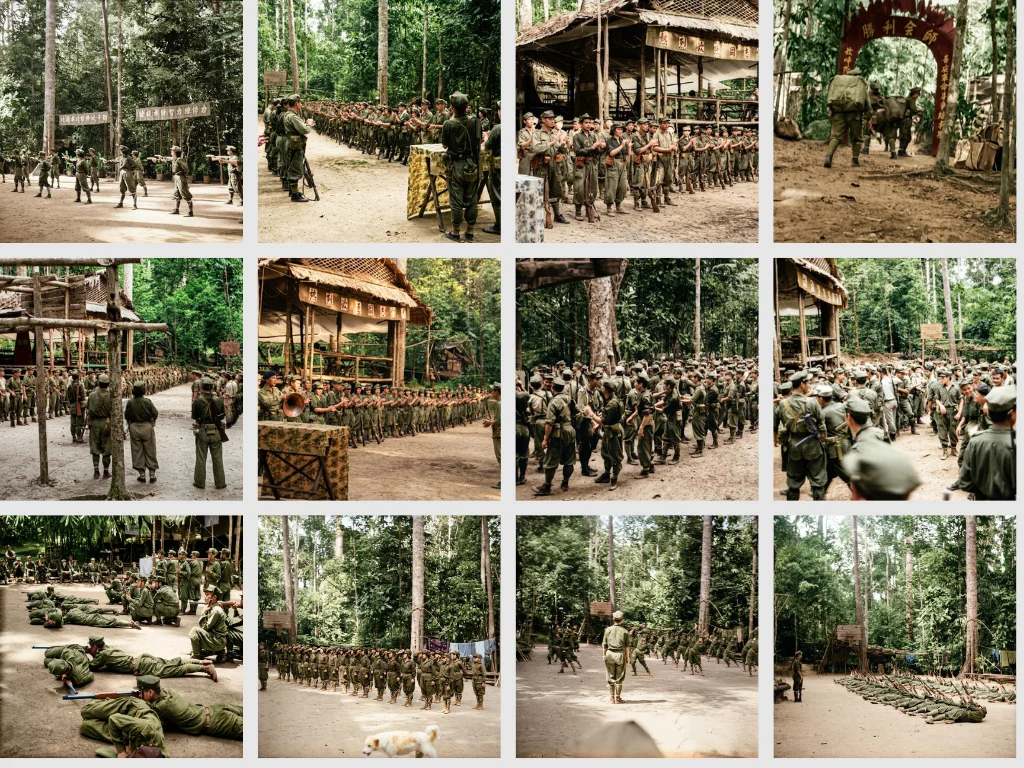
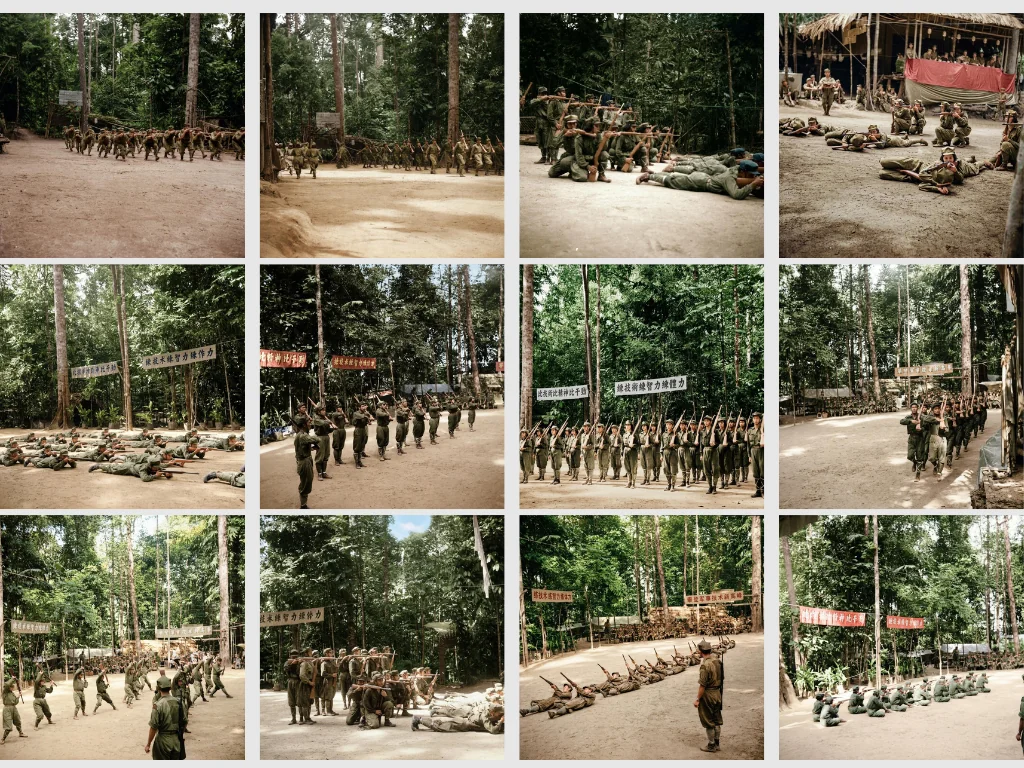
1948年5月中旬起,马共中央迅速启动全面的应急战备机制。面对殖民军警暗探四处布控的严密罗网,马共中央下达了紧急战备密令,实行两手战略部署:一方面,城镇各工会组织与公开团体的骨干分子,在全面戒严降临前有条不紊地向农村和边缘林区实行战略疏散;另一方面,各地抗日军老战士与青年自卫骨干迅速转入秘密集结状态,检修隐藏武器,重新激活丛林地下联络交通网。
一场紧锣密鼓的战备物资抢运与转移行动在全马各地悄然展开。在霹雳近打谷、雪兰莪乌鲁冷岳、柔佛新山以及森美兰胶园深处,大批胶工、矿工与农民冒着被殖民当局逮捕处决的极大危险,昼夜不停地将关键战略物资抢运进山:从印刷设备、油印蜡纸、发电机、蓄电池,到粮食、食盐、急救药品、布匹和秘密隐藏的枪械弹药。这些抢运进山的物资储备,为日后在热带丛林深处开展持久游击自卫提供了不可或缺的物质基础。
当英殖民军政高层在吉隆坡紧锣密鼓拟定6月中旬的搜捕名单、企图将马共中央机关与骨干力量一网打尽时,各地公开机构早已按计划撤空,主要领导机关与骨干力量已在各族群众掩护下迅速转入丛林。殖民者企图以突然袭击全歼革命中枢的计划彻底落空。
殖民当局在第一回合企图通过‘斩首式搜捕’瓦解抵抗的图谋未能得逞。正是五月扩大会议的清醒研判与迅速果断的避险转移,使核心骨干与武装力量在全面镇压前夕得以保全,迅速退入中央山脉根据地,为即将爆发的抗英民族解放战争奠定了坚实的组织与物质基石。
Beginning in mid-May 1948, the CPM Central Committee activated emergency defense measures. Facing tightening colonial police surveillance, the party issued urgent directives implementing a dual-track strategy: public unionists and progressive leaders evacuated urban centers toward rural edges, while MPAJA veterans and youth cadres reassembled covertly, retrieving cached weapons and reactivating jungle logistics networks.
A clandestine operation to transport vital provisions was set in motion across Malaya. In the Kinta Valley, Ulu Langat, Johor Bahru, and Negeri Sembilan, laborers and rubber tappers risked execution to move critical supplies into mountain caches: printing presses, mimeograph stencils, generators, batteries, grain, salt, medicine, cloth, and arms. These supplies established the material foundation for protracted guerrilla self-defense in the deep jungle.
When colonial authorities in Kuala Lumpur prepared arrest lists for a mid-June sweep intended to decapitate the communist movement, they found urban offices largely vacated. Leading party organs and key cadres had already withdrawn into the foothills under local mass protection, completely thwarting the intended decapitation strike.
The colonial authorities' opening gambit to crush the resistance through a sudden sweep collapsed. Through the realistic assessments of the May Enlarged Conference and decisive strategic relocation, the movement's leadership and core strength remained intact, taking up positions along the Main Range to build the organizational and logistical foundation for the anti-colonial liberation struggle.
1948年5月中旬起,马共中央迅速启动全面的应急战备机制。面对殖民军警暗探四处布控的严密罗网,马共中央下达了紧急战备密令,实行两手战略部署:一方面,城镇各工会组织与公开团体的骨干分子,在全面戒严降临前有条不紊地向农村和边缘林区实行战略疏散;另一方面,各地抗日军老战士与青年自卫骨干迅速转入秘密集结状态,检修隐藏武器,重新激活丛林地下联络交通网。
一场紧锣密鼓的战备物资抢运与转移行动在全马各地悄然展开。在霹雳近打谷、雪兰莪乌鲁冷岳、柔佛新山以及森美兰胶园深处,大批胶工、矿工与农民冒着被殖民当局逮捕处决的极大危险,昼夜不停地将关键战略物资抢运进山:从印刷设备、油印蜡纸、发电机、蓄电池,到粮食、食盐、急救药品、布匹和秘密隐藏的枪械弹药。这些抢运进山的物资储备,为日后在热带丛林深处开展持久游击自卫提供了不可或缺的物质基础。
Beginning in mid-May 1948, the CPM Central Committee activated emergency defense measures. Facing tightening colonial police surveillance, the party issued urgent directives implementing a dual-track strategy: public unionists and progressive leaders evacuated urban centers toward rural edges, while MPAJA veterans and youth cadres reassembled covertly, retrieving cached weapons and reactivating jungle logistics networks.
A clandestine operation to transport vital provisions was set in motion across Malaya. In the Kinta Valley, Ulu Langat, Johor Bahru, and Negeri Sembilan, laborers and rubber tappers risked execution to move critical supplies into mountain caches: printing presses, mimeograph stencils, generators, batteries, grain, salt, medicine, cloth, and arms. These supplies established the material foundation for protracted guerrilla self-defense in the deep jungle.
当英殖民军政高层在吉隆坡紧锣密鼓拟定6月中旬的搜捕名单、企图将马共中央机关与骨干力量一网打尽时,各地公开机构早已按计划撤空,主要领导机关与骨干力量已在各族群众掩护下迅速转入丛林。殖民者企图以突然袭击全歼革命中枢的计划彻底落空。
殖民当局在第一回合企图通过‘斩首式搜捕’瓦解抵抗的图谋未能得逞。正是五月扩大会议的清醒研判与迅速果断的避险转移,使核心骨干与武装力量在全面镇压前夕得以保全,迅速退入中央山脉根据地,为即将爆发的抗英民族解放战争奠定了坚实的组织与物质基石。
When colonial authorities in Kuala Lumpur prepared arrest lists for a mid-June sweep intended to decapitate the communist movement, they found urban offices largely vacated. Leading party organs and key cadres had already withdrawn into the foothills under local mass protection, completely thwarting the intended decapitation strike.
The colonial authorities' opening gambit to crush the resistance through a sudden sweep collapsed. Through the realistic assessments of the May Enlarged Conference and decisive strategic relocation, the movement's leadership and core strength remained intact, taking up positions along the Main Range to build the organizational and logistical foundation for the anti-colonial liberation struggle.