建制专卷第4卷:马来亚民族解放军(MNLA,下篇):1964年革命烈士纪念大典、检阅台阅兵与1967年《决心书》整军运动
Armed Forces Monograph Vol. 4: Malayan National Liberation Army (MNLA, Part II): 1964 Martyrs Commemoration, Military Reviews & the 1967 Letters of Resolution Movement
【第二历史时期建制(下篇)总览】1960年代泰马边境大整训与政治思想动员 ➔ 1964年9月1日“马来亚革命烈士纪念大会”与中马双语“检阅台(PENTAS PEMERIKSAAN PERBARISAN)”盛大阅兵 ➔ 1967年1月南下重开武装斗争前夕的《决心书》与马来文《SURAT KEAZAMAN(第十支队学员决心书)》全军整军立誓运动 ➔ 珍贵历史底片、手稿原件与营地纪实影像,完整还原1968年重燃战火前夕马共武装力量的思想淬炼与战斗准备。
[Second Armed Force Era (Part II) Overview] 1960s Thai-Malaysian border reorganization and political mobilization ➔ 1 September 1964 Malayan Revolutionary Martyrs Commemoration Assembly and bilingual Reviewing Stand ('PENTAS PEMERIKSAAN PERBARISAN') parades ➔ January 1967 Handwritten Chinese 'Letters of Resolution' (决心书) and Malay 'SURAT KEAZAMAN' (10th Regiment Cadets) pledge campaign prior to the 1968 southward offensive ➔ Curated archival photographs, original manuscripts, and camp documentary reels.
第一章:1967年《决心书》与《SURAT KEAZAMAN》:南下出征前夕的铁血誓言
Chapter 1: The 1967 'Letters of Resolution' (决心书 & SURAT KEAZAMAN): Written Oaths Before the Southward Offensive
1961年马共中央确立停止战略退却、重整武装力量的“新方针”后,泰马边境各支队营地掀起了轰轰烈烈的扩军整训与政治学习高潮。至1967年初,随着重返马来亚半岛腹地开展游击战的战略部署日趋成熟,全军各支队、党校与新兵训练营全面开展了向党支部递交亲笔《决心书》的庄严誓师运动。
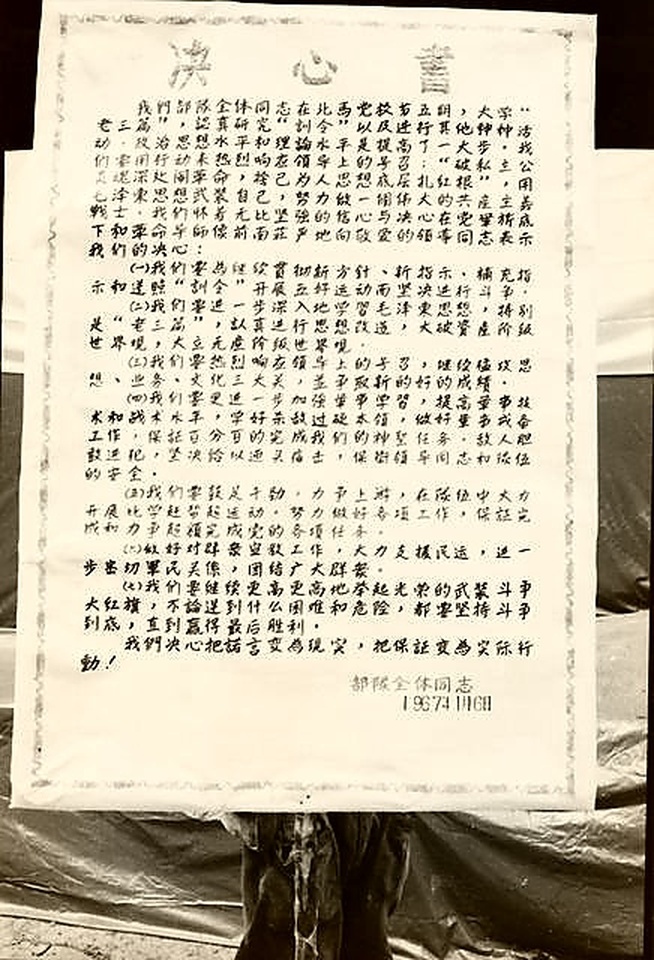
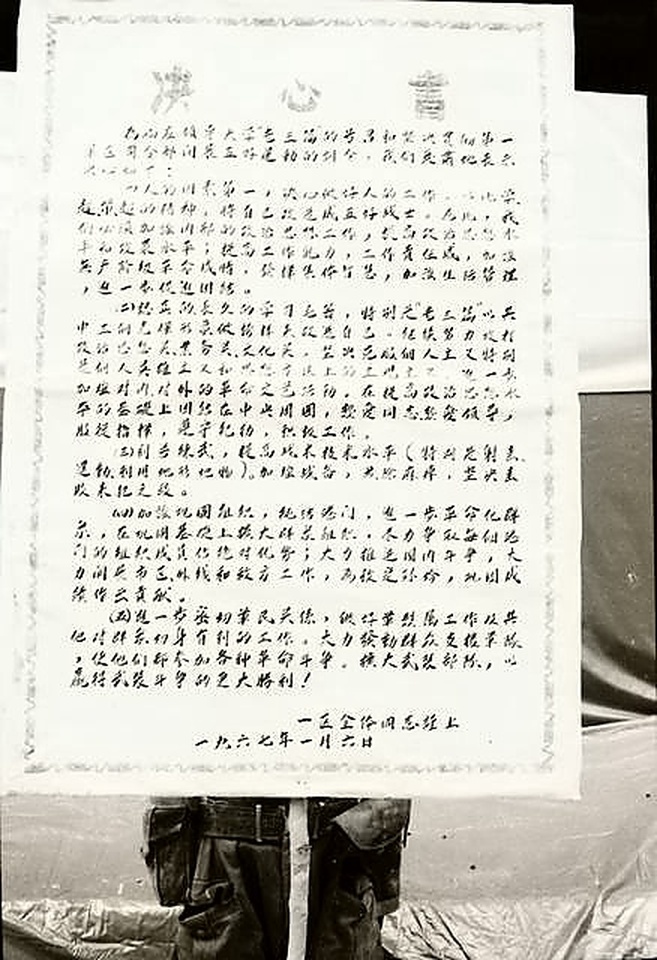
在留存至今的1967年1月6日(北马党校第五期“部队全体”与“一区全体”集体立誓)、1月15日与1月25日原始手稿中,既有华族指战员用毛笔与钢笔在红框信笺上工整书写的《决心书》,也有马来亚民族解放军第十支队(Rejimen Ke-10)马来族青年学员用马来文亲笔撰写的《SURAT KEAZAMAN(决心书)》。一篇篇字迹刚劲的誓言,不仅总结了政治整训与战术苦练的收获,更表达了随时听从马共中央调遣、跨越封锁线南下杀敌的沸腾热血。
Following the CPM Central Committee's 1961 'New Policy' to halt strategic retreat and rebuild the armed forces, border camps across southern Thailand launched intensive recruitment, military training, and political study campaigns. By early 1967, as preparations matured for dispatching guerrilla columns back into the Malayan heartland, fighters across all regiments and party schools participated in an army-wide pledge movement by submitting handwritten 'Letters of Resolution'.
Preserved in the museum archives are original manuscripts dated 15 and 25 January 1967—including vertical-script Chinese '决心书' written in brush and fountain pen on red-bordered stationery, alongside Malay-language 'SURAT KEAZAMAN' penned by Malay cadets of the 10th Regiment (Rejimen Ke-10). Every page radiates ideological conviction and readiness to cross the border blockades into combat.
【1967年《决心书》与马来文《SURAT KEAZAMAN》原件题记】
“决心书(1967.1.6 / 1967.1.15 / 1967.1.25)”與“SURAT KEAZAMAN — DPD PENUNTUT REJ: 10(第十支队学员决心书)”:中马两族指战员在密林油灯下亲笔立誓,将个人生死置之度外,坚决服从马共中央指挥,苦练丛林游击战术,为争取马来亚各民族彻底解放而战斗到底。[Archival Inscription on the 1967 Letters of Resolution & SURAT KEAZAMAN]— 录自馆藏1967年1月民族解放军《决心书》及《SURAT KEAZAMAN》原始手稿档案(Z2-W4) | From the January 1967 Original Manuscripts of the MNLA 'Letters of Resolution' and 'SURAT KEAZAMAN' (Z2-W4)
'Letters of Resolution (15 Jan 1967 / 25 Jan 1967)' and 'SURAT KEAZAMAN — DPD PENUNTUT REJ: 10 (From the Cadets of the 10th Regiment)': Written by candlelight in the jungle, Chinese and Malay fighters pledged to master guerrilla warfare and follow the CPM Central Committee's command to the very end.
第二章:1964–1968年马来亚革命烈士纪念大会与中马双语检阅台大阅兵
Chapter 2: The 1964 Malayan Revolutionary Martyrs Commemoration Assembly and Bilingual Reviewing Stand Parades
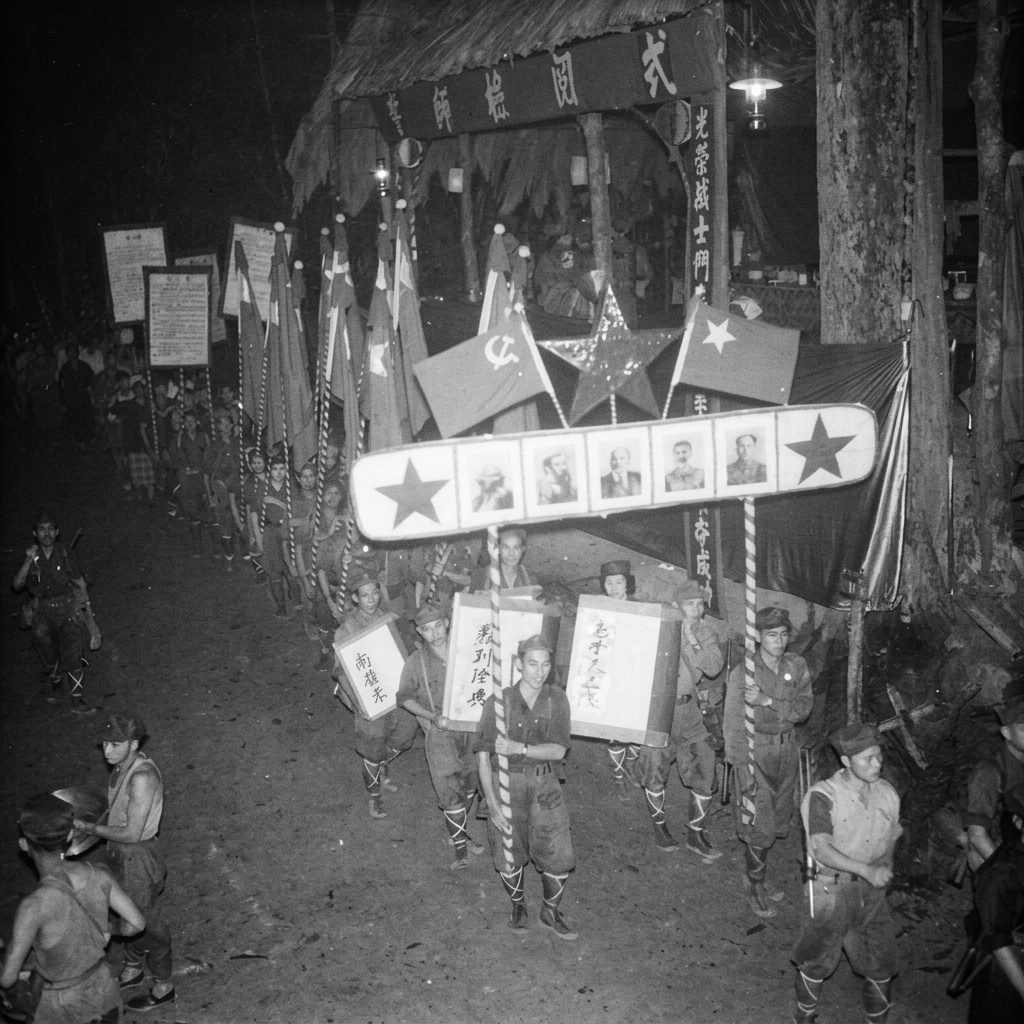
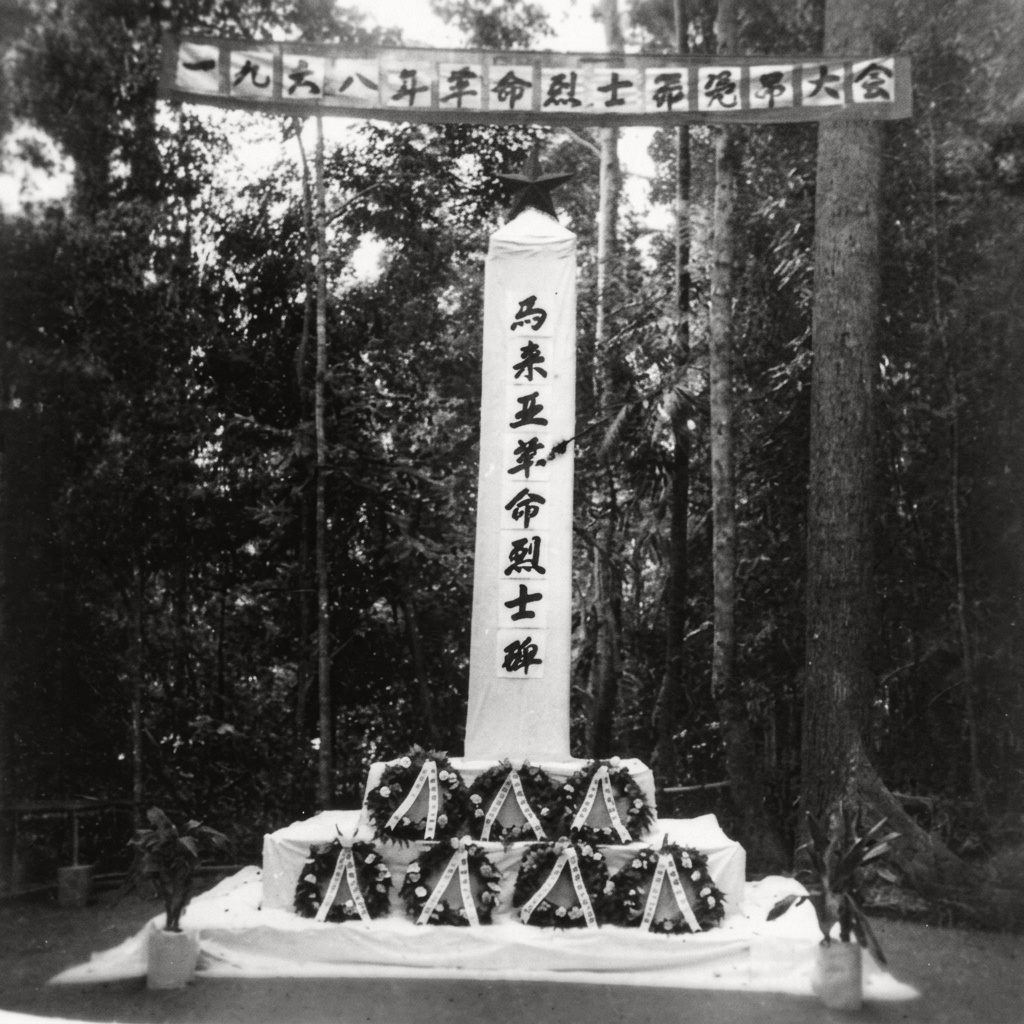
每年9月1日的“马来亚革命烈士节”(纪念1942年9月1日在雪兰莪石山脚浴血奋战牺牲的抗日先烈),是马共武装力量最庄严的精神洗礼日。从1964年9月1日的“马来亚革命烈士纪念大会”到1968年9月1日挥师南下之际的“革命烈士节凭吊大会”,民族解放军指战员们在密林广场中央竖起高耸的“马来亚革命烈士碑”,向自1930年建党、抗日战争及抗英解放战争以来英勇捐躯的各族先烈敬献花圈、脱帽默哀并鸣枪致敬。
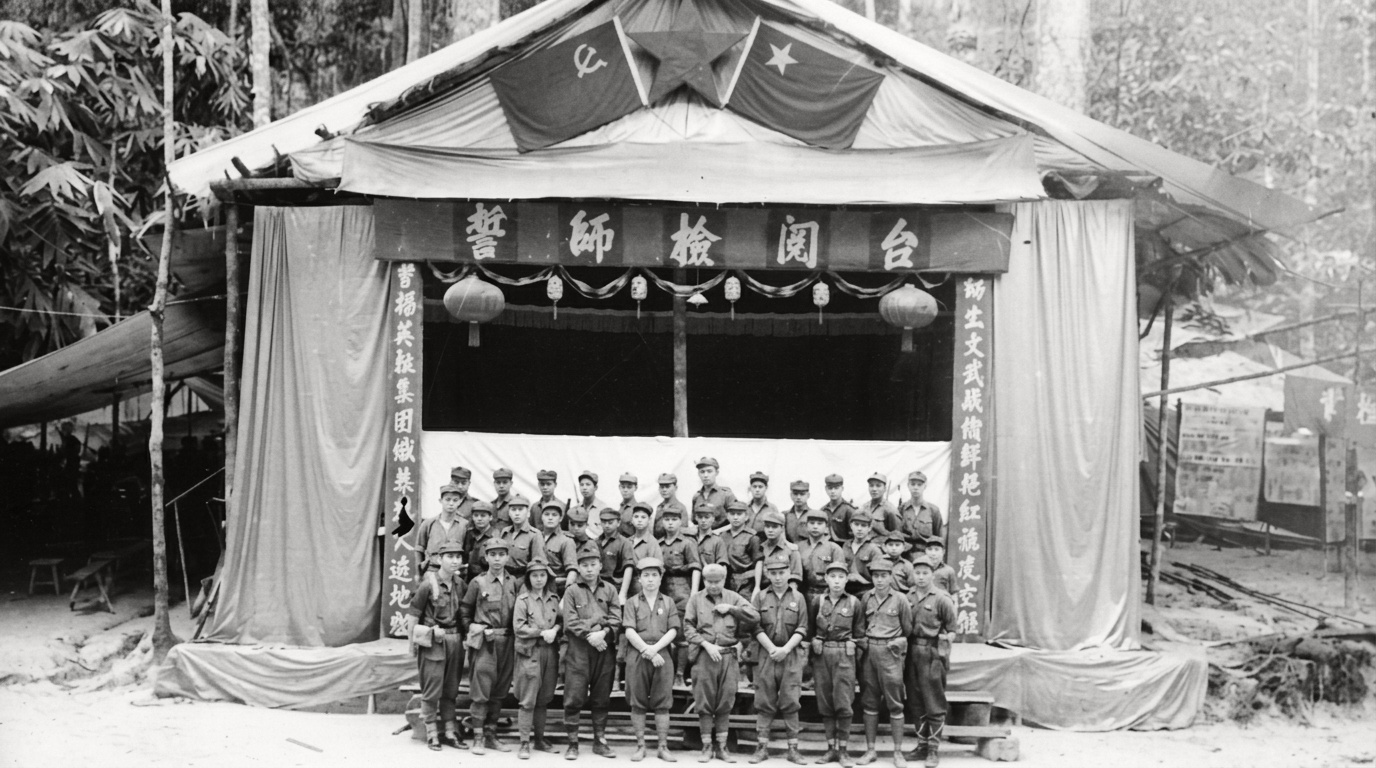
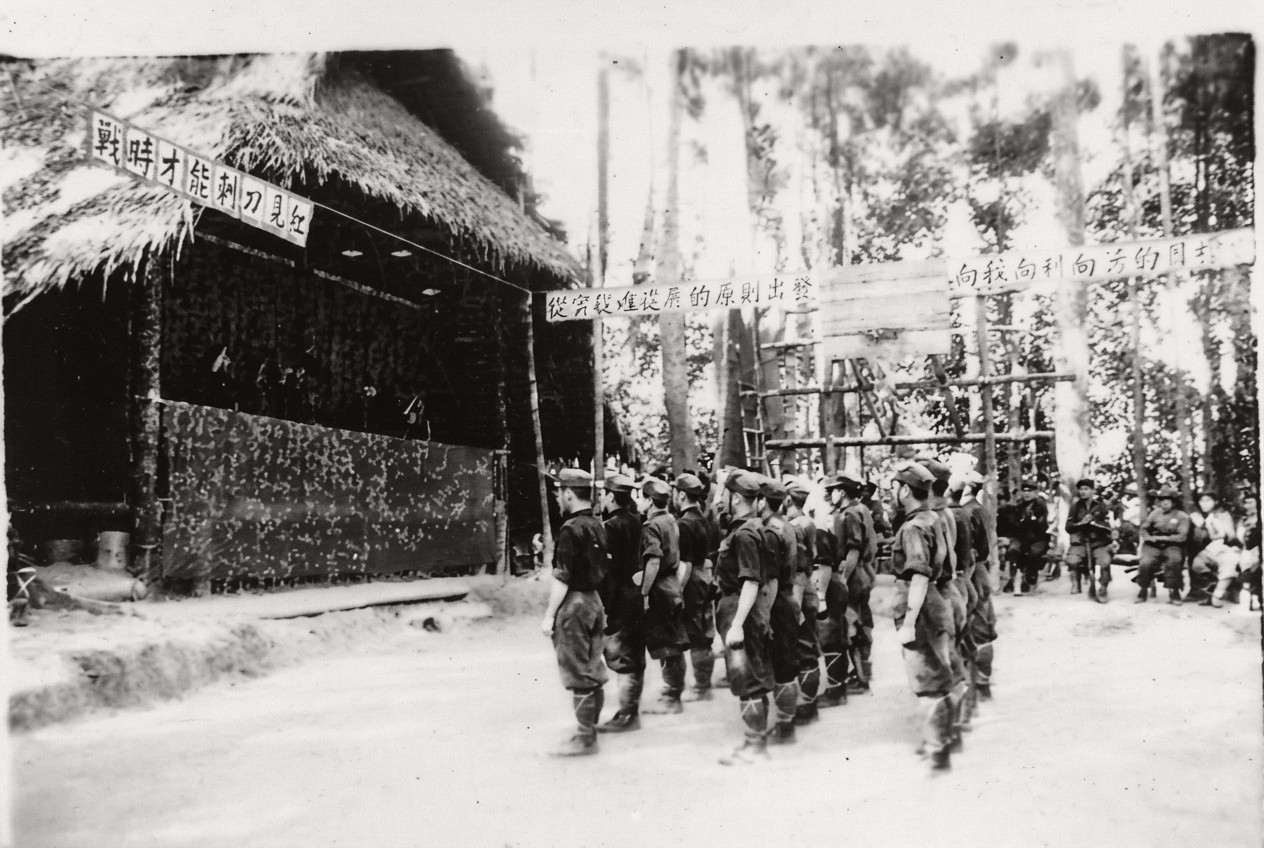
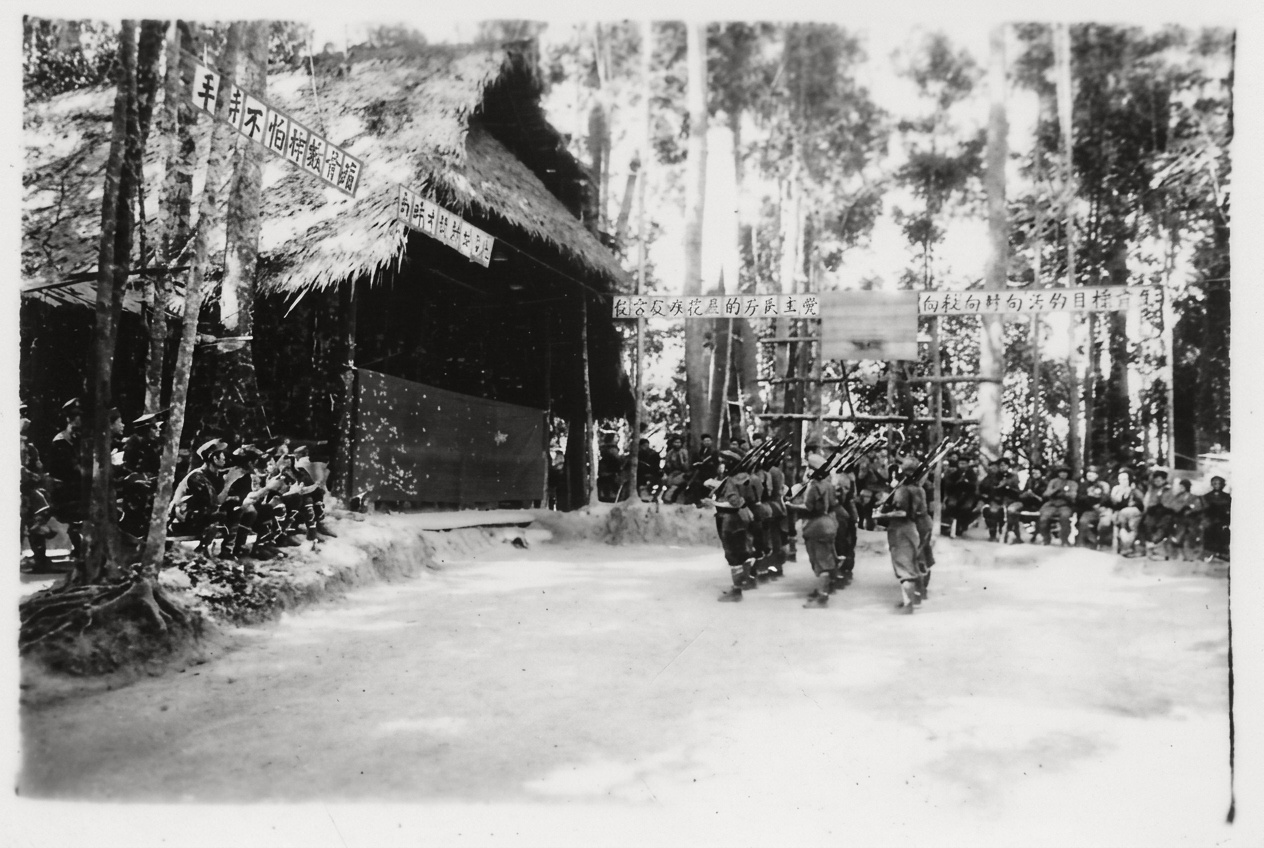
与此同时,在装饰有“检阅台 / PENTAS PEMERIKSAAN PERBARISAN”中马双语牌匾的森林校阅场上,各支队受阅方队荷枪实弹、高擎红旗正步通过主席台。庄严的阅兵仪式与热烈的“部队庆功大会”、“誓师大会”,将边境整训推向高潮。
Every year on 1 September—Malayan Revolutionary Martyrs' Day, commemorating the heroes who fell at Batu Caves on 1 September 1942—the CPM armed forces held solemn ceremonies of remembrance. On 1 September 1964, the MNLA convened the grand '1964 Malayan Revolutionary Martyrs Commemoration Assembly' at its border base camp, erecting a towering cenotaph inscribed 'Eternal Glory to the Revolutionary Martyrs' and laying wreaths in honor of fallen fighters.
Simultaneously, before a ceremonial reviewing stand emblazoned with the bilingual title '检阅台 / PENTAS PEMERIKSAAN PERBARISAN', armed guerrilla columns marched past in disciplined formation, followed by Merit Commendation Rallies and Oath-Taking Assemblies.
第三章:丛林军营全貌纪实:战术演练、政治学习与各族战友团结风貌
Chapter 3: Panorama of Jungle Camp Life: Tactical Drills, Political Study, and Multi-Ethnic Solidarity
在1960年代泰马边境的整训岁月里,民族解放军把每一座深山密营都建设成了既是战斗堡垒、又是革命熔炉的大学校。从清晨的体操与刺杀训练,到白天的战术沙盘推演、政治文化课与后勤农垦生产,再到夜晚的篝火晚会与革命戏剧演出,整支军队始终洋溢着高昂的革命乐观主义精神。
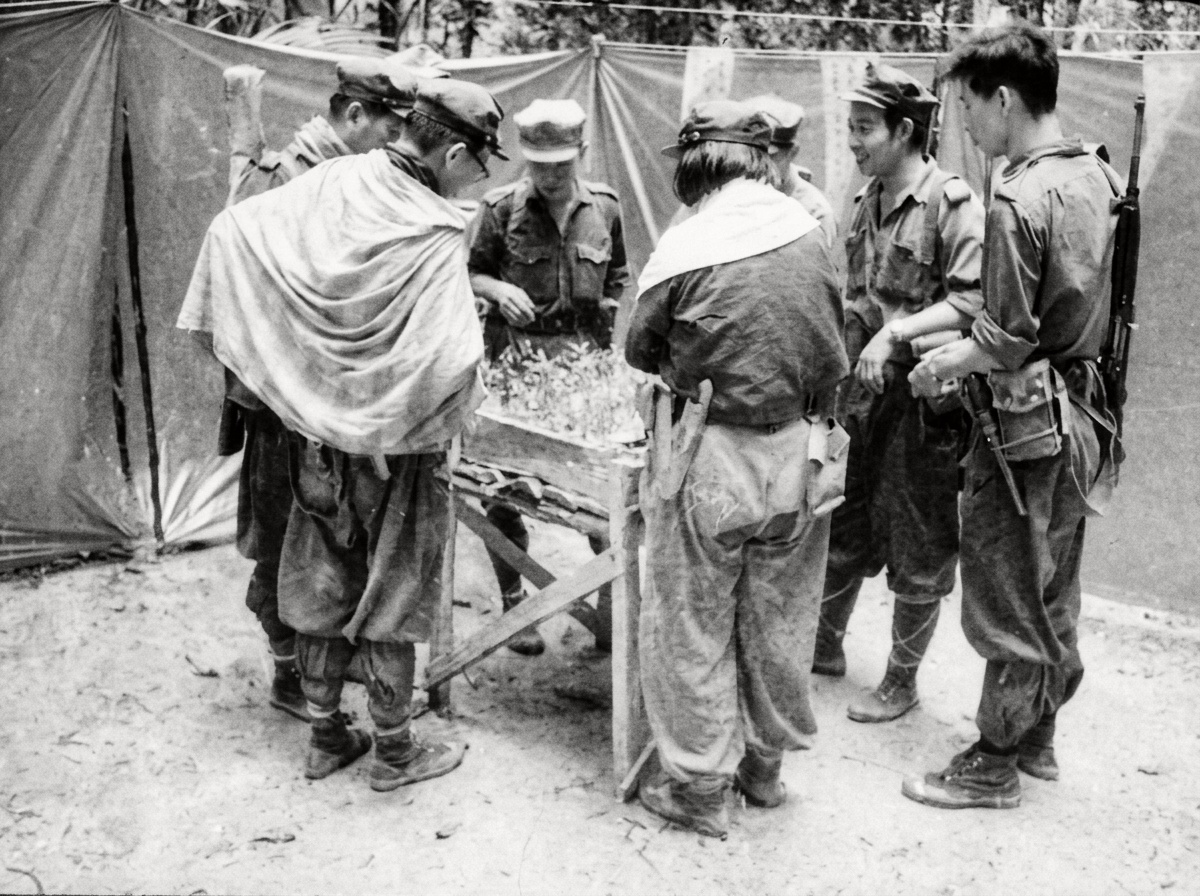
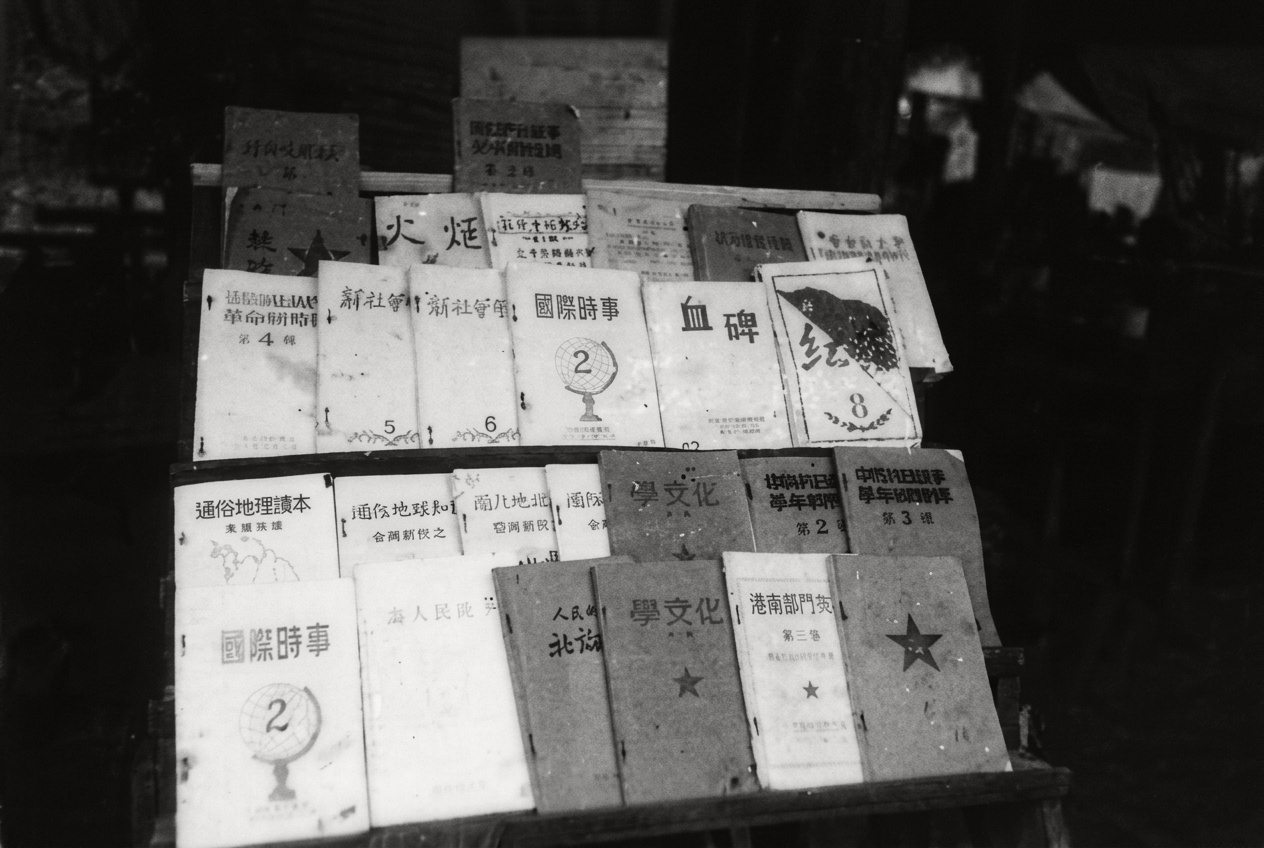
以下这组珍贵的历史底片,真实记录了民族解放军在1960年代整训期间围聚山地沙盘研讨战术、陈列部队油印书刊以及北马党校女指战员全副武装列队合影的鲜活场景,为我们还原了一幅立体而生动的丛林铁军历史画卷。
透过静态的历史照片走进动态的馆藏胶片,最令人会心一笑的莫过于游击队营地里热气腾腾的“丛林大锅饭”与充满艺术气息的森林舞台。为了防止炊烟暴露营地目标,战士们发明了将烟道深埋入地下数十米外排散的“无烟灶”。在《野战厨房与营地聚餐》(No. 15)与《炊事班日常》(No. 23)中,炊事员们挽起袖子,在巨木树墩做成的菜板上飞快切配林间采摘的野笋、木薯叶与自种瓜菜,在直径逾米的大铁锅里翻炒烹煮;开饭哨音响起时,各族男女战士端着搪瓷碗围坐竹桌旁,一边品尝热汤美味,一边畅谈训练趣事,欢声笑语回荡在幽谷之中。
每逢周末、建党节、建军节或佳节夜晚,竹木搭建的森林大礼堂便化作璀璨的艺术殿堂。在《军营文化晚会实录》(No. 17)与《百花齐放(Puspaseni)》中,平日里手握钢枪的战士们抱起手风琴、小提琴、曼陀林与竹笛,在汽灯与发电机灯光下合奏出激昂悠扬的旋律;女战士们换上亲手缝制的民族服装,翩翩跳起马来传统舞蹈、华人扇子舞与反映游击队生活的现代舞剧,展现出丛林铁军浪漫、多才多艺而又热爱生活的动人一面。
Throughout the 1960s border reorganization, the MNLA transformed every deep-forest encampment into both a combat fortress and a revolutionary school. From dawn calisthenics and bayonet drills to daytime tactical sand-table exercises, political literacy classes, and evening cultural performances, the camps brimmed with discipline and revolutionary optimism.
The following archival photographs document the MNLA during the 1960s reorganization period—capturing commanders and fighters studying mountain guerrilla tactics around a sand-table model, mimeographed troop periodicals and textbooks, and armed female fighters of the 5th Northern Malaya Party School.
Stepping from still photographs into the museum's moving film reels, nothing brings the guerrillas' humanity to life more vividly than their bustling jungle kitchens and lively forest stages. To prevent cooking smoke from betraying camp locations to reconnaissance aircraft, fighters engineered underground 'smokeless stoves' that dispersed exhaust dozens of meters away. In Archival Reels No. 15 and No. 23, mess-squad fighters chop wild bamboo shoots, cassava leaves, and camp-grown vegetables on giant tree-stump cutting boards and stir-fry meals in massive iron woks; when the mess whistle blows, fighters gather around bamboo tables with enamel bowls, sharing hot soup and lively banter.
On festival evenings and anniversaries, the bamboo auditorium transformed into a vibrant concert hall. As captured in Reel No. 17 and the 40th Anniversary gala 'Puspaseni' ('A Hundred Flowers Blossom'), fighters who carried rifles by day picked up accordions, violins, mandolins, and bamboo flutes by night, accompanying graceful Malay dances, Chinese folk dances, and original guerrilla theatrical skits beneath the glow of camp lamps.
在1960年代泰马边境的整训岁月里,民族解放军把每一座深山密营都建设成了既是战斗堡垒、又是革命熔炉的大学校。从清晨的体操与刺杀训练,到白天的战术沙盘推演、政治文化课与后勤农垦生产,再到夜晚的篝火晚会与革命戏剧演出,整支军队始终洋溢着高昂的革命乐观主义精神。
以下这组珍贵的历史底片,真实记录了民族解放军在1960年代整训期间围聚山地沙盘研讨战术、陈列部队油印书刊以及北马党校女指战员全副武装列队合影的鲜活场景,为我们还原了一幅立体而生动的丛林铁军历史画卷。
Throughout the 1960s border reorganization, the MNLA transformed every deep-forest encampment into both a combat fortress and a revolutionary school. From dawn calisthenics and bayonet drills to daytime tactical sand-table exercises, political literacy classes, and evening cultural performances, the camps brimmed with discipline and revolutionary optimism.
The following archival photographs document the MNLA during the 1960s reorganization period—capturing commanders and fighters studying mountain guerrilla tactics around a sand-table model, mimeographed troop periodicals and textbooks, and armed female fighters of the 5th Northern Malaya Party School.
透过静态的历史照片走进动态的馆藏胶片,最令人会心一笑的莫过于游击队营地里热气腾腾的“丛林大锅饭”与充满艺术气息的森林舞台。为了防止炊烟暴露营地目标,战士们发明了将烟道深埋入地下数十米外排散的“无烟灶”。在《野战厨房与营地聚餐》(No. 15)与《炊事班日常》(No. 23)中,炊事员们挽起袖子,在巨木树墩做成的菜板上飞快切配林间采摘的野笋、木薯叶与自种瓜菜,在直径逾米的大铁锅里翻炒烹煮;开饭哨音响起时,各族男女战士端着搪瓷碗围坐竹桌旁,一边品尝热汤美味,一边畅谈训练趣事,欢声笑语回荡在幽谷之中。
每逢周末、建党节、建军节或佳节夜晚,竹木搭建的森林大礼堂便化作璀璨的艺术殿堂。在《军营文化晚会实录》(No. 17)与《百花齐放(Puspaseni)》中,平日里手握钢枪的战士们抱起手风琴、小提琴、曼陀林与竹笛,在汽灯与发电机灯光下合奏出激昂悠扬的旋律;女战士们换上亲手缝制的民族服装,翩翩跳起马来传统舞蹈、华人扇子舞与反映游击队生活的现代舞剧,展现出丛林铁军浪漫、多才多艺而又热爱生活的动人一面。
Stepping from still photographs into the museum's moving film reels, nothing brings the guerrillas' humanity to life more vividly than their bustling jungle kitchens and lively forest stages. To prevent cooking smoke from betraying camp locations to reconnaissance aircraft, fighters engineered underground 'smokeless stoves' that dispersed exhaust dozens of meters away. In Archival Reels No. 15 and No. 23, mess-squad fighters chop wild bamboo shoots, cassava leaves, and camp-grown vegetables on giant tree-stump cutting boards and stir-fry meals in massive iron woks; when the mess whistle blows, fighters gather around bamboo tables with enamel bowls, sharing hot soup and lively banter.
On festival evenings and anniversaries, the bamboo auditorium transformed into a vibrant concert hall. As captured in Reel No. 17 and the 40th Anniversary gala 'Puspaseni' ('A Hundred Flowers Blossom'), fighters who carried rifles by day picked up accordions, violins, mandolins, and bamboo flutes by night, accompanying graceful Malay dances, Chinese folk dances, and original guerrilla theatrical skits beneath the glow of camp lamps.