建制专卷第5卷:马来亚人民军(MPA,1982–1989):边区六大部队部署、日籍国际主义战友四十五年传奇与雨林兵工厂
Armed Forces Monograph Vol. 5: The Malayan People's Army (MPA, 1982–1989): Border Force Deployment, 45 Years of Japanese Internationalist Veterans & Jungle Arsenals
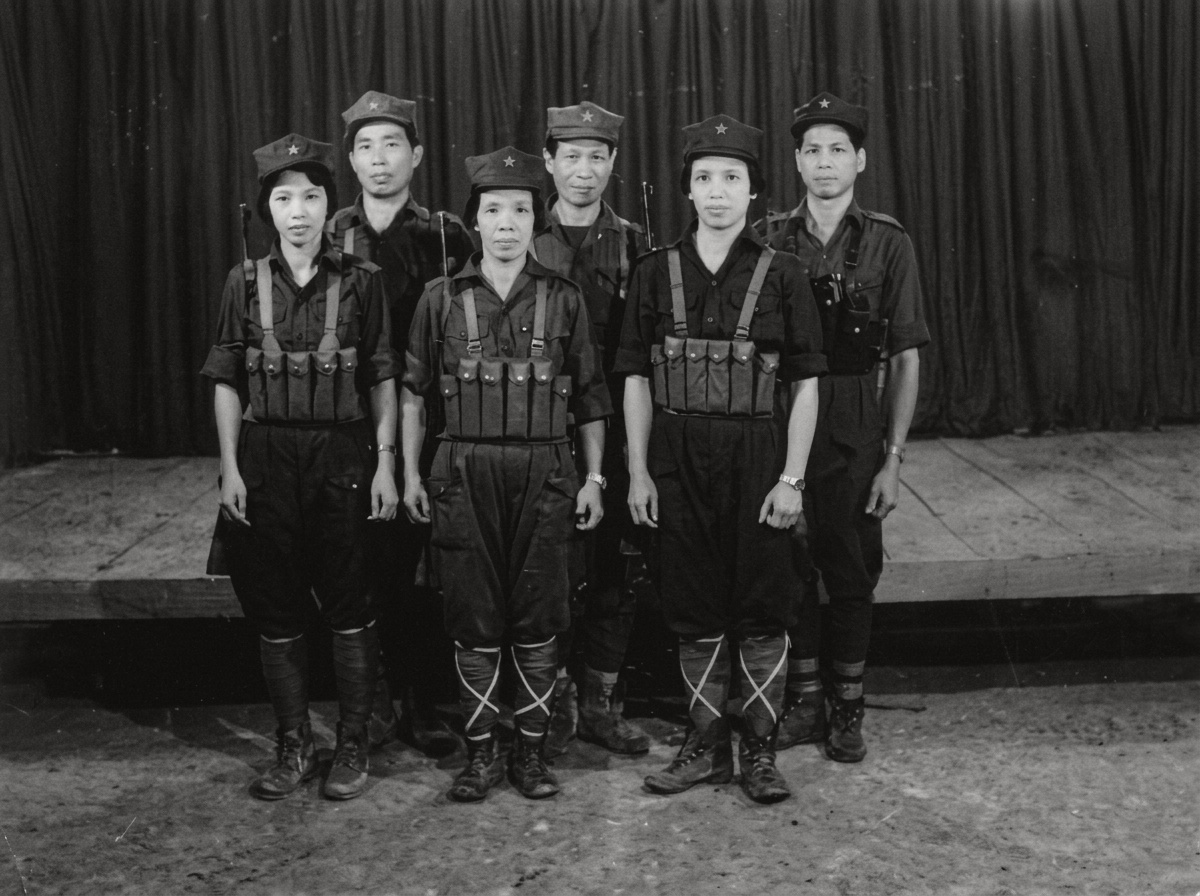
【第三历史时期建制总览】1982年6月20日“马来亚民族解放军”正式改称“马来亚人民军”(MPA),重新定位为“人民的守护者”,为1989年“体面和平”奠定政治基础 ➔ 马共边区部队六大部署示意图(第八支队、特区、北马局机关队、第十支队马来族、第十二支队一区与二区) ➔ 四十五年传奇:从异国士兵到丛林战友(1945年约200至400名日本士兵拒绝遣返加入马共游击队,田中清明、桥本惠之坚守45年后于1990年荣归日本) ➔ 雨林兵工厂(Arsenal:丛林枪械改制、地雷与迫击炮弹自主研发)。
[Third Armed Force Era Overview] Formal renaming of the MNLA to the 'Malayan People's Army' (MPA) on 20 June 1982 as 'defenders of the people', paving the way for the 1989 'peace with dignity' ➔ Deployment Map of Six Major Border Commands (8th Regiment, Special Zone, Northern Bureau HQ Unit, 10th Regiment - Malay Ethnic Group, 12th Regiment Area 1 & Area 2) ➔ For 45 Years: From Foreign Soldiers to Revolutionary Brothers in the Jungle (200–400 Japanese soldiers joining in 1945; Kiyoaki Tanaka and Shigeyuki Hashimoto returning home in 1990) ➔ The Jungle Arsenal.
第一章:从“民族解放军”到“马来亚人民军”(MPA):战略调整与泰马边区六大部队部署
Chapter 1: From MNLA to the Malayan People's Army (MPA): Strategic Repositioning and the Six Border Force Deployments
1980年代初,随着东南亚地缘政治格局的深刻演变与冷战大气候的转换,马共中央审时度势,对武装斗争的战略定位进行了重大调整。1982年6月20日,马共中央正式将沿用了三十三年的“马来亚民族解放军”(MNLA)改称为“马来亚人民军”(Malayan People's Army,简称 MPA)。
这一番号更迭绝非单纯的名称变换,而是深具远见的战略政治转向:人民军主动弱化了过往单一的阶层对抗色彩,致力于团结马来亚社会各阶层、各族群与爱国力量,构建最广泛的统一战线,并将军队重新定位为“人民的守护者”(defenders of the people)。进入1980年代中后期,人民军的工作重心逐步由大规模主动出击转向巩固泰马边境根据地、维持严密防务,并积极探索通过政治谈判实现和平转型的路径。正是这一从“解放军”到“人民军”的战略升华,为1989年12月马共走出丛林、与马泰两国政府签署《合艾和平协议》并赢得举世瞩目的“体面和平”(peace with dignity)奠定了坚实的政治基础。
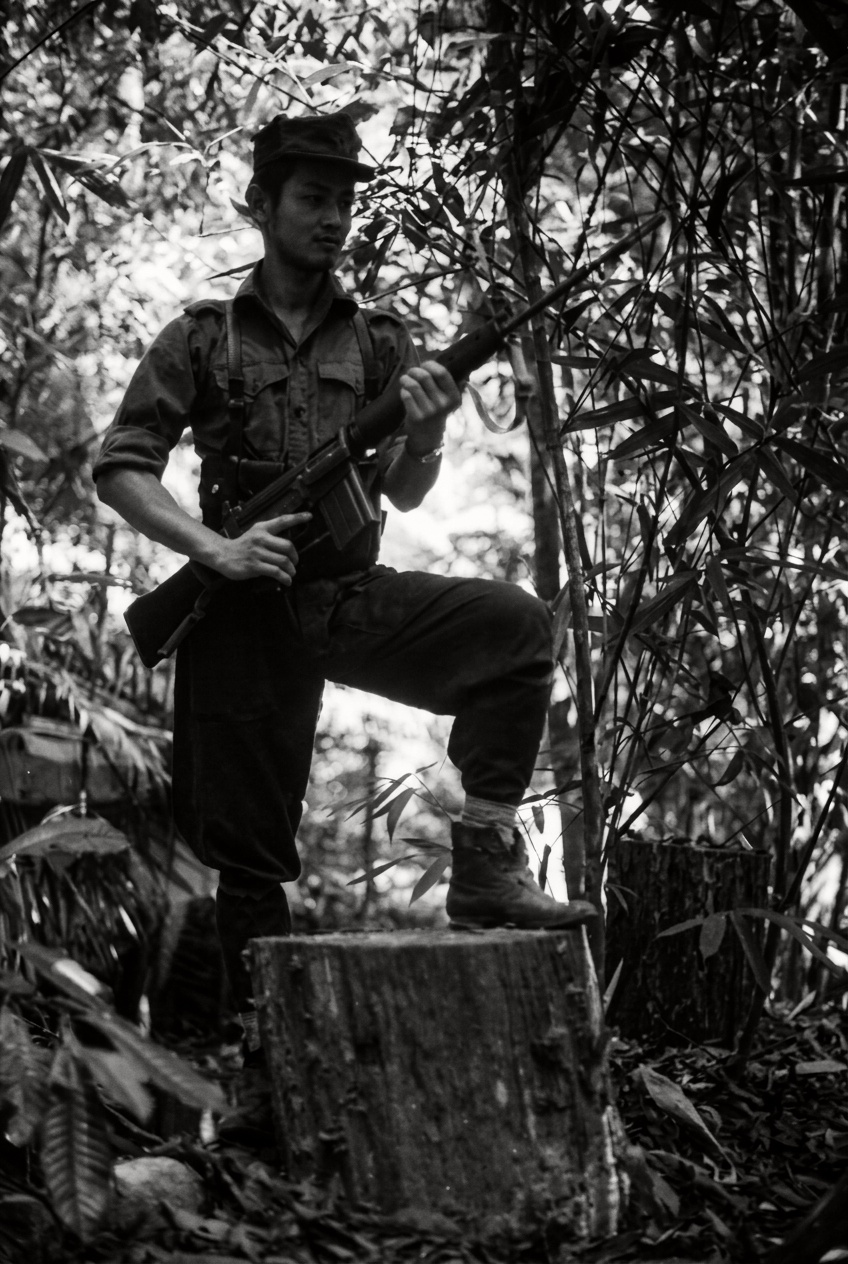
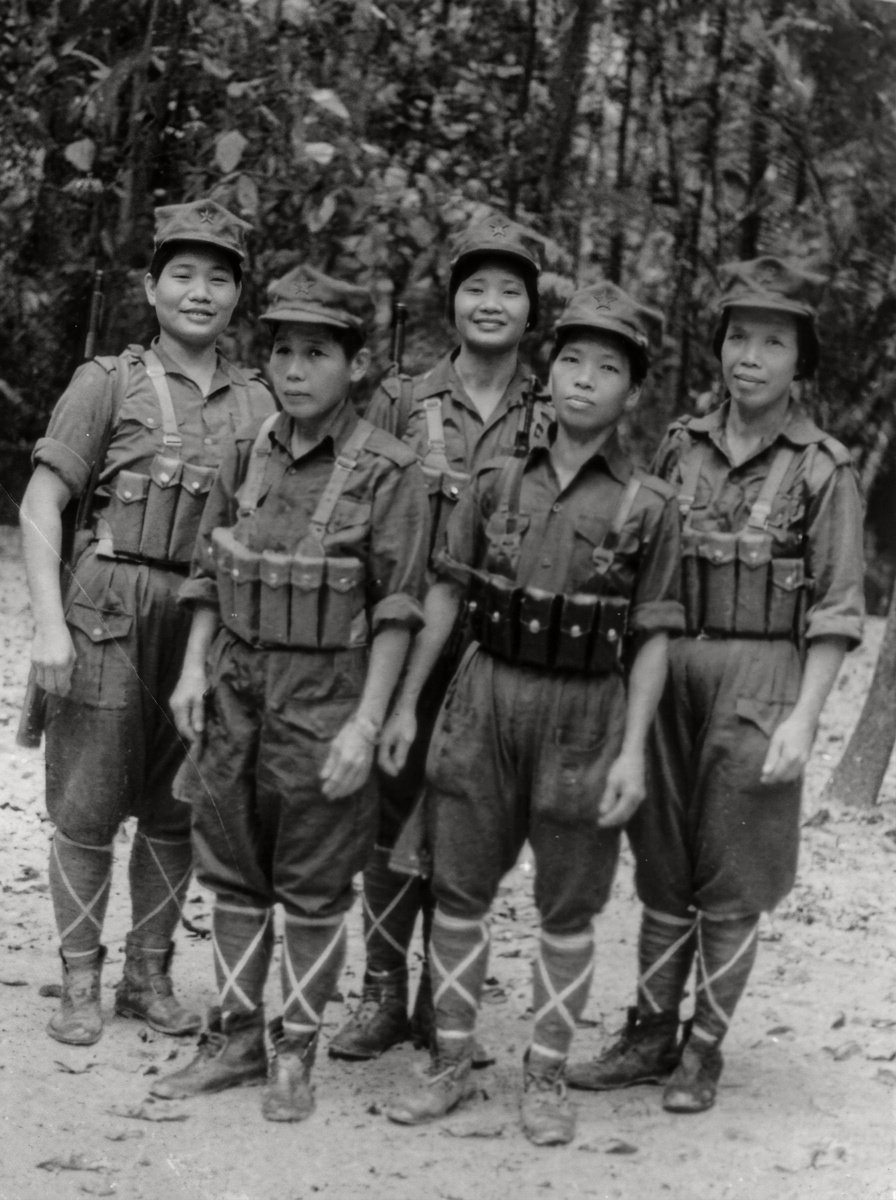
在泰马边境绵延三百余英里的崇山峻岭间,马来亚人民军构建了东西呼应、互为犄角的六大主力防区(详见《马共边区部队部署示意图》):西翼宋卡府昔罗(Sadao)边境为第八支队防区;向东依次为纳榻威与沙巴育方向的特区部队、居中统筹全军的北马局机关队、驻守勿洞核心突出部的第十二支队一区与第十二支队二区,以及驻守最东翼陶公府素基林(Sukhirin)与威恩山区的第十支队(马来族部队)。
In the early 1980s, responding to shifting regional geopolitics and the evolving Cold War landscape, the CPM Central Committee undertook a major strategic realignment. On 20 June 1982, the Malayan National Liberation Army (MNLA) was formally renamed the Malayan People's Army (MPA).
This renaming represented a far-sighted political repositioning: softening rigid class rhetoric to build the broadest possible multi-ethnic united front and redefining the armed forces as 'defenders of the people.' During the mid-to-late 1980s, the MPA shifted its focus from active offensives to consolidating its Thai-Malaysian border bases and pursuing a negotiated political settlement—laying the indispensable foundation for the December 1989 Hat Yai Peace Agreement and the achievement of 'peace with dignity.'
Across the 314-mile Thai-Malaysian frontier, the MPA maintained six interlocking operational commands (as shown in the official 'Deployment of CPM Forces in the Border Areas of Thailand and Malaysia' diagram): the 8th Regiment in the western Sadao sector; the Special Zone in Na Thawi and Saba Yoi; the central Northern Bureau Headquarters Unit; the 12th Regiment Area 1 and Area 2 in the Betong salient; and the Malay-majority 10th Regiment in the eastern Sukhirin (Waeng) sector.
【马来亚人民军 (MPA)】
1982年,为顺应国内外形势的变化,马共正式将“马来亚民族解放军”改称为“马来亚人民军”(MPA)。这次改名弱化了过往的阶层色彩,致力于建立更广泛的统一战线,将自身重新定位为“人民的守护者”。
在1980年代后期,随着冷战格局的演变,马共人民军的工作重心逐渐从主动出击转向维持边境根据地的生存,并开始探索和平转型的可能性。
这一时期从“解放军”到“人民军”的转变,为马共最终走出森林、在1989年与马泰政府签署《合艾和平协议》,实现“体面和平”奠定了关键的政治基础。[The Malayan People's Army (MPA)]— 录自《马来亚人民军 (MPA)》原始文献(第一节) | Verbatim Transcription from 'The Malayan People's Army (MPA)' Primary Chronicle (Section 1)
In 1982, to adapt to changing domestic and international circumstances, the CPM formally renamed the 'Malayan National Liberation Army' as the 'Malayan People's Army' (MPA). This renaming softened its previous class-based rhetoric, aiming instead to build a broader united front and reposition the force as the 'defenders of the people'.
By the late 1980s, as the Cold War landscape evolved, the focus of the MPA gradually shifted from active offensives to maintaining the survival of its border base areas, while beginning to explore the possibility of a peaceful transition.
This transition from a 'Liberation Army' to a 'People's Army' laid the crucial political foundation for the CPM to eventually emerge from the jungle, sign the Hat Yai Peace Agreement with the Malaysian and Thai governments in 1989, and achieve 'peace with dignity'.
第二章:四十五年(1945–1990):从异国士兵到丛林战友,田中清明与桥本惠之的国际主义传奇
Chapter 2: For 45 Years (1945–1990): From Foreign Soldiers to Revolutionary Brothers — Kiyoaki Tanaka and Shigeyuki Hashimoto
在马共武装力量半个世纪的征程中,有一段跨越民族血仇与国界疆域、感人至深的国际主义传奇。1945年8月第二次世界大战结束、日本宣布无条件投降之际,约200至400名身处马来亚的年轻日本士兵与技术人员,出于对军国主义侵略战争的深刻反省以及对马来亚人民反殖独立事业的由衷同情,拒绝向盟军投降遣返,毅然隐入赤道雨林,投身马共领导的人民武装队伍。
这批日籍战友彻底抛弃了昔日帝国军人的身份,凭借过硬的军事战术素养、枪炮维修技艺与野战外科医术,成为马来亚民族解放军的重要战术教官、兵工厂高级技师与前线战斗骨干。在1945年至1990年长达45年的艰苦岁月里,他们与华族、巫族、印族战友同吃一锅芭蕉芯、共卧一处防空壕,在英军与联邦军队残酷的围剿中并肩浴血奋战,把热带雨林当成了自己的第二故乡,绝大多数日籍国际主义战士为马来亚民族解放事业献出了宝贵生命。
1989年12月《合艾和平协议》签署后,两位在丛林中幸存下来的白发日籍老战士,田中清明(Kiyoaki Tanaka,党内化名“清德”)与桥本惠之(Shigeyuki Hashimoto,党内化名“阿福”),脱下了穿戴近半个世纪的绿色军装。1990年春,在马共中央与全体战友热泪盈眶的欢送大会上,两位老人挥别生死与共四十五载的丛林兄弟,正式踏上返回日本故土的归途,谱写了一曲超越历史恩怨的国际主义壮歌。
Within the half-century history of the CPM armed forces lies an extraordinary chapter of internationalist brotherhood that transcended wartime enmity. When World War II ended in August 1945 with Japan's surrender, approximately 200 to 400 young Japanese soldiers and technicians in Malaya refused repatriation and chose instead to remain in the equatorial rainforests, joining the CPM-led guerrilla forces.
Overcoming past national hostilities, these Japanese internationalist fighters contributed their advanced military training, ordnance engineering skills, and medical expertise as tactical instructors and frontline backbones. Through 45 grueling years from 1945 to 1990, amidst severe supply shortages and relentless military encirclements, they fought shoulder to shoulder with Chinese, Malay, and Indian guerrillas, embracing the Malayan jungle as their shared revolutionary homeland. Most laid down their lives in the forest.
Following the historic December 1989 Hat Yai Peace Agreement, the two surviving Japanese veterans—Kiyoaki Tanaka and Shigeyuki Hashimoto—hung up their green uniforms after nearly half a century in the jungle. In spring 1990, after tearful farewell banquets with their fellow fighters at the Peace Village, they returned home to Japan, closing a remarkable 45-year odyssey of reconciliation and revolutionary solidarity.
【四十五年:从异国士兵到丛林战友】
1945年二战结束,日军投降。在这历史转折点上,一批身处马来亚雨林、约200至400名年轻的日本士兵选择拒绝遣返,转而加入马共领导的游击队。他们凭借过硬的军事素养,化敌为友,成为部队重要的战术教官与前线骨干。
在1945到1990这漫长的45年间,他们与华、巫、印各族战士同生共死。在极度匮乏与残酷的围剿中,他们将热带雨林视为共同的革命故乡。
1989年《合艾和平协议》签署后,这段跨越半世纪的丛林传奇画上句点。1990年,田中清明、桥本惠之等日籍老兵终于脱下军装,挥别战友,踏上阔别45年的归途。这是一部超越历史血仇与国家疆界的革命兄弟情谊。[For 45 Years: From Foreign Soldiers to Revolutionary Brothers in the Jungle]— 录自《四十五年:从异国士兵到丛林战友》原始文献(第二节) | Verbatim Transcription from 'For 45 Years: From Foreign Soldiers to Revolutionary Brothers in the Jungle' Primary Chronicle (Section 2)
When World War II ended in 1945 with Japan's surrender, history took an unexpected turn in the Malayan rainforests. Approximately 200 to 400 young Japanese soldiers refused to surrender and repatriate, deciding instead to join the guerrilla forces led by the CPM. Overcoming past enmity, they utilised their military expertise to become vital tactical instructors and frontline backbones of the units.
For 45 gruelling years, from 1945 to 1990, they shared life and death with our Chinese, Malay, and Indian fighters. Amidst extreme scarcity and relentless military encirclements, they fought shoulder to shoulder, embracing the tropical jungle as their shared revolutionary homeland.
Following the historic 1989 Hat Yai Peace Agreement, this nearly half a century of isolation, surviving Japanese veterans like Kiyoaki Tanaka and Shigeyuki Hashimoto hung up their uniforms, bade a tearful farewell to their comrades, and returned home to Japan in 1990. This extraordinary 45 year journey stands as a testament to a revolutionary brotherhood that transcended national borders and achieved profound reconciliation over historical grievances.
第三章:雨林兵工厂(Arsenal)与山林野趣:自力更生的军工制造与溪流捕鱼日常
Chapter 3: The Jungle Arsenal and Rainforest Foraging: Self-Reliant Ordnance Manufacturing and Stream Fishing
在长达四十余年的丛林游击战中,马共武装力量始终面临着英联邦军队与马泰当局严密的武器封锁。为了在没有外部军火援助的绝境中维持战斗力,人民军在泰马边境幽深隐蔽的原始雨林与地下坑道中,创建了自力更生的“雨林兵工厂”(Arsenal)。
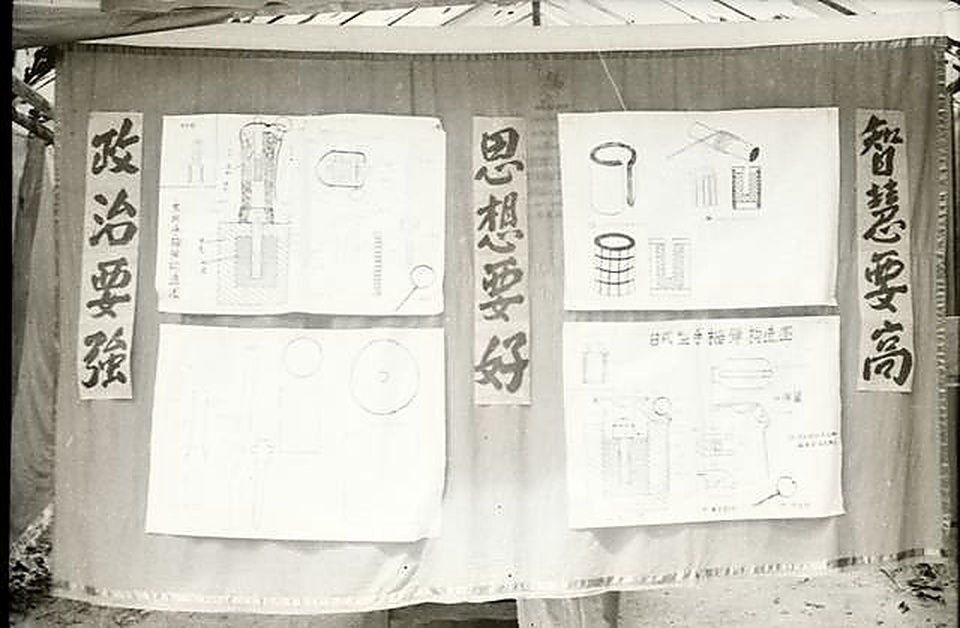
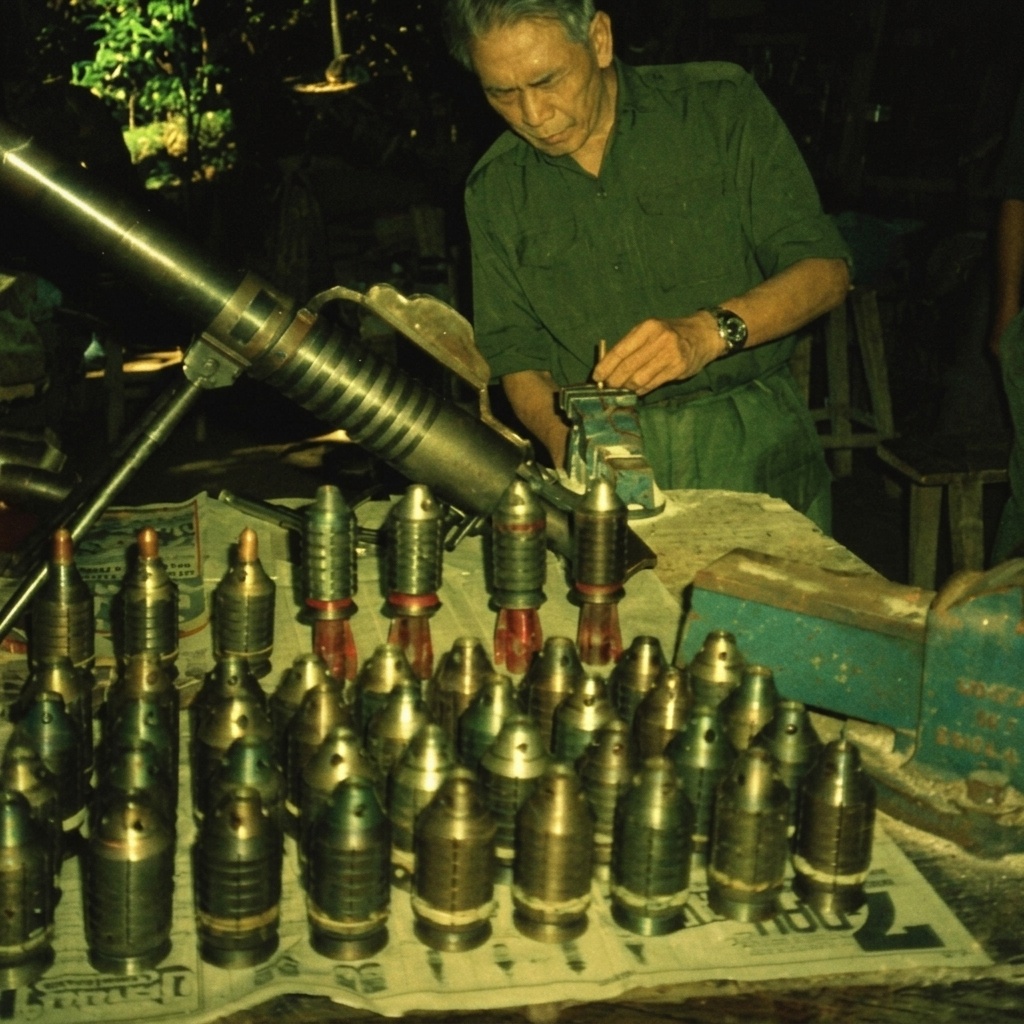
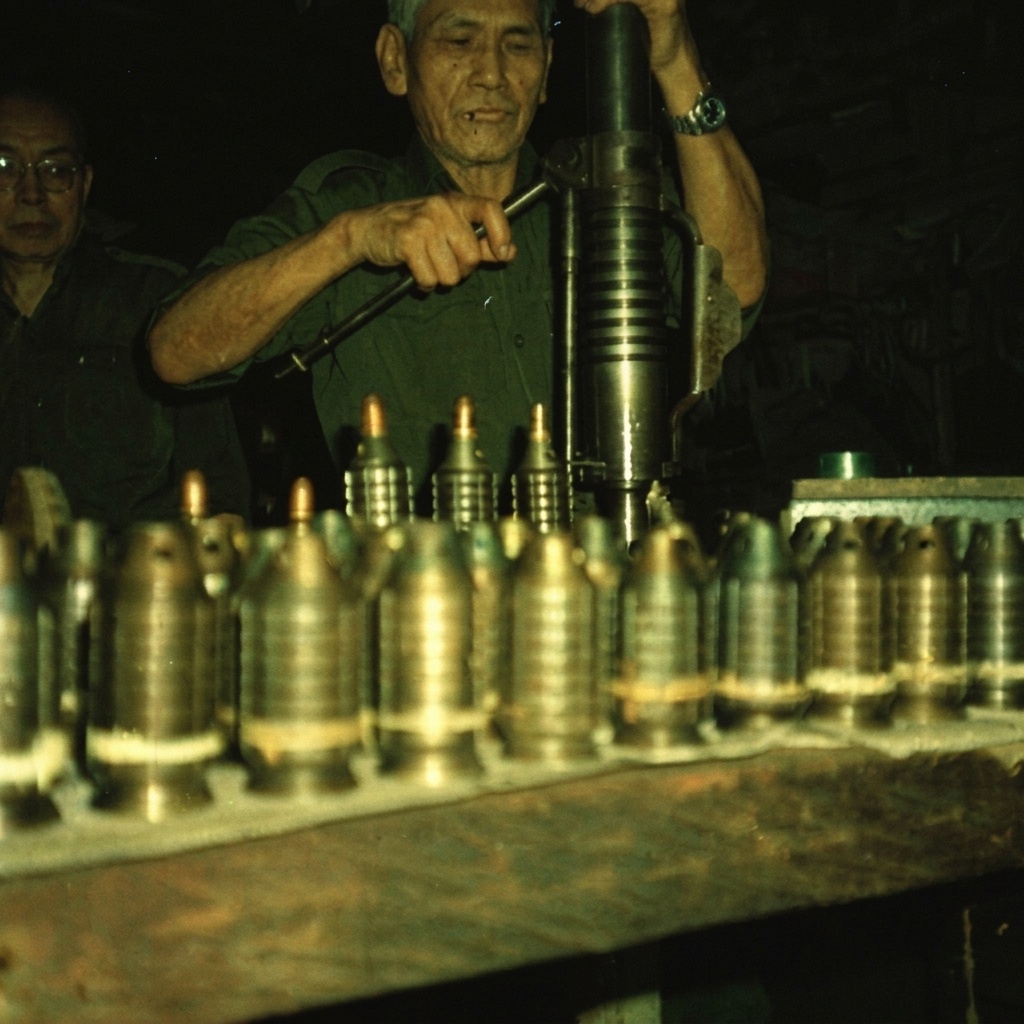
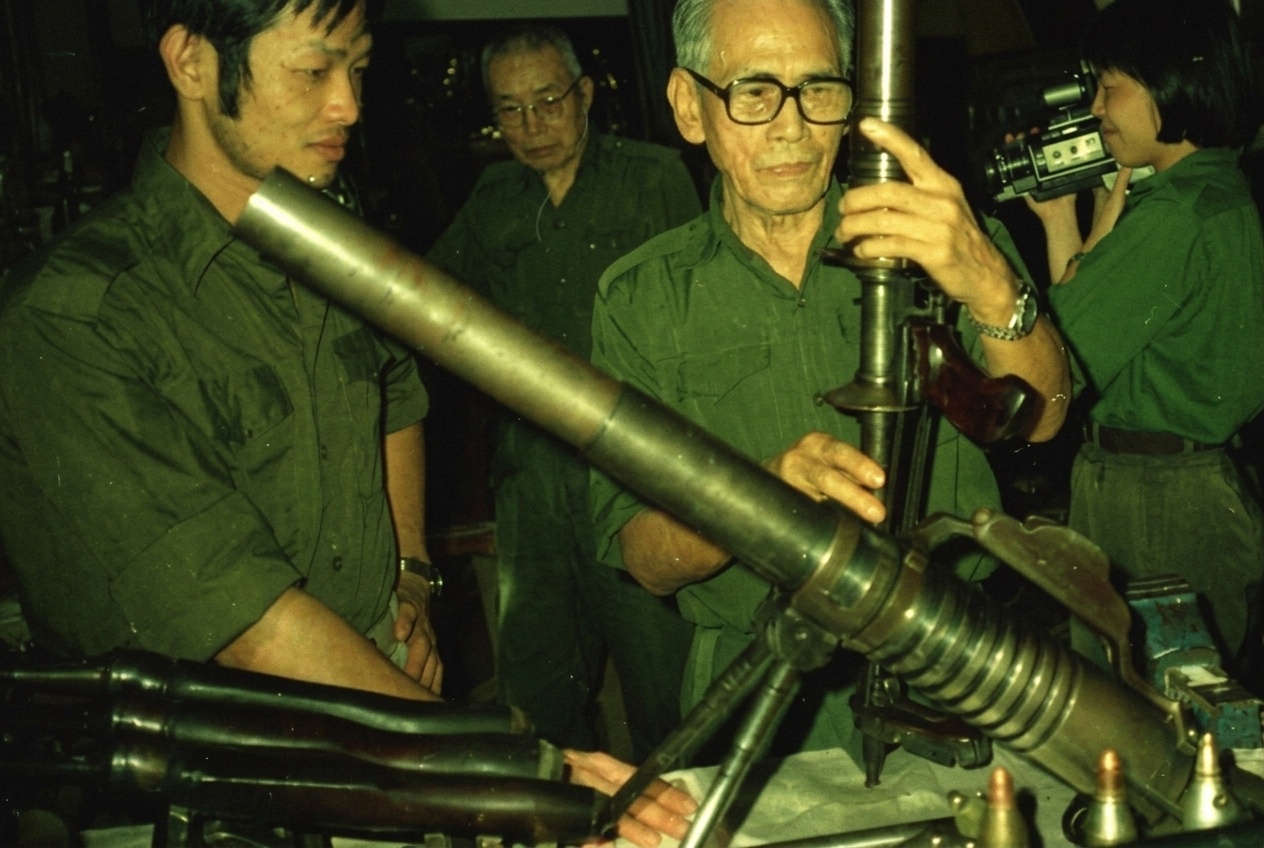
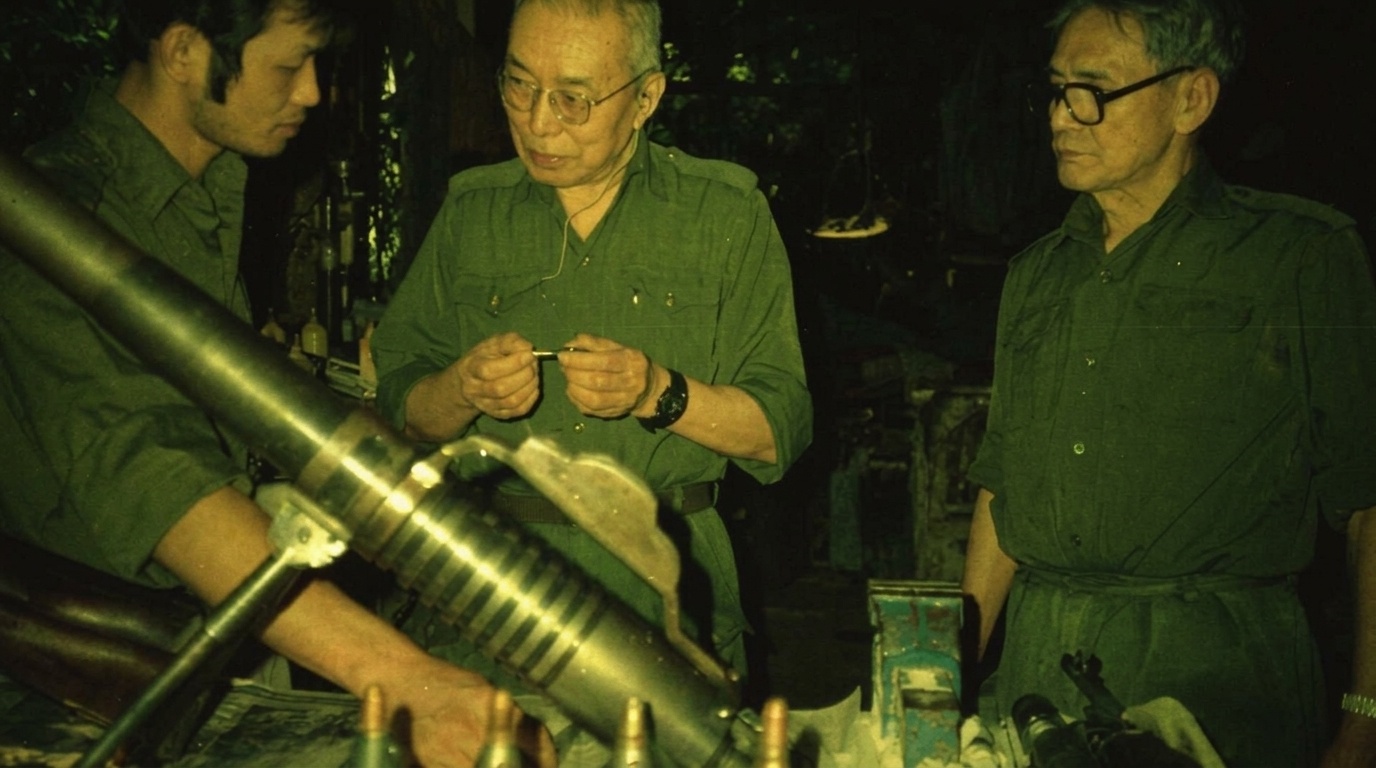
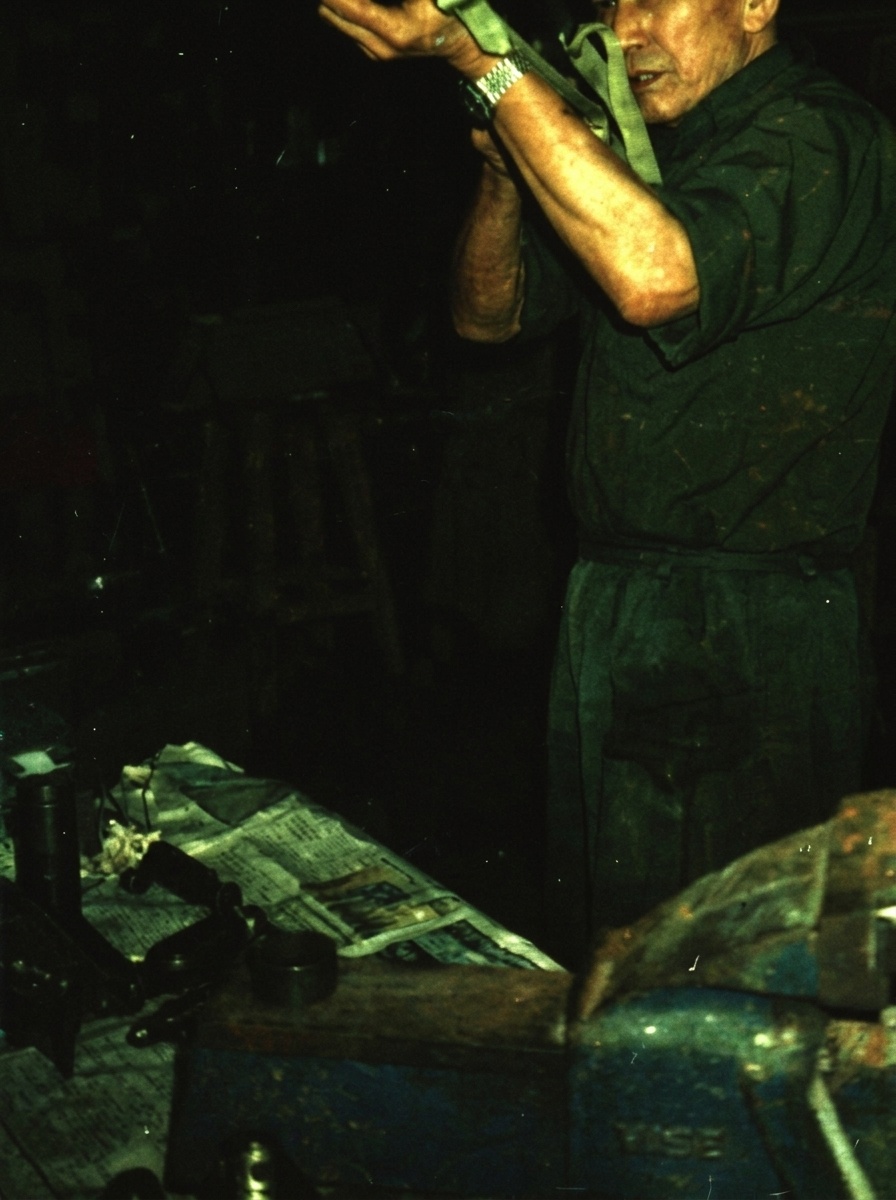
在日籍军工技师与华、巫族能工巧匠的通力协作下,兵工厂指战员利用简陋的车床、手摇钻机、铁砧与熔炉,将缴获的未爆航弹、炮弹壳与废旧钢管改造成精准的步枪枪机零件、冲锋枪组件、手榴弹以及令敌军闻风丧胆的丛林踏发式地雷与定向雷。以下这组珍贵历史照片,真实记录了密林军事技术展览上的手绘《手榴弹构造图》工程图谱,以及勿洞地下兵工厂军械技师在工作台前装配自制地雷、迫击炮弹与调试重型掷弹筒的第一手场景。
在紧张的军工生产与战备执勤之余,大自然慷慨的馈赠也为深山密营里的指战员们带来了无穷的生活野趣。泰马边境人迹罕至的清澈山涧中盛产肥美的野生河鱼(如吉罗鱼与山溪鲤),每逢休整日或伙食改善日,战士们便结伴来到林间溪谷,用竹篓、渔网或徒手围堵捕鱼。在馆藏《密林溪流捕鱼与野外生存日常》(No. 27-3 外景)原声录像中,湍急的溪水间回荡着年轻战士们纯真爽朗的欢呼与笑声:“抓那条!掉了掉了,哈哈!”满载而归的野生河鱼不仅为营地大锅饭增添了珍贵的蛋白质营养,更映照出这群丛林儿女苦中作乐、亲如手足的质朴天性。
Throughout more than four decades of jungle guerrilla warfare under tight military blockades, the CPM armed forces relied on sheer ingenuity to sustain their ordnance supplies. Deep within concealed rainforest valleys and underground tunnels along the Thai-Malaysian frontier, the Malayan People's Army established self-reliant jungle 'Arsenals.'
Working with rudimentary lathes, hand drills, anvils, and forge fires, skilled armourers—including Japanese ordnance technicians and Chinese and Malay craftsmen—recycled unexploded aerial bombs, artillery shells, and steel pipes into precision rifle components, mortars, submachine guns, hand grenades, and tactical landmines. The following archival photographs document the MPA's hand-drawn grenade engineering blueprints and underground arsenal technicians assembling landmines, mortar shells, and heavy grenade dischargers.
Between demanding shifts at the jungle Arsenal and perimeter sentry duty, the bounty of the equatorial rainforest offered the fighters moments of pure joy and recreation. The crystal-clear mountain streams along the Thai-Malaysian frontier teemed with wild river fish; on rest days, combatants waded into the rapids with bamboo traps and nets to supplement the camp's protein rations. In the candid archival video 'Jungle Stream Fishing and Wilderness Survival' (No. 27-3), infectious laughter and playful shouts echo over the rushing water—'Catch that one! Oh, it slipped away, haha!'—revealing the irrepressible spirit and camaraderie of these young jungle fighters.
在长达四十余年的丛林游击战中,马共武装力量始终面临着英联邦军队与马泰当局严密的武器封锁。为了在没有外部军火援助的绝境中维持战斗力,人民军在泰马边境幽深隐蔽的原始雨林与地下坑道中,创建了自力更生的“雨林兵工厂”(Arsenal)。
在日籍军工技师与华、巫族能工巧匠的通力协作下,兵工厂指战员利用简陋的车床、手摇钻机、铁砧与熔炉,将缴获的未爆航弹、炮弹壳与废旧钢管改造成精准的步枪枪机零件、冲锋枪组件、手榴弹以及令敌军闻风丧胆的丛林踏发式地雷与定向雷。以下这组珍贵历史照片,真实记录了密林军事技术展览上的手绘《手榴弹构造图》工程图谱,以及勿洞地下兵工厂军械技师在工作台前装配自制地雷、迫击炮弹与调试重型掷弹筒的第一手场景。
Throughout more than four decades of jungle guerrilla warfare under tight military blockades, the CPM armed forces relied on sheer ingenuity to sustain their ordnance supplies. Deep within concealed rainforest valleys and underground tunnels along the Thai-Malaysian frontier, the Malayan People's Army established self-reliant jungle 'Arsenals.'
Working with rudimentary lathes, hand drills, anvils, and forge fires, skilled armourers—including Japanese ordnance technicians and Chinese and Malay craftsmen—recycled unexploded aerial bombs, artillery shells, and steel pipes into precision rifle components, mortars, submachine guns, hand grenades, and tactical landmines. The following archival photographs document the MPA's hand-drawn grenade engineering blueprints and underground arsenal technicians assembling landmines, mortar shells, and heavy grenade dischargers.
在紧张的军工生产与战备执勤之余,大自然慷慨的馈赠也为深山密营里的指战员们带来了无穷的生活野趣。泰马边境人迹罕至的清澈山涧中盛产肥美的野生河鱼(如吉罗鱼与山溪鲤),每逢休整日或伙食改善日,战士们便结伴来到林间溪谷,用竹篓、渔网或徒手围堵捕鱼。在馆藏《密林溪流捕鱼与野外生存日常》(No. 27-3 外景)原声录像中,湍急的溪水间回荡着年轻战士们纯真爽朗的欢呼与笑声:“抓那条!掉了掉了,哈哈!”满载而归的野生河鱼不仅为营地大锅饭增添了珍贵的蛋白质营养,更映照出这群丛林儿女苦中作乐、亲如手足的质朴天性。
Between demanding shifts at the jungle Arsenal and perimeter sentry duty, the bounty of the equatorial rainforest offered the fighters moments of pure joy and recreation. The crystal-clear mountain streams along the Thai-Malaysian frontier teemed with wild river fish; on rest days, combatants waded into the rapids with bamboo traps and nets to supplement the camp's protein rations. In the candid archival video 'Jungle Stream Fishing and Wilderness Survival' (No. 27-3), infectious laughter and playful shouts echo over the rushing water—'Catch that one! Oh, it slipped away, haha!'—revealing the irrepressible spirit and camaraderie of these young jungle fighters.