建制专卷第6卷:主力作战支队与中枢指挥建制:第十支队(马来族部队)、特区部队、北马局机关队与第十二支队
Armed Forces Monograph Vol. 6: Main Operational Regiments & Command HQ: The 10th Regiment, Special Zone, Northern Bureau HQ Unit & 12th Regiment
【四大主力建制专卷总览】马共第十支队(1949年5月21日成立于彭亨淡马鲁县吉道,阿都拉·西迪与拉昔·迈丁领导的马来族武装,彻底粉碎英殖民者“华人暴动”谎言) ➔ 特区部队(纳榻威、沙巴育、也拉边境马来族与华族混合精锐突击力量,拉昔·迈丁、西巴与阿陈、白丝木协同指挥) ➔ 北马局机关队(马共在泰马边境的“大脑与联络神经网络”,统筹军事部署、战略物资、加密无线电与政治宣传) ➔ 第十二支队(勿洞森林的钢铁堡垒与文化火炬,徒手开凿一公里花岗岩“比雅密地道”,创办“火炬出版社”印行《人民前锋报》与《十年》)。
[Four Core Formations Overview] The 10th Regiment (founded 21 May 1949 in Kerdau, Temerloh, Pahang under Abdullah C.D. and Rashid Maidin as the Malay-majority regiment, shattering British 'Chinese rebellion' propaganda) ➔ The Special Zone (mixed Malay-Chinese elite assault force in Na Thawi, Saba Yoi, and Yala led by Rashid Maidin, Selamah, Ah Chen, and Bai Si Mu) ➔ Northern Bureau Headquarters Unit ('Brain and Neural Network of the CPM') ➔ The 12th Regiment ('Iron Bastion and Cultural Torch of the Betong Forest', builders of the 1-km granite Piyamit Tunnels and Torch Publishing House).
第一章:马共第十支队(The 10th Regiment):马来族战士的丛林历程与反殖先锋
Chapter 1: The 10th Regiment: The Jungle Journey of Malay Guerrilla Fighters
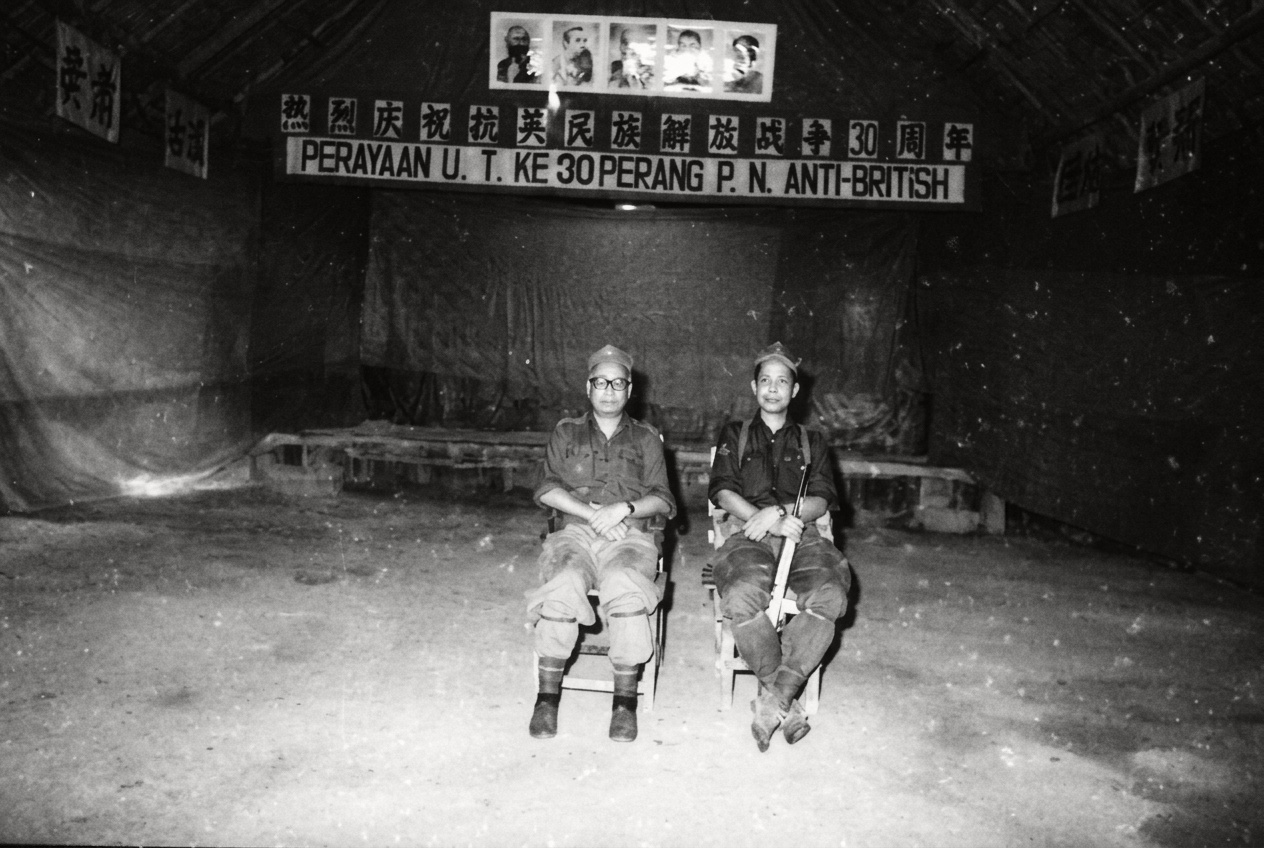
1949年5月21日,在彭亨州淡马鲁县吉道(Kerdau, Temerloh, Pahang)的热带丛林深处,马来亚共产党正式成立了第一支也是唯一一支以马来族指战员为主体的正规武装部队,马来亚民族解放军第十支队(Rejimen Ke-10)。该支队由马共中央委员、前马来亚马来国民党(PKMM)杰出劳工领袖阿都拉·西迪(Abdullah C.D.)出任司令员兼政委,著名马来族革命家拉昔·迈丁(Rashid Maidin)、瓦希·安努亚(Wahi Annuar)、慕沙·阿末(Musa Ahmad)与苏里亚尼·阿都拉(Suriani Abdullah,原名荣金)等共同参与创建领导。
第十支队的核心骨干大多来自战后遭英殖民当局镇压取缔的马来亚马来国民党(PKMM)、觉醒青年团(API)与觉醒妇女团(AWAS)的左翼马来知识分子及彭亨河流域的觉醒农民。他们高举反殖民族解放旗帜,将社会主义平等理想与伊斯兰教反抗暴政、追求公义的教义有机融合,在丛林军营中依然虔诚履行宗教功课并庆祝开斋节。第十支队的诞生与长达四十年的浴血奋战,用铁一般的事实彻底粉碎了英国殖民政府将马共武装斗争抹黑为“纯华人暴动”、企图挑拨华巫族群对立的“分而治之”政治谎言。
第十支队在漫长的森林岁月中,始终保持着浓郁的马来民族文化传统与虔诚的伊斯兰宗教生活。每逢开斋节(Hari Raya Aidilfitri)与哈芝节(Hari Raya Aidil Adha / 宰牲节),素基林密林营地便洋溢着庄重而喜庆的节日气氛:清晨,悠扬的赞主词(Takbir Raya)在参天古木间回荡,全体马来族指战员换上整洁的民族盛装或新军装,在森林礼堂内虔诚举行会礼祈祷,随后彼此双手相握、互道宽恕与祝福,并一同烹制竹筒饭(Lemang)、仁当咖喱与传统马来糕点。馆藏《森林里的哈芝节》与《独立英雄(Pahlawan Kemerdekaan)》两部珍贵马来语文献片,生动定格了这支马来族游击队兼具信仰温情与英雄气概的双重面貌。
On 21 May 1949, deep in the jungle of Kerdau, Temerloh District, Pahang, the Communist Party of Malaya formally established its first and primary Malay-majority armed formation: the 10th Regiment (Rejimen Ke-10) of the Malayan National Liberation Army. Commanded by CPM Central Committee member Abdullah C.D. alongside prominent Malay revolutionary leaders Rashid Maidin, Wahi Annuar, Musa Ahmad, and Suriani Abdullah, the regiment stood as the vanguard of Malay anti-colonial armed struggle.
Drawn largely from left-wing Malay intellectuals of the banned Malay Nationalist Party (PKMM), Angkatan Pemuda Insaf (API), and Angkatan Wanita Sedar (AWAS) as well as Pahang riverine peasantry, the fighters of the 10th Regiment harmonized anti-imperialist liberation ideals with Islamic teachings on justice and resistance to oppression. Their very existence and four-decade jungle campaign shattered the British colonial regime's divide-and-rule propaganda that portrayed the uprising as an exclusively 'Chinese rebellion.'
Throughout its four decades in the rainforest, the 10th Regiment preserved its rich Malay cultural heritage and devout Islamic religious life. Every year during Hari Raya Aidilfitri and Hari Raya Aidil Adha, the Sukhirin jungle camp came alive with solemn devotion and festive warmth: at dawn, the melodic chants of the Takbir Raya echoed through the towering trees as Malay fighters dressed in neat traditional attire or fresh uniforms gathered in the bamboo hall for congregational prayers, embracing one another to seek forgiveness and sharing jungle-cooked lemang and rendang. The museum's Malay-language archival films 'Selamat Hari Raya Aidil Adha' and 'Pahlawan Kemerdekaan' ('Heroes of Independence') vividly capture both the spiritual warmth and heroic sacrifices of the 10th Regiment.
1949年5月21日,在彭亨州淡马鲁县吉道(Kerdau, Temerloh, Pahang)的热带丛林深处,马来亚共产党正式成立了第一支也是唯一一支以马来族指战员为主体的正规武装部队,马来亚民族解放军第十支队(Rejimen Ke-10)。该支队由马共中央委员、前马来亚马来国民党(PKMM)杰出劳工领袖阿都拉·西迪(Abdullah C.D.)出任司令员兼政委,著名马来族革命家拉昔·迈丁(Rashid Maidin)、瓦希·安努亚(Wahi Annuar)、慕沙·阿末(Musa Ahmad)与苏里亚尼·阿都拉(Suriani Abdullah,原名荣金)等共同参与创建领导。
第十支队的核心骨干大多来自战后遭英殖民当局镇压取缔的马来亚马来国民党(PKMM)、觉醒青年团(API)与觉醒妇女团(AWAS)的左翼马来知识分子及彭亨河流域的觉醒农民。他们高举反殖民族解放旗帜,将社会主义平等理想与伊斯兰教反抗暴政、追求公义的教义有机融合,在丛林军营中依然虔诚履行宗教功课并庆祝开斋节。第十支队的诞生与长达四十年的浴血奋战,用铁一般的事实彻底粉碎了英国殖民政府将马共武装斗争抹黑为“纯华人暴动”、企图挑拨华巫族群对立的“分而治之”政治谎言。
On 21 May 1949, deep in the jungle of Kerdau, Temerloh District, Pahang, the Communist Party of Malaya formally established its first and primary Malay-majority armed formation: the 10th Regiment (Rejimen Ke-10) of the Malayan National Liberation Army. Commanded by CPM Central Committee member Abdullah C.D. alongside prominent Malay revolutionary leaders Rashid Maidin, Wahi Annuar, Musa Ahmad, and Suriani Abdullah, the regiment stood as the vanguard of Malay anti-colonial armed struggle.
Drawn largely from left-wing Malay intellectuals of the banned Malay Nationalist Party (PKMM), Angkatan Pemuda Insaf (API), and Angkatan Wanita Sedar (AWAS) as well as Pahang riverine peasantry, the fighters of the 10th Regiment harmonized anti-imperialist liberation ideals with Islamic teachings on justice and resistance to oppression. Their very existence and four-decade jungle campaign shattered the British colonial regime's divide-and-rule propaganda that portrayed the uprising as an exclusively 'Chinese rebellion.'
【马共第十支队|马来族战士的丛林历程】
1949年5月21日,马共在彭亨州淡马鲁县吉道正式成立了第一支、也是唯一一支以马来族为主体的武装部队,“第十支队”,由马共中央委员阿都拉·西迪领导,拉昔·迈丁同样是该部队的灵魂人物。
这支队伍的成员多为受过教育的马来左翼青年(多来自马来亚马来国民党 PKMM),他们怀揣着将国家从英国殖民统治下解放出来的理想走入森林。在长达四十年的时间里,他们在丛林中坚持遵循伊斯兰教义,将革命理想与宗教信仰融合。
第十支队的存在,直接打破了英殖民政府将马共宣传为“纯华人暴动”的政治论述,证明了这场武装斗争在当时跨越种族的复杂性与感召力。[The 10th Regiment | The Jungle Journey of Malay Fighters]— 录自《马共第十支队 (The 10th Regiment)》原始文献(第一节) | Verbatim Transcription from 'The 10th Regiment' Primary Chronicle (Section 1)
On 21 May 1949, in Kerdau, Temerloh, Pahang, the CPM formally established its first and only predominantly Malay armed unit—the '10th Regiment'—led by CPM Central Committee member Abdullah C.D., with Rashid Maidin also serving as a central figure of the regiment.
Its members were largely educated left-wing Malay youth (many from the Malay Nationalist Party, PKMM) who entered the jungle driven by the ideal of liberating their homeland from British colonial rule. Across four decades in the forest, they steadfastly observed Islamic teachings, harmonising revolutionary ideals with their religious faith.
The existence of the 10th Regiment directly shattered the British colonial narrative that portrayed the CPM as a 'purely Chinese rebellion', proving the cross-ethnic complexity and appeal of the armed struggle.
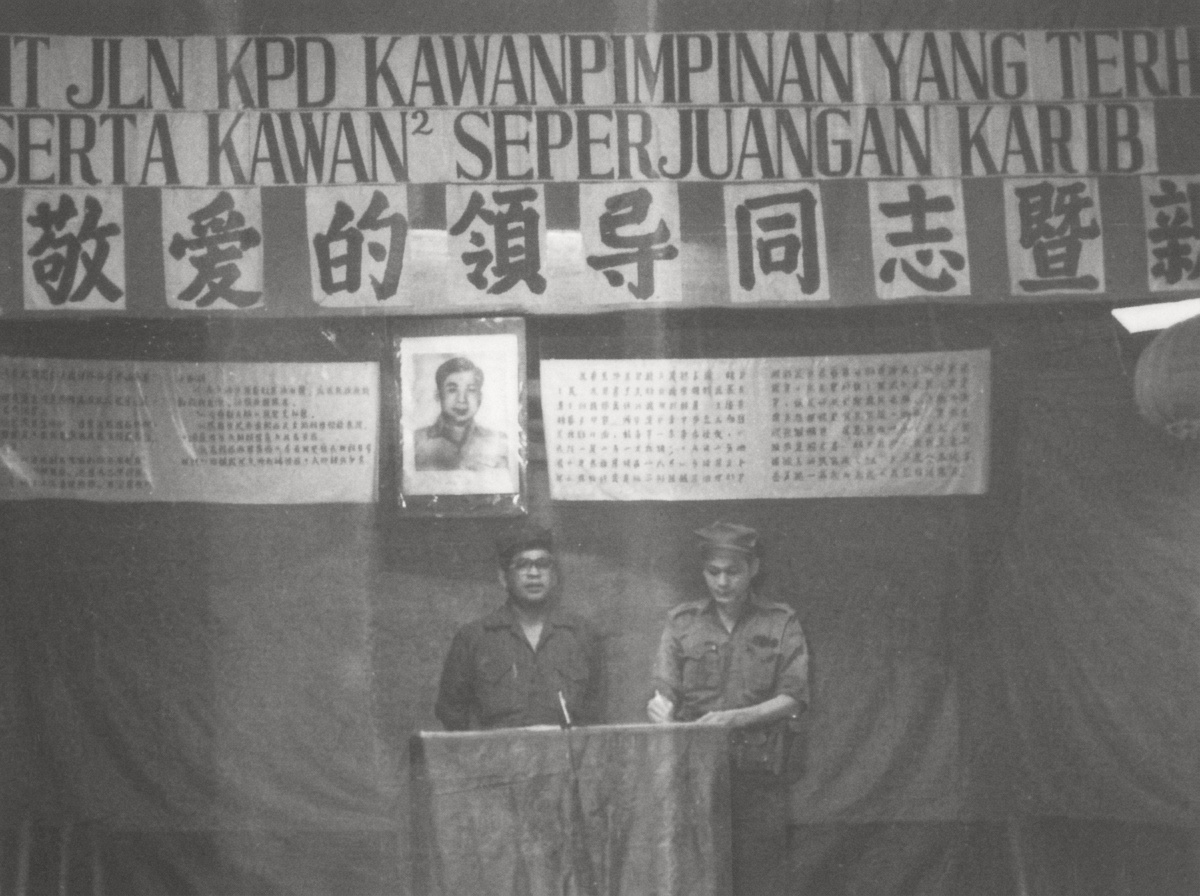
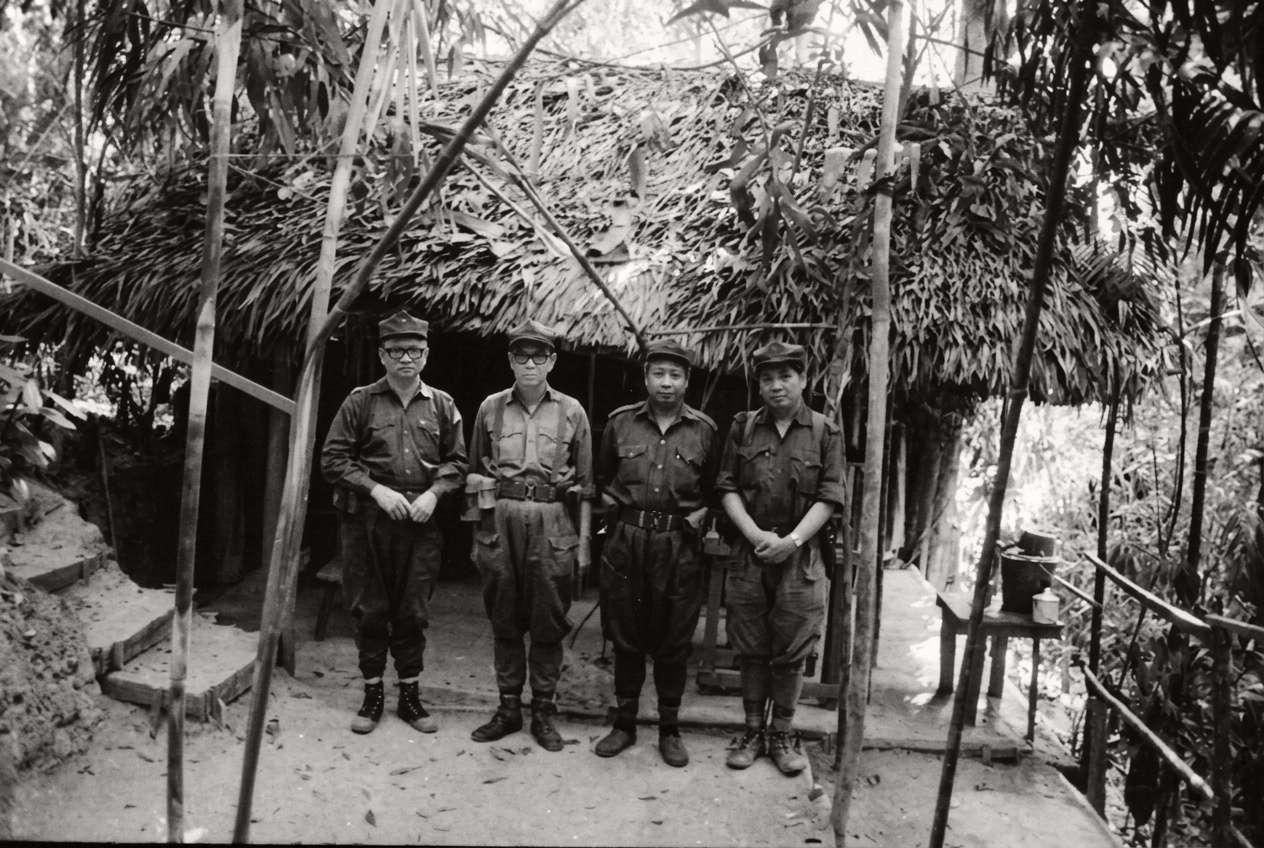
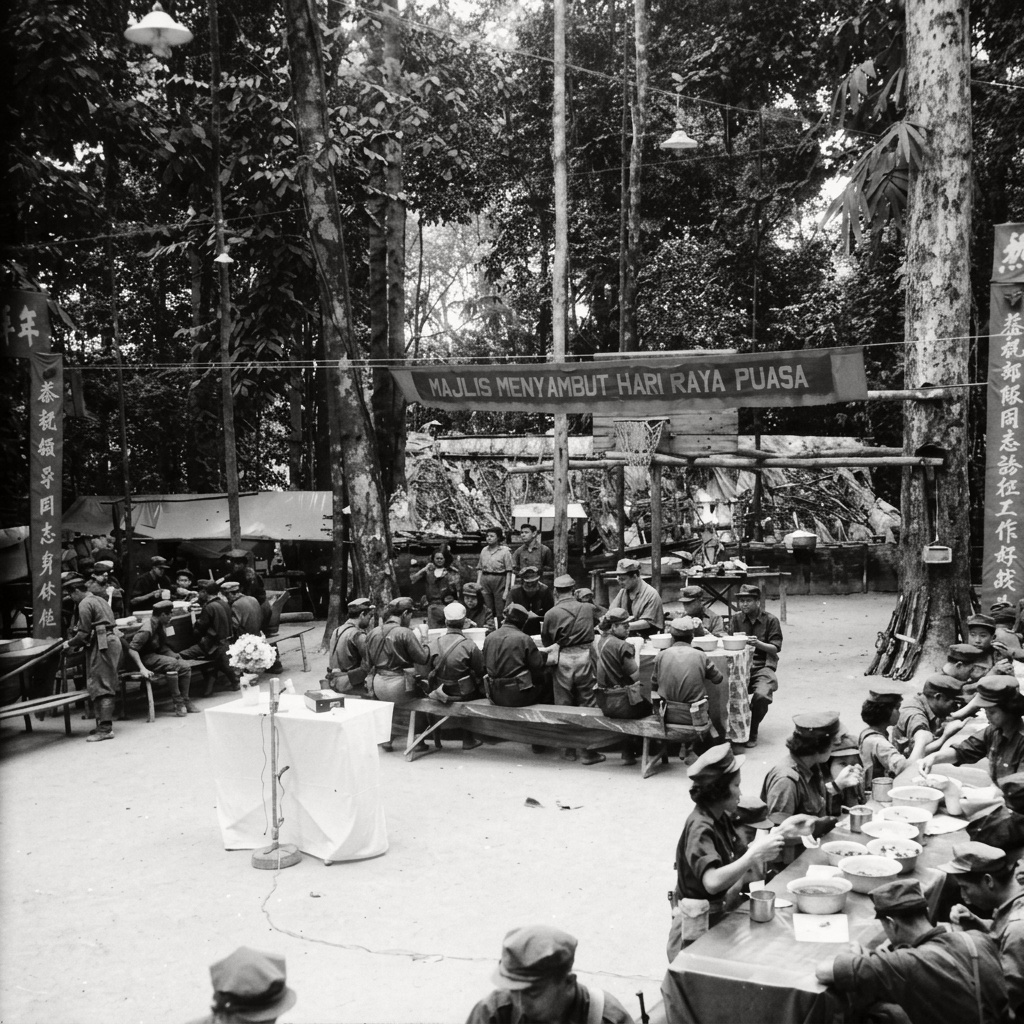
第十支队在漫长的森林岁月中,始终保持着浓郁的马来民族文化传统与虔诚的伊斯兰宗教生活。每逢开斋节(Hari Raya Aidilfitri)与哈芝节(Hari Raya Aidil Adha / 宰牲节),素基林密林营地便洋溢着庄重而喜庆的节日气氛:清晨,悠扬的赞主词(Takbir Raya)在参天古木间回荡,全体马来族指战员换上整洁的民族盛装或新军装,在森林礼堂内虔诚举行会礼祈祷,随后彼此双手相握、互道宽恕与祝福,并一同烹制竹筒饭(Lemang)、仁当咖喱与传统马来糕点。馆藏《森林里的哈芝节》与《独立英雄(Pahlawan Kemerdekaan)》两部珍贵马来语文献片,生动定格了这支马来族游击队兼具信仰温情与英雄气概的双重面貌。
Throughout its four decades in the rainforest, the 10th Regiment preserved its rich Malay cultural heritage and devout Islamic religious life. Every year during Hari Raya Aidilfitri and Hari Raya Aidil Adha, the Sukhirin jungle camp came alive with solemn devotion and festive warmth: at dawn, the melodic chants of the Takbir Raya echoed through the towering trees as Malay fighters dressed in neat traditional attire or fresh uniforms gathered in the bamboo hall for congregational prayers, embracing one another to seek forgiveness and sharing jungle-cooked lemang and rendang. The museum's Malay-language archival films 'Selamat Hari Raya Aidil Adha' and 'Pahlawan Kemerdekaan' ('Heroes of Independence') vividly capture both the spiritual warmth and heroic sacrifices of the 10th Regiment.
第二章:特区(The Special Zone)与北马局机关队(Northern Bureau HQ Unit):边境渗透尖兵与全军神经中枢
Chapter 2: The Special Zone and the Northern Bureau Headquarters Unit: Border Penetration Vanguard and Command Brain
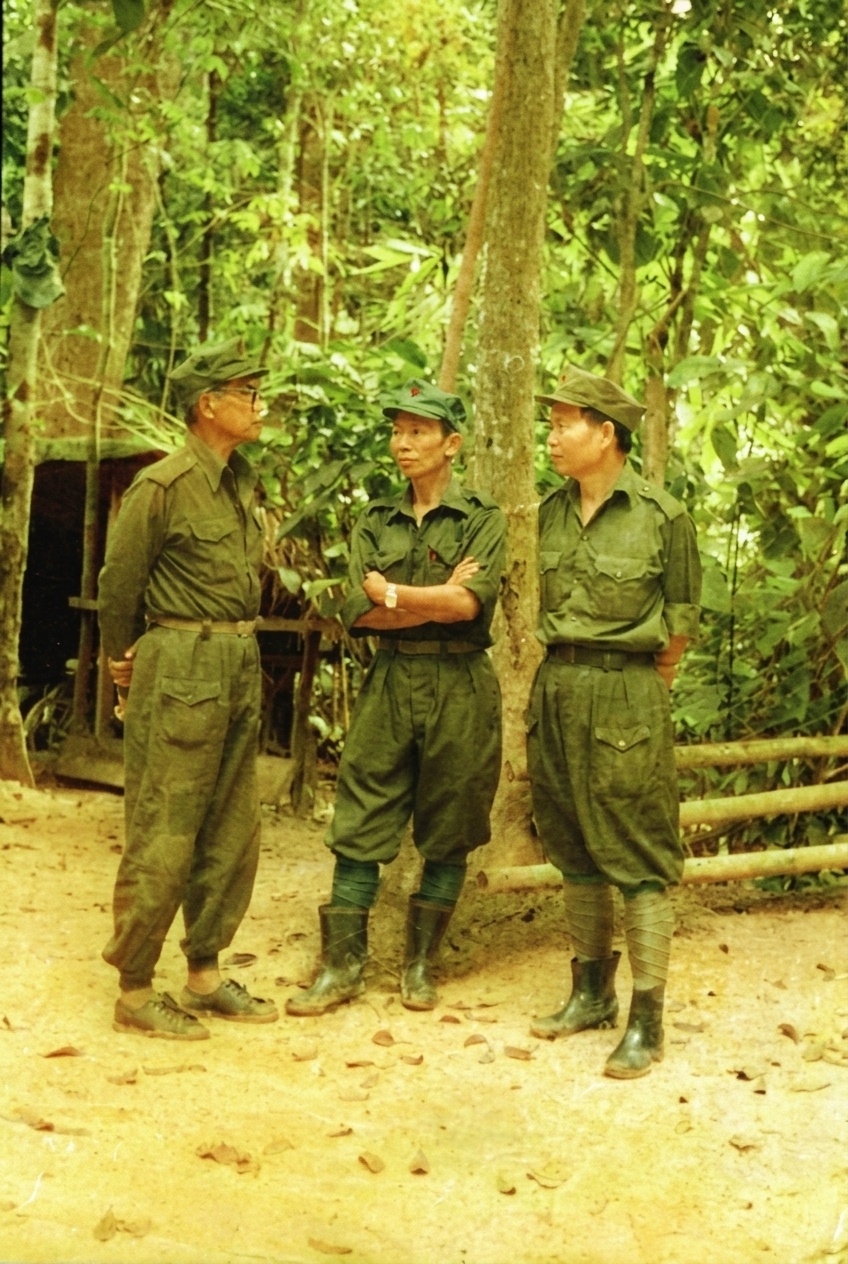
在泰马边境中段与西段的宋卡府纳榻威(Na Thawi)、沙巴育(Saba Yoi)及也拉府(Yala)交界地带,活跃着一支极具战略机动性的精锐力量,马共“特区”部队(The Special Zone)。特区部队规模精干,以马来族指战员为主体,同时与华族部队密切协同,主要承担边境侦察渗透、武装突击、开辟秘密交通走廊以及深入马来乡村开展群众动员(民运)的特殊使命。该部队汇聚了马共党内杰出的跨族群指挥员:马来族领导人拉昔·迈丁(Rashid Maidin)与女杰西巴(Selamah),以及华族领导人阿陈(Ah Chen)与抗日老将白丝木(Bai Si Mu),成为华巫两族指战员生死与共的典范。
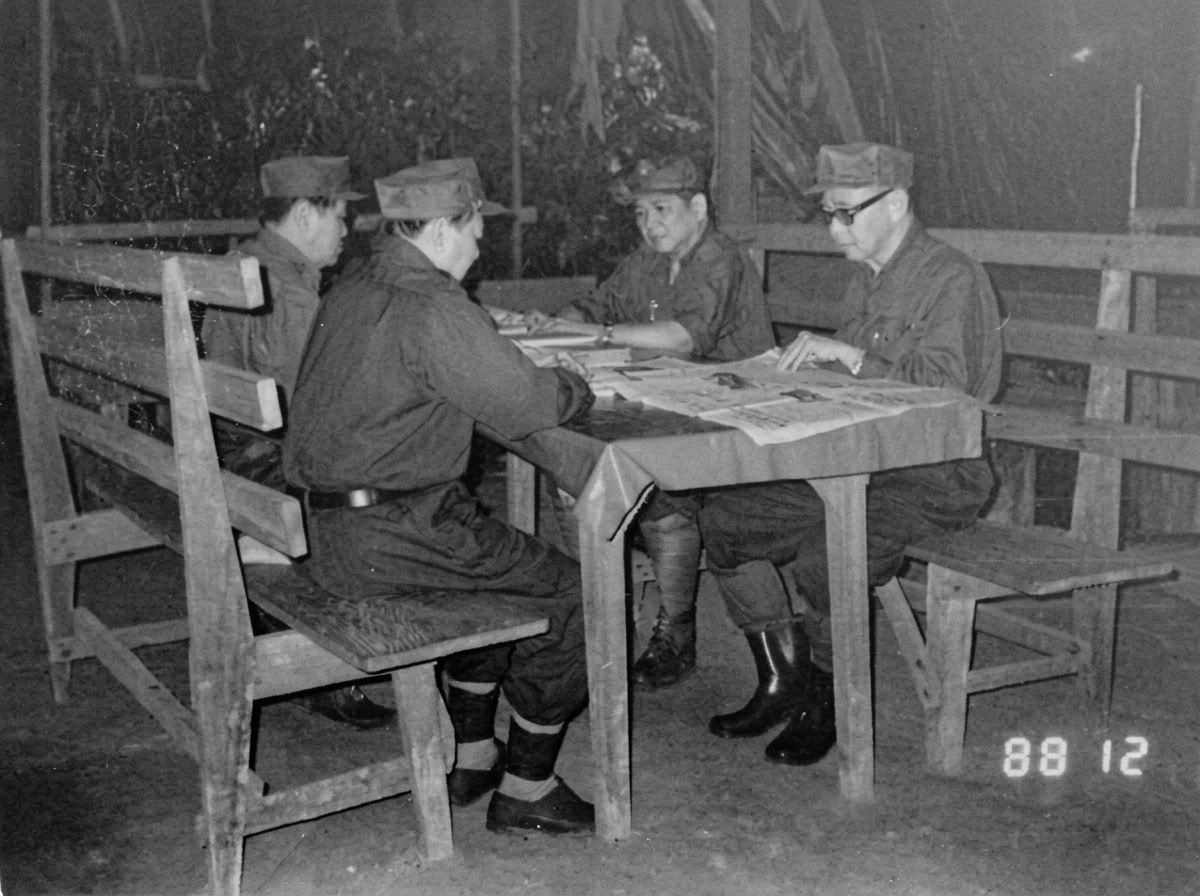
而在整条泰马边境防线的核心腹地,则驻扎着统御全军的最高指挥机关,“北马局机关队”(Northern Bureau Headquarters Unit)。“北马局”是马共中央委员会在泰马边境割据时期的最高前敌指挥与决策机构,而“北马局机关队”则是直接保卫并服务于这一中枢的精锐行政与武装护卫部队。机关队虽不轻易直接暴露于前线阵地,却是全军名副其实的“大脑与联络神经网络”:负责统筹各支队与突击队的作战方案、调配战略物资、运作高度机密的无线电加密通信总台,并编印全党全军的核心政治理论文献。
Operating across the rugged frontier districts of Na Thawi, Saba Yoi, and Yala was the elite 'Special Zone' (特区) force. Compact, agile, and composed predominantly of Malay fighters operating in close coordination with Chinese detachments, the Special Zone specialized in border penetration, tactical ambushes, and rural mass mobilization. Its leadership brought together distinguished Malay commanders Rashid Maidin and Selamah alongside veteran Chinese commanders Ah Chen and Bai Si Mu.
At the strategic heart of the frontier stood the 'Northern Bureau Headquarters Unit' (北马局机关队). The 'Northern Bureau' served as the supreme border command organ of the CPM Central Committee, while its Headquarters Unit functioned as the elite administrative, communications, and armed escort force protecting the leadership core. Acting as the 'brain and neural network' of the entire army, it coordinated overall military operations, strategic logistics, encrypted radio communications, and ideological publications.
【特区|边境渗透与突击力量】
马共“特区”是一支规模较小、以马来族成员为主的武装力量,并与华族部队协同行动。部队主要活动于泰国边境地区,如纳榻威、沙巴育及也拉一带,负责执行游击行动、基层组织与跨境联络等任务。
马来族领导人:拉昔·迈丁、西巴|华族领导人:阿陈、白丝木
【北马局机关队|马共的大脑与联络神经网络】
“北马局”是马共中央在泰马边境地区的最高指挥机构,而“北马局机关队”则是直接服务并保卫这一核心中枢的精锐行政与武装护卫力量。
这支队伍不直接负责大规模的前线冲锋,但却是全军的“大脑”:负责统筹各支队的军事部署、调配战略物资、运作核心的加密无线电通讯,以及起草和印刷关键的政治宣传文件。机关队成员由文化水平较高、政治绝对可靠的骨干组成,是维系马共在边境割据时期有效运转的中枢神经。[The Special Zone | Border Penetration and Assault Force]— 录自《特区》与《北马局机关队》原始文献(第二、三节) | Verbatim Transcription from 'The Special Zone' and 'Northern Bureau Headquarters Unit' Primary Chronicles (Sections 2 & 3)
The CPM 'Special Zone' was a smaller armed force composed mainly of Malay members, operating in coordination with Chinese units. Active primarily along the Thai border areas of Na Thawi, Saba Yoi and Yala, the unit carried out guerrilla operations, grassroots organisation and cross-border liaison missions.
Malay Leaders: Rashid Maidin, Selamah | Chinese Leaders: Ah Chen, Bai Si Mu
[Northern Bureau Headquarters Unit | The Brain and Neural Network of the CPM]
The 'Northern Bureau' served as the supreme command authority of the CPM Central Committee in the Thai-Malaysian border region, while the 'Northern Bureau Headquarters Unit' was the elite administrative and armed escort force directly serving and protecting this core nerve centre.
Though not tasked with large-scale frontline charges, this unit functioned as the 'brain' of the entire army: coordinating military deployments across regiments, allocating strategic supplies, operating core encrypted radio communications, and drafting and printing vital political publications. Composed of well-educated and politically steadfast cadres, the Headquarters Unit was the central nervous system sustaining the CPM's border apparatus.
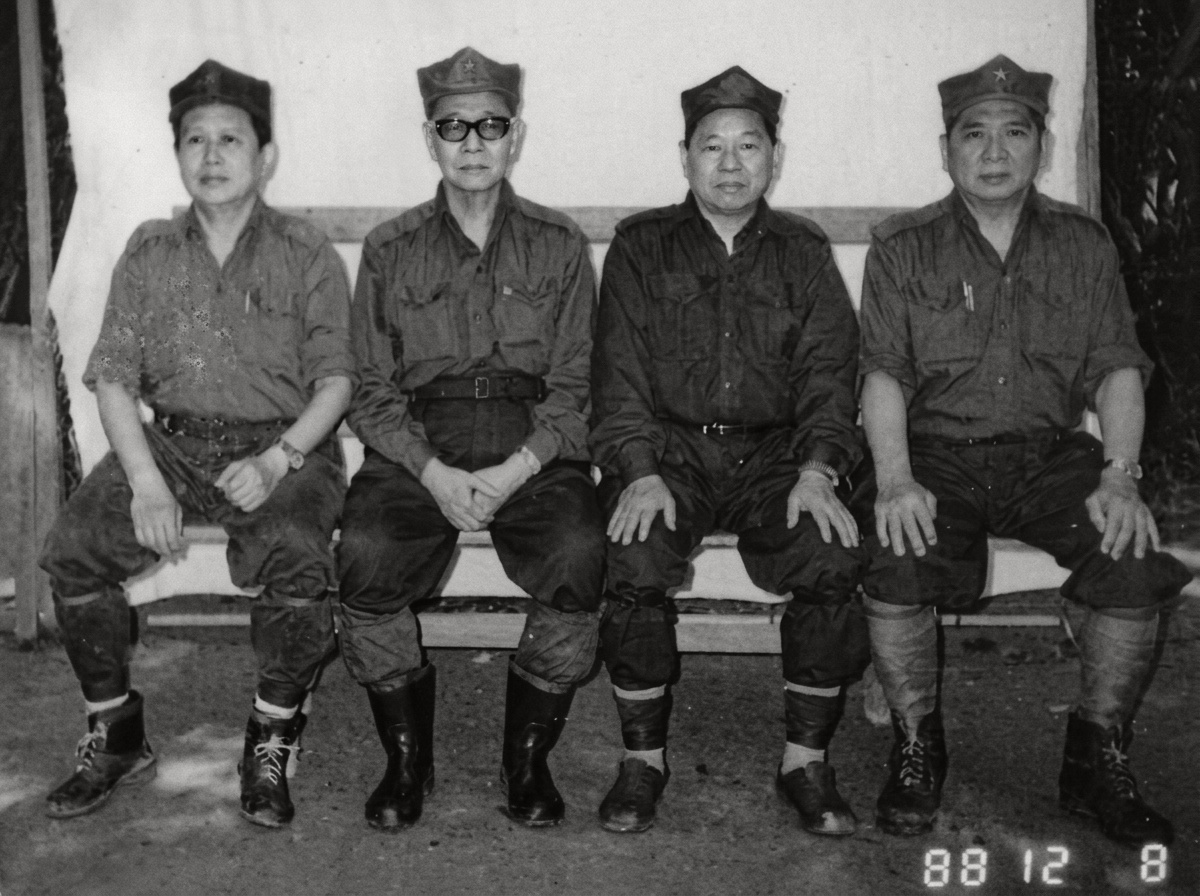
第三章:第十二支队(The 12th Regiment):勿洞森林的钢铁堡垒、比雅密地道与火炬出版社
Chapter 3: The 12th Regiment: Iron Bastion of the Betong Forest, the Piyamit Tunnels, and Torch Publishing House
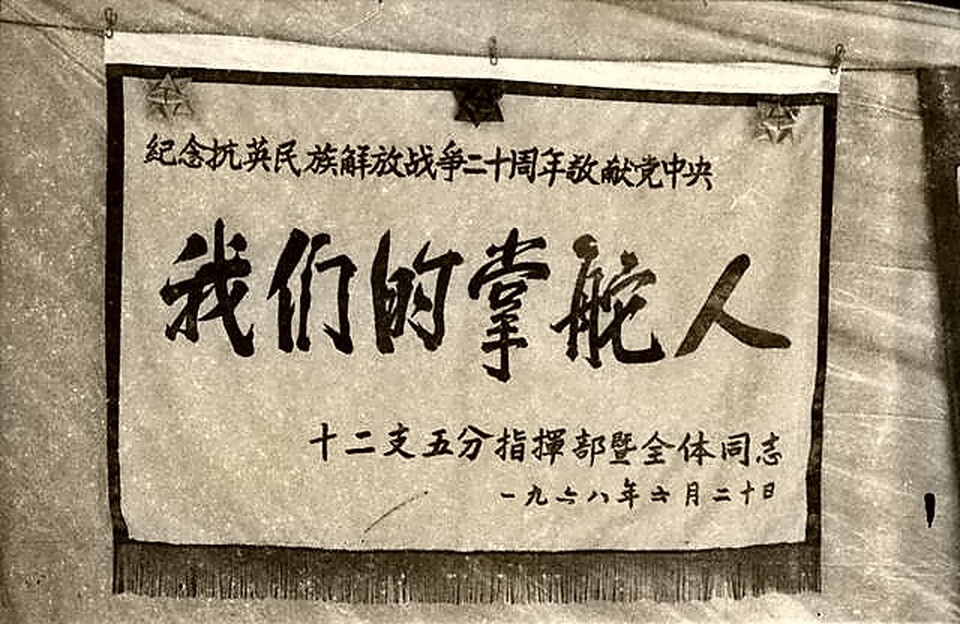
在马来亚民族解放军与人民军的编制序列中,1949年整编成立的“第十二支队”(The 12th Regiment,后划分为一区与二区)具有举足轻重的战略地位。该支队长期驻守于泰马边境勿洞(Betong)突出部的崇山峻岭与原始雨林中,直接肩负着保卫马共中央委员会大本营、维护全军后勤总基地与核心训练营地的神圣使命,被誉为“勿洞森林的钢铁堡垒”。
面对马泰军方在1970年代发动的猛烈空中轰炸与地面重炮围剿,第十二支队指战员展现了惊天地、泣鬼神的工程奇迹:在没有任何现代大型机械的情况下,战士们仅凭铁镐、钢钎与双手,在坚硬的花岗岩山体腹地中日夜苦战,徒手开凿出全长约一公里、蜿蜒曲折且设有指挥室、电台室、野战手术室、粮仓与多个隐蔽射击孔的地下防御工事,著名的“比雅密地道”(友谊村地道 / Piyamit Tunnels)。
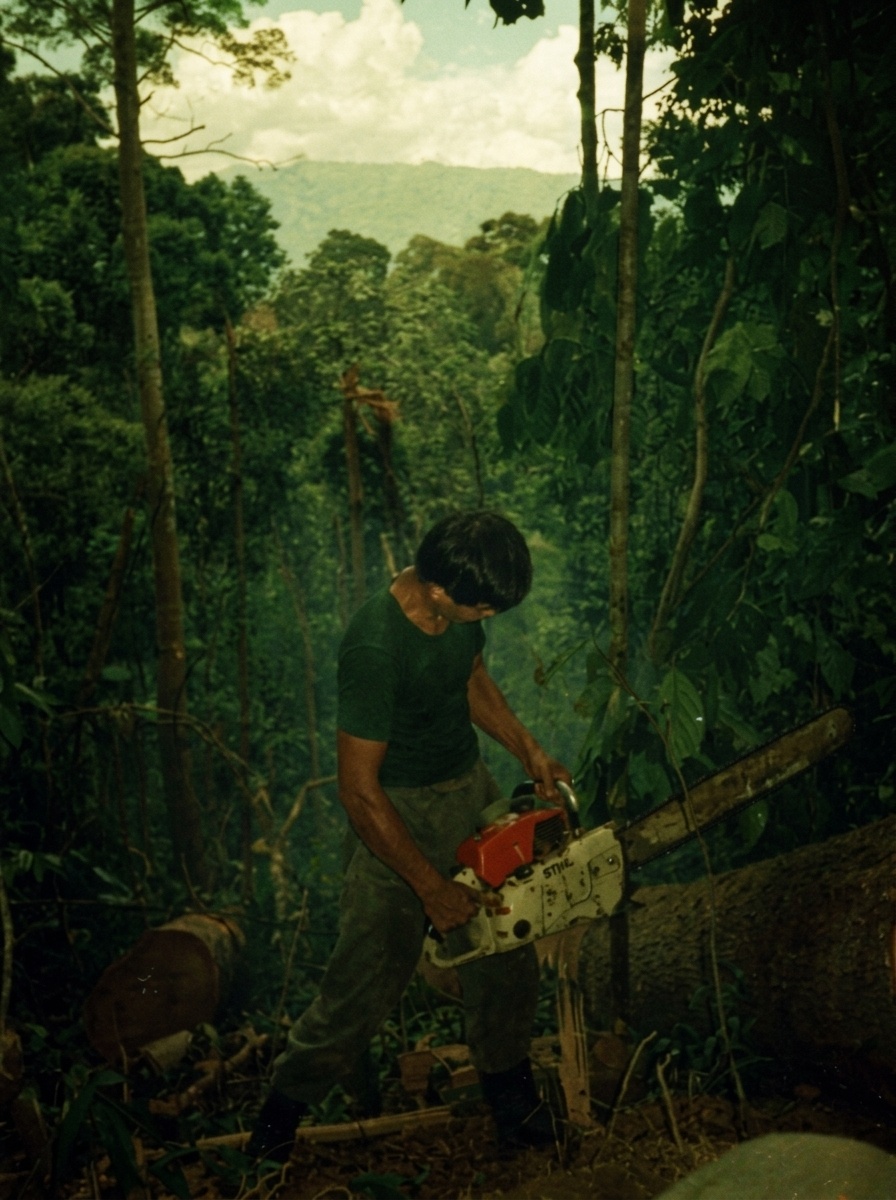
与此同时,第十二支队还是高举革命文化火炬的摇篮。支队在幽暗潮湿的密林深处创立了“火炬出版社”(Torch Publishing House),利用刻蜡版与手摇油印机,克服纸张油墨极度匮乏的困难,定期出版《人民前锋报》、《十年》等重要党内刊物与文化读物,用思想火炬照亮漫长的丛林岁月。在第十二支队中,大批英姿飒爽的华族与各族女战士不仅承担了文化出版、机要电讯与战地医疗重任,更与男战士一样背枪巡逻、埋设地雷、开凿地道,撑起了勿洞钢铁堡垒的半边天。
在枪林弹雨与开凿花岗岩地道的铁血岁月之外,森林营地里其实还藏着一个令所有访客忍俊不禁、充满童趣的温馨角落,由战士们亲手搭建的森林“小小动物园”(Zoo Kecil)。在原始雨林行军巡逻或开荒劳作时,指战员们常会遇到与母兽失散的幼小猪尾猴(beruk)、叶猴、穿山甲、小鼷鹿(鼠鹿)以及受伤的犀鸟与山雉。满怀怜爱之心的年轻男女战士将这些森林小生灵抱回营地悉心喂养照料,用竹木搭起小巧的栖息棚舍。
在馆藏《森林营地里的“小小动物园”(Zoo Kecil II)》与《雨林生灵伴侣(No. 83-3)》两部趣味横生的生活短片中,解说员甚至幽默地用第一人称替镜头里憨态可掬的小猴子配音:“在这座小小动物园里,我是年纪最小的一只小猪尾猴,今年才半岁大(Dalam zoo kecil ini, saya beruk yang paling kecil, umur saya baru setengah tahun)……”看着女战士像哄孩子一样用奶瓶给幼猴喂水、给小猴子洗澡抓痒,人们得以窥见这群丛林铁军战士内心深处最柔软、最热爱生命与自然的纯真温情。
Within the order of battle of the MNLA and MPA, the '12th Regiment' (reorganized in 1949 and later structured into Area 1 and Area 2) held a position of paramount strategic importance. Garrisoned across the rugged rainforest mountains of the Betong salient on the Thai-Malaysian frontier, the 12th Regiment was directly entrusted with defending the CPM Central Committee Headquarters, main logistics depots, and central training camps—earning its reputation as the 'Iron Bastion of the Betong Forest.'
To withstand relentless aerial bombardment and artillery barrages during the 1970s, fighters of the 12th Regiment accomplished a staggering feat of military engineering: without heavy machinery, using only hand picks, steel chisels, and shovels, they excavated the 1-kilometer 'Piyamit Tunnels' (Friendship Village Tunnels) through solid granite mountain rock, complete with underground command posts, radio rooms, field infirmaries, and concealed firing ports.
Simultaneously, the 12th Regiment kept the cultural torch burning in the rainforest by founding the 'Torch Publishing House' (火炬出版社). Operating mimeograph machines deep in the jungle, they printed vital periodicals including 'People's Vanguard' (《人民前锋报》) and 'Ten Years' (《十年》). Across every sphere of the 12th Regiment—from tunnel excavation and armed patrol to publishing and medical care—female combatants played an indispensable, heroic role.
Beyond the iron discipline of tunnel excavation and armed patrols, the jungle camps harbored a delightful, unexpected corner of tenderness: the camp 'Mini Zoo' (Zoo Kecil) lovingly built by the fighters themselves. While patrolling or clearing garden plots in the equatorial rainforest, combatants frequently rescued orphaned baby pig-tailed macaques (beruk), dusky leaf monkeys, pangolins, mouse-deer, and injured hornbills. Bringing these tiny creatures back to camp, the young male and female fighters built bamboo enclosures and nursed them by hand.
In the utterly charming archival films 'Zoo Kecil II' and 'Rainforest Companions: The Camp Mini Zoo' (No. 83-3), the narrator playfully voices the baby macaque in Malay in the first person: 'In this little zoo, I am the smallest monkey of all—I am only half a year old (Dalam zoo kecil ini, saya beruk yang paling kecil, umur saya baru setengah tahun)...' Watching armed guerrilla fighters gently bottle-feeding orphaned monkeys, bathing them in basins, and playing with tame forest birds offers an unforgettable glimpse into the gentle, life-affirming humanity of the soldiers in the forest.
在马来亚民族解放军与人民军的编制序列中,1949年整编成立的“第十二支队”(The 12th Regiment,后划分为一区与二区)具有举足轻重的战略地位。该支队长期驻守于泰马边境勿洞(Betong)突出部的崇山峻岭与原始雨林中,直接肩负着保卫马共中央委员会大本营、维护全军后勤总基地与核心训练营地的神圣使命,被誉为“勿洞森林的钢铁堡垒”。
面对马泰军方在1970年代发动的猛烈空中轰炸与地面重炮围剿,第十二支队指战员展现了惊天地、泣鬼神的工程奇迹:在没有任何现代大型机械的情况下,战士们仅凭铁镐、钢钎与双手,在坚硬的花岗岩山体腹地中日夜苦战,徒手开凿出全长约一公里、蜿蜒曲折且设有指挥室、电台室、野战手术室、粮仓与多个隐蔽射击孔的地下防御工事,著名的“比雅密地道”(友谊村地道 / Piyamit Tunnels)。
与此同时,第十二支队还是高举革命文化火炬的摇篮。支队在幽暗潮湿的密林深处创立了“火炬出版社”(Torch Publishing House),利用刻蜡版与手摇油印机,克服纸张油墨极度匮乏的困难,定期出版《人民前锋报》、《十年》等重要党内刊物与文化读物,用思想火炬照亮漫长的丛林岁月。在第十二支队中,大批英姿飒爽的华族与各族女战士不仅承担了文化出版、机要电讯与战地医疗重任,更与男战士一样背枪巡逻、埋设地雷、开凿地道,撑起了勿洞钢铁堡垒的半边天。
Within the order of battle of the MNLA and MPA, the '12th Regiment' (reorganized in 1949 and later structured into Area 1 and Area 2) held a position of paramount strategic importance. Garrisoned across the rugged rainforest mountains of the Betong salient on the Thai-Malaysian frontier, the 12th Regiment was directly entrusted with defending the CPM Central Committee Headquarters, main logistics depots, and central training camps—earning its reputation as the 'Iron Bastion of the Betong Forest.'
To withstand relentless aerial bombardment and artillery barrages during the 1970s, fighters of the 12th Regiment accomplished a staggering feat of military engineering: without heavy machinery, using only hand picks, steel chisels, and shovels, they excavated the 1-kilometer 'Piyamit Tunnels' (Friendship Village Tunnels) through solid granite mountain rock, complete with underground command posts, radio rooms, field infirmaries, and concealed firing ports.
Simultaneously, the 12th Regiment kept the cultural torch burning in the rainforest by founding the 'Torch Publishing House' (火炬出版社). Operating mimeograph machines deep in the jungle, they printed vital periodicals including 'People's Vanguard' (《人民前锋报》) and 'Ten Years' (《十年》). Across every sphere of the 12th Regiment—from tunnel excavation and armed patrol to publishing and medical care—female combatants played an indispensable, heroic role.
【第十二支队|勿洞森林的钢铁堡垒与文化火炬】
第十二支队于1949年整编成立,长期驻扎于泰马边境勿洞的崇山峻岭之中。作为直接保卫马共中央大本营的核心主力,第十二支队不仅是军事上的“钢铁堡垒”,更是维持整个边境根据地运转的后勤与训练中枢。
在长达四十年的丛林岁月里,第十二支队创造了多项令人惊叹的丛林生存奇迹。为了抵御军方的空中轰炸与地面围剿,战士们在缺乏大型机械的情况下,仅凭铁镐与双手,在花岗岩山体中徒手开凿出全长约一公里的地下防御工事,即如今著名的“比雅密地道”(友谊村地道)。
除了严酷的军事防御,第十二支队还肩负着传播思想的使命。他们在密林深处创立了“火炬出版社”,克服物资极度匮乏的困难,亲手排版、油印出版了《人民前锋报》、《十年》等重要刊物,用文字凝聚士气。同时,这支队伍中涌现了大批杰出的女战士,她们在医疗、通讯、出版乃至前线战斗中,都撑起了“半边天”。[The 12th Regiment | The Iron Bastion and Cultural Torch of the Betong Forest]— 录自《第十二支队 (The 12th Regiment)》原始文献(第四节) | Verbatim Transcription from 'The 12th Regiment' Primary Chronicle (Section 4)
Reorganised and established in 1949, the 12th Regiment was long stationed in the rugged mountains of Betong along the Thai-Malaysian border. As the core main force directly defending the CPM Central Headquarters, the 12th Regiment served not only as a military 'iron bastion', but also as the logistical and training hub sustaining the entire border base area.
Across four decades in the jungle, the 12th Regiment achieved remarkable feats of survival. To withstand aerial bombardment and ground encirclement campaigns without heavy machinery, fighters used only picks and their bare hands to excavate a one-kilometre underground defensive network through solid granite—now famous as the 'Piyamit Tunnels' (Friendship Village Tunnels).
Beyond military defence, the 12th Regiment carried the torch of culture and ideas. Deep in the forest, they founded the 'Torch Publishing House', overcoming extreme supply shortages to hand-typeset and mimeograph major publications such as 'People's Vanguard' and 'Ten Years' to rally morale. Outstanding female fighters also rose to prominence throughout the regiment, holding up 'half the sky' in medical care, communications, publishing and frontline combat.
在枪林弹雨与开凿花岗岩地道的铁血岁月之外,森林营地里其实还藏着一个令所有访客忍俊不禁、充满童趣的温馨角落,由战士们亲手搭建的森林“小小动物园”(Zoo Kecil)。在原始雨林行军巡逻或开荒劳作时,指战员们常会遇到与母兽失散的幼小猪尾猴(beruk)、叶猴、穿山甲、小鼷鹿(鼠鹿)以及受伤的犀鸟与山雉。满怀怜爱之心的年轻男女战士将这些森林小生灵抱回营地悉心喂养照料,用竹木搭起小巧的栖息棚舍。
在馆藏《森林营地里的“小小动物园”(Zoo Kecil II)》与《雨林生灵伴侣(No. 83-3)》两部趣味横生的生活短片中,解说员甚至幽默地用第一人称替镜头里憨态可掬的小猴子配音:“在这座小小动物园里,我是年纪最小的一只小猪尾猴,今年才半岁大(Dalam zoo kecil ini, saya beruk yang paling kecil, umur saya baru setengah tahun)……”看着女战士像哄孩子一样用奶瓶给幼猴喂水、给小猴子洗澡抓痒,人们得以窥见这群丛林铁军战士内心深处最柔软、最热爱生命与自然的纯真温情。
Beyond the iron discipline of tunnel excavation and armed patrols, the jungle camps harbored a delightful, unexpected corner of tenderness: the camp 'Mini Zoo' (Zoo Kecil) lovingly built by the fighters themselves. While patrolling or clearing garden plots in the equatorial rainforest, combatants frequently rescued orphaned baby pig-tailed macaques (beruk), dusky leaf monkeys, pangolins, mouse-deer, and injured hornbills. Bringing these tiny creatures back to camp, the young male and female fighters built bamboo enclosures and nursed them by hand.
In the utterly charming archival films 'Zoo Kecil II' and 'Rainforest Companions: The Camp Mini Zoo' (No. 83-3), the narrator playfully voices the baby macaque in Malay in the first person: 'In this little zoo, I am the smallest monkey of all—I am only half a year old (Dalam zoo kecil ini, saya beruk yang paling kecil, umur saya baru setengah tahun)...' Watching armed guerrilla fighters gently bottle-feeding orphaned monkeys, bathing them in basins, and playing with tame forest birds offers an unforgettable glimpse into the gentle, life-affirming humanity of the soldiers in the forest.