战役专篇第1集:从保卫星洲到实质地方管治:1942–1945年抗日四大标志性战役与战后接收全纪实
Campaign Episode 1: From the Defense of Singapore to De Facto Local Governance: Four Landmark Anti-Japanese Battles (1942–1945)
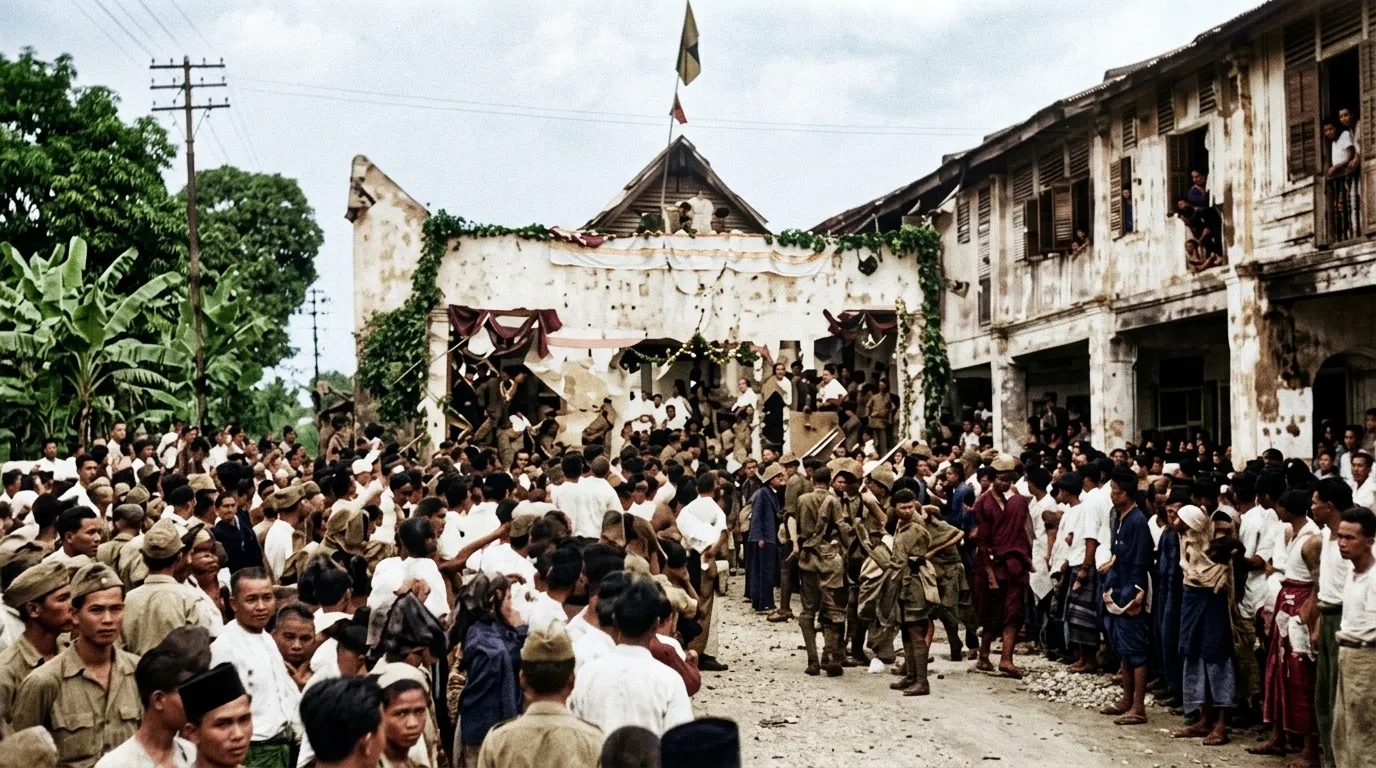
【抗日战争时间序列与战略结局】1942年2月保卫新加坡之战 ➔ 1942年9月1日石山脚“九一事件”浴血突围 ➔ 1942年10月双文丹、冬巴央森林防御战 ➔ 1944年5月13日柔北十多个警察局联合进攻战 ➔ 1945年8月日本投降后,马共抗日军实施了短暂的实质地方管治。本篇循着抗日卫国战争的历史时间脉络,揭示马来亚人民抗日军如何从星洲保卫战的烽火起步,历经三年零八个月浴血奋战,最终在1945年8月成为全马唯一实质掌控逾七成市镇的人民政权力量。
[Chronological Anti-Japanese Campaign Series & Strategic Outcome] Feb 1942 Battle of Singapore ➔ Sep 1, 1942 Batu Caves Breakout ➔ Oct 1942 Serendah & Tombayang Forest Defense ➔ May 13, 1944 Joint Attacks on Over 10 Northern Johor Police Stations ➔ Brief Administration: After the Japanese surrender in August 1945, the CPM Anti-Japanese Army implemented brief, de facto local governance and administration across Malaya.
第一章:保卫新加坡之战与星洲大检举的血泪记忆(1942年2月)
Chapter 1: The Battle of Singapore and the Blood-Soaked Memory of the Sook Ching Massacre (February 1942)
1941年12月8日凌晨,日本法西斯第25军在马来亚吉兰丹哥打巴鲁强行登陆,太平洋战争全面爆发。号称“远东直布罗陀”的英军马来亚防线在日军凌厉的穿插攻势下一触即溃,短短五十五天内便从泰马边境一路溃退至柔佛海峡南端的新加坡岛。在民族存亡的危急关头,长期遭受英殖民当局严酷镇压的马来亚共产党以抗日救亡大局为重,毅然提出同英国殖民当局合作抗日的主张,迫使殖民当局释放政治犯,并紧急动员新加坡各业工人、青年学生与华侨群众组建星华义勇军及抗日敌后武装骨干。
1942年2月上旬,日军强渡柔佛海峡攻入新加坡岛。马共动员的青年战士与义勇军指战员在武吉知马高地、裕廊防线与市区街垒同日寇展开殊死搏杀,以简陋的步枪和手榴弹顽强阻击日军机械化部队。然而,以白思华中将为首的英军统帅部在尚有数万守军的情况下,于1942年2月15日农历除夕向山下奉文无条件投降,将全岛数百万各族民众推入日本军国主义铁蹄之下。
英军投降后,日本占领军立即在新加坡展开骇人听闻的“新加坡大检举”(肃清大屠杀)。日军宪兵队在全岛设立检证中心,重点搜捕马共党员、抗日义勇军战士、南侨筹赈骨干及爱国华侨青年,数以万计的手无寸铁同胞被押往樟宜海滩、榜鹅尾与圣淘沙等地惨遭集体机枪扫射屠杀。面对腥风血雨,马共地下党组织与刚刚在半岛雨林中建立的马来亚人民抗日军各独立队毫不退缩,将星洲血债化作武装抗日的燎原烈火,成为沦陷区唯一坚持全面武装抵抗的中流砥柱。
In the early hours of December 8, 1941, the Imperial Japanese 25th Army landed at Kota Bharu, Kelantan, igniting the Pacific War in Southeast Asia. Britain's vaunted 'Gibraltar of the East' defense collapsed in just fifty-five days, retreating down the entire length of the peninsula to Singapore Island. At this hour of existential peril, the Communist Party of Malaya (CPM), despite years of severe British repression, placed national salvation above all else. The Party proposed an anti-fascist united front with the British authorities, secured the release of imprisoned cadres, and urgently mobilized workers, students, and patriotic Chinese youth to form volunteer defense units and guerrilla nuclei.
In early February 1942, as Japanese forces crossed the Johor Strait onto Singapore Island, CPM-mobilized fighters and volunteers fought ferociously at Bukit Timah, the Jurong line, and urban barricades, confronting Japanese armor and artillery with antiquated rifles. Yet on February 15, 1942, Lunar New Year's Day, Lieutenant-General Arthur Percival surrendered unconditionally with tens of thousands of Commonwealth troops still under arms, abandoning the civilian population to Japanese military rule.
Immediately following the British capitulation, the Japanese occupation authorities unleashed the infamous 'Sook Ching' purge across Singapore. Kempeitai screening centers targeted CPM members, anti-Japanese volunteers, relief fund activists, and patriotic youth, massacring tens of thousands of Chinese civilians at Changi Beach, Punggol Point, and Sentosa. Undaunted by this reign of terror, CPM underground networks and the newly formed Independent Regiments of the Malayan People's Anti-Japanese Army (MPAJA) carried the torch of armed resistance deep into the peninsular rainforests.
【1942–1945 抗日代表性战役时间序列与战略影响总览】
• 1942.2 保卫新加坡之战(The Battle of Singapore):在日军攻入新加坡前夕,马共动员群众配合英军英勇抵抗。后英军投降,日军展开新加坡大检举,疯狂屠杀华侨。
• 1942.9.1 石山脚“九一事件”(The "September 1st" Batu Caves Incident):因内奸莱特出卖,会议会址遭2000多名日军合围。30名马共成员浴血突围击毙击伤日军100多人,18人牺牲(含9位高级干部)。此后9月1日被定为“革命烈士节”。
• 1942.10 双文丹、冬巴央森林防御战(The Serendah & Tombayang Forest Defense Battle):抗日军第一独立队进行两次防御战,击退日军清剿,击毙击伤日军100多名。
• 1944.5.13 柔北十多个警察局联合进攻战(The Joint Attacks on Johor Police Stations):抗日军主动出击,同时向日伪控制的10多个警察局发动进攻,毙伤俘部分警员,缴获枪支100多支。
★ 短暂管治(Brief Administration · 战役全局战略影响):1945年8月日本投降后,马共抗日军实施了短暂的实质地方管治。正因为抗日军在三年零八个月中粉碎日寇清剿并转入战略反攻,在英军重返半岛前的历史真空期,抗日军顺理成章接管全马逾70%市镇,设立人民委员会与人民法庭,首次在马来亚历史上确立了人民自治政权的崇高威望。[1942–1945 Chronological Anti-Japanese Campaign Series & Strategic Impact]— 《马来亚共产党武装斗争历史战役全纪实》抗日时期核心定评 | Core Historical Assessment, CPM Armed Struggle Historical Campaigns Archive
• 1942.2 The Battle of Singapore: On the eve of the Japanese invasion of Singapore, the CPM mobilized the masses to assist British forces in heroic resistance. After the British surrender, the Japanese initiated the "Sook Ching" screening, massacring tens of thousands of Chinese.
• 1942.9.1 The "September 1st" Batu Caves Incident: Betrayed by the spy Lai Te, the meeting site was surrounded by over 2,000 Japanese soldiers. Thirty CPM members engaged in a breakout, killing or wounding over 100 Japanese troops; 18 members sacrificed (including 9 senior cadres). September 1st was later declared "Revolutionary Martyrs' Day".
• 1942.10 The Serendah & Tombayang Forest Defense Battle: The 1st Independent Regiment of the MPAJA fought two defensive battles, repelling the Japanese sweeps and killing or wounding over 100 Japanese soldiers.
• 1944.5.13 The Joint Attacks on Johor Police Stations: The MPAJA launched simultaneous attacks on over 10 Japanese-controlled police stations in Northern Johor, capturing over 100 firearms and neutralizing or capturing defending personnel.
★ Brief Administration (Strategic Impact): After the Japanese surrender in August 1945, the CPM Anti-Japanese Army implemented brief, de facto local governance and administration across over 70% of Malayan towns.
1941年12月8日凌晨,日本法西斯第25军在马来亚吉兰丹哥打巴鲁强行登陆,太平洋战争全面爆发。号称“远东直布罗陀”的英军马来亚防线在日军凌厉的穿插攻势下一触即溃,短短五十五天内便从泰马边境一路溃退至柔佛海峡南端的新加坡岛。在民族存亡的危急关头,长期遭受英殖民当局严酷镇压的马来亚共产党以抗日救亡大局为重,毅然提出同英国殖民当局合作抗日的主张,迫使殖民当局释放政治犯,并紧急动员新加坡各业工人、青年学生与华侨群众组建星华义勇军及抗日敌后武装骨干。
1942年2月上旬,日军强渡柔佛海峡攻入新加坡岛。马共动员的青年战士与义勇军指战员在武吉知马高地、裕廊防线与市区街垒同日寇展开殊死搏杀,以简陋的步枪和手榴弹顽强阻击日军机械化部队。然而,以白思华中将为首的英军统帅部在尚有数万守军的情况下,于1942年2月15日农历除夕向山下奉文无条件投降,将全岛数百万各族民众推入日本军国主义铁蹄之下。
英军投降后,日本占领军立即在新加坡展开骇人听闻的“新加坡大检举”(肃清大屠杀)。日军宪兵队在全岛设立检证中心,重点搜捕马共党员、抗日义勇军战士、南侨筹赈骨干及爱国华侨青年,数以万计的手无寸铁同胞被押往樟宜海滩、榜鹅尾与圣淘沙等地惨遭集体机枪扫射屠杀。面对腥风血雨,马共地下党组织与刚刚在半岛雨林中建立的马来亚人民抗日军各独立队毫不退缩,将星洲血债化作武装抗日的燎原烈火,成为沦陷区唯一坚持全面武装抵抗的中流砥柱。
In the early hours of December 8, 1941, the Imperial Japanese 25th Army landed at Kota Bharu, Kelantan, igniting the Pacific War in Southeast Asia. Britain's vaunted 'Gibraltar of the East' defense collapsed in just fifty-five days, retreating down the entire length of the peninsula to Singapore Island. At this hour of existential peril, the Communist Party of Malaya (CPM), despite years of severe British repression, placed national salvation above all else. The Party proposed an anti-fascist united front with the British authorities, secured the release of imprisoned cadres, and urgently mobilized workers, students, and patriotic Chinese youth to form volunteer defense units and guerrilla nuclei.
In early February 1942, as Japanese forces crossed the Johor Strait onto Singapore Island, CPM-mobilized fighters and volunteers fought ferociously at Bukit Timah, the Jurong line, and urban barricades, confronting Japanese armor and artillery with antiquated rifles. Yet on February 15, 1942, Lunar New Year's Day, Lieutenant-General Arthur Percival surrendered unconditionally with tens of thousands of Commonwealth troops still under arms, abandoning the civilian population to Japanese military rule.
Immediately following the British capitulation, the Japanese occupation authorities unleashed the infamous 'Sook Ching' purge across Singapore. Kempeitai screening centers targeted CPM members, anti-Japanese volunteers, relief fund activists, and patriotic youth, massacring tens of thousands of Chinese civilians at Changi Beach, Punggol Point, and Sentosa. Undaunted by this reign of terror, CPM underground networks and the newly formed Independent Regiments of the Malayan People's Anti-Japanese Army (MPAJA) carried the torch of armed resistance deep into the peninsular rainforests.
保卫新加坡之战(1942.2):在日军攻入新加坡前夕,马共动员群众配合英军英勇抵抗。后英军投降,日军展开新加坡大检举,疯狂屠杀华侨。The Battle of Singapore (1942.2): On the eve of the Japanese invasion of Singapore, the CPM mobilized the masses to assist British forces in heroic resistance. After the British surrender, the Japanese initiated the 'Sook Ching' screening, massacring tens of thousands of Chinese.— 《马来亚共产党武装斗争战史纪要:烽火抗日时期(1941–1945)》 | Military Chronicle of the CPM Armed Struggle: The Anti-Japanese War Period (1941–1945)
第二章:石山脚“九一事件”浴血突围与双文丹、冬巴央森林防御战(1942年9月–10月)
Chapter 2: The September 1st Batu Caves Breakout and the Serendah & Tombayang Forest Defense Battles (September–October 1942)
1942年8月底,马共中央与马来亚人民抗日军各独立队高级领导干部秘密齐聚吉隆坡近郊黑风洞附近的石山脚(Batu Caves),准备召开具有战略意义的党与抗日军高级干部联席会议,商讨全面扩大敌后游击战与建立抗日根据地。然而,长期潜伏在马共最高领导层、早已秘密投靠日本宪兵队的内奸莱特,竟将这次绝密会议的准确时间、地点与出席名单悉数出卖给日军特高课。
1942年9月1日拂晓,两千多名全副武装的日军精锐部队在叛徒引导下,对石山脚宿营地实施铁桶般的四面合围。面对敌众我寡、兵力悬殊逾六十倍的绝境,宿营地内的三十名马共高级干部与抗日军护卫战士临危不惧,依托山林岩石地形奋起还击,与日寇展开惨烈的近距离浴血突围战。在激战中,三十名勇士以无畏的革命气概击毙、击伤日军一百多人,用鲜血撕开突破口。此役共有十八位马共优秀儿女壮烈牺牲,其中包括马共中央常委小忠(李振宗)、抗日军第一独立队首任司令部党代表许庆彪等九位党与军队的高级领导干部。为铭记先烈忠魂,马共中央随后庄严决定将每年9月1日定为“九一革命烈士节”。
“九一事件”后,日军妄图乘势彻底扑灭雪兰莪境内的抗日武装,于1942年10月调集大批兵力对马来亚人民抗日军第一独立队驻扎的双文丹(Serendah)与冬巴央(Tombayang)森林营地发动大规模拉网式“清剿”。第一独立队指战员化悲痛为力量,充分利用热带原始雨林的复杂地形,在双文丹与冬巴央森林连续组织了两次教科书式的阵地与运动防御战。抗日军战士待日军深入密林仰攻之际突然开火,以精准的步枪齐射与侧翼包抄彻底打乱日军进攻队形,成功击退日军两次疯狂扫荡,累计击毙、击伤日军一百多名,不仅牢牢保卫了雪兰莪抗日游击根据地,更以实战胜利宣告了日寇消灭马共武装企图的彻底破产。
In late August 1942, senior leaders of the CPM Central Committee and commanders of the MPAJA Independent Regiments gathered covertly at Batu Caves (Shishanjiao) on the outskirts of Kuala Lumpur for a strategic joint conference to expand guerrilla warfare across the peninsula. Unbeknownst to the delegates, the spy and traitor Lai Te, who had infiltrated the Party's top leadership and secretly collaborated with the Japanese Kempeitai, betrayed the exact time, location, and roster of the conference to Japanese military intelligence.
At dawn on September 1, 1942, over 2,000 heavily armed Japanese troops encircled the Batu Caves encampment. Outnumbered more than sixty to one, the thirty CPM cadres and MPAJA guards fought back with extraordinary valor, engaging the Japanese in a fierce close-quarters breakout battle across the rocky jungle slopes. The thirty fighters killed or wounded over 100 Japanese soldiers to breach the cordon. Eighteen comrades fell heroically in action, including nine senior Party and military leaders such as Central Standing Committee member Xiao Zhong (Li Zhenzong) and MPAJA 1st Independent Regiment Party Representative Xu Qingbiao. In eternal tribute to their sacrifice, September 1st was officially proclaimed 'Revolutionary Martyrs' Day'.
Seeking to capitalize on the Batu Caves raid, the Japanese military launched massive encirclement sweeps in October 1942 against the MPAJA 1st Independent Regiment in the Serendah and Tombayang forests of Selangor. Turning grief into combat resolve, the 1st Independent Regiment utilized the dense tropical terrain to fight two consecutive defensive battles. Allowing the Japanese columns to advance deep into the jungle kill zones before unleashing concentrated rifle volleys and flanking counter-attacks, the 1st Independent Regiment repelled both Japanese sweeps and killed or wounded over 100 Japanese soldiers, consolidating the Selangor guerrilla base.
1. 石山脚“九一事件”(1942.9.1):因内奸莱特出卖,会议会址遭2000多名日军合围。30名马共成员浴血突围击毙击伤日军100多人,18人牺牲(含9位高级干部)。此后9月1日被定为“革命烈士节”。
2. 双文丹、冬巴央森林防御战(1942.10):抗日军第一独立队进行两次防御战,击退日军清剿,击毙击伤日军100多名。1. The 'September 1st' Batu Caves Incident (1942.9.1): Betrayed by the spy Lai Te, the meeting site was surrounded by over 2,000 Japanese soldiers. Thirty CPM members engaged in a breakout, killing or wounding over 100 Japanese troops; 18 members sacrificed (including 9 senior cadres). September 1st was later declared 'Revolutionary Martyrs' Day'.— 《马来亚人民抗日军战史档案:1942年秋季反围剿战役纪实》 | MPAJA Combat Archives: Autumn 1942 Counter-Encirclement Campaigns
2. The Serendah & Tombayang Forest Defense Battle (1942.10): The 1st Independent Regiment of the MPAJA fought two defensive battles, repelling the Japanese sweeps and killing or wounding over 100 Japanese soldiers.
第三章:1943年12月英国官方承认文件、柔北十多座警局联合进攻战与战后实质管治(1943–1945)
Chapter 3: The December 1943 British Recognition Document, the Northern Johor Joint Offensive, and Post-War Administration (1943–1945)
随着马来亚人民抗日军在全半岛发展壮大为八个独立队,英国盟军东南亚战区司令部不得不正视马共武装是马来亚境内唯一具有强大战斗力的抗日力量这一铁的事实。1943年12月,在日本占领下的马来亚丛林中,马来亚人民抗日军收到了一份通过红十字会渠道转交、来自英国政府的正式文件(原件现存于英国伦敦丘园国家档案馆,见下方历史原件图证)。这份文件由马共代表陈平(化名Tan Choon Lim)与英军136部队代表约翰·戴维斯(John Davis)共同签署确认,正式宣布英国承认马来亚共产党及其武装部队马来亚人民抗日军为“合法”的反法西斯同盟力量。
这原本应是一份期盼已久的认可。然而,正如陈平在历史回忆中所深刻指出的,抗日军战士们收到文件时并未感到欣慰,而是深感震惊与清醒:多年来,马共指战员在密林中浴血奋战、流血牺牲,却始终被英国殖民法律视为“非法组织”;如今英国只是在太平洋战场吃紧、亟需马共抗日军配合反攻时,才出于实用主义利益做出了这份迟来的承认。
1944年5月13日,驻扎在柔佛北部的马来亚人民抗日军主动出击,组织了抗日战争中期规模浩大的“柔北十多个警察局联合进攻战”。抗日军各突击分队在严密的情报配合下,在同一时间向日伪当局控制的十多个警察局据点发动雷霆万钧的联合强攻,一举毙伤、俘虏大批日伪警员,当场缴获步枪、手枪等各类枪支一百多支及大批弹药,彻底瘫痪了日军在柔北腹地的基层殖民治安网。
1945年8月15日日本宣布无条件投降后,在英军尚未重返马来亚的权力真空期内,走出丛林的马来亚人民抗日军受到全马各族人民箪食壶浆的夹道欢迎。马共抗日军进驻全马超过百分之七十的城镇与乡村,设立人民委员会,维护社会治安、审讯日伪汉奸、恢复粮食供应与学校教育,实施了短暂而秩序井然的实质地方人民管治,展现了马共卓越的政权组织与社会治理能力。
As the Malayan People's Anti-Japanese Army expanded into eight Independent Regiments across the peninsula, the Allied South East Asia Command was compelled to recognize that the CPM-led forces constituted the only effective anti-Japanese military power inside Malaya. In December 1943, deep within Japanese-occupied Malaya, the MPAJA received a formal document from the British government delivered through the Red Cross (original preserved at The National Archives, Kew, London; see archival facsimiles below). Bearing the signatures of CPM representative Chin Peng (signing as Tan Choon Lim) and Force 136 officer John Davis, the document announced that Britain officially recognized the Communist Party of Malaya and its military arm, the MPAJA, as a legitimate anti-fascist force.
Although such recognition had long been awaited, the fighters felt no joy, only sober realization. After years of jungle warfare, bloodshed, and sacrifice while being branded 'illegal' by the colonial state, they understood that Britain had extended formal recognition only because the Allied war effort was hard-pressed and desperately needed the MPAJA as a battlefield ally.
On May 13, 1944, MPAJA forces in Northern Johor launched a coordinated offensive known as the 'Joint Attacks on Over Ten Northern Johor Police Stations.' Striking simultaneously across the region, MPAJA assault squads overran more than ten Japanese-controlled police stations, neutralizing or capturing the defending personnel and seizing over 100 firearms along with substantial ammunition reserves, shattering Japanese administrative control in northern Johor.
Following Japan's unconditional surrender in August 1945, before British forces could reoccupy the peninsula, MPAJA regiments emerged from the jungle to tumultuous welcomes from all ethnic communities. Taking over more than seventy percent of Malaya's towns and districts, the CPM Anti-Japanese Army established People's Committees and implemented brief, orderly de facto local governance and administration.
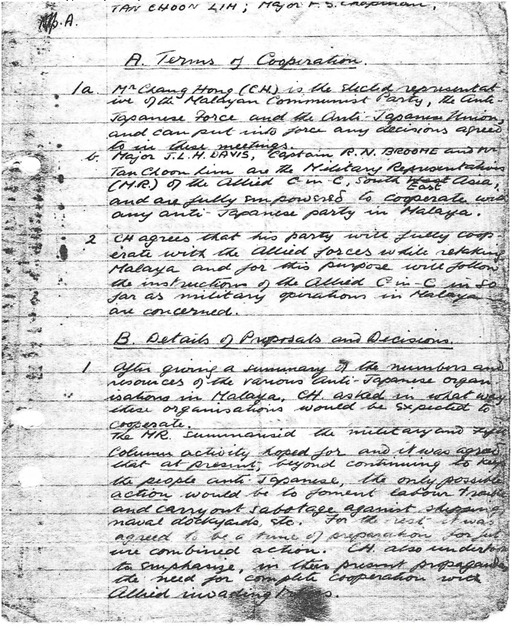
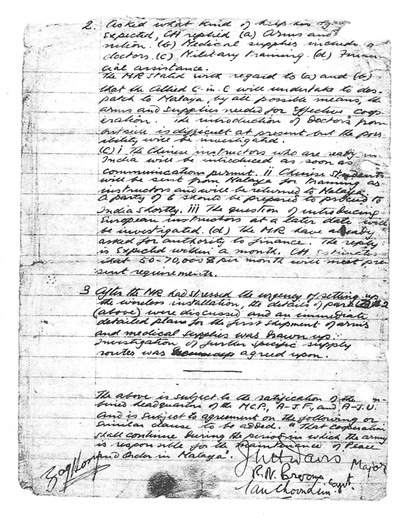
1943年12月,在日本占领下的马来亚,马来亚人民抗日军收到了一份来自英国政府的正式文件。这份通过红十字会转交的文件宣布:英国承认马来亚共产党及其武装部队为“合法”的反法西斯力量。
这原本应是一份期盼已久的认可。然而,战士们并未感到欣慰,而是深感震惊。多年来,他们在丛林中奋战、流血牺牲,却始终被视为非法组织。如今,英国只是在战争吃紧、急需盟友时,做出了这份承认。In December 1943, during the Japanese occupation of Malaya, members of the Malayan People's Anti-Japanese Army (MPAJA) received a formal document from the British government. Delivered through the Red Cross, the document announced that Britain now officially recognized the Malayan Communist Party and its military arm, the MPAJA, as a legitimate anti-fascist force.— 陈平(Chin Peng)关于1943年12月英国伦敦丘园国家档案馆馆藏承认文件的历史评述 | Chin Peng on the December 1943 British Recognition Document (The National Archives, Kew, London)
This recognition had long been awaited. Yet the fighters felt no joy, only deep shock. After years of jungle warfare, bloodshed, and sacrifice while being branded 'illegal', they realized that Britain had only offered recognition out of wartime necessity.