第13集:紧急状态下的马来亚集中营与布里格斯计划(1950年)
Episode 13: Concentration Camps in Malaya: The Briggs Plan and Mass Internment (1950)
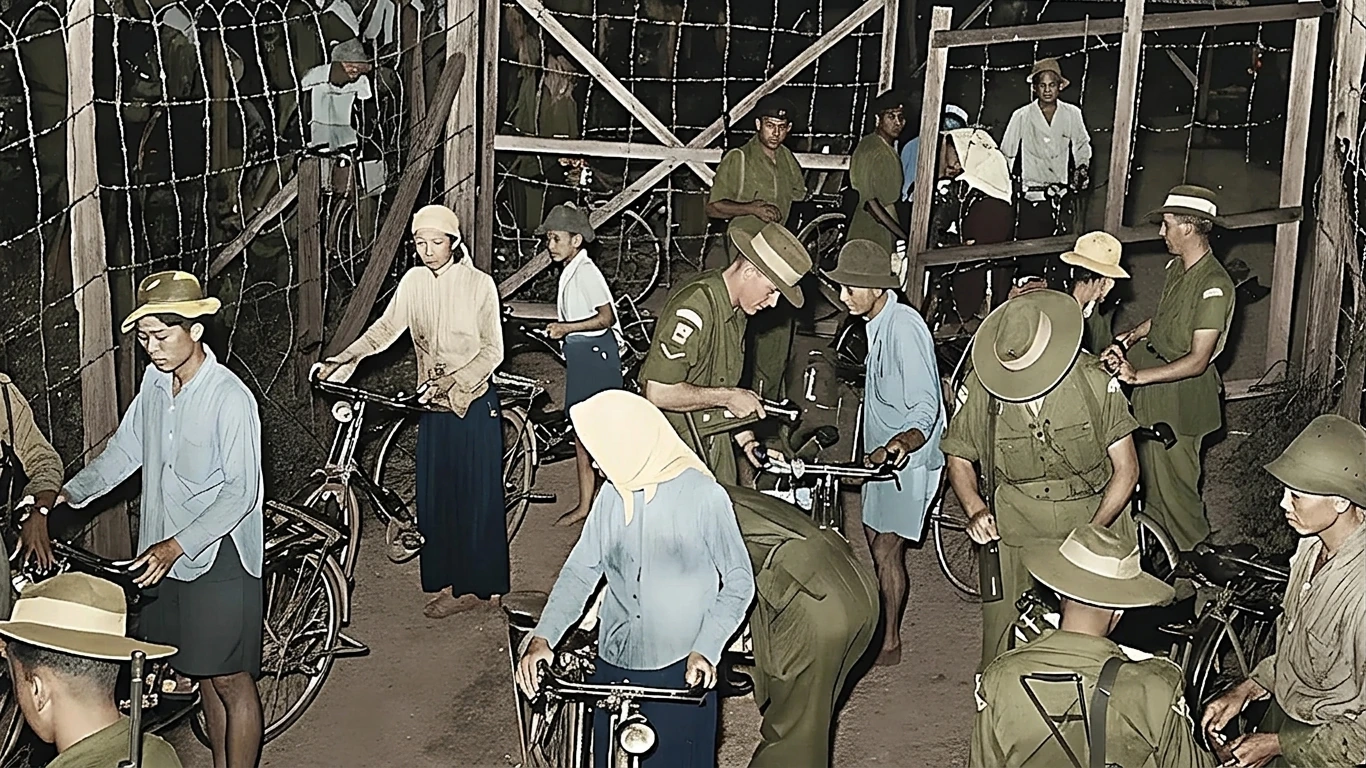
1950年6月,英帝国陆军中将哈罗德·布里格斯出台了臭名昭著的“布里格斯计划”。殖民当局以法西斯式的集体惩罚手段,强行将50余万华人平民驱赶进全马450余座带刺铁丝网“新村”集中营,实行野蛮断粮搜身与集中做饭,公然严重践踏《日内瓦第四公约》。马共与“民运”军民生死相依,并及时纠正群众工作偏差;而英军更实施猎首割耳等反人类暴行,彻底丧失了政治与道义合法性。
In June 1950, British Lieutenant-General Sir Harold Briggs enacted the infamous 'Briggs Plan.' Using fascist collective punishment, colonial forces forcibly uprooted over 500,000 Chinese rural civilians into 450 barbed-wire 'New Village' concentration camps, implementing food rationing, invasive strip-searches, and communal kitchens in direct violation of the Geneva Convention. Despite terror, the CPM and Min Yuen maintained vital popular bonds; while British forces engaged in barbaric headhunting and psychological warfare, obliterating all moral legitimacy.
第一章:布里格斯计划出笼:割断军民鱼水深情的现代集中营毒计
Chapter 1: The Emergence of the Briggs Plan: An Imperial Blueprint for Modern Concentration Camps
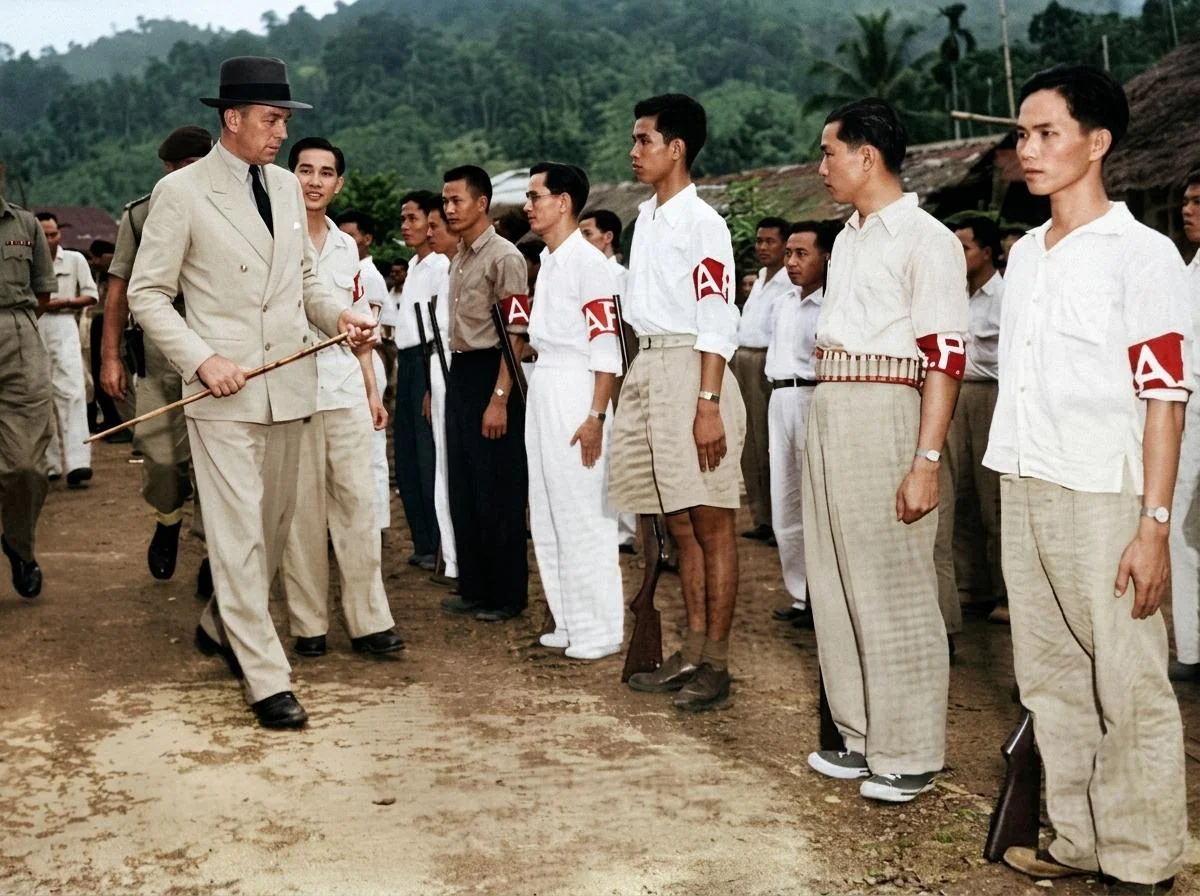
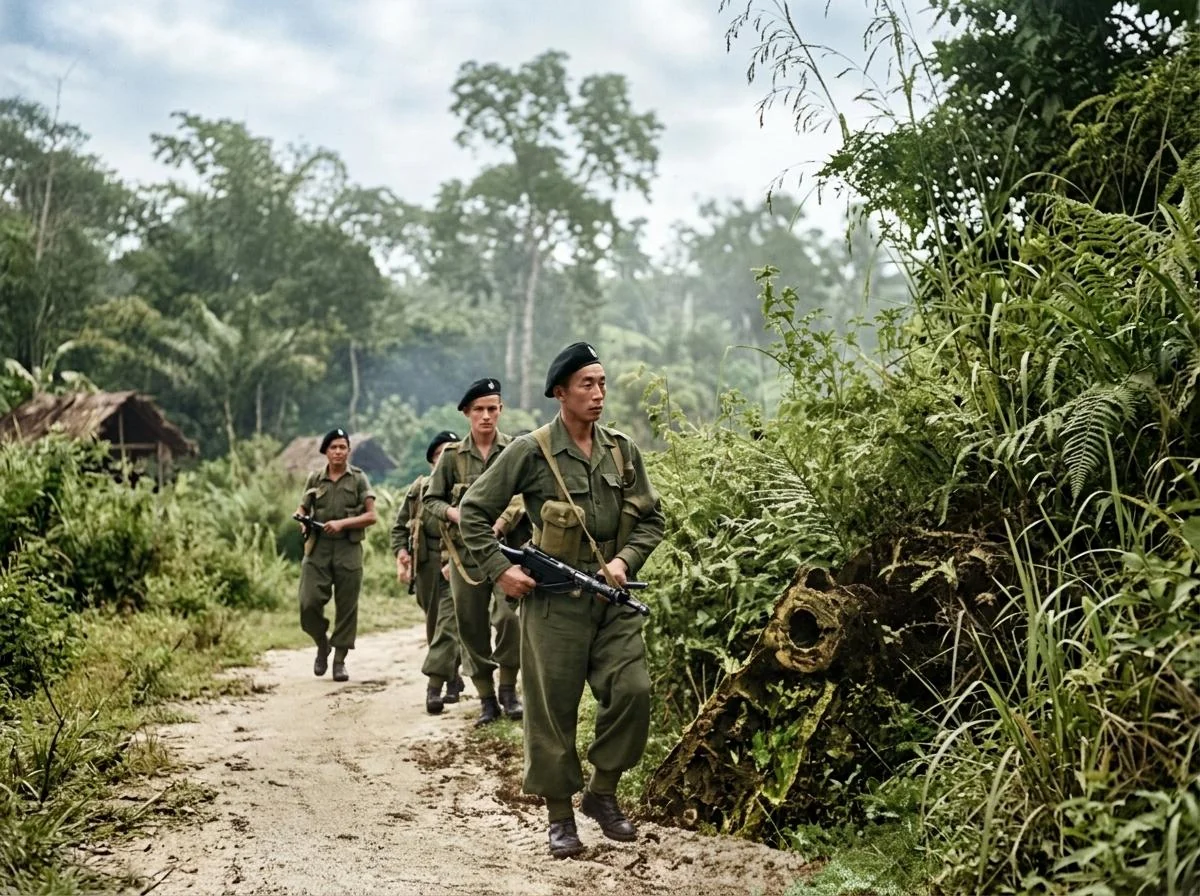
进入1950年,大英帝国在马来亚的殖民镇压深陷泥潭。英军虽然出动了包括近卫步兵旅、廓尔喀步枪团、皇家空军轰炸机在内的庞大陆空军力,但在广袤的热带丛林面前屡屡扑空。英军指挥官们在无数次惨败后不得不承认:马来亚民族解放军之所以能够在丛林深处神出鬼没、生生不息,其真正力量源泉在于广大农村与胶园边缘开荒拓殖的数十万华人平民同胞。
这数十万工农大众在马共‘民运’(Min Yuen,负责保障部队补给与情报的后勤部、传递情报的交通组,需要时也参加战斗)的秘密组织与联系下,与游击队结成了生死与共的鱼水深情。他们不仅是游击队取之不尽的兵源沃土,更是源源不断输送粮食、药品、布匹和情报的红色生命线。在殖民者眼中,这群手无寸铁的百姓被仇视地蔑称为游击队的‘静默后勤支柱’。
为了彻底斩断军民鱼水深情,1950年4月,英国战时内阁任命曾任英属印度陆军中将的哈罗德·布里格斯爵士(Lt. Gen. Sir Harold Briggs)为首任‘行动主任’(Director of Operations),全权统筹全马三军与警政力量。同年6月8日,布里格斯正式出台了载入殖民罪恶史册的‘布里格斯计划’(The Briggs Plan)。
布里格斯的核心战略哲学极其冷酷而野蛮:‘排干池水以捕其鱼’(To drain the water to catch the fish)。他把大英帝国在世纪之交南非布尔战争(Boer War)中用来对付布尔平民的‘集中营’(Concentration Camps)手段,原封不动地搬到了热带马来亚。布里格斯主张:既然无法在丛林中消灭游击队,那就用国家暴力将全马所有乡村平民全部从世代定居的家园连根拔起,强行圈禁进由铁丝网、探照灯与机枪碉堡包围的集中管制区,以此彻底割断游击队的一切补给来源,企图迫使游击队在物资匮乏中走向崩溃。
By 1950, British counter-insurgency was bogged down in a costly quagmire. Despite deploying Guards brigades, Gurkha rifles, and RAF heavy bombers, British forces were repeatedly outmaneuvered in the jungles. Imperial commanders were forced to concede that the MNLA's resilience stemmed from the profound popular support of hundreds of thousands of rural Chinese farmers and rubber tappers living along the jungle fringes.
Connected through the CPM's Min Yuen (the logistics and intelligence department and courier network that also participated in combat when needed), these working masses formed an unbreakable bond with the liberation army—supplying volunteers, rice, penicillin, cloth, and critical military intelligence. To colonial eyes, these unarmed civilians constituted the guerrillas' 'silent logistics backbone.'
To sever this lifeline, Britain's war cabinet appointed Lt. Gen. Sir Harold Briggs as the first Director of Operations in April 1950. On June 8, 1950, he formally promulgated the infamous Briggs Plan.
Briggs' doctrine was ruthlessly elemental: 'to drain the water to catch the fish.' He transplanted the concentration camp system pioneered by the British Army during the South African Boer War to the Malayan jungle. Calculating that the guerrillas could not be defeated militarily in the forests, Briggs resolved to forcibly uproot entire rural populations and herd them into militarized enclosures ringed by barbed wire and pillboxes, starving the liberation army into submission.
进入1950年,大英帝国在马来亚的殖民镇压深陷泥潭。英军虽然出动了包括近卫步兵旅、廓尔喀步枪团、皇家空军轰炸机在内的庞大陆空军力,但在广袤的热带丛林面前屡屡扑空。英军指挥官们在无数次惨败后不得不承认:马来亚民族解放军之所以能够在丛林深处神出鬼没、生生不息,其真正力量源泉在于广大农村与胶园边缘开荒拓殖的数十万华人平民同胞。
这数十万工农大众在马共‘民运’(Min Yuen,负责保障部队补给与情报的后勤部、传递情报的交通组,需要时也参加战斗)的秘密组织与联系下,与游击队结成了生死与共的鱼水深情。他们不仅是游击队取之不尽的兵源沃土,更是源源不断输送粮食、药品、布匹和情报的红色生命线。在殖民者眼中,这群手无寸铁的百姓被仇视地蔑称为游击队的‘静默后勤支柱’。
By 1950, British counter-insurgency was bogged down in a costly quagmire. Despite deploying Guards brigades, Gurkha rifles, and RAF heavy bombers, British forces were repeatedly outmaneuvered in the jungles. Imperial commanders were forced to concede that the MNLA's resilience stemmed from the profound popular support of hundreds of thousands of rural Chinese farmers and rubber tappers living along the jungle fringes.
Connected through the CPM's Min Yuen (the logistics and intelligence department and courier network that also participated in combat when needed), these working masses formed an unbreakable bond with the liberation army—supplying volunteers, rice, penicillin, cloth, and critical military intelligence. To colonial eyes, these unarmed civilians constituted the guerrillas' 'silent logistics backbone.'
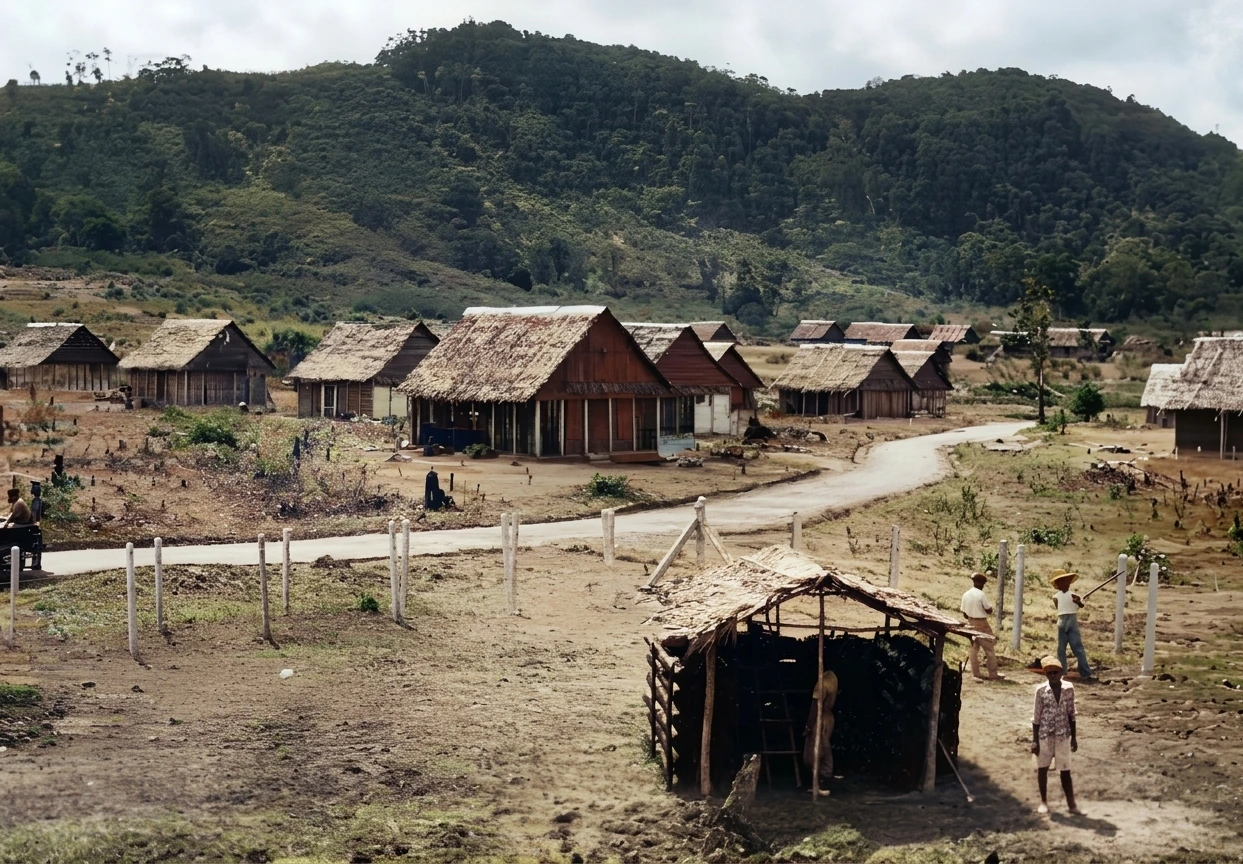
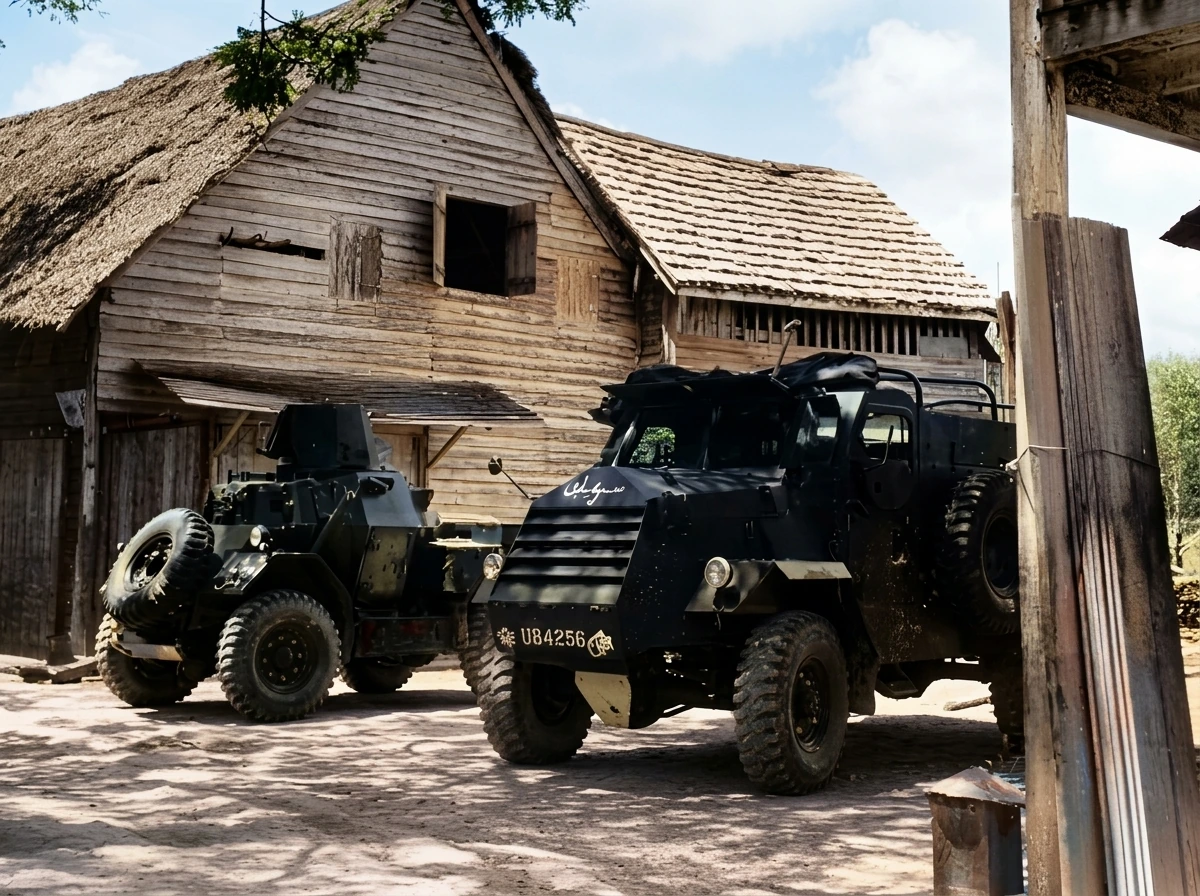
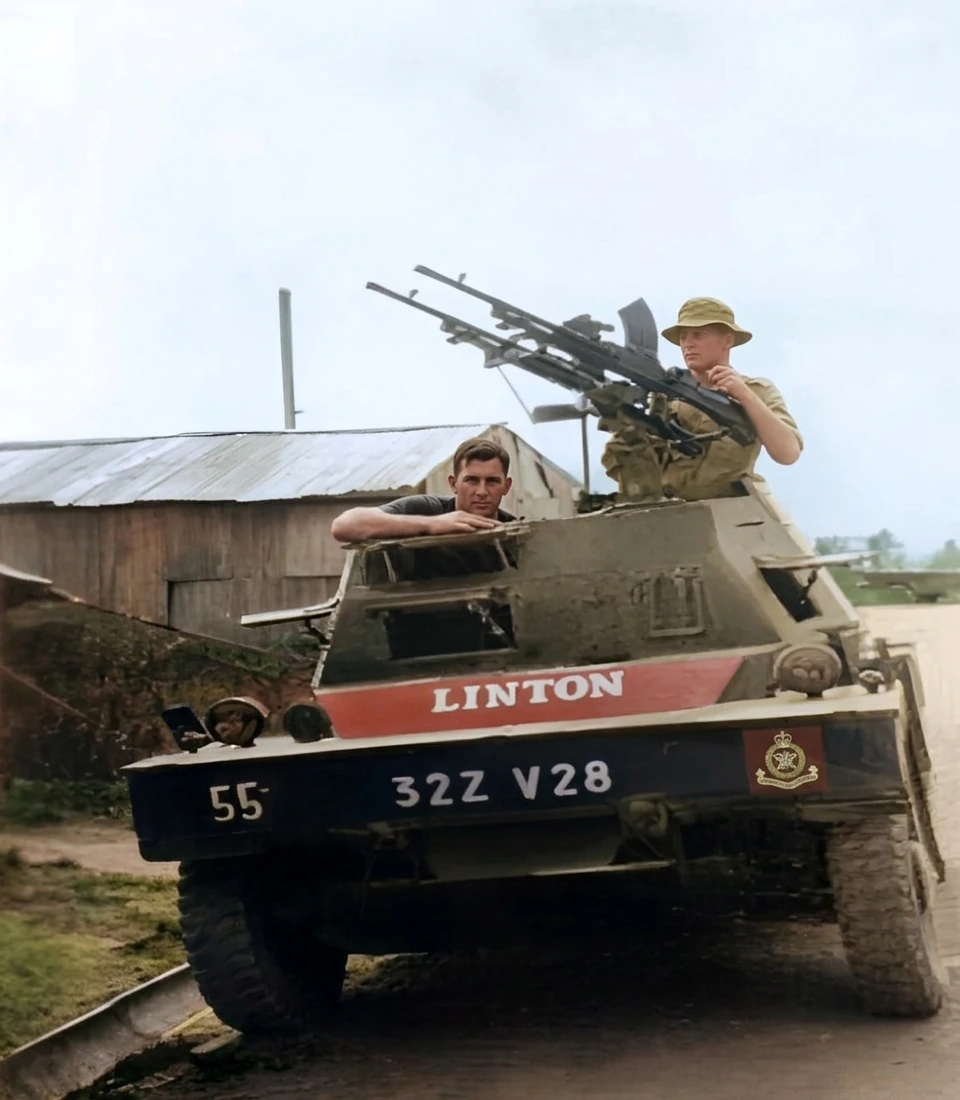

为了彻底斩断军民鱼水深情,1950年4月,英国战时内阁任命曾任英属印度陆军中将的哈罗德·布里格斯爵士(Lt. Gen. Sir Harold Briggs)为首任‘行动主任’(Director of Operations),全权统筹全马三军与警政力量。同年6月8日,布里格斯正式出台了载入殖民罪恶史册的‘布里格斯计划’(The Briggs Plan)。
布里格斯的核心战略哲学极其冷酷而野蛮:‘排干池水以捕其鱼’(To drain the water to catch the fish)。他把大英帝国在世纪之交南非布尔战争(Boer War)中用来对付布尔平民的‘集中营’(Concentration Camps)手段,原封不动地搬到了热带马来亚。布里格斯主张:既然无法在丛林中消灭游击队,那就用国家暴力将全马所有乡村平民全部从世代定居的家园连根拔起,强行圈禁进由铁丝网、探照灯与机枪碉堡包围的集中管制区,以此彻底割断游击队的一切补给来源,企图迫使游击队在物资匮乏中走向崩溃。
To sever this lifeline, Britain's war cabinet appointed Lt. Gen. Sir Harold Briggs as the first Director of Operations in April 1950. On June 8, 1950, he formally promulgated the infamous Briggs Plan.
Briggs' doctrine was ruthlessly elemental: 'to drain the water to catch the fish.' He transplanted the concentration camp system pioneered by the British Army during the South African Boer War to the Malayan jungle. Calculating that the guerrillas could not be defeated militarily in the forests, Briggs resolved to forcibly uproot entire rural populations and herd them into militarized enclosures ringed by barbed wire and pillboxes, starving the liberation army into submission.
第二章:枪口下的强制大迁移:50余万华人被驱入450个铁丝网新村的浩劫
Chapter 2: Mass Eviction at Gunpoint: Half a Million Civilians Herded into 450 Barbed-Wire New Villages
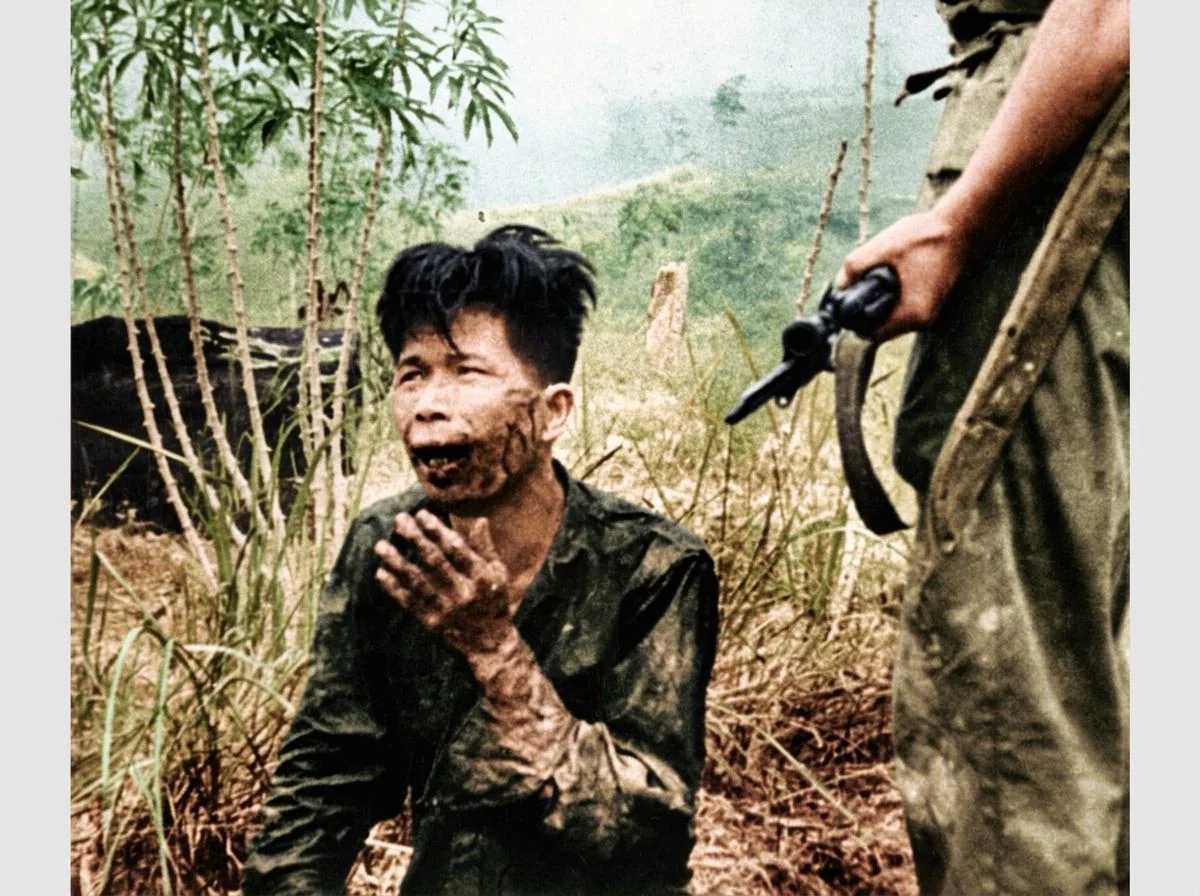
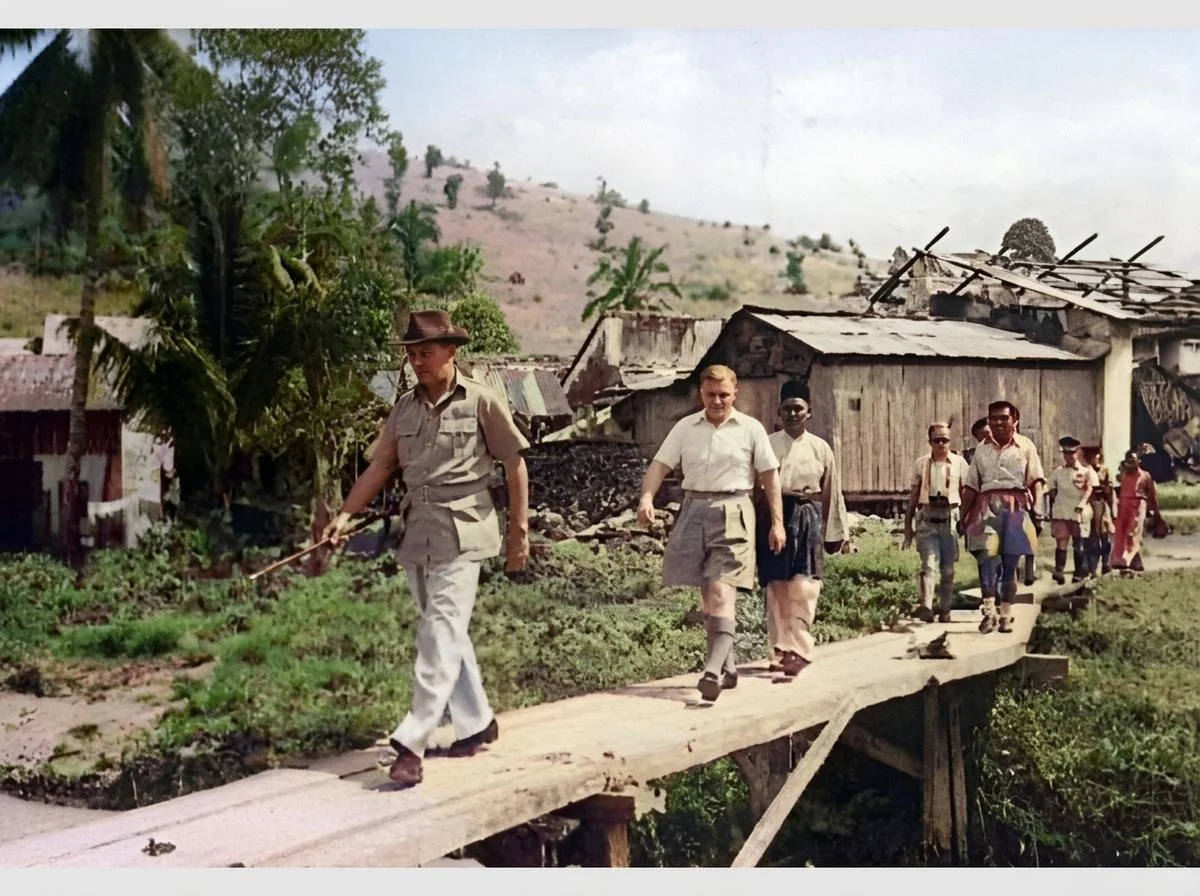
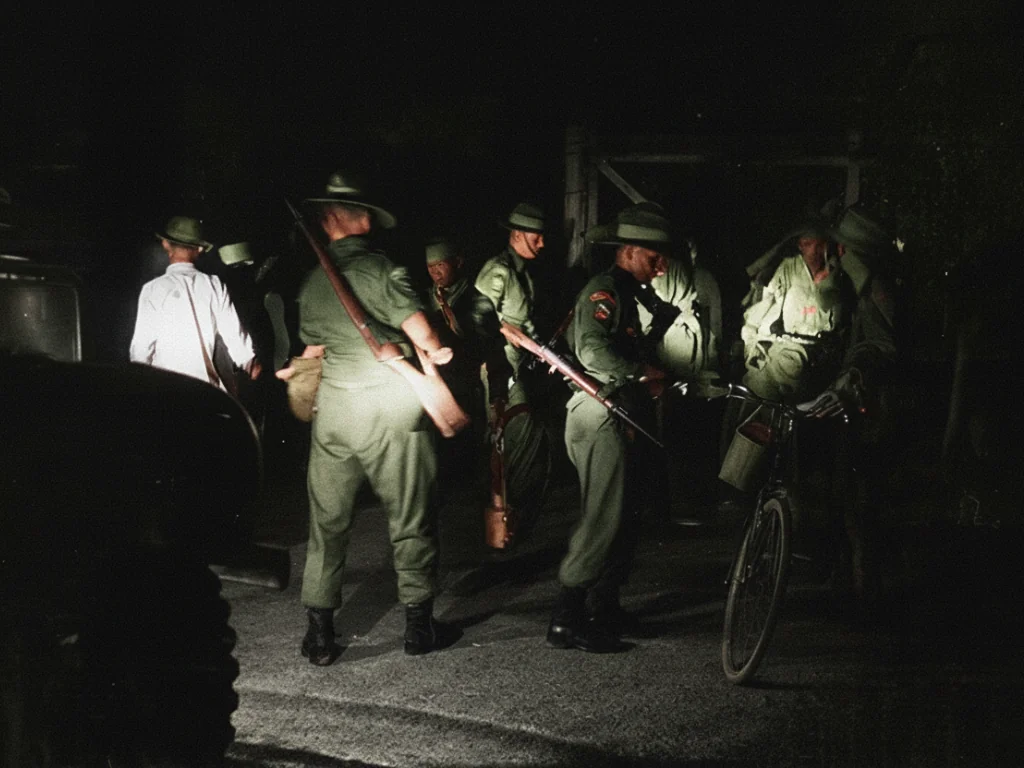
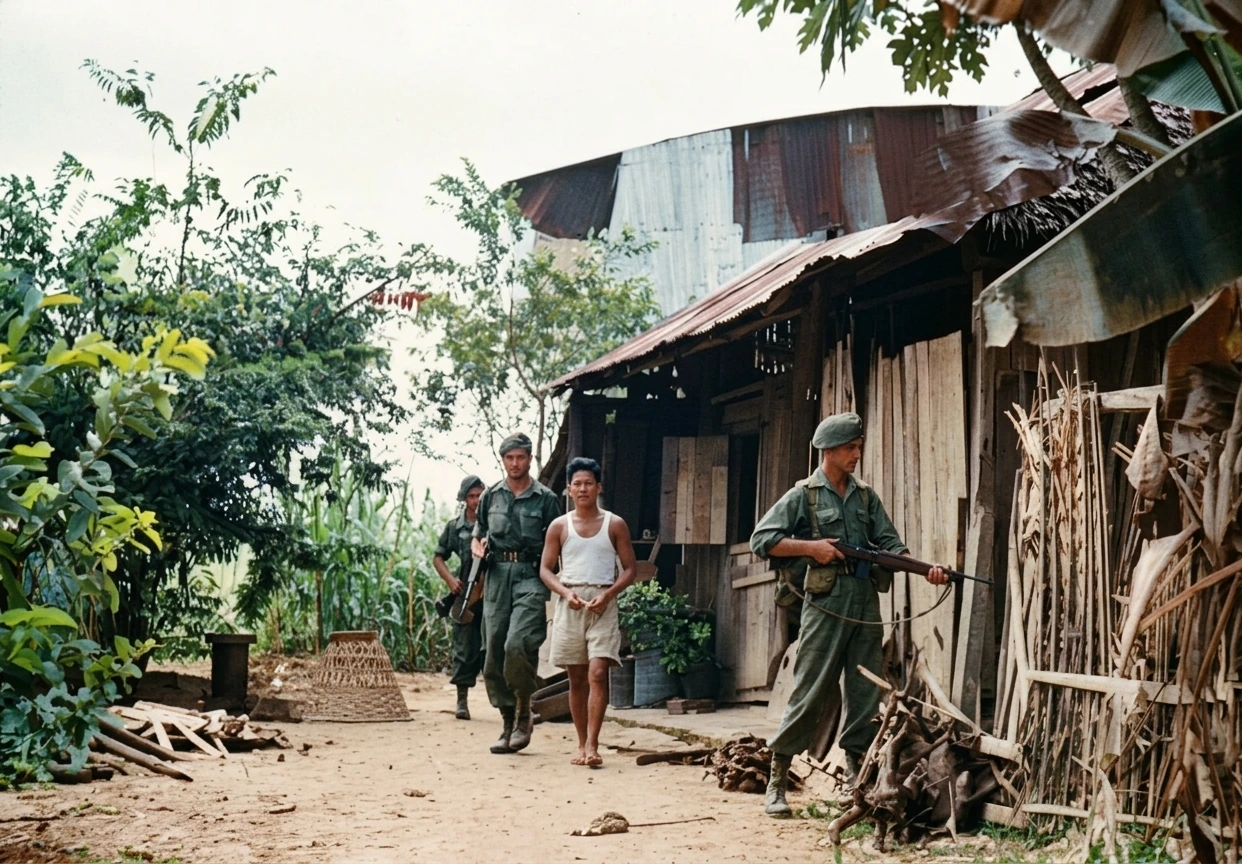
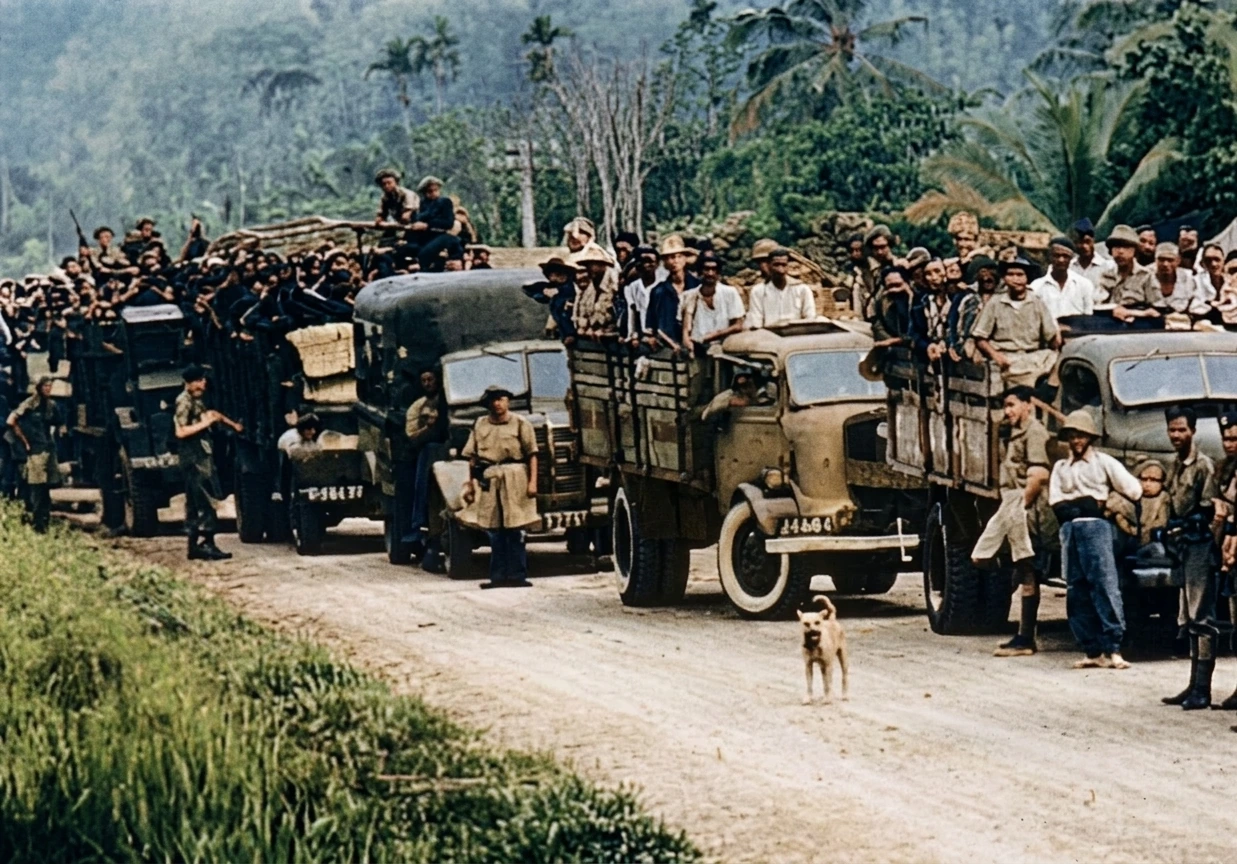
从1950年下半年起至1954年,一场席卷整个马来半岛的强制迁徙浩劫疯狂展开。英军野战部队、廓尔喀步兵与特别宪警开着满载铁丝网和重机枪的军用卡车,在拂晓时分突然包围偏远乡村与胶园聚落。英军军官手持扩音器,勒令全村老幼必须在短短两小时内收拾随身衣物登车离开;任何稍有迟疑或抗辩的村民,往往遭到军警殴打乃至当场射击。
当惊恐万状的村民被押上军用卡车后,英军工兵立即当着他们的面,将汽油倾倒在村民辛勤经营几代人的木屋上点火焚烧,用装甲推土机推平菜园、橡胶幼苗与水稻田,甚至向村里的水井投放毒药并开枪屠杀所有水牛与家禽。大量宁静祥和的乡村聚落在浓烟中被彻底夷平。
殖民官方档案统计证实:在布里格斯计划推行的四年中,全马有超过40万至58万无辜平民(绝大多数为华裔,占当时全马华人总人口的三分之一以上),)被强行驱逐出家园,强塞进全马各地新建的450余座集中营中。殖民宣传机器给这些集中营冠以‘新村’(New Villages)的温情假名,妄图向联合国和国际社会粉饰为‘改善华人生活的现代化乡村计划’。
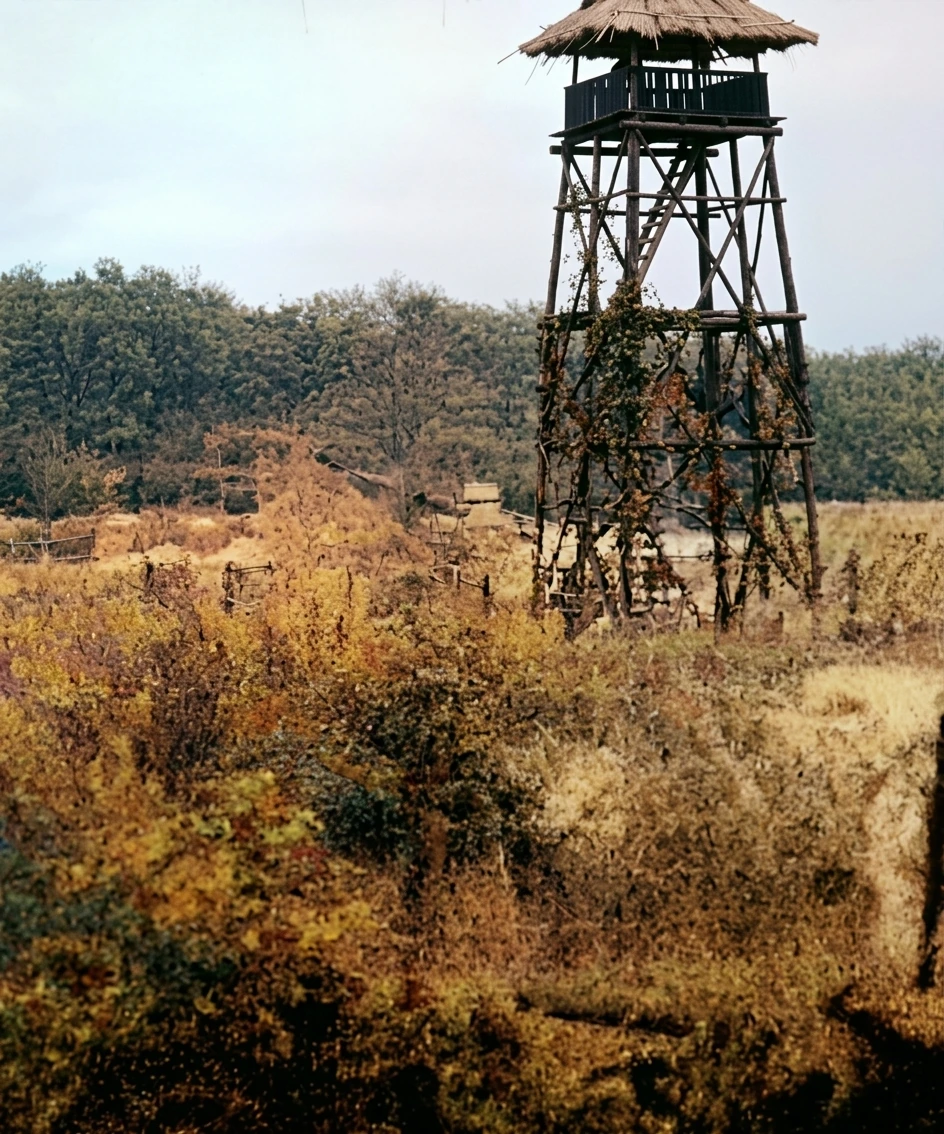
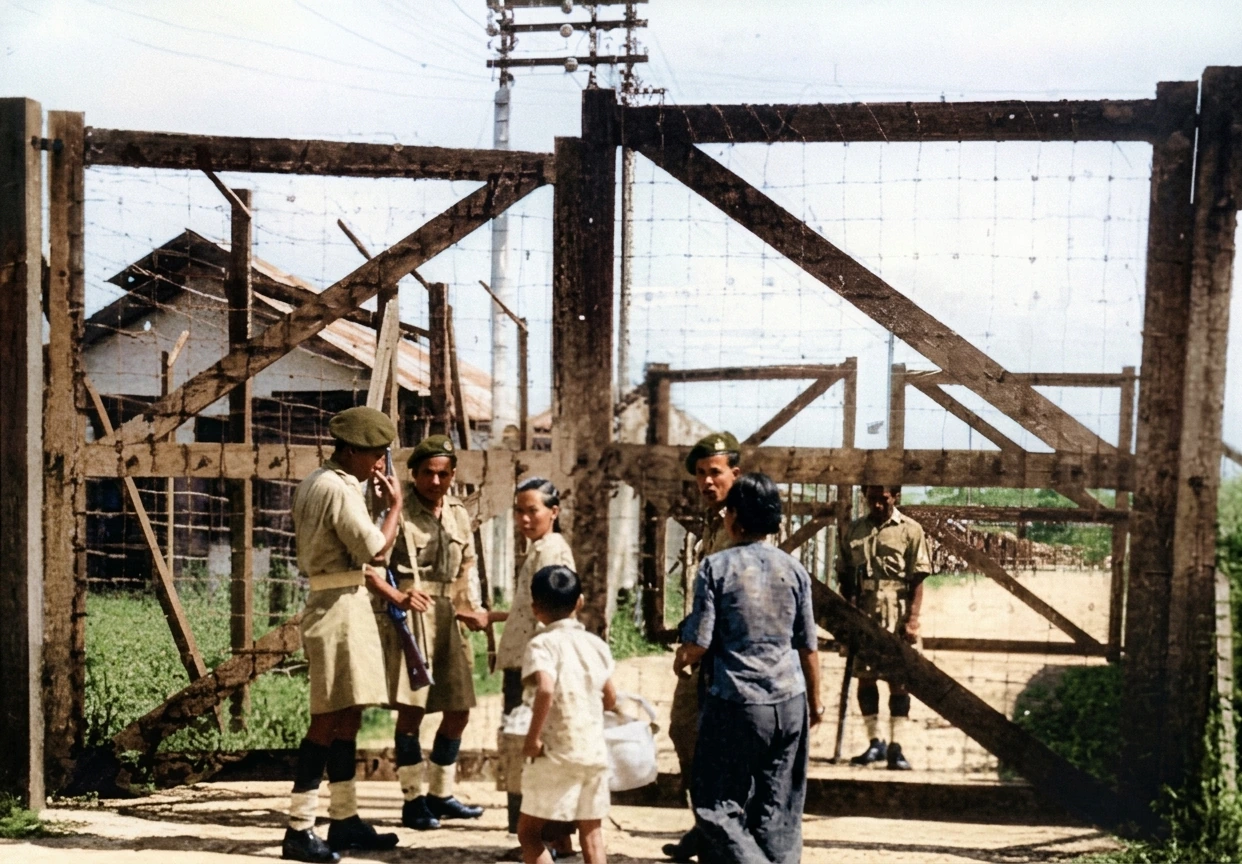
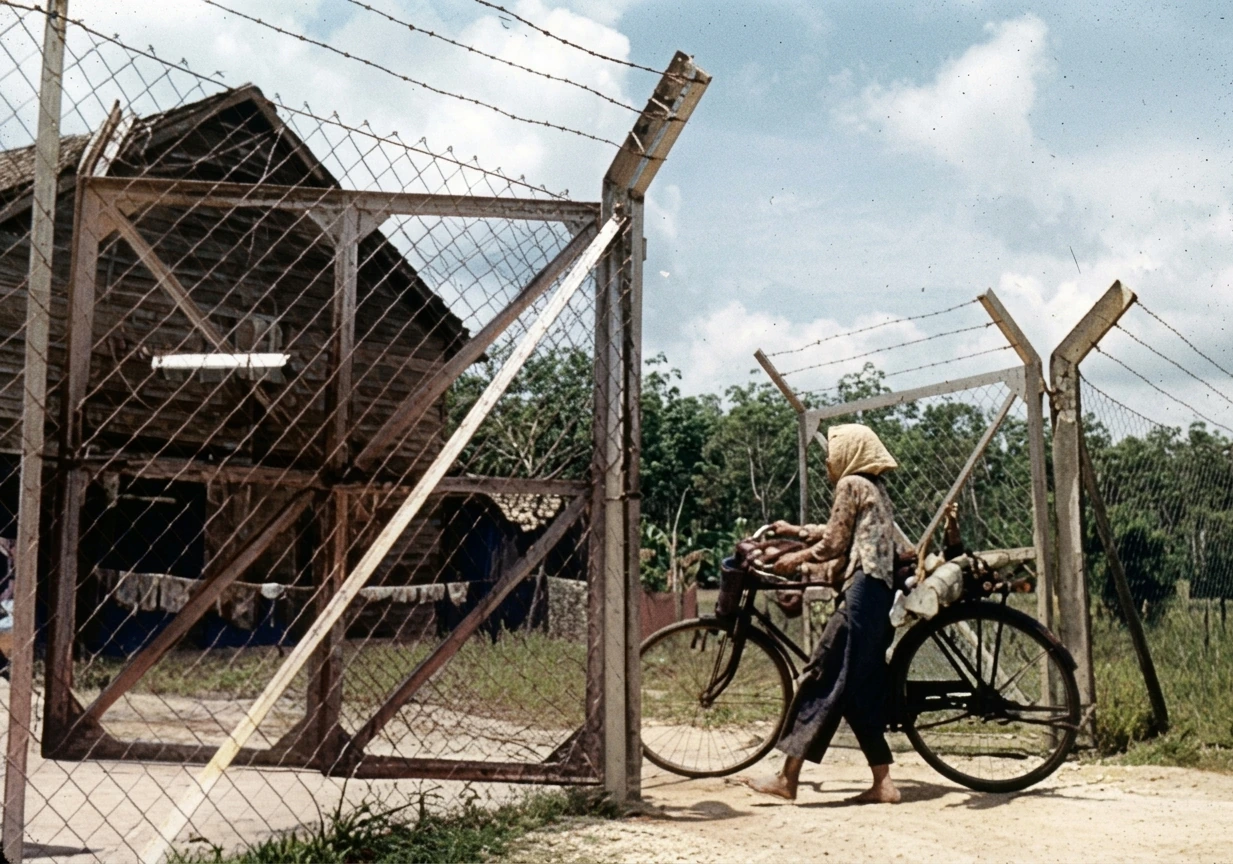
然而,历史现场的实照戳穿了一切谎言:所谓的‘新村’,四周全部被高达十至十二英尺的双层带刺铁丝网死死包围,铁丝网外密布雷区与竹签陷阱;村庄四角矗立着高耸的木制或砖石警卫哨塔,探照灯与布伦机枪24小时对准村内;全村仅留一个重兵把守的单一出入铁门,每日天黑后实行全村宵禁,任何人胆敢靠近铁丝网十米以内,哨兵有权在不予警告的情况下开枪射击。实质上构成了大规模军事监禁与人口隔离系统。
Between late 1950 and 1954, a catastrophic storm of forced deportations swept the peninsula. British infantry, Gurkhas, and police cordoned off rural hamlets at dawn. Using bullhorns, officers gave villagers two hours to pack personal belongings before being loaded onto military transports; anyone hesitating was struck with rifle butts or executed on the spot.
As weeping villagers were loaded into trucks, British engineers poured petrol over timber homes and torched them before their eyes. Bulldozers flattened orchards and vegetable plots, poisoned wells, and shot livestock. Thousands of peaceful farming communities were reduced to smoking fields of ash.
Colonial statistics confirm that over 400,000 to 580,000 civilians—over one-third of Malaya's total Chinese population—were violently uprooted and crammed into over 450 newly built enclosures. Colonial propaganda dubbed these camps 'New Villages,' peddling the brazen fiction of 'welfare-oriented community development' to the United Nations.
Photographs preserve the truth: each 'New Village' was an open-air prison encircled by double 10-to-12-foot barbed-wire fences, watchtowers, searchlights, and pillboxes with machine guns trained inward. Single guarded checkpoints controlled entry. At night, total curfews were enforced; sentries were legally authorized to shoot on sight anyone approaching the perimeter.
从1950年下半年起至1954年,一场席卷整个马来半岛的强制迁徙浩劫疯狂展开。英军野战部队、廓尔喀步兵与特别宪警开着满载铁丝网和重机枪的军用卡车,在拂晓时分突然包围偏远乡村与胶园聚落。英军军官手持扩音器,勒令全村老幼必须在短短两小时内收拾随身衣物登车离开;任何稍有迟疑或抗辩的村民,往往遭到军警殴打乃至当场射击。
当惊恐万状的村民被押上军用卡车后,英军工兵立即当着他们的面,将汽油倾倒在村民辛勤经营几代人的木屋上点火焚烧,用装甲推土机推平菜园、橡胶幼苗与水稻田,甚至向村里的水井投放毒药并开枪屠杀所有水牛与家禽。大量宁静祥和的乡村聚落在浓烟中被彻底夷平。
Between late 1950 and 1954, a catastrophic storm of forced deportations swept the peninsula. British infantry, Gurkhas, and police cordoned off rural hamlets at dawn. Using bullhorns, officers gave villagers two hours to pack personal belongings before being loaded onto military transports; anyone hesitating was struck with rifle butts or executed on the spot.
As weeping villagers were loaded into trucks, British engineers poured petrol over timber homes and torched them before their eyes. Bulldozers flattened orchards and vegetable plots, poisoned wells, and shot livestock. Thousands of peaceful farming communities were reduced to smoking fields of ash.
殖民官方档案统计证实:在布里格斯计划推行的四年中,全马有超过40万至58万无辜平民(绝大多数为华裔,占当时全马华人总人口的三分之一以上),被强行驱逐出家园,强塞进全马各地新建的450余座集中营中。殖民宣传机器给这些集中营冠以‘新村’(New Villages)的温情假名,妄图向联合国和国际社会粉饰为‘改善华人生活的现代化乡村计划’。
然而,历史现场的实照戳穿了一切谎言:所谓的‘新村’,四周全部被高达十至十二英尺的双层带刺铁丝网死死包围,铁丝网外密布雷区与竹签陷阱;村庄四角矗立着高耸的木制或砖石警卫哨塔,探照灯与布伦机枪24小时对准村内;全村仅留一个重兵把守的单一出入铁门,每日天黑后实行全村宵禁,任何人胆敢靠近铁丝网十米以内,哨兵有权在不予警告的情况下开枪射击。实质上构成了大规模军事监禁与人口隔离系统。
Colonial statistics confirm that over 400,000 to 580,000 civilians—over one-third of Malaya's total Chinese population—were violently uprooted and crammed into over 450 newly built enclosures. Colonial propaganda dubbed these camps 'New Villages,' peddling the brazen fiction of 'welfare-oriented community development' to the United Nations.
Photographs preserve the truth: each 'New Village' was an open-air prison encircled by double 10-to-12-foot barbed-wire fences, watchtowers, searchlights, and pillboxes with machine guns trained inward. Single guarded checkpoints controlled entry. At night, total curfews were enforced; sentries were legally authorized to shoot on sight anyone approaching the perimeter.
第三章:绝粮搜身、熟食集中厨房与违反日内瓦公约的联合国控诉
Chapter 3: Starvation Warfare, Strip-Searches, and UN Indictments Under the Geneva Convention
为了将集中营内的百姓与丛林游击队彻底隔绝,殖民当局推行了令人发指的‘粮食控制条例’(Food Denial Campaign)。每家每户的大米被严格配给称重,家中严禁存放任何未加工生米、食油、食盐与常备药品,违者直接以通敌罪判处重刑乃至绞刑。
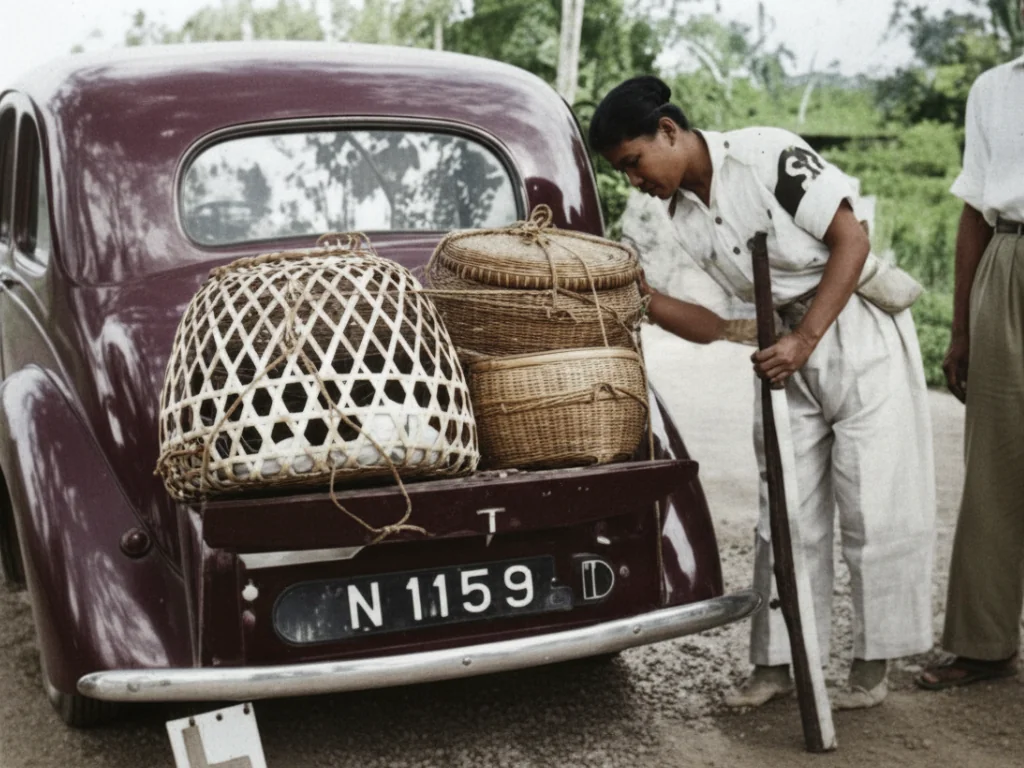
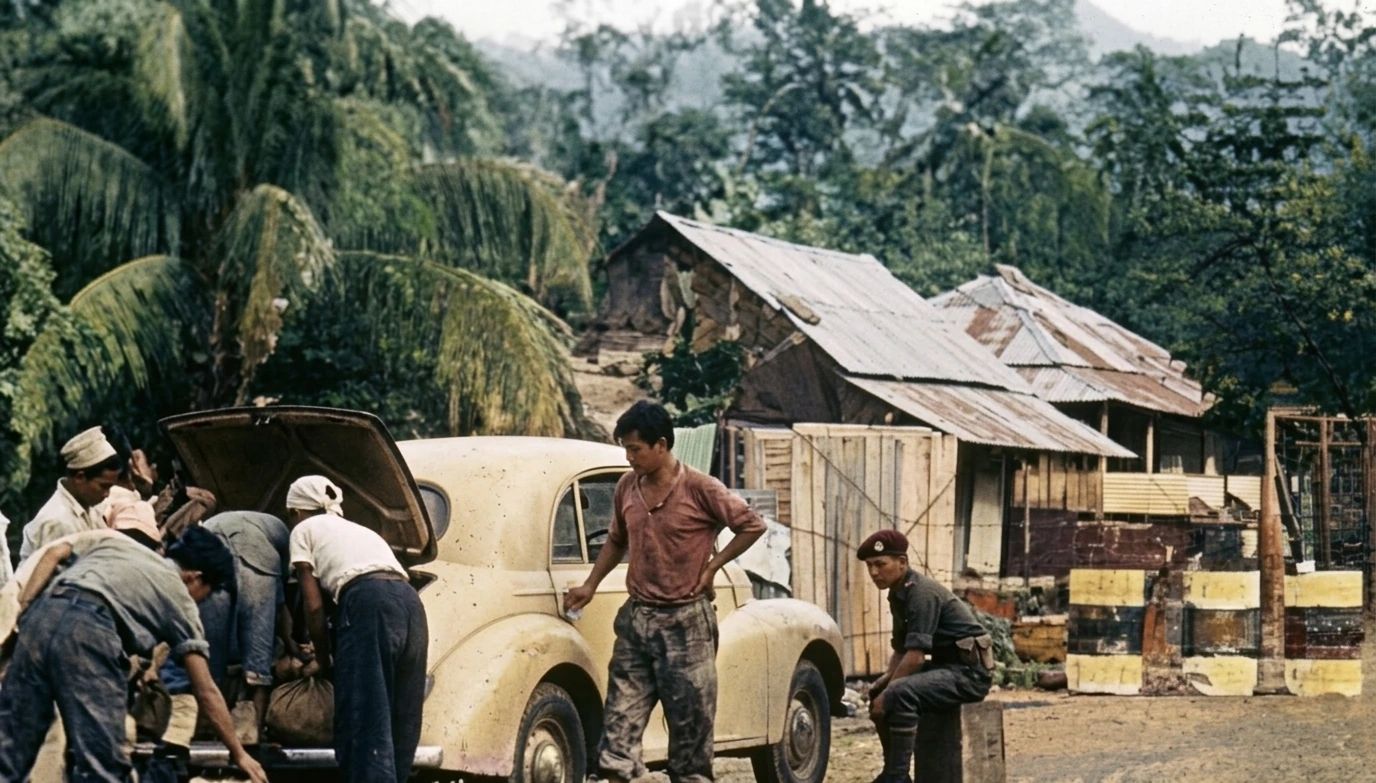
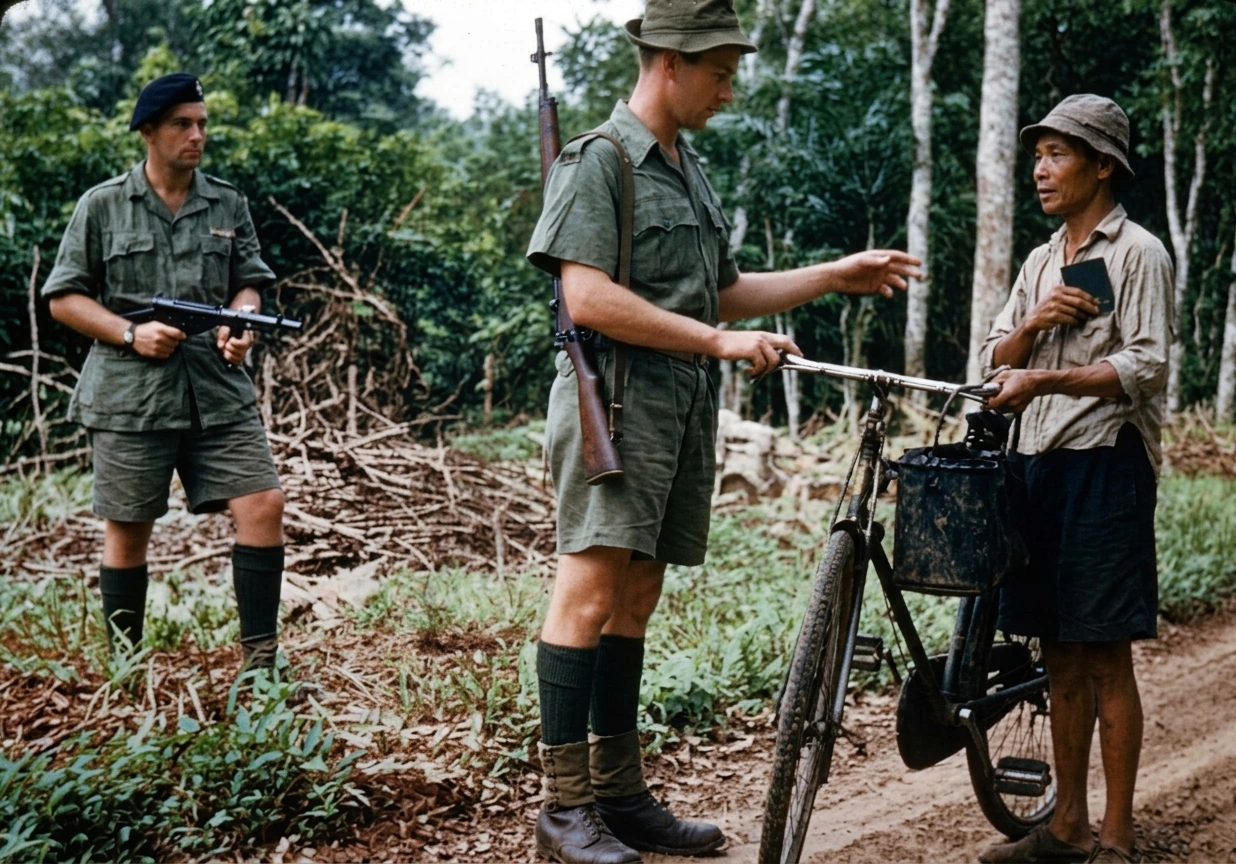
更野蛮的是,殖民当局在全马新村普遍设立了‘中央熟食大厨房’(Central Communal Cooking Centers),强令全体村民必须在公共大锅内将大米煮成熟饭后方可食用。因为熟米饭在热带潮湿炎热的气候下短短数小时便会发馊变质,根本无法带入丛林长期储存,以此切断对游击队的粮源支持。每天黎明村民出村割胶时,必须在唯一关卡接受殖民警察极其屈辱的脱衣搜身:连饭盒底层、自行车座垫钢管、锄头木柄乃至妇女的发髻都必须用金属探针细细挑刺,严禁携带任何生米私自离村。
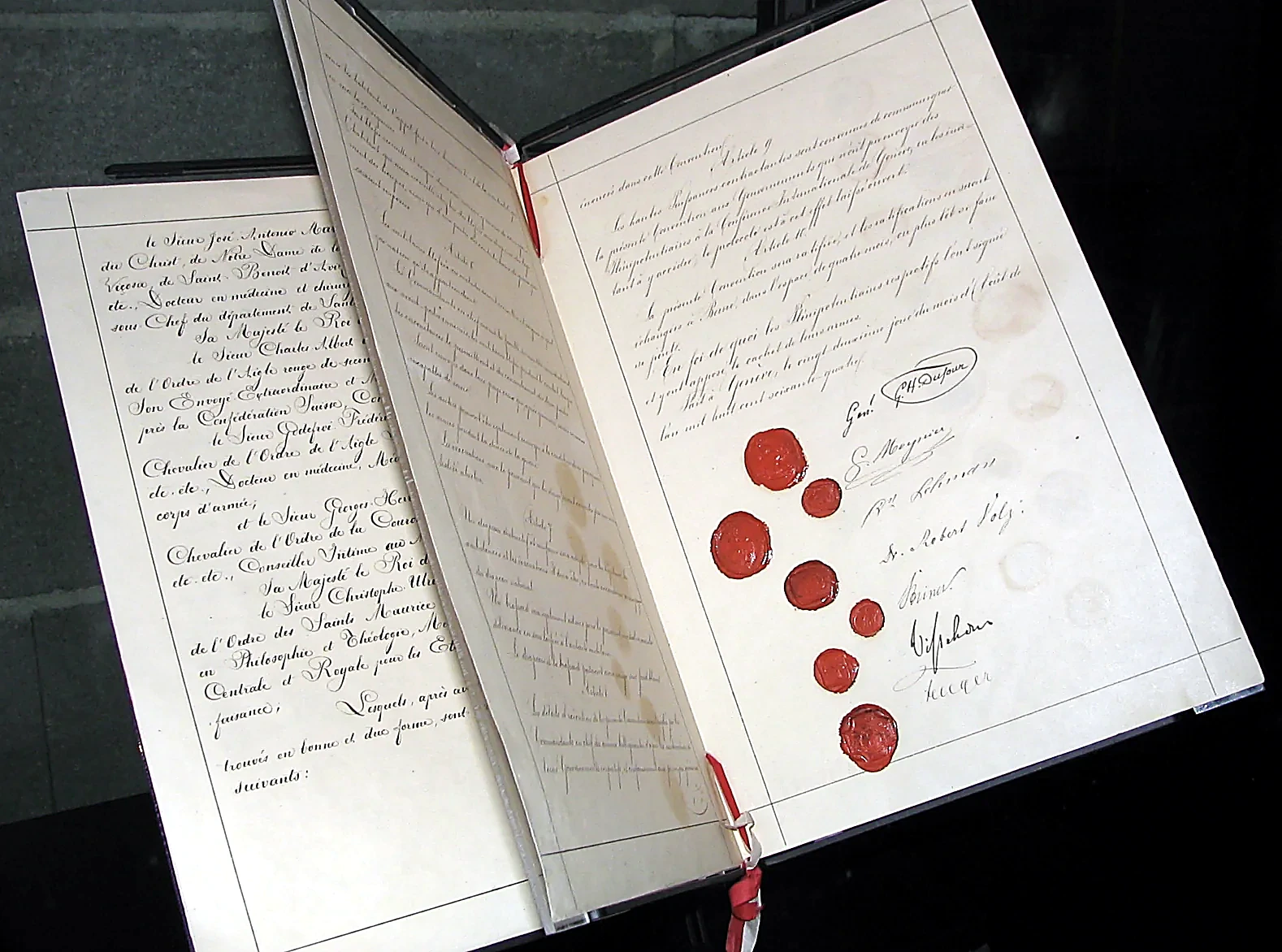
这种灭绝人性的集体连坐惩罚,激起了国际社会的强烈义愤。在联合国大会第三委员会的讲坛上,埃及著名法学家与外交官马哈茂德·阿兹米博士(Dr. Mahmoud Azmi)发表了措辞极其严厉的指控演说:他当着英国代表的面,痛斥英国在马来亚推行的新村铁丝网圈禁与断粮集体惩罚,公然严重践踏了1949年《日内瓦第四公约》(Fourth Geneva Convention)第33条关于‘严禁对被占领地平民实行任何集体惩罚、恐怖恐吓与报复行为’的国际法基本准则。
大英帝国披着所谓的‘自由法治’羊皮,在马来亚却干着比纳粹集中营毫不逊色的反人类集体惩罚,在战后国际人权与去殖民化进程中留下了沉重的历史污点。
To enforce total isolation, authorities enacted the draconian Food Denial Campaign. Family rice was rationed by the ounce, and households were prohibited under penalty of death from possessing raw grain, salt, or basic medicine.
Under the central communal kitchen system, villagers were compelled to boil their daily rice at centralized public vats before taking it to the fields—because cooked rice spoiled within hours in equatorial heat, rendering it useless for guerrilla supply. Every morning, laborers underwent humiliating strip-searches at sentry gates: food tins, bicycle frames, and women's hair buns were prodded with metal skewers to ensure not a single grain of uncooked rice escaped.
This inhumane collective punishment triggered international outrage. Before the United Nations General Assembly's Third Committee, distinguished Egyptian diplomat Dr. Mahmoud Azmi delivered a scathing indictment: he denounced Britain's New Village internment and food blockades as flagrant violations of Article 33 of the Fourth Geneva Convention (1949), which strictly forbids collective penalties and intimidation against civilian populations.
Behind its hypocritical mantle of 'liberty and justice,' the British Empire stood condemned in the court of world opinion for perpetrating crimes against humanity in Malaya.
为了将集中营内的百姓与丛林游击队彻底隔绝,殖民当局推行了令人发指的‘粮食控制条例’(Food Denial Campaign)。每家每户的大米被严格配给称重,家中严禁存放任何未加工生米、食油、食盐与常备药品,违者直接以通敌罪判处重刑乃至绞刑。
更野蛮的是,殖民当局在全马新村普遍设立了‘中央熟食大厨房’(Central Communal Cooking Centers),强令全体村民必须在公共大锅内将大米煮成熟饭后方可食用。因为熟米饭在热带潮湿炎热的气候下短短数小时便会发馊变质,根本无法带入丛林长期储存,以此切断对游击队的粮源支持。每天黎明村民出村割胶时,必须在唯一关卡接受殖民警察极其屈辱的脱衣搜身:连饭盒底层、自行车座垫钢管、锄头木柄乃至妇女的发髻都必须用金属探针细细挑刺,严禁携带任何生米私自离村。
To enforce total isolation, authorities enacted the draconian Food Denial Campaign. Family rice was rationed by the ounce, and households were prohibited under penalty of death from possessing raw grain, salt, or basic medicine.
Under the central communal kitchen system, villagers were compelled to boil their daily rice at centralized public vats before taking it to the fields—because cooked rice spoiled within hours in equatorial heat, rendering it useless for guerrilla supply. Every morning, laborers underwent humiliating strip-searches at sentry gates: food tins, bicycle frames, and women's hair buns were prodded with metal skewers to ensure not a single grain of uncooked rice escaped.
将数十万华裔‘蹲户’强制迁入铁丝网围困的‘新村’:实属彻头彻尾的‘集体惩罚’政策,公然违反《日内瓦第四公约》第33条。当局既未实施逐户审查,亦未设立申诉机制,却以‘少数人之过’株连整村民众。The forced relocation of hundreds of thousands of Chinese squatters into barbed-wire-encircled 'New Villages' constitutes unequivocal collective punishment – a flagrant violation of Article 33 of the Fourth Geneva Convention. Without individual hearings or due process, entire communities were uprooted for alleged transgressions of a minority.— 埃及代表马哈茂德·阿兹米博士在联合国大会第三委员会发言记录(节选,原文第6-8段),1952年 | Statement by Egypt's delegate Dr. Mahmoud Azmi to the UN General Assembly Third Committee (excerpt, paras. 6-8), 1952
这种灭绝人性的集体连坐惩罚,激起了国际社会的强烈义愤。在联合国大会第三委员会的讲坛上,埃及著名法学家与外交官马哈茂德·阿兹米博士(Dr. Mahmoud Azmi)发表了措辞极其严厉的指控演说:他当着英国代表的面,痛斥英国在马来亚推行的新村铁丝网圈禁与断粮集体惩罚,公然严重践踏了1949年《日内瓦第四公约》(Fourth Geneva Convention)第33条关于‘严禁对被占领地平民实行任何集体惩罚、恐怖恐吓与报复行为’的国际法基本准则。
大英帝国披着所谓的‘自由法治’羊皮,在马来亚却干着比纳粹集中营毫不逊色的反人类集体惩罚,在战后国际人权与去殖民化进程中留下了沉重的历史污点。
This inhumane collective punishment triggered international outrage. Before the United Nations General Assembly's Third Committee, distinguished Egyptian diplomat Dr. Mahmoud Azmi delivered a scathing indictment: he denounced Britain's New Village internment and food blockades as flagrant violations of Article 33 of the Fourth Geneva Convention (1949), which strictly forbids collective penalties and intimidation against civilian populations.
Behind its hypocritical mantle of 'liberty and justice,' the British Empire stood condemned in the court of world opinion for perpetrating crimes against humanity in Malaya.
第四章:配给证与马共纠错、“民运”血脉与英军猎首剥皮丑闻
Chapter 4: Ration Cards, CPM Self-Correction, Min Yuen Lifelines, and the British Headhunting Scandal
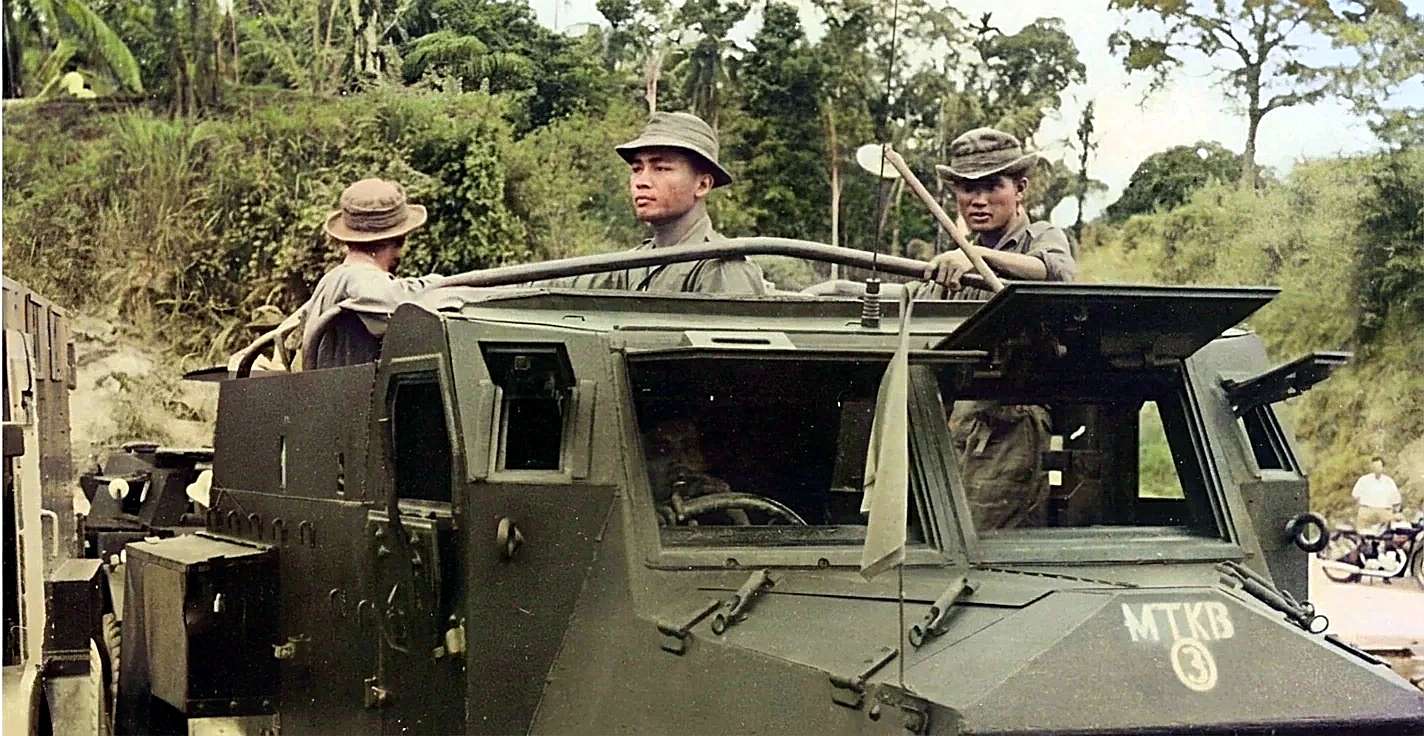
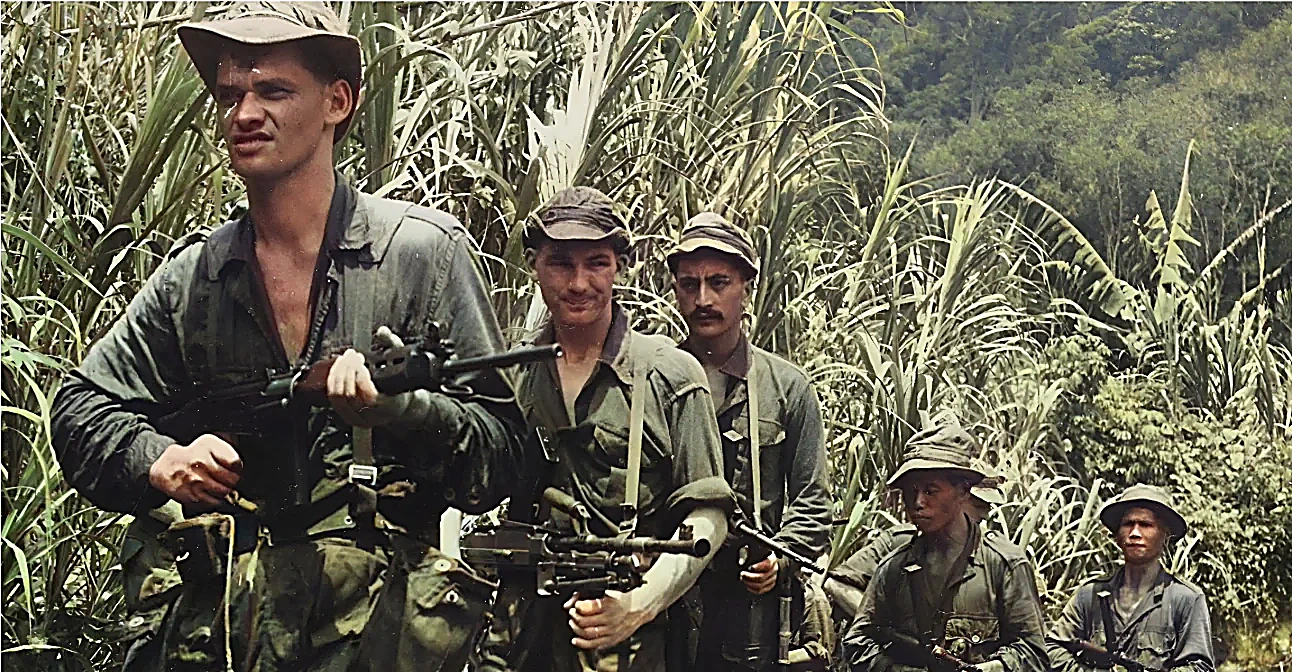
面对殖民当局建立的铁壁合围,马共领导下的‘民运’地下工作者与广大爱国村民,展现了惊天地泣鬼神的斗争智慧与牺牲精神。妇女把大米缝入双层夹衣,胶工把药品藏进空心车轴,青年冒死趁夜割开铁丝网将生米与干粮送入林缘接头点。无数‘民运’英雄在酷刑拷打面前坚贞不屈,用生命守护着这根红色血脉。
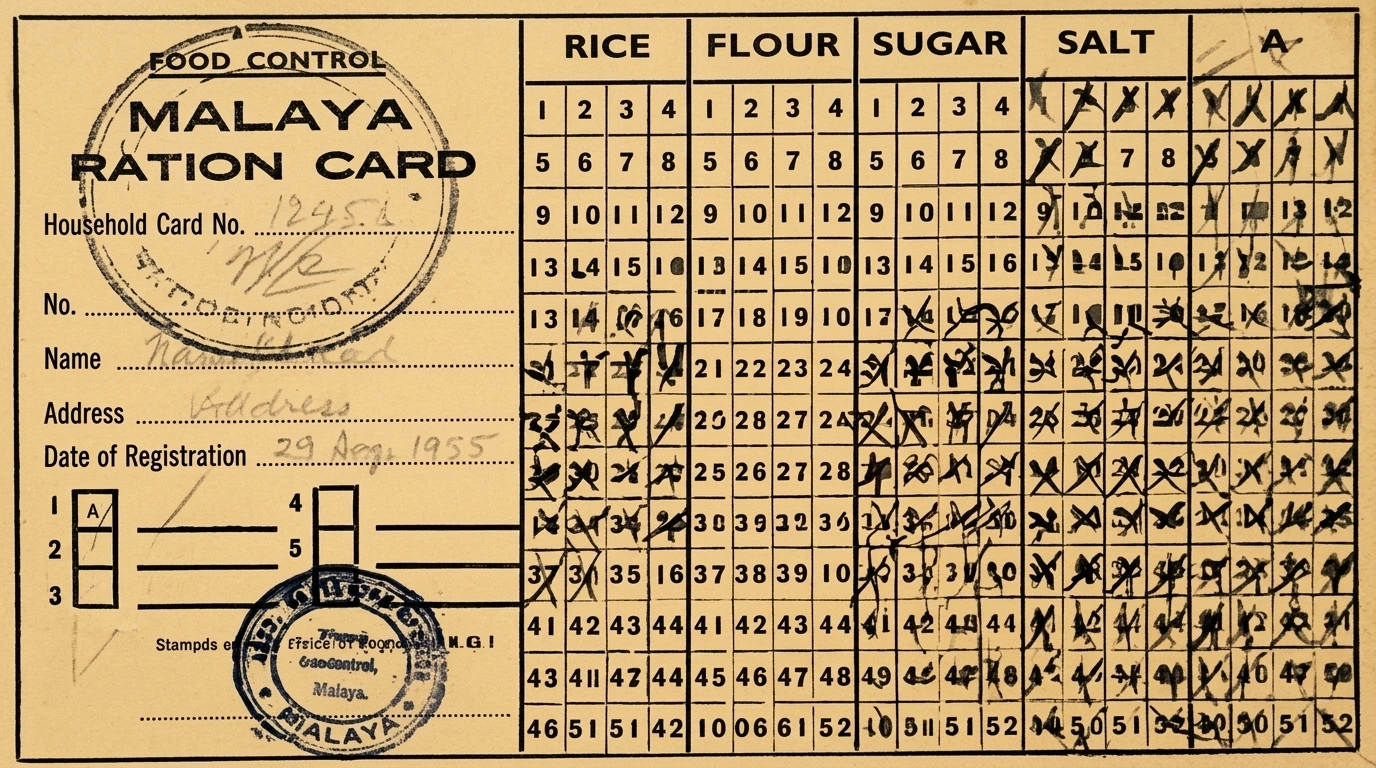
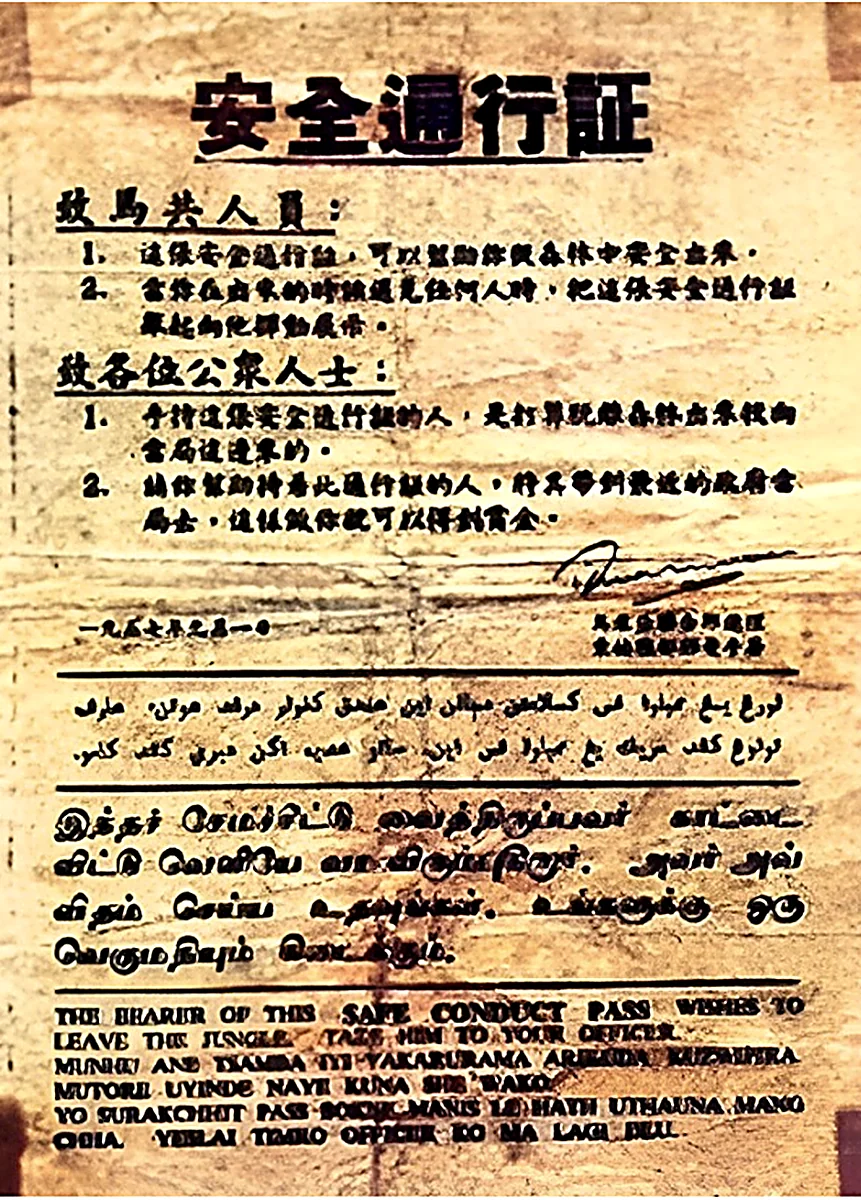
同时,在极端险恶的斗争环境下,马共中央及时察觉政策偏差对群众基础造成的侵蚀。在1950至1951年相持最艰苦的阶段,少数基层武装因物资匮乏曾采取收缴平民身份证和配给证以对抗殖民管制的过激做法,在客观上给群众生活造成了困扰。马共中央于1951年10月1日正式颁布《十月决议》(October Resolutions),对脱离群众利益的过激行为进行了严肃整顿,明确禁止没收平民身份证与粮食配给卡,要求部队严格执行群众纪律,全力保障劳动群众的切身利益与基本生计。
2009年《合艾和平协议》签署二十周年之际,陈平在曼谷接受媒体专访时,本着实事求是、直面历史的态度坦诚回顾了这一历史曲折,对当年因反封锁抗争与过激偏差给无辜平民带来的生计困扰与伤害公开表达了歉意。这一勇于自我剖析与承担责任的坦荡胸怀,反映了马共对群众路线与历史责任的严肃态度。
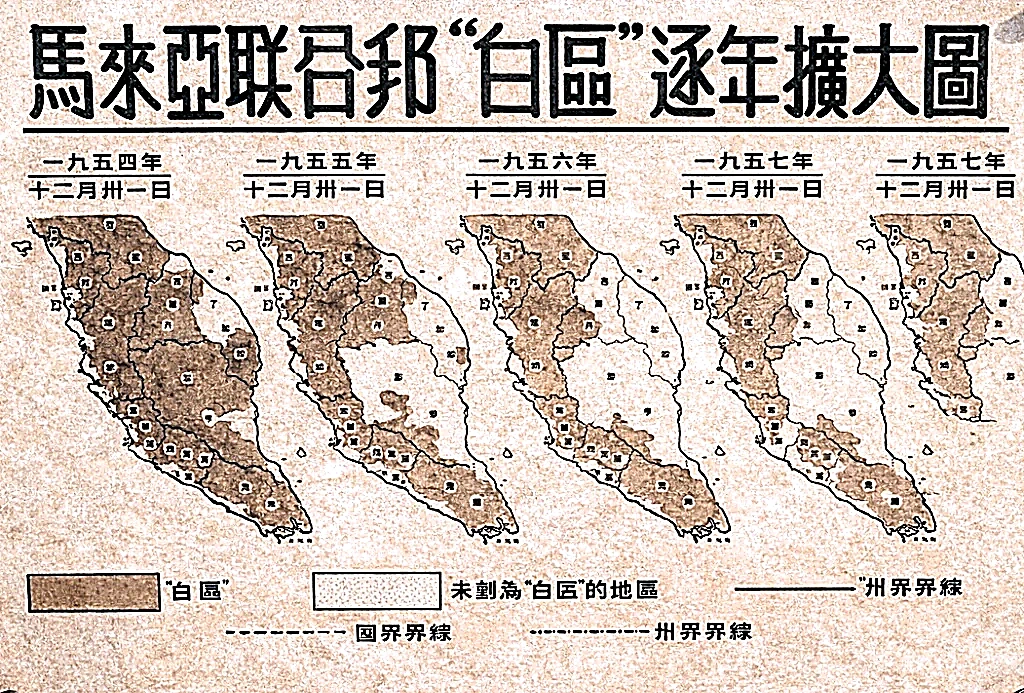
伴随着集中营新村制度的固化与严酷的粮食断绝战术,1953年9月,英军最高专员兼武装部队总司令邓普勒(Gerald Templer)在马六甲正式启动了臭名昭著的“白区”(White Area)政策。殖民当局将所谓“肃清游击队”且民众严格服从反恐管制的区域划为“白区”,逐步解除宵禁与搜身;而对仍有游击队活动或民众坚决拒斥合作的地区,则严厉定为“黑区”(Black Area),继续施加绝粮封锁与军事轰炸。自1954年至1958年,殖民当局逐年绘制并大肆散发《马来亚联邦“白区”逐年扩大图》,企图以此大造舆论,宣扬其殖民清剿战争的“胜利”。
然而,剥离殖民宣传机器的欺骗性外衣,从反殖战争的真实战略态势审视,这幅地图最值得考量的历史事实,恰恰在于那些长期未能被殖民当局完全控制的广大“黑区”。在长达数年的物资封锁与军事围剿下,深山密林游击根据地与“民运”群众的长期抵抗,牵制了近三十万英联邦精锐陆空军力与庞大安保系统,造成每年巨额的财政赤字,在战略上客观动摇了大英帝国维系直接殖民统治的可行性。
从这一宏观维度考察,深山黑区的长期抗争构成了瓦解殖民统治体系的重要反作用力。正是这种无法被彻底消灭的持久军事消耗与政治对峙,迫使伦敦殖民统治者在战后权衡利弊,最终不得不加快宪政谈判与政权移交的步伐。
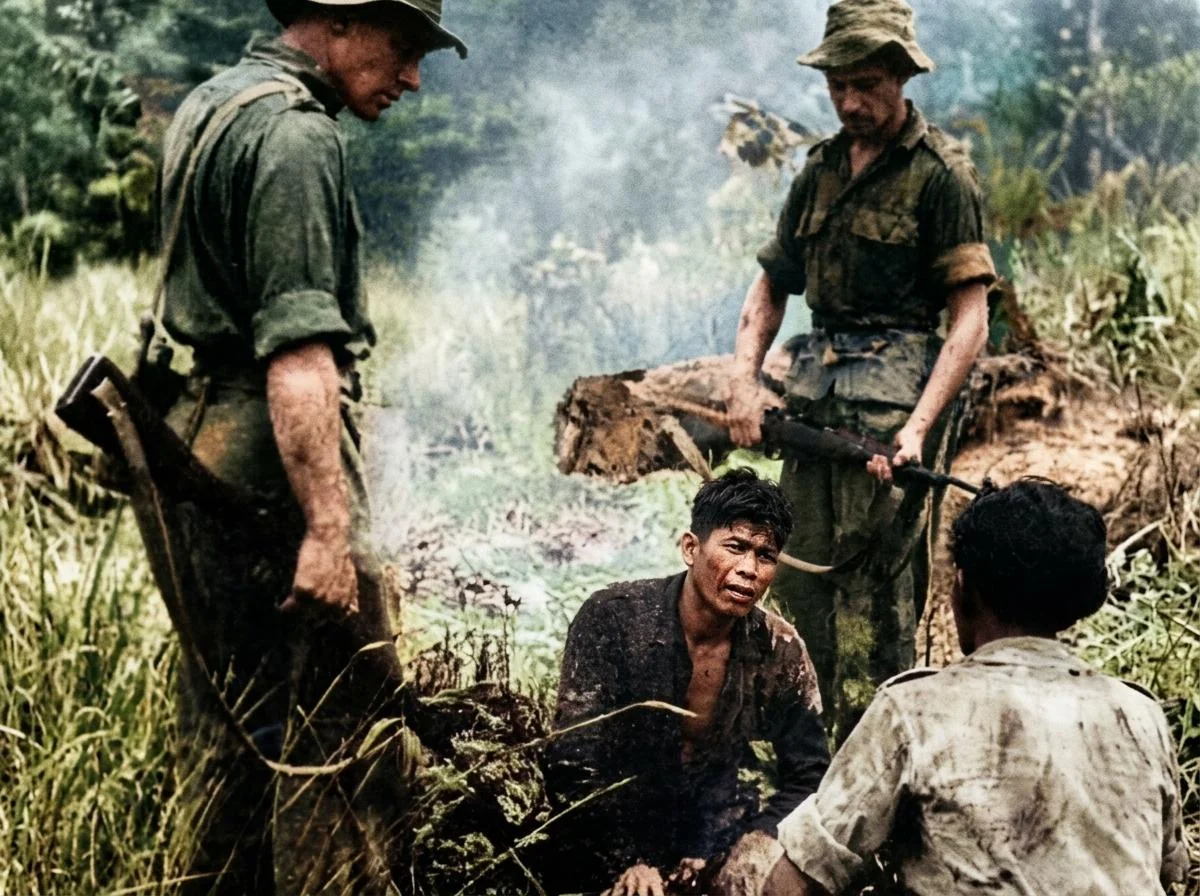
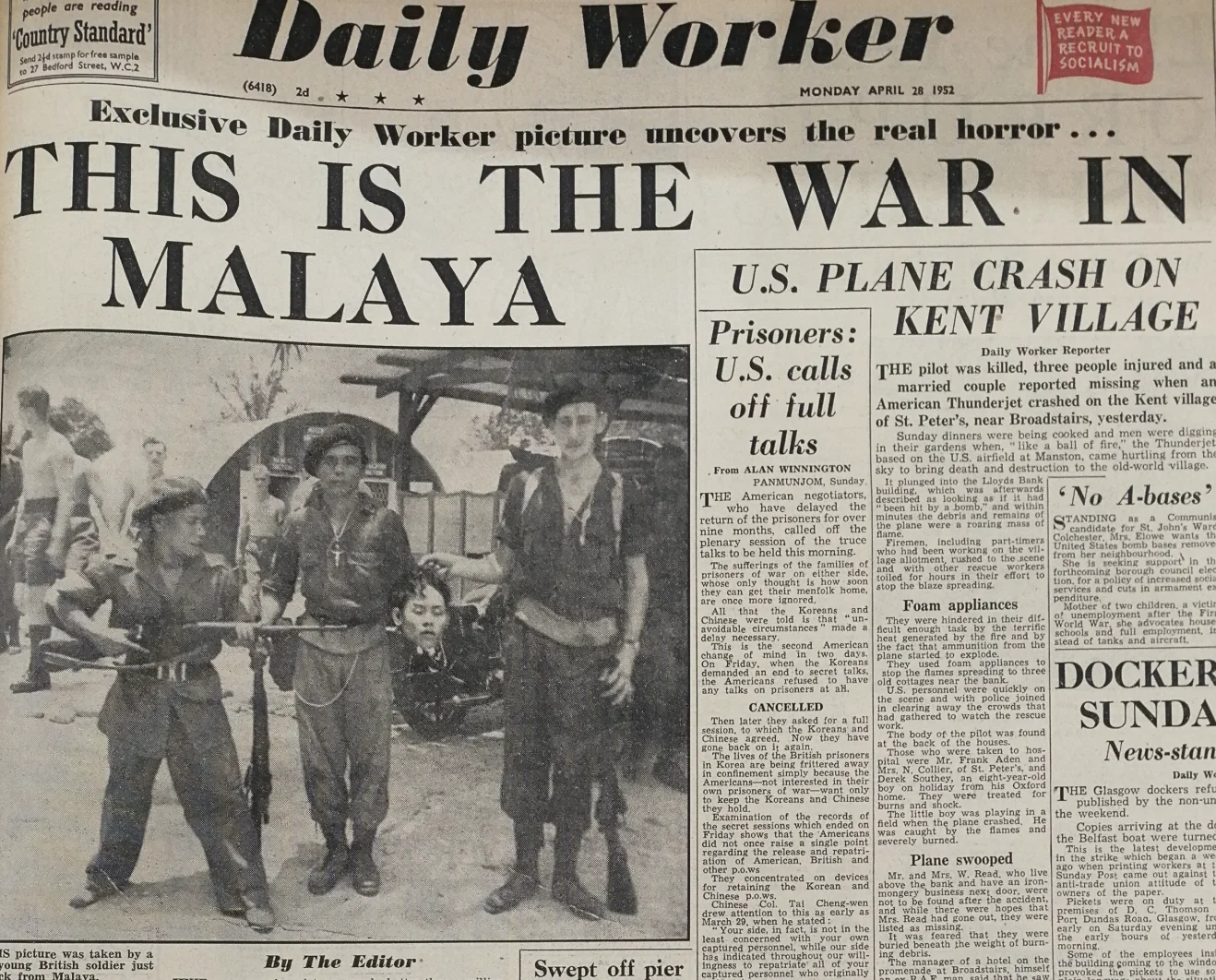
在反游击清剿行动中,部分英军部队亦屡屡突破人道法准则。1952年4月28日,英国共产党机关报《工人日报》(Daily Worker)在头版发表揭露报道《这是马来亚的战争》(This is the War in Malaya),刊登了英国皇家海军陆战队第40突击队(40 Commando R.M.)在吉打巡逻中手提被斩首马共战士头颅合影的战地照片,引发国际社会的强烈关注与震动。
提供这张骇人斩首照片的年轻英军士兵在退伍返英后发表了震撼的战地自白:“我们在马来亚绝不可能获胜!游击队的组织太严密了,全体人民都与他们站在一起,我们小伙子的士气极其低落!”在英国国内工人阶级、进步议员与国际正义舆论的雷霆重压下,英国政府在下议院辩论中被逼入绝境,最终于1952年5月7日被迫在下议院正式承认照片完全属实,推翻了殖民当局长期宣称的所谓文明战争说辞。
这一系列政治风波与反战抗议表明,殖民战争在马来半岛不仅遭遇了坚韧的游击周旋,更在英国本土激发起道义危机与政治争议,从内部削弱了殖民政策的社会共识与统治合法性。
Faced with colonial siege, Min Yuen underground cadres and villagers displayed unmatched heroism. Women stitched rice into double-layered jackets, tappers concealed medicine inside bicycle shafts, and youths cut wire by night to deliver grain to forest caches. Countless Min Yuen martyrs endured torture without yielding.
Concurrently, amid an extremely hostile operational environment, the CPM Central Committee recognized the corrosive impact of policy errors on its mass base. During the grueling deadlock of 1950-1951, isolated guerrilla units under severe logistical shortages had confiscated civilian identity and ration cards to counter colonial controls, creating unintended hardships for rural families. On October 1, 1951, the Central Committee issued the October Resolutions, systematically rectifying ultra-left tendencies, strictly prohibiting the seizure of civilian identification and ration cards, and ordering all units to uphold strict mass discipline to safeguard the livelihoods and interests of working people.
In 2009, on the twentieth anniversary of the Haadyai Peace Accord, Chin Peng candidly reviewed these historical setbacks during a media interview in Bangkok, forthrightly acknowledging past errors and publicly expressing his apology for the hardships and harm suffered by innocent civilians during the wartime counter-blockade struggles. This willingness to undertake self-reflection and shoulder historical responsibility demonstrated the CPM's serious commitment to the mass line and historical accountability.
Following the consolidation of New Village internment camps and food blockades, High Commissioner General Sir Gerald Templer instituted the 'White Area' policy in September 1953, beginning in Malacca. Regions deemed pacified and compliant were designated 'White Areas,' where curfews and gate searches were partially relaxed; while zones with active guerrilla operations or civilian resistance were branded 'Black Areas,' subjected to round-the-clock bombardment and strict food deprivation. Between 1954 and 1958, authorities widely disseminated maps tracking the progressive expansion of 'White Areas' to manufacture an illusion of imminent military victory.
Stripping away the veneer of colonial propaganda and examining the actual strategic balance of the anti-colonial war, the true historical significance of this map lies in the endurance of the expansive 'Black Areas' that the colonial authorities failed to pacify. Under prolonged logistical blockades and military encirclement, the sustained resistance of the jungle guerrilla bases and the Min Yuen network tied down nearly 300,000 Commonwealth troops and an extensive security apparatus, inflicting heavy financial drains on Britain and structurally eroding the sustainability of direct colonial rule.
Viewed from this broader perspective, the persistent resistance within the Black Areas served as a vital countervailing force against the colonial apparatus. It was precisely this indomitable military attrition and political deadlock that forced Whitehall to reassess its colonial commitments, ultimately accelerating constitutional negotiations and the transfer of sovereignty.
During counter-insurgency sweep operations, certain British units repeatedly breached humanitarian norms. On April 28, 1952, the Daily Worker published a front-page exposé titled 'This is the War in Malaya,' featuring a battlefield photograph of soldiers from 40 Commando Royal Marines posing with the severed heads of fallen CPM fighters in Kedah, sparking deep outrage across the international community.
The young British soldier who smuggled the photograph back from the jungle delivered a devastating battlefield confession: 'We can never win in Malaya. The guerrillas are too well organised. The people are with them. The morale of our lads is low.' Confronted by mounting working-class indignation and parliamentary grilling, the Churchill government was cornered into formally admitting the photograph's authenticity in the House of Commons on May 7, 1952, collapsing years of official denials.
This wave of political controversy and anti-war demonstrations revealed that the colonial war in Malaya not only encountered resilient guerrilla resistance on the ground, but also ignited moral crises and domestic dissent within Britain itself, fundamentally weakening the domestic consensus and political legitimacy underpinning colonial policy.
面对殖民当局建立的铁壁合围,马共领导下的‘民运’地下工作者与广大爱国村民,展现了惊天地泣鬼神的斗争智慧与牺牲精神。妇女把大米缝入双层夹衣,胶工把药品藏进空心车轴,青年冒死趁夜割开铁丝网将生米与干粮送入林缘接头点。无数‘民运’英雄在酷刑拷打面前坚贞不屈,用生命守护着这根红色血脉。
同时,在极端险恶的斗争环境下,马共中央及时察觉政策偏差对群众基础造成的侵蚀。在1950至1951年相持最艰苦的阶段,少数基层武装因物资匮乏曾采取收缴平民身份证和配给证以对抗殖民管制的过激做法,在客观上给群众生活造成了困扰。马共中央于1951年10月1日正式颁布《十月决议》(October Resolutions),对脱离群众利益的过激行为进行了严肃整顿,明确禁止没收平民身份证与粮食配给卡,要求部队严格执行群众纪律,全力保障劳动群众的切身利益与基本生计。
2009年《合艾和平协议》签署二十周年之际,陈平在曼谷接受媒体专访时,本着实事求是、直面历史的态度坦诚回顾了这一历史曲折,对当年因反封锁抗争与过激偏差给无辜平民带来的生计困扰与伤害公开表达了歉意。这一勇于自我剖析与承担责任的坦荡胸怀,反映了马共对群众路线与历史责任的严肃态度。
Faced with colonial siege, Min Yuen underground cadres and villagers displayed unmatched heroism. Women stitched rice into double-layered jackets, tappers concealed medicine inside bicycle shafts, and youths cut wire by night to deliver grain to forest caches. Countless Min Yuen martyrs endured torture without yielding.
Concurrently, amid an extremely hostile operational environment, the CPM Central Committee recognized the corrosive impact of policy errors on its mass base. During the grueling deadlock of 1950-1951, isolated guerrilla units under severe logistical shortages had confiscated civilian identity and ration cards to counter colonial controls, creating unintended hardships for rural families. On October 1, 1951, the Central Committee issued the October Resolutions, systematically rectifying ultra-left tendencies, strictly prohibiting the seizure of civilian identification and ration cards, and ordering all units to uphold strict mass discipline to safeguard the livelihoods and interests of working people.
In 2009, on the twentieth anniversary of the Haadyai Peace Accord, Chin Peng candidly reviewed these historical setbacks during a media interview in Bangkok, forthrightly acknowledging past errors and publicly expressing his apology for the hardships and harm suffered by innocent civilians during the wartime counter-blockade struggles. This willingness to undertake self-reflection and shoulder historical responsibility demonstrated the CPM's serious commitment to the mass line and historical accountability.
马共曾把没收身份证作为应对方式。1951年10月1日,马共中央勒令停止没收身份证、配给证等,并承认此举失策。2009年,陈平再度向受害平民致歉,自认责任。The CPM deployed identity document confiscation as a countermeasure. On 1 October 1951, its Central Committee urgently ordered cessation of this practice regarding IDs and ration cards, acknowledging it as a grave strategic error. In 2009, Chin Peng again issued a public apology to affected civilians and formally accepted personal responsibility.— 权威党史文献考据定论(1951年马共中央《十月决议》与陈平2009年公开致歉档案) | Archival Historical Verdict (CPM October 1, 1951 Resolution & Chin Peng's 2009 Public Apology)
伴随着集中营新村制度的固化与严酷的粮食断绝战术,1953年9月,英军最高专员兼武装部队总司令邓普勒(Gerald Templer)在马六甲正式启动了臭名昭著的“白区”(White Area)政策。殖民当局将所谓“肃清游击队”且民众严格服从反恐管制的区域划为“白区”,逐步解除宵禁与搜身;而对仍有游击队活动或民众坚决拒斥合作的地区,则严厉定为“黑区”(Black Area),继续施加绝粮封锁与军事轰炸。自1954年至1958年,殖民当局逐年绘制并大肆散发《马来亚联邦“白区”逐年扩大图》,企图以此大造舆论,宣扬其殖民清剿战争的“胜利”。
然而,剥离殖民宣传机器的欺骗性外衣,从反殖战争的真实战略态势审视,这幅地图最值得考量的历史事实,恰恰在于那些长期未能被殖民当局完全控制的广大“黑区”。在长达数年的物资封锁与军事围剿下,深山密林游击根据地与“民运”群众的长期抵抗,牵制了近三十万英联邦精锐陆空军力与庞大安保系统,造成每年巨额的财政赤字,在战略上客观动摇了大英帝国维系直接殖民统治的可行性。
从这一宏观维度考察,深山黑区的长期抗争构成了瓦解殖民统治体系的重要反作用力。正是这种无法被彻底消灭的持久军事消耗与政治对峙,迫使伦敦殖民统治者在战后权衡利弊,最终不得不加快宪政谈判与政权移交的步伐。
Following the consolidation of New Village internment camps and food blockades, High Commissioner General Sir Gerald Templer instituted the 'White Area' policy in September 1953, beginning in Malacca. Regions deemed pacified and compliant were designated 'White Areas,' where curfews and gate searches were partially relaxed; while zones with active guerrilla operations or civilian resistance were branded 'Black Areas,' subjected to round-the-clock bombardment and strict food deprivation. Between 1954 and 1958, authorities widely disseminated maps tracking the progressive expansion of 'White Areas' to manufacture an illusion of imminent military victory.
Stripping away the veneer of colonial propaganda and examining the actual strategic balance of the anti-colonial war, the true historical significance of this map lies in the endurance of the expansive 'Black Areas' that the colonial authorities failed to pacify. Under prolonged logistical blockades and military encirclement, the sustained resistance of the jungle guerrilla bases and the Min Yuen network tied down nearly 300,000 Commonwealth troops and an extensive security apparatus, inflicting heavy financial drains on Britain and structurally eroding the sustainability of direct colonial rule.
Viewed from this broader perspective, the persistent resistance within the Black Areas served as a vital countervailing force against the colonial apparatus. It was precisely this indomitable military attrition and political deadlock that forced Whitehall to reassess its colonial commitments, ultimately accelerating constitutional negotiations and the transfer of sovereignty.
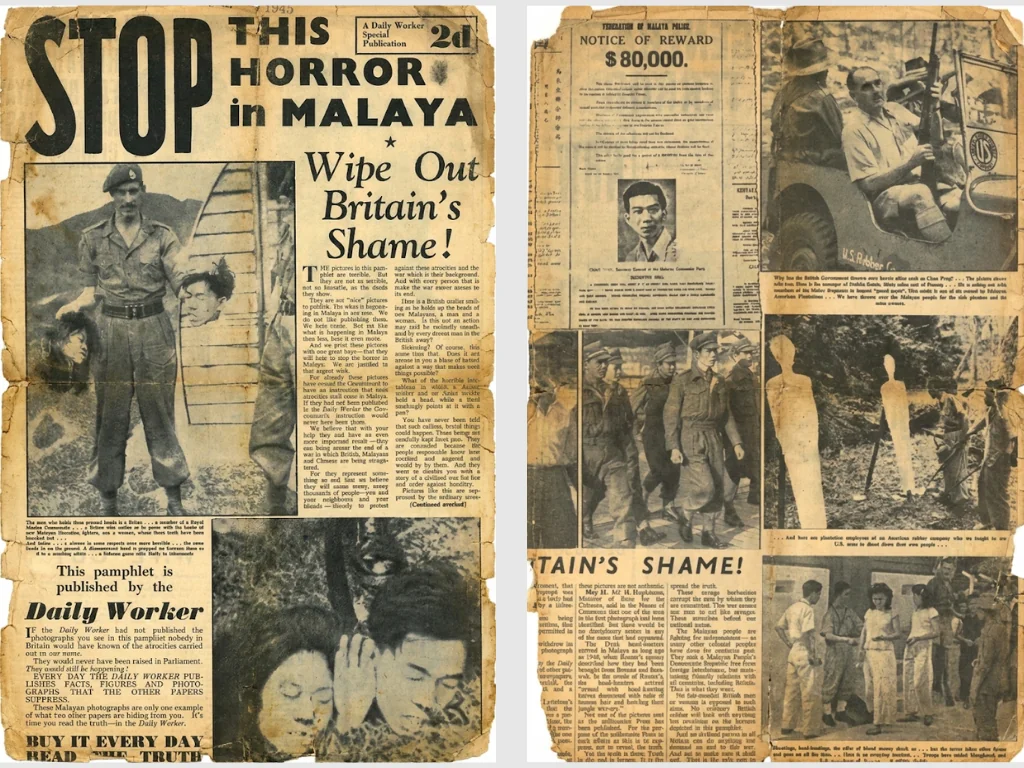
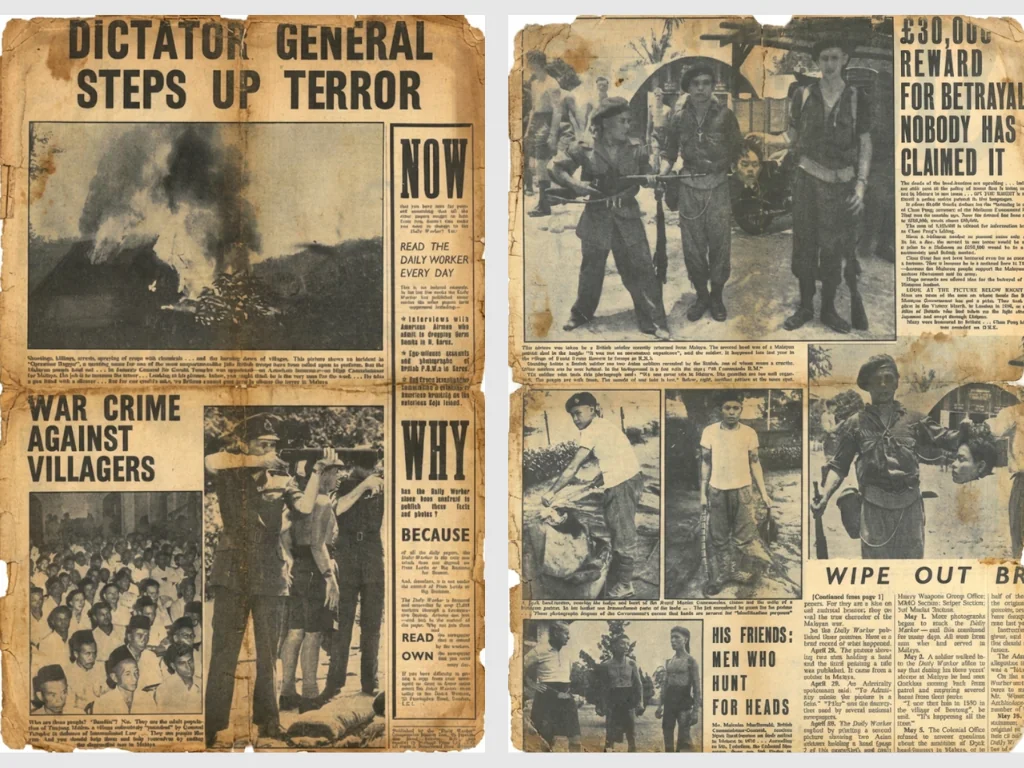
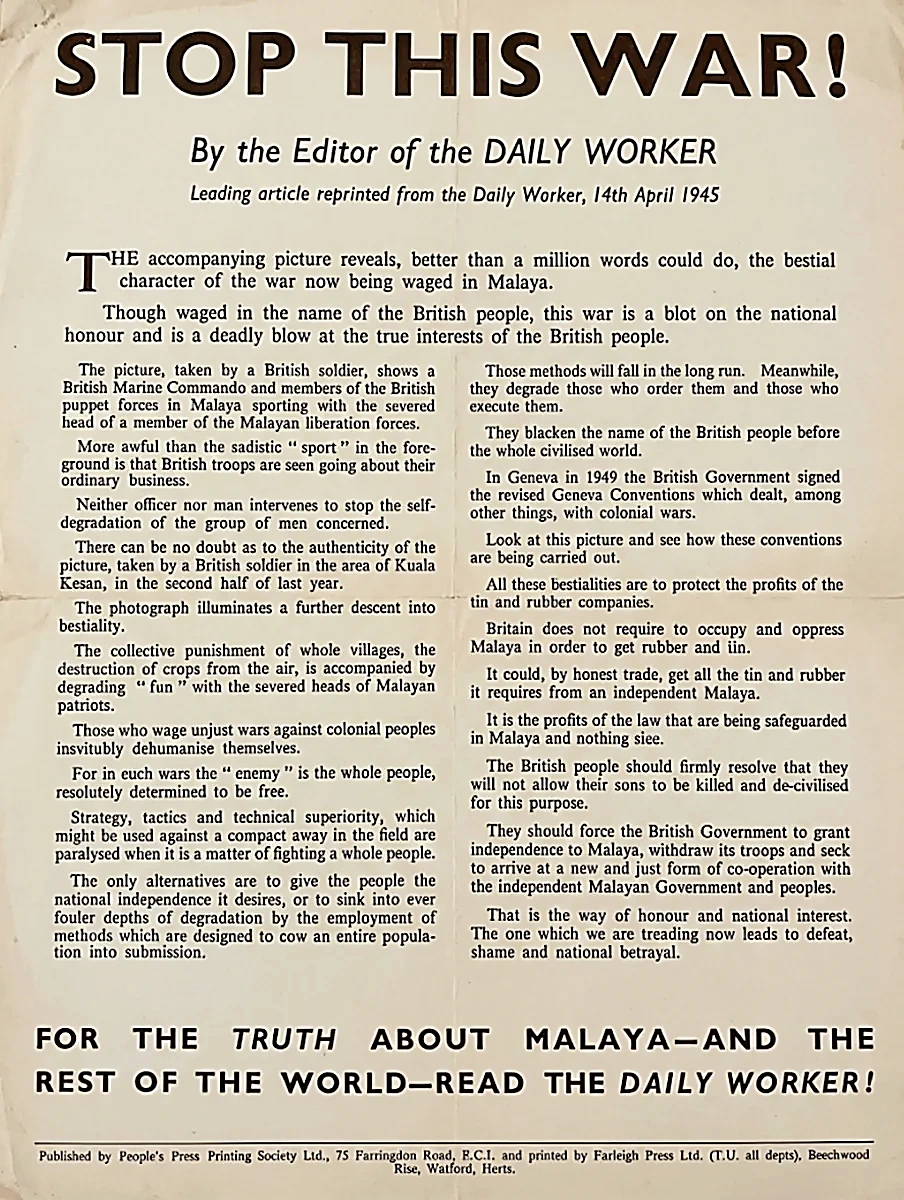
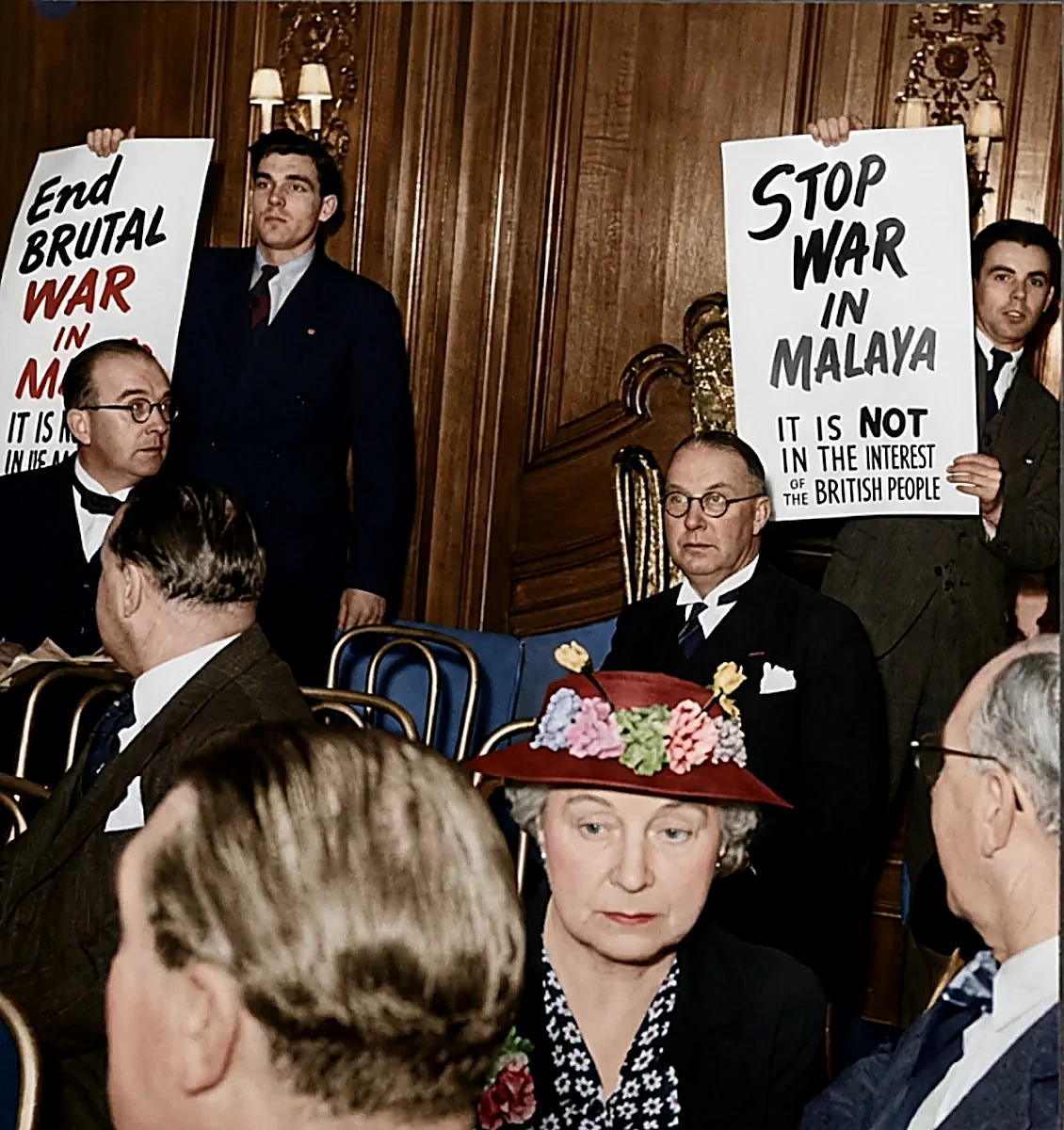
打着英国人民旗号发动的这场战争,是对国家荣誉的玷污,是对英国人民真正利益的致命打击!所有这些野蛮暴行,纯粹是为了保护橡胶与锡矿垄断公司的暴利!Though waged in the name of the British people, this war is a blot on national honour and a deadly blow at the true interests of the British people. All these bestialities are to protect the profits of the tin and rubber companies!— 英国《工人日报》特刊社论《停止这场战争!》,1952年4月14日 | Daily Worker Editorial 'STOP THIS WAR!', April 14, 1952
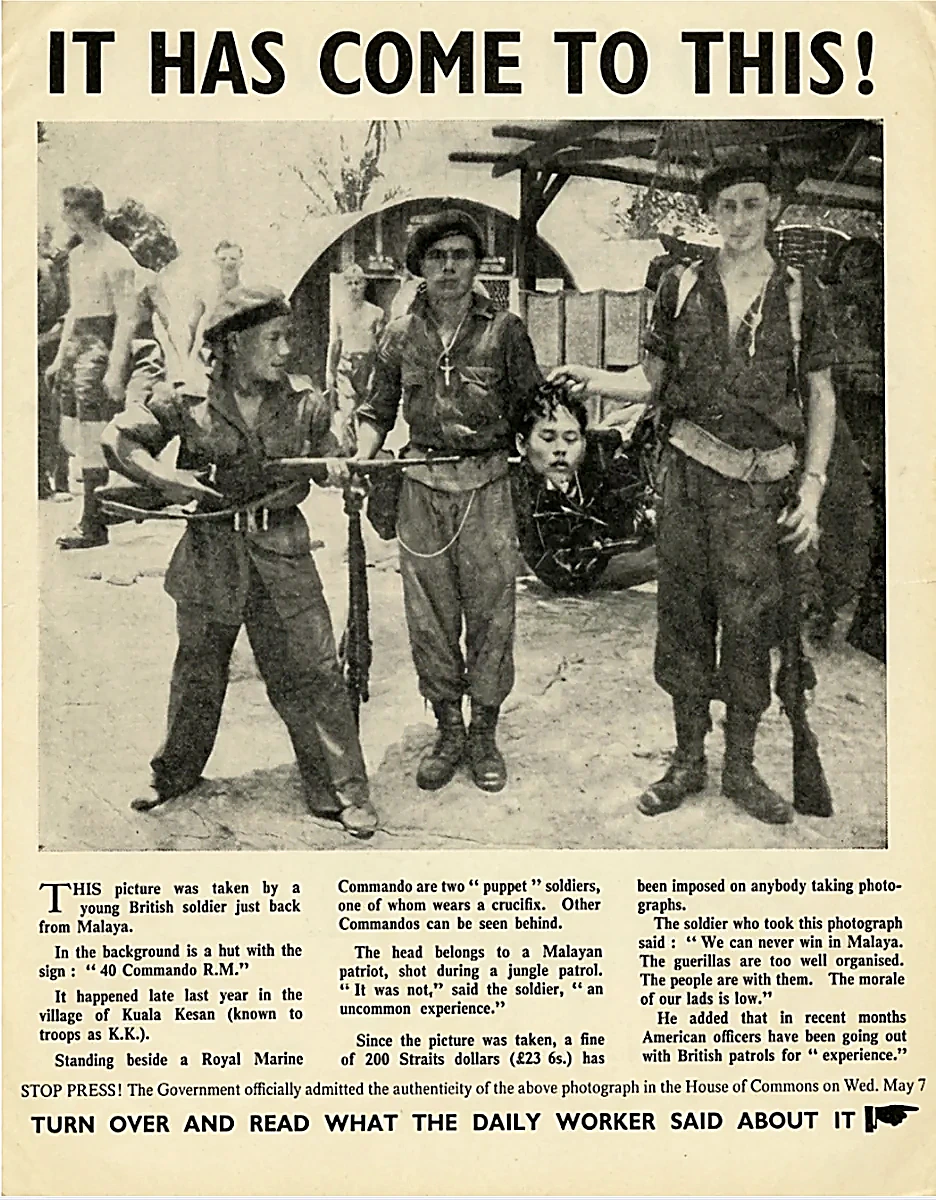
在反游击清剿行动中,部分英军部队亦屡屡突破人道法准则。1952年4月28日,英国共产党机关报《工人日报》(Daily Worker)在头版发表揭露报道《这是马来亚的战争》(This is the War in Malaya),刊登了英国皇家海军陆战队第40突击队(40 Commando R.M.)在吉打巡逻中手提被斩首马共战士头颅合影的战地照片,引发国际社会的强烈关注与震动。
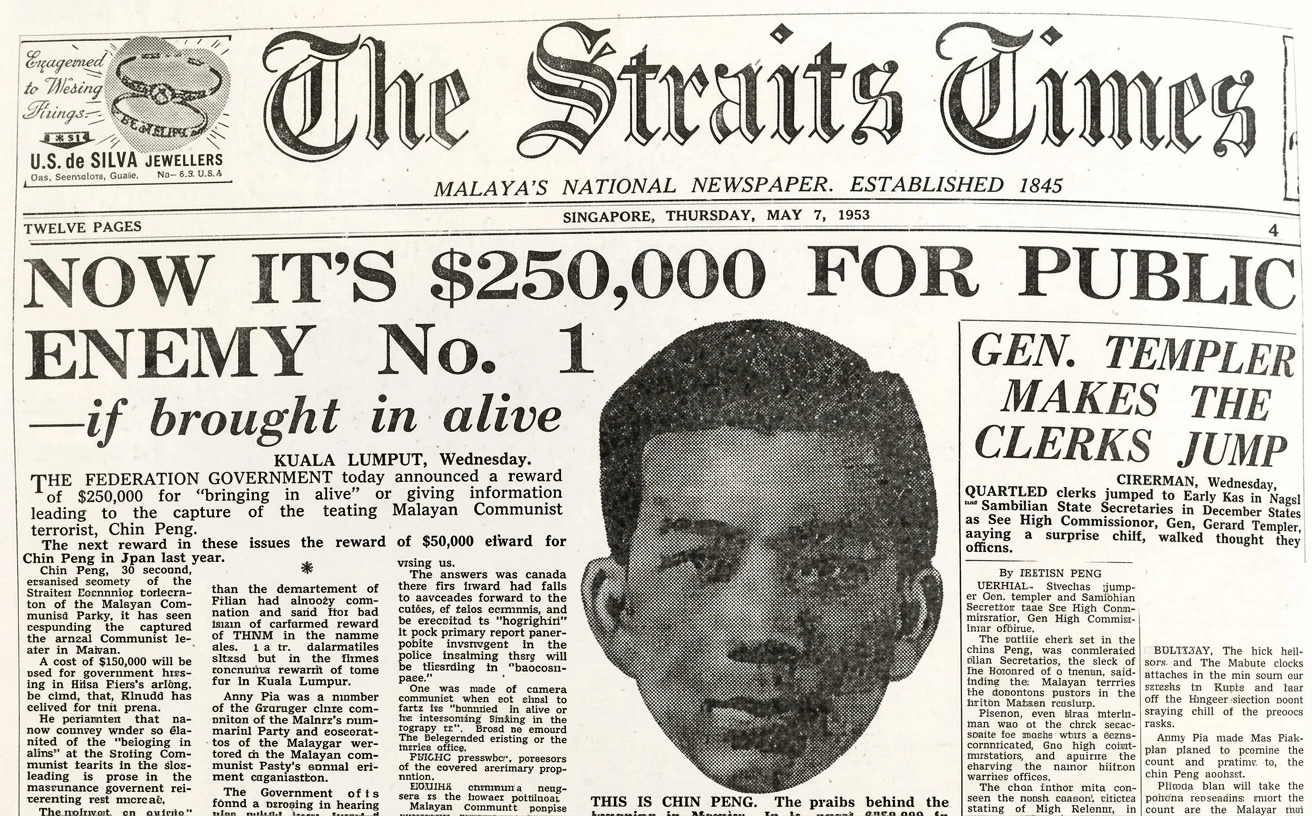
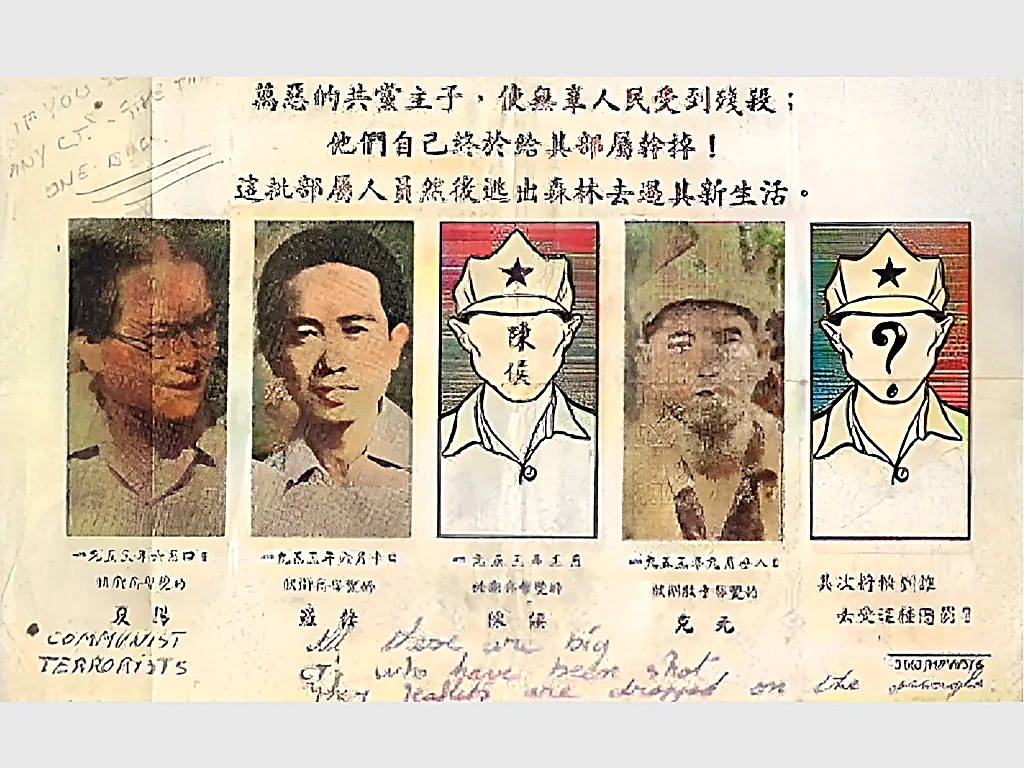
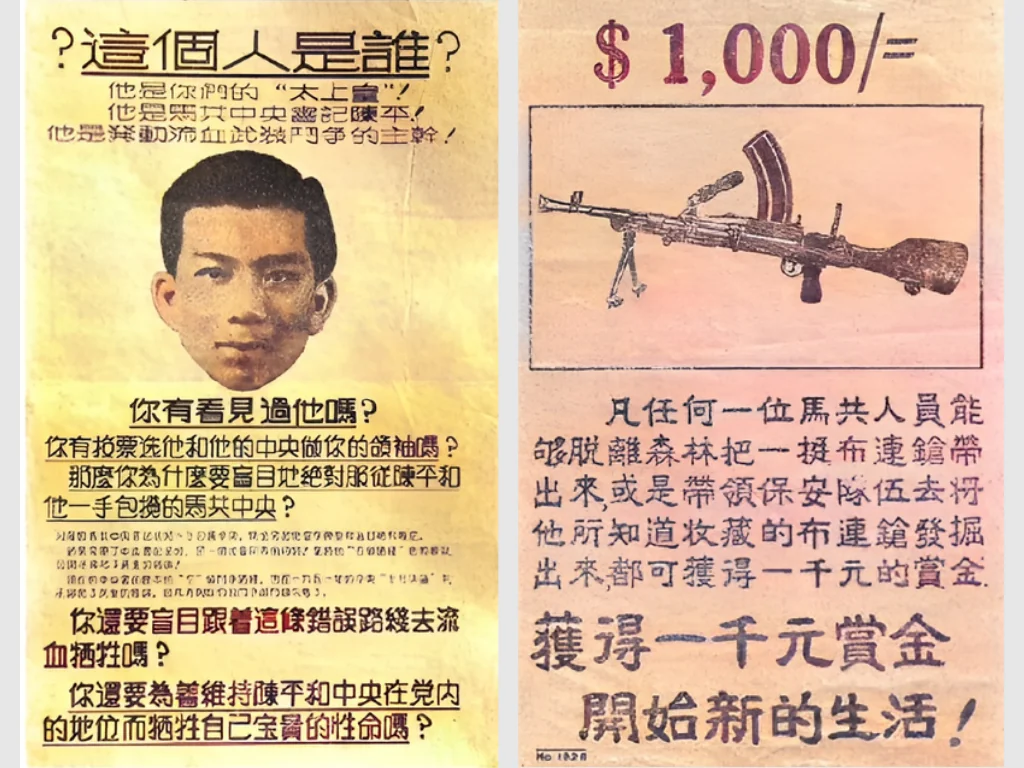
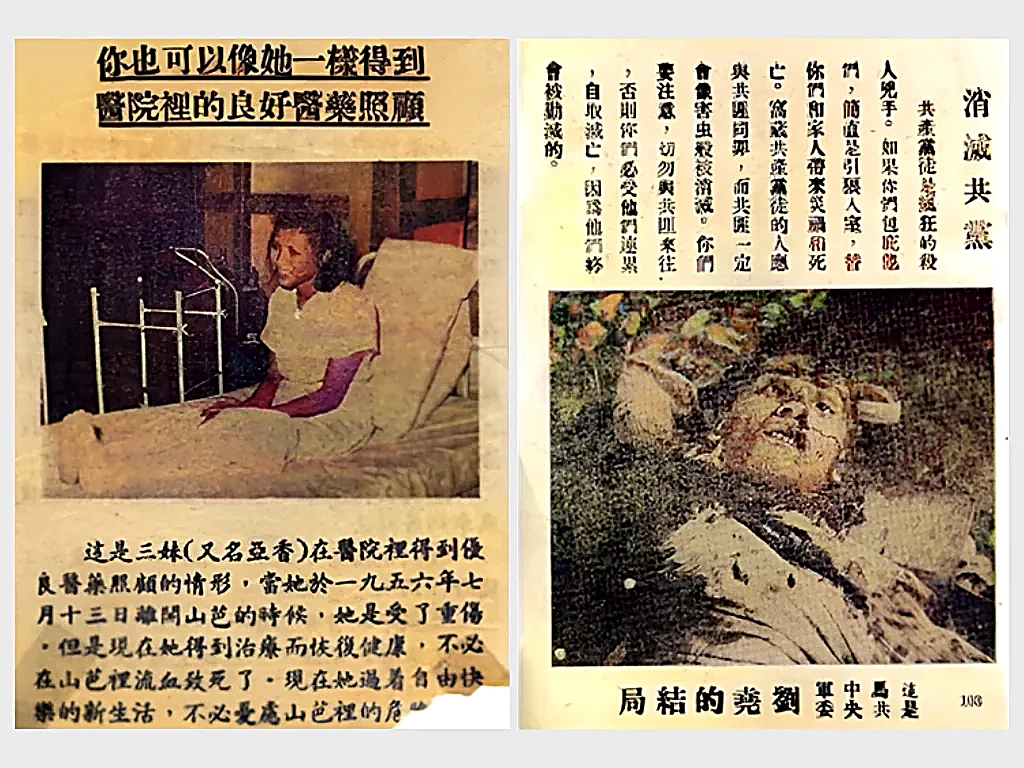
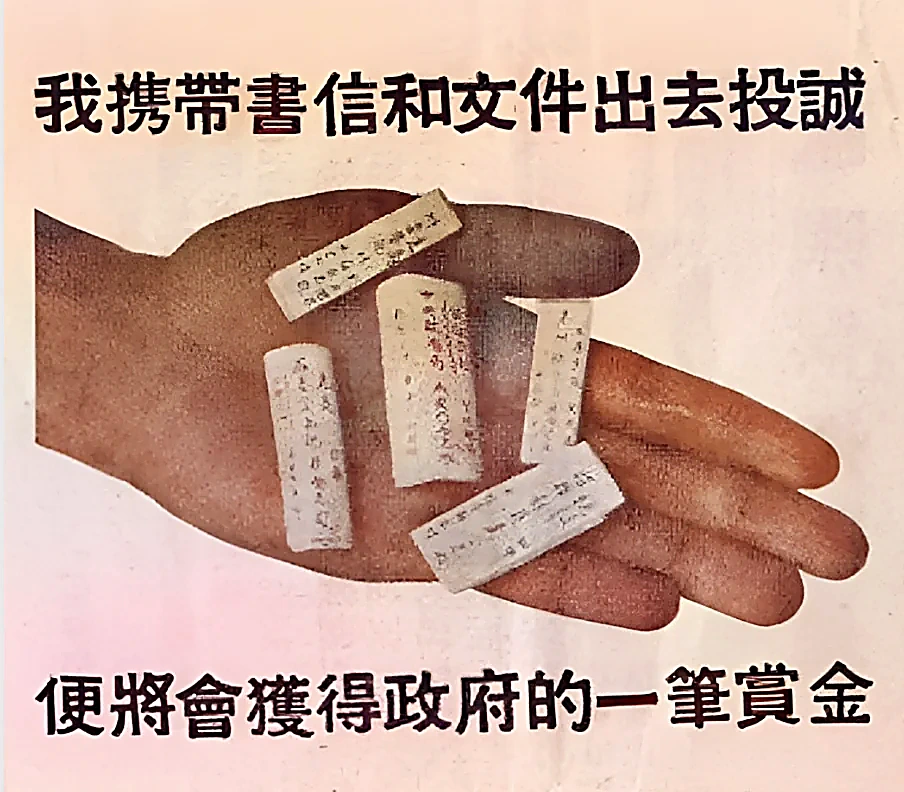
解密档案进一步证实:大英帝国军方甚至从婆罗洲沙捞越秘密招募了超过1000名伊班族战士(殖民档案统称‘海达雅人’/ Dyak Trackers)组建所谓的‘特种追踪队’,在马来半岛丛林中公然推行‘割耳朵计赏’、‘砍人头记功’的赏金制度。而在城镇与乡村上空,英国皇家空军疯狂抛洒上亿张心理战造谣传单,《海峡时报》公然登载悬赏25万叻币捉拿陈平的通告。
面对白厅当局的极力掩盖,1952年4月14日,《工人日报》发表具有划时代意义的重磅社论《停止这场战争!》(STOP THIS WAR!),以极其深刻的政治洞察力剥光了殖民侵略的画皮。社论一针见血地指出:打着英国人民旗号发动的这场残酷战争,不仅严重玷污了英国的国家荣誉,也违背了英国普通民众的切身利益。英军在马来亚实施的全村连坐、焚村绝粮以及手提烈士首级嬉笑的野蛮行径,其背后的唯一真实图谋,就是为了誓死捍卫邓禄普(Dunlop)橡胶寡头与矿业财阀的经济垄断特权。一个独立平等的马来亚完全能通过公平诚实的正常贸易供给资源,大英帝国却把本国工农子弟送去热带丛林充当殖民战争的牺牲品。
提供这张骇人斩首照片的年轻英军士兵在退伍返英后发表了震撼的战地自白:“我们在马来亚绝不可能获胜!游击队的组织太严密了,全体人民都与他们站在一起,我们小伙子的士气极其低落!”在英国国内工人阶级、进步议员与国际正义舆论的雷霆重压下,英国政府在下议院辩论中被逼入绝境,最终于1952年5月7日被迫在下议院正式承认照片完全属实,推翻了殖民当局长期宣称的所谓文明战争说辞。
这一系列政治风波与反战抗议表明,殖民战争在马来半岛不仅遭遇了坚韧的游击周旋,更在英国本土激发起道义危机与政治争议,从内部削弱了殖民政策的社会共识与统治合法性。
During counter-insurgency sweep operations, certain British units repeatedly breached humanitarian norms. On April 28, 1952, the Daily Worker published a front-page exposé titled 'This is the War in Malaya,' featuring a battlefield photograph of soldiers from 40 Commando Royal Marines posing with the severed heads of fallen CPM fighters in Kedah, sparking deep outrage across the international community.
Declassified files further confirm that the British military recruited over 1,000 Iban warriors from Borneo (designated 'Dyak Trackers' in colonial records) into 'Ferret Forces,' instituting a savage bounty system rewarding soldiers for severed ears and decapitated heads. Overhead, RAF aircraft dropped millions of psychological warfare leaflets, while the Straits Times advertised a record $250,000 bounty on CPM Secretary-General Chin Peng.
Shattering Whitehall's blackout, on April 14, 1952, the Daily Worker published a landmark editorial headlined 'STOP THIS WAR!', exposing the imperialist plunder at the heart of the conflict. The editorial declared: 'Though waged in the name of the British people, this war is a blot on national honour and a deadly blow at the true interests of the British people.' It revealed that village burnings, starvation blockades, and headhunting atrocities served solely to safeguard the bloodstained profits of tin and Dunlop rubber monopolists, arguing that a free Malaya could provide all necessary rubber through honest trade without sacrificing British youth as cannon fodder.
The young British soldier who smuggled the photograph back from the jungle delivered a devastating battlefield confession: 'We can never win in Malaya. The guerrillas are too well organised. The people are with them. The morale of our lads is low.' Confronted by mounting working-class indignation and parliamentary grilling, the Churchill government was cornered into formally admitting the photograph's authenticity in the House of Commons on May 7, 1952, collapsing years of official denials.
This wave of political controversy and anti-war demonstrations revealed that the colonial war in Malaya not only encountered resilient guerrilla resistance on the ground, but also ignited moral crises and domestic dissent within Britain itself, fundamentally weakening the domestic consensus and political legitimacy underpinning colonial policy.
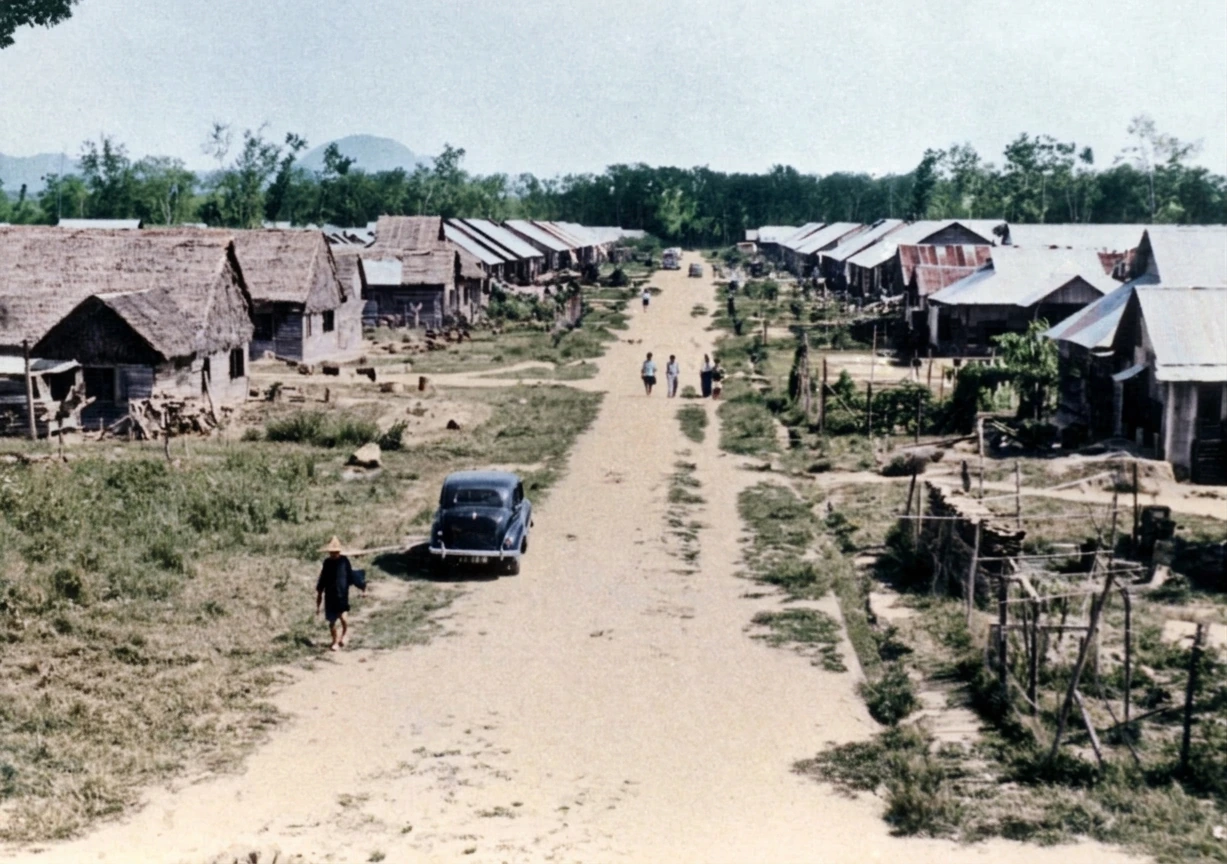
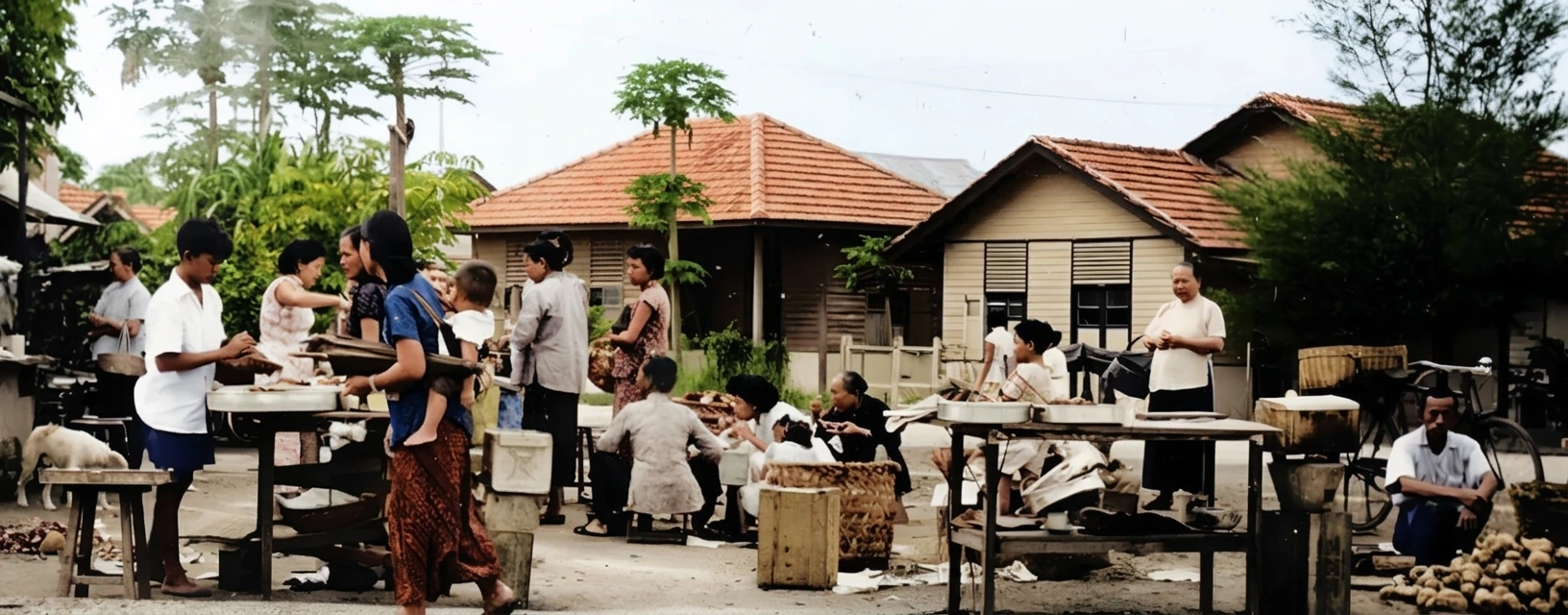
七十余载沧桑巨变,当年在枪口与铁丝网下建立的数百座集中营,历经岁月洗礼,最终演化为今天深植于马来半岛大地的‘华人新村’。近年来,关于将新村列为国家文化遗产与申请联合国世界文化遗产的呼声日益高涨,其独特的木板锌顶建筑、街巷肌理、方言民俗与社区互助精神,已成为马来西亚各民族多元历史画卷中不可分割的宝贵历史文化遗产。
然而,历史的本源绝不容被轻浮的浪漫化所遮蔽:今天新村的每一栋老木屋、每一条纵横交错的巷弄,其起点不是殖民者的仁慈恩赐,而是半个多世纪前五十余万工农大众在法西斯迁村令下被迫离乡背井、在饥饿断粮与连坐惩罚中守望相助的泣血长征。大英帝国以铁丝网与集中营扼杀民族解放的毒计早已彻底破产,殖民统治者也早已被扫进历史垃圾堆;而各民族劳苦大众在囚笼绝境中所展现的顽强生命力、民族文化血脉与反抗压迫的钢铁意志,却穿透殖民长夜,永恒铭刻在马来西亚的大地之上!Over seven decades since their coercive inception, the barbed-wire internment camps of the Briggs Plan have evolved into the distinctive Chinese New Villages (Kampung Baru) that dot the peninsula today. As initiatives champion their nomination for national and UNESCO World Heritage status, their unique timber-and-zinc architecture, communal layouts, dialect cultures, and mutual-aid networks stand recognized as an indelible part of Malaysia's living intangible cultural heritage.
Yet authentic historical memory rejects sentimental sanitization: every historic house and lane in these villages originated not from imperial benevolence, but from the traumatic forced relocation of over half a million laborers under military gunpoints, enduring collective starvation and draconian curfews. The British Empire's design to crush national liberation through barbed-wire concentration camps collapsed into ultimate defeat, and the colonizers have long been swept into the dustbin of history. In enduring contrast, the invincible resilience, cultural integrity, and anti-colonial solidarity forged by the laboring masses behind the wire have outlasted imperial darkness, eternally etched into the soil of Malaysia.
历史档案图证与文献影印(全卷图录)
Archival Photographic & Documentary Evidence Gallery