第6集:马共及抗日军的功勋、蒙巴顿授勋与全马劳工抗争(1945–1948)
Episode 6: The Merits of the CPM & MPAJA, Mountbatten Decoration, and Nationwide Labor Struggles (1945–1948)
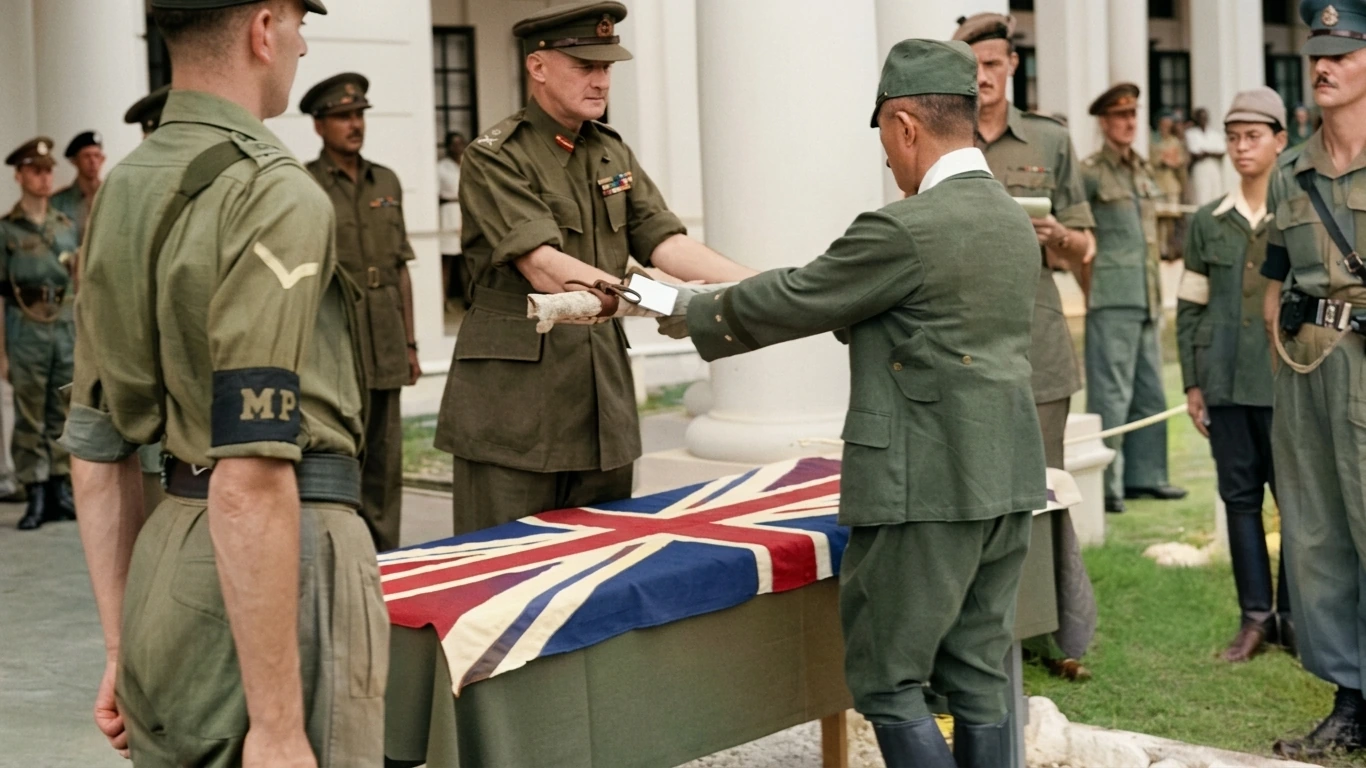
二战胜利后,东南亚盟军最高统帅蒙巴顿勋爵在新加坡举行盛大授勋典礼,向陈平、刘尧等八位抗日军代表颁授盟军战役勋章,抗日军代表团亦受邀远赴伦敦参加同盟国胜利大游行,彰显了马共为世界反法西斯战争建立的不朽功勋。然而和平极为短暂,随着战后泛马各业工人联合会(PMFTU)蓬勃兴起掀起全马罢工浪潮,英国殖民统治者撕下伪装,镇压工运并堵死合法民主斗争之路。
Following World War II, Supreme Allied Commander Lord Mountbatten decorated Chin Peng, Lau Yew, and six other MPAJA representatives with Allied campaign stars in Singapore, and an MPAJA delegation marched in the 1946 London Victory Parade, affirming their anti-fascist heroism. Yet peace was short-lived: as the Pan-Malayan Federation of Trade Unions (PMFTU) mobilized nationwide strikes, British colonial authorities resorted to armed repression and banishment.
第一章:铁血战绩与盟军授勋:抗日军功勋大决算与伦敦胜利大游行
Chapter 1: War Records and Allied Honors: The MPAJA Combat Summary and the London Victory Parade
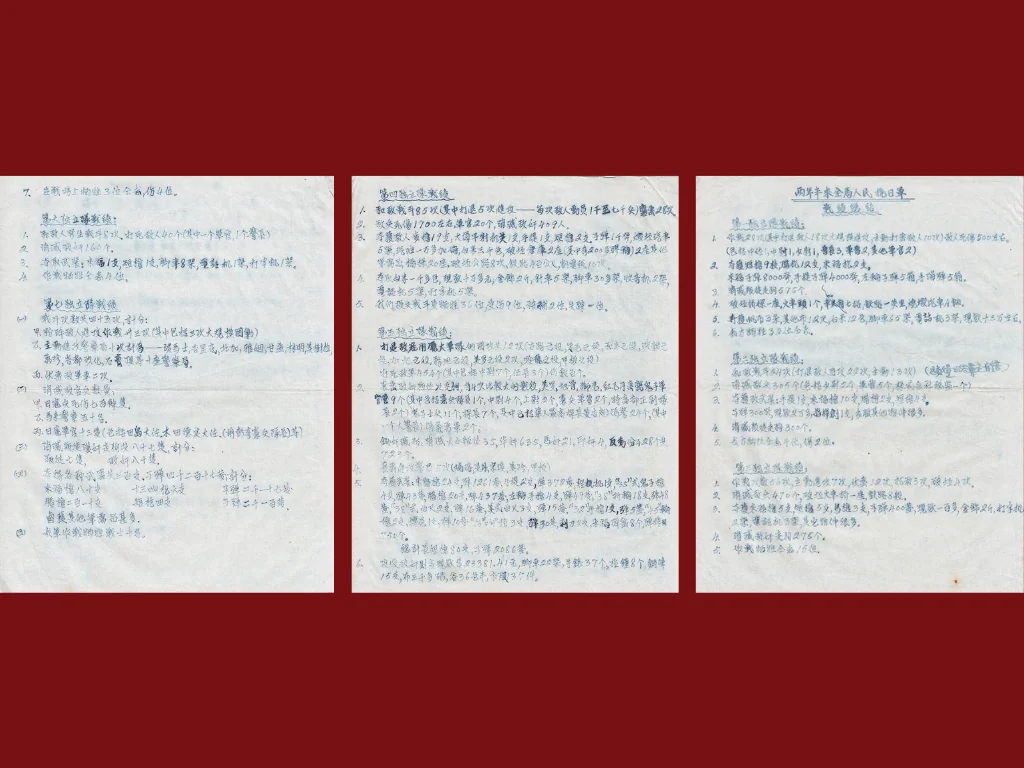
在整整三年零八个月的敌后丛林战中,马来亚人民抗日军(MPAJA)在马共坚强领导下,纵横驰骋于半岛千里崇山峻岭,浴血奋战,建立了不可磨灭的历史功勋。抗日军司令部于抗战胜利之际汇总全马游击区战报编辑的《两年半来全马人民抗日军战绩总结(1942–1945)》原始手稿,以冷峻确凿的数字记录了八支独立队的光辉战绩:全军累计与日伪军交战340余次,击毙击伤日军与伪军警5,500余人,处决罪大恶极的汉奸走狗数百人,缴获机枪、步枪数千支及弹药数十万发。这份沉甸甸的原始决算清单,不仅是全马各民族抗击法西斯武装力量作为唯一真正中流砥柱的历史铁证,更是战后迫使大英帝国与同盟国最高统帅部不得不承认抗日军为战胜国同盟军、向抗日军领袖授勋的根本事实基石。
凭藉着在热带雨林中建立的卓绝战功,1946年1月6日,东南亚盟军最高统帅蒙巴顿海军上将(Admiral Lord Louis Mountbatten)在新加坡市政局大厦前草场(Padang)举行隆重授勋典礼,亲自为抗日军中央军事委员会主席刘尧(Lau Yew)及陈平(Chin Peng)等八位人民抗日军代表颁授两枚盟军战役勋章:缅甸星章(Burma Star)与1939/45星章(1939/45 Star)。此外,鉴于陈平在抗日战争后期代表马共与英军136部队开展敌后军事合作、协同盟军反攻及营救盟军人员中的卓越贡献,英国政府还曾正式通知陈平将颁赠一枚大英帝国官佐勋章(OBE,Officer of the Most Excellent Order of the British Empire),但始终未说明具体颁赠日期;直至1948年马共被迫转入抗英民族解放战争后,英国政府才通过报章宣布收回这枚从未实际颁发的OBE勋章。
1946年6月8日,英国政府在伦敦威斯敏斯特林荫大道举行纪念第二次世界大战击败法西斯轴心国的同盟国胜利大游行(London Victory Celebrations of 1946)。来自全球数十个反法西斯同盟国及英联邦属地的数万名军人方阵,按序列正步通过皇家检阅台。
应英国政府正式邀请,马来亚人民抗日军派遣八名代表(代表抗日军八支独立队,以抗日军中央军事委员会成员兼雪兰莪州委刘尧为首,包括第一独立队指挥员周洋滨、森美兰州第二独立队指挥员邓福隆、柔北第三独立队指挥员林昌、柔南第四独立队指挥员陈田、霹雳州第五独立队指挥员廖伟中〔化名 Itu 上校〕、西彭亨第六独立队指挥员汪清、东彭亨/关丹区第七独立队指挥员孙文经、吉打第八独立队指挥员白丝木等)以及三名随员共十一人远赴伦敦,作为马来亚敌后反法西斯武装力量的官方代表参加胜利大游行。陈平本人则留驻马来亚主持战后繁重的党务与组织工作,并未前往伦敦参加胜利大游行。
在伦敦胜利大游行队列中,头戴三星军帽的马来亚人民抗日军代表团昂首行进在同盟国受阅方阵之中,向世界展示了马来亚各族人民浴血抗日的坚毅风貌。驻扎伦敦肯辛顿花园营地(Kensington Gardens Camp)期间,英国前首相温斯顿·丘吉尔(Winston Churchill)曾前往营地检阅受阅部队,并与抗日军代表陈田、白丝木握手交谈。
从1946年1月6日新加坡市政局大厦草场的盟军授勋典礼,到同年6月8日抗日军代表团受邀出席伦敦胜利大游行,这一系列国际军事礼遇构成了无可辩驳的历史定谳:马来亚共产党及其领导的人民抗日军是马来亚反法西斯卫国战争当之无愧的主力军,其流血牺牲与历史功勋即便连企图重返殖民地的英国当局也不得不在全世界面前予以公开承认。
Throughout three years and eight months of arduous jungle resistance, the Malayan People's Anti-Japanese Army (MPAJA), under the firm leadership of the CPM, waged unyielding guerrilla warfare across the peninsula, forging an indelible historical contribution. Compiled by the MPAJA General Headquarters at the war's conclusion, the primary operational manuscript 'Combat Record Summary of the MPAJA (1942–1945)' records the empirical achievements of the eight independent regiments: over 340 combat engagements against Japanese and puppet forces, more than 5,500 enemy casualties inflicted, hundreds of traitors executed, and thousands of firearms seized alongside vast quantities of ammunition. This balance sheet stands as indisputable proof that the MPAJA was Malaya's sole backbone of anti-fascist resistance, providing the concrete factual justification that compelled the British Empire and Allied Supreme Command to officially recognize the resistance army as Allied comrades and decorate its leaders.
Recognizing these extraordinary wartime achievements, Supreme Allied Commander Southeast Asia Admiral Lord Louis Mountbatten presided over a formal military investiture on the Padang in front of the Municipal Building in Singapore on January 6, 1946. Mountbatten personally decorated eight MPAJA representatives, including Central Military Committee Chairman Lau Yew and Chin Peng, with the Burma Star and the 1939/45 Star. In addition, recognizing Chin Peng's pivotal role in coordinating MPAJA operations with Force 136, the British government formally notified Chin Peng that he would be awarded the Order of the British Empire (OBE), without specifying a presentation date; the medal was never physically presented, and after the anti-British war broke out in 1948, the British government announced through the press that the OBE award was revoked.
On June 8, 1946, the British government staged the Allied London Victory Parade along The Mall in Westminster to commemorate the defeat of the Axis powers in World War II, with tens of thousands of Allied troops marching past the reviewing stand.
At the official invitation of the British government, the Malayan People's Anti-Japanese Army dispatched eight representatives (representing the eight Independent Regiments, led by Central Military Committee member and Selangor State Committee member Lau Yew, and including 1st Regiment Commander Zhou Yangbin, Negeri Sembilan 2nd Regiment Commander Deng Fulong, North Johor 3rd Regiment Commander Lin Chang, South Johor 4th Regiment Commander Chen Tian, Perak 5th Regiment Commander Liao Weizhong [alias Col. Itu], West Pahang 6th Regiment Commander Wang Qing, East Pahang / Kuantan 7th Regiment Commander Sun Wenjing, and Kedah 8th Regiment Commander Bai Simu) along with three accompanying staff members (eleven personnel in total) to London to march in the Victory Parade. Chin Peng remained in Malaya to oversee vital post-war Party organizational work and did not travel to London for the parade.
Marching in the Allied victory procession in their distinctive three-star caps, the MPAJA delegation represented the anti-fascist armed struggle of the Malayan people before the international public. At the Kensington Gardens encampment in London, former British Prime Minister Winston Churchill inspected the contingent and shook hands with MPAJA delegates Chen Tian and Bai Simu.
From the January 6, 1946 investiture on the Singapore Padang to the MPAJA delegation's participation in the June 8, 1946 London Victory Parade, these official Allied honors established an irrefutable historical verdict: the Communist Party of Malaya and the MPAJA were the indispensable main force of Malaya's anti-fascist war, whose sacrifices and historic merits even the returning British colonial power was compelled to formally acknowledge before the world.
在整整三年零八个月的敌后丛林战中,马来亚人民抗日军(MPAJA)在马共坚强领导下,纵横驰骋于半岛千里崇山峻岭,浴血奋战,建立了不可磨灭的历史功勋。抗日军司令部于抗战胜利之际汇总全马游击区战报编辑的《两年半来全马人民抗日军战绩总结(1942–1945)》原始手稿,以冷峻确凿的数字记录了八支独立队的光辉战绩:全军累计与日伪军交战340余次,击毙击伤日军与伪军警5,500余人,处决罪大恶极的汉奸走狗数百人,缴获机枪、步枪数千支及弹药数十万发。这份沉甸甸的原始决算清单,不仅是全马各民族抗击法西斯武装力量作为唯一真正中流砥柱的历史铁证,更是战后迫使大英帝国与同盟国最高统帅部不得不承认抗日军为战胜国同盟军、向抗日军领袖授勋的根本事实基石。
Throughout three years and eight months of arduous jungle resistance, the Malayan People's Anti-Japanese Army (MPAJA), under the firm leadership of the CPM, waged unyielding guerrilla warfare across the peninsula, forging an indelible historical contribution. Compiled by the MPAJA General Headquarters at the war's conclusion, the primary operational manuscript 'Combat Record Summary of the MPAJA (1942–1945)' records the empirical achievements of the eight independent regiments: over 340 combat engagements against Japanese and puppet forces, more than 5,500 enemy casualties inflicted, hundreds of traitors executed, and thousands of firearms seized alongside vast quantities of ammunition. This balance sheet stands as indisputable proof that the MPAJA was Malaya's sole backbone of anti-fascist resistance, providing the concrete factual justification that compelled the British Empire and Allied Supreme Command to officially recognize the resistance army as Allied comrades and decorate its leaders.
凭藉着在热带雨林中建立的卓绝战功,1946年1月6日,东南亚盟军最高统帅蒙巴顿海军上将(Admiral Lord Louis Mountbatten)在新加坡市政局大厦前草场(Padang)举行隆重授勋典礼,亲自为抗日军中央军事委员会主席刘尧(Lau Yew)及陈平(Chin Peng)等八位人民抗日军代表颁授两枚盟军战役勋章:缅甸星章(Burma Star)与1939/45星章(1939/45 Star)。此外,鉴于陈平在抗日战争后期代表马共与英军136部队开展敌后军事合作、协同盟军反攻及营救盟军人员中的卓越贡献,英国政府还曾正式通知陈平将颁赠一枚大英帝国官佐勋章(OBE,Officer of the Most Excellent Order of the British Empire),但始终未说明具体颁赠日期;直至1948年马共被迫转入抗英民族解放战争后,英国政府才通过报章宣布收回这枚从未实际颁发的OBE勋章。
Recognizing these extraordinary wartime achievements, Supreme Allied Commander Southeast Asia Admiral Lord Louis Mountbatten presided over a formal military investiture on the Padang in front of the Municipal Building in Singapore on January 6, 1946. Mountbatten personally decorated eight MPAJA representatives, including Central Military Committee Chairman Lau Yew and Chin Peng, with the Burma Star and the 1939/45 Star. In addition, recognizing Chin Peng's pivotal role in coordinating MPAJA operations with Force 136, the British government formally notified Chin Peng that he would be awarded the Order of the British Empire (OBE), without specifying a presentation date; the medal was never physically presented, and after the anti-British war broke out in 1948, the British government announced through the press that the OBE award was revoked.
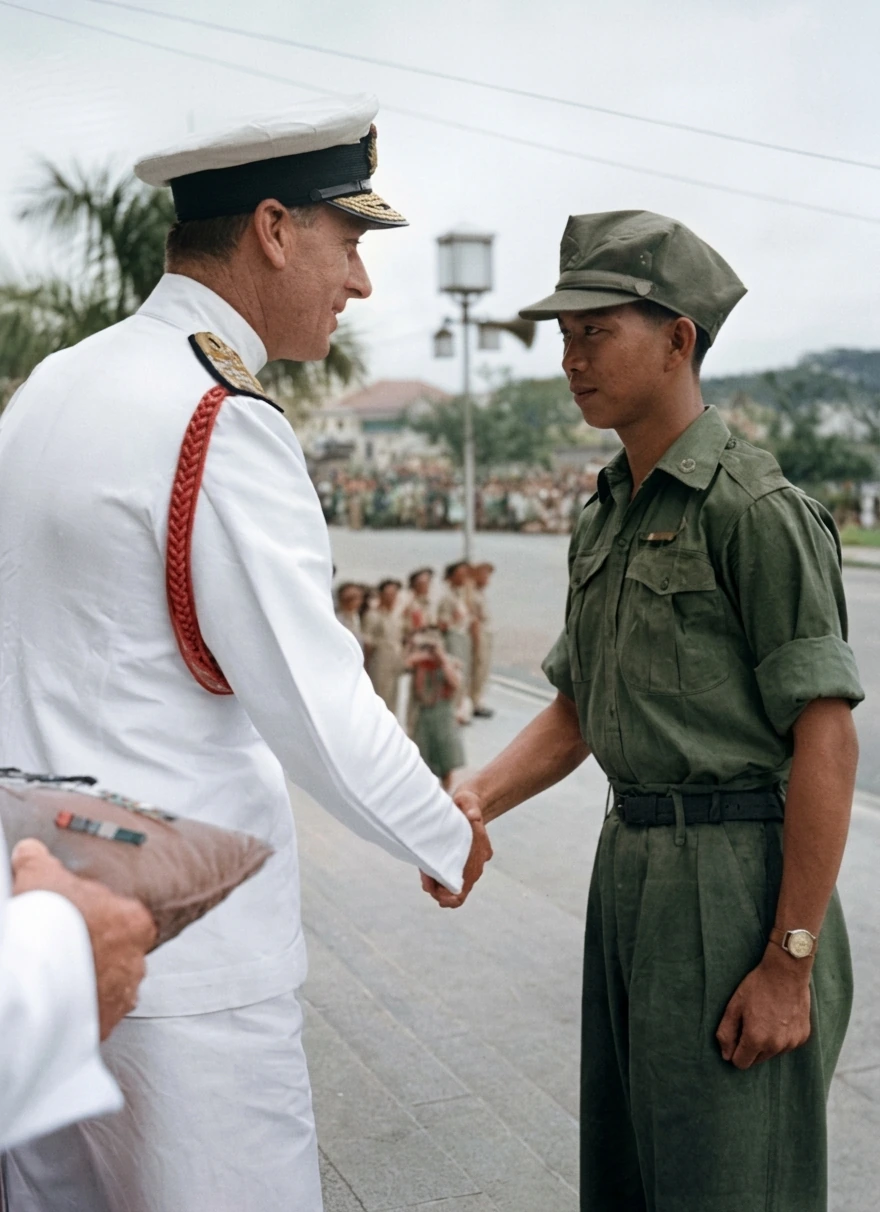
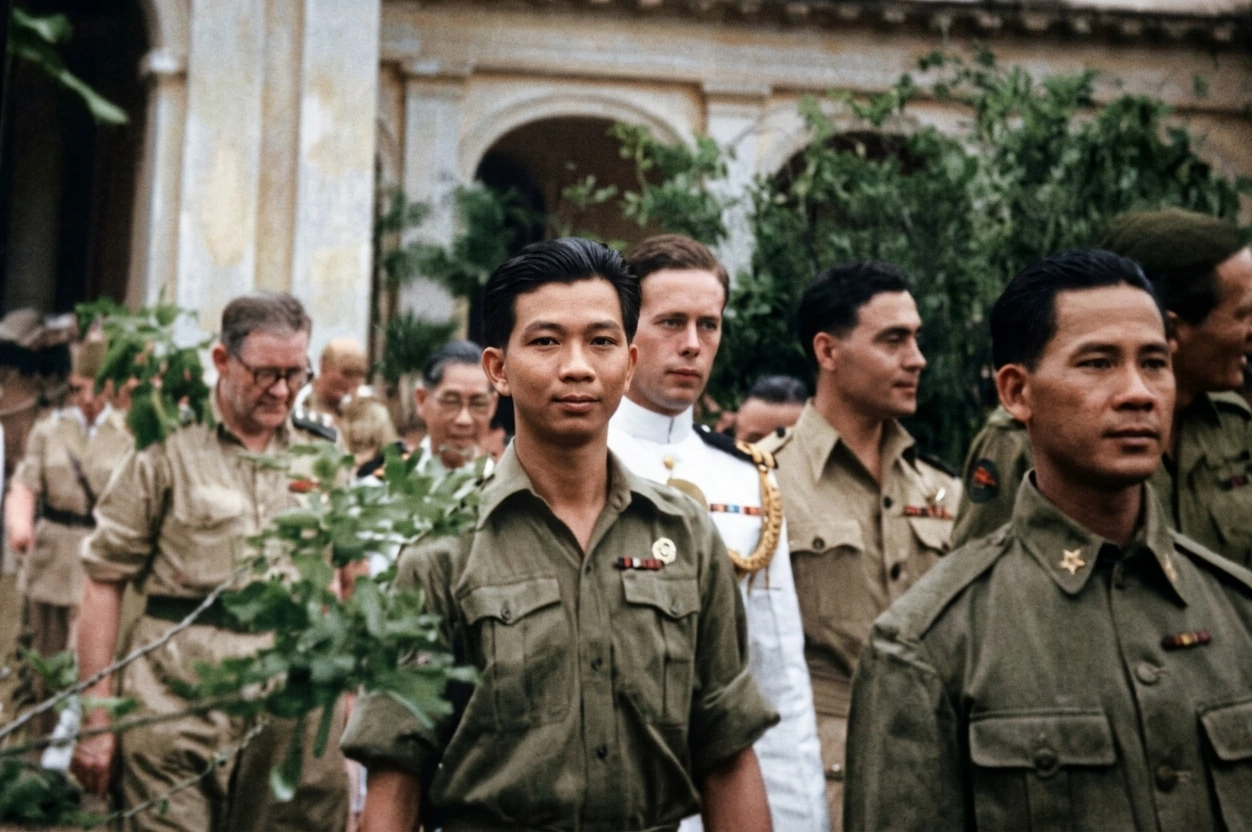
1946年1月6日,英军东南亚最高统帅蒙巴顿将军在新加坡市政局大厦前草场亲自颁赠两枚勋章(缅甸星章和1939/45星章)给人民抗日军八位代表(包括陈平与刘尧)。同年6月8日,抗日军派出八名代表和三名随员赴英参加伦敦二次大战胜利大游行。On January 6, 1946, Supreme Allied Commander Southeast Asia General Mountbatten personally presented two medals (the Burma Star and the 1939/45 Star) to eight representatives of the Malayan People's Anti-Japanese Army (including Chin Peng and Lau Yew) on the Padang in front of the Municipal Building in Singapore. On June 8 of the same year, the MPAJA dispatched eight representatives and three accompanying personnel to Britain to participate in the London World War II Victory Parade.— 《马来亚人民抗日军战绩与复员授勋历史档案纪要》(1946年原始文献记录) | Archival Record of MPAJA Combat Achievements and Post-War Investiture (1946 Primary Document)
1946年6月8日,英国政府在伦敦威斯敏斯特林荫大道举行纪念第二次世界大战击败法西斯轴心国的同盟国胜利大游行(London Victory Celebrations of 1946)。来自全球数十个反法西斯同盟国及英联邦属地的数万名军人方阵,按序列正步通过皇家检阅台。
应英国政府正式邀请,马来亚人民抗日军派遣八名代表(代表抗日军八支独立队,以抗日军中央军事委员会成员兼雪兰莪州委刘尧为首,包括第一独立队指挥员周洋滨、森美兰州第二独立队指挥员邓福隆、柔北第三独立队指挥员林昌、柔南第四独立队指挥员陈田、霹雳州第五独立队指挥员廖伟中〔化名 Itu 上校〕、西彭亨第六独立队指挥员汪清、东彭亨/关丹区第七独立队指挥员孙文经、吉打第八独立队指挥员白丝木等)以及三名随员共十一人远赴伦敦,作为马来亚敌后反法西斯武装力量的官方代表参加胜利大游行。陈平本人则留驻马来亚主持战后繁重的党务与组织工作,并未前往伦敦参加胜利大游行。
On June 8, 1946, the British government staged the Allied London Victory Parade along The Mall in Westminster to commemorate the defeat of the Axis powers in World War II, with tens of thousands of Allied troops marching past the reviewing stand.
At the official invitation of the British government, the Malayan People's Anti-Japanese Army dispatched eight representatives (representing the eight Independent Regiments, led by Central Military Committee member and Selangor State Committee member Lau Yew, and including 1st Regiment Commander Zhou Yangbin, Negeri Sembilan 2nd Regiment Commander Deng Fulong, North Johor 3rd Regiment Commander Lin Chang, South Johor 4th Regiment Commander Chen Tian, Perak 5th Regiment Commander Liao Weizhong [alias Col. Itu], West Pahang 6th Regiment Commander Wang Qing, East Pahang / Kuantan 7th Regiment Commander Sun Wenjing, and Kedah 8th Regiment Commander Bai Simu) along with three accompanying staff members (eleven personnel in total) to London to march in the Victory Parade. Chin Peng remained in Malaya to oversee vital post-war Party organizational work and did not travel to London for the parade.
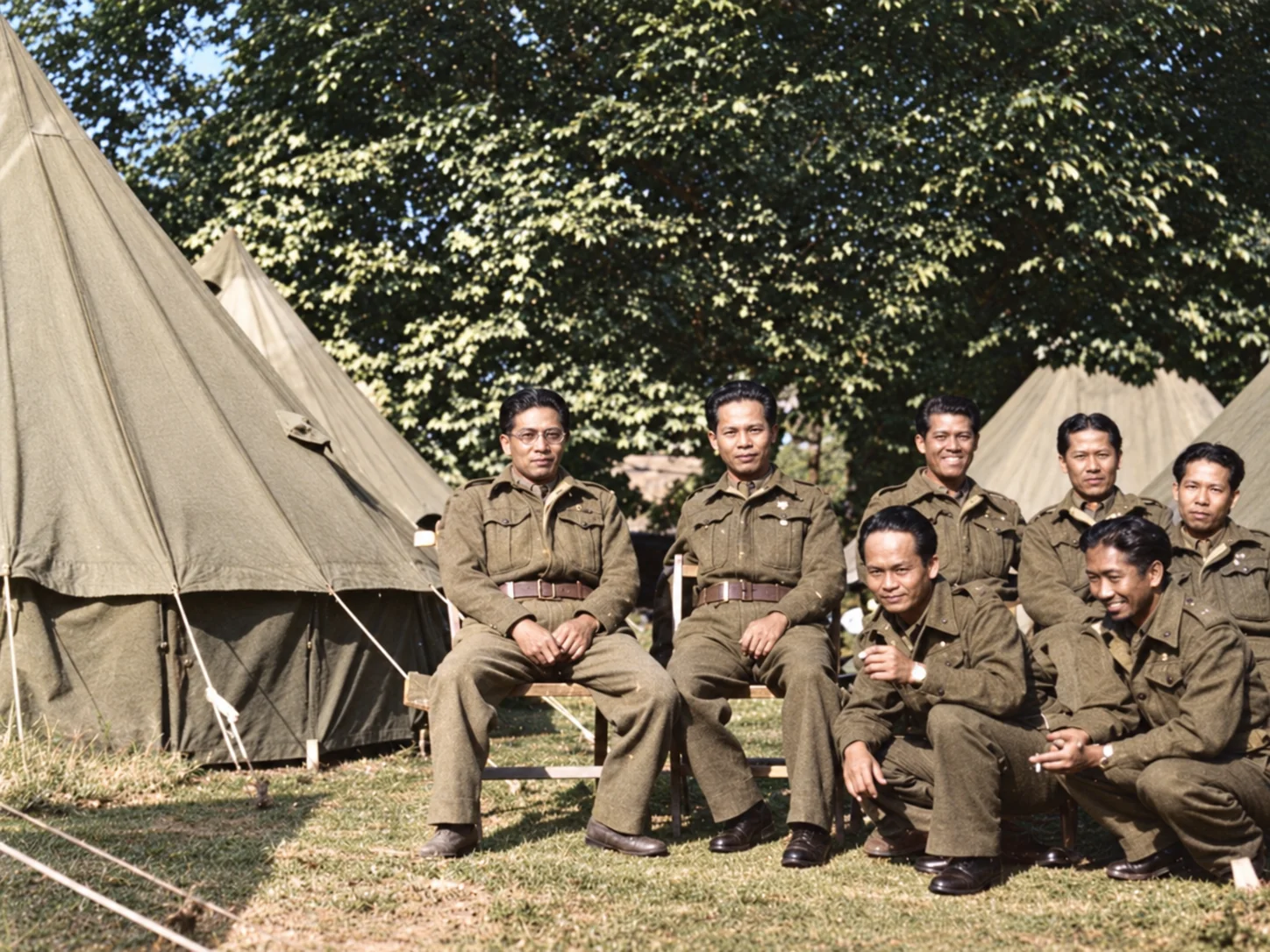
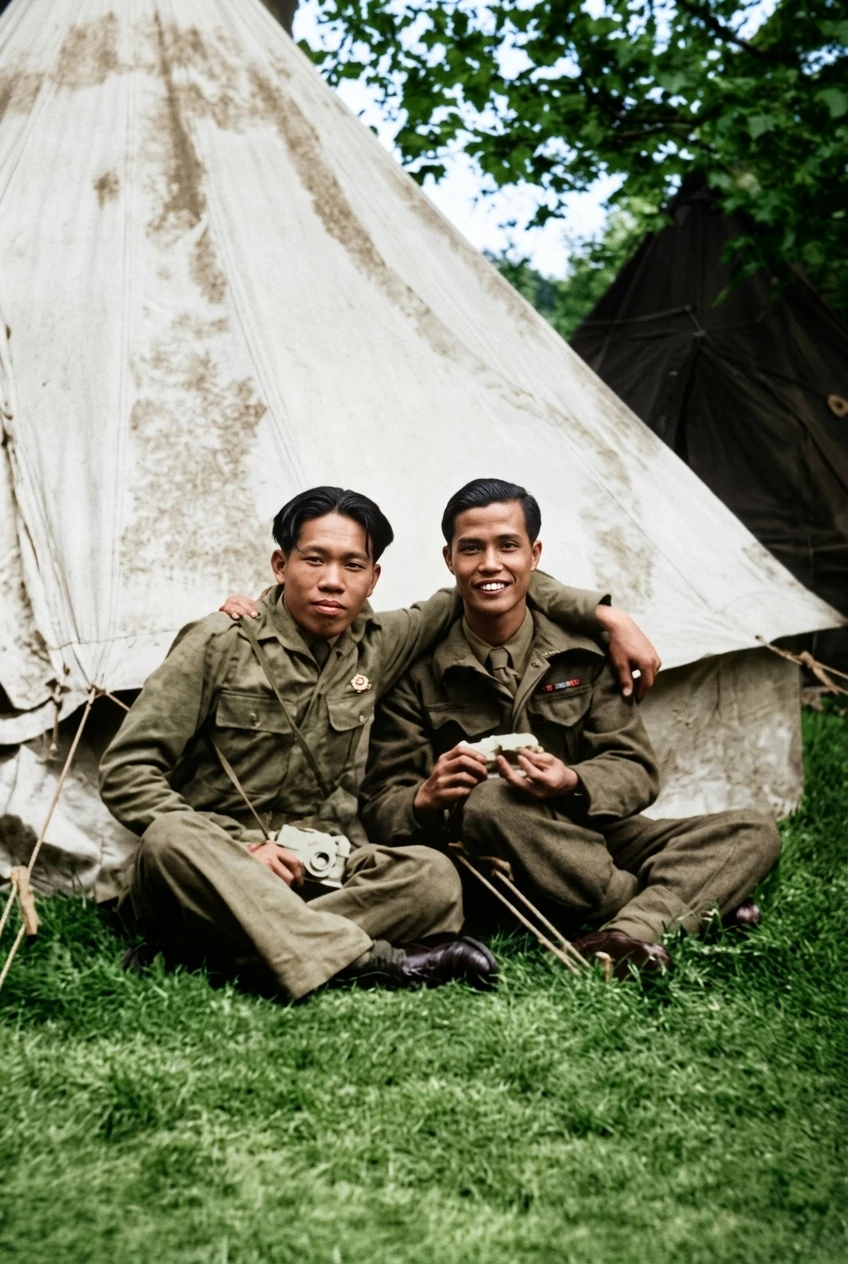
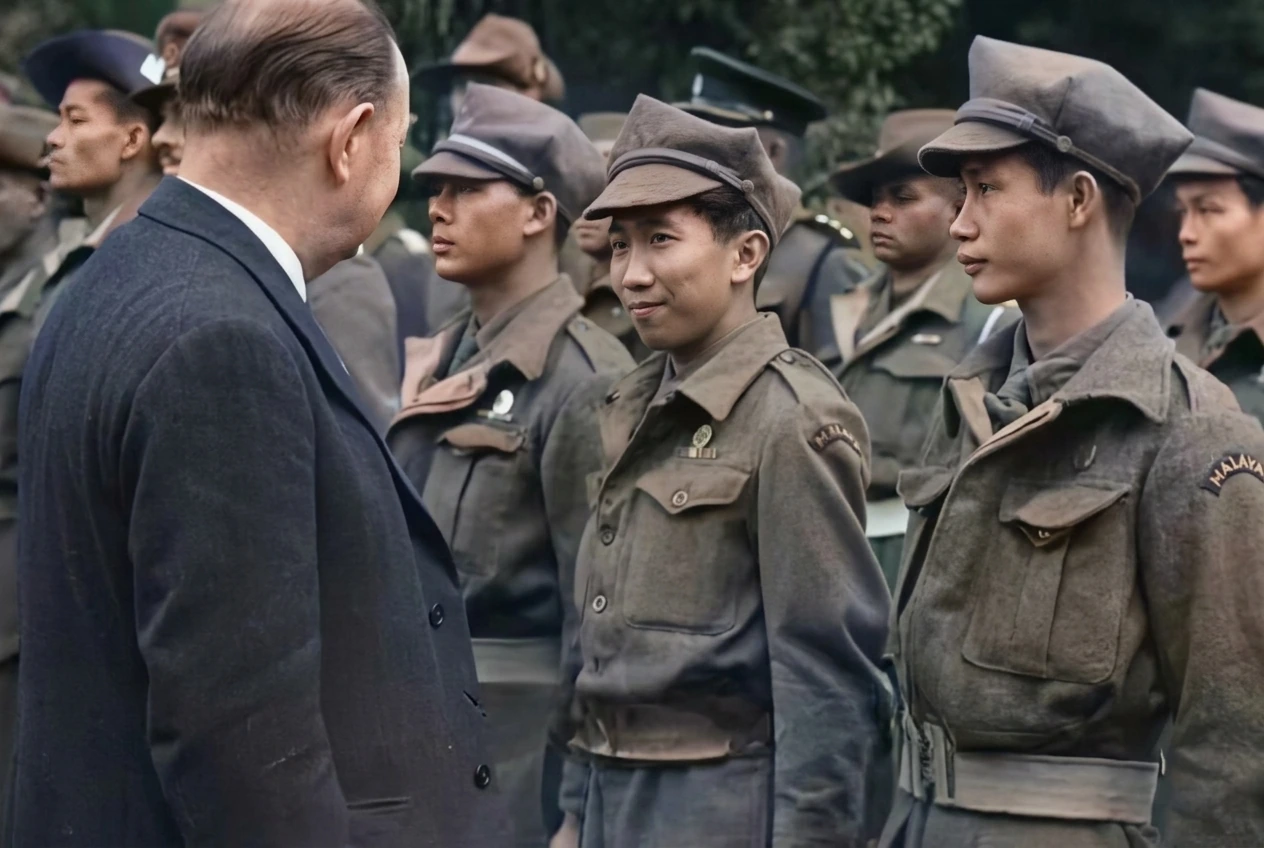
在伦敦胜利大游行队列中,头戴三星军帽的马来亚人民抗日军代表团昂首行进在同盟国受阅方阵之中,向世界展示了马来亚各族人民浴血抗日的坚毅风貌。驻扎伦敦肯辛顿花园营地(Kensington Gardens Camp)期间,英国前首相温斯顿·丘吉尔(Winston Churchill)曾前往营地检阅受阅部队,并与抗日军代表陈田、白丝木握手交谈。
从1946年1月6日新加坡市政局大厦草场的盟军授勋典礼,到同年6月8日抗日军代表团受邀出席伦敦胜利大游行,这一系列国际军事礼遇构成了无可辩驳的历史定谳:马来亚共产党及其领导的人民抗日军是马来亚反法西斯卫国战争当之无愧的主力军,其流血牺牲与历史功勋即便连企图重返殖民地的英国当局也不得不在全世界面前予以公开承认。
Marching in the Allied victory procession in their distinctive three-star caps, the MPAJA delegation represented the anti-fascist armed struggle of the Malayan people before the international public. At the Kensington Gardens encampment in London, former British Prime Minister Winston Churchill inspected the contingent and shook hands with MPAJA delegates Chen Tian and Bai Simu.
From the January 6, 1946 investiture on the Singapore Padang to the MPAJA delegation's participation in the June 8, 1946 London Victory Parade, these official Allied honors established an irrefutable historical verdict: the Communist Party of Malaya and the MPAJA were the indispensable main force of Malaya's anti-fascist war, whose sacrifices and historic merits even the returning British colonial power was compelled to formally acknowledge before the world.
第二章:白天握手晚上磨刀:英国殖民当局对战后英雄的冷血算计
Chapter 2: Shaking Hands by Day, Sharpening Knives by Night: Imperial Duplicity
然而,授勋仪式与阅兵场上的政治礼遇,丝毫掩盖不了英国殖民主义者重建殖民专制统治的冷酷算计。就在蒙巴顿于新加坡草场为陈平、刘尧等代表佩戴战役勋章,以及英国政府邀请刘尧、陈田等抗日军代表团赴伦敦参加胜利大游行的同时,英国军管会(BMA)与伦敦殖民地部(Colonial Office)早已在幕后调转枪口,将这支在抗日烽火中成长起来的人民革命力量列为必须极力遏制与铲除的头号目标。
这种“白天握手、晚上磨刀”的两面手法,深刻暴露了英帝国主义战后远东战略的阶级本质。在日军刚刚投降、英军尚未全面控制马来亚城乡的权力真空期,高调承认抗日军战功并颁授盟军勋章,不过是英国当局稳定局势、安抚南洋民意的权宜之计。一旦大批英军舰队重返新加坡与槟城海港、殖民行政机器完成接收,在各族工农群众中享有崇高威望的马来亚共产党,便立即被英国垄断资本集团视为恢复橡胶园与锡矿超额剥削的最大障碍。
殖民当局态度的急转直下在1946年初的一系列高压事件中暴露无遗。就在新加坡草场授勋典礼前夕,英军管当局无理逮捕并重判雪兰莪人民抗日同盟会负责人孙光四年苦役,陈平、刘尧等赴新受勋代表遂于1月7日集体抵制原定拜会英军海陆空三军司令的官方行程以示抗议。授勋典礼结束仅九天后的1946年1月15日,原英军136部队驻马首席联络官、时任英军管署高级民政事务官的约翰·戴维斯上校(Col. John Davis)便赶赴吉隆坡,取出预先拟好的致盟军最高统帅蒙巴顿勋爵《道歉信》,盛气凌人地逼迫抗日军代表团集体签字谢罪。陈平与刘尧对此怒不可遏并坚决抵制,但急于向英方妥协讨好的内奸莱特竟强令众人违心签字,酿成陈平在回忆录中痛心疾首的“屈辱的道歉信”事件。同年2月15日,新加坡与柔佛各地群众集会纪念新加坡沦陷四周年并抗议殖民暴政,英国殖民军警悍然向手无寸铁的游行群众开枪扫射,在新加坡与柔佛丰盛港制造流血惨案,并于3月31日未经审讯强行将十名青年与工运领袖驱逐出境。与此同时,殖民地政治部特务对陈平等马共领导人实施全天候秘密监控,甚至在1947年将马共驻新加坡办事处公开代表林亚亮同志无理逮捕并残酷迫害致死于狱中。
英国殖民者精心营造的所谓“盟友礼遇”,最终在围绕陈平那枚大英帝国官佐勋章(OBE)的戏剧性结局中彻底破产:英国政府虽曾通知向陈平颁赠OBE勋章,却迟迟不予兑现;及至1948年6月殖民当局全面发动武装镇压、马共被迫奋起领导抗英民族解放战争,白厅便公然通过报章宣布收回这枚从未颁发的勋章。铁的事实证明,殖民宗主国的勋章从来不是和平与民主的契约,马来亚各族人民的真正解放唯有依靠不屈不挠的自主抗争方能赢得。
Yet the pageantry of military investitures and victory parades could not conceal the calculated duplicity of British colonial policy. Even as Admiral Mountbatten pinned campaign medals onto Chin Peng and Lau Yew on the Singapore Padang, and even as Whitehall invited Lau Yew, Chen Tian, and the MPAJA delegation to march in the London Victory Parade, the British Military Administration (BMA) and the Colonial Office were already preparing systematic repression against the very anti-fascist forces they had publicly honored.
This two-faced strategy reflected the cold class logic of British imperial governance in post-war Southeast Asia. During the immediate post-surrender power vacuum before British garrisons had fully reoccupied the interior, recognizing the MPAJA's wartime record and conferring Allied decorations served as a tactical expedient to stabilize order and pacify popular sentiment. Once British naval squadrons re-established control over Malayan ports and administrative centers, the Communist Party of Malaya—commanding deep prestige among multiethnic workers and peasants—was immediately targeted as the primary obstacle to the restoration of British monopoly exploitation over rubber and tin.
The abrupt turn toward colonial coercion surfaced unmistakably in early 1946. Just before the Singapore Padang investiture, the BMA arbitrarily arrested Selangor Anti-Japanese Union leader Soon Kwong and sentenced him to four years' hard labor, prompting Chin Peng, Lau Yew, and the MPAJA delegation to boycott scheduled courtesy calls on the British Service Commanders on January 7 in protest. Barely nine days after the medal ceremony, on January 15, 1946, former Force 136 Chief Malaya Liaison Officer Colonel John Davis—then serving as a senior BMA civil affairs officer—hurried to Kuala Lumpur with a pre-drafted 'Letter of Apology' addressed to Supreme Allied Commander Lord Mountbatten, peremptorily demanding that the MPAJA delegation sign it collectively. Although Chin Peng and Lau Yew were outraged and strongly resisted, traitor Lai Teck, eager to appease the British authorities, forced the delegation to sign under duress—an episode Chin Peng later condemned in his memoirs as the 'humiliating letter of apology' incident. On February 15, 1946, British colonial police opened fire on peaceful demonstrators in Singapore and Mersing, Johor, causing bloodshed and mass arrests, followed on March 31 by the summary banishment without trial of ten youth and labor leaders. Meanwhile, Special Branch operatives subjected Chin Peng and other Party leaders to constant surveillance, and in 1947 colonial authorities arrested and tortured to death in prison Comrade Lin Yaliang, the CPM's representative at the Singapore Office.
The hollowness of imperial honors was ultimately epitomized by the fate of the Order of the British Empire (OBE) promised to Chin Peng: having formally notified him of the award without ever fixing a presentation date, the British government publicly announced through the newspapers after the outbreak of the anti-British war in 1948 that the unissued OBE medal was revoked. Historical reality demonstrated beyond doubt that colonial decorations were never a guarantee of democratic rights; true national independence could only be achieved through the unyielding struggle of the Malayan people.
然而,授勋仪式与阅兵场上的政治礼遇,丝毫掩盖不了英国殖民主义者重建殖民专制统治的冷酷算计。就在蒙巴顿于新加坡草场为陈平、刘尧等代表佩戴战役勋章,以及英国政府邀请刘尧、陈田等抗日军代表团赴伦敦参加胜利大游行的同时,英国军管会(BMA)与伦敦殖民地部(Colonial Office)早已在幕后调转枪口,将这支在抗日烽火中成长起来的人民革命力量列为必须极力遏制与铲除的头号目标。
这种“白天握手、晚上磨刀”的两面手法,深刻暴露了英帝国主义战后远东战略的阶级本质。在日军刚刚投降、英军尚未全面控制马来亚城乡的权力真空期,高调承认抗日军战功并颁授盟军勋章,不过是英国当局稳定局势、安抚南洋民意的权宜之计。一旦大批英军舰队重返新加坡与槟城海港、殖民行政机器完成接收,在各族工农群众中享有崇高威望的马来亚共产党,便立即被英国垄断资本集团视为恢复橡胶园与锡矿超额剥削的最大障碍。
Yet the pageantry of military investitures and victory parades could not conceal the calculated duplicity of British colonial policy. Even as Admiral Mountbatten pinned campaign medals onto Chin Peng and Lau Yew on the Singapore Padang, and even as Whitehall invited Lau Yew, Chen Tian, and the MPAJA delegation to march in the London Victory Parade, the British Military Administration (BMA) and the Colonial Office were already preparing systematic repression against the very anti-fascist forces they had publicly honored.
This two-faced strategy reflected the cold class logic of British imperial governance in post-war Southeast Asia. During the immediate post-surrender power vacuum before British garrisons had fully reoccupied the interior, recognizing the MPAJA's wartime record and conferring Allied decorations served as a tactical expedient to stabilize order and pacify popular sentiment. Once British naval squadrons re-established control over Malayan ports and administrative centers, the Communist Party of Malaya—commanding deep prestige among multiethnic workers and peasants—was immediately targeted as the primary obstacle to the restoration of British monopoly exploitation over rubber and tin.
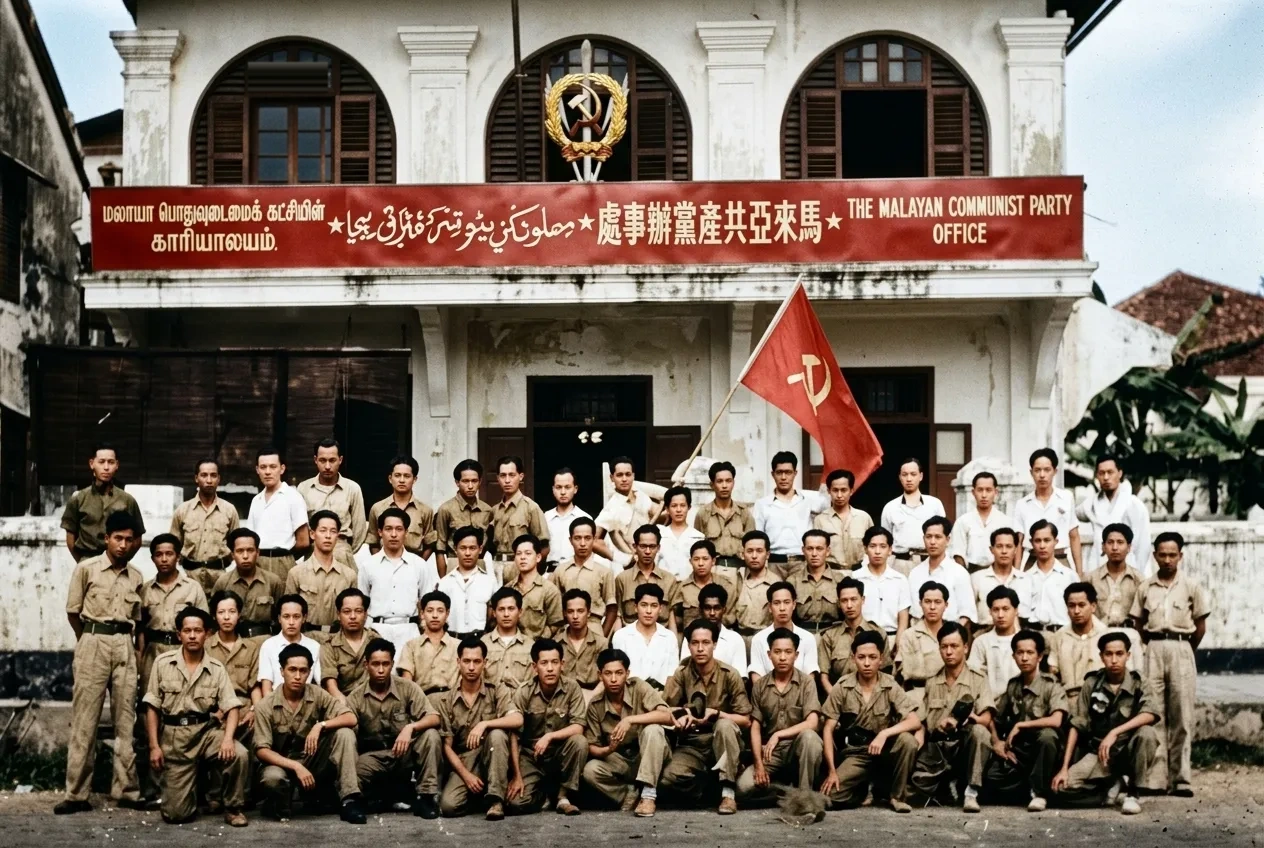
殖民当局态度的急转直下在1946年初的一系列高压事件中暴露无遗。就在新加坡草场授勋典礼前夕,英军管当局无理逮捕并重判雪兰莪人民抗日同盟会负责人孙光四年苦役,陈平、刘尧等赴新受勋代表遂于1月7日集体抵制原定拜会英军海陆空三军司令的官方行程以示抗议。授勋典礼结束仅九天后的1946年1月15日,原英军136部队驻马首席联络官、时任英军管署高级民政事务官的约翰·戴维斯上校(Col. John Davis)便赶赴吉隆坡,取出预先拟好的致盟军最高统帅蒙巴顿勋爵《道歉信》,盛气凌人地逼迫抗日军代表团集体签字谢罪。陈平与刘尧对此怒不可遏并坚决抵制,但急于向英方妥协讨好的内奸莱特竟强令众人违心签字,酿成陈平在回忆录中痛心疾首的“屈辱的道歉信”事件。同年2月15日,新加坡与柔佛各地群众集会纪念新加坡沦陷四周年并抗议殖民暴政,英国殖民军警悍然向手无寸铁的游行群众开枪扫射,在新加坡与柔佛丰盛港制造流血惨案,并于3月31日未经审讯强行将十名青年与工运领袖驱逐出境。与此同时,殖民地政治部特务对陈平等马共领导人实施全天候秘密监控,甚至在1947年将马共驻新加坡办事处公开代表林亚亮同志无理逮捕并残酷迫害致死于狱中。
英国殖民者精心营造的所谓“盟友礼遇”,最终在围绕陈平那枚大英帝国官佐勋章(OBE)的戏剧性结局中彻底破产:英国政府虽曾通知向陈平颁赠OBE勋章,却迟迟不予兑现;及至1948年6月殖民当局全面发动武装镇压、马共被迫奋起领导抗英民族解放战争,白厅便公然通过报章宣布收回这枚从未颁发的勋章。铁的事实证明,殖民宗主国的勋章从来不是和平与民主的契约,马来亚各族人民的真正解放唯有依靠不屈不挠的自主抗争方能赢得。
The abrupt turn toward colonial coercion surfaced unmistakably in early 1946. Just before the Singapore Padang investiture, the BMA arbitrarily arrested Selangor Anti-Japanese Union leader Soon Kwong and sentenced him to four years' hard labor, prompting Chin Peng, Lau Yew, and the MPAJA delegation to boycott scheduled courtesy calls on the British Service Commanders on January 7 in protest. Barely nine days after the medal ceremony, on January 15, 1946, former Force 136 Chief Malaya Liaison Officer Colonel John Davis—then serving as a senior BMA civil affairs officer—hurried to Kuala Lumpur with a pre-drafted 'Letter of Apology' addressed to Supreme Allied Commander Lord Mountbatten, peremptorily demanding that the MPAJA delegation sign it collectively. Although Chin Peng and Lau Yew were outraged and strongly resisted, traitor Lai Teck, eager to appease the British authorities, forced the delegation to sign under duress—an episode Chin Peng later condemned in his memoirs as the 'humiliating letter of apology' incident. On February 15, 1946, British colonial police opened fire on peaceful demonstrators in Singapore and Mersing, Johor, causing bloodshed and mass arrests, followed on March 31 by the summary banishment without trial of ten youth and labor leaders. Meanwhile, Special Branch operatives subjected Chin Peng and other Party leaders to constant surveillance, and in 1947 colonial authorities arrested and tortured to death in prison Comrade Lin Yaliang, the CPM's representative at the Singapore Office.
The hollowness of imperial honors was ultimately epitomized by the fate of the Order of the British Empire (OBE) promised to Chin Peng: having formally notified him of the award without ever fixing a presentation date, the British government publicly announced through the newspapers after the outbreak of the anti-British war in 1948 that the unissued OBE medal was revoked. Historical reality demonstrated beyond doubt that colonial decorations were never a guarantee of democratic rights; true national independence could only be achieved through the unyielding struggle of the Malayan people.
第三章:合法斗争的激荡风雷:从为温饱与权利而战到《人民宪法草案》与全国总罢市
Chapter 3: The Tempest of Constitutional Struggle — From the Fight for Rice & Rights to the People's Constitution & The Great Hartal
从1946年初至1948年上半年,面对英国殖民政府战后企图重新套上殖民枷锁的严峻挑战,马来亚共产党将全党的工作重心转向了战后公开合法的群众运动。党紧紧依靠全马各民族劳苦大众,在工矿、种植园与城市码头掀起了一场近代东南亚历史上规模最为浩大、组织最为严密的无产阶级阶级斗争风暴!
战后初期,英国军管会(BMA)的极度冷漠、专制与贪腐,让历经三年八个月日据浩劫的百姓雪上加霜。英军政府单方面作废日本香蕉票,使人民微薄积蓄瞬间化为乌有;粮食供应极度匮乏,官僚中饱私囊,黑市猖獗。在这样的生死绝境下,泛马各业工人联合会(Pan-Malayan Federation of Trade Unions, PMFTU)与新加坡总工会(SFTU)相继诞生。这一工运庞然大物在极短的时间内团结吸纳了超过40万名各民族工人,涵盖了当时全马60%以上的产业工人!从新加坡的码头搬运工、吉隆坡的中央铁路局技工,到雪兰莪煤矿工人与霹雳、柔佛数十万华印割胶工人,千百万人挽起手臂,在红旗指引下发出了“为温饱与权利而战”的阶级怒吼!
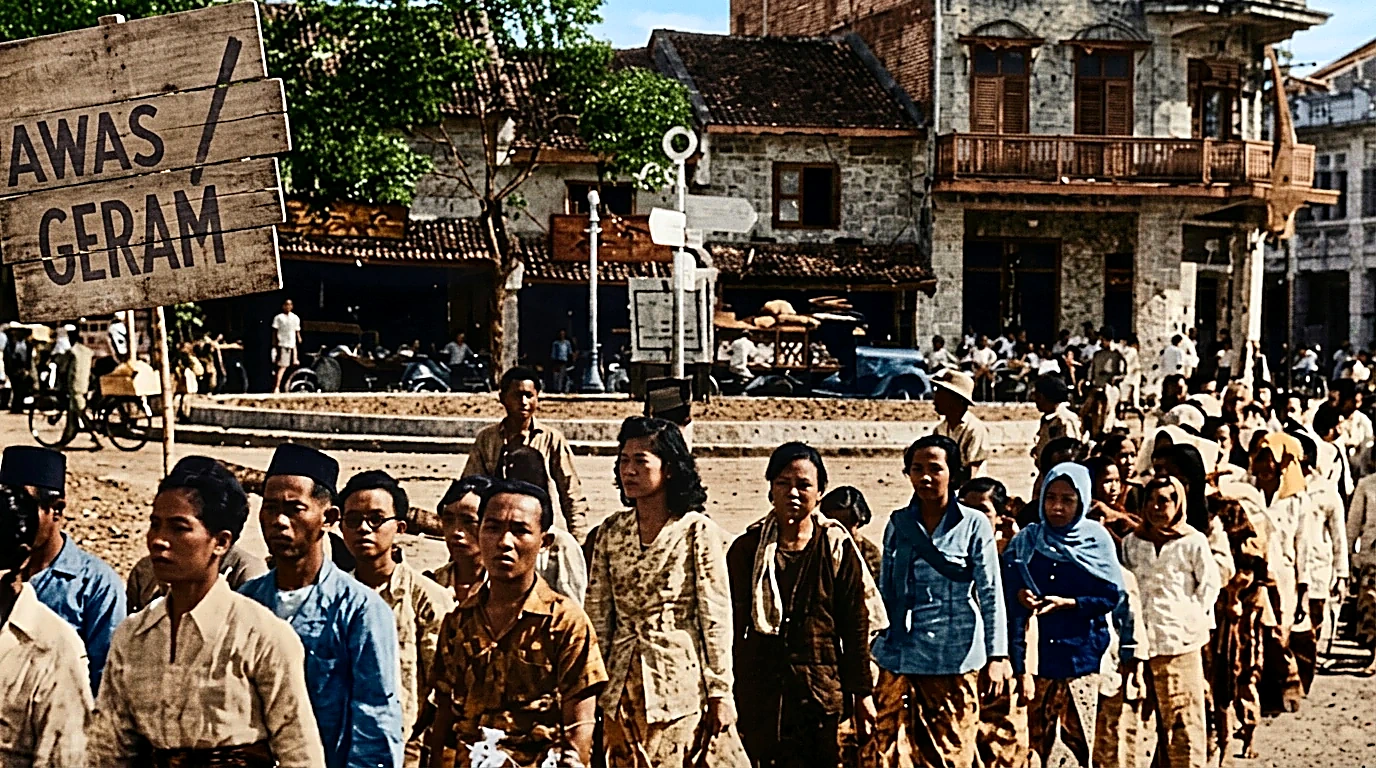
1946年至1947年,震撼全国的罢工浪潮席卷马来半岛与新加坡,造成殖民经济损失逾30万工日,成为对英国军管当局严重失职与垄断掠夺的猛烈反击。工人们的诉求朴素而坚定:体面的生存工资、安全的劳动环境、实行八小时工作制与做人的尊严!然而,贪婪的外国庄园主与矿场主为了榨取超额暴利,不仅悍然拒绝工人的正当要求,更勾结殖民警察甚至雇佣黑帮流氓(gangsters)武装冲击工会纠察线,恐吓甚至殴打工会骨干。面对黑白两道的暴力威胁,英雄的各族劳工无所畏惧,高举写有“AWAS GERAM”(警惕怒火)的标语牌走上街头,掀起了前赴后继的抗暴浪潮!
随着劳工阶级力量的蓬勃兴起,这一阶级伟力与全马各民族争取独立自主的政治愿景发生了历史性的伟大聚变。面对英国殖民当局企图重新固化专制统治、秘密与封建旧精英勾结炮制排他性《马来亚联合邦宪制提案》的阴谋,马共全力推动并支持了最广泛的爱国统一战线。由进步马来政党组成的“人民力量中心”(PUTERA,涵盖马来国民党PKMM、青年觉醒团API、农民阵线BATAS等)与“全马联合行动委员会”(AMCJA,涵盖工运力量、新民主青年团及陈祯禄为代表的爱国人士)正式结盟。AMCJA由著名华人爱国领袖陈祯禄(Tan Cheng Lock)出任主席。
1947年8月10日,PUTERA-AMCJA联席会议正式通过并于同年9月郑重颁布了马来亚历史上首部体现主权在民精神的立国宏纲:《人民宪法草案》(The People's Constitutional Proposals for Malaya)。该草案富有远见地设想了一个包括新加坡在内的统一马来亚;给予全马所有在此定居者平等的完全公民权;建立全民普选的中央立法议会;确立马来语为国语,以“Melayu”作为全体公民之共同民族国籍身份。这不仅是对英帝国殖民分裂统治的直接挑战,更是各民族人民携手掌握自身命运的伟大构想!
新旧宪制的历史大对决:两种截然不同的建国道路在1947年发生了正面撞击!PUTERA-AMCJA的《人民宪法草案》代表了人民的方向:包容新加坡、全民享有平等公民权、全民普选代议民主、各民族荣辱与共;而英国殖民当局炮制的《马来亚联合邦协定》则代表了专制独裁的历史倒退:强行割裂新加坡、剥夺占人口半数的华印劳工公民权、维护总督独裁专制、蓄意挑拨种族分化。正因如此,当殖民总督悍然宣布撕毁人民宪法、强推专制协定时,全马各阶层群众的怒火如火山般喷薄而出!
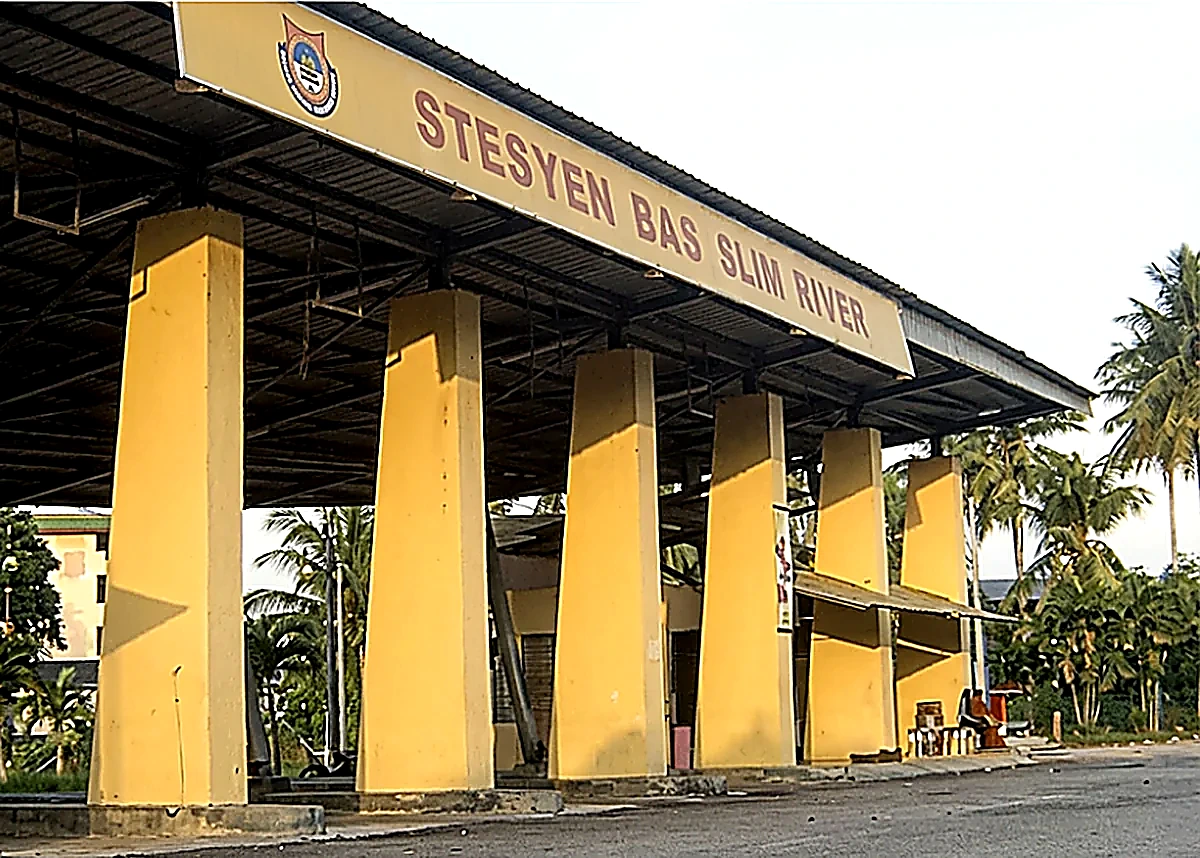
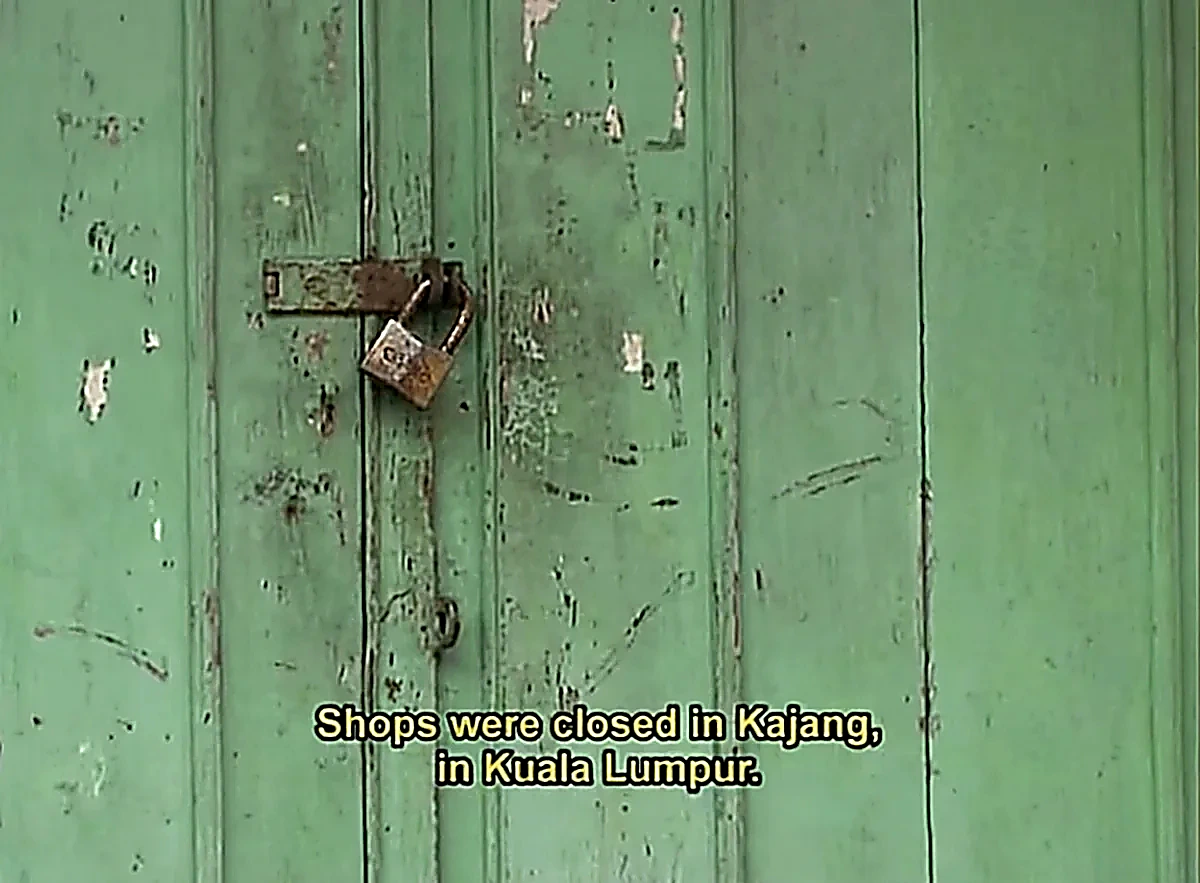
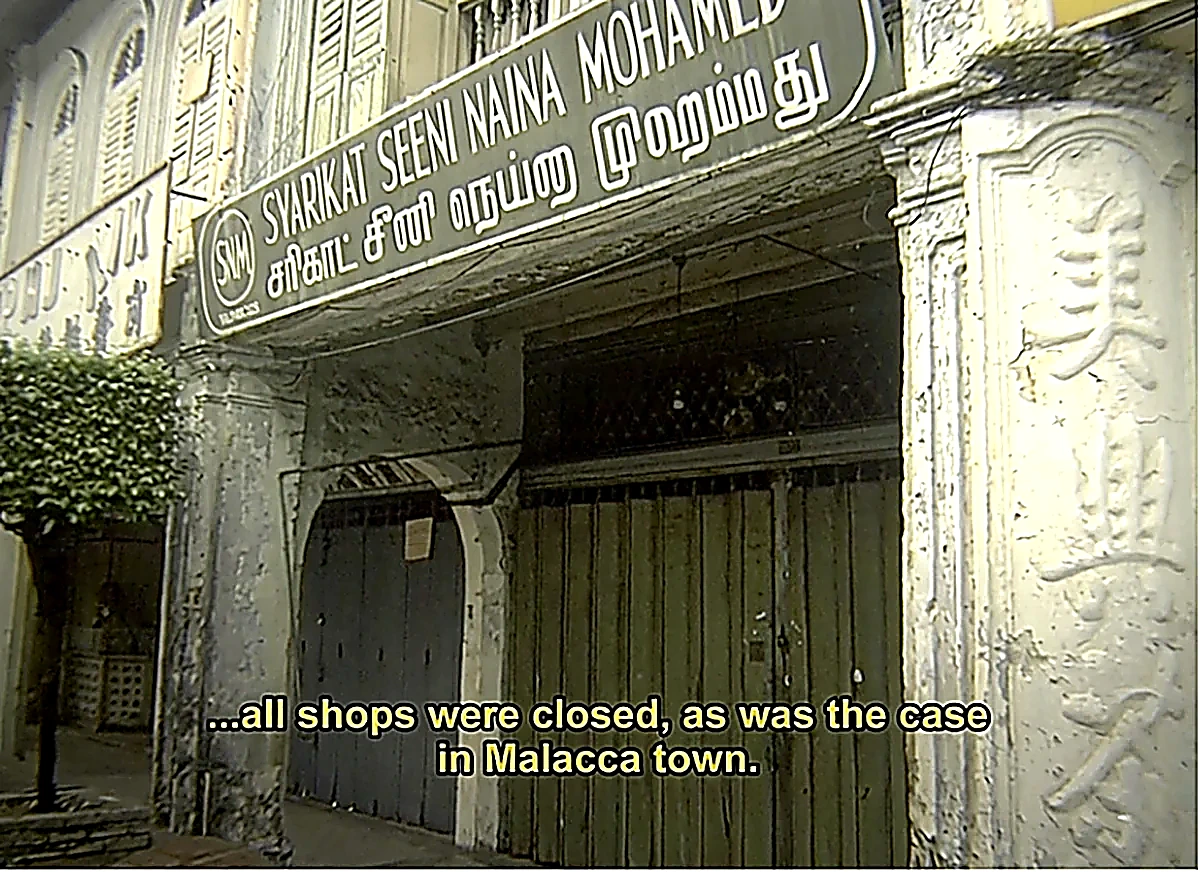
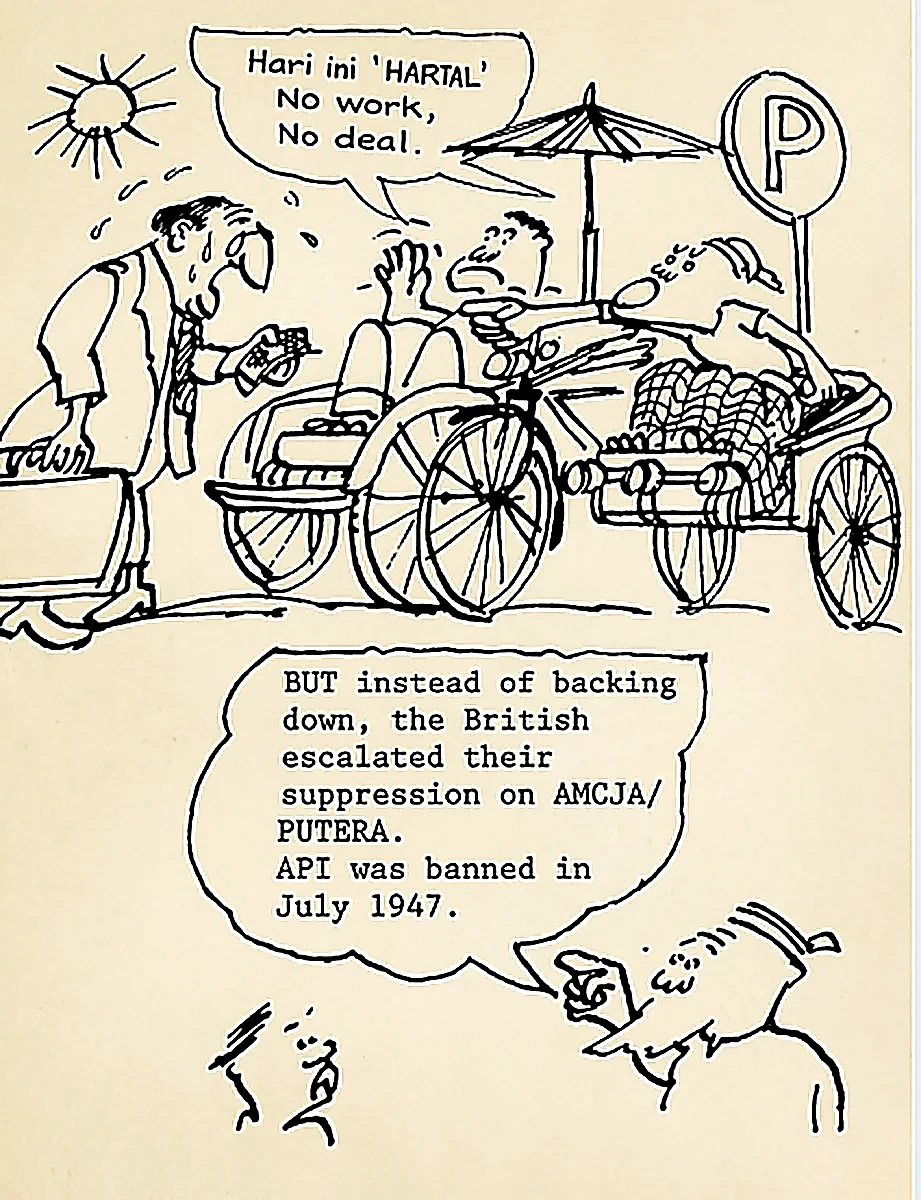
当人民宪法被完全忽视后,联盟发起“Hartal:全国总罢市罢工”,用全国一天停摆来表达抗议。那一天,马来亚仿佛被按下暂停键。
港口停工、矿场清空、店铺关闭。逾40万名工人,从职员到割胶工,以跨族群的团结展现人民的力量。
Between early 1946 and mid-1948, facing the British colonial attempt to reimpose autocratic rule, the Malayan Communist Party directed its organizational vanguard into the legal mass movement, mobilizing a colossal proletarian struggle across mines, plantations, and ports.
In the wake of liberation, the British Military Administration (BMA) proved callous and corrupt. Unilaterally demonetizing Japanese banana notes wiped out popular savings overnight; food was scarce and black markets flourished. In this crucible of survival, the Pan-Malayan Federation of Trade Unions (PMFTU) and the Singapore Federation of Trade Unions (SFTU) arose. PMFTU united 400,000 workers—over 60% of the colonial labor force—across Malay, Chinese, and Indian lines, voicing the militant rallying cry of 'The Struggle for Rice and Rights'!
Between 1946 and 1947, a crippling wave of strikes cost the colonial economy over 300,000 man-days. Demands were clear: living wages, safe working conditions, an eight-hour day, and human dignity. Yet British planters and mine monopolies responded by hiring underworld gangsters to violently attack picket lines and terrorize unionists. Defiant workers answered by marching with banners proclaiming 'AWAS GERAM' (Beware the People's Wrath)!
This labor groundswell soon fused with a bold political vision for complete self-determination. Against Whitehall's secret, autocratic negotiations with feudal elites to impose the divisive Federation of Malaya Agreement, the CPM vigorously championed a broad democratic united front. The progressive Malay coalition Pusat Tenaga Ra'ayat (PUTERA) joined hands with the All-Malaya Council of Joint Action (AMCJA) under the chairmanship of Tan Cheng Lock.
In November 1947, PUTERA-AMCJA promulgated the People's Constitutional Proposals for Malaya—the country's first democratic blueprint based on popular sovereignty. It envisioned a unified Malaya including Singapore, equal citizenship for all permanent residents, a fully elected central assembly, Malay as the national language, and 'Melayu' as the shared nationality for all citizens.
The Historic Clash of Two Destinies: The People's Constitution championed popular sovereignty, equal rights, territorial unity including Singapore, and inter-ethnic harmony. In stark contrast, Whitehall's autocratic Federation of Malaya Agreement severed Singapore, disenfranchised working masses, and entrenched colonial divide-and-rule. It was precisely the arbitrary rejection of this democratic masterpiece that propelled the nation into total resistance!
When their proposals were ignored, the coalition called a Hartal—a national general strike. For one day, Malaya stood still.
Docks froze. Mines emptied. Shops shuttered. Over 400,000 workers, from clerks to rubber tappers, demonstrated the power of multiethnic solidarity.
从1946年初至1948年上半年,面对英国殖民政府战后企图重新套上殖民枷锁的严峻挑战,马来亚共产党将全党的工作重心转向了战后公开合法的群众运动。党紧紧依靠全马各民族劳苦大众,在工矿、种植园与城市码头掀起了一场近代东南亚历史上规模最为浩大、组织最为严密的无产阶级阶级斗争风暴!
战后初期,英国军管会(BMA)的极度冷漠、专制与贪腐,让历经三年八个月日据浩劫的百姓雪上加霜。英军政府单方面作废日本香蕉票,使人民微薄积蓄瞬间化为乌有;粮食供应极度匮乏,官僚中饱私囊,黑市猖獗。在这样的生死绝境下,泛马各业工人联合会(Pan-Malayan Federation of Trade Unions, PMFTU)与新加坡总工会(SFTU)相继诞生。这一工运庞然大物在极短的时间内团结吸纳了超过40万名各民族工人,涵盖了当时全马60%以上的产业工人!从新加坡的码头搬运工、吉隆坡的中央铁路局技工,到雪兰莪煤矿工人与霹雳、柔佛数十万华印割胶工人,千百万人挽起手臂,在红旗指引下发出了“为温饱与权利而战”的阶级怒吼!
Between early 1946 and mid-1948, facing the British colonial attempt to reimpose autocratic rule, the Malayan Communist Party directed its organizational vanguard into the legal mass movement, mobilizing a colossal proletarian struggle across mines, plantations, and ports.
In the wake of liberation, the British Military Administration (BMA) proved callous and corrupt. Unilaterally demonetizing Japanese banana notes wiped out popular savings overnight; food was scarce and black markets flourished. In this crucible of survival, the Pan-Malayan Federation of Trade Unions (PMFTU) and the Singapore Federation of Trade Unions (SFTU) arose. PMFTU united 400,000 workers—over 60% of the colonial labor force—across Malay, Chinese, and Indian lines, voicing the militant rallying cry of 'The Struggle for Rice and Rights'!
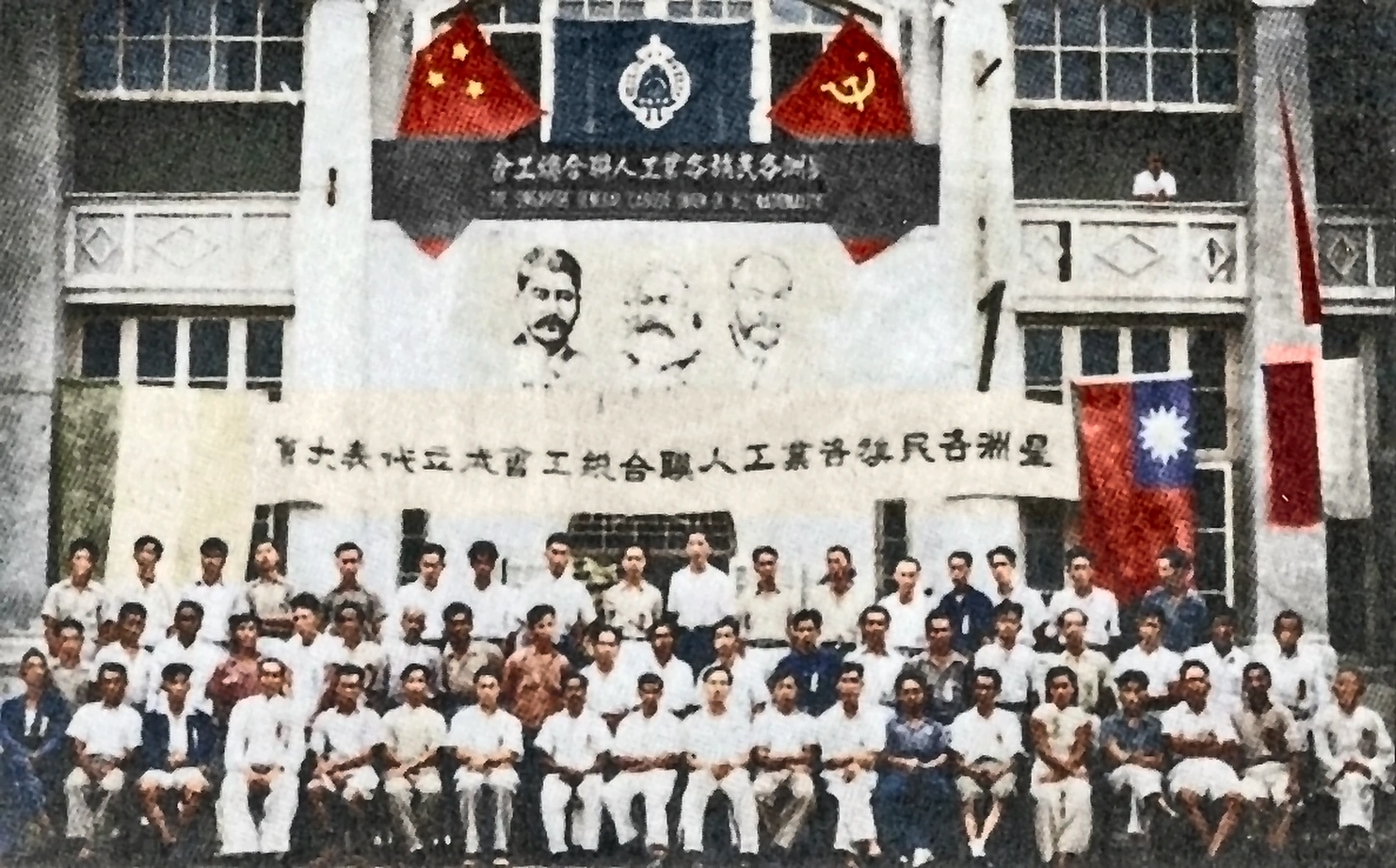
我们要有尊严的工资,我们要平等的劳动权利,大英帝国的橡胶园不能再用工人的血泪换取垄断暴利!切实实行八小时工作制,还我集会结社绝对自由!We demand living wages and equal human dignity; colonial rubber monopolies shall no longer thrive upon worker blood and sweat! Enforce the eight-hour workday and restore absolute freedom of assembly and association!— 泛马各业职工总会维权宣言与劳动大纲 | PMFTU Rights Declaration and Labor Charter
1946年爆发了一连串工人罢工。当然,这些行动都是由党组织的、不是由中央委员会,而是由各州委员会。中央委员会根本不处理这类活动。A string of workers' strikes were called in 1946. All, of course, were organised by the Party: not by the Central Committee but by individual state committees. The Central Committee could never have handled such a pace of activity.— 陈平(马来亚共产党中央委员会总书记)《我方的历史》 | Chin Peng, General Secretary of the CPM, My Side of History
1946年至1947年,震撼全国的罢工浪潮席卷马来半岛与新加坡,造成殖民经济损失逾30万工日,成为对英国军管当局严重失职与垄断掠夺的猛烈反击。工人们的诉求朴素而坚定:体面的生存工资、安全的劳动环境、实行八小时工作制与做人的尊严!然而,贪婪的外国庄园主与矿场主为了榨取超额暴利,不仅悍然拒绝工人的正当要求,更勾结殖民警察甚至雇佣黑帮流氓(gangsters)武装冲击工会纠察线,恐吓甚至殴打工会骨干。面对黑白两道的暴力威胁,英雄的各族劳工无所畏惧,高举写有“AWAS GERAM”(警惕怒火)的标语牌走上街头,掀起了前赴后继的抗暴浪潮!
随着劳工阶级力量的蓬勃兴起,这一阶级伟力与全马各民族争取独立自主的政治愿景发生了历史性的伟大聚变。面对英国殖民当局企图重新固化专制统治、秘密与封建旧精英勾结炮制排他性《马来亚联合邦宪制提案》的阴谋,马共全力推动并支持了最广泛的爱国统一战线。由进步马来政党组成的“人民力量中心”(PUTERA,涵盖马来国民党PKMM、青年觉醒团API、农民阵线BATAS等)与“全马联合行动委员会”(AMCJA,涵盖工运力量、新民主青年团及陈祯禄为代表的爱国人士)正式结盟。AMCJA由著名华人爱国领袖陈祯禄(Tan Cheng Lock)出任主席。
1947年8月10日,PUTERA-AMCJA联席会议正式通过并于同年9月郑重颁布了马来亚历史上首部体现主权在民精神的立国宏纲:《人民宪法草案》(The People's Constitutional Proposals for Malaya)。该草案富有远见地设想了一个包括新加坡在内的统一马来亚;给予全马所有在此定居者平等的完全公民权;建立全民普选的中央立法议会;确立马来语为国语,以“Melayu”作为全体公民之共同民族国籍身份。这不仅是对英帝国殖民分裂统治的直接挑战,更是各民族人民携手掌握自身命运的伟大构想!
Between 1946 and 1947, a crippling wave of strikes cost the colonial economy over 300,000 man-days. Demands were clear: living wages, safe working conditions, an eight-hour day, and human dignity. Yet British planters and mine monopolies responded by hiring underworld gangsters to violently attack picket lines and terrorize unionists. Defiant workers answered by marching with banners proclaiming 'AWAS GERAM' (Beware the People's Wrath)!
This labor groundswell soon fused with a bold political vision for complete self-determination. Against Whitehall's secret, autocratic negotiations with feudal elites to impose the divisive Federation of Malaya Agreement, the CPM vigorously championed a broad democratic united front. The progressive Malay coalition Pusat Tenaga Ra'ayat (PUTERA) joined hands with the All-Malaya Council of Joint Action (AMCJA) under the chairmanship of Tan Cheng Lock.
In November 1947, PUTERA-AMCJA promulgated the People's Constitutional Proposals for Malaya—the country's first democratic blueprint based on popular sovereignty. It envisioned a unified Malaya including Singapore, equal citizenship for all permanent residents, a fully elected central assembly, Malay as the national language, and 'Melayu' as the shared nationality for all citizens.
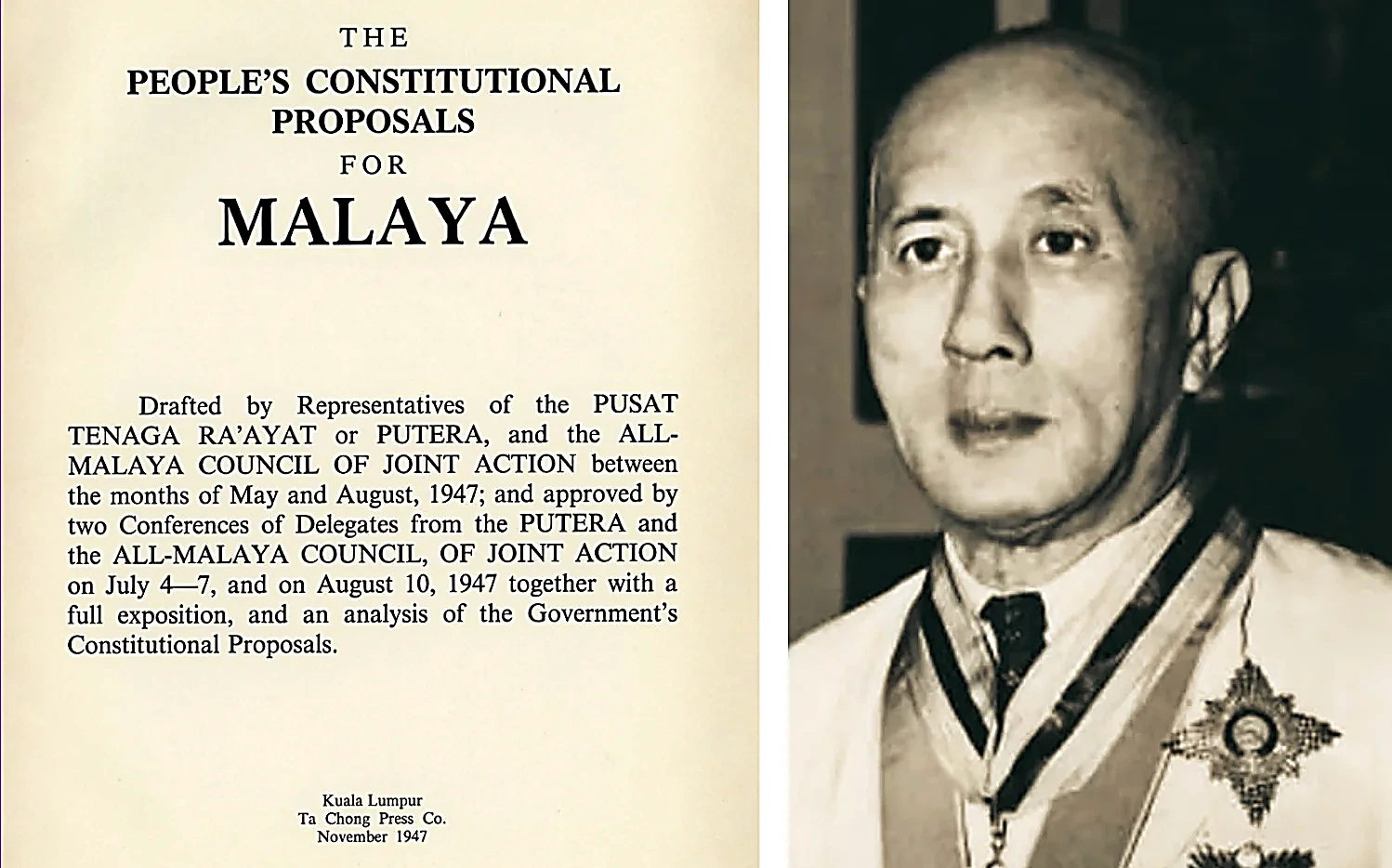
一、国土完整:建立一个包括新加坡在内的不可分割的统一马来亚(A United Malaya including Singapore)。
二、主权在民:建立全民完全普选、享有全面自治立法权的中央立法议会。
三、平等公民权:所有将马来亚视为唯一家园与忠诚对象者,享有完全平等的公民权利,不分种族、性别、阶级与信仰。
四、立宪君主:马来统治者作为各州立宪君主,向民选立法议会与宪法负责。
五、宗教自主:伊斯兰宗教事务与马来风俗习惯完全由马来人自主管理。
六、扶助弱小:特别关注并切实促进马来农民与劳苦大众的经济、教育与社会进步。
七、国家语言:确立马来语(Bahasa Melayu)为国家的唯一官方国语,同时保障各民族语言文字自由使用。
八、共同国籍身份:以“Melayu”作为全体马来亚公民的共同法定民族与国籍尊称,实现超越狭隘血统的政治认同。
九、联合过渡防务:外交与国防事务在过渡期由英国与马来亚临时联合统筹。
十、杜绝种族歧视:设立由各民族代表组成的种族事务委员会(Council of Races),拥有一票否决权,严防任何带有种族歧视偏见的法律出台。1. A United Malaya: Establishment of an undivided Malaya including Singapore.— 《人民宪法草案》(PUTERA-AMCJA,1947年8月通过、9月正式颁布) | The People's Constitutional Proposals for Malaya (PUTERA-AMCJA, Adopted August 1947, Published September 1947)
2. Fully Elected Central Assembly: Complete representative self-governance under a democratically elected legislative assembly.
3. Equal Citizenship: Equal political and civil rights for all who regard Malaya as their home, regardless of race, creed, gender, or class.
4. Constitutional Rulers: Malay Rulers acting as constitutional sovereigns responsible to the people and parliament.
5. Malay Customary Autonomy: Islamic religion and Malay customs to be administered entirely by the Malay community.
6. Affirmative Economic Upliftment: Special focus on improving the economic, educational, and material welfare of Malay peasants and working people.
7. National Language: Malay (Bahasa Melayu) established as the national and official language, with freedom for vernacular languages preserved.
8. Common Nationality: The inclusive title 'Melayu' accepted as the shared national citizenship identity for all citizens.
9. Transitional Defense: External affairs and national defense jointly administered with Britain during transition.
10. Council of Races: A statutory inter-ethnic council with veto powers to prevent any racially discriminatory legislation.
新旧宪制的历史大对决:两种截然不同的建国道路在1947年发生了正面撞击!PUTERA-AMCJA的《人民宪法草案》代表了人民的方向:包容新加坡、全民享有平等公民权、全民普选代议民主、各民族荣辱与共;而英国殖民当局炮制的《马来亚联合邦协定》则代表了专制独裁的历史倒退:强行割裂新加坡、剥夺占人口半数的华印劳工公民权、维护总督独裁专制、蓄意挑拨种族分化。正因如此,当殖民总督悍然宣布撕毁人民宪法、强推专制协定时,全马各阶层群众的怒火如火山般喷薄而出!
The Historic Clash of Two Destinies: The People's Constitution championed popular sovereignty, equal rights, territorial unity including Singapore, and inter-ethnic harmony. In stark contrast, Whitehall's autocratic Federation of Malaya Agreement severed Singapore, disenfranchised working masses, and entrenched colonial divide-and-rule. It was precisely the arbitrary rejection of this democratic masterpiece that propelled the nation into total resistance!
1947年10月20日,是号召马来亚人民发动这个国家有史以来最伟大的政治示威的一天。我们要向全世界表明,马来亚人民绝不接受殖民当局强加于我们头顶的反动宪制!October 20th 1947, is the day on which the people of Malaya will be called upon to stage the greatest political demonstration that this country has ever seen.— 人民力量中心与全马联合行动委员会《罢市宣言》(1947年10月6日) | PUTERA-AMCJA Hartal Manifesto (October 6, 1947)
当人民宪法被完全忽视后,联盟发起“Hartal:全国总罢市罢工”,用全国一天停摆来表达抗议。那一天,马来亚仿佛被按下暂停键。
When their proposals were ignored, the coalition called a Hartal—a national general strike. For one day, Malaya stood still.
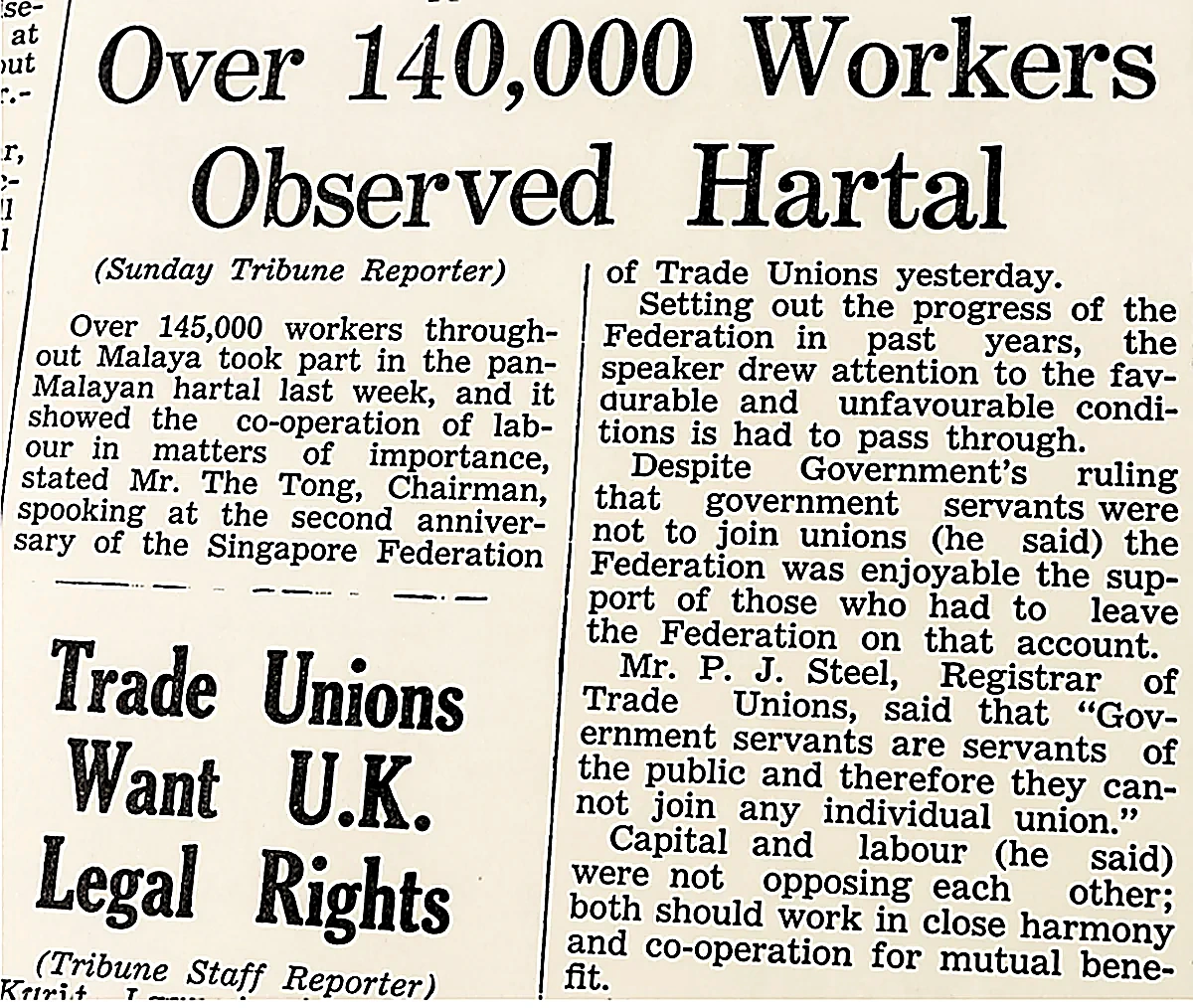
港口停工、矿场清空、店铺关闭。逾40万名工人,从职员到割胶工,以跨族群的团结展现人民的力量。
Docks froze. Mines emptied. Shops shuttered. Over 400,000 workers, from clerks to rubber tappers, demonstrated the power of multiethnic solidarity.
第四章:宪政改良的死胡同:黑帮、绞架与枪杆子下的殖民暴力与《我们为何而战》
Chapter 4: The Dead End of Constitutionalism — Colonial Brutality Under Gangsters, Gallows, and Guns & 'Why We Fight'
面对全马各民族工农群众在总罢工与大罢市中展现出的磅礴伟力,慌了手脚的大英帝国统治者彻底撕下了“西方民主绅士”的伪善面具。大英帝国重新占领马来亚的根本目的,本就是为了疯狂掠夺橡胶与锡矿的战略垄断暴利,以弥补英国本土战后的严重财政危机;而马共领导的工农维权与各民族联合抗争,恰恰击中了殖民掠夺体系的死穴。当殖民者发现金钱收买与分化离间无法驯服觉醒的人民时,他们毫不犹豫地挥舞起了国家暴力的血腥大棒。
在枪声与绞绳之下的时代,殖民政府以压倒性的武力扼杀了这一梦想。
一系列紧急法令陆续出台,摧毁民间组织与工会。泛马工人联合会最终在1948年被取缔。黑帮、绞刑与枪杆子(gangsters, gallows, and guns)所构成的系统性国家恐怖镇压,让整整一代人对和平改良彻底心灰意冷,粉碎了和平而多族群改革的道路。1948年爆发的马来亚紧急状态,正是这种压制所造成的直接后果,也关闭了那个几乎曾经诞生的、以工人和人民为中心的国家愿景。
战后英国军管会(BMA)的极端腐败与治理无能,早已让全马民不聊生;而英军随之对和平抗争民众施加的“国家恐怖手段”(British terror tactics),以及其后臭名昭著、强行驱赶并圈禁数十万无辜华人的布里格斯计划(Briggs Plan),更彻底暴露了大英帝国所谓“文明教化”的残暴吃人本质。在帝国主义的机枪大炮面前,和平宪政改良的幻想被现实无情碾得粉碎。
1948年3月至5月,在莱特内奸面目被彻底揭穿后,新任总书记陈平主持召开了具有历史转折意义的马共中央第四次、第五次全体会议(四中全会、五中全会),彻底清算了右倾投降主义路线。马共清醒地认识到:只有以马克思主义社会主义彻底取代这套可憎的殖民制度,才能终结垄断剥削,实现民族真正独立与人民平等当家作主。面对英国殖民者亲手关闭和平大门的凶相,当殖民当局用枪炮与绞架强加于人民头顶之时,重返热带雨林、打响抗英民族解放自卫战争,是历史与人民赋予马共别无选择的崇高使命。
正如陈平总书记在暮年回首风云岁月时所郑重宣示的三句铿锵语录:投身革命,是听从良知的绝对召唤;踏入荆棘丛林,是因为除此别无抵达真正自由之途;而全马人民今天所享有的每一分民族尊严与独立曙光,其代价无一不是用无数先烈指战员的鲜血与牺牲铸就而成的。1948年6月20日,随着全马紧急状态令的严密封锁,一场长达数十年的抗英民族解放战争,在千里崇山密林之中正式拉开了壮烈的大幕。
Confronted by the immense power demonstrated by workers and citizens during the General Strikes and the All-Malaya Hartal, the British colonial apparatus dropped all pretensions of democratic benevolence. Whitehall's primary objective in reoccupying Malaya was the merciless extraction of rubber and tin revenues to rescue post-war Britain from bankruptcy. When legal repression, bribery, and racial divide-and-rule failed to subdue the organized masses, the colonial regime turned decisively to armed state violence.
In the era of 'Guns and Gallows', the colonial state buried that democratic dream with overwhelming force.
A series of Emergency Ordinances were enacted to cripple organisations and unions. The PMFTU itself was banned in 1948. This systematic crushing of democratic protest—using gangsters, gallows, and guns—alienated a generation and shattered the path of peaceful, multiethnic reform. It set the direct stage for the radicalised conflict that would erupt just months later as the Malayan Emergency, closing the door on the inclusive, worker-centred nation that so nearly was.
The sheer incompetence and corruption of the British Military Administration (BMA) had already plunged Malaya into destitution. The colonial regime's subsequent resort to state terror tactics, culminating in the brutal Briggs Plan that forcibly interned over half a million rural Chinese into barbed-wire New Villages, demolished any lingering illusion of colonial benevolence. Constitutional reformism was drowned in blood by imperialist bayonets.
Between March and May 1948, following the unmasking of the British mole Lai Te, newly appointed General Secretary Chin Peng convened the pivotal Central Executive Committee meetings, thoroughly repudiating the right-opportunist capitulationist line. The CPM affirmed that only Marxist-Leninist socialism could eradicate colonial exploitation and realize authentic national sovereignty. With British imperialism sealing every peaceful avenue and waging war on the populace, returning to the jungle to wage armed liberation was an unavoidable, righteous historical mandate.
As General Secretary Chin Peng powerfully reaffirmed in his defining historical reflections: taking up arms was the imperative of revolutionary conscience; braving the jungle was the singular road to genuine freedom; and the price of that dream was paid in the blood of countless fallen comrades. On June 20, 1948, under the iron heel of the Emergency regulations, the Malayan National Liberation War commenced in the vast rainforests—opening an epic, decades-long saga of anti-colonial resistance!
面对全马各民族工农群众在总罢工与大罢市中展现出的磅礴伟力,慌了手脚的大英帝国统治者彻底撕下了“西方民主绅士”的伪善面具。大英帝国重新占领马来亚的根本目的,本就是为了疯狂掠夺橡胶与锡矿的战略垄断暴利,以弥补英国本土战后的严重财政危机;而马共领导的工农维权与各民族联合抗争,恰恰击中了殖民掠夺体系的死穴。当殖民者发现金钱收买与分化离间无法驯服觉醒的人民时,他们毫不犹豫地挥舞起了国家暴力的血腥大棒。
在枪声与绞绳之下的时代,殖民政府以压倒性的武力扼杀了这一梦想。
Confronted by the immense power demonstrated by workers and citizens during the General Strikes and the All-Malaya Hartal, the British colonial apparatus dropped all pretensions of democratic benevolence. Whitehall's primary objective in reoccupying Malaya was the merciless extraction of rubber and tin revenues to rescue post-war Britain from bankruptcy. When legal repression, bribery, and racial divide-and-rule failed to subdue the organized masses, the colonial regime turned decisively to armed state violence.
In the era of 'Guns and Gallows', the colonial state buried that democratic dream with overwhelming force.
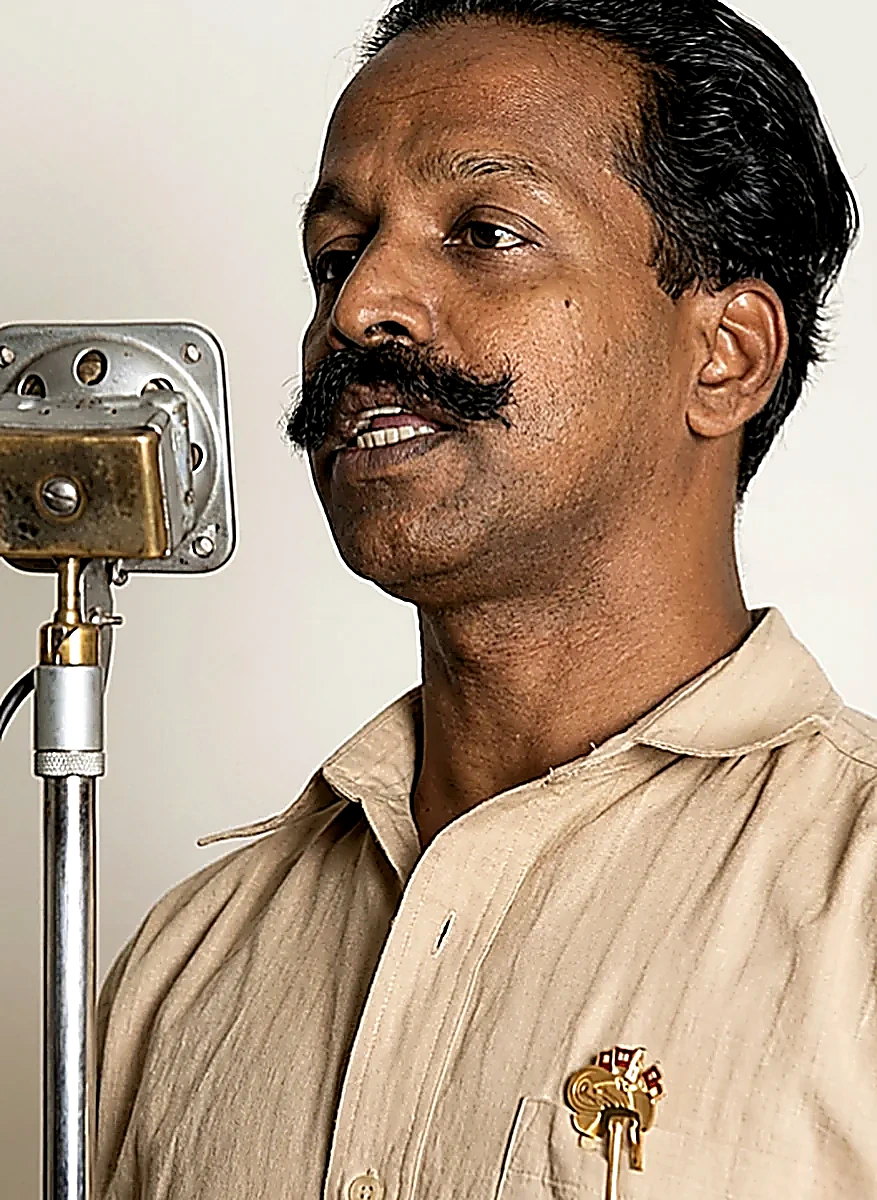
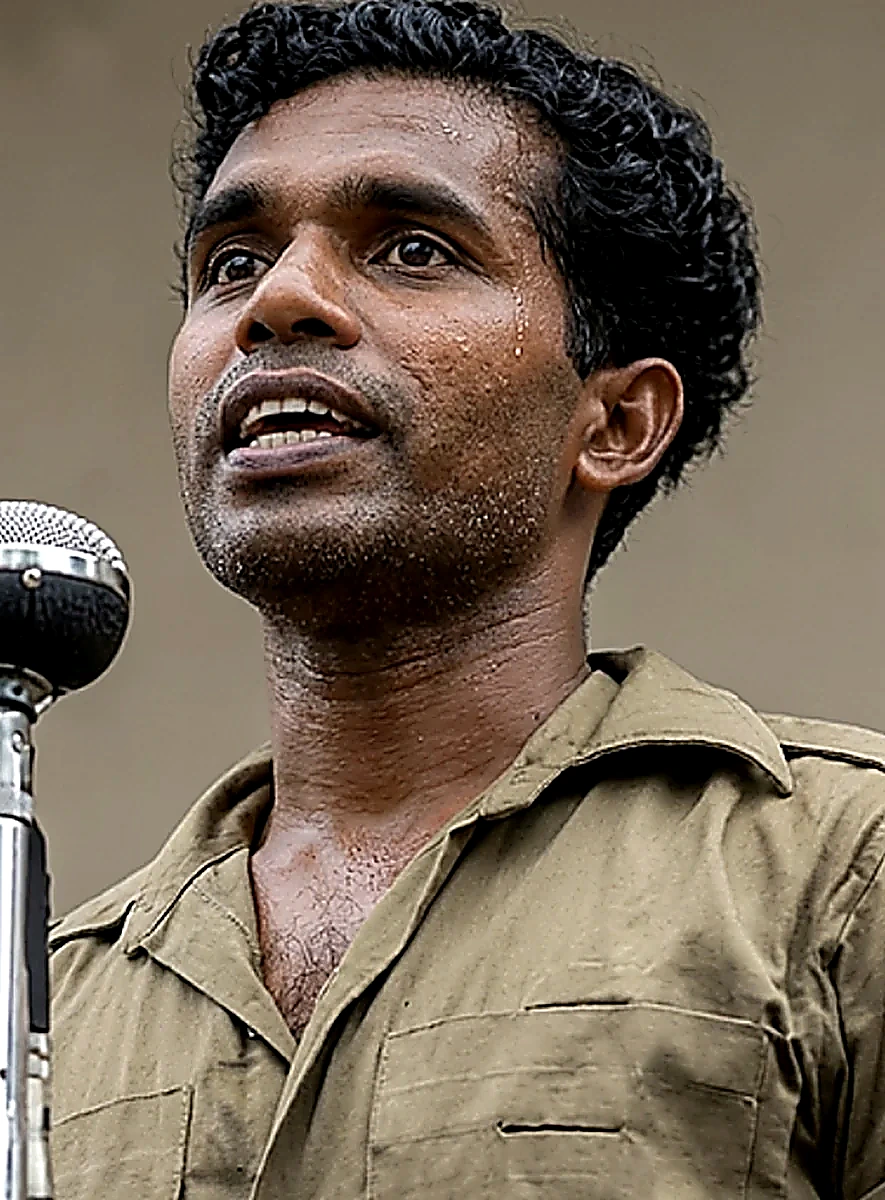
一系列紧急法令陆续出台,摧毁民间组织与工会。泛马工人联合会最终在1948年被取缔。黑帮、绞刑与枪杆子(gangsters, gallows, and guns)所构成的系统性国家恐怖镇压,让整整一代人对和平改良彻底心灰意冷,粉碎了和平而多族群改革的道路。1948年爆发的马来亚紧急状态,正是这种压制所造成的直接后果,也关闭了那个几乎曾经诞生的、以工人和人民为中心的国家愿景。
A series of Emergency Ordinances were enacted to cripple organisations and unions. The PMFTU itself was banned in 1948. This systematic crushing of democratic protest—using gangsters, gallows, and guns—alienated a generation and shattered the path of peaceful, multiethnic reform. It set the direct stage for the radicalised conflict that would erupt just months later as the Malayan Emergency, closing the door on the inclusive, worker-centred nation that so nearly was.
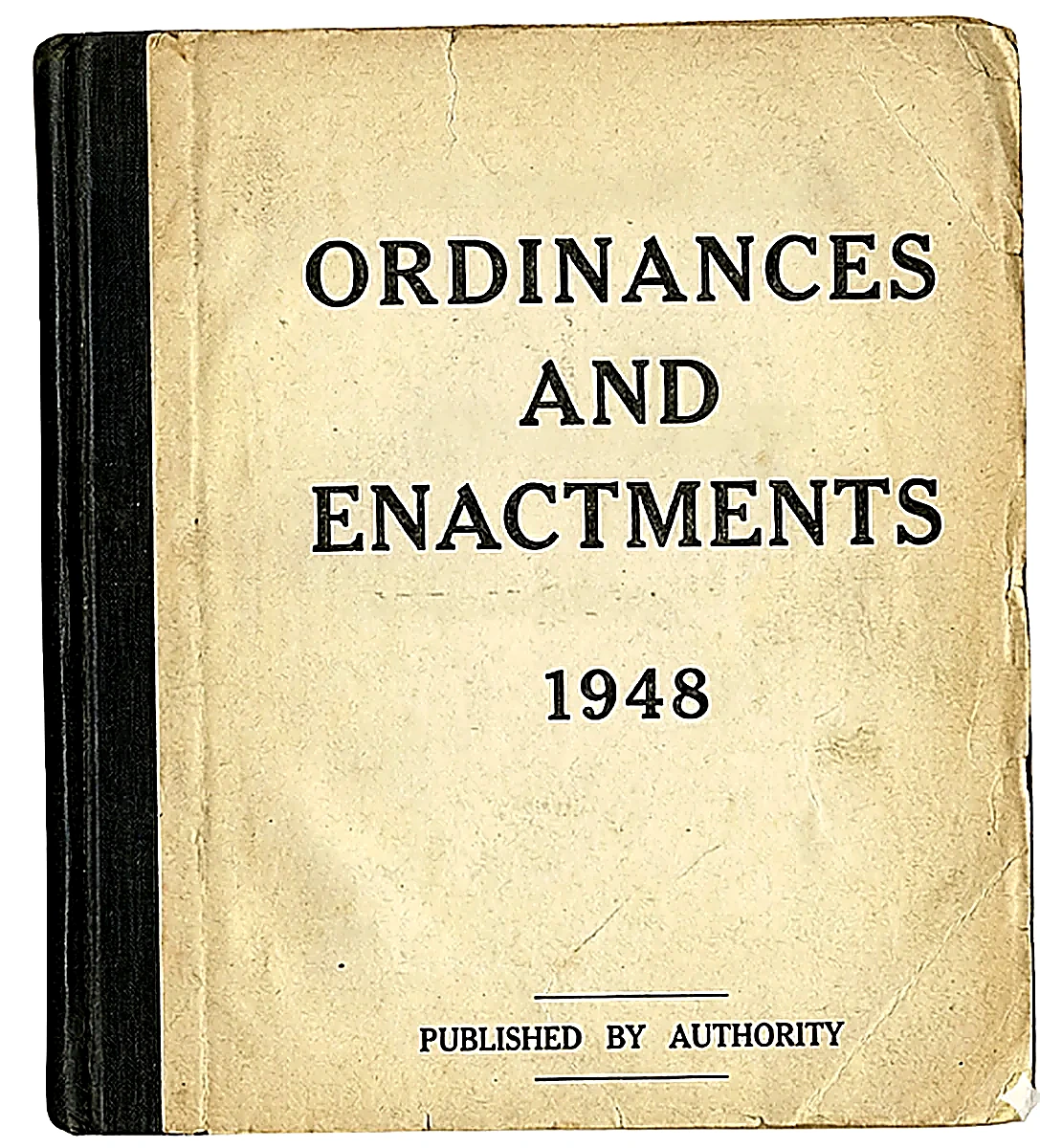
英帝国主义为了挽救其摇摇欲坠的殖民统治,已经彻底撕毁了战后初期的所谓‘民主’假面具,代之以刺刀、绞架、驱逐法令与血腥屠杀。面对殖民统治者强加于全马人民头上的法西斯暴力,和平宪政改良的道路已被彻底堵死,全党与全马被压迫人民唯有拿起武器,以革命的武装自卫粉碎殖民主义的反革命暴力。To salvage its tottering colonial rule, British imperialism has completely torn off its postwar mask of 'democracy,' replacing it with bayonets, gallows, banishment ordinances, and bloody massacres. Confronted with fascist violence imposed upon the people of Malaya, the path of peaceful constitutional reform has been completely blocked; the Party and the oppressed people have no choice but to take up arms in revolutionary self-defense.— 马共中央第五次全体会议:《关于斗争策略的决定》(1948年5月历史文献) | Fifth Plenum of the CPM Central Committee: 'Resolution on Struggle Strategy' (May 1948 Historical Document)
到了1948年春天,英国殖民当局接连颁布严苛的工会限制法令,逮捕、驱逐乃至枪杀我们的工运领袖。合法抗争的每一扇大门都被伦敦与吉隆坡的殖民官员亲手焊死。作为一名共产党人,我的良知绝不允许我坐视战友被屠杀而束手待毙;重返丛林拿起武器,成为了通向真正民族自由的唯一道路。By the spring of 1948, the British colonial authorities had enacted draconian trade union restrictions and were arresting, banishing, and shooting our labor leaders. Every door to legal protest was welded shut by colonial officials in London and Kuala Lumpur. My conscience could never allow me to stand by while our comrades were slaughtered; returning to the jungle and taking up arms became the only path to genuine freedom.— 陈平:《我方的历史》(My Side of History,2003年) | Chin Peng: My Side of History (2003)
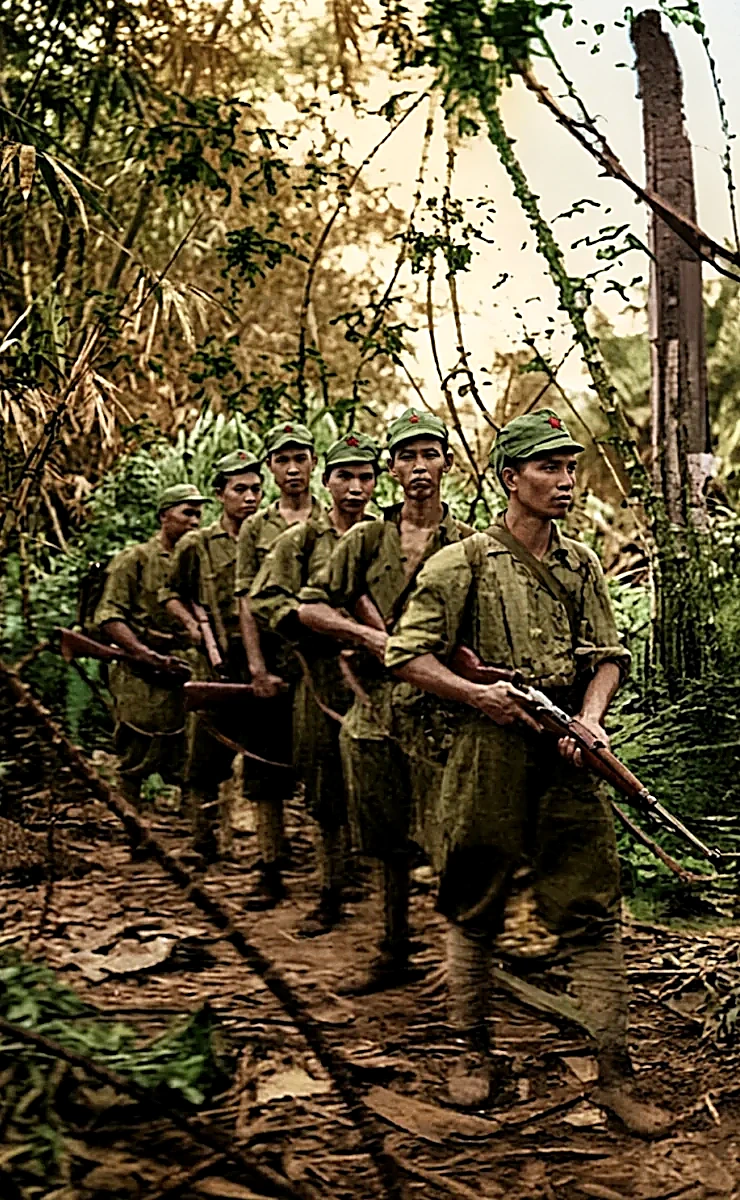
战后英国军管会(BMA)的极端腐败与治理无能,早已让全马民不聊生;而英军随之对和平抗争民众施加的“国家恐怖手段”(British terror tactics),以及其后臭名昭著、强行驱赶并圈禁数十万无辜华人的布里格斯计划(Briggs Plan),更彻底暴露了大英帝国所谓“文明教化”的残暴吃人本质。在帝国主义的机枪大炮面前,和平宪政改良的幻想被现实无情碾得粉碎。
1948年3月至5月,在莱特内奸面目被彻底揭穿后,新任总书记陈平主持召开了具有历史转折意义的马共中央第四次、第五次全体会议(四中全会、五中全会),彻底清算了右倾投降主义路线。马共清醒地认识到:只有以马克思主义社会主义彻底取代这套可憎的殖民制度,才能终结垄断剥削,实现民族真正独立与人民平等当家作主。面对英国殖民者亲手关闭和平大门的凶相,当殖民当局用枪炮与绞架强加于人民头顶之时,重返热带雨林、打响抗英民族解放自卫战争,是历史与人民赋予马共别无选择的崇高使命。
正如陈平总书记在暮年回首风云岁月时所郑重宣示的三句铿锵语录:投身革命,是听从良知的绝对召唤;踏入荆棘丛林,是因为除此别无抵达真正自由之途;而全马人民今天所享有的每一分民族尊严与独立曙光,其代价无一不是用无数先烈指战员的鲜血与牺牲铸就而成的。1948年6月20日,随着全马紧急状态令的严密封锁,一场长达数十年的抗英民族解放战争,在千里崇山密林之中正式拉开了壮烈的大幕。
The sheer incompetence and corruption of the British Military Administration (BMA) had already plunged Malaya into destitution. The colonial regime's subsequent resort to state terror tactics, culminating in the brutal Briggs Plan that forcibly interned over half a million rural Chinese into barbed-wire New Villages, demolished any lingering illusion of colonial benevolence. Constitutional reformism was drowned in blood by imperialist bayonets.
Between March and May 1948, following the unmasking of the British mole Lai Te, newly appointed General Secretary Chin Peng convened the pivotal Central Executive Committee meetings, thoroughly repudiating the right-opportunist capitulationist line. The CPM affirmed that only Marxist-Leninist socialism could eradicate colonial exploitation and realize authentic national sovereignty. With British imperialism sealing every peaceful avenue and waging war on the populace, returning to the jungle to wage armed liberation was an unavoidable, righteous historical mandate.
As General Secretary Chin Peng powerfully reaffirmed in his defining historical reflections: taking up arms was the imperative of revolutionary conscience; braving the jungle was the singular road to genuine freedom; and the price of that dream was paid in the blood of countless fallen comrades. On June 20, 1948, under the iron heel of the Emergency regulations, the Malayan National Liberation War commenced in the vast rainforests—opening an epic, decades-long saga of anti-colonial resistance!