第5集:马来亚共产党短暂行使管治国家的职权与战略复员(1945年8月至12月)
Episode 5: The Brief Governance and Strategic Demobilization of the CPM (August to December 1945)
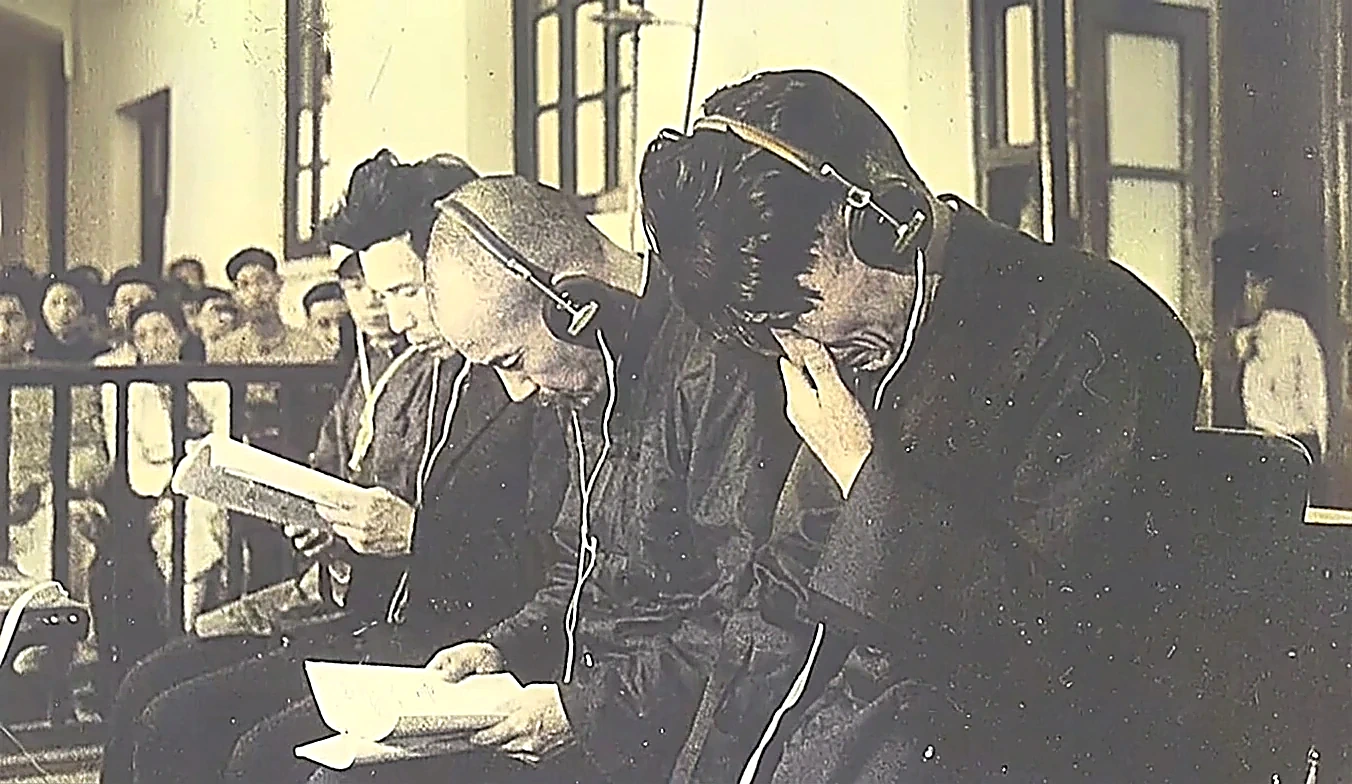
1945年8月15日日本无条件投降至9月初英军重返马来亚的数十天内,马来半岛出现完全的权力真空。马共领导的人民抗日军毅然进驻全马各大城镇与乡村,组建广泛代表各民族与各阶层的“人民委员会”,开创了平抑物价、开仓济贫、维护治安的辉煌人民自治实践。然而,内奸莱特为迎合重返的英殖民者,抛出《八大主张》推行右倾投降路线,将抗日时期《九大纲领》确立的“建立马来亚民主共和国”降格为“成立各级民主自治政府”,直接导致人民抗日军交出武器、解甲复员,给马共与民族独立事业造成极其惨重的损失与破坏;幸赖陈平、刘尧等忠诚将领果断实行“明交暗留”,在深山秘藏五千余支精良武器,为日后抗英民族解放战争保留了关键火种。
Following Japan's unconditional surrender on 15 August 1945, a total power vacuum emerged across Malaya. The CPM-led Malayan People's Anti-Japanese Army (MPAJA) swiftly entered towns and rural districts, organizing broadly representative People's Committees that maintained public order, stabilized prices, and distributed grain relief. However, traitor Lai Te, catering to the returning British colonialists, put forward the 'Eight-Point Program' to enforce a right-opportunist capitulationist line—downgrading the 1943 Nine-Point Anti-Japanese Program's goal of establishing a 'Malayan Democratic Republic' to mere 'democratic self-governing administrations' under colonial rule. This capitulation led directly to the disarmament and demobilization of the MPAJA, inflicting severe damage on the CPM and the national independence movement, though frontline commanders Chin Peng and Lau Yew vigilantly cached over 5,000 pristine weapons in the jungle.
第一章:权力真空与人民的选择:1945年8月抗日军光复全马城镇
Chapter 1: Power Vacuum and the People's Choice: MPAJA Liberation of Towns in August 1945
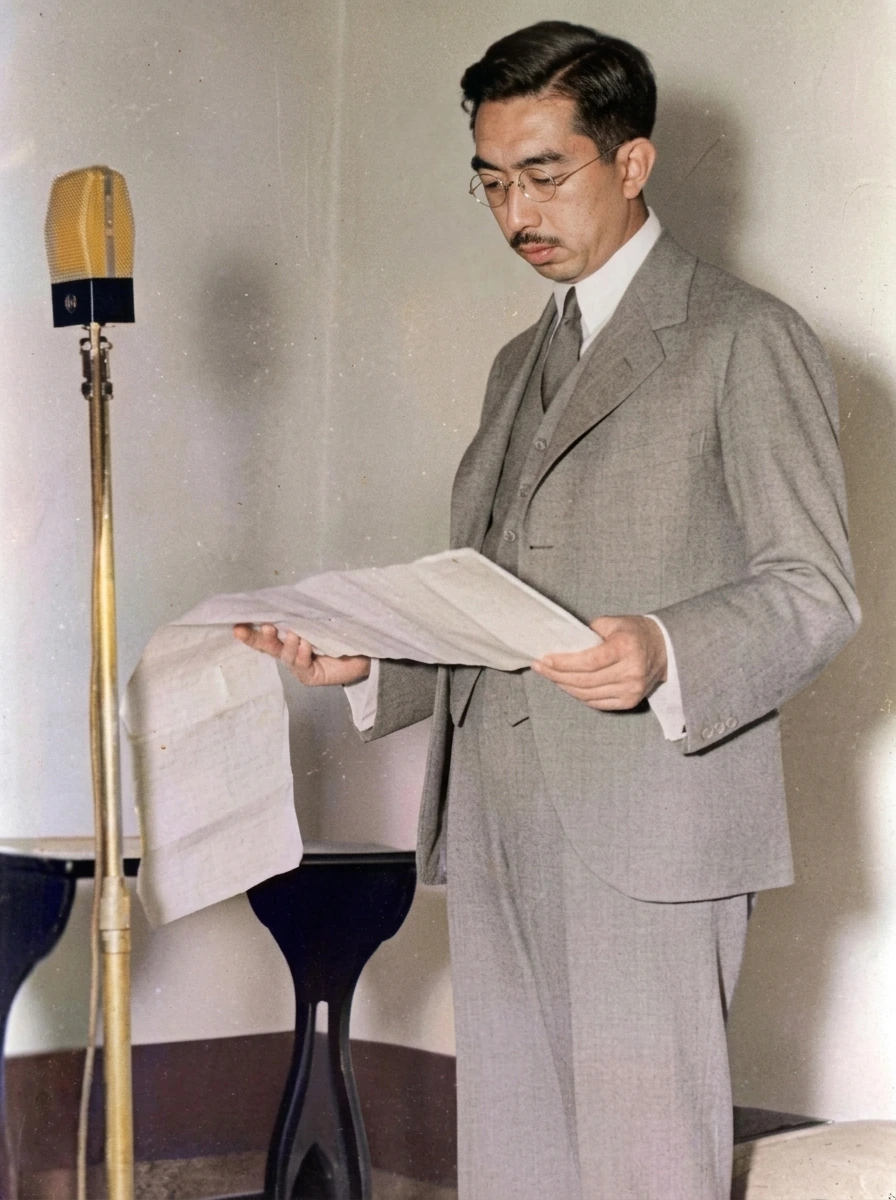
1945年8月15日中午,日本天皇裕仁通过无线电广播终战诏书,宣布无条件投降。这一历史时刻在马来半岛引发了强烈的政治地震:统治半岛三年零八个月的日伪殖民机器瞬间瘫痪瓦解,而英国殖民军队远在南亚次大陆,尚未集结登陆。在这段长达三周有余的历史“权力真空期”内,整座半岛三百万各民族人民没有任何外国殖民者的压迫与统治。
面对历史赋予的庄严使命,深入热带密林浴血苦战一千三百多个日夜的马来亚人民抗日军(MPAJA),在全马各族同胞翘首以盼的热烈欢呼声中走出丛林。从霹雳怡保、太平,到雪兰莪吉隆坡、森美兰芙蓉,再到柔佛新山,抗日军各支独立队军容严整地进驻全马各州重镇与广阔乡村。街道两旁人山人海,鞭炮齐鸣,红旗与抗日军三星旗迎风招展,各民族民众以发自肺腑的感激与拥护,迎接自己真正的民族解放者。
与人民抗日军光明正大光复城镇形成鲜明对比的是,大英帝国早在密谋重返马来亚、重建殖民统治。根据英国国家档案馆现已解密的绝密文件(档案号 DEFE 2/648A),英国军方早在1945年上半年便制定了代号“拉链行动”(Operation Zipper)的全面入侵方案,其明确战略目标是在登陆后火速设立英国军事管理机构(BMA),恢复殖民秩序。迟至1945年9月9日,英军才在波德申与摩立海岸小心翼翼地抢滩登陆。此时的全马社会治安与市政运作,早已在人民抗日军的有效管治下平稳运行了近一个月。
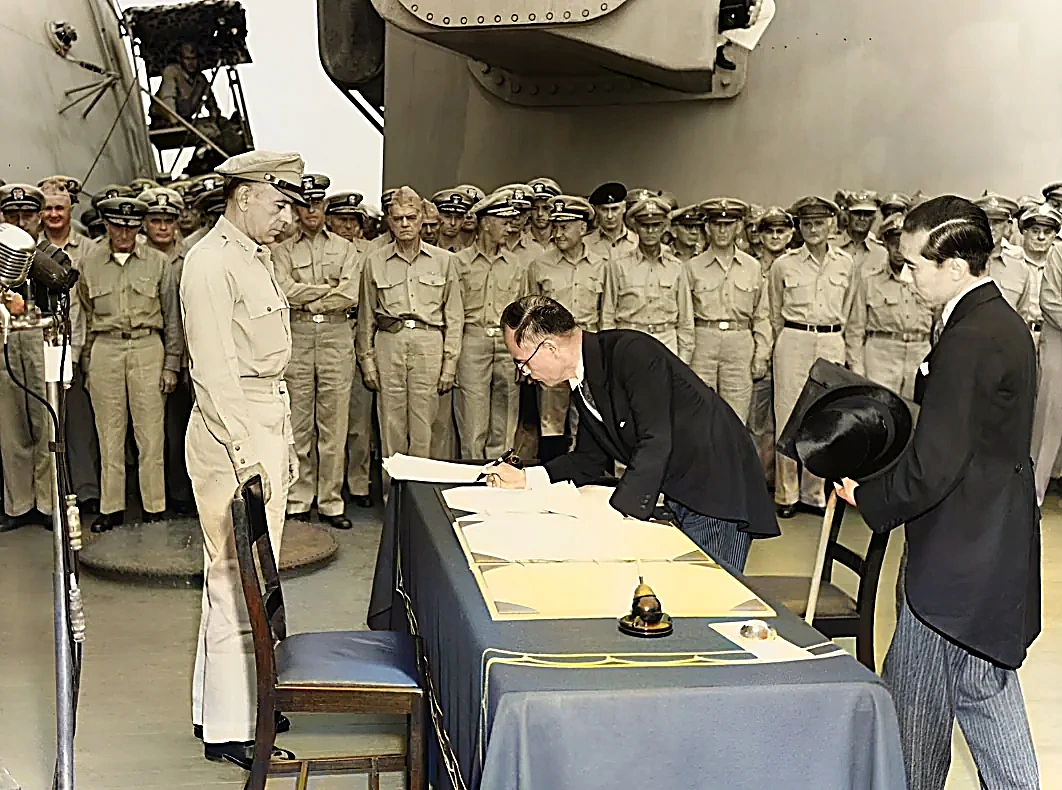
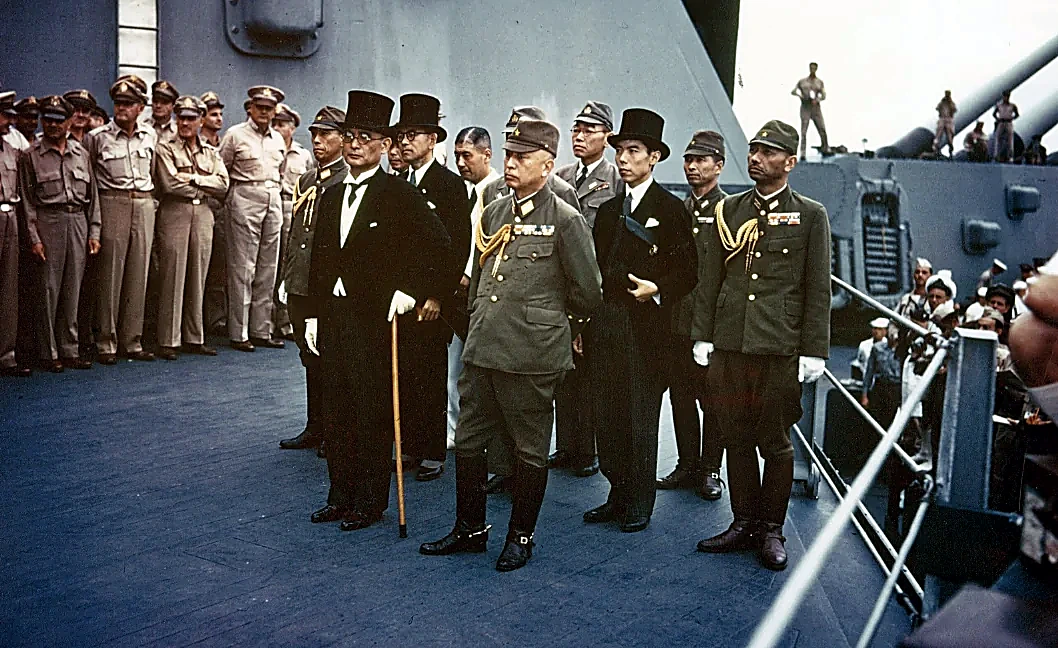
历史档案与现场照片生动记录了这一重大历史时刻:1945年9月9日,英国军队正式实施代号“拉链行动”(Operation Zipper)的登陆计划,在森美兰波德申与雪兰莪摩立海岸两栖抢滩,标志着大英帝国重新占领马来亚的开端。迟至9月13日,驻吉隆坡日军才正式向英军签署投降书,日军军官向英方缴出军刀,大批日军战俘被解除武装。然而,此时英国军管会(BMA)所面对的,并非一个无序的殖民废墟,而是一个在马共领导下各级人民委员会平稳运转、各民族团结自治近一个月的觉醒社会。
At noon on 15 August 1945, Japanese Emperor Hirohito broadcast the Imperial Rescript on Surrender, announcing unconditional capitulation. This historic moment triggered a profound seismic shift across Malaya: the brutal Japanese occupation apparatus instantly collapsed, while British imperial forces remained stationed thousands of miles away in South Asia, entirely unprepared for an immediate landing. In this unprecedented power vacuum lasting more than three weeks, the three million inhabitants of the peninsula lived free of foreign colonial overlords.
Confronting this sacred historic calling, the Malayan People's Anti-Japanese Army (MPAJA), having endured over 1,300 days and nights of guerrilla warfare in equatorial rainforests, emerged triumphant from the jungle amid deafening acclaim from the multi-ethnic populace. From Ipoh and Taiping in Perak, through Kuala Lumpur in Selangor and Seremban in Negeri Sembilan, down to Johor Bahru, combat regiments of the MPAJA marched in disciplined columns to liberate towns, mining villages, and rural districts. Cheering crowds lined the streets, firecrackers echoed continuously, and Three-Star banners fluttered alongside red flags as workers, peasants, and merchants hailed their true national liberators.
In stark contrast to the MPAJA's open and popular liberation, the British Empire had long conspired to re-impose colonial hegemony. According to declassified British War Office files at The National Archives (File DEFE 2/648A), British commanders formulated Operation Zipper in early 1945, an amphibious invasion plan whose explicit operational objective was to erect the British Military Administration (BMA) and restore colonial domination. British troops delayed their tentative coastal landings at Morib and Port Dickson until 9 September 1945. By that time, public order and civil administration had already functioned under legitimate MPAJA authority for nearly a month.
Archival records and field photographs capture this pivotal moment: on 9 September 1945, British forces executed Operation Zipper, staging amphibious landings at Port Dickson and Morib to commence the reoccupation of Malaya. On 13 September, Japanese forces in Kuala Lumpur formally signed the surrender instrument, yielding their samurai swords and disarming troops. However, the British Military Administration (BMA) encountered not a helpless colonial ruin, but a politically awakened society where CPM-led People's Committees had maintained municipal order and multi-ethnic self-governance for nearly a month.
1945年8月15日中午,日本天皇裕仁通过无线电广播终战诏书,宣布无条件投降。这一历史时刻在马来半岛引发了强烈的政治地震:统治半岛三年零八个月的日伪殖民机器瞬间瘫痪瓦解,而英国殖民军队远在南亚次大陆,尚未集结登陆。在这段长达三周有余的历史“权力真空期”内,整座半岛三百万各民族人民没有任何外国殖民者的压迫与统治。
面对历史赋予的庄严使命,深入热带密林浴血苦战一千三百多个日夜的马来亚人民抗日军(MPAJA),在全马各族同胞翘首以盼的热烈欢呼声中走出丛林。从霹雳怡保、太平,到雪兰莪吉隆坡、森美兰芙蓉,再到柔佛新山,抗日军各支独立队军容严整地进驻全马各州重镇与广阔乡村。街道两旁人山人海,鞭炮齐鸣,红旗与抗日军三星旗迎风招展,各民族民众以发自肺腑的感激与拥护,迎接自己真正的民族解放者。
At noon on 15 August 1945, Japanese Emperor Hirohito broadcast the Imperial Rescript on Surrender, announcing unconditional capitulation. This historic moment triggered a profound seismic shift across Malaya: the brutal Japanese occupation apparatus instantly collapsed, while British imperial forces remained stationed thousands of miles away in South Asia, entirely unprepared for an immediate landing. In this unprecedented power vacuum lasting more than three weeks, the three million inhabitants of the peninsula lived free of foreign colonial overlords.
Confronting this sacred historic calling, the Malayan People's Anti-Japanese Army (MPAJA), having endured over 1,300 days and nights of guerrilla warfare in equatorial rainforests, emerged triumphant from the jungle amid deafening acclaim from the multi-ethnic populace. From Ipoh and Taiping in Perak, through Kuala Lumpur in Selangor and Seremban in Negeri Sembilan, down to Johor Bahru, combat regiments of the MPAJA marched in disciplined columns to liberate towns, mining villages, and rural districts. Cheering crowds lined the streets, firecrackers echoed continuously, and Three-Star banners fluttered alongside red flags as workers, peasants, and merchants hailed their true national liberators.
与人民抗日军光明正大光复城镇形成鲜明对比的是,大英帝国早在密谋重返马来亚、重建殖民统治。根据英国国家档案馆现已解密的绝密文件(档案号 DEFE 2/648A),英国军方早在1945年上半年便制定了代号“拉链行动”(Operation Zipper)的全面入侵方案,其明确战略目标是在登陆后火速设立英国军事管理机构(BMA),恢复殖民秩序。迟至1945年9月9日,英军才在波德申与摩立海岸小心翼翼地抢滩登陆。此时的全马社会治安与市政运作,早已在人民抗日军的有效管治下平稳运行了近一个月。
In stark contrast to the MPAJA's open and popular liberation, the British Empire had long conspired to re-impose colonial hegemony. According to declassified British War Office files at The National Archives (File DEFE 2/648A), British commanders formulated Operation Zipper in early 1945, an amphibious invasion plan whose explicit operational objective was to erect the British Military Administration (BMA) and restore colonial domination. British troops delayed their tentative coastal landings at Morib and Port Dickson until 9 September 1945. By that time, public order and civil administration had already functioned under legitimate MPAJA authority for nearly a month.
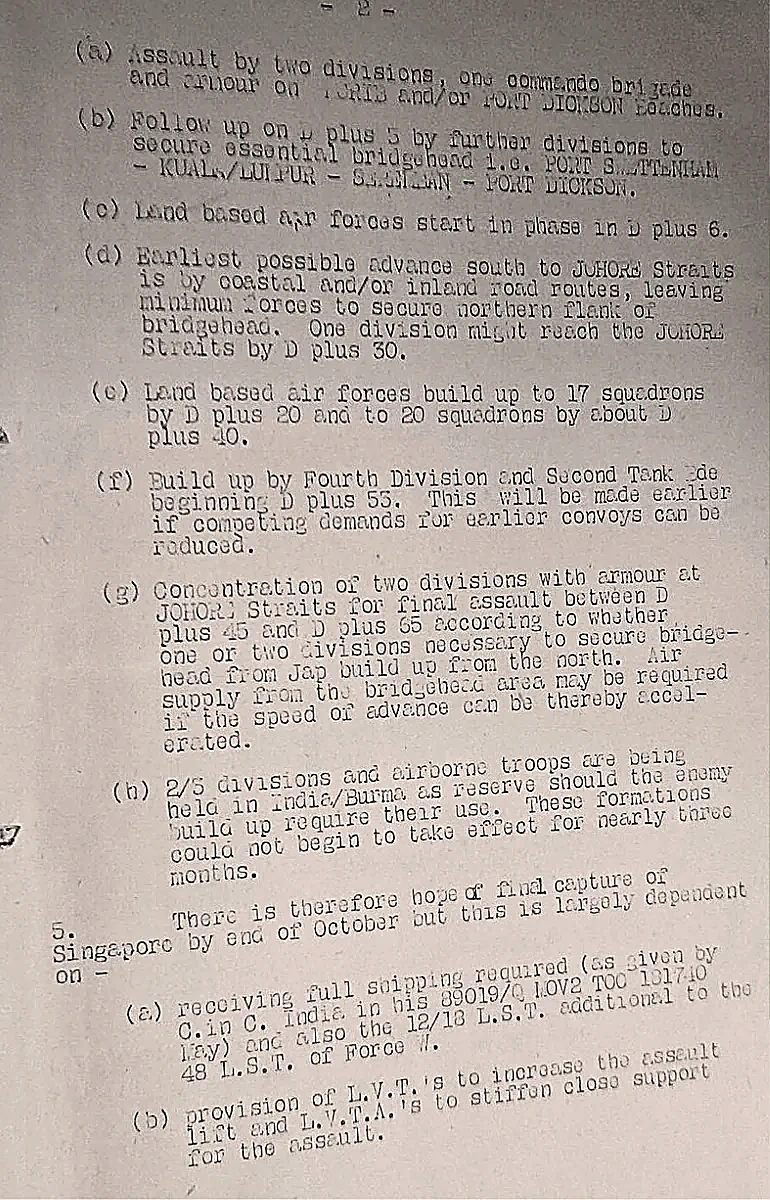
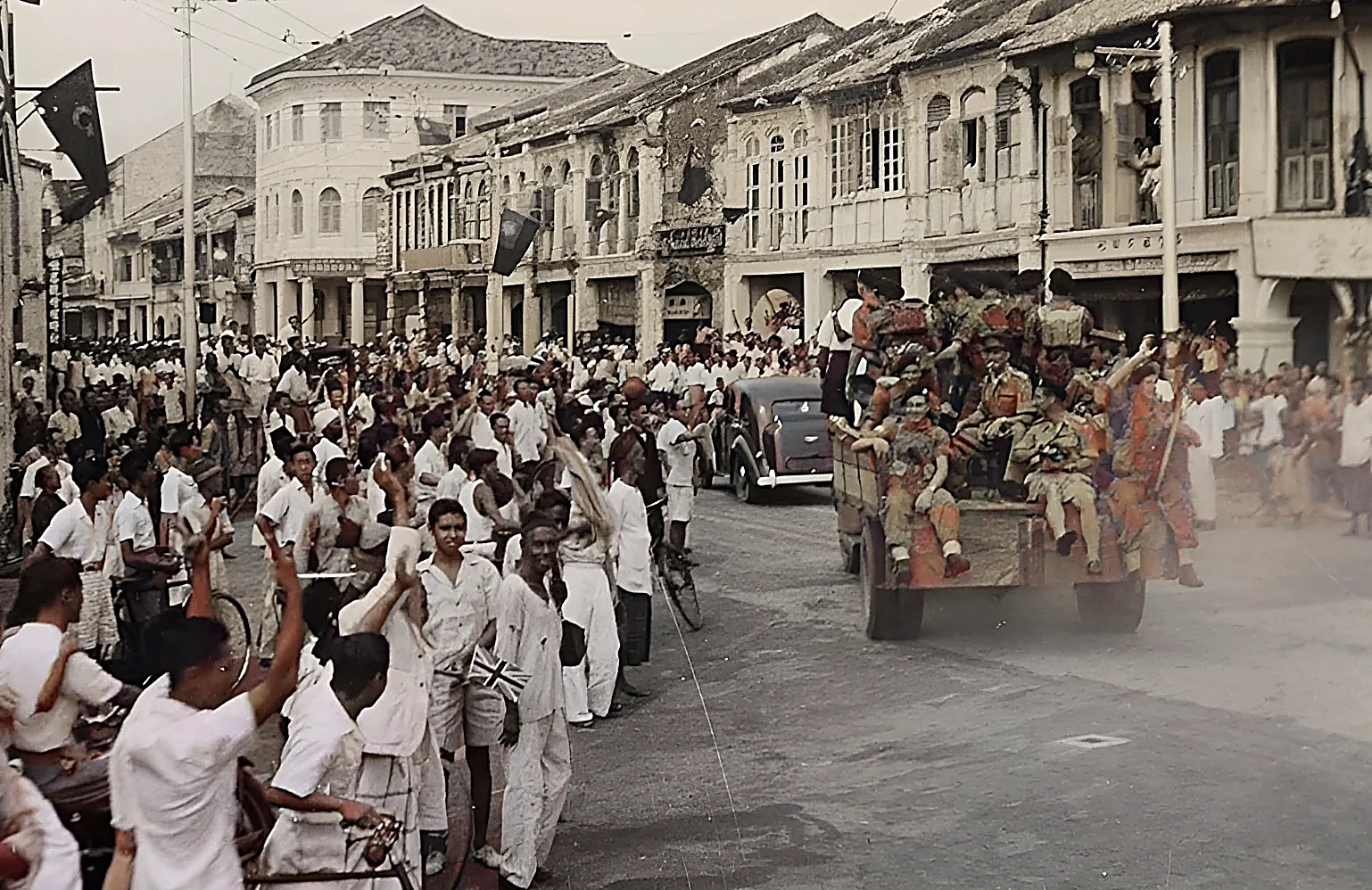
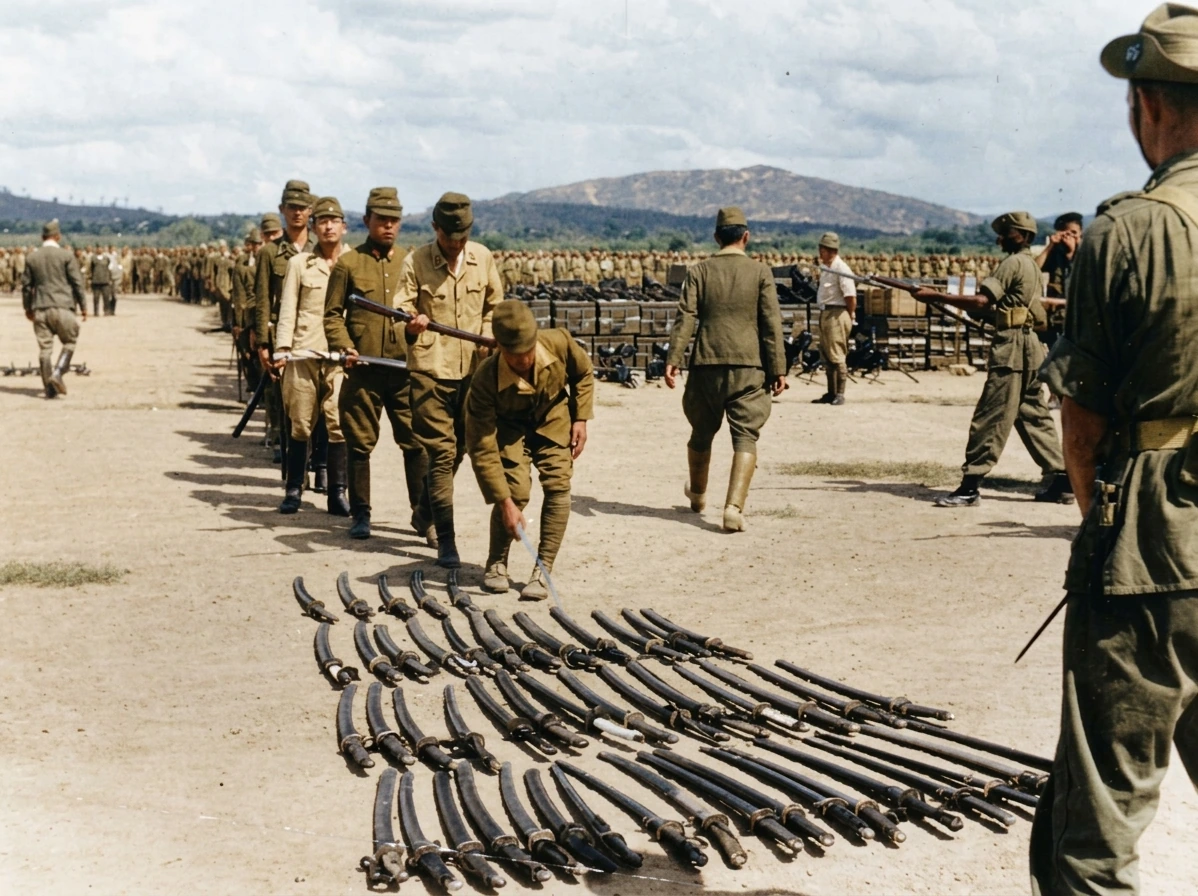
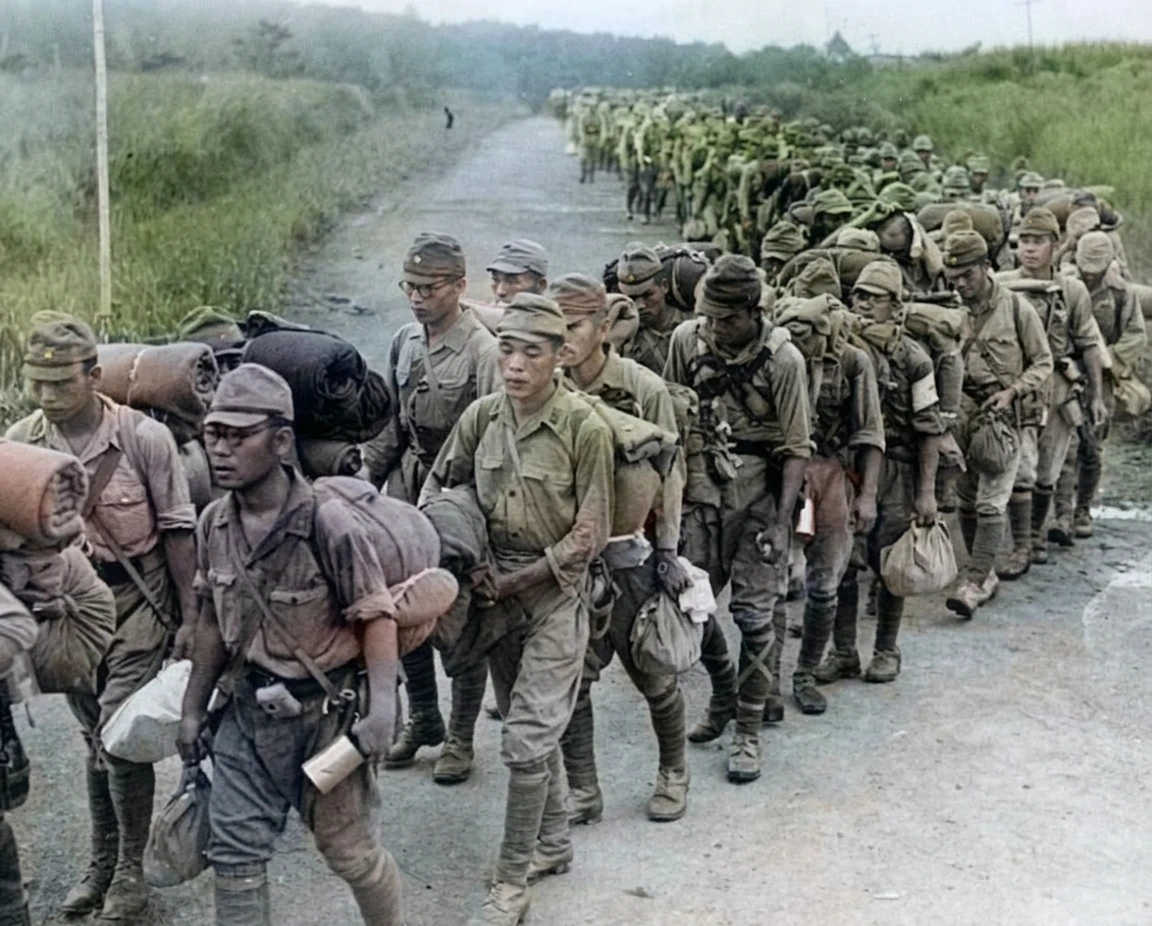
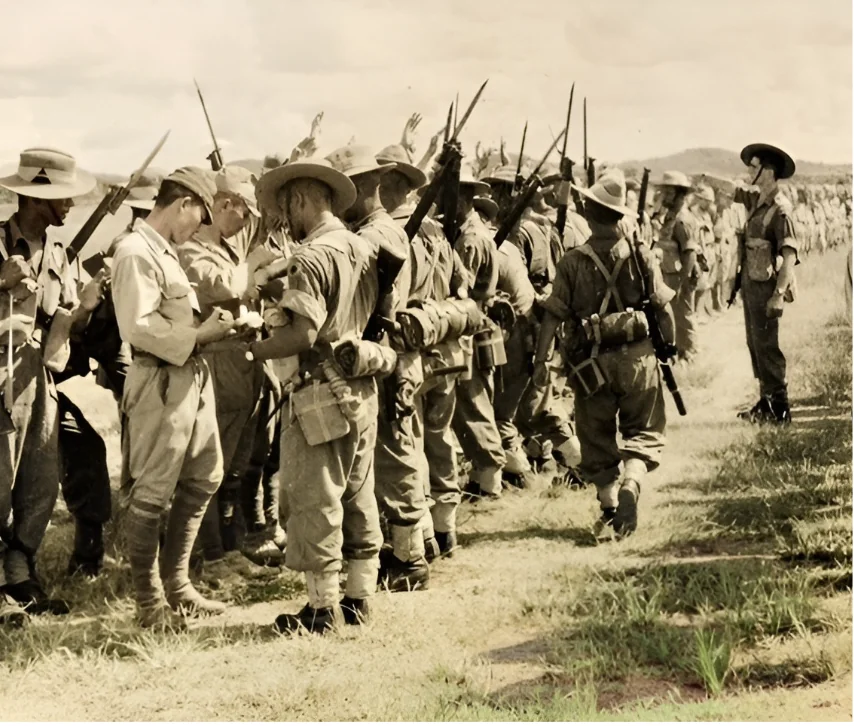
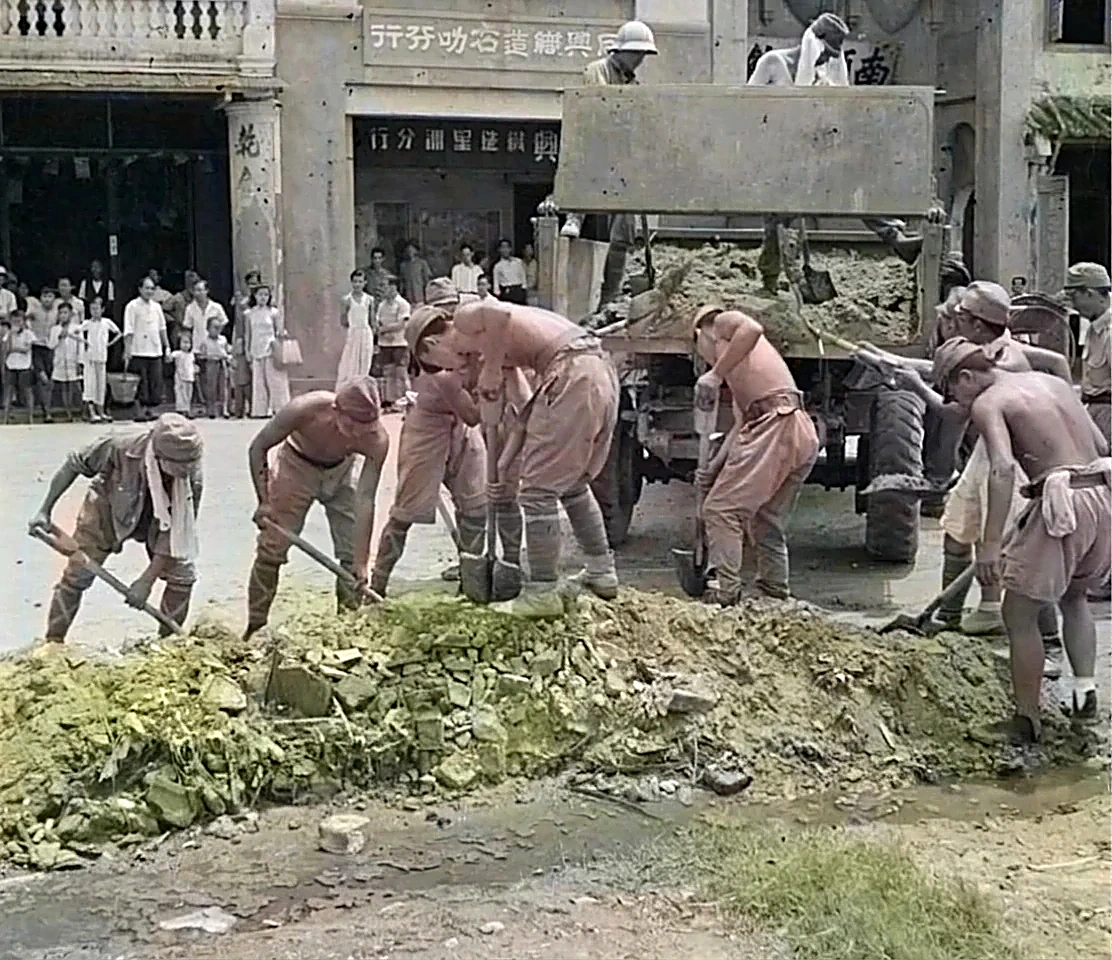
历史档案与现场照片生动记录了这一重大历史时刻:1945年9月9日,英国军队正式实施代号“拉链行动”(Operation Zipper)的登陆计划,在森美兰波德申与雪兰莪摩立海岸两栖抢滩,标志着大英帝国重新占领马来亚的开端。迟至9月13日,驻吉隆坡日军才正式向英军签署投降书,日军军官向英方缴出军刀,大批日军战俘被解除武装。然而,此时英国军管会(BMA)所面对的,并非一个无序的殖民废墟,而是一个在马共领导下各级人民委员会平稳运转、各民族团结自治近一个月的觉醒社会。
Archival records and field photographs capture this pivotal moment: on 9 September 1945, British forces executed Operation Zipper, staging amphibious landings at Port Dickson and Morib to commence the reoccupation of Malaya. On 13 September, Japanese forces in Kuala Lumpur formally signed the surrender instrument, yielding their samurai swords and disarming troops. However, the British Military Administration (BMA) encountered not a helpless colonial ruin, but a politically awakened society where CPM-led People's Committees had maintained municipal order and multi-ethnic self-governance for nearly a month.
第二章:行使人民政权职能的金色岁月:人民委员会平抑物价与开仓济贫
Chapter 2: The Golden Era of People's Governance: Price Controls and Grain Relief by People's Committees
在接管全马城镇与乡村的金色岁月里,马共展现出卓越的现代政权管治能力与深厚的爱民情怀。人民抗日军在日本投降次日曾接到盟军东南亚最高统帅蒙巴顿的命令,无理要求抗日军不得进城接受日军投降。抗日军中央军委决定对这一旨在维护殖民特权的指令不予理会,迅速进驻全马几乎所有大中城镇,首先收缴日伪警察局的枪支弹药,成立临时治安委员会;并在此基础上进一步组建起由工、农、商各阶层及各民族代表广泛参与的“人民委员会”(People's Committees),取代临时治安委员会正式行使地方政府职权。
人民委员会进驻后,立即推行了一系列深得民心的民生举措:果断查封并没收了日本军阀与垄断财阀(三井、三菱等)囤积的粮食、布匹与食盐仓库,在全马各地设立了数百处平价粮店与施粥所,开仓济贫,将数万吨大米配给饥寒交迫的贫苦百姓;同时宣布废除日伪时期强加于各族农民与胶工身上的苛捐杂税,实行严厉的平抑物价法令,重拳惩处囤积居奇、投机倒把的奸商。
在社会秩序与法制建设方面,在英军重返马来亚前,人民抗日军已相继在雪兰莪、柔北、柔南、丁加奴、新山、马六甲及霹雳各地建立起州级与市镇级人民委员会。抗日军指战员荷枪实弹日夜巡逻,释放日据时期被关押的政治犯,取缔烟馆、赌窝与暗娼,逮捕并公审罪大恶极的马奸特务,迅速稳定了全马城乡治安。各民族人民在这段短暂而光辉的人民自治岁月里,第一次亲身体验到了没有殖民总督专权、没有种族歧视的人民民主新生活,以铁的事实证明马来亚各族人民完全有智慧、有能力自主管治好自己的国家。
During this golden era of administering towns and rural regions, the CPM demonstrated remarkable administrative capability and deep devotion to the masses. On the day after Japan's surrender, the MPAJA received an order from Allied Supreme Commander Admiral Mountbatten demanding that resistance forces refrain from entering towns to accept the Japanese surrender. Rejecting this colonial directive, the MPAJA Central Military Commission swiftly entered nearly all major and medium-sized towns across Malaya, seizing arms from enemy police stations, establishing Temporary Security Committees, and subsequently organizing broadly representative People's Committees comprising delegates from workers, peasants, merchants, and all ethnic communities to exercise local government authority.
Upon assuming civic administration, the People's Committees enacted decisive relief measures: swiftly seizing and unsealing supply depots stockpiled by Japanese military cartels (such as Mitsui and Mitsubishi), they distributed thousands of tons of grain, salt, and cotton fabric to destitute communities. Hundreds of fair-price rice shops and soup kitchens opened across the peninsula. Simultaneously, the Committees abolished extortionate wartime levies imposed on rubber tappers and farmers, enforced stringent anti-profiteering decrees, and clamped down decisively on merchant hoarders.
In social law and order, prior to the British return, state-level and municipal People's Committees had been established across Selangor, Northern Johor, Southern Johor, Terengganu, Johor Bahru, Melaka, and Perak. Armed MPAJA detachments conducted 24-hour patrols, releasing political prisoners, dismantling Japanese-sponsored gambling syndicates and opium dens, and bringing collaborationist traitors and Kempeitai informants before public tribunals. Throughout this brief, glorious period of self-governance, the people of Malaya experienced for the first time a democratic civic life free of colonial despotism and racial discrimination, proving beyond doubt that the Malayan people possessed the full wisdom and capacity to govern their own country.
在接管全马城镇与乡村的金色岁月里,马共展现出卓越的现代政权管治能力与深厚的爱民情怀。人民抗日军在日本投降次日曾接到盟军东南亚最高统帅蒙巴顿的命令,无理要求抗日军不得进城接受日军投降。抗日军中央军委决定对这一旨在维护殖民特权的指令不予理会,迅速进驻全马几乎所有大中城镇,首先收缴日伪警察局的枪支弹药,成立临时治安委员会;并在此基础上进一步组建起由工、农、商各阶层及各民族代表广泛参与的“人民委员会”(People's Committees),取代临时治安委员会正式行使地方政府职权。
人民委员会进驻后,立即推行了一系列深得民心的民生举措:果断查封并没收了日本军阀与垄断财阀(三井、三菱等)囤积的粮食、布匹与食盐仓库,在全马各地设立了数百处平价粮店与施粥所,开仓济贫,将数万吨大米配给饥寒交迫的贫苦百姓;同时宣布废除日伪时期强加于各族农民与胶工身上的苛捐杂税,实行严厉的平抑物价法令,重拳惩处囤积居奇、投机倒把的奸商。
During this golden era of administering towns and rural regions, the CPM demonstrated remarkable administrative capability and deep devotion to the masses. On the day after Japan's surrender, the MPAJA received an order from Allied Supreme Commander Admiral Mountbatten demanding that resistance forces refrain from entering towns to accept the Japanese surrender. Rejecting this colonial directive, the MPAJA Central Military Commission swiftly entered nearly all major and medium-sized towns across Malaya, seizing arms from enemy police stations, establishing Temporary Security Committees, and subsequently organizing broadly representative People's Committees comprising delegates from workers, peasants, merchants, and all ethnic communities to exercise local government authority.
Upon assuming civic administration, the People's Committees enacted decisive relief measures: swiftly seizing and unsealing supply depots stockpiled by Japanese military cartels (such as Mitsui and Mitsubishi), they distributed thousands of tons of grain, salt, and cotton fabric to destitute communities. Hundreds of fair-price rice shops and soup kitchens opened across the peninsula. Simultaneously, the Committees abolished extortionate wartime levies imposed on rubber tappers and farmers, enforced stringent anti-profiteering decrees, and clamped down decisively on merchant hoarders.
“告全马同胞书:抗日军进驻各大城镇,严禁任何破坏抢掠;各民族同胞亲善团结,共同维护地方秩序与民生安定!”"Proclamation to All Malayan Compatriots: The MPAJA occupies all urban centers; all looting and sabotage are strictly prohibited. Multi-ethnic solidarity must unite to maintain civic peace and livelihood stability!"— 马来亚人民抗日军进驻城镇第一号布告(1945年8月) | MPAJA Civil Administration Proclamation No. 1 (August 1945)
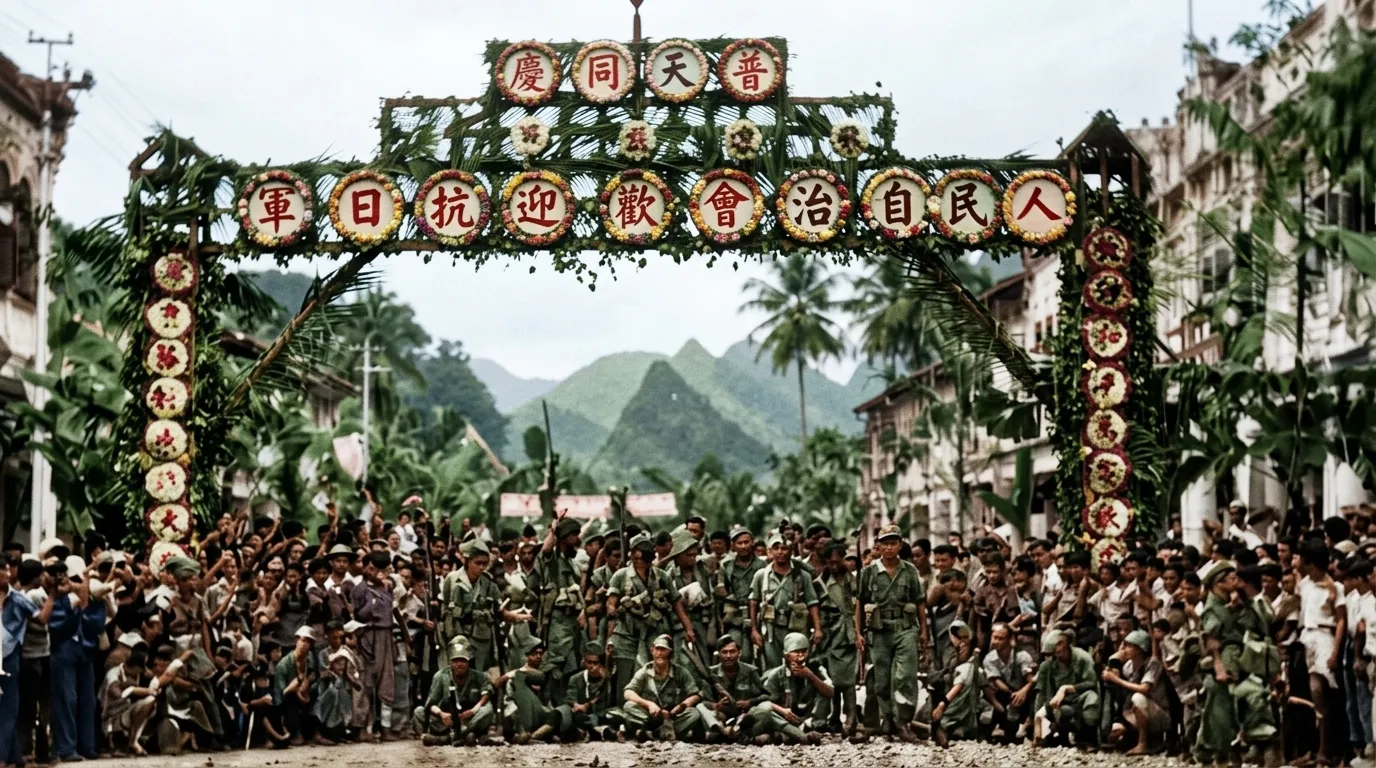
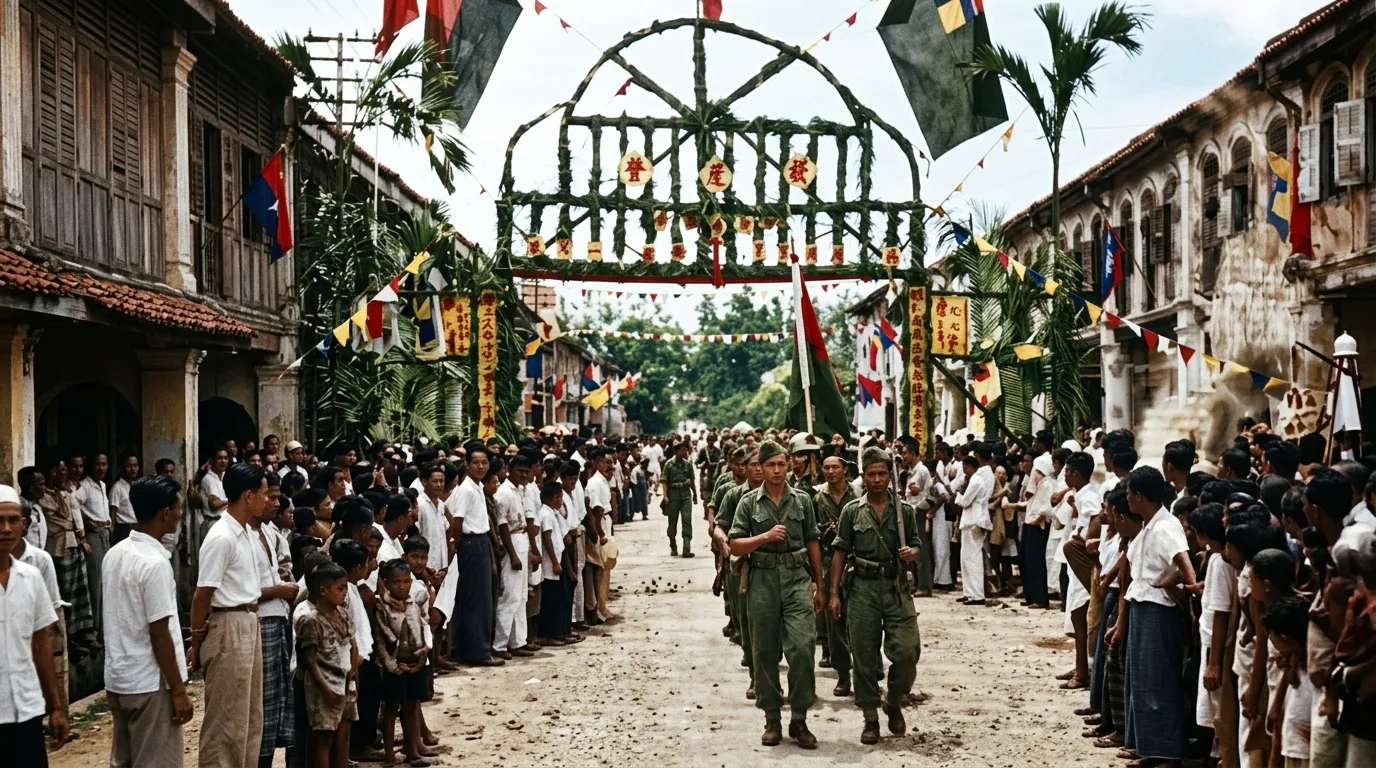
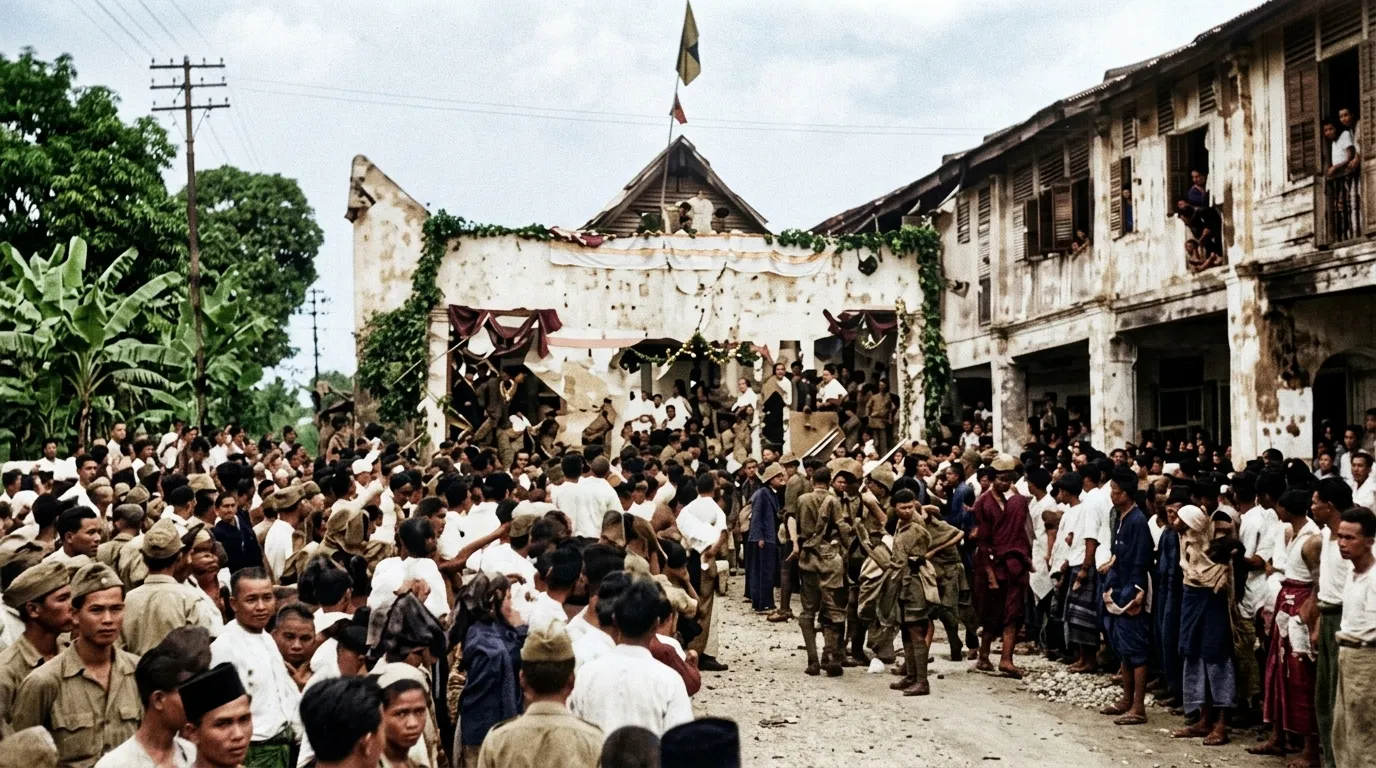
在社会秩序与法制建设方面,在英军重返马来亚前,人民抗日军已相继在雪兰莪、柔北、柔南、丁加奴、新山、马六甲及霹雳各地建立起州级与市镇级人民委员会。抗日军指战员荷枪实弹日夜巡逻,释放日据时期被关押的政治犯,取缔烟馆、赌窝与暗娼,逮捕并公审罪大恶极的马奸特务,迅速稳定了全马城乡治安。各民族人民在这段短暂而光辉的人民自治岁月里,第一次亲身体验到了没有殖民总督专权、没有种族歧视的人民民主新生活,以铁的事实证明马来亚各族人民完全有智慧、有能力自主管治好自己的国家。
In social law and order, prior to the British return, state-level and municipal People's Committees had been established across Selangor, Northern Johor, Southern Johor, Terengganu, Johor Bahru, Melaka, and Perak. Armed MPAJA detachments conducted 24-hour patrols, releasing political prisoners, dismantling Japanese-sponsored gambling syndicates and opium dens, and bringing collaborationist traitors and Kempeitai informants before public tribunals. Throughout this brief, glorious period of self-governance, the people of Malaya experienced for the first time a democratic civic life free of colonial despotism and racial discrimination, proving beyond doubt that the Malayan people possessed the full wisdom and capacity to govern their own country.
第三章:内奸莱特的右倾投降主义路线与《八大主张》的严重危害:抗日军被迫缴械复员的沉痛教训
Chapter 3: Traitor Lai Te's Right-Opportunist Capitulation and the Destructive Impact of the 'Eight-Point Program': The Bitter Lesson of MPAJA Demobilization
正当全马人民欢庆抗战胜利、各地人民委员会初具人民政权雏形的关键历史时刻,潜伏在马共最高领导层的内奸莱特,却为迎合即将重返马来亚的英殖民者,蓄意将蓬勃发展的民族独立革命推向妥协投降的深渊。1945年8月13日,马共召开中马各州地委和抗日军司令部代表联席会议,莱特在会上作长篇形势报告,公然抛出“不是与英帝对立,而是谅解”的投降主义结论。他宣称战后阶段是所谓“培养力量、准备条件夺取政权的阶段,而不是过左的武装斗争,不是立刻夺取政权”,主张在斗争方式上采取所谓“忍耐策略”,并在会上抛出了迎合英帝国主义的《八大主张》(1945年8月25日以《和平、民主、自治八大主张》之名发表)。
将《八大主张》与抗日战争时期马共中央于1943年2月通过的《抗日九大纲领》相对照,即可清晰洞察这一文件的右倾投降本质:1943年的《抗日九大纲领》明确规定“驱逐日本法西斯出马来亚,建立马来亚民主共和国”,并确立“改编人民抗日军为正规国防军,保卫国土”;而在莱特主导的《八大主张》中,不仅彻底阉割了“建立马来亚民主共和国”的最高建国纲领和民族独立口号,将其严重降格为在英国殖民统治框架下“成立各级民主自治政府”(见第2条),更把保卫国土的人民抗日军预设为等待当局抚恤安置的“复员”人员(见第5条),在政治纲领与斗争形式上全面倒退为右倾投降。
《八大主张》的出台与贯彻,给马共组织和马来亚民族解放事业带来了极其深重的消极影响与历史性破坏:第一,它在政治和思想上解除了全党的精神武装,散布对英殖民者“和平宪政让步”的虚妄幻想,强行压制了党内各级干部与抗日军将士乘权力真空期宣布独立、建立人民政权的革命主动性;第二,它在政权建设上导致1945年9月5日英军重返马来亚后,全马各地由抗日军掌管的州级与地方人民委员会毫无抵抗地被英国军事管制委员会(BMA)轻易接管;第三,它在军事上直接导致人民抗日军交出武器、解甲复员。由于英国殖民者的狡诈、内奸莱特以《八大主张》推行的出卖配合,以及当时马共和抗日军领导层政治上的不成熟,马来亚人民用鲜血换来的抗日胜利果实就这样被英殖民者轻易夺去。
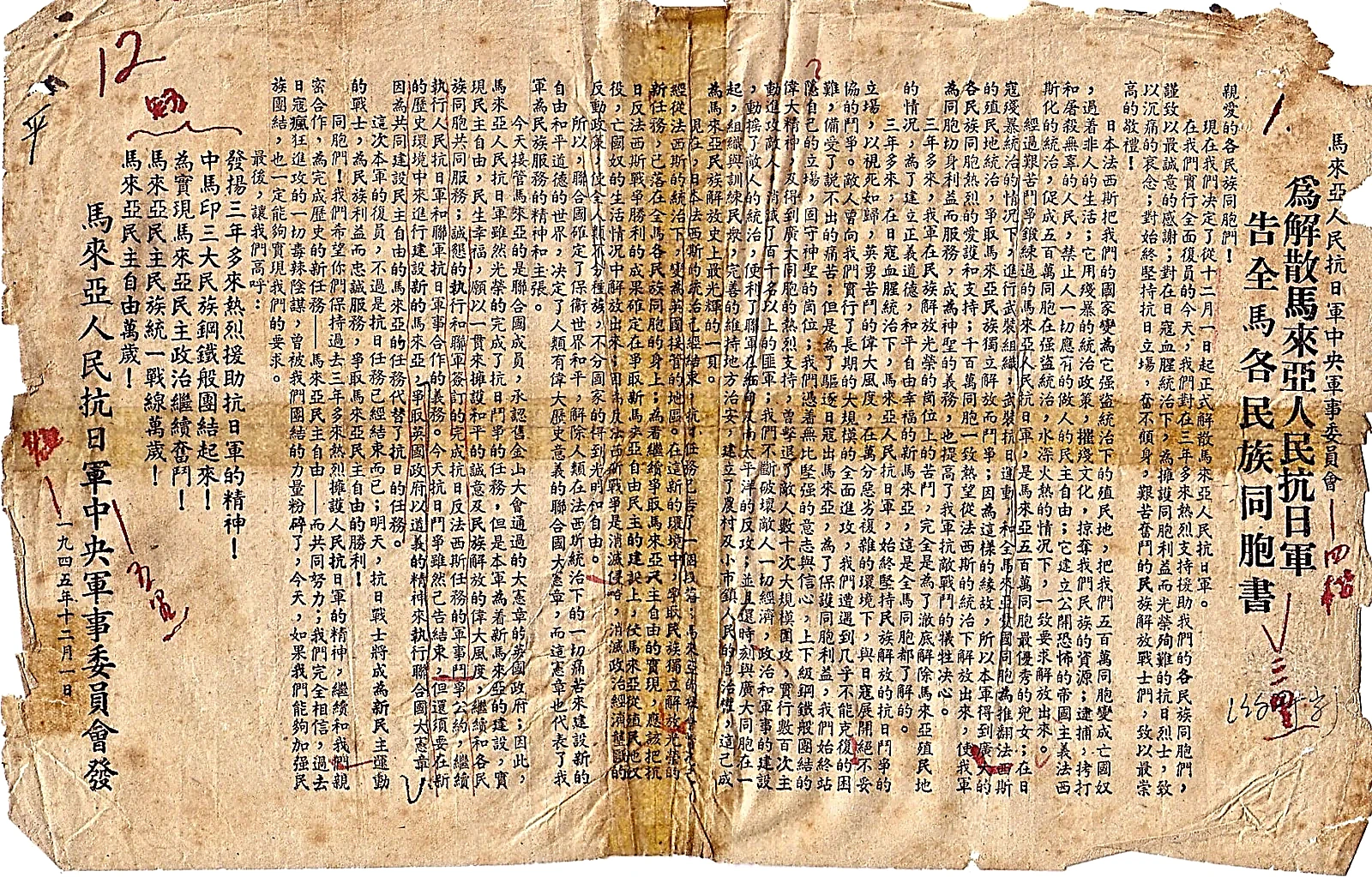
面对马共内部绝大多数忠诚干部的困惑与抵制,莱特以所谓“国际大局”与“忍耐策略”相压制。1945年11月15日,马共和抗日军正式接受英国军事管制政府提出的解散抗日军计划。1945年12月1日,抗日军所属33个中队另1个直属分队共6,800名公开武装战士,奉命在全马各州举行复员仪式正式解散。在柔佛新山、吉隆坡以及各支独立队驻地,战士们身着军装,噙着热泪,将三年零八个月赖以同日寇殊死搏杀的枪械交予接收的英军军官。抗日军中央军事委员会于1945年12月1日发表了《为解散抗日军告各族同胞书》。
幸而,身经百战的陈平、刘尧等前线忠诚将领始终保持着高度的历史警惕性。在1945年9月15日至17日召开的马共特别会议上,前线将领们顶住压力,坚决对机动小队与秘密部队进行了战略重组。在12月1日执行公开部队复员时,抗日军实行了“明交暗留”的战略自卫部署:仅将约4,000件陈旧磨损的枪械上交英军,而秘密部队则把约5,000件精良崭新的斯登冲锋枪、布伦机枪、大量弹药及无线电设备精心封油打包,秘密埋藏于全马各地的深山密林岩洞之中。这批战略预存的武器装备,为后来1948年6月英国殖民政权实施全面军事镇压时,马共迅速组建马来亚民族解放军重返丛林、开展抗英民族解放战争,保留了最宝贵、最关键的武装火种。
At the very juncture when all Malaya celebrated victory and the People's Committees formed the embryonic structure of popular sovereignty, traitor Lai Te, entrenched at the apex of the CPM leadership, deliberately steered the burgeoning national liberation movement into capitulation to appease the returning British colonialists. On 13 August 1945, at a joint conference of Central Malaya state/district committees and MPAJA headquarters representatives, Lai Te delivered a lengthy report concluding that the Party's posture must be 'not confrontation with British imperialism, but understanding.' Asserting that the postwar phase required a 'strategy of patience' rather than 'leftist armed struggle or immediate seizure of power,' Lai Te put forward his 'Eight-Point Program' (formally issued on 25 August 1945 as the Eight-Point Program for Peace, Democracy, and Autonomy).
Contrasting the 'Eight-Point Program' with the CPM's February 1943 'Nine-Point Anti-Japanese Program' exposes its right-opportunist capitulationist essence: whereas the 1943 Nine-Point Program explicitly proclaimed the supreme goal of 'driving Japanese fascism out of Malaya and establishing the Malayan Democratic Republic' and 'reorganizing the MPAJA into a regular national defense army to defend the homeland,' Lai Te's Eight-Point Program abandoned both the Democratic Republic program and the slogan of national independence. Instead, Article 2 downgraded the national goal to merely 'forming democratic self-governing administrations at various levels' within the British colonial framework, while Article 5 presupposed the 'demobilization' of the MPAJA into veterans awaiting state resettlement—representing a total retreat in both political program and form of struggle.
The promulgation and enforcement of the 'Eight-Point Program' inflicted severe negative consequences and historic damage upon the CPM and the Malayan revolution: First, politically and ideologically, it disarmed the Party by spreading illusions of British colonial goodwill and suppressing cadres' initiatives to proclaim independence during the power vacuum. Second, administrative authority over the state and municipal People's Committees was surrendered without resistance to the British Military Administration (BMA) after British troops landed in September 1945. Third, militarily, it led directly to the disarmament and demobilization of the MPAJA. Owing to British colonial cunning, traitor Lai Te's betrayal through the Eight-Point Program, and the political immaturity of the leadership at the time, the fruits of victory won with the blood of the Malayan people were thus easily seized by the British colonialists.
Suppressing widespread dissent within the ranks under the pretext of international directives and a 'strategy of patience,' Lai Te forced through the demobilization plan. On 15 November 1945, the CPM and the MPAJA formally accepted the BMA's disbandment plan. On 1 December 1945, 33 companies and one directly subordinate detachment totaling 6,800 armed fighters were officially demobilized across the states. In Johor Bahru, Kuala Lumpur, and regimental encampments, weeping guerrilla fighters in uniform laid down the rifles and machine guns they had carried through three years and eight months of bloodstained resistance, turning them over to British officers. On 1 December 1945, the MPAJA Central Military Committee issued its Proclamation on Disbanding the Anti-Japanese Army.
Remarkably, battle-hardened leaders including Chin Peng and Lau Yew maintained astute historical vigilance. During the CPM Special Conference of 15–17 September 1945, frontline commanders restructured mobile units and clandestine reserves. In executing the 1 December demobilization, the resistance enacted an ingenious strategy: surrendering approximately 4,000 worn, obsolete arms to British authorities, while secretly preserving roughly 5,000 pristine Sten guns, Bren light machine guns, munitions, and transceivers carefully greased and cached within deep jungle limestone caverns. These pre-positioned arsenals preserved the indispensable military foundation when Britain unleashed the 1948 Emergency War, enabling the swift rebirth of the Malayan National Liberation Army.
正当全马人民欢庆抗战胜利、各地人民委员会初具人民政权雏形的关键历史时刻,潜伏在马共最高领导层的内奸莱特,却为迎合即将重返马来亚的英殖民者,蓄意将蓬勃发展的民族独立革命推向妥协投降的深渊。1945年8月13日,马共召开中马各州地委和抗日军司令部代表联席会议,莱特在会上作长篇形势报告,公然抛出“不是与英帝对立,而是谅解”的投降主义结论。他宣称战后阶段是所谓“培养力量、准备条件夺取政权的阶段,而不是过左的武装斗争,不是立刻夺取政权”,主张在斗争方式上采取所谓“忍耐策略”,并在会上抛出了迎合英帝国主义的《八大主张》(1945年8月25日以《和平、民主、自治八大主张》之名发表)。
将《八大主张》与抗日战争时期马共中央于1943年2月通过的《抗日九大纲领》相对照,即可清晰洞察这一文件的右倾投降本质:1943年的《抗日九大纲领》明确规定“驱逐日本法西斯出马来亚,建立马来亚民主共和国”,并确立“改编人民抗日军为正规国防军,保卫国土”;而在莱特主导的《八大主张》中,不仅彻底阉割了“建立马来亚民主共和国”的最高建国纲领和民族独立口号,将其严重降格为在英国殖民统治框架下“成立各级民主自治政府”(见第2条),更把保卫国土的人民抗日军预设为等待当局抚恤安置的“复员”人员(见第5条),在政治纲领与斗争形式上全面倒退为右倾投降。
At the very juncture when all Malaya celebrated victory and the People's Committees formed the embryonic structure of popular sovereignty, traitor Lai Te, entrenched at the apex of the CPM leadership, deliberately steered the burgeoning national liberation movement into capitulation to appease the returning British colonialists. On 13 August 1945, at a joint conference of Central Malaya state/district committees and MPAJA headquarters representatives, Lai Te delivered a lengthy report concluding that the Party's posture must be 'not confrontation with British imperialism, but understanding.' Asserting that the postwar phase required a 'strategy of patience' rather than 'leftist armed struggle or immediate seizure of power,' Lai Te put forward his 'Eight-Point Program' (formally issued on 25 August 1945 as the Eight-Point Program for Peace, Democracy, and Autonomy).
Contrasting the 'Eight-Point Program' with the CPM's February 1943 'Nine-Point Anti-Japanese Program' exposes its right-opportunist capitulationist essence: whereas the 1943 Nine-Point Program explicitly proclaimed the supreme goal of 'driving Japanese fascism out of Malaya and establishing the Malayan Democratic Republic' and 'reorganizing the MPAJA into a regular national defense army to defend the homeland,' Lai Te's Eight-Point Program abandoned both the Democratic Republic program and the slogan of national independence. Instead, Article 2 downgraded the national goal to merely 'forming democratic self-governing administrations at various levels' within the British colonial framework, while Article 5 presupposed the 'demobilization' of the MPAJA into veterans awaiting state resettlement—representing a total retreat in both political program and form of struggle.
【反面教材档案:莱特为迎合英殖民者抛出的右倾投降纲领】《和平、民主、自治八大主张》原文条目:
1. 坚决拥护中、苏、美、英民主国家反法西斯同盟,拥护新成立的国际和平组织:联合国;
2. 在马来亚全境彻底实行民主制度,建立由全马各民族各抗日党派普选产生的全马民意代议机关(各民族代表大会),制定民主宪法,成立各级民主自治政府;
3. 彻底保障人民的基本民主权利,实行言论、出版、结社、集会、罢工、信仰、居住及迁徙之绝对自由;
4. 彻底取缔与废除日本法西斯占领时期的一切反动统治机构、伪军警特务组织、奴役制度与苛捐杂税,严惩罪大恶极的汉奸与变节者;
5. 正式承认马来亚人民抗日军及各抗日民众团体的合法崇高地位,由国家政府优待并抚恤抗日阵亡烈士家属与伤残军人,妥善安顿并保障全体复员抗日指战员之就业与生活;
6. 切实改善工人、农民及各族劳苦大众的经济生活,实行八小时工作制,增加工资,减免田租与苛税;
7. 保护各民族正当工商业发展,实行自由贸易,严厉打击官僚资本与奸商囤积居奇、投机倒把的黑市行为,迅速恢复生产,开仓平抑粮价物价,全面救济失业工人与饥民;
8. 实行全民免费普及教育,发展马来语、华语、泰米尔语及英语等各民族进步文化与出版事业,确立马来亚各民族在政治、经济、文化上一律平等的崇高原则。[Negative Historical Lesson: The Right-Opportunist Capitulationist Program Put Forward by Lai Te to Appease British Colonialists] Text of the Eight-Point Program for Peace, Democracy, and Autonomy:— 1945年8月25日发表之《和平、民主、自治八大主张》(莱特于1945年8月13日中马各州地委与抗日军司令部代表联席会议上为迎合英殖民者提出;该文件背弃1943年《抗日九大纲领》“建立马来亚民主共和国”目标,降格为“成立各级民主自治政府”,直接导致抗日军缴械复员,兹作为党史反面教材立此存照) | The Eight-Point Program for Peace, Democracy, and Autonomy (25 August 1945, proposed by Lai Te on 13 August 1945 to appease returning British colonialists; preserved here as a negative historical example illustrating the abandonment of the 1943 Nine-Point Program's 'Malayan Democratic Republic' in favor of 'self-government' and MPAJA demobilization)
1. Resolute support for the anti-fascist Allied democratic coalition (China, USSR, USA, Britain) and the United Nations;
2. Implement a democratic system throughout Malaya, establishing a popularly elected National Representative Assembly representing all nationalities and anti-Japanese parties to draft a constitution and form democratic self-governing governments at various levels [Note: downgrading the 1943 Nine-Point Program's 'Malayan Democratic Republic' to mere colonial 'self-government'];
3. Guarantee fundamental democratic rights: freedom of speech, press, association, assembly, strike, belief, residence, and movement;
4. Abolish all Japanese fascist ruling organs, puppet police/special service organizations, enslavement systems, and exorbitant levies, and severely punish traitors;
5. Officially recognize the legal status of the MPAJA and anti-Japanese mass organizations, with state pensions for martyrs' families and disabled veterans, and proper resettlement and livelihood guarantees for all demobilized anti-Japanese combatants [Note: presupposing the disarmament and demobilization of the MPAJA];
6. Improve the economic livelihood of workers, peasants, and toiling masses by enacting an eight-hour workday, wage increases, and reductions in rent and taxes;
7. Protect legitimate industry and commerce across all nationalities, practice free trade, combat black-market hoarding, restore production, stabilize prices, and relieve the unemployed;
8. Implement universal free education, develop progressive culture in Malay, Chinese, Tamil, and English, and establish political, economic, and cultural equality among all nationalities.
《八大主张》的出台与贯彻,给马共组织和马来亚民族解放事业带来了极其深重的消极影响与历史性破坏:第一,它在政治和思想上解除了全党的精神武装,散布对英殖民者“和平宪政让步”的虚妄幻想,强行压制了党内各级干部与抗日军将士乘权力真空期宣布独立、建立人民政权的革命主动性;第二,它在政权建设上导致1945年9月5日英军重返马来亚后,全马各地由抗日军掌管的州级与地方人民委员会毫无抵抗地被英国军事管制委员会(BMA)轻易接管;第三,它在军事上直接导致人民抗日军交出武器、解甲复员。由于英国殖民者的狡诈、内奸莱特以《八大主张》推行的出卖配合,以及当时马共和抗日军领导层政治上的不成熟,马来亚人民用鲜血换来的抗日胜利果实就这样被英殖民者轻易夺去。
The promulgation and enforcement of the 'Eight-Point Program' inflicted severe negative consequences and historic damage upon the CPM and the Malayan revolution: First, politically and ideologically, it disarmed the Party by spreading illusions of British colonial goodwill and suppressing cadres' initiatives to proclaim independence during the power vacuum. Second, administrative authority over the state and municipal People's Committees was surrendered without resistance to the British Military Administration (BMA) after British troops landed in September 1945. Third, militarily, it led directly to the disarmament and demobilization of the MPAJA. Owing to British colonial cunning, traitor Lai Te's betrayal through the Eight-Point Program, and the political immaturity of the leadership at the time, the fruits of victory won with the blood of the Malayan people were thus easily seized by the British colonialists.
“马共在日本投降后,原可以像印尼和越南共产党一样取得政权,当时马共的公开和秘密队伍总共一万多人,而印尼和越南宣布独立时的力量才几百人。如果不是莱特长期领导,日本投降后,马共会宣布马来亚独立。莱特这个内奸对马来亚的独立进程造成严重的损害。”"After Japan surrendered, the CPM could have taken power just as the Indonesian and Vietnamese communists did. The CPM had more than ten thousand members, open and underground, whereas Indonesia and Vietnam each had only a few hundred when they proclaimed independence. Had it not been for Lai Te's long tenure as leader, the CPM would have declared Malayan independence right after Japan's defeat. Lai Te's treachery dealt a severe blow to Malaya's road to independence."— 陈平(1998年6月《星洲日报》记者专访文献) | Chin Peng, Interview with Sin Chew Daily (June 1998)
面对马共内部绝大多数忠诚干部的困惑与抵制,莱特以所谓“国际大局”与“忍耐策略”相压制。1945年11月15日,马共和抗日军正式接受英国军事管制政府提出的解散抗日军计划。1945年12月1日,抗日军所属33个中队另1个直属分队共6,800名公开武装战士,奉命在全马各州举行复员仪式正式解散。在柔佛新山、吉隆坡以及各支独立队驻地,战士们身着军装,噙着热泪,将三年零八个月赖以同日寇殊死搏杀的枪械交予接收的英军军官。抗日军中央军事委员会于1945年12月1日发表了《为解散抗日军告各族同胞书》。
Suppressing widespread dissent within the ranks under the pretext of international directives and a 'strategy of patience,' Lai Te forced through the demobilization plan. On 15 November 1945, the CPM and the MPAJA formally accepted the BMA's disbandment plan. On 1 December 1945, 33 companies and one directly subordinate detachment totaling 6,800 armed fighters were officially demobilized across the states. In Johor Bahru, Kuala Lumpur, and regimental encampments, weeping guerrilla fighters in uniform laid down the rifles and machine guns they had carried through three years and eight months of bloodstained resistance, turning them over to British officers. On 1 December 1945, the MPAJA Central Military Committee issued its Proclamation on Disbanding the Anti-Japanese Army.
幸而,身经百战的陈平、刘尧等前线忠诚将领始终保持着高度的历史警惕性。在1945年9月15日至17日召开的马共特别会议上,前线将领们顶住压力,坚决对机动小队与秘密部队进行了战略重组。在12月1日执行公开部队复员时,抗日军实行了“明交暗留”的战略自卫部署:仅将约4,000件陈旧磨损的枪械上交英军,而秘密部队则把约5,000件精良崭新的斯登冲锋枪、布伦机枪、大量弹药及无线电设备精心封油打包,秘密埋藏于全马各地的深山密林岩洞之中。这批战略预存的武器装备,为后来1948年6月英国殖民政权实施全面军事镇压时,马共迅速组建马来亚民族解放军重返丛林、开展抗英民族解放战争,保留了最宝贵、最关键的武装火种。
Remarkably, battle-hardened leaders including Chin Peng and Lau Yew maintained astute historical vigilance. During the CPM Special Conference of 15–17 September 1945, frontline commanders restructured mobile units and clandestine reserves. In executing the 1 December demobilization, the resistance enacted an ingenious strategy: surrendering approximately 4,000 worn, obsolete arms to British authorities, while secretly preserving roughly 5,000 pristine Sten guns, Bren light machine guns, munitions, and transceivers carefully greased and cached within deep jungle limestone caverns. These pre-positioned arsenals preserved the indispensable military foundation when Britain unleashed the 1948 Emergency War, enabling the swift rebirth of the Malayan National Liberation Army.
第四章:英国重归统治的残酷真相与重燃火种:从妥协退让到重入丛林的血泪觉醒
Chapter 4: The Brutal Reality of British Reoccupation: From Strategic Compromise to Rekindling the Armed Struggle in the Jungle
历史以极其残酷的现实击碎了合法改良的幻想。英军重新占领马来亚后,立即成立了英国军事管理机构(BMA)。殖民当局非但没有兑现战时关于改善民生、保障民主权利的诺言,反而以征服者的姿态压制工农。每位复员战士仅领到微薄的350元所谓“退伍救济金”,在战后剧烈的通货膨胀中迅速消耗殆尽;而英国军管会更扶植橡胶与锡矿垄断资本恢复殖民剥削,引发全马物价飞涨、民不聊生。
英国殖民统治者重返半岛后,一面在表面上向抗日军代表颁授战役勋章,一面却无理逮捕雪兰莪人民抗日同盟会领导人孙光(Soon Kwong)并强行判处四年苦役。正如陈平在回忆录《我方的历史》中所记述,当马共与抗日军代表团在1946年1月新加坡授勋期间以集体拒绝拜会英军海陆空三军司令抗议英方暴行后,原英军136部队驻马首席联络官约翰·戴维斯上校(Col. John Davis)于1月15日赶赴吉隆坡,递出一份预先拟好的致东南亚盟军最高统帅蒙巴顿勋爵《道歉信》。面对这封措辞屈辱的文书,陈平与刘尧悲愤交加、坚决抵制,然而内奸莱特却为迎合英军当局,强令代表团忍辱签字。这一被称为“屈辱道歉信”的历史事件,令陈平与前线干部进一步看清了莱特右倾投降路线的卑劣本质。
被出卖、被缴械、被迫害的血泪教训,让全马各族工农大众与全体马共指战员深刻认清了莱特右倾投降路线的危害。在清算内奸莱特并纠正右倾机会主义路线后,陈平、刘尧等前线将领在复员期间实行“明交暗留”所秘藏于深山岩洞的五千余支精良武器,成为日后革命自卫的坚实底气。
解甲归田的战士们脱下军装,以坚韧不拔的意志深入到橡胶园、锡矿场与铁路工会,迅速组建起涵盖近五十万会员的泛马各业职工总会(PMFTU),掀起了声势浩大的反帝工运浪潮;马共更与马来民族党(PKMM)等进步力量建立起广泛的反帝统一战线。当1948年6月英国殖民政权颁布《紧急状态条例》、全面查封左翼工会与进步社团并实施大搜捕时,深山岩洞中封存的五千支战枪破土而出,马共指战员与各族优秀儿女毅然重返热带雨林,正式打响了抗英民族解放战争。
History swiftly demolished any illusions of constitutional accommodation. Upon re-imposing colonial rule, the British established the British Military Administration (BMA). Rather than honoring wartime pledges of social justice and civil liberties, the imperial authorities governed with martial arrogance. Each demobilized partisan received a meager 350-dollar gratuity, rendered worthless by soaring inflation. Meanwhile, British commercial cartels reclaimed rubber and tin monopolies, plunging the peninsula into social misery.
Upon reoccupying the peninsula, while outwardly conferring campaign medals on MPAJA representatives, the British Military Administration arbitrarily arrested Selangor Anti-Japanese Union leader Soon Kwong and sentenced him to four years' hard labor. As Chin Peng recounted in his memoirs "My Side of History", after the CPM and MPAJA delegation in Singapore boycotted scheduled official visits to the British Service Commanders in January 1946 to protest Soon Kwong's persecution, former Force 136 chief Malaya liaison officer Colonel John Davis hurried to Kuala Lumpur on 15 January 1946 with a pre-drafted "Letter of Apology" addressed to Supreme Allied Commander Lord Mountbatten. Outraged by the humiliating text, Chin Peng and Lau Yew strongly objected, yet traitor Lai Te, eager to appease the British authorities, ordered the delegation to sign under duress. This "humiliating letter of apology" incident further exposed to Chin Peng and frontline cadres the treacherous nature of Lai Te's right-opportunist capitulationist line.
The bitter lessons of betrayal, disarmament, and repression awakened the multi-ethnic masses and all CPM combatants to the grave damage caused by Lai Te's right-opportunist capitulationist line. Following the exposure of traitor Lai Te and the rectification of the right-opportunist line, the more than 5,000 pristine automatic weapons cached deep within jungle caverns by Chin Peng, Lau Yew, and frontline commanders became the bedrock of revolutionary self-defense.
Demobilized partisans channeled their resolve into the labor movement, mobilizing over 460,000 workers into the Pan-Malayan Federation of Trade Unions (PMFTU) and forging a broad anti-imperialist united front with the Malay Nationalist Party (PKMM). When Britain declared the Emergency in June 1948, banning progressive unions and launching mass arrests, the cached weapons were unearthed, and Malaya's patriots returned to the jungle to wage the Anti-British National Liberation War.
历史以极其残酷的现实击碎了合法改良的幻想。英军重新占领马来亚后,立即成立了英国军事管理机构(BMA)。殖民当局非但没有兑现战时关于改善民生、保障民主权利的诺言,反而以征服者的姿态压制工农。每位复员战士仅领到微薄的350元所谓“退伍救济金”,在战后剧烈的通货膨胀中迅速消耗殆尽;而英国军管会更扶植橡胶与锡矿垄断资本恢复殖民剥削,引发全马物价飞涨、民不聊生。
英国殖民统治者重返半岛后,一面在表面上向抗日军代表颁授战役勋章,一面却无理逮捕雪兰莪人民抗日同盟会领导人孙光(Soon Kwong)并强行判处四年苦役。正如陈平在回忆录《我方的历史》中所记述,当马共与抗日军代表团在1946年1月新加坡授勋期间以集体拒绝拜会英军海陆空三军司令抗议英方暴行后,原英军136部队驻马首席联络官约翰·戴维斯上校(Col. John Davis)于1月15日赶赴吉隆坡,递出一份预先拟好的致东南亚盟军最高统帅蒙巴顿勋爵《道歉信》。面对这封措辞屈辱的文书,陈平与刘尧悲愤交加、坚决抵制,然而内奸莱特却为迎合英军当局,强令代表团忍辱签字。这一被称为“屈辱道歉信”的历史事件,令陈平与前线干部进一步看清了莱特右倾投降路线的卑劣本质。
History swiftly demolished any illusions of constitutional accommodation. Upon re-imposing colonial rule, the British established the British Military Administration (BMA). Rather than honoring wartime pledges of social justice and civil liberties, the imperial authorities governed with martial arrogance. Each demobilized partisan received a meager 350-dollar gratuity, rendered worthless by soaring inflation. Meanwhile, British commercial cartels reclaimed rubber and tin monopolies, plunging the peninsula into social misery.
Upon reoccupying the peninsula, while outwardly conferring campaign medals on MPAJA representatives, the British Military Administration arbitrarily arrested Selangor Anti-Japanese Union leader Soon Kwong and sentenced him to four years' hard labor. As Chin Peng recounted in his memoirs "My Side of History", after the CPM and MPAJA delegation in Singapore boycotted scheduled official visits to the British Service Commanders in January 1946 to protest Soon Kwong's persecution, former Force 136 chief Malaya liaison officer Colonel John Davis hurried to Kuala Lumpur on 15 January 1946 with a pre-drafted "Letter of Apology" addressed to Supreme Allied Commander Lord Mountbatten. Outraged by the humiliating text, Chin Peng and Lau Yew strongly objected, yet traitor Lai Te, eager to appease the British authorities, ordered the delegation to sign under duress. This "humiliating letter of apology" incident further exposed to Chin Peng and frontline cadres the treacherous nature of Lai Te's right-opportunist capitulationist line.
被出卖、被缴械、被迫害的血泪教训,让全马各族工农大众与全体马共指战员深刻认清了莱特右倾投降路线的危害。在清算内奸莱特并纠正右倾机会主义路线后,陈平、刘尧等前线将领在复员期间实行“明交暗留”所秘藏于深山岩洞的五千余支精良武器,成为日后革命自卫的坚实底气。
解甲归田的战士们脱下军装,以坚韧不拔的意志深入到橡胶园、锡矿场与铁路工会,迅速组建起涵盖近五十万会员的泛马各业职工总会(PMFTU),掀起了声势浩大的反帝工运浪潮;马共更与马来民族党(PKMM)等进步力量建立起广泛的反帝统一战线。当1948年6月英国殖民政权颁布《紧急状态条例》、全面查封左翼工会与进步社团并实施大搜捕时,深山岩洞中封存的五千支战枪破土而出,马共指战员与各族优秀儿女毅然重返热带雨林,正式打响了抗英民族解放战争。
The bitter lessons of betrayal, disarmament, and repression awakened the multi-ethnic masses and all CPM combatants to the grave damage caused by Lai Te's right-opportunist capitulationist line. Following the exposure of traitor Lai Te and the rectification of the right-opportunist line, the more than 5,000 pristine automatic weapons cached deep within jungle caverns by Chin Peng, Lau Yew, and frontline commanders became the bedrock of revolutionary self-defense.
Demobilized partisans channeled their resolve into the labor movement, mobilizing over 460,000 workers into the Pan-Malayan Federation of Trade Unions (PMFTU) and forging a broad anti-imperialist united front with the Malay Nationalist Party (PKMM). When Britain declared the Emergency in June 1948, banning progressive unions and launching mass arrests, the cached weapons were unearthed, and Malaya's patriots returned to the jungle to wage the Anti-British National Liberation War.
回溯自日寇南侵,英军失利,全马沦陷,我全马人民为着保卫马来亚,为着身家性命,在共产党正确领导之下,拿起了武器,成立马来亚人民抗日军,在敌后坚持抗日游击战争……三年零八个月中,统计大小战斗三百四十余次,毙伤日寇五千五百余名。今天,战争虽告结束,抗日军奉命于十二月一日正式退伍复员,然我全体退伍同志定当继续团结全马各民族同胞,为实现真正之民主自由与民族解放而奋斗!Looking back to when the Japanese invaders pushed south, British forces were defeated, and all of Malaya fell, our people of Malaya—to defend Malaya and protect our lives and homes—took up arms under the correct leadership of the Communist Party, founded the Malayan People's Anti-Japanese Army, and waged guerrilla warfare behind enemy lines... Over three years and eight months, we fought more than 340 engagements great and small, killing or wounding over 5,500 Japanese troops. Today, though the war has ended and the Anti-Japanese Army is ordered to formally demobilize on December 1, all our demobilized comrades shall continue to unite our compatriots of all nationalities to strive for genuine democratic freedom and national liberation!— 《马来亚人民抗日军彭亨西区第六独立队退伍宣言》(1945年11月25日印历史原件) | Demobilization Declaration of the MPAJA Western Pahang 6th Independent Regiment (Original Printed Broadsheet, November 25, 1945)