第15集:华玲和谈与历史破冰(1955年12月28日-29日)
Episode 15: The Baling Peace Talks (December 28–29, 1955)
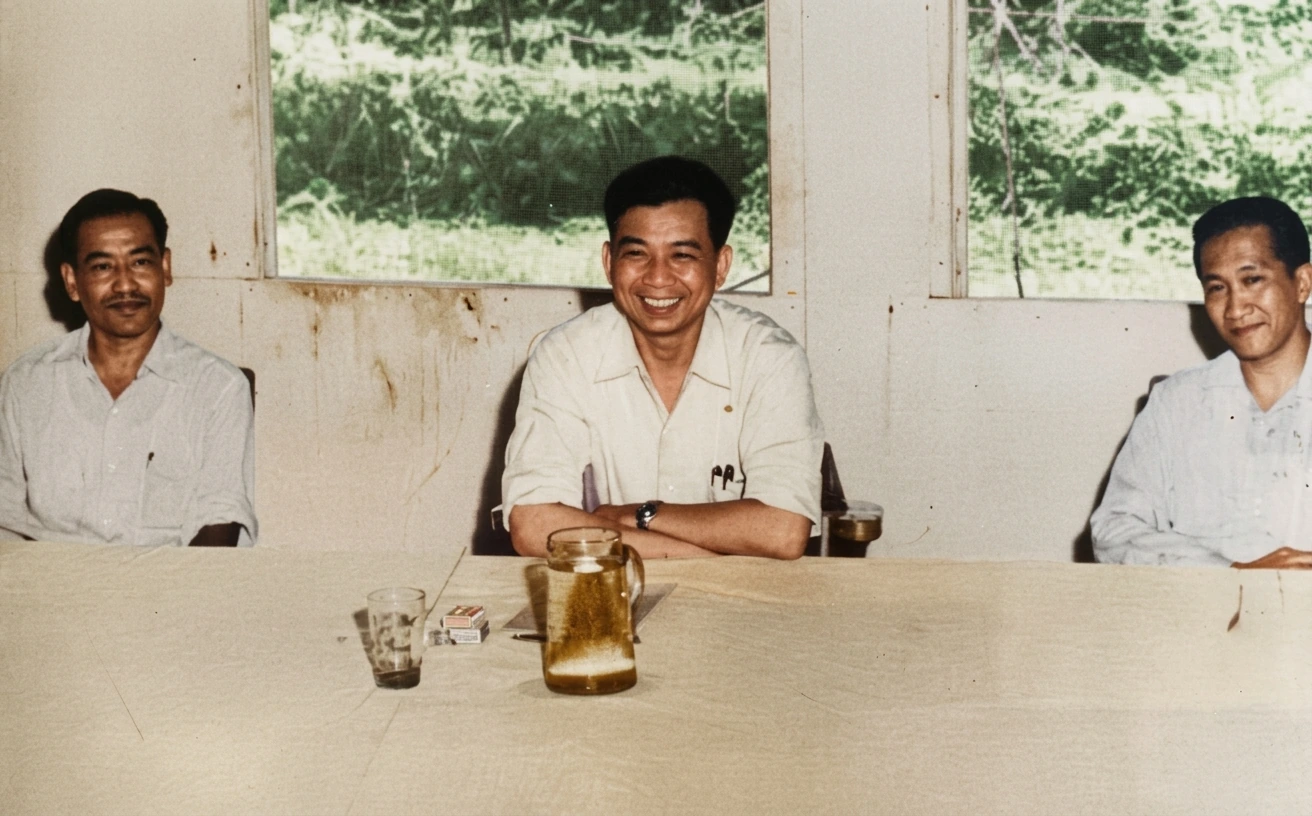
1955年12月28日至29日,在吉打州北部边陲小镇华玲的一所英校教室内,举世瞩目的“华玲和谈”(Baling Talks)正式举行。以新当选联合邦首席部长东姑阿都拉曼、新加坡首席部长大卫·马绍尔、马华公会总会长陈祯禄为首的官方代表团,同走出原始丛林的马共总书记陈平、中央委员陈田与拉昔·迈丁展开了整整两天两夜的闭门交锋。这是一场深刻改变马来亚现代国运的历史对话:马共本着结束战乱的真诚愿望,提出放下武器、作为合法政党参与国家宪政民主建设;然而背后的英国殖民当局却向东姑施加绝密政治紧箍咒,坚决要求马共“无条件投降”并接受无限期拘押与安全甄别审查。尽管和谈最终因殖民霸权与买办势力的阻挠而破裂,陈平在谈判桌上那句掷地有声的庄严承诺:“只要马来亚联合邦民选政府完全掌握内部安全与本地武装部队控制权,我们就停止敌对行动并放下武器”,彻底剥夺了大英帝国以“剿共维稳”为由赖在马来亚不走的任何法理与道义借口,直接迫使伦敦白厅在二十个月后的1957年8月31日提前承认马来亚联合邦独立。然而,解密档案与当事人自白更揭开了历史最深沉的悖论:大英帝国与执政当局在独立后悍然封杀马共的所有和平停火呼吁,执意将战火延烧三十余年。马共志士为国家独立流尽鲜血,却在独立之日被剥夺了和平建设祖国的权利,铸就了二十世纪民族解放史上最为悲壮的丰碑。
On December 28 and 29, 1955, inside a modest English school classroom in the northern Kedah border town of Baling, the historic Baling Talks convened. Chief Minister Tunku Abdul Rahman, Singapore Chief Minister David Marshall, and MCA President Sir Tan Cheng Lock confronted CPM Secretary-General Chin Peng, Central Committee member Chen Tien, and Malay revolutionary leader Rashid Maidin across two days of intense closed-door negotiations. This encounter irrevocably altered the destiny of Malaya. The CPM offered to lay down arms and integrate into constitutional politics as a recognized party; yet British colonial authorities imposed a strict back-channel embargo, instructing Tunku to demand unconditional surrender and indefinite security detention. Though the talks collapsed under imperial intransigence, Chin Peng thundered a historic pledge: the moment the elected Malayan government achieved full sovereign control over internal security and armed forces, the CPM would cease hostilities and lay down its weapons. This single commitment dismantled Whitehall’s pretext for indefinite colonial occupation, directly accelerating the proclamation of Merdeka on August 31, 1957. Yet declassified records and candid memoirs reveal the supreme paradox: post-Merdeka peace overtures from the CPM were ruthlessly rejected by the Alliance regime, extending the Emergency for decades. Those who bled to win Malaya’s independence were tragic strangers to its inaugural dawn.
第一章:和平的曙光:1955年联邦普选与仁丹、高乌秘密预备会
Chapter 1: The Glimmer of Peace: The 1955 General Elections and Preliminary Border Talks
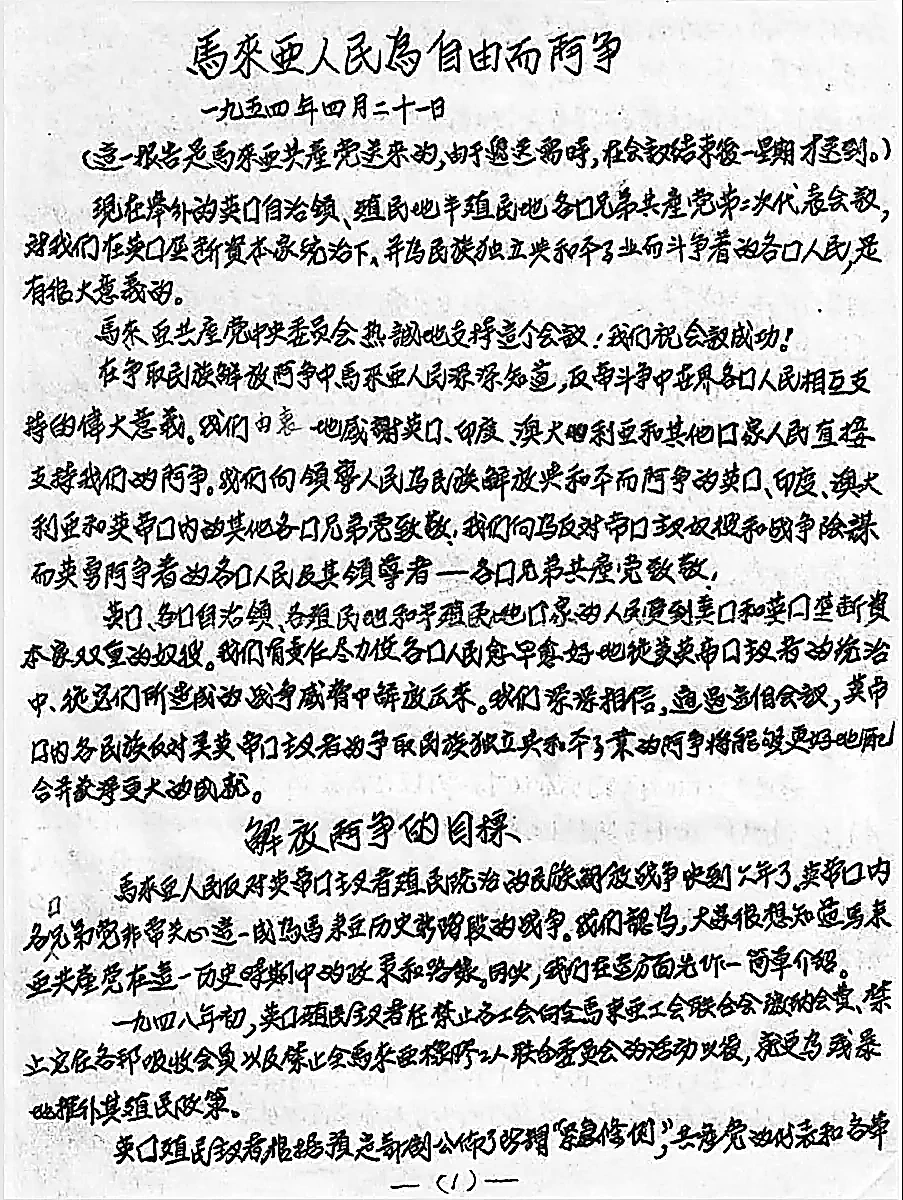
1954年4月21日,马共驻英国全权代表林丰美在伦敦举行的英联邦各国共产党与工人党代表大会上,正式发表题为《马来亚人民为自由而斗争》(Malaya Fights for Freedom)的划时代宣言。这份历史文献第一次向国际社会全面系统地阐明了马共反对大英帝国殖民奴役的民族解放纲领,并明确释放出重要的政策信号:马共不仅在丛林中开展英勇的武装自卫,更愿意在尊重人民民主权利与民族独立尊严的前提下,通过和平政治谈判解决武装冲突。
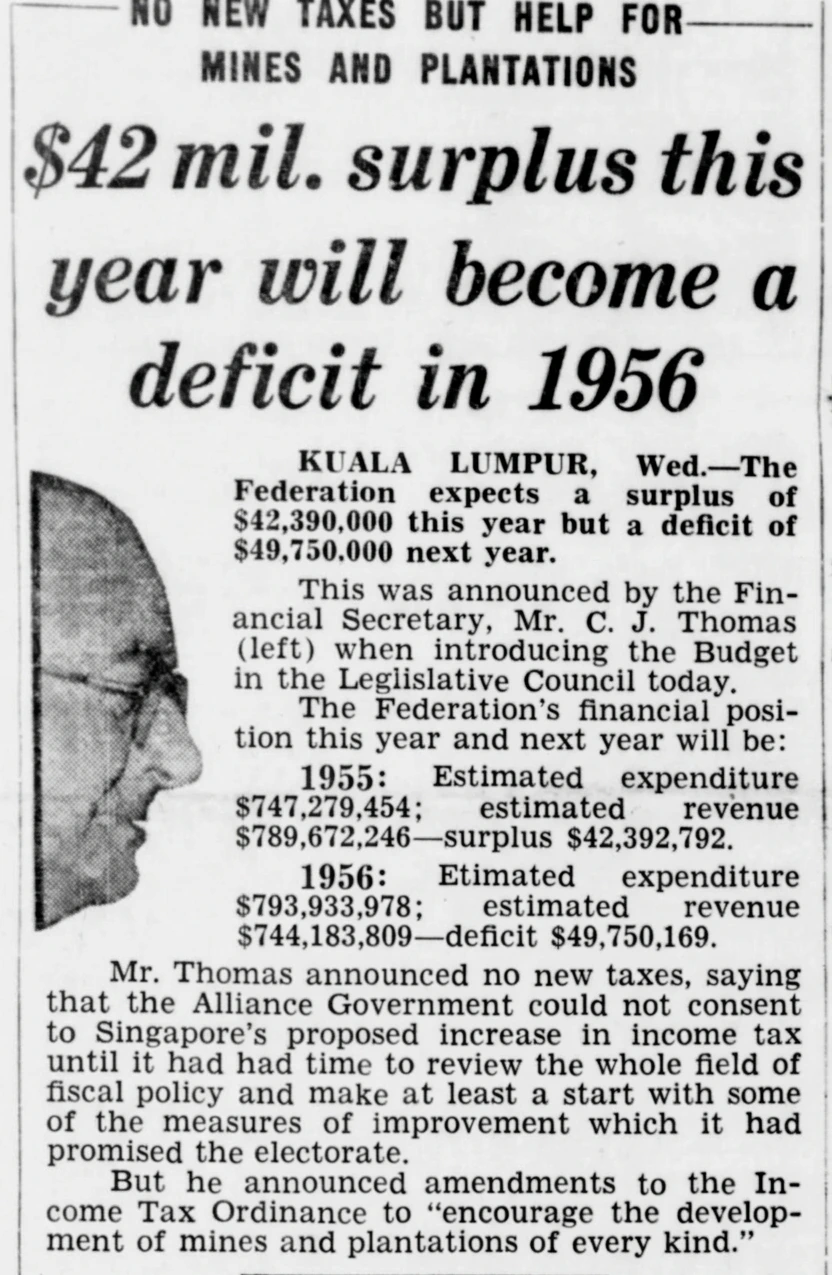
与马共主动倡导和平相呼应的,是英帝国主义在马来亚面临的全面财政与军事困境。截至1954年底,英军在马来亚执行紧急状态军事围剿的累计直接开销已高达1亿3,500万英镑(英国殖民事务副大臣霍普金森在国会正式确认)。庞大军费让英国财政不堪重负,马来亚联合邦财政更从战后初期的盈余坠入巨额赤字深渊。面对马共机动灵活的丛林麻雀战,英国军械优势深陷泥潭,前英国殖民地部大臣利特尔顿甚至在伦敦坦白承认:“我们可能永远无法获得类似二战胜利那样的完全胜利。”殖民战争难以为继,全马各民族人民反对战争、渴望和平的呼声排山倒海。
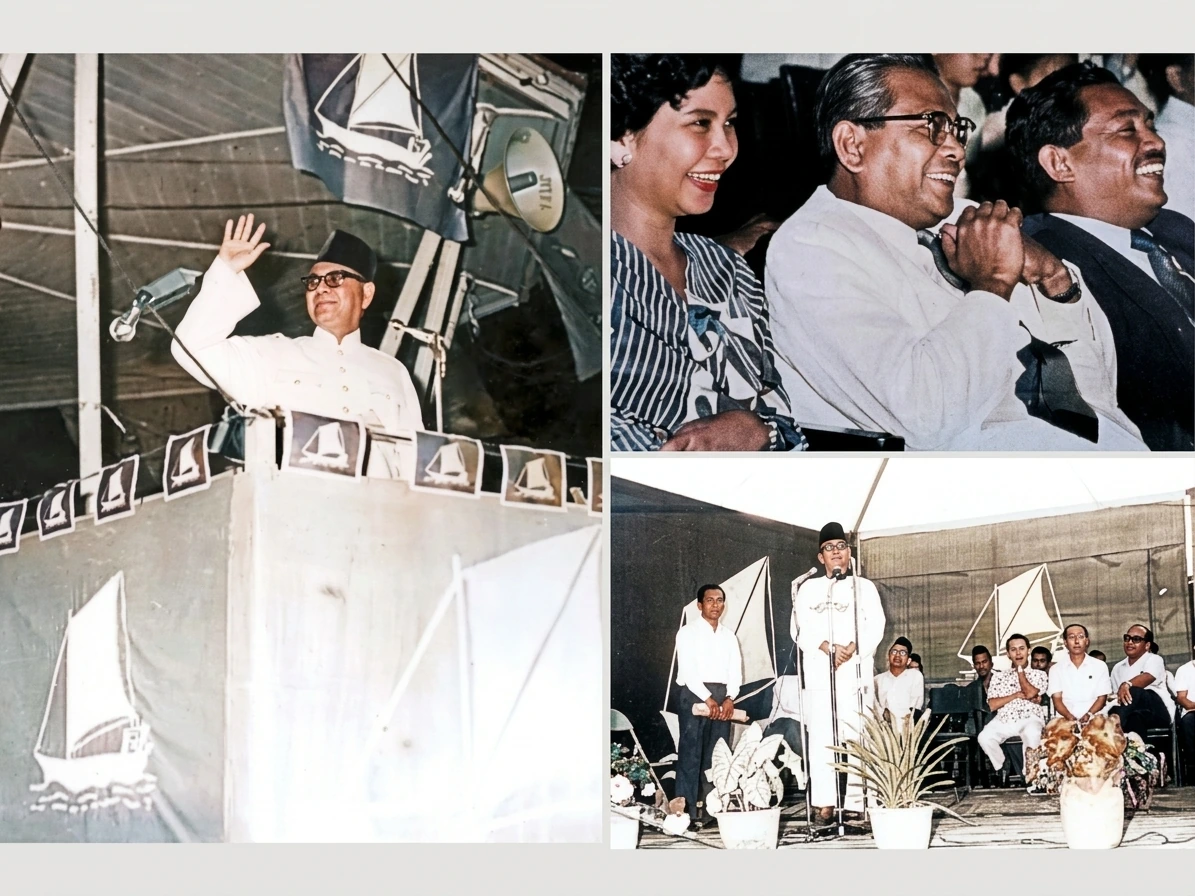
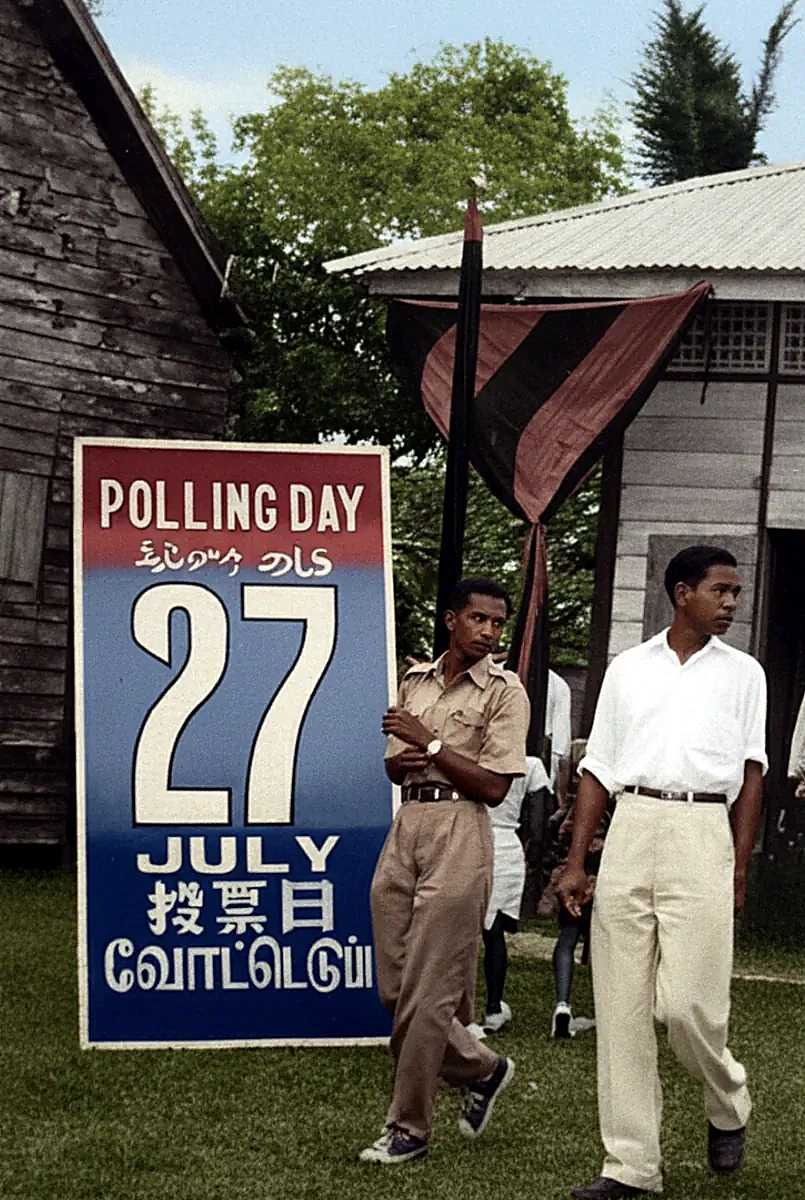
1955年7月27日,马来亚联合邦举行历史上首次全国立法议会大选。由东姑阿都拉曼领导的巫统、马华公会与国大党组成的“联盟党”(Alliance Party),敏锐捕捉到广大民众要求终结战争的强烈愿望,打出“两年自治”、“四年独立”、“进山见陈平”三大竞选口号,最终横扫52个民选议席中的51席,取得压倒性胜利,东姑随之出任联合邦首席部长。
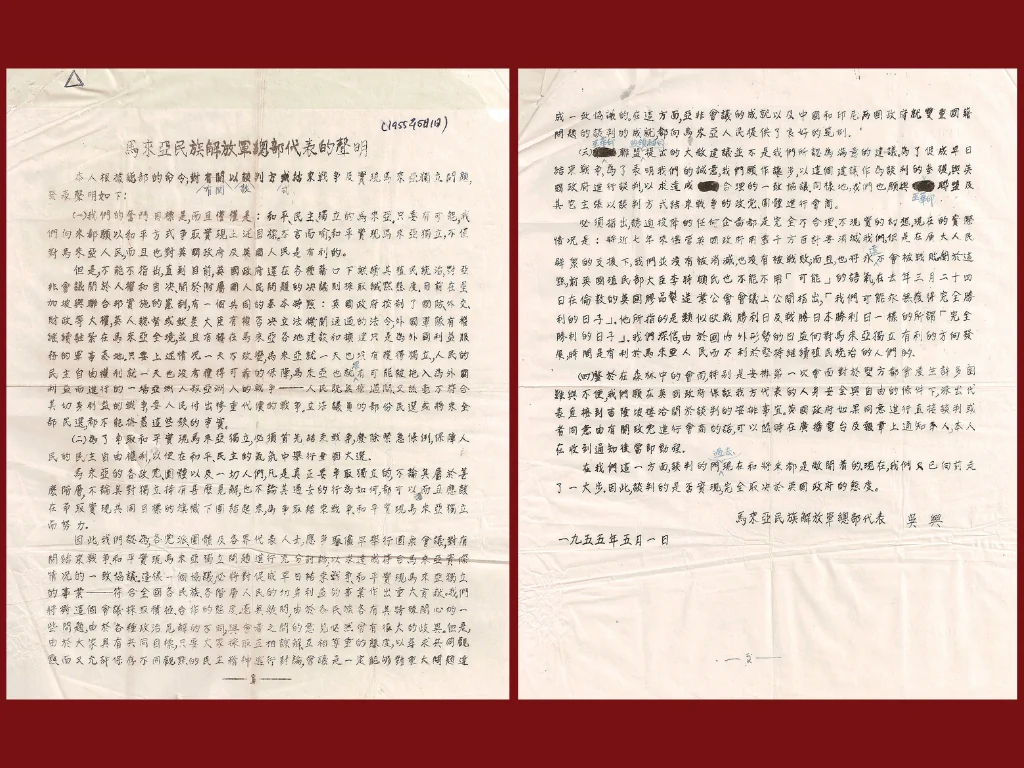
早在大选前的1955年5月1日,马共中央便以“吴兴”化名发出《马来亚民族解放军总部代表的声明》,正式向吉隆坡当局建议和谈。声明充分汲取万隆亚非会议的反帝精神,郑重呼吁全马各政党、各团体跨越政治分歧举行圆桌会议,甚至主动表示愿以联盟党提出的大赦建议作为谈判基础。8月5日东姑就职后以个人名义发出和谈信号,虽然殖民当局在9月9日单方面发布带有诱降意味的“大赦令”,但马共中央依然顾全大局,约定了联络密码并保持高层绝密通信。
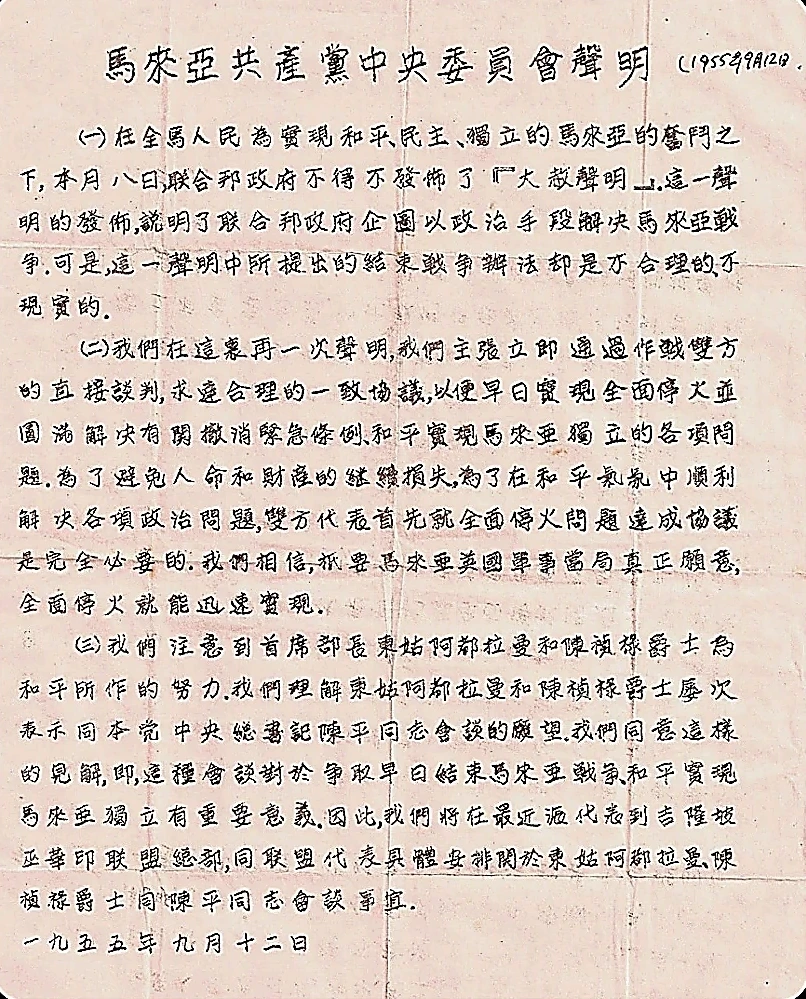
大选尘埃落定后,英殖民当局企图利用新政权成立的契机分化抗英力量。1955年9月9日,殖民政府单方面发布所谓“大赦令”,妄图迫使马共武装人员交枪出降并接受政治甄别。面对殖民主义者的政治诱降,马共中央于1955年9月12日迅速发表《马来亚共产党中央委员会声明》(即下述油印历史文献原件)。
马共中央在声明中一针见血地驳斥了大赦令附带的屈辱条件,严正指出任何强加投降审查的方案既不合理也绝不现实;声明郑重倡议:交战双方应立即举行直接政治和谈,实行全马普遍停火,撤废严苛殖民法令,保障各民族民主权利以加速国家真正独立;同时高度肯定首席部长东姑阿都拉曼与陈祯禄爵士谋求和平的诚意,正式宣布马共准备派遣代表前往吉隆坡联盟总部商讨会面具体办法。这份纲领性声明不仅彻底粉碎了殖民当局分化诱降的阴谋,更为后续的仁丹预备会铺平了道路。
在1955年9月12日马共中央发表声明倡议直接政治和谈后,双方通过秘密联络通道敲定预备会晤安排。10月17日,马共代表陈田与李进喜走出丛林,在霹雳北部仁丹(Klian Intan)同联合邦政府代表助理教育部长朱运兴、副警察总监威利(I. S. Wylie)举行第一次和谈预备会议。
1955年10月25日,吉兰丹州联盟的三位联邦立法议员阿都卡立·阿旺奥斯曼(Abd. Khalid bin Awang Osman,吉兰丹南区联邦立法议员)、东姑因陀罗·佩特拉(Tengku Indra Petra,吉兰丹北区联邦立法议员)等自哥打峇鲁巫统办事处(C/O. Pejabat UMNO Kota Bharu)联名向马共发出两页长的马来文正式复函(即下述档案原件,复1955年7月1日马共倡议圆桌和平会议之来函)。在这份珍贵文献中,联盟联邦立法议员不仅开篇向马共指战员致敬,尊称其为“舍生忘死、忍受苦难的爱国者(sa-bagai Patriot)”,更明确承认联盟在大选前写入竞选宣言(manifesto Perikatan sa-belum pilehan raya Federal)的废除殖民统治、建立自由独立民主马来亚的目标,“与共产党武装部队将殖民主义驱逐出马来亚的目标是完全一致的”,同时主张以宪政民主取代武装斗争以加快实现独立,并郑重承诺倘若联盟未能在四年期限内为马来亚取得独立,全体联盟议员将辞去全马各级议会席位、拒绝与殖民政府合作。
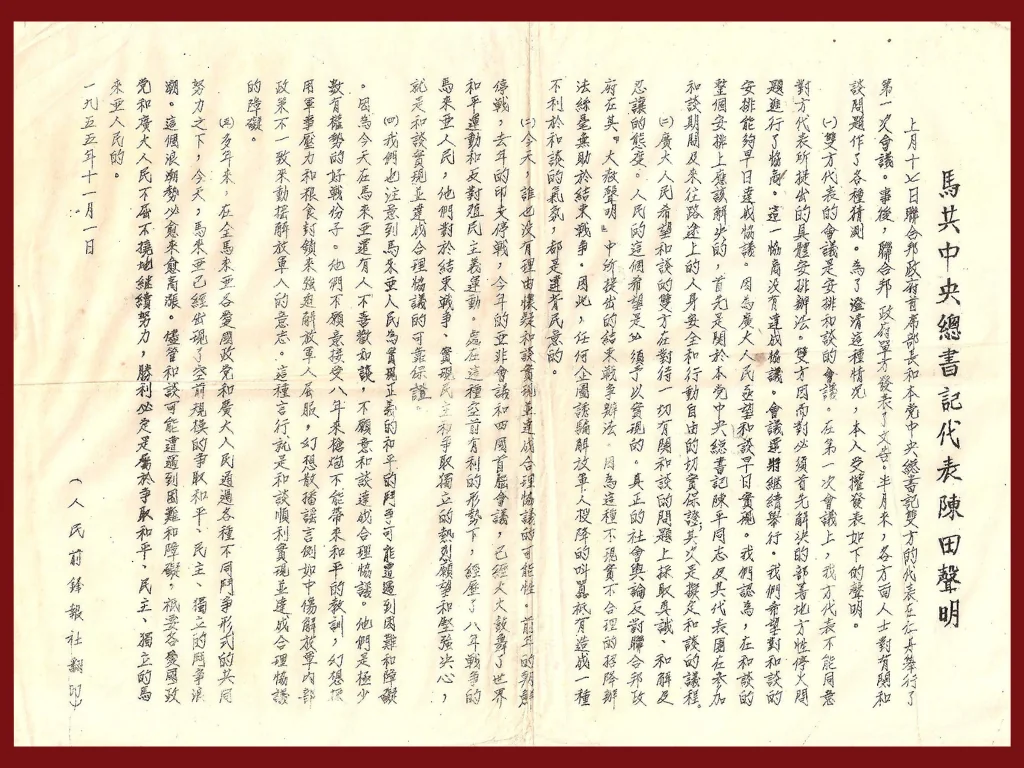
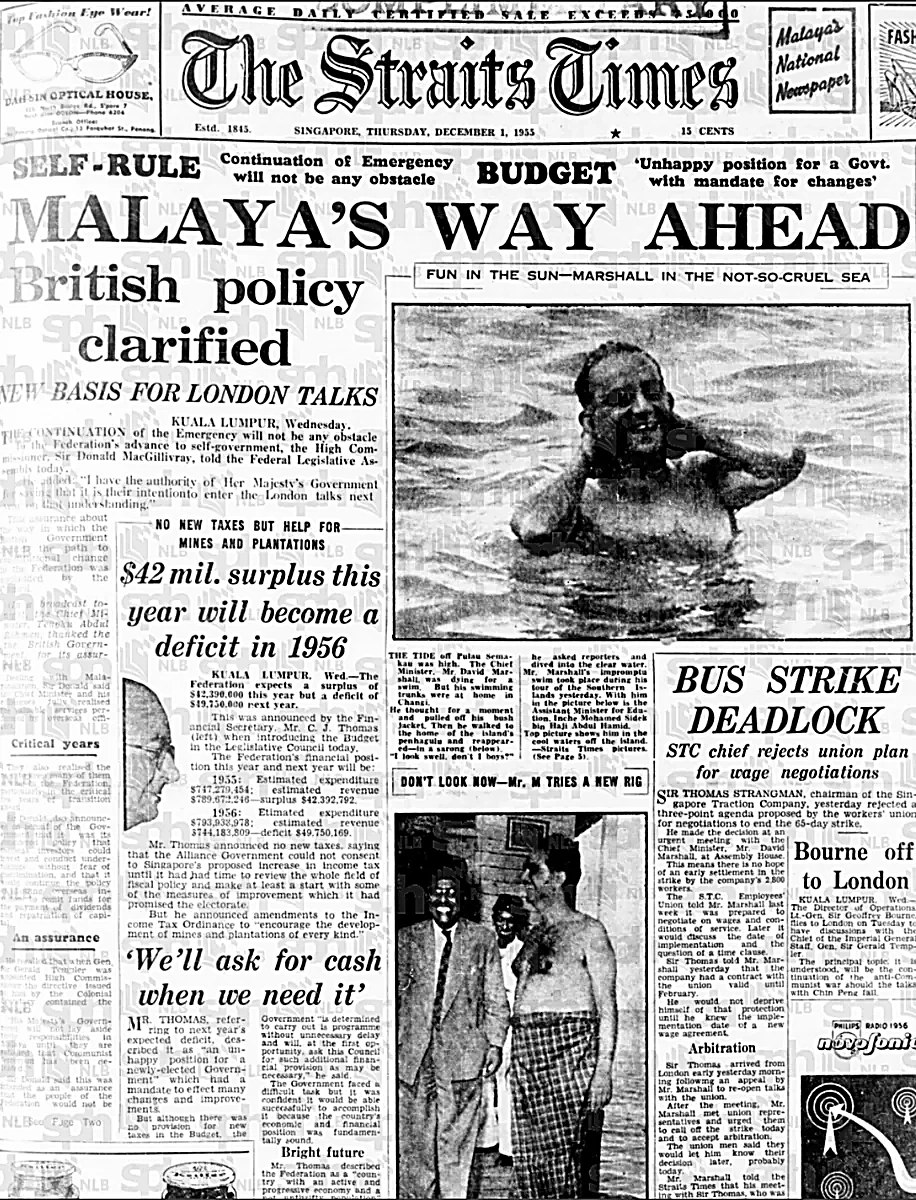
为向公众如实通报和谈筹备进展,马共中央总书记代表陈田于1955年11月1日发表《马共中央总书记代表陈田声明》(由人民前锋报社翻印),详尽说明10月17日仁丹第一次预备会议经过。11月17日至18日第二次预备会议期间,陈田再次会见各报记者并散发书面声明与传单,强调群众期望双方以真诚、谅解和妥协的态度看待和谈,任何企图利诱民族解放军投降的行径都只会破坏和谈气氛、违背人民意愿。11月18日全马各大报章刊登陈田声明后,东姑阿都拉曼大为震怒,威胁称若马共继续向报界发表声明便拒绝与陈平会面,此后有关和谈的新闻公报完全由政府单方面垄断,马共的声音遭到严密封锁。12月1日《海峡时报》头版披露英国政策松动:“紧急状态不再是联合邦自治的障碍”。随后双方于12月13日在高乌(Kroh)临时军营举行第三次预备会,并于12月24日在仁丹第四次预备会上正式敲定于12月28日至29日在吉打州华玲政府英文学校举行正式会谈。
On April 21, 1954, Lim Hong Bee, the plenipotentiary representative of the Malayan Communist Party (CPM) in London, issued a landmark manifesto titled 'Malaya Fights for Freedom' at the Conference of Communist and Workers' Parties of the British Commonwealth. This historic document articulated the CPM's anti-colonial platform while signalling a crucial strategic transition: the party was prepared to pursue a peaceful negotiated settlement provided national independence, human dignity, and popular liberties were safeguarded.
Simultaneously, the British imperial war machine in Malaya was buckling under crippling economic strain. By the close of 1954, direct military expenditures for the Emergency had escalated to approximately £135 million, as formally confirmed in the UK Parliament by Under-Secretary of State for the Colonies Henry Hopkinson. This vast financial hemorrhage plunged the Federation of Malaya from fiscal surplus into severe budgetary deficits. Former Colonial Secretary Oliver Lyttelton confessed in London: 'We may never achieve the day of complete victory.' The colonial counterinsurgency had hit a strategic dead end amid mounting popular demands for peace.
On July 27, 1955, the Federation of Malaya held its inaugural national legislative council elections. Capitalizing on the public clamor for peace, the Alliance Party under Tunku Abdul Rahman campaigned on three magnetic pledges: 'Self-rule within Two Years,' 'Independence within Four Years,' and 'Into the Jungles to meet Chin Peng.' The Alliance swept 51 of the 52 contested seats in an unprecedented landslide, elevating Tunku to Chief Minister.
Weeks prior to the election, on May 1, 1955, the CPM Central Committee issued the 'Statement by the Malayan National Liberation Army Headquarters Representative' under the pseudonym 'Wu Xing,' formally proposing peace talks to the Kuala Lumpur authorities. Imbued with the spirit of the Bandung Afro-Asian Conference, the statement proposed an all-party round-table conference and expressed readiness to treat the Alliance's amnesty ideas as a starting point. On August 5, Tunku sent a personal feeler, and despite a flawed colonial amnesty on September 9, both sides established confidential transmission codes to sustain dialogue.
Following the election, British colonial authorities sought to divide the liberation movement. On September 9, 1955, the colonial administration unilaterally declared an "Amnesty," attempting to coerce CPM fighters into surrender and screening. In immediate response, the CPM Central Committee issued its historic "Statement of the Central Committee of the Communist Party of Malaya" on September 12, 1955 (preserved in the archival mimeograph below).
The statement dismantled the flawed surrender conditions, declaring any screening or detention unreasonable and unworkable. It proposed immediate direct peace talks between warring parties, an unconditional nationwide ceasefire, the repeal of repressive decrees, and the restoration of democratic rights to accelerate genuine independence. Crucially, the statement welcomed the peace intentions expressed by Chief Minister Tunku Abdul Rahman and Sir Tan Cheng Lock, announcing the CPM's readiness to send envoys to the Alliance headquarters in Kuala Lumpur to arrange a summit. This decisive intervention foiled colonial divide-and-rule tactics and directly paved the way for the Klian Intan preliminary talks.
Following the CPM Central Committee's September 12 declaration proposing direct political negotiations, both sides finalized arrangements through confidential channels. On October 17, 1955, CPM representatives Chen Tien and Lee Chin Hee emerged from the jungle to meet federal delegates Assistant Education Minister Too Joon Hing and Deputy Police Commissioner I. S. Wylie at Klian Intan, Perak, for the first preparatory session.
On October 25, 1955, three Kelantan Alliance Federal Legislative Councillors, Abd. Khalid bin Awang Osman (Federal Legislative Councillor for Kelantan Selatan), Tengku Indra Petra (Member of the Federal Legislative Council for Kelantan Utara), and their colleague, sent a joint two-page Malay reply letter to the CPM from the Kota Bharu UMNO Office (C/O. Pejabat UMNO Kota Bharu, replying to the CPM's July 1, 1955 peace circular). Opening with a direct salute to the CPM fighters for risking their lives and enduring hardship 'as Patriots' (sa-bagai Patriot), the Alliance legislators explicitly affirmed that the Alliance's objective, written into its manifesto prior to the Federal election (sa-belum pilehan raya Federal), of abolishing colonial rule and establishing a free, independent, and democratic Malaya was 'identical to the objective of the Communist armed forces to drive colonialism out of Malaya,' while advocating constitutional struggle to accelerate independence and vowing that if independence were not achieved within four years, all Alliance councilors would resign from councils at every level across Malaya and refuse to cooperate with the colonial administration.
To keep the public truthfully informed of the preparatory progress, Chen Tien issued the 'Statement by Chen Tien, Representative of the General Secretary of the CPM Central Committee' on November 1, 1955 (reprinted by the People's Vanguard Press), detailing the October 17 first preparatory meeting at Klian Intan. During the second preparatory meeting on November 17–18, Chen Tien again briefed journalists and distributed statements and leaflets emphasizing mutual sincerity and warning that any attempt to induce the MNLA to surrender would poison the atmosphere of the talks and defy the popular will. When major newspapers carried the news on November 18, Tunku Abdul Rahman reacted with anger, threatening to cancel the talks if the Communists continued issuing statements to the press; thereafter, all press bulletins were monopolized by the government and the CPM's voice was blocked. On December 1, The Straits Times front page reported a shift in British policy: 'Emergency no longer an obstacle to self-government.' Following a third preparatory meeting at a temporary military camp in Kroh on December 13 and a fourth at Klian Intan on December 24, both sides fixed December 28–29 at the Government English School in Baling, Kedah, for the formal talks.
1954年4月21日,马共驻英国全权代表林丰美在伦敦举行的英联邦各国共产党与工人党代表大会上,正式发表题为《马来亚人民为自由而斗争》(Malaya Fights for Freedom)的划时代宣言。这份历史文献第一次向国际社会全面系统地阐明了马共反对大英帝国殖民奴役的民族解放纲领,并明确释放出重要的政策信号:马共不仅在丛林中开展英勇的武装自卫,更愿意在尊重人民民主权利与民族独立尊严的前提下,通过和平政治谈判解决武装冲突。
与马共主动倡导和平相呼应的,是英帝国主义在马来亚面临的全面财政与军事困境。截至1954年底,英军在马来亚执行紧急状态军事围剿的累计直接开销已高达1亿3,500万英镑(英国殖民事务副大臣霍普金森在国会正式确认)。庞大军费让英国财政不堪重负,马来亚联合邦财政更从战后初期的盈余坠入巨额赤字深渊。面对马共机动灵活的丛林麻雀战,英国军械优势深陷泥潭,前英国殖民地部大臣利特尔顿甚至在伦敦坦白承认:“我们可能永远无法获得类似二战胜利那样的完全胜利。”殖民战争难以为继,全马各民族人民反对战争、渴望和平的呼声排山倒海。
On April 21, 1954, Lim Hong Bee, the plenipotentiary representative of the Malayan Communist Party (CPM) in London, issued a landmark manifesto titled 'Malaya Fights for Freedom' at the Conference of Communist and Workers' Parties of the British Commonwealth. This historic document articulated the CPM's anti-colonial platform while signalling a crucial strategic transition: the party was prepared to pursue a peaceful negotiated settlement provided national independence, human dignity, and popular liberties were safeguarded.
Simultaneously, the British imperial war machine in Malaya was buckling under crippling economic strain. By the close of 1954, direct military expenditures for the Emergency had escalated to approximately £135 million, as formally confirmed in the UK Parliament by Under-Secretary of State for the Colonies Henry Hopkinson. This vast financial hemorrhage plunged the Federation of Malaya from fiscal surplus into severe budgetary deficits. Former Colonial Secretary Oliver Lyttelton confessed in London: 'We may never achieve the day of complete victory.' The colonial counterinsurgency had hit a strategic dead end amid mounting popular demands for peace.
1955年7月27日,马来亚联合邦举行历史上首次全国立法议会大选。由东姑阿都拉曼领导的巫统、马华公会与国大党组成的“联盟党”(Alliance Party),敏锐捕捉到广大民众要求终结战争的强烈愿望,打出“两年自治”、“四年独立”、“进山见陈平”三大竞选口号,最终横扫52个民选议席中的51席,取得压倒性胜利,东姑随之出任联合邦首席部长。
早在大选前的1955年5月1日,马共中央便以“吴兴”化名发出《马来亚民族解放军总部代表的声明》,正式向吉隆坡当局建议和谈。声明充分汲取万隆亚非会议的反帝精神,郑重呼吁全马各政党、各团体跨越政治分歧举行圆桌会议,甚至主动表示愿以联盟党提出的大赦建议作为谈判基础。8月5日东姑就职后以个人名义发出和谈信号,虽然殖民当局在9月9日单方面发布带有诱降意味的“大赦令”,但马共中央依然顾全大局,约定了联络密码并保持高层绝密通信。
On July 27, 1955, the Federation of Malaya held its inaugural national legislative council elections. Capitalizing on the public clamor for peace, the Alliance Party under Tunku Abdul Rahman campaigned on three magnetic pledges: 'Self-rule within Two Years,' 'Independence within Four Years,' and 'Into the Jungles to meet Chin Peng.' The Alliance swept 51 of the 52 contested seats in an unprecedented landslide, elevating Tunku to Chief Minister.
Weeks prior to the election, on May 1, 1955, the CPM Central Committee issued the 'Statement by the Malayan National Liberation Army Headquarters Representative' under the pseudonym 'Wu Xing,' formally proposing peace talks to the Kuala Lumpur authorities. Imbued with the spirit of the Bandung Afro-Asian Conference, the statement proposed an all-party round-table conference and expressed readiness to treat the Alliance's amnesty ideas as a starting point. On August 5, Tunku sent a personal feeler, and despite a flawed colonial amnesty on September 9, both sides established confidential transmission codes to sustain dialogue.
大选尘埃落定后,英殖民当局企图利用新政权成立的契机分化抗英力量。1955年9月9日,殖民政府单方面发布所谓“大赦令”,妄图迫使马共武装人员交枪出降并接受政治甄别。面对殖民主义者的政治诱降,马共中央于1955年9月12日迅速发表《马来亚共产党中央委员会声明》(即下述油印历史文献原件)。
马共中央在声明中一针见血地驳斥了大赦令附带的屈辱条件,严正指出任何强加投降审查的方案既不合理也绝不现实;声明郑重倡议:交战双方应立即举行直接政治和谈,实行全马普遍停火,撤废严苛殖民法令,保障各民族民主权利以加速国家真正独立;同时高度肯定首席部长东姑阿都拉曼与陈祯禄爵士谋求和平的诚意,正式宣布马共准备派遣代表前往吉隆坡联盟总部商讨会面具体办法。这份纲领性声明不仅彻底粉碎了殖民当局分化诱降的阴谋,更为后续的仁丹预备会铺平了道路。
Following the election, British colonial authorities sought to divide the liberation movement. On September 9, 1955, the colonial administration unilaterally declared an "Amnesty," attempting to coerce CPM fighters into surrender and screening. In immediate response, the CPM Central Committee issued its historic "Statement of the Central Committee of the Communist Party of Malaya" on September 12, 1955 (preserved in the archival mimeograph below).
The statement dismantled the flawed surrender conditions, declaring any screening or detention unreasonable and unworkable. It proposed immediate direct peace talks between warring parties, an unconditional nationwide ceasefire, the repeal of repressive decrees, and the restoration of democratic rights to accelerate genuine independence. Crucially, the statement welcomed the peace intentions expressed by Chief Minister Tunku Abdul Rahman and Sir Tan Cheng Lock, announcing the CPM's readiness to send envoys to the Alliance headquarters in Kuala Lumpur to arrange a summit. This decisive intervention foiled colonial divide-and-rule tactics and directly paved the way for the Klian Intan preliminary talks.
在1955年9月12日马共中央发表声明倡议直接政治和谈后,双方通过秘密联络通道敲定预备会晤安排。10月17日,马共代表陈田与李进喜走出丛林,在霹雳北部仁丹(Klian Intan)同联合邦政府代表助理教育部长朱运兴、副警察总监威利(I. S. Wylie)举行第一次和谈预备会议。
1955年10月25日,吉兰丹州联盟的三位联邦立法议员阿都卡立·阿旺奥斯曼(Abd. Khalid bin Awang Osman,吉兰丹南区联邦立法议员)、东姑因陀罗·佩特拉(Tengku Indra Petra,吉兰丹北区联邦立法议员)等自哥打峇鲁巫统办事处(C/O. Pejabat UMNO Kota Bharu)联名向马共发出两页长的马来文正式复函(即下述档案原件,复1955年7月1日马共倡议圆桌和平会议之来函)。在这份珍贵文献中,联盟联邦立法议员不仅开篇向马共指战员致敬,尊称其为“舍生忘死、忍受苦难的爱国者(sa-bagai Patriot)”,更明确承认联盟在大选前写入竞选宣言(manifesto Perikatan sa-belum pilehan raya Federal)的废除殖民统治、建立自由独立民主马来亚的目标,“与共产党武装部队将殖民主义驱逐出马来亚的目标是完全一致的”,同时主张以宪政民主取代武装斗争以加快实现独立,并郑重承诺倘若联盟未能在四年期限内为马来亚取得独立,全体联盟议员将辞去全马各级议会席位、拒绝与殖民政府合作。
为向公众如实通报和谈筹备进展,马共中央总书记代表陈田于1955年11月1日发表《马共中央总书记代表陈田声明》(由人民前锋报社翻印),详尽说明10月17日仁丹第一次预备会议经过。11月17日至18日第二次预备会议期间,陈田再次会见各报记者并散发书面声明与传单,强调群众期望双方以真诚、谅解和妥协的态度看待和谈,任何企图利诱民族解放军投降的行径都只会破坏和谈气氛、违背人民意愿。11月18日全马各大报章刊登陈田声明后,东姑阿都拉曼大为震怒,威胁称若马共继续向报界发表声明便拒绝与陈平会面,此后有关和谈的新闻公报完全由政府单方面垄断,马共的声音遭到严密封锁。12月1日《海峡时报》头版披露英国政策松动:“紧急状态不再是联合邦自治的障碍”。随后双方于12月13日在高乌(Kroh)临时军营举行第三次预备会,并于12月24日在仁丹第四次预备会上正式敲定于12月28日至29日在吉打州华玲政府英文学校举行正式会谈。
Following the CPM Central Committee's September 12 declaration proposing direct political negotiations, both sides finalized arrangements through confidential channels. On October 17, 1955, CPM representatives Chen Tien and Lee Chin Hee emerged from the jungle to meet federal delegates Assistant Education Minister Too Joon Hing and Deputy Police Commissioner I. S. Wylie at Klian Intan, Perak, for the first preparatory session.
On October 25, 1955, three Kelantan Alliance Federal Legislative Councillors, Abd. Khalid bin Awang Osman (Federal Legislative Councillor for Kelantan Selatan), Tengku Indra Petra (Member of the Federal Legislative Council for Kelantan Utara), and their colleague, sent a joint two-page Malay reply letter to the CPM from the Kota Bharu UMNO Office (C/O. Pejabat UMNO Kota Bharu, replying to the CPM's July 1, 1955 peace circular). Opening with a direct salute to the CPM fighters for risking their lives and enduring hardship 'as Patriots' (sa-bagai Patriot), the Alliance legislators explicitly affirmed that the Alliance's objective, written into its manifesto prior to the Federal election (sa-belum pilehan raya Federal), of abolishing colonial rule and establishing a free, independent, and democratic Malaya was 'identical to the objective of the Communist armed forces to drive colonialism out of Malaya,' while advocating constitutional struggle to accelerate independence and vowing that if independence were not achieved within four years, all Alliance councilors would resign from councils at every level across Malaya and refuse to cooperate with the colonial administration.
To keep the public truthfully informed of the preparatory progress, Chen Tien issued the 'Statement by Chen Tien, Representative of the General Secretary of the CPM Central Committee' on November 1, 1955 (reprinted by the People's Vanguard Press), detailing the October 17 first preparatory meeting at Klian Intan. During the second preparatory meeting on November 17–18, Chen Tien again briefed journalists and distributed statements and leaflets emphasizing mutual sincerity and warning that any attempt to induce the MNLA to surrender would poison the atmosphere of the talks and defy the popular will. When major newspapers carried the news on November 18, Tunku Abdul Rahman reacted with anger, threatening to cancel the talks if the Communists continued issuing statements to the press; thereafter, all press bulletins were monopolized by the government and the CPM's voice was blocked. On December 1, The Straits Times front page reported a shift in British policy: 'Emergency no longer an obstacle to self-government.' Following a third preparatory meeting at a temporary military camp in Kroh on December 13 and a fourth at Klian Intan on December 24, both sides fixed December 28–29 at the Government English School in Baling, Kedah, for the formal talks.
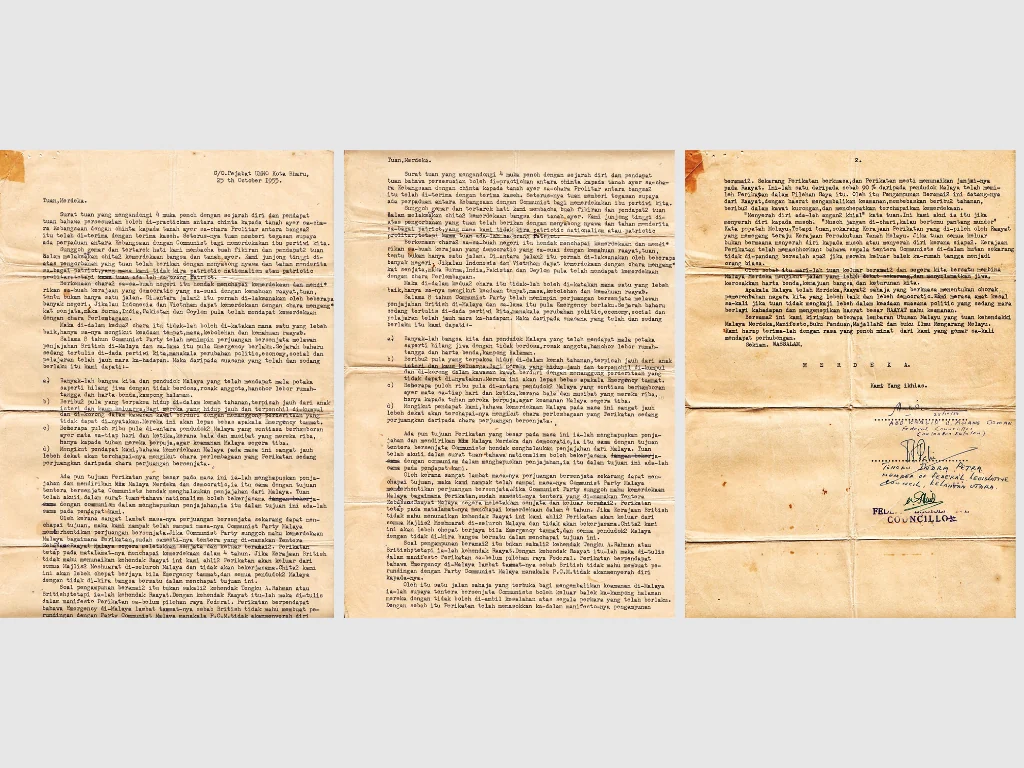
“我们高度崇敬阁下作为爱国者(Patriot)舍生忘死、忍受苦难所作出的牺牲……正如联邦大选之前已写入联盟竞选宣言的那样,联盟争取废除殖民统治、建立一个自由、独立与民主的马来亚的目标,与共产党武装部队将殖民主义驱逐出马来亚的目标是完全一致的。倘若联盟未能在四年期限内为马来亚取得独立,我们全体联盟议员将辞去全马各级议会席位,拒绝再与政府合作。”"We hold in the highest esteem the sacrifices you have made by risking your lives and enduring hardship as Patriots... As written in the Alliance manifesto prior to the Federal election, the Alliance's objective of abolishing colonialism and establishing a free, independent, and democratic Malaya is identical to the objective of the Communist armed forces to drive colonialism out of Malaya. Should the Alliance fail to secure independence for Malaya within four years, all of us in the Alliance will resign from every council across Malaya and refuse to cooperate."— 吉兰丹州联盟联邦立法议员阿都卡立·阿旺奥斯曼(Abd. Khalid bin Awang Osman)、东姑因陀罗·佩特拉(Tengku Indra Petra)等致马来亚共产党复函(1955年10月25日发自哥打峇鲁巫统办事处) | Reply Letter to the CPM signed by Kelantan Alliance Federal Legislative Councillors Abd. Khalid bin Awang Osman, Tengku Indra Petra, et al. (C/O Pejabat UMNO Kota Bharu, October 25, 1955)
第二章:华玲英校的历史相逢:陈平走出丛林与全球记者的镁光灯
Chapter 2: Historic Encounter at Baling English School: Chin Peng Steps from the Jungle into the Global Limelight
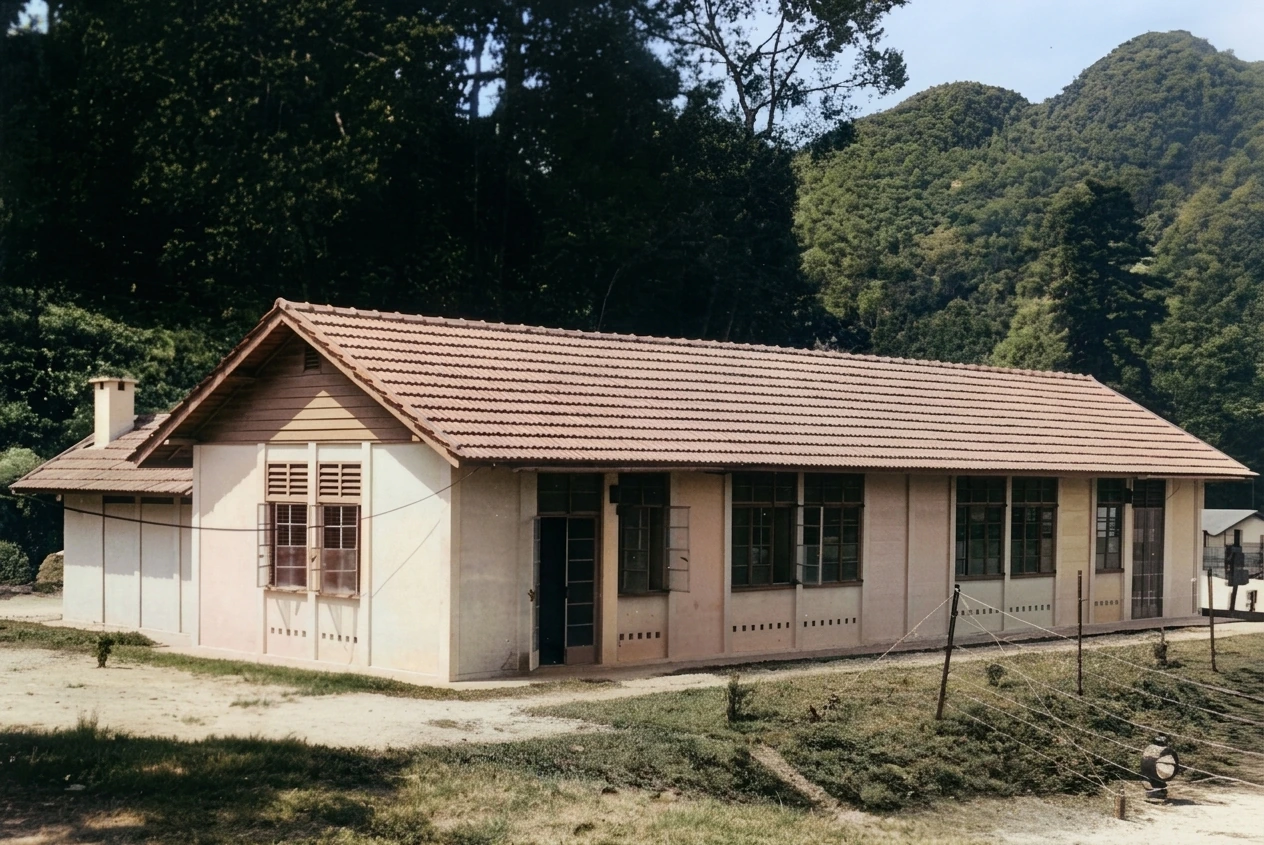
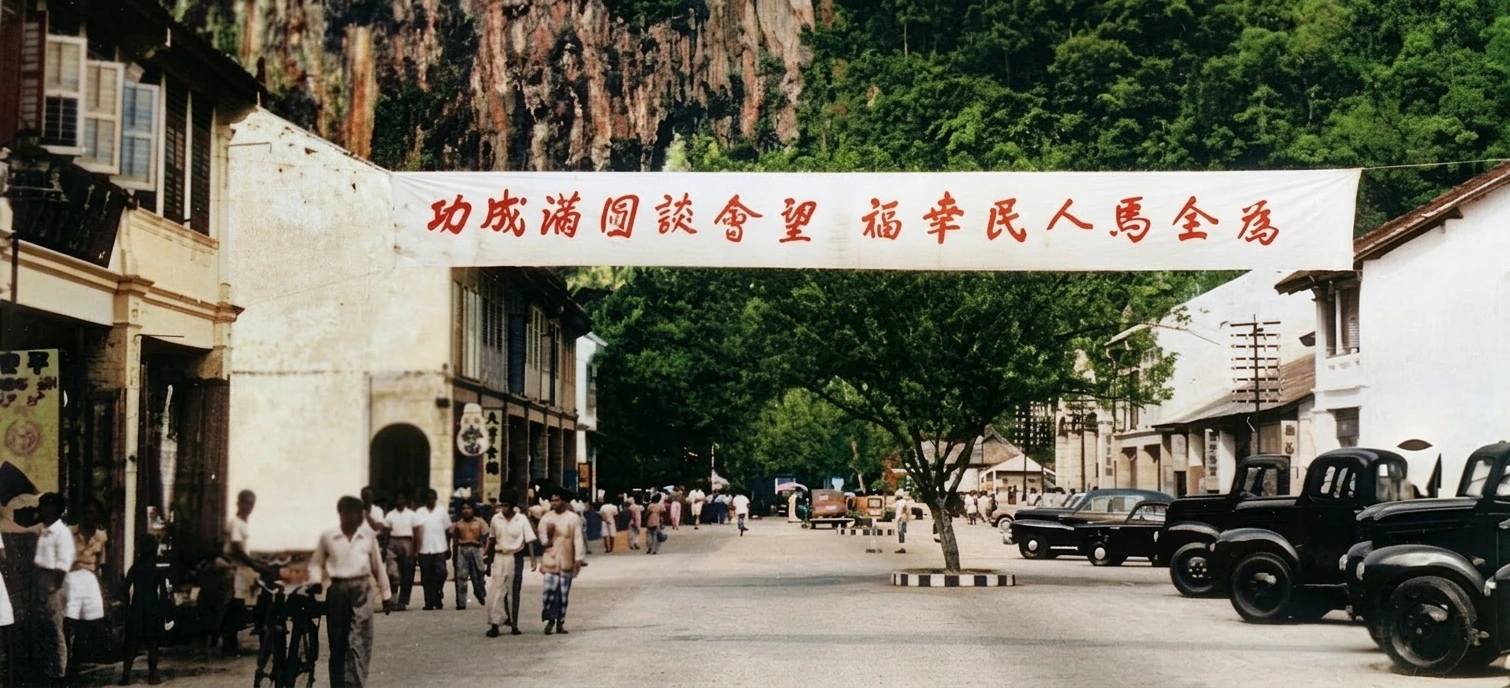
1955年12月28日中午12点35分,在英方联络官、抗日时期136部队旧识约翰·戴维斯(John Davis)的陪同下,一辆插有安全通行标志的专车缓缓驶抵吉打州华玲镇。马共总书记陈平、中央委员陈田、中央委员拉昔·迈丁(Rashid Maidin)与三名随行警卫员昂首走出车门,步入华玲政府英文学校(现SK Tunku Putera)。会场坐落在巍峨陡峭的华玲山脚下,被带刺铁丝网与荷枪实弹的英国陆军、廓尔喀雇佣兵及联邦警察团团守卫。平房教室外,各民族工农群众自发悬挂起饱含期盼的巨幅横幅:“为全马人民幸福,望会谈圆满成功。”
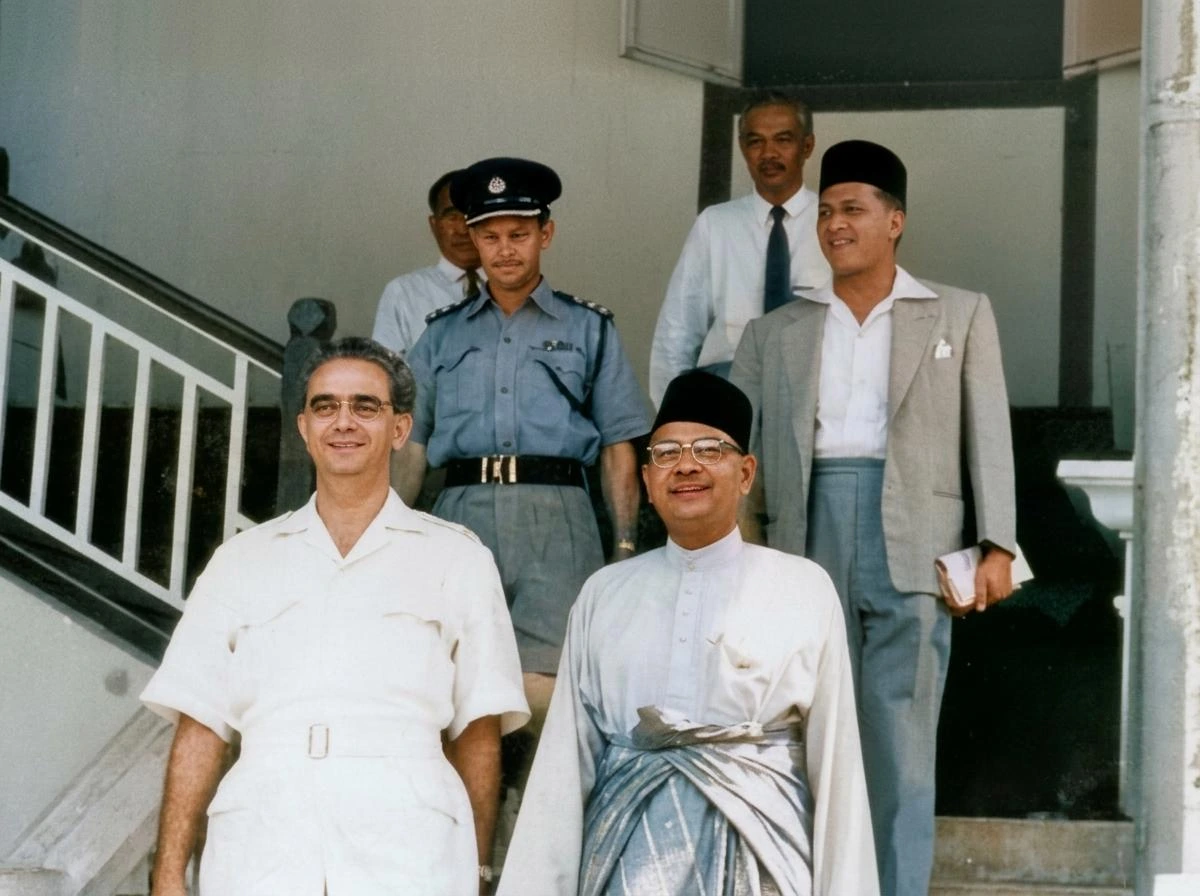
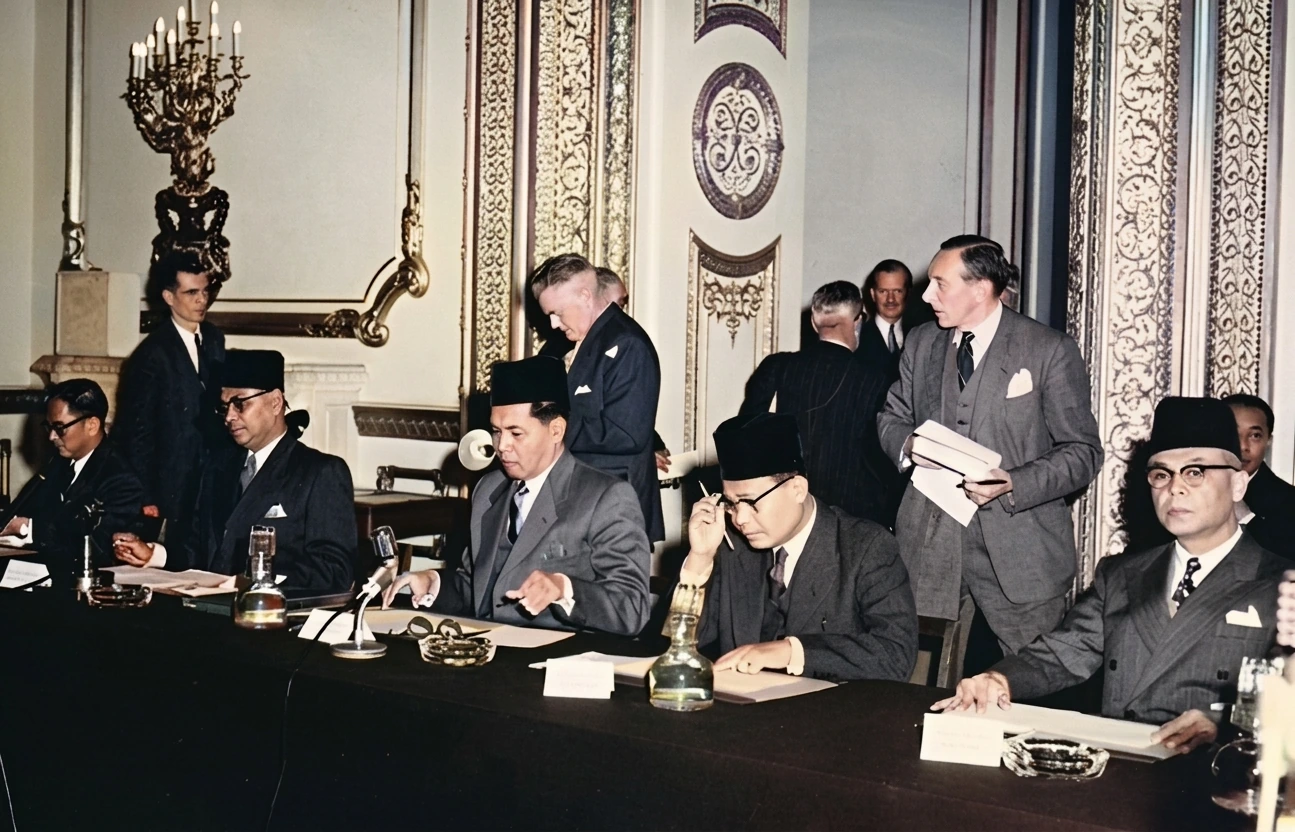
走进历史现场,谈判桌两侧坐着六位举足轻重的历史当事人。官方代表团由马来亚联合邦首席部长东姑阿都拉曼、新加坡首席部长大卫·马绍尔、马华公会总会长陈祯禄组成;马共代表团则由年仅31岁的总书记陈平领衔,宣传部长陈田与杰出的马来族革命领袖拉昔·迈丁并肩在座。拉昔·迈丁在谈判席上的巍然端坐,彻底戳穿了英国殖民当局所谓“马共仅是华人武装”的狭隘种族谎言,向全世界彰显了马共矢志不渝争取全马各民族大团结的革命本质。
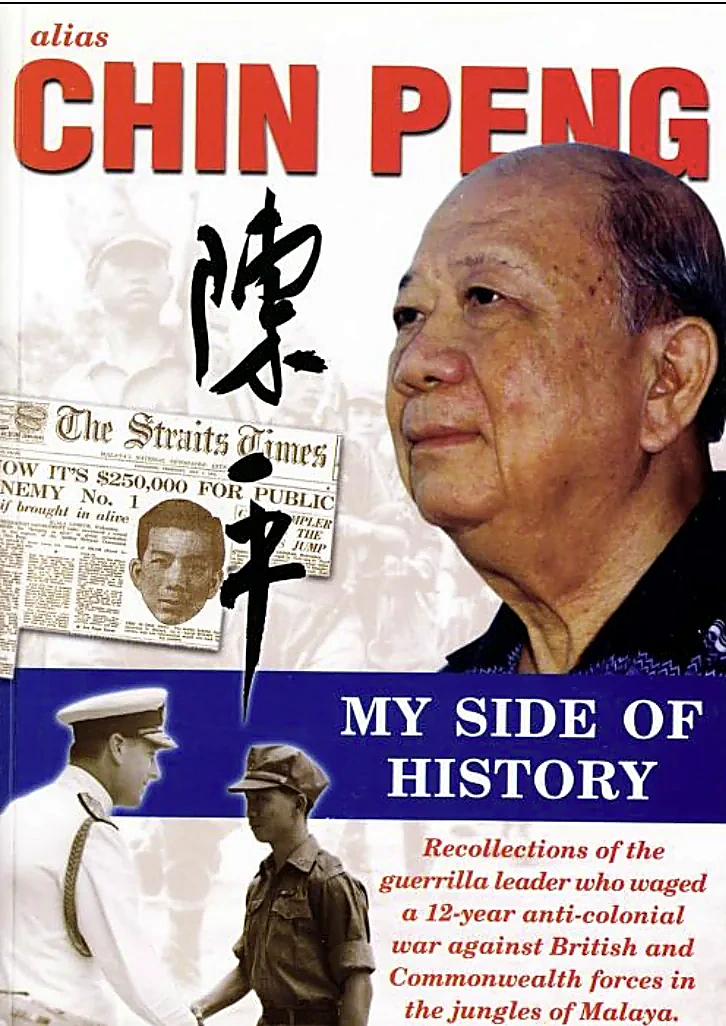
此时的华玲成为全世界数十家顶级新闻通讯社镁光灯的焦点。然而,透过表面的热烈握手与外交礼节,陈平凭借其极高的战略洞察力,迅速看穿了这场和谈隐藏的政治陷阱。陈平在回忆录《我方的历史》(Alias Chin Peng: My Side of History)中留下了冷峻深刻的战地自白:当东姑阿都拉曼在寒暄中再度确认自己将在会谈结束四天后的1956年1月1日准时飞赴伦敦进行独立谈判时,陈平立即意识到,对方早已预设了华玲会谈的极限周期:最多维持两天。
一场牵动国家前途、涉及七年多残酷游击战争的生死大和解,绝不可能在区区两天之内仓促达成。陈平敏锐洞察到:官方代表团并非抱着达成实质妥协的善意而来,而是企图把马共诱出丛林,打造成一场展示执政者“坚决反共立场”的华丽政治作秀(political grandstanding),作为其飞赴伦敦进行独立谈判的重要政治考量。
At 12:35 PM on December 28, 1955, accompanied by British liaison officer John Davis (Chin Peng's wartime Force 136 acquaintance during the Anti-Japanese War), a designated security vehicle arrived at the Kedah border town of Baling. CPM Secretary-General Chin Peng, Central Committee member Chen Tien, Malay leader Rashid Maidin, and three armed bodyguards stepped forward into the Baling Government English School (now SK Tunku Putera). Framed by the limestone crags of Mount Baling, the campus was encircled by concertina wire and Commonwealth troops. Prominently displayed hung a large civic banner: 'For the Welfare of All Malayan People, May These Negotiations Achieve Complete Success!'
Inside the classroom, six historical protagonists gathered around the conference table. The government delegation comprised Federation Chief Minister Tunku Abdul Rahman, Singapore Chief Minister David Marshall, and MCA President Sir Tan Cheng Lock. Across the table sat the CPM delegation: 31-year-old Secretary-General Chin Peng, propaganda chief Chen Tien, and veteran Malay patriot Rashid Maidin. Maidin's prominent role obliterated colonial propaganda portraying the insurgency as exclusively ethnic, proving the CPM's multi-ethnic vanguard character.
Baling instantly captivated the international press, yet beneath the polite handshakes and flashing bulbs, Chin Peng penetrated the diplomatic facade. In his memoirs, *Alias Chin Peng: My Side of History*, he recorded a chilling realization: the moment Tunku re-confirmed his firm departure for London in four days' time (January 1, 1956), Chin Peng understood the talks had been predetermined to last no more than two days.
Seven bloody years of rainforest warfare and labyrinthine constitutional issues could never be resolved in 48 hours. Chin Peng perceived that the Alliance had not come for genuine compromise, but had staged the summit as an exercise in political grandstanding. Tunku sought to demonstrate unyielding anti-communist resolve to his British overseers, converting the Baling encounter into primary leverage for his upcoming Whitehall negotiations.
1955年12月28日中午12点35分,在英方联络官、抗日时期136部队旧识约翰·戴维斯(John Davis)的陪同下,一辆插有安全通行标志的专车缓缓驶抵吉打州华玲镇。马共总书记陈平、中央委员陈田、中央委员拉昔·迈丁(Rashid Maidin)与三名随行警卫员昂首走出车门,步入华玲政府英文学校(现SK Tunku Putera)。会场坐落在巍峨陡峭的华玲山脚下,被带刺铁丝网与荷枪实弹的英国陆军、廓尔喀雇佣兵及联邦警察团团守卫。平房教室外,各民族工农群众自发悬挂起饱含期盼的巨幅横幅:“为全马人民幸福,望会谈圆满成功。”
走进历史现场,谈判桌两侧坐着六位举足轻重的历史当事人。官方代表团由马来亚联合邦首席部长东姑阿都拉曼、新加坡首席部长大卫·马绍尔、马华公会总会长陈祯禄组成;马共代表团则由年仅31岁的总书记陈平领衔,宣传部长陈田与杰出的马来族革命领袖拉昔·迈丁并肩在座。拉昔·迈丁在谈判席上的巍然端坐,彻底戳穿了英国殖民当局所谓“马共仅是华人武装”的狭隘种族谎言,向全世界彰显了马共矢志不渝争取全马各民族大团结的革命本质。
At 12:35 PM on December 28, 1955, accompanied by British liaison officer John Davis (Chin Peng's wartime Force 136 acquaintance during the Anti-Japanese War), a designated security vehicle arrived at the Kedah border town of Baling. CPM Secretary-General Chin Peng, Central Committee member Chen Tien, Malay leader Rashid Maidin, and three armed bodyguards stepped forward into the Baling Government English School (now SK Tunku Putera). Framed by the limestone crags of Mount Baling, the campus was encircled by concertina wire and Commonwealth troops. Prominently displayed hung a large civic banner: 'For the Welfare of All Malayan People, May These Negotiations Achieve Complete Success!'
Inside the classroom, six historical protagonists gathered around the conference table. The government delegation comprised Federation Chief Minister Tunku Abdul Rahman, Singapore Chief Minister David Marshall, and MCA President Sir Tan Cheng Lock. Across the table sat the CPM delegation: 31-year-old Secretary-General Chin Peng, propaganda chief Chen Tien, and veteran Malay patriot Rashid Maidin. Maidin's prominent role obliterated colonial propaganda portraying the insurgency as exclusively ethnic, proving the CPM's multi-ethnic vanguard character.
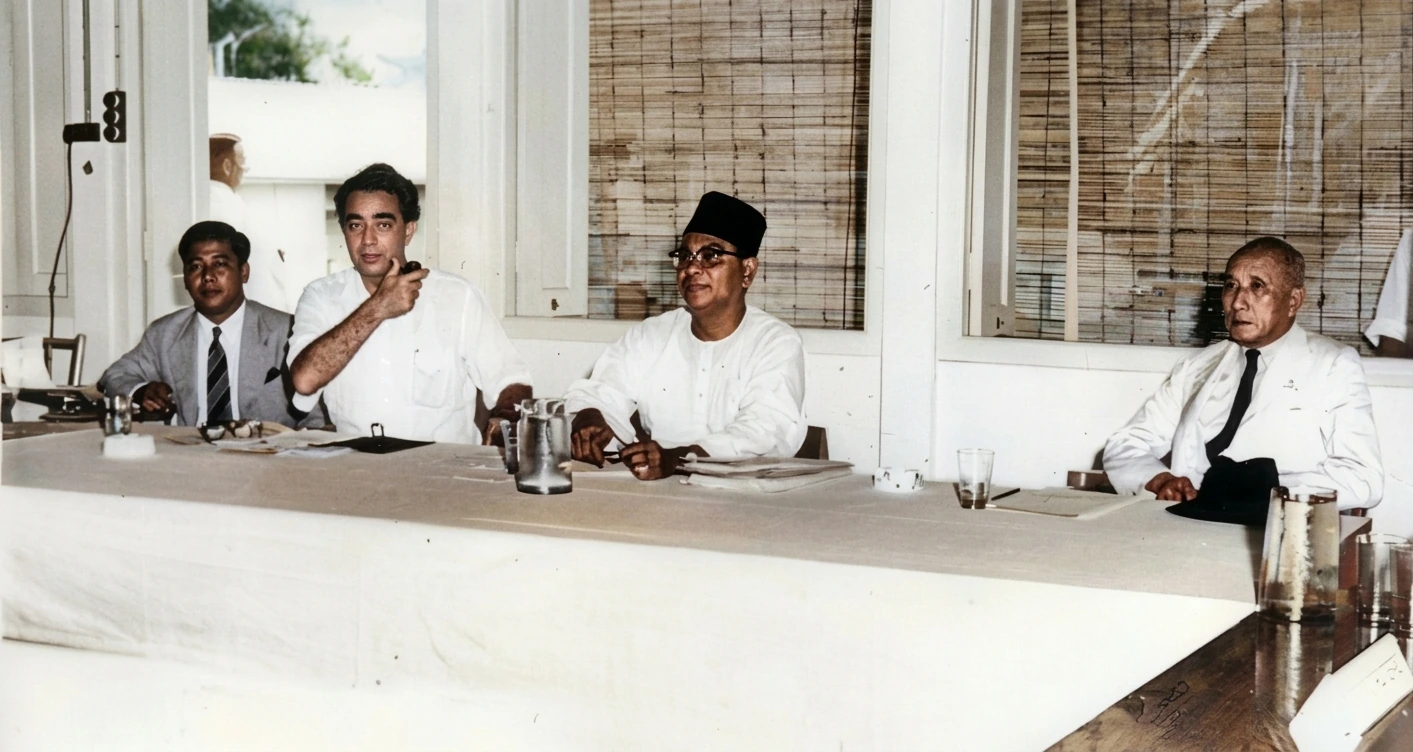
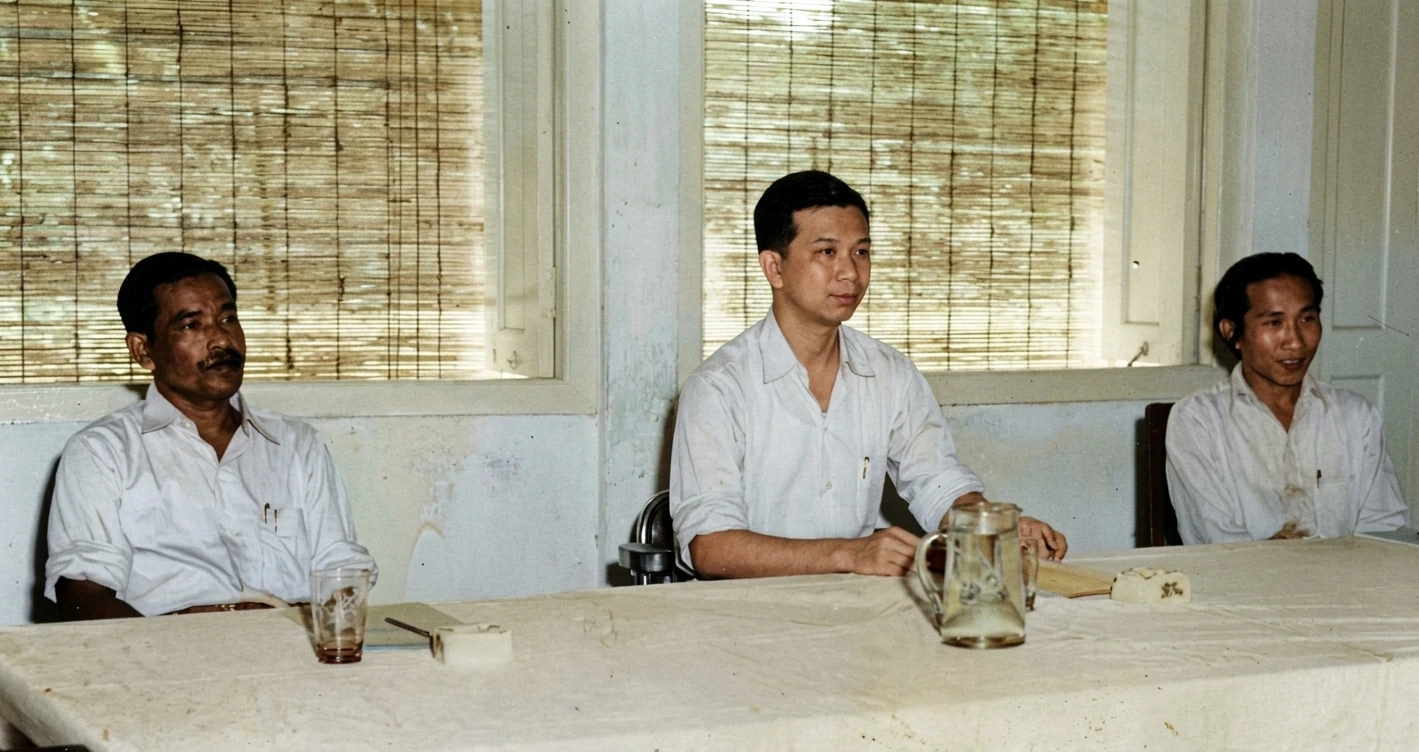
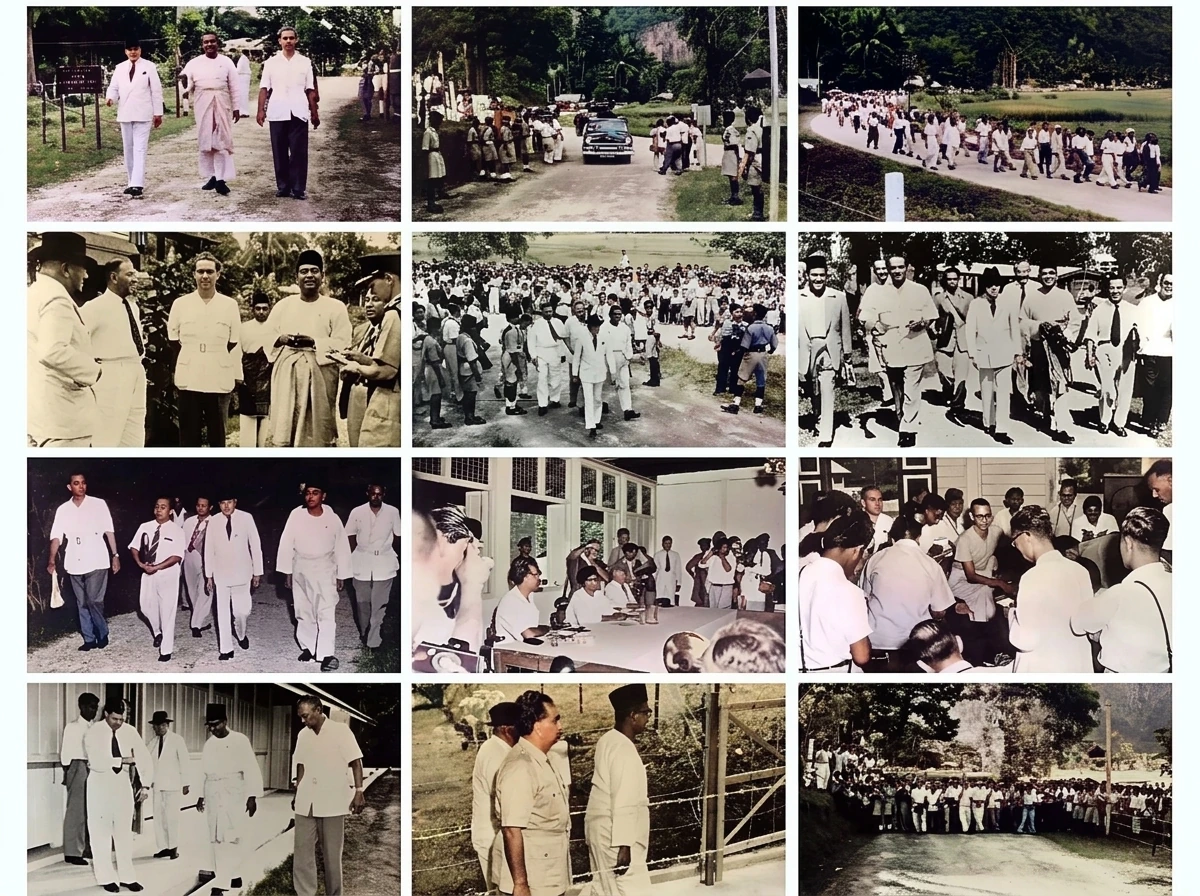
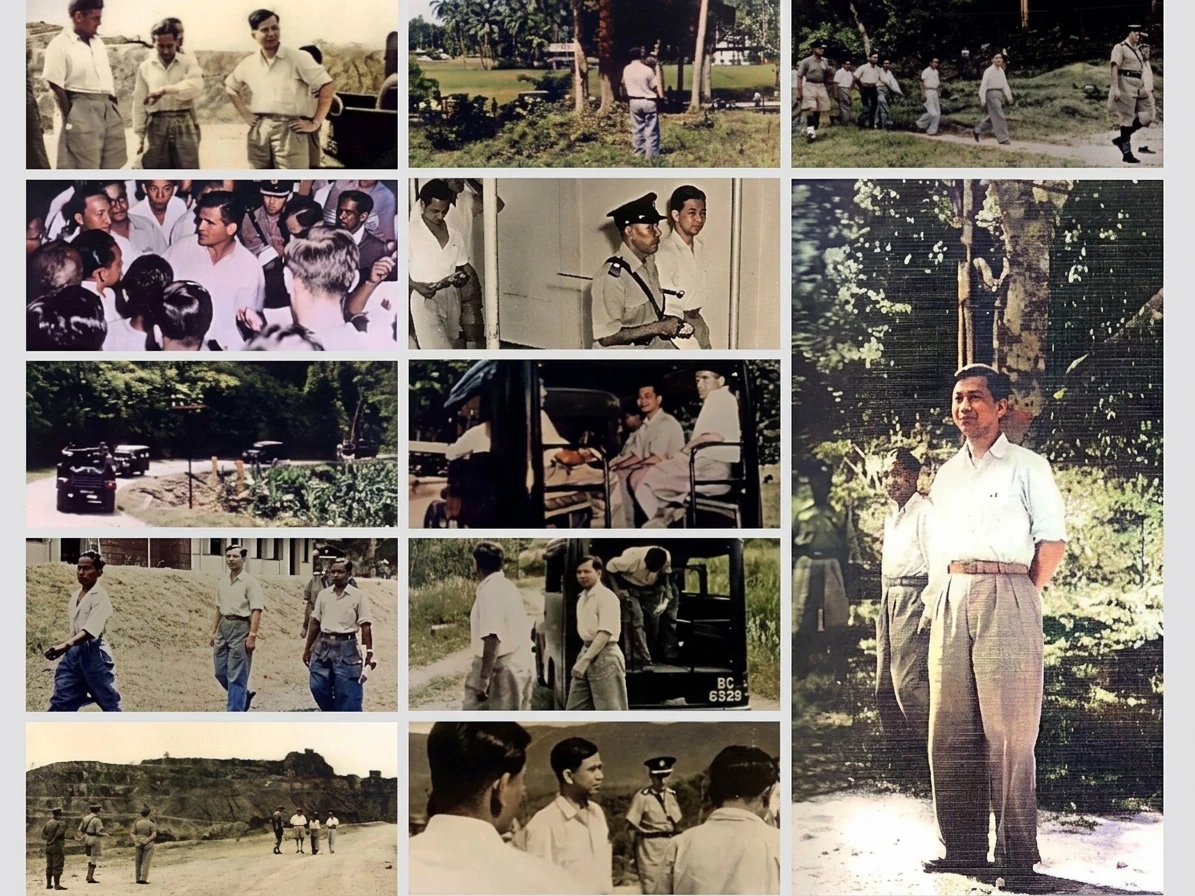
此时的华玲成为全世界数十家顶级新闻通讯社镁光灯的焦点。然而,透过表面的热烈握手与外交礼节,陈平凭借其极高的战略洞察力,迅速看穿了这场和谈隐藏的政治陷阱。陈平在回忆录《我方的历史》(Alias Chin Peng: My Side of History)中留下了冷峻深刻的战地自白:当东姑阿都拉曼在寒暄中再度确认自己将在会谈结束四天后的1956年1月1日准时飞赴伦敦进行独立谈判时,陈平立即意识到,对方早已预设了华玲会谈的极限周期:最多维持两天。
一场牵动国家前途、涉及七年多残酷游击战争的生死大和解,绝不可能在区区两天之内仓促达成。陈平敏锐洞察到:官方代表团并非抱着达成实质妥协的善意而来,而是企图把马共诱出丛林,打造成一场展示执政者“坚决反共立场”的华丽政治作秀(political grandstanding),作为其飞赴伦敦进行独立谈判的重要政治考量。
Baling instantly captivated the international press, yet beneath the polite handshakes and flashing bulbs, Chin Peng penetrated the diplomatic facade. In his memoirs, *Alias Chin Peng: My Side of History*, he recorded a chilling realization: the moment Tunku re-confirmed his firm departure for London in four days' time (January 1, 1956), Chin Peng understood the talks had been predetermined to last no more than two days.
Seven bloody years of rainforest warfare and labyrinthine constitutional issues could never be resolved in 48 hours. Chin Peng perceived that the Alliance had not come for genuine compromise, but had staged the summit as an exercise in political grandstanding. Tunku sought to demonstrate unyielding anti-communist resolve to his British overseers, converting the Baling encounter into primary leverage for his upcoming Whitehall negotiations.
第三章:舌剑唇枪:谈判桌上的死结:投降审查 vs 宪政合法地位
Chapter 3: Clash of Principles: The Baling Deadlock: Surrender and Screening vs. Constitutional Legitimacy
12月28日至29日,华玲英校的简陋教室内展开了整整五轮寸土不让的唇枪舌剑。会谈伊始,东姑阿都拉曼声称自己与马绍尔是“民选人民代表,绝非英国殖民者的传声筒或傀儡”。陈平坦诚回应道:“我们正是因为深知东姑与马绍尔先生不是傀儡,才甘冒生命危险走出丛林前来谈判。”然而,一旦切入实质政治条件,双方立场爆发了无法弥合的根本对立。
马共代表团展现了最大的爱国妥协诚意,正式提出四大正义主张:第一,面对民选政府愿立即结束武装斗争;第二,政府必须正式承认马共为合法政党;第三,马共全体指战员在放下武器后必须享有不受侵犯的完全人身自由,严禁任何政治审查与人身拘禁;第四,原马共成员有权自由参加新马任何合法政党或自由组建新政党,和平追求政治理想。然而,官方代表团在英国殖民当局的幕后制约下,抛出三项强硬条件:坚决不予承认马共合法地位;强令马共自行解散;要求马共全体成员必须接受“有条件投降”,并被关入扣留营接受长期的所谓“安全甄别与审查(scrutiny)”,经安全审查后方可获释。
谈判桌上,新加坡首席部长马绍尔言辞尖锐,指责马共“搞暴力破坏”,甚至影射马共是外国思想的代理人。陈平当即严正驳斥:“在这次谈判中我们绝不打算争辩意识形态问题。作为一个共产党员,我们坚信自己的理想,绝不可能在压力下被迫放弃政治信仰。承认不承认马共,应当由全马人民在自由选举中裁决。要剥夺我们的思想自由是不可能的,如果硬要剥夺我们的思想自由,我们只好坚持自卫到底。”
谈判在停火的性质与待遇问题上陷入不可调和的死结:官方坚持将其定性为“缴械投降”与“拘押甄别”,而马共代表团则坚决捍卫组织的政治权利与人格尊严。面对官方代表团逼迫投降的要求,陈平作出了载入现代史册的坚定表态:“要我们出来投降是不可能的。如果你们强要我们投降的话,我们就情愿战至最后一人。”这一声明明确划定了马共拒绝接受侮辱性处置的底线。
马共中央宣传部长陈田当场留下的亲笔手书《华玲和谈记录》(第30至32页,记录12月29日上午10时45分开启的第五轮即最后一轮会谈实况),为这场围绕“投降审查”与“人格尊严”的生死交锋保留了第一手文献铁证。当东姑与马绍尔试图将“拘留审查”淡化为“调查(enquiry)”并要求马共成员获释后向警方报到时,陈平寸步不让地指出:“拘留意味着投降,调查也意味着投降……向警察报告也意味着投降。”面对马绍尔反问“你们为了什么而斗争”,陈平凛然回答:“为了人的尊严。在我们看来,投降对我们是一种侮辱。试问:要是你处在我们目前的处境,你能接受吗?”并再次庄严宣告:“如果要我们出来投降,出来被人家扣留,那末,我们只有打到最后一个人。”
从战略全局审视华玲和谈的这一核心僵局可以看到:谈判在停火的根本原则上陷入死结,官方代表团在英方压力下坚持将其定义为“投降与拘押甄别”,而马共代表团则坚决主张必须以“尊重人的尊严与政治平等”为不可逾越的前提。正如陈平在总结这场交锋时所指出的,与其在自己的国土上低头受辱,不如在丛林里昂首为自由而战。尽管会谈最终未能达成停火协议,但东姑阿都拉曼敏锐注意到马共明确表示愿在一个掌握军政主权的独立马来亚政府之下停止武装战斗;这一立场成为东姑四天后飞赴伦敦向英国政府索取独立时间表时极具分量的战略筹码。
Across December 28 and 29, five exhausting sessions unfolded inside the humid classroom. Tunku opened by declaring that he and Marshall were elected leaders, not British mouthpieces. Chin Peng candidly rejoined: 'It is precisely because we know you and Mr. Marshall are not puppets that we risked our lives to emerge from the jungle.' Yet once substance was broached, the gulf proved impassable.
The CPM advanced four principled propositions: immediate cessation of armed struggle; formal legalization of the CPM as a legitimate political party; absolute, unrestricted civil liberty for all cadres upon laying down arms without detention or interrogation; and full constitutional rights to participate in or form political organizations. In response, the government delivered an ultimatum dictated by British strategy: categorical refusal to recognize the party; compulsory dissolution of the CPM; and mandatory surrender followed by indefinite internment and security screening ('scrutiny') until authorities were satisfied.
During heated exchanges, David Marshall launched ideological attacks, accusing the CPM of senseless violence and foreign allegiance. Chin Peng firmly rebutted: 'We will not debate ideology here. As Communists, we believe in our ideals; we can never be compelled by force to renounce them. Whether the CPM is recognized must be judged by the people. To strip us of freedom of thought is impossible. If forced, we have no alternative but to fight on.'
The summit fractured over the definition and treatment of peace: the Alliance framed it as capitulation and internment, while the CPM delegation insisted on protecting their organization's political standing and personal dignity. Confronted with the ultimatum to surrender, Chin Peng delivered the defining statement of the talks: 'It is impossible for us to come out and surrender. If you insist on surrender, we would rather fight to the last man.' This position clearly demarcated the CPM's bottom line against any humiliating capitulation.
The firsthand handwritten minutes recorded on the spot by CPM Central Propaganda Chief Chen Tien ('Record of the Baling Talks,' pp. 30–32, documenting the fifth and final session beginning at 10:45 AM on December 29) preserve irrefutable primary evidence of this confrontation over screening and human dignity. When Tunku and Marshall attempted to soften 'detention and screening' into an 'enquiry' followed by mandatory police reporting, Chin Peng replied uncompromisingly: 'Detention means surrender, investigation also means surrender... reporting to the police also means surrender.' When Marshall asked what they were fighting for, Chin Peng answered: 'For human dignity. In our view, surrender is an insult to us. Ask yourself: if you were in our present position, could you accept it?' and declared once more: 'If we are required to come out to surrender, to come out and be detained by others, then we have no choice but to fight to the very last man.'
Examining the core deadlock at Baling from a strategic perspective reveals why the negotiations fractured over the fundamental principle of peace: the official delegation, constrained by British directives, insisted on framing peace as surrender and security screening, whereas the CPM delegation upheld respect for human dignity and political equality as an unyielding prerequisite. As Chin Peng summarized this choice, it was better to fight for freedom with heads held high in the jungle than to submit to humiliation in one's own homeland. Although the talks did not produce an immediate ceasefire, Tunku Abdul Rahman keenly noted the CPM's pledge to cease armed struggle under an independent Malayan government exercising sovereign control over internal security, a commitment that became a decisive strategic lever when Tunku flew to London four days later to negotiate Merdeka.
12月28日至29日,华玲英校的简陋教室内展开了整整五轮寸土不让的唇枪舌剑。会谈伊始,东姑阿都拉曼声称自己与马绍尔是“民选人民代表,绝非英国殖民者的传声筒或傀儡”。陈平坦诚回应道:“我们正是因为深知东姑与马绍尔先生不是傀儡,才甘冒生命危险走出丛林前来谈判。”然而,一旦切入实质政治条件,双方立场爆发了无法弥合的根本对立。
马共代表团展现了最大的爱国妥协诚意,正式提出四大正义主张:第一,面对民选政府愿立即结束武装斗争;第二,政府必须正式承认马共为合法政党;第三,马共全体指战员在放下武器后必须享有不受侵犯的完全人身自由,严禁任何政治审查与人身拘禁;第四,原马共成员有权自由参加新马任何合法政党或自由组建新政党,和平追求政治理想。然而,官方代表团在英国殖民当局的幕后制约下,抛出三项强硬条件:坚决不予承认马共合法地位;强令马共自行解散;要求马共全体成员必须接受“有条件投降”,并被关入扣留营接受长期的所谓“安全甄别与审查(scrutiny)”,经安全审查后方可获释。
Across December 28 and 29, five exhausting sessions unfolded inside the humid classroom. Tunku opened by declaring that he and Marshall were elected leaders, not British mouthpieces. Chin Peng candidly rejoined: 'It is precisely because we know you and Mr. Marshall are not puppets that we risked our lives to emerge from the jungle.' Yet once substance was broached, the gulf proved impassable.
The CPM advanced four principled propositions: immediate cessation of armed struggle; formal legalization of the CPM as a legitimate political party; absolute, unrestricted civil liberty for all cadres upon laying down arms without detention or interrogation; and full constitutional rights to participate in or form political organizations. In response, the government delivered an ultimatum dictated by British strategy: categorical refusal to recognize the party; compulsory dissolution of the CPM; and mandatory surrender followed by indefinite internment and security screening ('scrutiny') until authorities were satisfied.
谈判桌上,新加坡首席部长马绍尔言辞尖锐,指责马共“搞暴力破坏”,甚至影射马共是外国思想的代理人。陈平当即严正驳斥:“在这次谈判中我们绝不打算争辩意识形态问题。作为一个共产党员,我们坚信自己的理想,绝不可能在压力下被迫放弃政治信仰。承认不承认马共,应当由全马人民在自由选举中裁决。要剥夺我们的思想自由是不可能的,如果硬要剥夺我们的思想自由,我们只好坚持自卫到底。”
谈判在停火的性质与待遇问题上陷入不可调和的死结:官方坚持将其定性为“缴械投降”与“拘押甄别”,而马共代表团则坚决捍卫组织的政治权利与人格尊严。面对官方代表团逼迫投降的要求,陈平作出了载入现代史册的坚定表态:“要我们出来投降是不可能的。如果你们强要我们投降的话,我们就情愿战至最后一人。”这一声明明确划定了马共拒绝接受侮辱性处置的底线。
马共中央宣传部长陈田当场留下的亲笔手书《华玲和谈记录》(第30至32页,记录12月29日上午10时45分开启的第五轮即最后一轮会谈实况),为这场围绕“投降审查”与“人格尊严”的生死交锋保留了第一手文献铁证。当东姑与马绍尔试图将“拘留审查”淡化为“调查(enquiry)”并要求马共成员获释后向警方报到时,陈平寸步不让地指出:“拘留意味着投降,调查也意味着投降……向警察报告也意味着投降。”面对马绍尔反问“你们为了什么而斗争”,陈平凛然回答:“为了人的尊严。在我们看来,投降对我们是一种侮辱。试问:要是你处在我们目前的处境,你能接受吗?”并再次庄严宣告:“如果要我们出来投降,出来被人家扣留,那末,我们只有打到最后一个人。”
During heated exchanges, David Marshall launched ideological attacks, accusing the CPM of senseless violence and foreign allegiance. Chin Peng firmly rebutted: 'We will not debate ideology here. As Communists, we believe in our ideals; we can never be compelled by force to renounce them. Whether the CPM is recognized must be judged by the people. To strip us of freedom of thought is impossible. If forced, we have no alternative but to fight on.'
The summit fractured over the definition and treatment of peace: the Alliance framed it as capitulation and internment, while the CPM delegation insisted on protecting their organization's political standing and personal dignity. Confronted with the ultimatum to surrender, Chin Peng delivered the defining statement of the talks: 'It is impossible for us to come out and surrender. If you insist on surrender, we would rather fight to the last man.' This position clearly demarcated the CPM's bottom line against any humiliating capitulation.
The firsthand handwritten minutes recorded on the spot by CPM Central Propaganda Chief Chen Tien ('Record of the Baling Talks,' pp. 30–32, documenting the fifth and final session beginning at 10:45 AM on December 29) preserve irrefutable primary evidence of this confrontation over screening and human dignity. When Tunku and Marshall attempted to soften 'detention and screening' into an 'enquiry' followed by mandatory police reporting, Chin Peng replied uncompromisingly: 'Detention means surrender, investigation also means surrender... reporting to the police also means surrender.' When Marshall asked what they were fighting for, Chin Peng answered: 'For human dignity. In our view, surrender is an insult to us. Ask yourself: if you were in our present position, could you accept it?' and declared once more: 'If we are required to come out to surrender, to come out and be detained by others, then we have no choice but to fight to the very last man.'
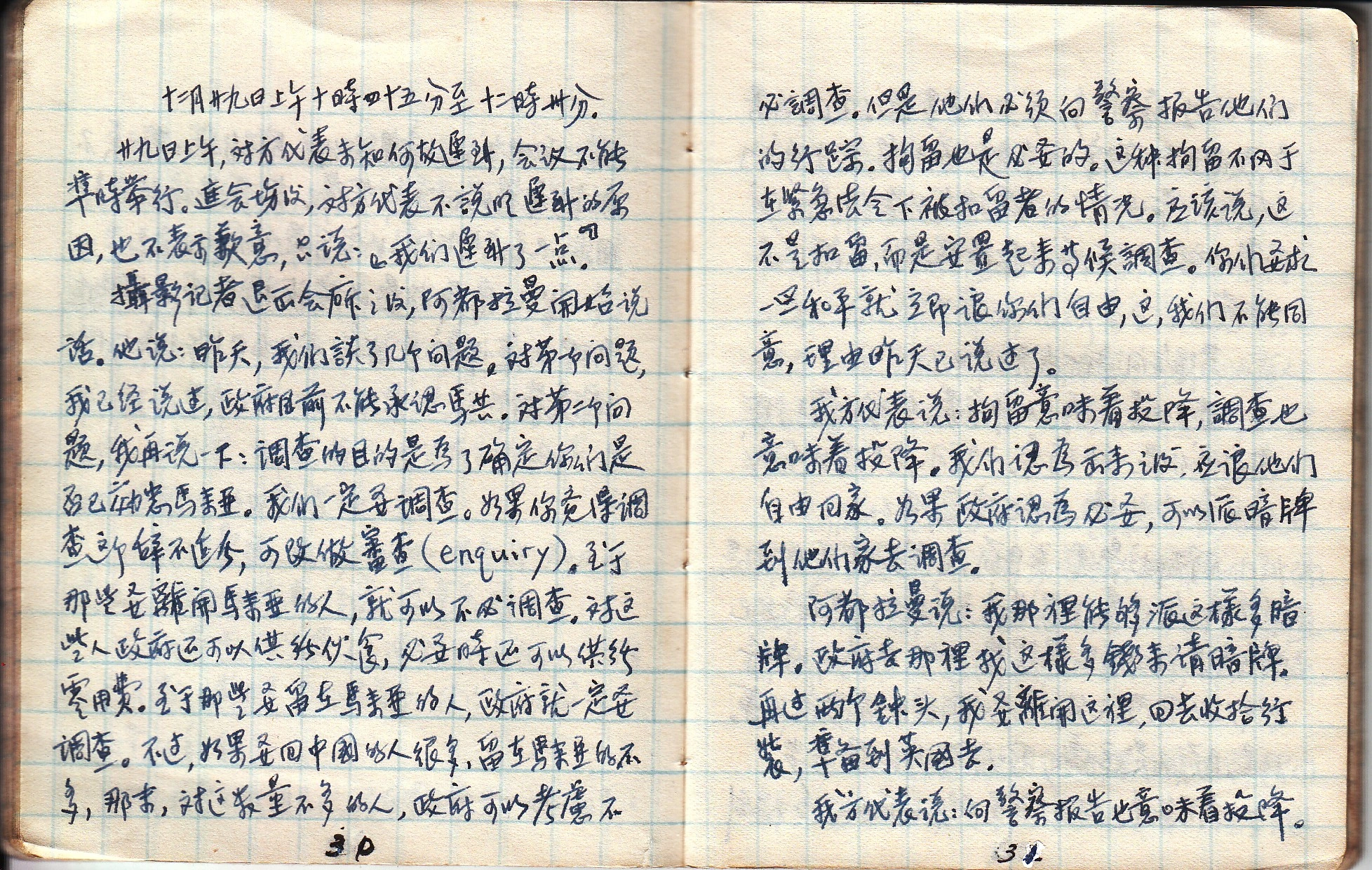
我方代表说:“拘留意味着投降,调查也意味着投降。我们认为出来之后,应让他们自由回家……向警察报告也意味着投降。现在既然时间不多,我也不必多说。不过,如果要我们出来投降,出来被人家扣留,那末,我们只有打到最后一个人。如果现有的条件是一成不变的话,那末,我的权限没有办法解决这个问题。”
马绍尔问:“打下去为了什么?”
我方代表答:“为了人的尊严。在我们看来,投降对我们是一种侮辱。试问:要是你处在我们目前的处境,你能接受吗?”Our representative said: "Detention means surrender, and investigation also means surrender. We hold that once they come out, they should be allowed to return home freely... Reporting to the police also means surrender. Since there is little time left now, I need not say much more. However, if we are required to come out and surrender, to come out and be detained by others, then we can only fight to the last man. If the existing terms remain unchanged, then my mandate provides no way to resolve this issue."— 《马共档案:陈田〈华玲和谈记录〉》(1955年12月29日第五次会议原始手稿,第31至32页) | CPM Archives: Chen Tien's Handwritten 'Record of the Baling Talks' (Original Minutes of the Fifth Session, December 29, 1955, pp. 31–32)
Marshall asked: "Fighting on for what?"
Our representative answered: "For human dignity. In our view, surrender is an insult to us. May I ask: if you were in our present position, could you accept it?"
从战略全局审视华玲和谈的这一核心僵局可以看到:谈判在停火的根本原则上陷入死结,官方代表团在英方压力下坚持将其定义为“投降与拘押甄别”,而马共代表团则坚决主张必须以“尊重人的尊严与政治平等”为不可逾越的前提。正如陈平在总结这场交锋时所指出的,与其在自己的国土上低头受辱,不如在丛林里昂首为自由而战。尽管会谈最终未能达成停火协议,但东姑阿都拉曼敏锐注意到马共明确表示愿在一个掌握军政主权的独立马来亚政府之下停止武装战斗;这一立场成为东姑四天后飞赴伦敦向英国政府索取独立时间表时极具分量的战略筹码。
Examining the core deadlock at Baling from a strategic perspective reveals why the negotiations fractured over the fundamental principle of peace: the official delegation, constrained by British directives, insisted on framing peace as surrender and security screening, whereas the CPM delegation upheld respect for human dignity and political equality as an unyielding prerequisite. As Chin Peng summarized this choice, it was better to fight for freedom with heads held high in the jungle than to submit to humiliation in one's own homeland. Although the talks did not produce an immediate ceasefire, Tunku Abdul Rahman keenly noted the CPM's pledge to cease armed struggle under an independent Malayan government exercising sovereign control over internal security, a commitment that became a decisive strategic lever when Tunku flew to London four days later to negotiate Merdeka.
第四章:幕后监听与政治底牌:谁在阻挠和平?
Chapter 4: The Hidden Puppeteers: British Declassified Confessions and Tunku's Calculated Failure
华玲和谈为何注定破裂?数十年来,殖民主义史书竭力将谈判失败归咎于马共所谓的“顽固”。然而,随着大英帝国机密档案的全面解密与马共第一手会谈实录的公开,英国殖民当局在幕后对和谈施加的严密监控与政治掣肘被彻底证实。
在和谈举行前夕,英国远东殖民总督麦唐纳(Malcolm MacDonald)与最高专员麦吉利夫雷便秘密约见东姑,划下了绝不容突破的死线:白厅严禁联邦政府承认马共合法地位,绝不允许马共党员以合法公民身份参政;英国军方更以“若向共产党妥协将严重危及马来半岛安全”为要挟,威胁推迟乃至取消独立承诺。东姑阿都拉曼由此戴上了英国人定制的绝密政治紧箍咒,他的任务不是寻求和解,而是借华玲会谈向伦敦殖民当局递交一份“反共保证”。
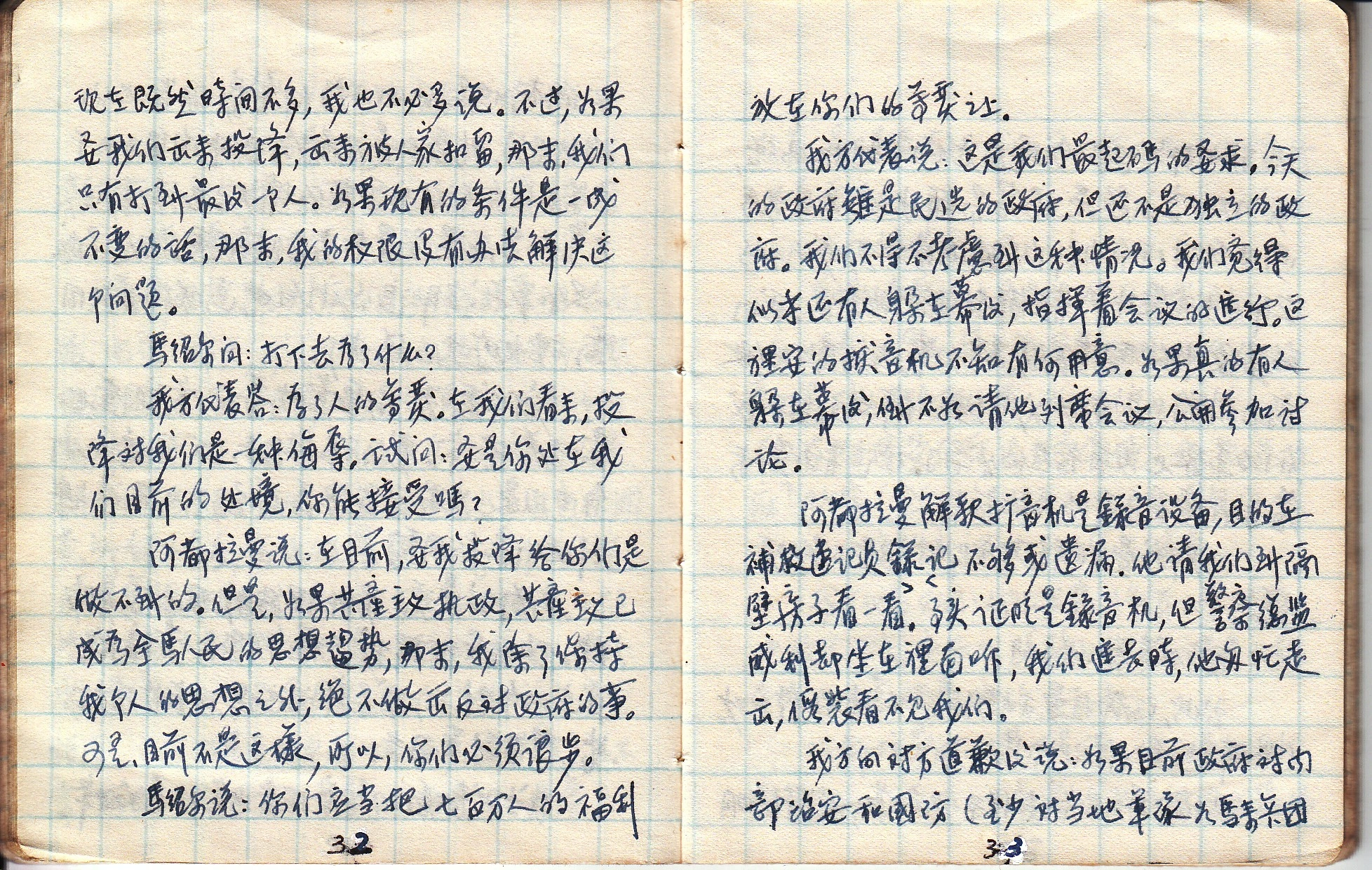
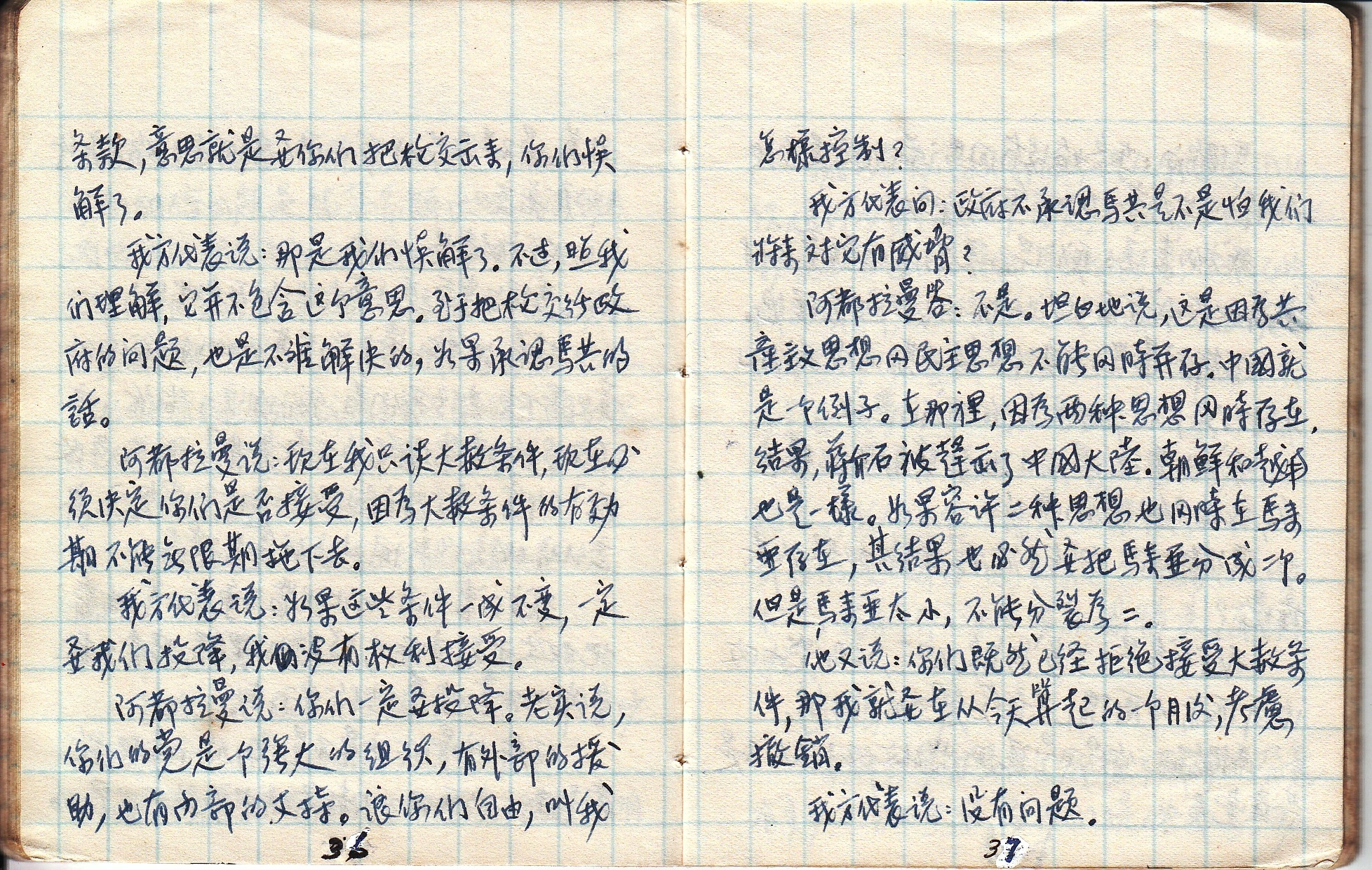
陈田当场亲笔记录的《华玲和谈记录》(第33页与第36页),更以铁一般的现场实录,同时揭开了会场内外的英方幕后监控与东姑阿都拉曼的真实政治底牌。在12月29日终局会谈期间,马共代表团敏锐察觉谈判桌上增设的扩音器,当即在席间点破:“我们觉得似乎还有人躲在幕后,指挥着会议的进行。这里安的扩音机不知有何用意。如果真的有人躲在幕后,倒不如请他列席会议,公开参加讨论。”东姑与马绍尔辩称那只是连接隔壁房间的录音机,并请马共代表入内查验。谁料马共代表推门步入隔壁房间时,竟当场撞破英国殖民当局副警察总监威利(I. S. Wylie)正端坐在录音机旁实时监听。陈田在手稿第33页如实记下:“证实是录音机,但警察总监威利却坐在里面听,我们进去时,他匆忙走出,假装看不见我们。”
而在手稿第36页,当马共代表明确提出“至于把枪交给政府的问题,也是不难解决的,如果承认马共的话”时,东姑阿都拉曼终于卸下掩饰,亲口亮出了拒绝承认马共合法地位的真实政治底牌:“你们一定要投降。老实说,你们的党是个强大的组织,有外部的援助,也有内部的支持。让你们自由,叫我怎样控制?”这番直白的表态证明,官方代表团之所以顽固坚持“投降审查”,根本不是因为马共拒绝放下武器,而是恐惧马共在赢得合法政党地位后凭借深厚的群众基础通过宪政选举挑战联盟政府的执政权。
更为关键的官方铁证,来自英国国家档案馆与新加坡国家档案馆现已解密的绝密外务档案 FCO 141/14904(《Amnesty & Surrender Terms》)。在泛黄的档案页边,赫然记录着英国高级殖民官员亲笔写下的一行密注:“人们挥之不去地感觉,1955年的机会被错失了,英国政府对此负有一定责任。”这行官方密注直接反映了战后英帝国安全战略对和谈进程的实质性制约。
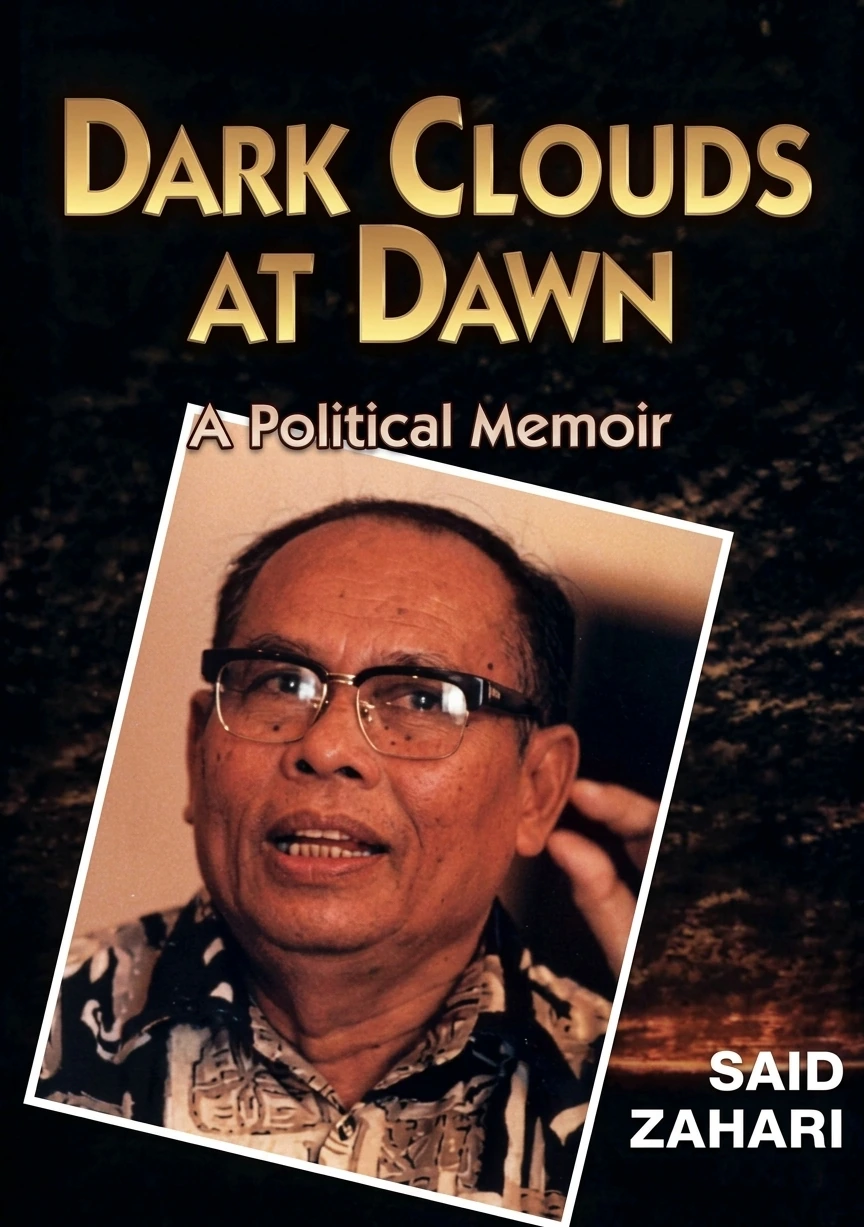
与此同时,著名爱国新闻工作者、时任《马来前锋报》(Utusan Melayu)总编辑赛·扎哈利(Said Zahari)在其政治回忆录《黎明的乌云》(Dark Clouds at Dawn,吉隆坡INSAN出版社,2001年,第282页)中,详细记录了和谈破裂当天他与东姑阿都拉曼的面对面对话。当扎哈里询问东姑是否对华玲会谈的失败感到遗憾时,东姑毫不犹豫地斩钉截铁回答道:“不会,我不会。我从未希望它能成功。”(No, I'm not. I never wanted it to be a success.)
从英国副警察总监威利在隔壁房间的实时监听,到东姑阿都拉曼“让你们自由,叫我怎样控制”与“我从未希望它能成功”的内心自白,多方档案形成了一条完整的证据链,深刻揭示了冷战地缘博弈与国内政权垄断诉求交织下的华玲和谈本质:英国殖民当局与联盟执政精英联手封死了马共通过和平宪政道路参政的大门,并借和谈破裂之机向伦敦展现反共立场的坚定性,以换取白厅在主权移交谈判中的背书。
Why were the Baling Talks doomed from inception? For decades, colonial historiography blamed CPM 'intransigence.' Yet declassified British state papers and primary CPM conference minutes have shattered this fabrication, exposing how Whitehall surveillance and political vetoes orchestrated the collapse.
Prior to the summit, Commissioner-General Malcolm MacDonald and High Commissioner Donald MacGillivray summoned Tunku, imposing rigid non-negotiable boundaries: under no circumstances was the CPM to be legalized, nor were its members to enjoy unfettered political liberties. The British military threatened that any compromise would jeopardize internal defense, derailing constitutional handover. Bound by these imperial directives, Tunku approached Baling not to negotiate peace, but to demonstrate staunch anti-communist credentials to his masters.
Chen Tien's firsthand handwritten minutes ('Record of the Baling Talks,' pp. 33 and 36) provide irrefutable on-the-spot proof exposing both the British 'hidden hand' and Tunku Abdul Rahman's true 'political bottom line.' During the final session on December 29, noticing a microphone placed on the conference table, the CPM delegation challenged the room: 'We feel as though someone is hiding behind the scenes, directing the proceedings of this conference. We do not know the purpose of the microphone installed here. If someone is truly hiding behind the scenes, it would be better to invite him to attend the meeting and participate openly in the discussion.' Tunku and Marshall claimed it was merely connected to a tape recorder in the adjoining room and invited the CPM delegates to inspect it. Upon opening the door to the next room, however, the CPM delegates caught British Deputy Commissioner of Police I. S. Wylie sitting beside the machine listening live! As Chen Tien recorded verbatim on page 33: 'Confirmed it was a tape recorder, but Deputy Police Commissioner Wylie was sitting inside listening; when we entered, he hurriedly walked out, pretending not to see us.'
On page 36 of the manuscript, when the CPM delegation explicitly stated, 'As for the question of handing over our guns to the government, that too is not difficult to resolve, provided the CPM is recognized,' Tunku Abdul Rahman dropped all pretense and blurted out his true political bottom line for refusing to legalize the party: 'You must surrender. Frankly, your party is a powerful organization, with external aid and internal support. If I let you go free, how am I to control it?' This candid admission proves that the official delegation insisted on 'surrender and screening' not because the CPM refused to lay down its arms, but because the ruling elite feared that a legalized CPM, backed by deep grassroots support, would challenge the Alliance government at the ballot box.
Further official proof emerges from declassified files at the UK and Singapore National Archives (FCO 141/14904, 'Amnesty & Surrender Terms'). In the margins, British officials inscribed a stunning confession: 'There is a lingering sense that the 1955 opportunity was missed, for which Her Majesty's Government bears some responsibility.' This official admission demolishes decades of propaganda attributing the deadlock solely to the guerrillas.
An equally devastating indictment comes from legendary nationalist editor Said Zahari of *Utusan Melayu*. In his memoir *Dark Clouds at Dawn* (INSAN, 2001, p. 282), Zahari recounted questioning Chief Minister Tunku Abdul Rahman immediately after the conference collapsed. When asked if he regretted the breakdown, Tunku answered without hesitation: 'No, I'm not. I never wanted it to be a success.'
From Deputy Police Commissioner Wylie's live eavesdropping in the adjoining room to Tunku Abdul Rahman's candid confessions ('If I let you go free, how am I to control it?' and 'I never wanted it to be a success'), converging primary sources establish a complete chain of evidence. Together, they expose the structural reality of the Baling Talks: British colonial authorities and Alliance elites jointly barred the CPM from constitutional participation, utilizing a calculated impasse at Baling to certify their anti-communist reliability before Whitehall.
华玲和谈为何注定破裂?数十年来,殖民主义史书竭力将谈判失败归咎于马共所谓的“顽固”。然而,随着大英帝国机密档案的全面解密与马共第一手会谈实录的公开,英国殖民当局在幕后对和谈施加的严密监控与政治掣肘被彻底证实。
在和谈举行前夕,英国远东殖民总督麦唐纳(Malcolm MacDonald)与最高专员麦吉利夫雷便秘密约见东姑,划下了绝不容突破的死线:白厅严禁联邦政府承认马共合法地位,绝不允许马共党员以合法公民身份参政;英国军方更以“若向共产党妥协将严重危及马来半岛安全”为要挟,威胁推迟乃至取消独立承诺。东姑阿都拉曼由此戴上了英国人定制的绝密政治紧箍咒,他的任务不是寻求和解,而是借华玲会谈向伦敦殖民当局递交一份“反共保证”。
Why were the Baling Talks doomed from inception? For decades, colonial historiography blamed CPM 'intransigence.' Yet declassified British state papers and primary CPM conference minutes have shattered this fabrication, exposing how Whitehall surveillance and political vetoes orchestrated the collapse.
Prior to the summit, Commissioner-General Malcolm MacDonald and High Commissioner Donald MacGillivray summoned Tunku, imposing rigid non-negotiable boundaries: under no circumstances was the CPM to be legalized, nor were its members to enjoy unfettered political liberties. The British military threatened that any compromise would jeopardize internal defense, derailing constitutional handover. Bound by these imperial directives, Tunku approached Baling not to negotiate peace, but to demonstrate staunch anti-communist credentials to his masters.
陈田当场亲笔记录的《华玲和谈记录》(第33页与第36页),更以铁一般的现场实录,同时揭开了会场内外的英方幕后监控与东姑阿都拉曼的真实政治底牌。在12月29日终局会谈期间,马共代表团敏锐察觉谈判桌上增设的扩音器,当即在席间点破:“我们觉得似乎还有人躲在幕后,指挥着会议的进行。这里安的扩音机不知有何用意。如果真的有人躲在幕后,倒不如请他列席会议,公开参加讨论。”东姑与马绍尔辩称那只是连接隔壁房间的录音机,并请马共代表入内查验。谁料马共代表推门步入隔壁房间时,竟当场撞破英国殖民当局副警察总监威利(I. S. Wylie)正端坐在录音机旁实时监听。陈田在手稿第33页如实记下:“证实是录音机,但警察总监威利却坐在里面听,我们进去时,他匆忙走出,假装看不见我们。”
而在手稿第36页,当马共代表明确提出“至于把枪交给政府的问题,也是不难解决的,如果承认马共的话”时,东姑阿都拉曼终于卸下掩饰,亲口亮出了拒绝承认马共合法地位的真实政治底牌:“你们一定要投降。老实说,你们的党是个强大的组织,有外部的援助,也有内部的支持。让你们自由,叫我怎样控制?”这番直白的表态证明,官方代表团之所以顽固坚持“投降审查”,根本不是因为马共拒绝放下武器,而是恐惧马共在赢得合法政党地位后凭借深厚的群众基础通过宪政选举挑战联盟政府的执政权。
更为关键的官方铁证,来自英国国家档案馆与新加坡国家档案馆现已解密的绝密外务档案 FCO 141/14904(《Amnesty & Surrender Terms》)。在泛黄的档案页边,赫然记录着英国高级殖民官员亲笔写下的一行密注:“人们挥之不去地感觉,1955年的机会被错失了,英国政府对此负有一定责任。”这行官方密注直接反映了战后英帝国安全战略对和谈进程的实质性制约。
与此同时,著名爱国新闻工作者、时任《马来前锋报》(Utusan Melayu)总编辑赛·扎哈利(Said Zahari)在其政治回忆录《黎明的乌云》(Dark Clouds at Dawn,吉隆坡INSAN出版社,2001年,第282页)中,详细记录了和谈破裂当天他与东姑阿都拉曼的面对面对话。当扎哈里询问东姑是否对华玲会谈的失败感到遗憾时,东姑毫不犹豫地斩钉截铁回答道:“不会,我不会。我从未希望它能成功。”(No, I'm not. I never wanted it to be a success.)
Chen Tien's firsthand handwritten minutes ('Record of the Baling Talks,' pp. 33 and 36) provide irrefutable on-the-spot proof exposing both the British 'hidden hand' and Tunku Abdul Rahman's true 'political bottom line.' During the final session on December 29, noticing a microphone placed on the conference table, the CPM delegation challenged the room: 'We feel as though someone is hiding behind the scenes, directing the proceedings of this conference. We do not know the purpose of the microphone installed here. If someone is truly hiding behind the scenes, it would be better to invite him to attend the meeting and participate openly in the discussion.' Tunku and Marshall claimed it was merely connected to a tape recorder in the adjoining room and invited the CPM delegates to inspect it. Upon opening the door to the next room, however, the CPM delegates caught British Deputy Commissioner of Police I. S. Wylie sitting beside the machine listening live! As Chen Tien recorded verbatim on page 33: 'Confirmed it was a tape recorder, but Deputy Police Commissioner Wylie was sitting inside listening; when we entered, he hurriedly walked out, pretending not to see us.'
On page 36 of the manuscript, when the CPM delegation explicitly stated, 'As for the question of handing over our guns to the government, that too is not difficult to resolve, provided the CPM is recognized,' Tunku Abdul Rahman dropped all pretense and blurted out his true political bottom line for refusing to legalize the party: 'You must surrender. Frankly, your party is a powerful organization, with external aid and internal support. If I let you go free, how am I to control it?' This candid admission proves that the official delegation insisted on 'surrender and screening' not because the CPM refused to lay down its arms, but because the ruling elite feared that a legalized CPM, backed by deep grassroots support, would challenge the Alliance government at the ballot box.
Further official proof emerges from declassified files at the UK and Singapore National Archives (FCO 141/14904, 'Amnesty & Surrender Terms'). In the margins, British officials inscribed a stunning confession: 'There is a lingering sense that the 1955 opportunity was missed, for which Her Majesty's Government bears some responsibility.' This official admission demolishes decades of propaganda attributing the deadlock solely to the guerrillas.
An equally devastating indictment comes from legendary nationalist editor Said Zahari of *Utusan Melayu*. In his memoir *Dark Clouds at Dawn* (INSAN, 2001, p. 282), Zahari recounted questioning Chief Minister Tunku Abdul Rahman immediately after the conference collapsed. When asked if he regretted the breakdown, Tunku answered without hesitation: 'No, I'm not. I never wanted it to be a success.'
从英国副警察总监威利在隔壁房间的实时监听,到东姑阿都拉曼“让你们自由,叫我怎样控制”与“我从未希望它能成功”的内心自白,多方档案形成了一条完整的证据链,深刻揭示了冷战地缘博弈与国内政权垄断诉求交织下的华玲和谈本质:英国殖民当局与联盟执政精英联手封死了马共通过和平宪政道路参政的大门,并借和谈破裂之机向伦敦展现反共立场的坚定性,以换取白厅在主权移交谈判中的背书。
From Deputy Police Commissioner Wylie's live eavesdropping in the adjoining room to Tunku Abdul Rahman's candid confessions ('If I let you go free, how am I to control it?' and 'I never wanted it to be a success'), converging primary sources establish a complete chain of evidence. Together, they expose the structural reality of the Baling Talks: British colonial authorities and Alliance elites jointly barred the CPM from constitutional participation, utilizing a calculated impasse at Baling to certify their anti-communist reliability before Whitehall.
第五章:历史的悖论:马共的停战庄严承诺与1957年提前独立
Chapter 5: The Historical Paradox: Chin Peng's Solemn Pledge and the Accelerated 1957 Independence
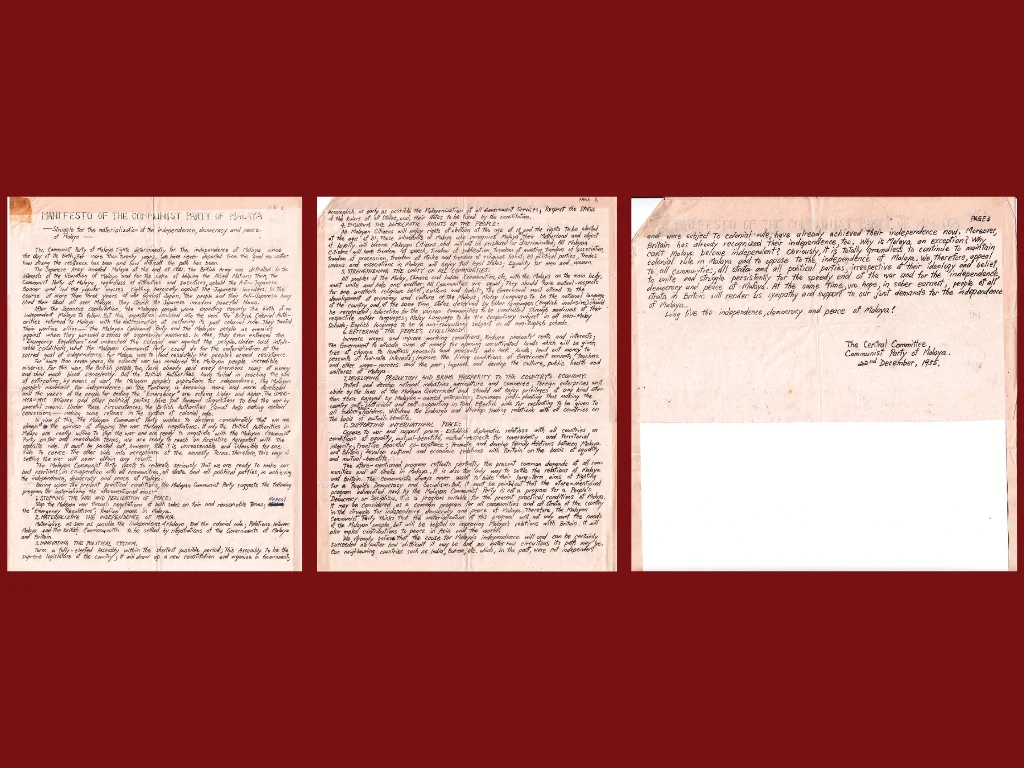
尽管面对官方代表团的极限施压,马共中央在会谈前后展现出了以民族独立前途为重的政治远见与历史担当。1955年12月22日,马共中央发表具有深远战略意义的《马来亚共产党宣言》,倡议与英国立即停火并废除紧急条例,主张在国家独立后立即召开全民普选的立宪议会,制定一部真正保障人民权利的新宪法。
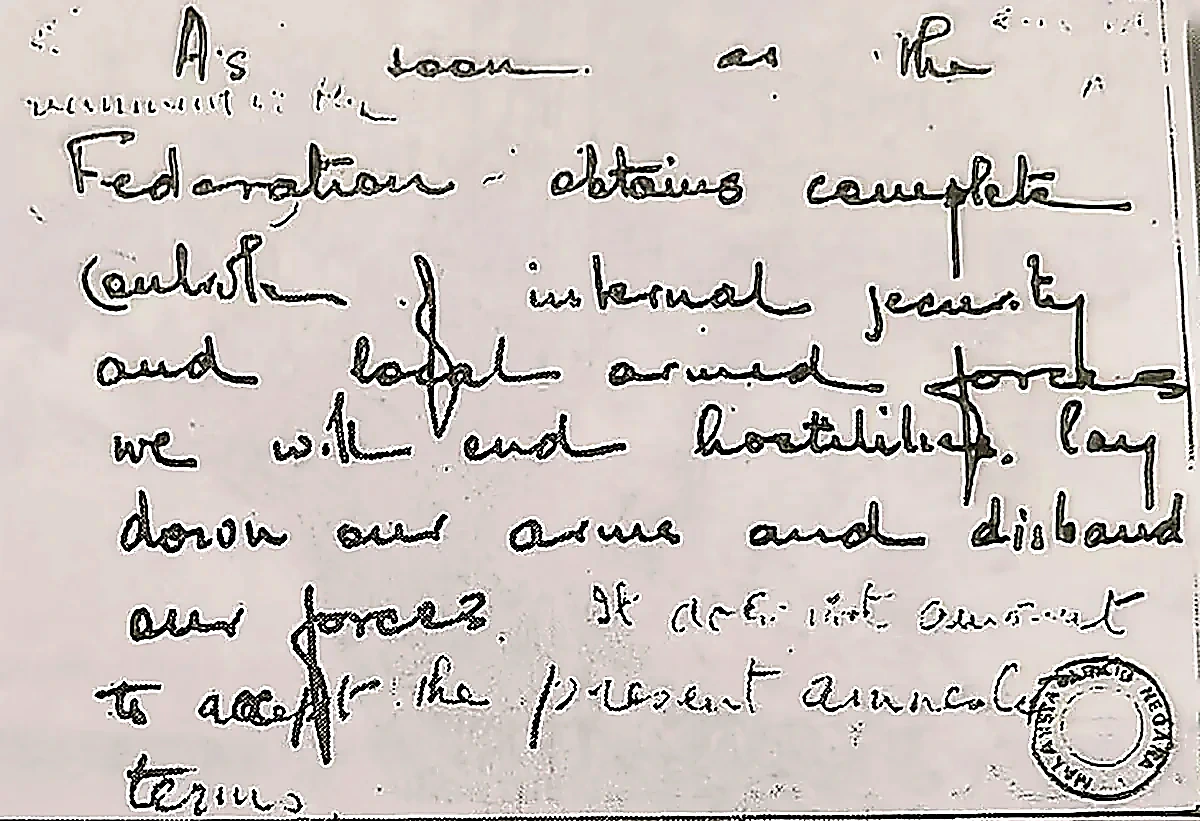
在12月29日和谈终局关头,大卫·马绍尔提笔起草联合声明草案,陈田代表马共代表团字斟句酌地做出了庄严的修改与补充。这份原始草案手稿留下了珍贵的历史见证:“只要马来亚联合邦民选政府获得对内部治安及本地武装部队的完全控制权,我们就停止敌对行动、放下武器并遣散部队。这并不等于接受目前的大赦条件。”
陈田当场亲笔写下的《华玲和谈记录》第33页末至第35页,将双方拟定这一历史性“停火条款”的全过程完整还原了出来。手稿原文记载,马共代表返回谈判桌后郑重宣告:“如果目前政府对内部治安和国防(至少对当地军队如马来兵团和联合邦兵团等)握有充分控制权的话,我们相信问题是很容易解决的。如果新马两地政府握有内部治安及国防权力,我们可以立即停止武装斗争,并且解散我们的军队。我们的军队叫做马来亚民族解放军。当新马二地政府已握有上述权力后,马来亚已解放了,因而,我们的军队也没有存在的必要了。但这并不意味着我们接受目前的大赦条件。”东姑阿都拉曼与马绍尔立即追问:“这是不是一项诺言?”马共代表斩钉截铁地回答:“是的。”手稿紧接着记下了极具历史现场感的一幕:“至此,阿都拉曼和马绍尔二人发生一些争吵(具体的话已经记不清了)。马绍尔再问:冬姑将于一月赴英,我将在四月赴英,是不是要等到我们两人都回来了,你才实行这项诺言?我方代表答:不必。马绍尔连声说:历史性的,历史性的!接着,他拿起笔来郑重其事地把我们的意见写下来,交给我们看,我们补充了一句话:‘这并不等于接受目前的大赦条件’,和‘民选政府’几个字(全文见公开报十二月卅日消息)。补充后,他交给新闻处主任拿去发表。”
陈平在会谈中作出的这一庄严承诺,在法理与战略层面上产生了决定性影响:一旦马来亚拥有自主防务与安全主权,马共即承诺停火,这一表态彻底瓦解了英国殖民者长期以“防务真空与治安威胁”为由拖延移交政权的借口,成为东姑阿都拉曼四天后飞赴伦敦向大英帝国索取独立主权时最具分量的战略筹码,客观上大幅加速了1957年马来亚提前独立的历史进程。
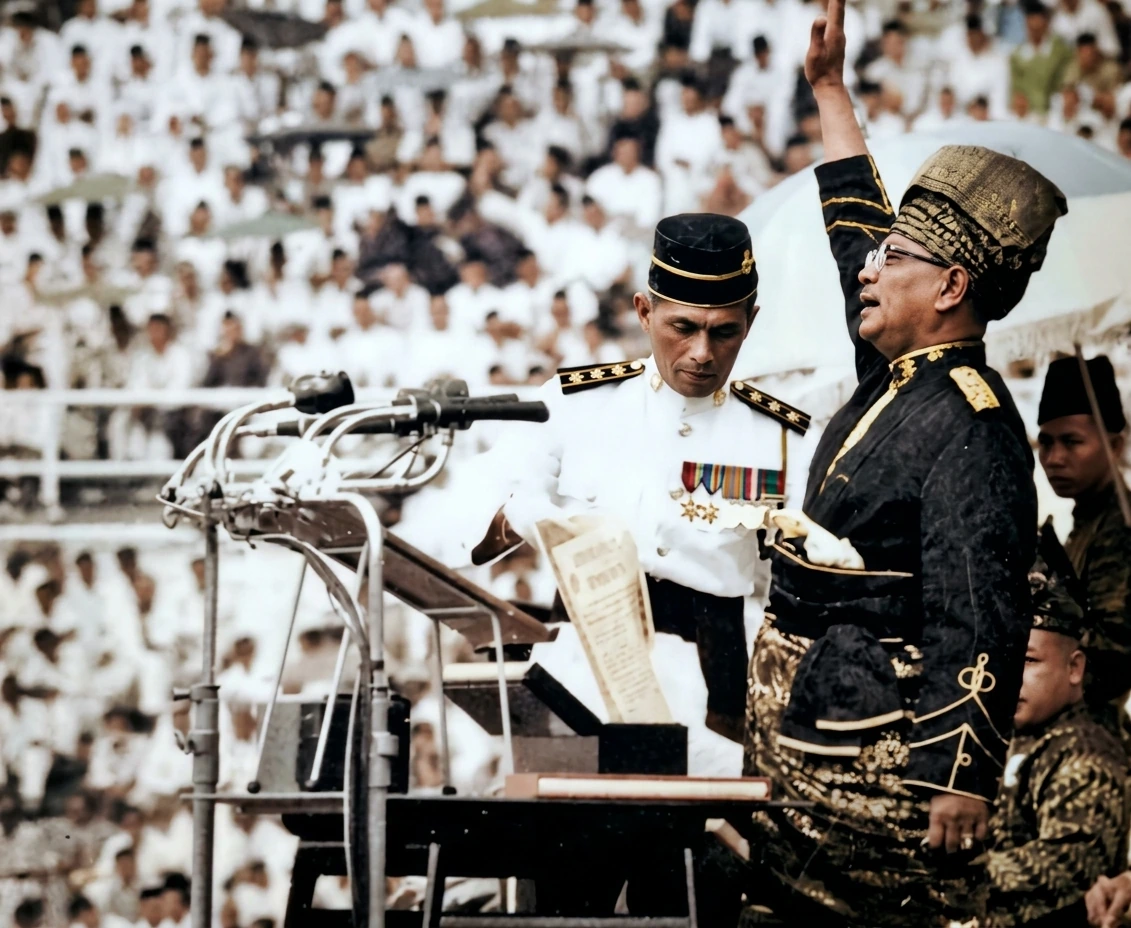
东姑阿都拉曼在1975年出版的自传回忆录《As a Matter of Interest》中,对此作出了毫不掩饰的直白表态:“紧急状态所带来的唯一好处就是我与陈平的会面。正因为我在华玲的那些会谈,我们才能够从马来亚共产党手中夺回主动权,随后在伦敦的一张会议桌旁与英国人就我们的独立进行谈判,并赢得作为一个国家的自由。华玲会谈直接引领了我们走向独立(Merdeka)。”
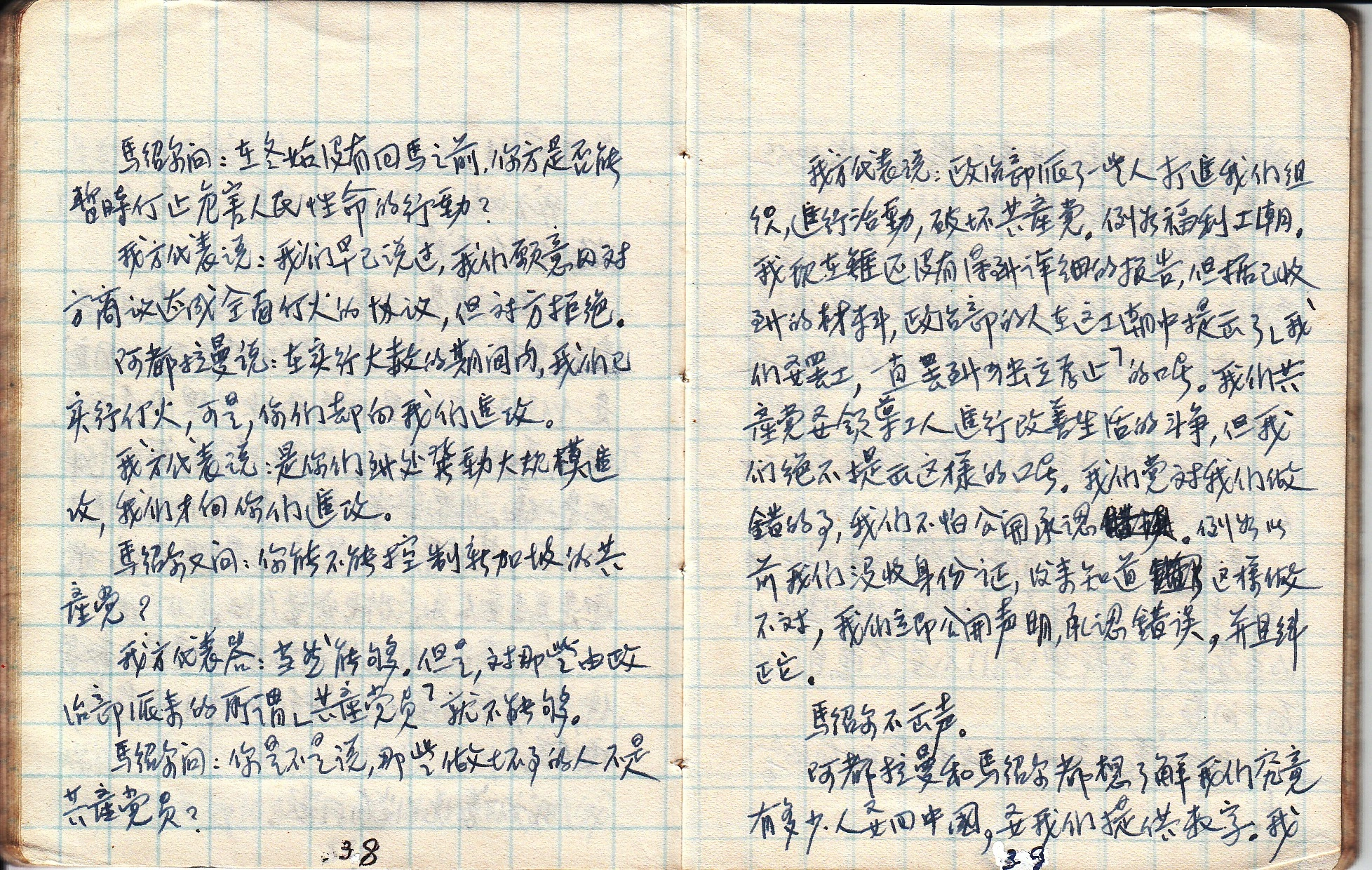
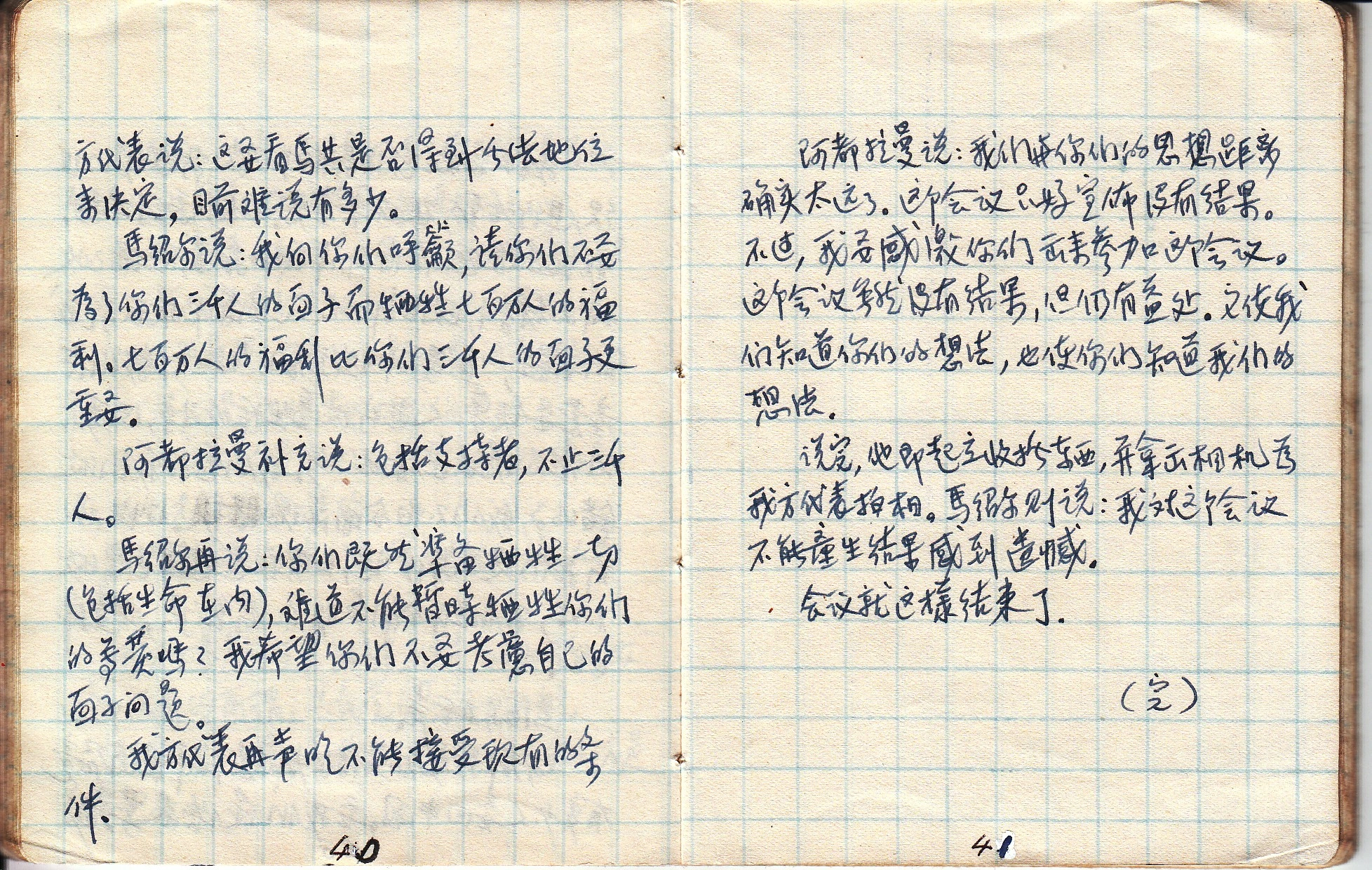
陈田手书《华玲和谈记录》的最后两幅跨页(第38至41页),进一步记录了第五次会议尾声的交锋与散会纪实。当马绍尔追问马共“能不能控制新加坡的共产党”时,马共代表明确指出,殖民当局政治部特务打进左翼组织进行挑拨破坏,例如在新加坡福利巴士工潮中蓄意提出“我们要罢工,一直罢到独立为止”的口号;同时马共代表坦荡地表示:“我们党对我们做错的事,我们不怕公开承认错误。例如以前我们没收身份证,后来知道这样做不对,我们立即公开声明,承认错误,并且纠正它。”手稿如实记下:“马绍尔不出声。”随后马绍尔再次呼吁马共“不要为了你们三千人的面子而牺牲七百万人的福利”,东姑当场补充说:“包括支持者,不止三千人。”在马共代表再次声明不能接受现有投降条件后,东姑宣布这次会议虽无结果但使双方知道了彼此的想法,“说完,他即起立收拾东西,并拿出相机为我方代表拍相”,历时两天的华玲和谈至此正式结束。
1956年初,中共中央主席毛泽东在北京接见马共中央代表团时,对陈平在华玲谈判中的表现给予了崇高赞誉:“前几天,我看了一出在吉隆坡上映的华玲和谈纪录片。当陈平同志在影片中出现时,观众都热烈鼓掌,这说明人民群众是拥护马共的。在和谈会议中,阿都拉曼威胁马共投降,陈平同志坚决拒绝,表示‘即使战斗到最后一个人,我们也要战斗下去’。这是英雄!在我们共产党人的字典里是找不到‘投降’两个字的!”
这一历史进程呈现出马来亚去殖民化脉络中极其深沉的一面:曾经在丛林中浴血抗日、抗英的反殖先驱,在国家获得主权后,由于冷战格局与战后宪政框架的制约,长期被排斥在国家政治体制之外。这种历史错位与代际反差,至今仍是马来西亚现代史学界探讨国家认同、民族和解与去殖民化叙事不可回避的课题。
Despite intense pressure, the CPM Central Committee demonstrated extraordinary statesmanship, prioritizing national sovereignty above partisan interests. On December 22, 1955, the CPM released its historic manifesto, calling for an immediate truce, the abolition of Emergency regulations, and the convening of an elected constituent assembly to draft a democratic constitution.
In the closing hours of December 29, David Marshall drafted a joint communique, to which Chen Tien appended decisive amendments on behalf of the CPM delegation. The historic draft read: 'As soon as the elected government of the Federation of Malaya obtains complete control over internal security and local armed forces, we will cease hostilities, lay down our arms, and disband our units. This does not mean acceptance of the present amnesty terms.'
Chen Tien's firsthand handwritten minutes ('Record of the Baling Talks,' from the bottom of p. 33 through p. 35) reconstruct verbatim how this historic 'ceasefire terms' draft was formulated. As recorded in the manuscript, upon returning to the table the CPM delegation solemnly declared: 'If the present government holds full control over internal security and national defense (at least over local armed forces such as the Malay Regiment and the Federation Regiment), we believe the problem can be easily resolved. If the governments of Malaya and Singapore hold power over internal security and national defense, we can immediately cease armed struggle and disband our army. Our army is called the Malayan National Liberation Army. Once the governments of Malaya and Singapore hold the aforementioned powers, Malaya is liberated, and therefore our army no longer needs to exist. However, this does not mean that we accept the present amnesty terms.' Tunku Abdul Rahman and Marshall immediately asked: 'Is this a pledge?' The CPM representative answered: 'Yes!' The manuscript then captures a remarkable scene at the table: 'At this point, Abdul Rahman and Marshall had a brief argument between themselves (the exact words are no longer clearly remembered). Marshall asked again: The Tunku will go to Britain in January, and I will go to Britain in April; must you wait until both of us have returned before fulfilling this pledge? Our representative answered: No need. Marshall exclaimed repeatedly: Historic, historic! Thereupon, he picked up his pen, solemnly wrote down our position, and handed it to us to review. We added one sentence: "This does not mean acceptance of the present amnesty terms," as well as the words "elected government" (full text as published in the press on December 30). After the additions, he handed it to the Director of Information for release.'
The solemn pledge formulated by Chin Peng produced decisive legal and strategic ramifications: by pledging to cease hostilities once Malaya achieved full sovereign control over defense and internal security, the CPM thoroughly dismantled the long-standing colonial pretext that an ongoing insurgency precluded independence. This pledge provided Tunku Abdul Rahman with his most potent geopolitical lever when he flew to London four days later to demand sovereignty, objectively accelerating the proclamation of Malayan independence in 1957.
In his 1975 memoir *As a Matter of Interest*, Tunku Abdul Rahman conceded this historical truth in unvarnished terms: 'The only benefit the Emergency brought was my meeting with Chin Peng. It was precisely because of those talks in Baling that we were able to wrest back the initiative from the Malayan Communist Party, then sit down with the British around a conference table in London to negotiate our independence... The Baling talks directly led us to Merdeka.'
The final two spreads of Chen Tien's handwritten 'Record of the Baling Talks' (pages 38–41) capture the concluding exchanges and adjournment of the fifth session. When Marshall asked whether the CPM could 'control the Communists in Singapore,' the CPM representatives pointed out that Special Branch agents had infiltrated labor organizations to carry out sabotage, such as raising provocative slogans like 'we will strike all the way until independence' during the Singapore Hock Lee bus strike. At the same time, the CPM delegation stated candidly: 'Regarding things our Party has done wrong, we are not afraid to publicly admit our mistakes. For example, in the past we confiscated identity cards; later, realizing this was wrong, we immediately issued a public statement admitting the mistake and correcting it.' As Chen Tien noted in the manuscript: 'Marshall fell silent.' When Marshall again appealed to the CPM 'not to sacrifice the welfare of 7 million people for the face of you 3,000 people,' Tunku interjected on the spot: 'Including supporters, there are more than 3,000.' After the CPM delegation reaffirmed that it could not accept the existing terms, Tunku declared that although the conference produced no agreement, it had enabled both sides to understand each other's thinking; 'having said this, he stood up to pack his things and took out his camera to take photographs of our representatives,' bringing the two-day Baling Talks to a close.
In early 1956, Chairman Mao Zedong praised Chin Peng's conduct at Baling when meeting the CPM delegation in Beijing: 'I watched a documentary film on the Baling Talks screened in Kuala Lumpur. When Comrade Chin Peng appeared on screen, the audience applauded warmly, proving the masses support the CPM. At the talks, Tunku threatened surrender; Chin Peng refused, saying they would fight to the last man. That is a hero! In our communist dictionary, there is no word "surrender"!'
This historical development illustrates a profound paradox within Malaya's decolonization trajectory: revolutionary pioneers who had waged protracted guerrilla resistance against fascism and colonialism found themselves excluded from the constitutional mainstream following national independence, constrained by Cold War imperatives and post-colonial internal security regimes. This historical divergence remains a pivotal subject of inquiry in modern Malaysian historiography concerning national reconciliation, historical memory, and decolonial narratives.
尽管面对官方代表团的极限施压,马共中央在会谈前后展现出了以民族独立前途为重的政治远见与历史担当。1955年12月22日,马共中央发表具有深远战略意义的《马来亚共产党宣言》,倡议与英国立即停火并废除紧急条例,主张在国家独立后立即召开全民普选的立宪议会,制定一部真正保障人民权利的新宪法。
在12月29日和谈终局关头,大卫·马绍尔提笔起草联合声明草案,陈田代表马共代表团字斟句酌地做出了庄严的修改与补充。这份原始草案手稿留下了珍贵的历史见证:“只要马来亚联合邦民选政府获得对内部治安及本地武装部队的完全控制权,我们就停止敌对行动、放下武器并遣散部队。这并不等于接受目前的大赦条件。”
Despite intense pressure, the CPM Central Committee demonstrated extraordinary statesmanship, prioritizing national sovereignty above partisan interests. On December 22, 1955, the CPM released its historic manifesto, calling for an immediate truce, the abolition of Emergency regulations, and the convening of an elected constituent assembly to draft a democratic constitution.
In the closing hours of December 29, David Marshall drafted a joint communique, to which Chen Tien appended decisive amendments on behalf of the CPM delegation. The historic draft read: 'As soon as the elected government of the Federation of Malaya obtains complete control over internal security and local armed forces, we will cease hostilities, lay down our arms, and disband our units. This does not mean acceptance of the present amnesty terms.'
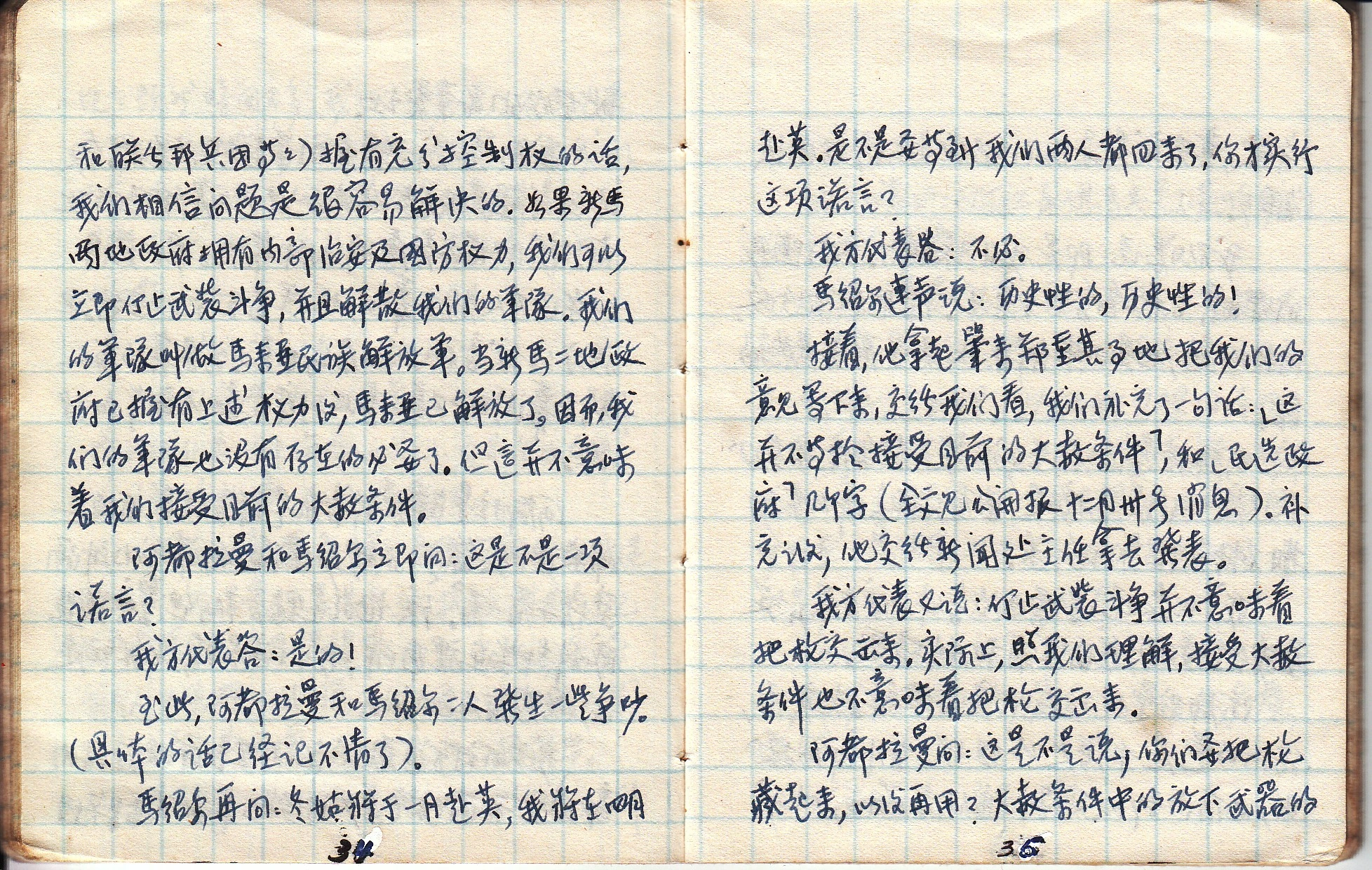
陈田当场亲笔写下的《华玲和谈记录》第33页末至第35页,将双方拟定这一历史性“停火条款”的全过程完整还原了出来。手稿原文记载,马共代表返回谈判桌后郑重宣告:“如果目前政府对内部治安和国防(至少对当地军队如马来兵团和联合邦兵团等)握有充分控制权的话,我们相信问题是很容易解决的。如果新马两地政府握有内部治安及国防权力,我们可以立即停止武装斗争,并且解散我们的军队。我们的军队叫做马来亚民族解放军。当新马二地政府已握有上述权力后,马来亚已解放了,因而,我们的军队也没有存在的必要了。但这并不意味着我们接受目前的大赦条件。”东姑阿都拉曼与马绍尔立即追问:“这是不是一项诺言?”马共代表斩钉截铁地回答:“是的。”手稿紧接着记下了极具历史现场感的一幕:“至此,阿都拉曼和马绍尔二人发生一些争吵(具体的话已经记不清了)。马绍尔再问:冬姑将于一月赴英,我将在四月赴英,是不是要等到我们两人都回来了,你才实行这项诺言?我方代表答:不必。马绍尔连声说:历史性的,历史性的!接着,他拿起笔来郑重其事地把我们的意见写下来,交给我们看,我们补充了一句话:‘这并不等于接受目前的大赦条件’,和‘民选政府’几个字(全文见公开报十二月卅日消息)。补充后,他交给新闻处主任拿去发表。”
陈平在会谈中作出的这一庄严承诺,在法理与战略层面上产生了决定性影响:一旦马来亚拥有自主防务与安全主权,马共即承诺停火,这一表态彻底瓦解了英国殖民者长期以“防务真空与治安威胁”为由拖延移交政权的借口,成为东姑阿都拉曼四天后飞赴伦敦向大英帝国索取独立主权时最具分量的战略筹码,客观上大幅加速了1957年马来亚提前独立的历史进程。
东姑阿都拉曼在1975年出版的自传回忆录《As a Matter of Interest》中,对此作出了毫不掩饰的直白表态:“紧急状态所带来的唯一好处就是我与陈平的会面。正因为我在华玲的那些会谈,我们才能够从马来亚共产党手中夺回主动权,随后在伦敦的一张会议桌旁与英国人就我们的独立进行谈判,并赢得作为一个国家的自由。华玲会谈直接引领了我们走向独立(Merdeka)。”
Chen Tien's firsthand handwritten minutes ('Record of the Baling Talks,' from the bottom of p. 33 through p. 35) reconstruct verbatim how this historic 'ceasefire terms' draft was formulated. As recorded in the manuscript, upon returning to the table the CPM delegation solemnly declared: 'If the present government holds full control over internal security and national defense (at least over local armed forces such as the Malay Regiment and the Federation Regiment), we believe the problem can be easily resolved. If the governments of Malaya and Singapore hold power over internal security and national defense, we can immediately cease armed struggle and disband our army. Our army is called the Malayan National Liberation Army. Once the governments of Malaya and Singapore hold the aforementioned powers, Malaya is liberated, and therefore our army no longer needs to exist. However, this does not mean that we accept the present amnesty terms.' Tunku Abdul Rahman and Marshall immediately asked: 'Is this a pledge?' The CPM representative answered: 'Yes!' The manuscript then captures a remarkable scene at the table: 'At this point, Abdul Rahman and Marshall had a brief argument between themselves (the exact words are no longer clearly remembered). Marshall asked again: The Tunku will go to Britain in January, and I will go to Britain in April; must you wait until both of us have returned before fulfilling this pledge? Our representative answered: No need. Marshall exclaimed repeatedly: Historic, historic! Thereupon, he picked up his pen, solemnly wrote down our position, and handed it to us to review. We added one sentence: "This does not mean acceptance of the present amnesty terms," as well as the words "elected government" (full text as published in the press on December 30). After the additions, he handed it to the Director of Information for release.'
The solemn pledge formulated by Chin Peng produced decisive legal and strategic ramifications: by pledging to cease hostilities once Malaya achieved full sovereign control over defense and internal security, the CPM thoroughly dismantled the long-standing colonial pretext that an ongoing insurgency precluded independence. This pledge provided Tunku Abdul Rahman with his most potent geopolitical lever when he flew to London four days later to demand sovereignty, objectively accelerating the proclamation of Malayan independence in 1957.
In his 1975 memoir *As a Matter of Interest*, Tunku Abdul Rahman conceded this historical truth in unvarnished terms: 'The only benefit the Emergency brought was my meeting with Chin Peng. It was precisely because of those talks in Baling that we were able to wrest back the initiative from the Malayan Communist Party, then sit down with the British around a conference table in London to negotiate our independence... The Baling talks directly led us to Merdeka.'
陈田手书《华玲和谈记录》的最后两幅跨页(第38至41页),进一步记录了第五次会议尾声的交锋与散会纪实。当马绍尔追问马共“能不能控制新加坡的共产党”时,马共代表明确指出,殖民当局政治部特务打进左翼组织进行挑拨破坏,例如在新加坡福利巴士工潮中蓄意提出“我们要罢工,一直罢到独立为止”的口号;同时马共代表坦荡地表示:“我们党对我们做错的事,我们不怕公开承认错误。例如以前我们没收身份证,后来知道这样做不对,我们立即公开声明,承认错误,并且纠正它。”手稿如实记下:“马绍尔不出声。”随后马绍尔再次呼吁马共“不要为了你们三千人的面子而牺牲七百万人的福利”,东姑当场补充说:“包括支持者,不止三千人。”在马共代表再次声明不能接受现有投降条件后,东姑宣布这次会议虽无结果但使双方知道了彼此的想法,“说完,他即起立收拾东西,并拿出相机为我方代表拍相”,历时两天的华玲和谈至此正式结束。
The final two spreads of Chen Tien's handwritten 'Record of the Baling Talks' (pages 38–41) capture the concluding exchanges and adjournment of the fifth session. When Marshall asked whether the CPM could 'control the Communists in Singapore,' the CPM representatives pointed out that Special Branch agents had infiltrated labor organizations to carry out sabotage, such as raising provocative slogans like 'we will strike all the way until independence' during the Singapore Hock Lee bus strike. At the same time, the CPM delegation stated candidly: 'Regarding things our Party has done wrong, we are not afraid to publicly admit our mistakes. For example, in the past we confiscated identity cards; later, realizing this was wrong, we immediately issued a public statement admitting the mistake and correcting it.' As Chen Tien noted in the manuscript: 'Marshall fell silent.' When Marshall again appealed to the CPM 'not to sacrifice the welfare of 7 million people for the face of you 3,000 people,' Tunku interjected on the spot: 'Including supporters, there are more than 3,000.' After the CPM delegation reaffirmed that it could not accept the existing terms, Tunku declared that although the conference produced no agreement, it had enabled both sides to understand each other's thinking; 'having said this, he stood up to pack his things and took out his camera to take photographs of our representatives,' bringing the two-day Baling Talks to a close.
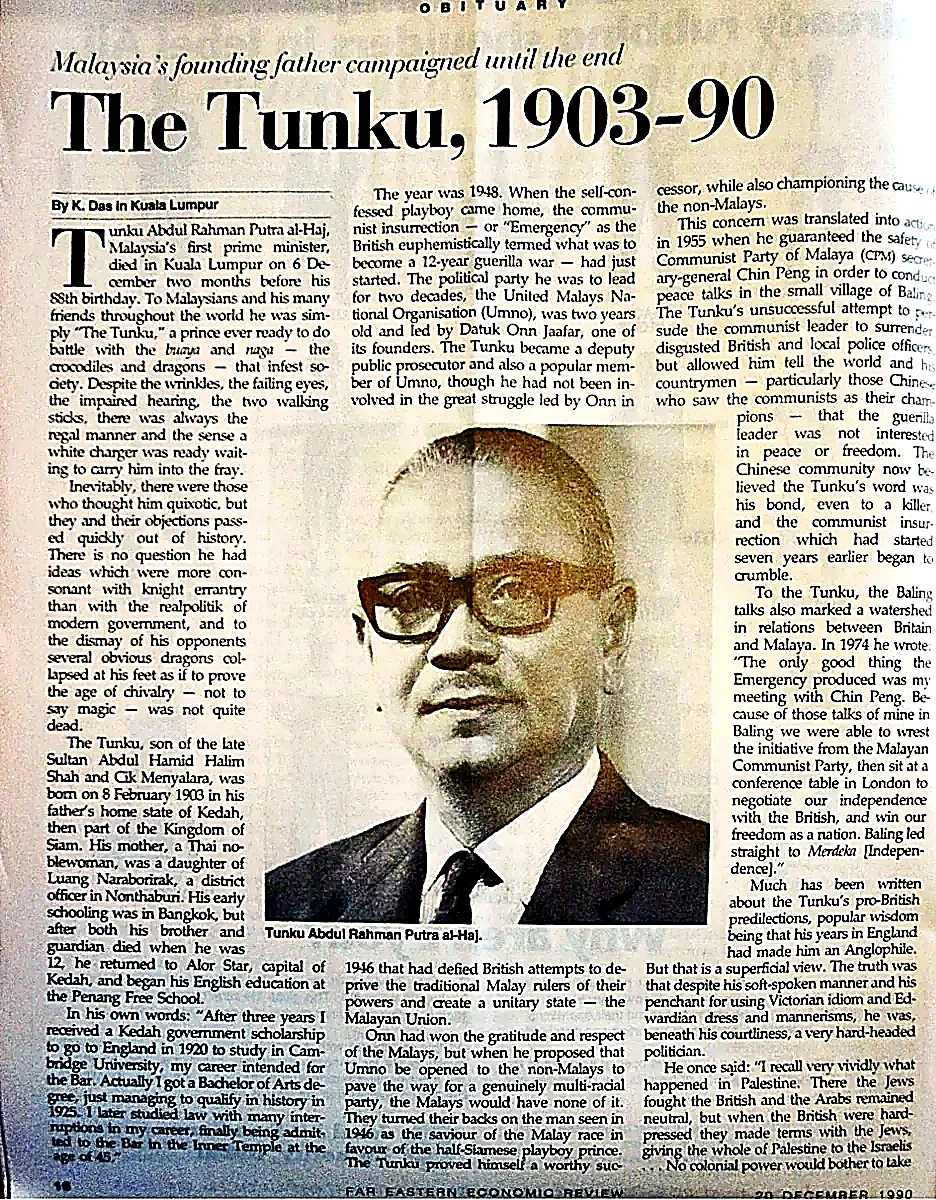
“华玲和谈直接引领我们走向独立”
“紧急状态所带来的唯一好处,就是我与陈平的会面。正因为我们在华玲的那些会谈,我们才能够从马来亚共产党手中夺回主动权,随后在伦敦的一张会议桌旁与英国人就我们的独立进行谈判,并赢得作为一个国家的自由。华玲会谈直接引领了我们走向独立(Merdeka)。”"The Baling talks directly led us to Merdeka."— 东姑阿都拉曼(马来亚联合邦首任首相,1975年出版自传回忆录《As a Matter of Interest》) | Tunku Abdul Rahman, First Prime Minister of Malaya (Memoir 'As a Matter of Interest', 1975)
"The only good that the Emergency brought about was my meeting with Chin Peng. Because of those talks in Baling we were able to wrest the initiative from the Malayan Communist Party, then sit around a conference table in London with the British to negotiate our independence and win our freedom as a nation. The Baling talks directly led us to Merdeka."
1956年初,中共中央主席毛泽东在北京接见马共中央代表团时,对陈平在华玲谈判中的表现给予了崇高赞誉:“前几天,我看了一出在吉隆坡上映的华玲和谈纪录片。当陈平同志在影片中出现时,观众都热烈鼓掌,这说明人民群众是拥护马共的。在和谈会议中,阿都拉曼威胁马共投降,陈平同志坚决拒绝,表示‘即使战斗到最后一个人,我们也要战斗下去’。这是英雄!在我们共产党人的字典里是找不到‘投降’两个字的!”
这一历史进程呈现出马来亚去殖民化脉络中极其深沉的一面:曾经在丛林中浴血抗日、抗英的反殖先驱,在国家获得主权后,由于冷战格局与战后宪政框架的制约,长期被排斥在国家政治体制之外。这种历史错位与代际反差,至今仍是马来西亚现代史学界探讨国家认同、民族和解与去殖民化叙事不可回避的课题。
In early 1956, Chairman Mao Zedong praised Chin Peng's conduct at Baling when meeting the CPM delegation in Beijing: 'I watched a documentary film on the Baling Talks screened in Kuala Lumpur. When Comrade Chin Peng appeared on screen, the audience applauded warmly, proving the masses support the CPM. At the talks, Tunku threatened surrender; Chin Peng refused, saying they would fight to the last man. That is a hero! In our communist dictionary, there is no word "surrender"!'
This historical development illustrates a profound paradox within Malaya's decolonization trajectory: revolutionary pioneers who had waged protracted guerrilla resistance against fascism and colonialism found themselves excluded from the constitutional mainstream following national independence, constrained by Cold War imperatives and post-colonial internal security regimes. This historical divergence remains a pivotal subject of inquiry in modern Malaysian historiography concerning national reconciliation, historical memory, and decolonial narratives.
第六章:重返热带雨林:和谈破裂后的战略抉择与边境新征程
Chapter 6: Return to the Rainforest: Post-Baling Strategy and the Border Sanctuary
长期以来,主流官方叙事往往将独立后的战火延续单一归咎于马共对和平进程的拒绝。然而,解密的官方档案与当时的马共公报呈现了更为复杂的多维面向:在1957年8月31日马来亚联合邦宣布独立后,马共曾数次公开发表声明并向民选政府正式致函,呼吁在承认既有政治现实的基础上重启和平谈判。
1956年3月5日,华玲会谈破裂不久,马共中央便发表《关于当前形势的声明》,呼吁重启和平谈判,遭政府断然拒绝。1957年8月31日马来亚联合邦宣布独立,就在独立盛典的次日(1957年9月1日),马共中央公开发表《马来亚共产党宣言》。宣言庄严宣告:在国家已经赢得独立的新形势下,马共宣布将不再以武装形式对抗国家政府,愿以和平民主方式共同建设繁荣、民主、富强的新马来亚;宣言强烈呼吁联邦政府立即废除紧急状态,释放所有政治犯,实现全民休养生息与国家和平。
为将和平倡议落到实处,1957年10月12日,陈平总书记从边境密林正式致函独立后的联合邦首任总理东姑阿都拉曼(原件标明日期“Tanggal 12 October, 1957.”,抬头致“Yang Berhormat Perdana Mentri”,由陈平以钢笔亲笔签署“Chen Ping, Setiausaha Agong, Party Komunist Malaya”),明确表示准备同东姑再度举行会谈(“bersedia berunding samula dengan Tengku”),以达成一项结束战争的公平合理协议;在信件第二段中,陈平写道:“为使我们这次会谈能够顺利达成协议,我建议首先由我方代表与东姑方面的代表举行初步会谈”("agar perundingan kita pada kali ini dapat menchapai persetujuan dengan lunak-nya, maka saya menchadangkan hendak-nya di-adakan terlebih dahulu pertemuan pendahuluan di-antara wakil2 dari pehak saya dengan pehak Tengku")。然而,联盟政府方面在公布该信译文时,却将“为使这次会谈能顺利达成协议”错译为“预料这次会谈将能达成双方满意的协议”,并借此向报界散布“马共准备出来投降”的舆论。
针对官方的蓄意错译与逼降论调,1957年12月9日,陈平再次向东姑发出第二封两页长的马来文正式公函(第二段首句即明确援引10月12日首函:“Saperti yg telah saya sebutkan dalam surat saya tanggal 12 October...”),正式提议委派拉昔·迈丁同志与陈田同志作为马共代表出席初步会谈,并在信中严正声明:“我方准备同政府方面进行的会谈,旨在达成公平合理的协议以结束战争、实现祖国和平,这同所谓‘投降’(penyerahan-diri)是毫不相干的。众所周知,我党发动武装斗争的目的是为了驱逐殖民主义者、争取马来亚的独立,绝无将民选联邦政府视为敌人的意图;因此在民选联邦政府与我方之间,根本不存在所谓投降的问题。”次日(1957年12月10日),马共中央委员会发言人则达·宾·阿都拉(Zedah bin Abdullah)发表《答〈人民呼声报〉记者问》(Suara Rakyat),公开揭露政府方面错译陈平10月12日来信的真相,并严正指出:“这场战争是英帝国主义强加在我国各族人民和马来亚共产党身上的。诱迫马共投降,本来就是英帝国主义的殖民统治政策。如果现在联盟的某些上层人物还要坚持这种要马共投降的无理主张,那显然是他们准备长期进行战争的借口。这种主张同英国殖民主义统治者的‘以马来亚人打马来亚人’的政策实际上没有区别。”
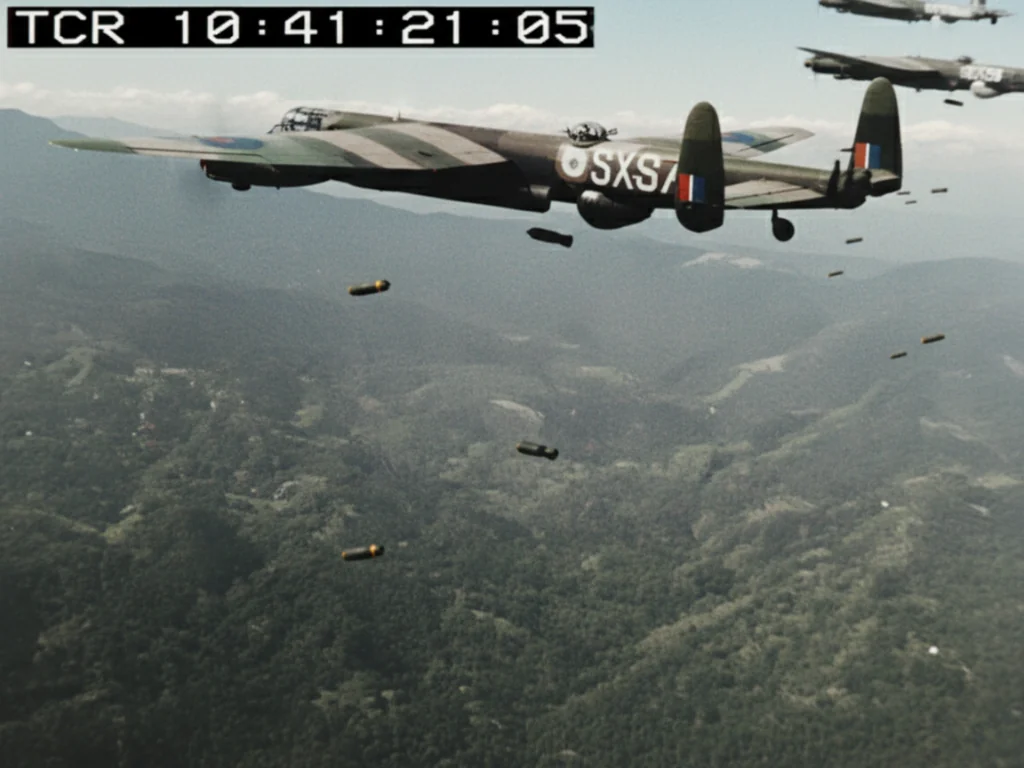
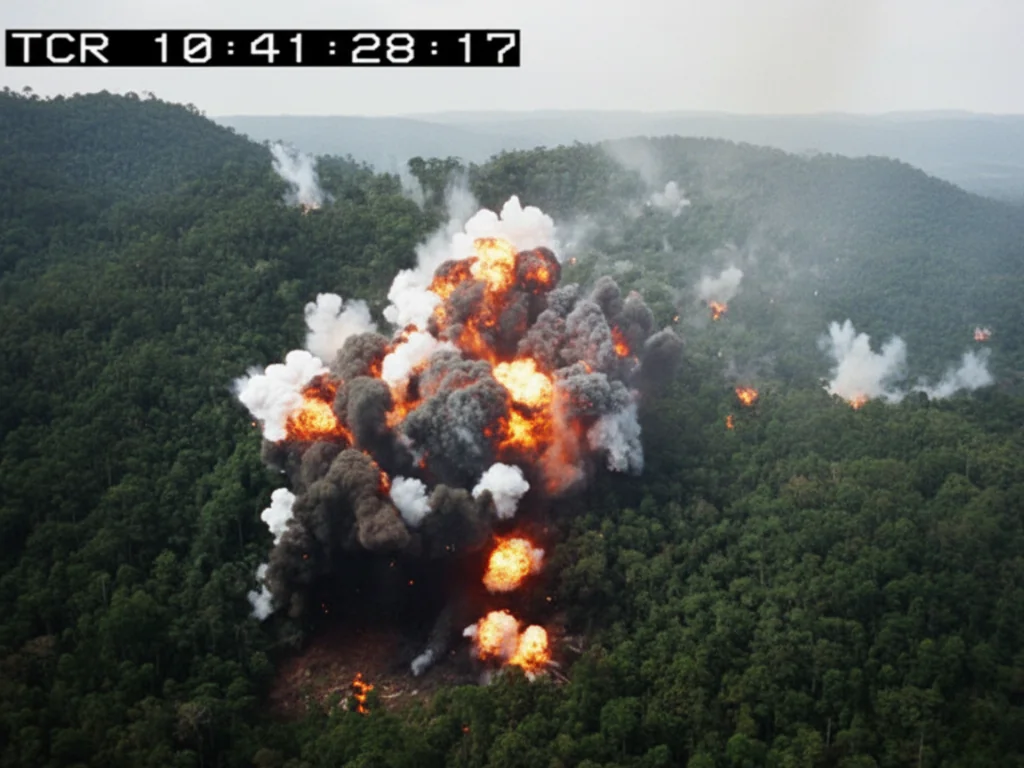
为什么新独立的联邦政府执意关闭和平谈判的大门?英国广播公司(BBC)战地纪录片《在马来亚未宣战的战争》(The Undeclared War)揭示了冷酷真相:独立后的马来亚与英国签署了《英马防务协定》(AMDA),数以万计的英军、澳大利亚与新西兰军队继续驻扎全马;殖民垄断资本需要“共产党威胁”来维持其橡胶锡矿特权,吉隆坡执政精英亦需要借“紧急状态”镇压国内工农运动与左翼政团。在接下来的三年里,英联邦联军出动轰炸机与重炮,对马共部队发动了更为疯狂高效的残酷扫荡,战火被强加在各民族人民头上。
面对冷战地缘博弈与联合邦内部的安全政策限制,马共中央与民族解放军主力部队在复杂局势下逐步向泰马边境战略转移,依托边境密林建立起长期周旋的依托阵地。尽管战火在后续数十年中因各方政治僵局继续延烧,但马共在华玲会谈中展现的谈判意愿与政治坚持,为后来的历史和解留下了不可忽视的先例,并最终在1989年12月2日促成了泰、马、马共三方《合艾和平协议》的正式签署。华玲和谈不仅是二十世纪东南亚非殖民化浪潮中的关键篇章,更为后人研究冷战初期武装冲突如何向政治和解过渡提供了极为宝贵的第一手档案参照。
For decades, mainstream official narratives have attributed the post-independence continuation of the conflict solely to the CPM's rejection of peace. However, declassified documents and contemporary CPM manifestos present a far more nuanced historical reality: following the proclamation of the Federation of Malaya's independence on August 31, 1957, the CPM repeatedly issued public declarations and formal letters to the elected leadership, calling for the resumption of negotiations based on mutual recognition of political realities.
On March 5, 1956, the CPM Central Committee issued the 'Statement on the Current Situation' urging resumed peace talks, which was flatly rebuffed. On September 1, 1957, one day after Merdeka, the CPM issued its historic 'Manifesto of the Malayan Communist Party.' The party announced it would cease armed confrontation against the independent government, pledging to pursue nation-building through peaceful, democratic means and urging an immediate repeal of Emergency regulations and national reconciliation.
Translating words into action, Chin Peng dispatched a formal Malay letter from the border rainforest to Prime Minister Tunku Abdul Rahman on October 12, 1957 (inscribed 'Tanggal 12 October, 1957.', addressed to 'Yang Berhormat Perdana Mentri', and signed in fountain pen 'Chen Ping, Setiausaha Agong, Party Komunist Malaya'), expressing readiness to reopen negotiations with Tunku ('bersedia berunding samula dengan Tengku') to achieve a fair and reasonable agreement to end the war. In the second paragraph, Chin Peng wrote: 'In order that our negotiations this time may smoothly reach an agreement, I propose that a preliminary meeting be held first between representatives from my side and Tengku's side' ("agar perundingan kita pada kali ini dapat menchapai persetujuan dengan lunak-nya, maka saya menchadangkan hendak-nya di-adakan terlebih dahulu pertemuan pendahuluan di-antara wakil2 dari pehak saya dengan pehak Tengku"). When releasing the letter, however, the government mistranslated 'in order that our negotiations may smoothly reach an agreement' as 'anticipating that these talks will reach a mutually satisfactory agreement,' exploiting this distortion to spread claims in the press that the CPM was ready to surrender.
Refuting the government's mistranslation and capitulation demands, Chin Peng sent a second two-page Malay letter to Prime Minister Tunku Abdul Rahman on December 9, 1957 (explicitly citing the October 12 letter in its second paragraph: 'Saperti yg telah saya sebutkan dalam surat saya tanggal 12 October...'), formally nominating Comrades Rashid Maidin and Chen Tien as the CPM's representatives for preliminary talks and declaring unequivocally: 'The talks our side is prepared to hold with the government are aimed at reaching a fair and reasonable agreement to end the war and realize peace in our homeland, which has nothing whatsoever to do with so-called "surrender" (penyerahan-diri). As is universally known, the objective of the armed struggle launched by our Party was to drive out the colonialists and win the independence of Malaya, with no intention of treating the elected Federal Government as an enemy; therefore, between the elected Federal Government and our side, the question of surrender simply does not exist.' The following day, December 10, 1957, CPM Central Committee spokesperson Zedah bin Abdullah issued his formal Q&A with Suara Rakyat (People's Voice), publicly exposing the government's mistranslation of Chin Peng's October 12 letter and pointing out: 'Everyone knows that this war was forced upon the people of all nationalities in our country and the Communist Party of Malaya by British imperialism. Inducing and forcing the CPM to surrender has always been the colonial ruling policy of British imperialism. If certain upper-stratum figures in the Alliance still insist on this unreasonable demand that the CPM surrender, that is clearly an excuse for preparing to wage a protracted war. Such a position is in practice no different from the British colonial rulers' policy of "making Malayans fight Malayans."'
Why did the newly sovereign government slam the door on peace? BBC documentary *The Undeclared War* and declassified military papers disclose the reality: Malaya entered the Anglo-Malayan Defense Agreement (AMDA), stationing tens of thousands of British, Australian, and New Zealand troops. Imperial monopolies required an ongoing 'Red Menace' to protect their plantation and tin concessions, while domestic elites used Emergency decrees to suppress trade unions and socialist opposition. For three years post-Merdeka, Commonwealth forces intensified air and artillery assaults against guerrilla positions.
Confronted by Cold War geopolitical complexities and the strict internal security framework of the newly independent Federation, the CPM Central Committee and core MNLA units strategically relocated toward the rugged Thai-Malayan border, establishing forest redoubts to sustain protracted survival. Although the conflict persisted across subsequent decades due to ideological deadlock, the negotiating principles and political tenacity demonstrated by the CPM at Baling established vital historical precedents for eventual peace, culminating in the landmark tripartite Haadyai Peace Agreement of December 2, 1989. The Baling Talks remain not only a defining chapter in Southeast Asia's decolonization history, but also an indispensable archival reference for understanding the protracted transition from armed conflict to negotiated settlement.
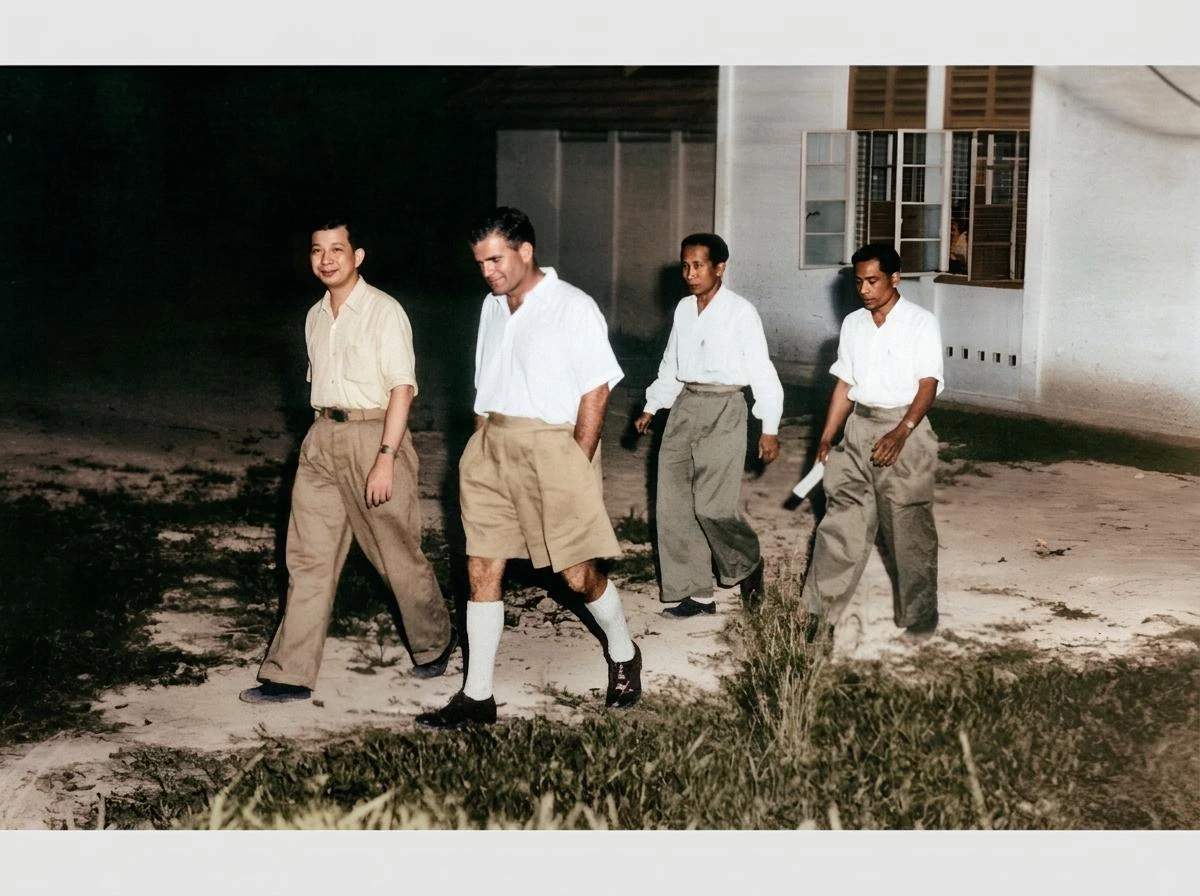
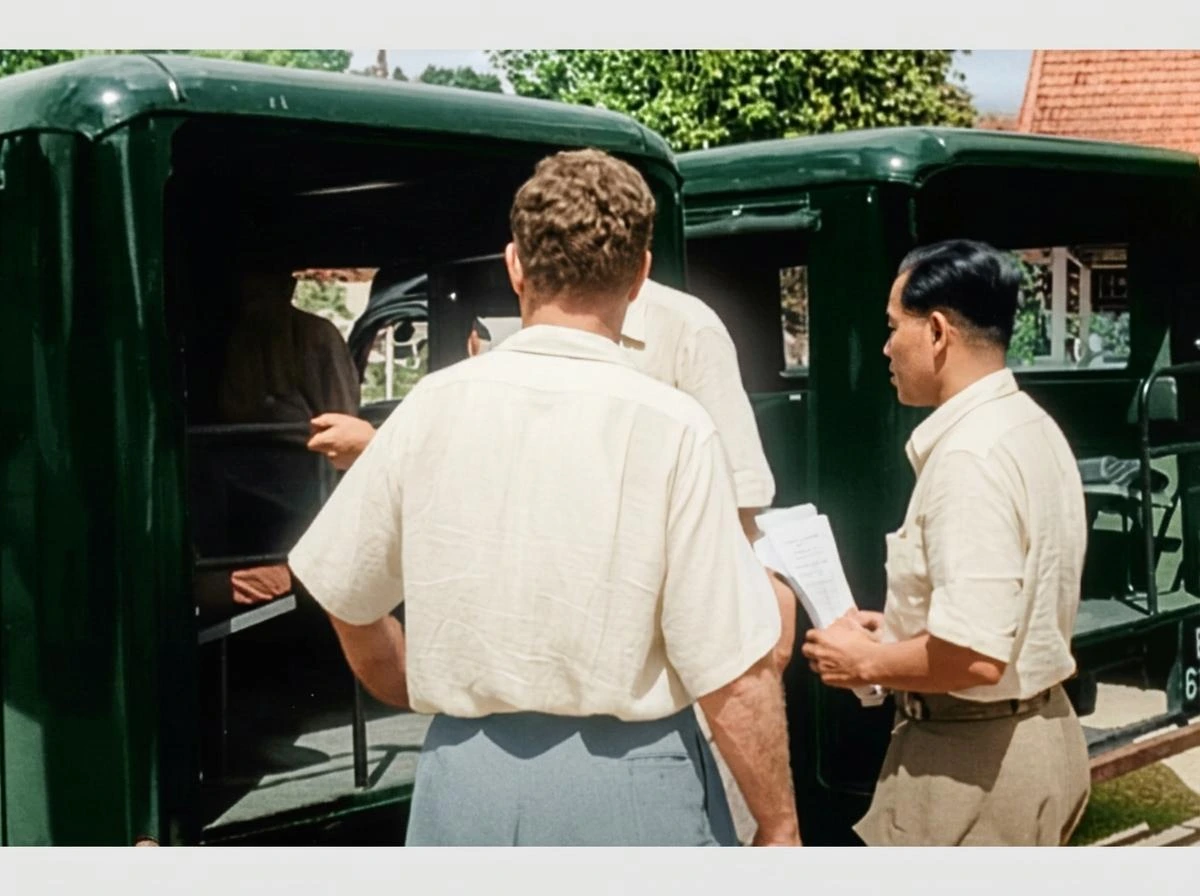
长期以来,主流官方叙事往往将独立后的战火延续单一归咎于马共对和平进程的拒绝。然而,解密的官方档案与当时的马共公报呈现了更为复杂的多维面向:在1957年8月31日马来亚联合邦宣布独立后,马共曾数次公开发表声明并向民选政府正式致函,呼吁在承认既有政治现实的基础上重启和平谈判。
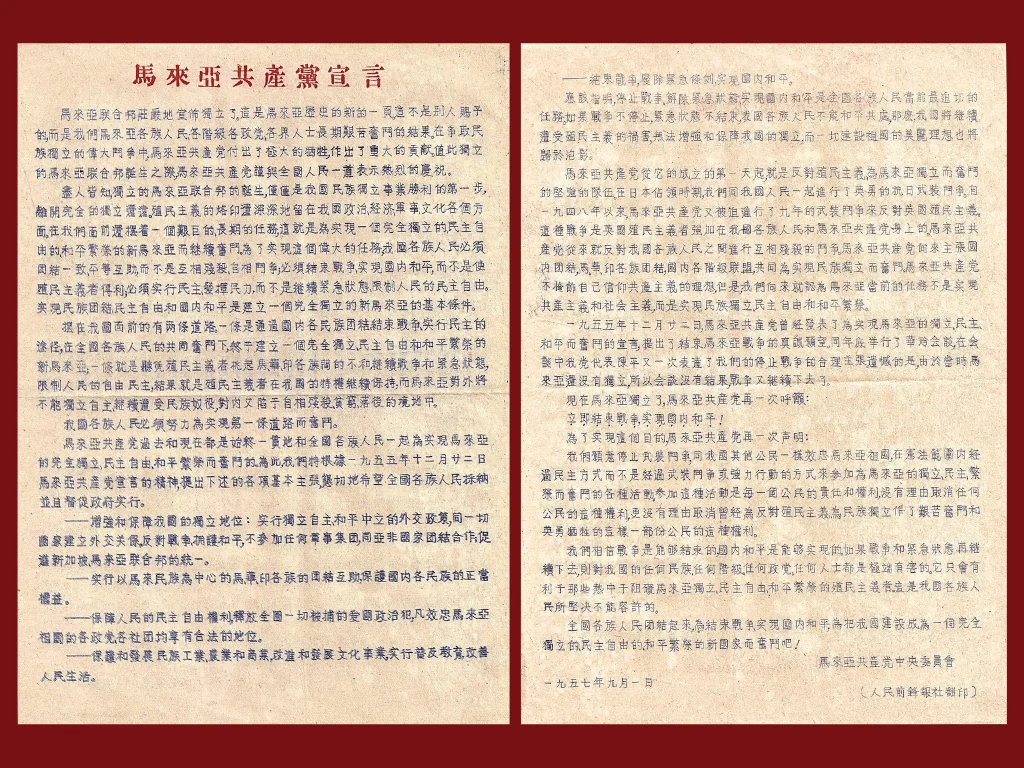
1956年3月5日,华玲会谈破裂不久,马共中央便发表《关于当前形势的声明》,呼吁重启和平谈判,遭政府断然拒绝。1957年8月31日马来亚联合邦宣布独立,就在独立盛典的次日(1957年9月1日),马共中央公开发表《马来亚共产党宣言》。宣言庄严宣告:在国家已经赢得独立的新形势下,马共宣布将不再以武装形式对抗国家政府,愿以和平民主方式共同建设繁荣、民主、富强的新马来亚;宣言强烈呼吁联邦政府立即废除紧急状态,释放所有政治犯,实现全民休养生息与国家和平。
For decades, mainstream official narratives have attributed the post-independence continuation of the conflict solely to the CPM's rejection of peace. However, declassified documents and contemporary CPM manifestos present a far more nuanced historical reality: following the proclamation of the Federation of Malaya's independence on August 31, 1957, the CPM repeatedly issued public declarations and formal letters to the elected leadership, calling for the resumption of negotiations based on mutual recognition of political realities.
On March 5, 1956, the CPM Central Committee issued the 'Statement on the Current Situation' urging resumed peace talks, which was flatly rebuffed. On September 1, 1957, one day after Merdeka, the CPM issued its historic 'Manifesto of the Malayan Communist Party.' The party announced it would cease armed confrontation against the independent government, pledging to pursue nation-building through peaceful, democratic means and urging an immediate repeal of Emergency regulations and national reconciliation.
为将和平倡议落到实处,1957年10月12日,陈平总书记从边境密林正式致函独立后的联合邦首任总理东姑阿都拉曼(原件标明日期“Tanggal 12 October, 1957.”,抬头致“Yang Berhormat Perdana Mentri”,由陈平以钢笔亲笔签署“Chen Ping, Setiausaha Agong, Party Komunist Malaya”),明确表示准备同东姑再度举行会谈(“bersedia berunding samula dengan Tengku”),以达成一项结束战争的公平合理协议;在信件第二段中,陈平写道:“为使我们这次会谈能够顺利达成协议,我建议首先由我方代表与东姑方面的代表举行初步会谈”("agar perundingan kita pada kali ini dapat menchapai persetujuan dengan lunak-nya, maka saya menchadangkan hendak-nya di-adakan terlebih dahulu pertemuan pendahuluan di-antara wakil2 dari pehak saya dengan pehak Tengku")。然而,联盟政府方面在公布该信译文时,却将“为使这次会谈能顺利达成协议”错译为“预料这次会谈将能达成双方满意的协议”,并借此向报界散布“马共准备出来投降”的舆论。
针对官方的蓄意错译与逼降论调,1957年12月9日,陈平再次向东姑发出第二封两页长的马来文正式公函(第二段首句即明确援引10月12日首函:“Saperti yg telah saya sebutkan dalam surat saya tanggal 12 October...”),正式提议委派拉昔·迈丁同志与陈田同志作为马共代表出席初步会谈,并在信中严正声明:“我方准备同政府方面进行的会谈,旨在达成公平合理的协议以结束战争、实现祖国和平,这同所谓‘投降’(penyerahan-diri)是毫不相干的。众所周知,我党发动武装斗争的目的是为了驱逐殖民主义者、争取马来亚的独立,绝无将民选联邦政府视为敌人的意图;因此在民选联邦政府与我方之间,根本不存在所谓投降的问题。”次日(1957年12月10日),马共中央委员会发言人则达·宾·阿都拉(Zedah bin Abdullah)发表《答〈人民呼声报〉记者问》(Suara Rakyat),公开揭露政府方面错译陈平10月12日来信的真相,并严正指出:“这场战争是英帝国主义强加在我国各族人民和马来亚共产党身上的。诱迫马共投降,本来就是英帝国主义的殖民统治政策。如果现在联盟的某些上层人物还要坚持这种要马共投降的无理主张,那显然是他们准备长期进行战争的借口。这种主张同英国殖民主义统治者的‘以马来亚人打马来亚人’的政策实际上没有区别。”
Translating words into action, Chin Peng dispatched a formal Malay letter from the border rainforest to Prime Minister Tunku Abdul Rahman on October 12, 1957 (inscribed 'Tanggal 12 October, 1957.', addressed to 'Yang Berhormat Perdana Mentri', and signed in fountain pen 'Chen Ping, Setiausaha Agong, Party Komunist Malaya'), expressing readiness to reopen negotiations with Tunku ('bersedia berunding samula dengan Tengku') to achieve a fair and reasonable agreement to end the war. In the second paragraph, Chin Peng wrote: 'In order that our negotiations this time may smoothly reach an agreement, I propose that a preliminary meeting be held first between representatives from my side and Tengku's side' ("agar perundingan kita pada kali ini dapat menchapai persetujuan dengan lunak-nya, maka saya menchadangkan hendak-nya di-adakan terlebih dahulu pertemuan pendahuluan di-antara wakil2 dari pehak saya dengan pehak Tengku"). When releasing the letter, however, the government mistranslated 'in order that our negotiations may smoothly reach an agreement' as 'anticipating that these talks will reach a mutually satisfactory agreement,' exploiting this distortion to spread claims in the press that the CPM was ready to surrender.
Refuting the government's mistranslation and capitulation demands, Chin Peng sent a second two-page Malay letter to Prime Minister Tunku Abdul Rahman on December 9, 1957 (explicitly citing the October 12 letter in its second paragraph: 'Saperti yg telah saya sebutkan dalam surat saya tanggal 12 October...'), formally nominating Comrades Rashid Maidin and Chen Tien as the CPM's representatives for preliminary talks and declaring unequivocally: 'The talks our side is prepared to hold with the government are aimed at reaching a fair and reasonable agreement to end the war and realize peace in our homeland, which has nothing whatsoever to do with so-called "surrender" (penyerahan-diri). As is universally known, the objective of the armed struggle launched by our Party was to drive out the colonialists and win the independence of Malaya, with no intention of treating the elected Federal Government as an enemy; therefore, between the elected Federal Government and our side, the question of surrender simply does not exist.' The following day, December 10, 1957, CPM Central Committee spokesperson Zedah bin Abdullah issued his formal Q&A with Suara Rakyat (People's Voice), publicly exposing the government's mistranslation of Chin Peng's October 12 letter and pointing out: 'Everyone knows that this war was forced upon the people of all nationalities in our country and the Communist Party of Malaya by British imperialism. Inducing and forcing the CPM to surrender has always been the colonial ruling policy of British imperialism. If certain upper-stratum figures in the Alliance still insist on this unreasonable demand that the CPM surrender, that is clearly an excuse for preparing to wage a protracted war. Such a position is in practice no different from the British colonial rulers' policy of "making Malayans fight Malayans."'
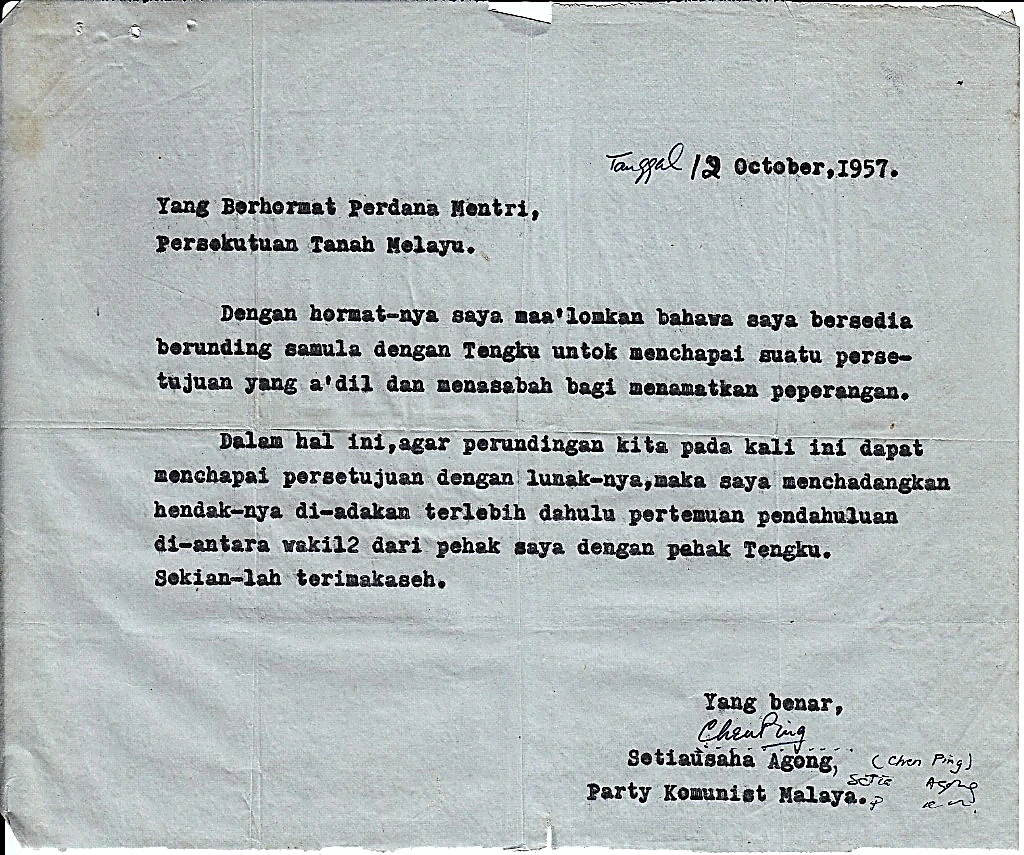
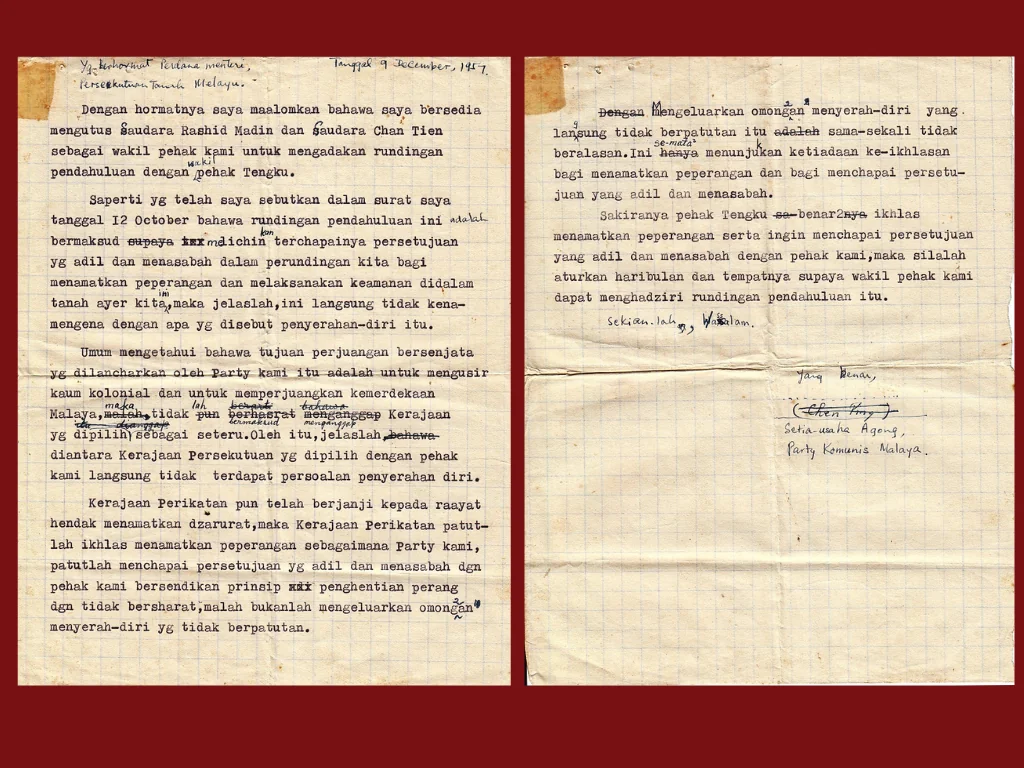
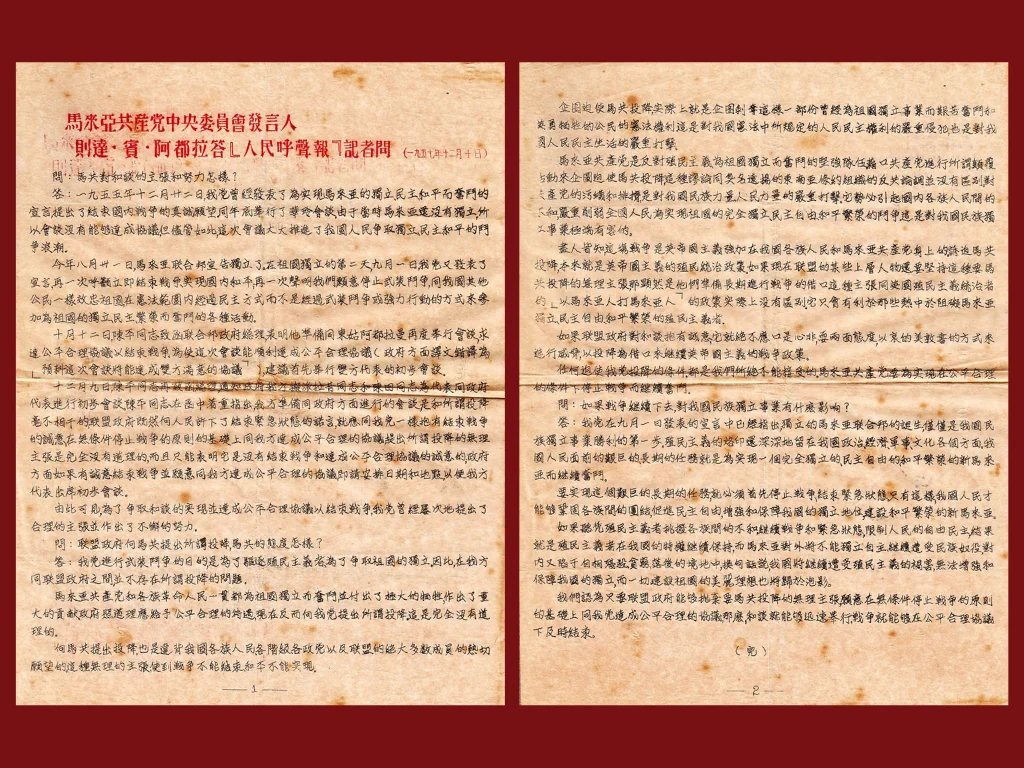
为什么新独立的联邦政府执意关闭和平谈判的大门?英国广播公司(BBC)战地纪录片《在马来亚未宣战的战争》(The Undeclared War)揭示了冷酷真相:独立后的马来亚与英国签署了《英马防务协定》(AMDA),数以万计的英军、澳大利亚与新西兰军队继续驻扎全马;殖民垄断资本需要“共产党威胁”来维持其橡胶锡矿特权,吉隆坡执政精英亦需要借“紧急状态”镇压国内工农运动与左翼政团。在接下来的三年里,英联邦联军出动轰炸机与重炮,对马共部队发动了更为疯狂高效的残酷扫荡,战火被强加在各民族人民头上。
面对冷战地缘博弈与联合邦内部的安全政策限制,马共中央与民族解放军主力部队在复杂局势下逐步向泰马边境战略转移,依托边境密林建立起长期周旋的依托阵地。尽管战火在后续数十年中因各方政治僵局继续延烧,但马共在华玲会谈中展现的谈判意愿与政治坚持,为后来的历史和解留下了不可忽视的先例,并最终在1989年12月2日促成了泰、马、马共三方《合艾和平协议》的正式签署。华玲和谈不仅是二十世纪东南亚非殖民化浪潮中的关键篇章,更为后人研究冷战初期武装冲突如何向政治和解过渡提供了极为宝贵的第一手档案参照。
Why did the newly sovereign government slam the door on peace? BBC documentary *The Undeclared War* and declassified military papers disclose the reality: Malaya entered the Anglo-Malayan Defense Agreement (AMDA), stationing tens of thousands of British, Australian, and New Zealand troops. Imperial monopolies required an ongoing 'Red Menace' to protect their plantation and tin concessions, while domestic elites used Emergency decrees to suppress trade unions and socialist opposition. For three years post-Merdeka, Commonwealth forces intensified air and artillery assaults against guerrilla positions.
Confronted by Cold War geopolitical complexities and the strict internal security framework of the newly independent Federation, the CPM Central Committee and core MNLA units strategically relocated toward the rugged Thai-Malayan border, establishing forest redoubts to sustain protracted survival. Although the conflict persisted across subsequent decades due to ideological deadlock, the negotiating principles and political tenacity demonstrated by the CPM at Baling established vital historical precedents for eventual peace, culminating in the landmark tripartite Haadyai Peace Agreement of December 2, 1989. The Baling Talks remain not only a defining chapter in Southeast Asia's decolonization history, but also an indispensable archival reference for understanding the protracted transition from armed conflict to negotiated settlement.